
 |


| Quantity: | |
|---|---|
Canada
Freight Shipping From China to Canada
When shipping goods from China to Canada, even small mistakes at the origin can lead to delays at the destination. Long transit routes, strict shipping schedules, and customs requirements all play an important role in the overall process.
Understanding shipping costs and transit times is essential before arranging your cargo. Whether you choose ocean freight, air freight, or rail transport, proper planning can help reduce delays, control logistics costs, and improve shipping efficiency.
This guide provides practical insights into freight shipping from China to Canada, helping businesses make informed logistics decisions and optimize their supply chain operations.
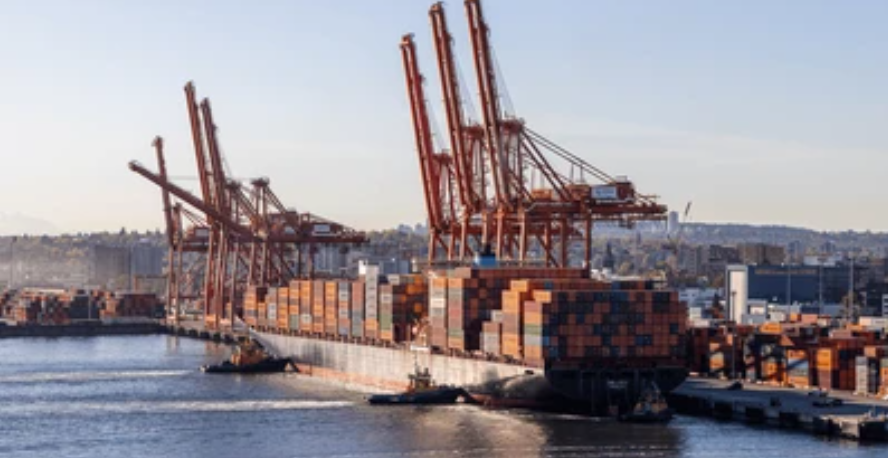
Sea freight From China to Canada
Sea freight from China to Canada plays a major role in international trade, connecting key ports such as Shanghai and Vancouver to support large-scale cargo transportation. Although ocean freight is slower than other shipping methods, it remains one of the most reliable and cost-effective solutions for moving goods between the two countries.
However, shipping from China to Canada can still involve challenges such as customs procedures, documentation requirements, and cargo compliance issues. Mistakes in paperwork or shipment declarations may lead to delays, additional costs, or customs inspections.
With proper planning and the right logistics strategy, businesses can reduce risks, improve shipping efficiency, and ensure smoother cargo transportation from China to Canada.
Main Shipping Ports in China
Port of Shanghai
Situated along the central Chinese coastline, the Port of Shanghai is the world’s busiest port, with a staggering shipping volume exceeding 40 million TEUs in 2020.
Renowned as the largest cargo hub globally, the Port of Shanghai connects with a wide network of international shipping routes. Its key trading partners include the United States, the European Union, and ASEAN nations.
For companies aiming to expand in East Asia or globally, leveraging the Port of Shanghai’s unmatched connectivity can provide substantial opportunities for growth.
Port of Ningbo-Zhoushan
Found in Zhejiang province’s eastern region, the Port of Ningbo-Zhoushan ranks just behind Shanghai, handling over 27 million TEUs in 2020.
This port functions as a vital hub for international trade, primarily working with Japan, South Korea, and Hong Kong.
Companies focusing on East Asia could benefit from leveraging Ningbo-Zhoushan’s specialized container terminals as a pivotal logistics hub.
Port of Shenzhen
Strategically located on the Pearl River Delta along China’s southern coast, the Port of Shenzhen processed more than 25 million TEUs in 2020.
This port plays a crucial role in Asia-Pacific trade, maintaining robust connections with Hong Kong, Singapore, and Malaysia.
For businesses planning to tap into the Asia-Pacific market, the Port of Shenzhen’s high efficiency and operational capacity make it an ideal entry point.
Port of Guangzhou
Located within the Pearl River Delta region, this port manages over 20 million TEUs annually.
It maintains strong trading relationships with Australia, the U.S., and ASEAN countries.
The Port of Guangzhou offers state-of-the-art facilities, enabling enhanced access to markets in Southern China and Southeast Asia for expanding enterprises.
Port of Qingdao
Based in Shandong province, the Port of Qingdao handled more than 18 million TEUs in 2020.
The port is instrumental in facilitating trade with countries such as Japan, South Korea, and the United States.
Companies focusing on Northeast Asia can leverage Port of Qingdao’s well-established rail network for seamless regional distribution and connectivity.
Port of Tianjin
Located in Northeast China, the Port of Tianjin handles upwards of 16 million TEUs annually.
This port serves as a crucial gateway for trade with South Korea, Japan, and Europe.
With comprehensive service offerings and strategic location, the Port of Tianjin is well-suited for businesses dealing extensively with Northeast Asia and Europe to optimize supply chain operations.
Main Shipping Ports in Canada
Port of Vancouver
Situated on the southwestern coast of British Columbia, the Port of Vancouver is Canada’s largest and busiest port, managing over 142 million tons of cargo annually. It accommodates diverse commodities, including grains, minerals, and forest products.
Serving as a critical hub on the Pacific Rim, it connects trade with major partners such as China, the USA, Japan, South Korea, and India. Its advantageous location makes it a vital gateway for Pacific-Asia trade.
For businesses shipping bulk commodities like grains, minerals, or forestry products, the Port of Vancouver is a top-tier option due to its extensive cargo handling capabilities and global reach.
Port of Halifax
Located in Nova Scotia along Canada’s eastern seaboard, the Port of Halifax ranks as the country’s fourth-largest port. It handles approximately 550,000 TEUs annually.
With core trading relationships spanning China, Europe, the Mediterranean, and the Indian Subcontinent, its position along the key Great Circle Route between North America and Europe enhances its strategic significance.
In addition to container shipping, the Port of Halifax specializes in handling automobiles and breakbulk cargo, making it an excellent choice for businesses operating in these markets.
Port of Montrea
Positioned on the St. Lawrence River in Quebec, the Port of Montreal is Canada’s second-largest port, processing over 1.6 million TEUs annually.
Primarily connected with Europe and the Mediterranean for containerized goods, its proximity offers the shortest direct route from Europe to North America's Midwest.
The Port of Montreal is ideal for businesses seeking cost-effective solutions for containerized shipments between Europe and North America. Its efficient transit times can help reduce overall shipping expenses.
Port of Prince Rupert
Situated on the northern coast of British Columbia, the Port of Prince Rupert boasts the shortest maritime route between North America’s west coast and Asia. It has a capacity exceeding 1 million TEUs per year.
The port’s primary trading partners include China, Japan, and the USA. Its geographic proximity to Asia makes it an attractive entry point for trans-Pacific trade compared to other west coast ports.
Companies targeting Asian markets can benefit from shorter shipping times by routing through the Port of Prince Rupert, enhancing competitive efficiency.
Port of Quebec
Found at the end of the St. Lawrence River, the Port of Quebec efficiently handles over 25 million tonnes of cargo annually across various categories.
The port caters to trade with Europe, Africa, and Central America. Its deep-water infrastructure enables operations throughout the year, accommodating sizable vessels without depth restrictions.
Ideal for enterprises handling diverse goods including bulk and general cargo—the Port of Quebec offers ample flexibility for varied freight requirements.
Port of Saint John
Located along the Bay of Fundy in New Brunswick, the Port of Saint John ranks as Canada’s third-largest port, with an annual shipping volume exceeding 28 million tonnes.
This port plays a pivotal role in facilitating trade with regions such as Europe, South America, and the Caribbean. Its year-round deep-water facilities and integrated rail connections enhance its value for global shipping logistics.
With multimodal capabilities that enable seamless rail connectivity and a capacity to handle varied cargo types, the Port of Saint John represents a versatile option for businesses seeking integrated supply chain solutions.
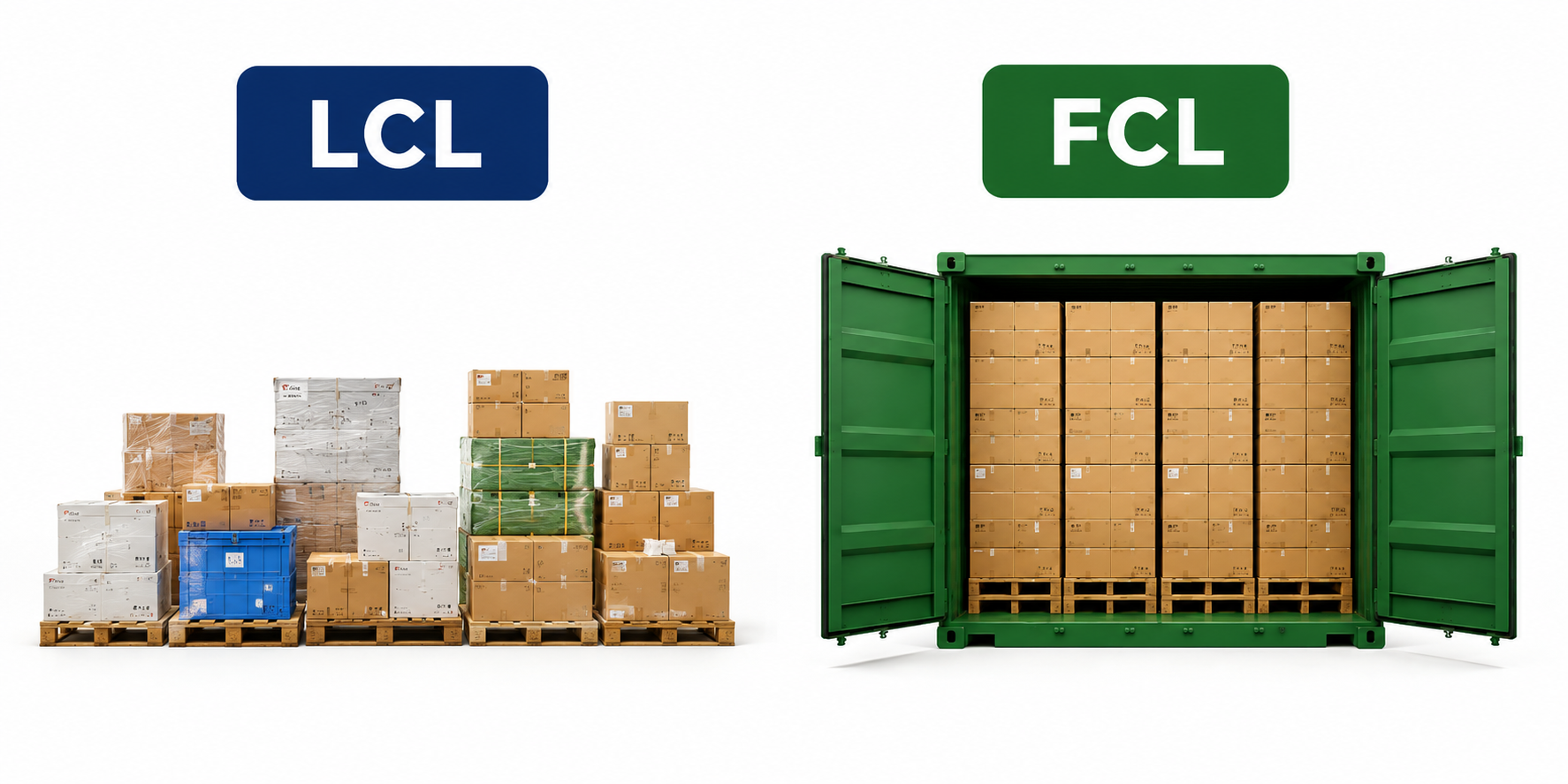
Should I Choose FCL or LCL for Shipping From China to Canada?
Deciding between Full Container Load (FCL) and Less than Container Load (LCL) for your shipping needs between China and Canada is crucial to optimizing costs, transit times, and the overall efficiency of your shipment. Both methods have distinct advantages and are suited to different shipping scenarios. Here's a breakdown to help you choose the option that best aligns with your requirements.
LCL: Less than Container Load
LCL shipping allows multiple shippers to share space in one container, making it a cost-effective option for smaller cargo volumes. It is generally suitable for shipments below 15 CBM and works well for businesses that do not require a full container. Since costs are based on the space occupied, LCL helps reduce shipping expenses for smaller orders.
However, because the container is shared with other cargo, shipments usually involve additional handling, consolidation, and deconsolidation processes, which may increase transit times and handling risks.
FCL: Full Container Load
FCL shipping provides exclusive use of an entire container for one shipment, offering greater security, faster handling, and improved shipping efficiency. It is typically the better option for cargo volumes above 14–15 CBM or for businesses shipping large quantities of goods.
Compared to LCL, FCL often delivers lower costs per unit for larger shipments because pricing is based on the container rather than cargo volume. With fewer handling stages, the risk of cargo damage or delays is also reduced. However, for smaller shipments, FCL may not be the most economical option due to the fixed container cost.
How long does sea freight take From China to Canada?
The transit time for sea freight from China to Canada typically depends on factors such as the specific ports involved, the shipping route, and any potential delays. On average, ocean freight can take anywhere from 15 to 40 days. Understanding the cost of shipping a container along this route can also feel overwhelming, as various elements come into play. These include the port of origin and destination, the shipping carrier, the type of goods, and market dynamics. As a general estimate, shipping rates per cubic meter (CBM) can range from $50 to $200. However, these figures are not fixed due to the ever-changing nature of the industry. To address this complexity, our company takes a tailored approach, with our shipping specialists working closely with you to secure the most competitive rate. Your confidence is our priority.
From China | To Canada | Average Shipping Time |
Port of Shanghai | Port of Vancouver | 22 days |
Port of Ningbo | Port of Prince Rupert | 16 days |
Port of Shenzhen | Port of Montreal | 43 days |
Port of Hong Kong | Port of Montreal | 43 days |
How much does it cost to ship a container from China to Canada?
Understanding the cost of shipping a container from China to Canada can be a bit daunting due to the many factors that come into play. Ocean freight rates are influenced by various elements such as the Point of Loading and Destination, the carrier used, the type of goods, and market conditions. Generally speaking, shipping rates per cubic meter (CBM) can range from $50 to $200. However, this is just an estimate, as exact pricing often fluctuates. To address these complexities, our company takes a tailored approach, working closely with you to secure the best possible shipping costs. Your satisfaction is our top priority.
Special Transportation Services
Out of Gauge (OOG) Container
Definition: An Out of Gauge container, commonly known as an OOG container, is designed to accommodate goods that exceed the dimensions of standard 20 or 40-foot containers due to their size or shape.
Suitable for: Items that are too large or uniquely shaped for standard containers.
Examples: Large machinery, industrial equipment, or oversized vehicles.
If your business deals with bulky or irregularly shaped goods that require secure transportation, OOG containers provide the specialized solution you need for shipping from China to Canada.
Break Bulk
Definition: Break bulk refers to cargo that is transported as individual pieces rather than in containers. Also called loose cargo loads.
Suitable for: Goods that are too large or heavy for containerized transport and are shipped as separate units.
Example: Yachts, steel beams, or giant generators.
For businesses shipping large-volume goods that don’t fit standard size containers, break bulk offers a practical and efficient option.
Dry Bulk
Definition: Dry bulk shipping is used for unpackaged raw materials transported in large quantities directly in the hold of a ship.
Suitable for: Bulk goods like construction materials or commodities such as grain, coal, or metal ores.
Example: Cement, steel, or fertilizer often shipped by construction firms from China to Canada.
This method is an economical and reliable option for transporting large quantities of unpacked goods.
Roll-on/Roll-off (Ro-Ro)
Definition: Roll-on/Roll-off refers to vessels designed for the transport of wheeled cargo that can be driven directly on and off the ship.
Suitable for: Wheeled vehicles such as cars, trucks, trailers, farm tractors, or even railway wagons.
Examples: Automobile manufacturers use this service to transport vehicles across borders.
If your business involves wheeled cargo, Ro-Ro shipping offers a fast and secure transportation solution.
Reefer Containers
Definition: Reefer containers are equipped with temperature regulation systems, enabling them to transport perishable goods securely.
Suitable for: Products requiring controlled temperatures such as fruits, vegetables, seafood, meat, cheese, and pharmaceuticals.
Examples: A seafood distributor could use reefer containers to maintain the quality of their goods during transit between China and Canada.
Reefer containers ensure that perishable items remain fresh and intact upon delivery.
When selecting the most appropriate shipping method, it's essential to evaluate your specific cargo requirements. At GB FREIGHT, we specialize in guiding clients through this process to determine the best option tailored to your needs. Feel free to reach out to us for a free shipping quote.
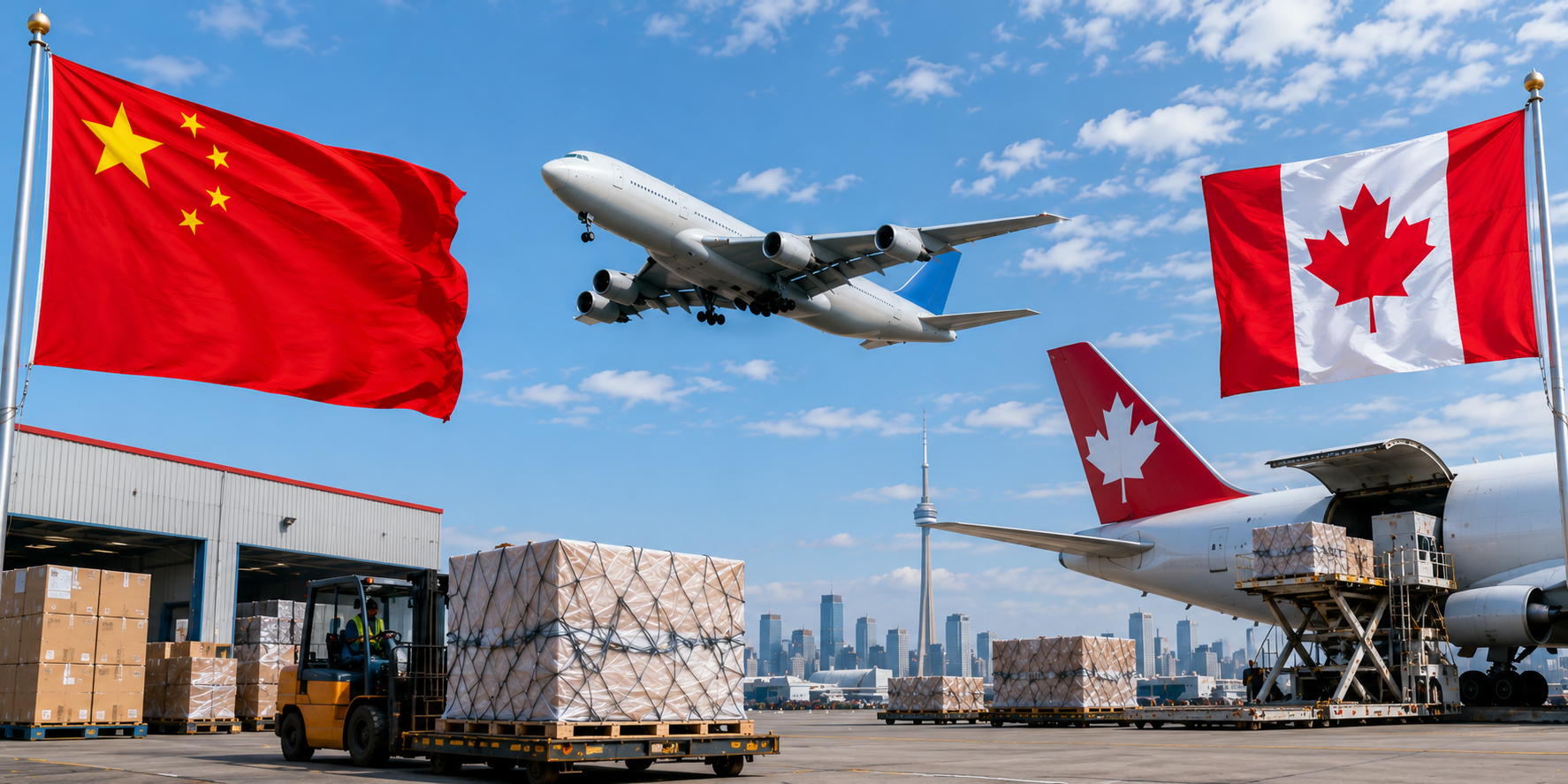
Air Freight From China to Canada
Looking to ship goods from China to Canada? Air freight could be an excellent solution. Known for its speed and reliability, it’s particularly well-suited for small, high-value items like designer apparel or cutting-edge technology. Picture your shipment soaring across the ocean, reaching its destination in days rather than the weeks maritime shipping often takes.
However, don’t overlook the details—small mistakes can cost you. Accurately calculating the weight and dimensions of your shipment is just as crucial as packing efficiently for a trip. Missteps, such as failing to adhere to shipping regulations or neglecting to review carrier policies, can come with hefty price tags. But fear not, with the right preparation, you’ll navigate air freight logistics like a pro.
Main International Airports in China
Airport | Code | Advantages |
Beijing Capital International Airport | PEK | Major global cargo hub with advanced freight facilities and strong international connections across North America, Europe, and Asia |
Shanghai Pudong International Airport | PVG | China’s busiest cargo airport with extensive international freight routes, modern cargo terminals, and efficient customs handling |
Guangzhou Baiyun International Airport | CAN | Key South China logistics gateway offering advanced cargo tracking systems and strong export connectivity |
Chengdu Shuangliu International Airport | CTU | Strategic hub in Western China with temperature-controlled facilities and growing links to Europe and Southeast Asia |
Hong Kong International Airport | HKG | One of the world’s leading cargo airports with express cargo terminals and highly efficient international logistics operations |
Main International Airports in Canada
Airport | Code | Advantages |
Toronto Pearson International Airport | YYZ | Canada’s largest cargo airport with extensive global connections and advanced freight handling infrastructure |
Vancouver International Airport | YVR | Major West Coast gateway with strong Asia-Pacific connections, cold storage facilities, and dedicated cargo terminals |
Montréal-Pierre Elliott Trudeau International Airport | YUL | Important Eastern Canada cargo hub with automated cargo handling systems and strong Europe–North America connectivity |
Calgary International Airport | YYC | Strategic freight hub for Western Canada with integrated customs facilities and fast cargo processing |
Edmonton International Airport | YEG | Key logistics airport with direct highway and rail access, supporting flexible domestic and international cargo distribution |
Is Air Cargo the Right Choice From China to the Canada ?
Air cargo is often a cost-effective and dependable option for shipments weighing over 100–150 kg (220–330 lbs). Renowned carriers like China Southern Airlines and Air Canada provide scheduled cargo services, offering consistency and peace of mind, though transit times can be moderate. If you’re aiming to balance speed with budget considerations, air freight might align perfectly with your shipping needs. Always remember, every shipment is unique and demands thorough evaluation to determine the best logistics strategy.
How long does air freight take From China to Canada?
Shipping goods via air freight from China to Canada generally takes around 3 to 5 days. However, transit times can vary due to factors such as the specific airports involved, shipment weight, and the type of goods being transported. For more precise timing and an efficient shipping process, it’s advisable to consult a freight forwarder like GB FREIGHT.
How much does it cost to ship a parcel From China to Canada with air freight?
Air freight costs from China to Canada typically range from $3 to $10 per kilogram, depending on various factors. These include the departure and arrival airports, the size and weight of the package, and the nature of the goods being shipped. Determining exact costs can be complex, but our expert team can help you navigate these variables and secure the optimal rate for your shipment. Contact us for a customized quote within 24 hours—free of charge.
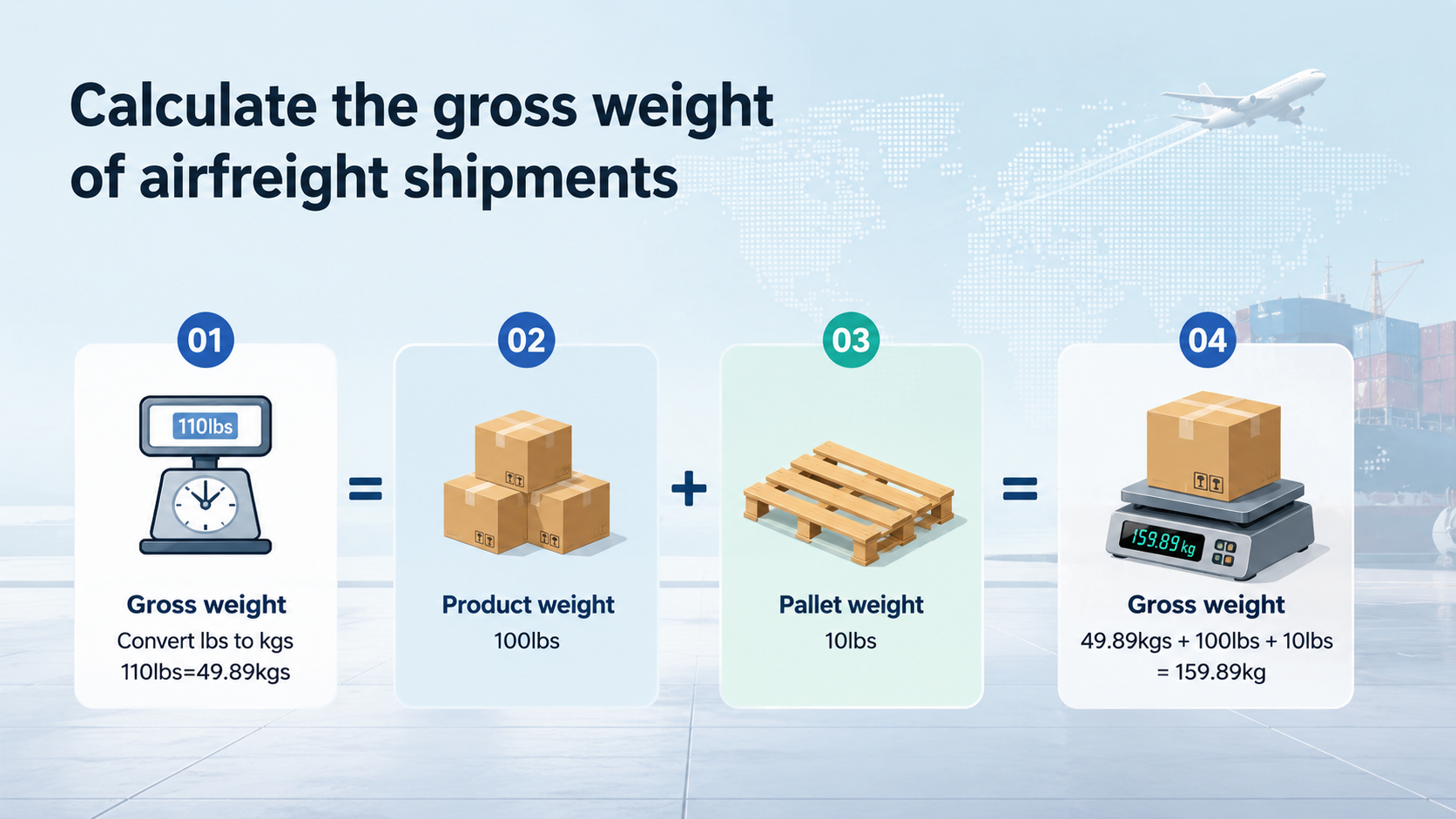
What is the difference between volumetric and gross weight?
Understanding the difference between gross weight and volumetric weight is important in air freight shipping. Gross weight refers to the actual physical weight of the cargo, including packaging and pallets.
Volumetric weight, also known as dimensional weight, measures how much space the shipment occupies. For standard air freight, it is calculated using: Length × Width × Height (cm) ÷ 6000. Express air freight typically uses ÷ 5000 instead.
Airlines charge based on whichever is higher between gross weight and volumetric weight. This pricing method ensures carriers are compensated fairly for both cargo weight and occupied space, especially for lightweight but bulky shipments.
Door-to-door shipping from China to Canada is a comprehensive logistics solution designed to streamline the global transportation process. It ensures your goods are picked up from a starting point, such as Beijing, and delivered directly to the designated destination—say, a doorstep in Toronto. Offering convenience and efficiency, this method is ideal for businesses navigating international trade between the two countries. Ready to uncover its advantages? Let’s explore.
What Is Door-to-Door Shipping?
Door-to-door shipping bridges geographical distances by handling your entire logistical process from pickup to final delivery. This service is particularly valued for minimizing the complexities of customs procedures and trade requirements, making it a go-to option for many companies. While it may involve slightly higher costs and potentially extended delivery times due to its comprehensive nature, it offers invaluable time savings by reducing operational burdens. For businesses prioritizing convenience and peace of mind, door-to-door shipping delivers an efficient and hassle-free solution for international logistics.
Benefits of Using a Door-to-Door Shipping From China to Canada
Simplified Logistics: Shipping can sometimes feel as overwhelming as solving a Rubik's Cube blindfolded. Door-to-door services take that load off your shoulders by managing every stage from pickup, transit, customs clearance, and final delivery—all in one seamless package.
On-Time Deliveries: For urgent shipments, timeliness is critical. Choosing door-to-door ensures your goods arrive when promised, giving you the reliability you need in today’s fast-paced business environment.
Enhanced Care: Handling specialized cargo? Whether it’s fragile, oversized, or perishable, your products receive professional treatment to ensure they reach their destination intact.
Convenient Administration: Say goodbye to excessive paperwork. These services take care of all the trucking logistics and administrative tasks, letting you focus on scaling up your business rather than getting entangled in regulatory formalities.
End-to-End Services: From packaging and documentation to customs duties and final delivery, this all-inclusive solution eliminates the need to juggle multiple service providers—like having an expertly planned buffet covering everything you need.
By choosing a door-to-door shipping service, you can simplify your processes, avoid unnecessary stress, and focus more on growing your business.
Why Choose GB FREIGHT?
GB FREIGHT specializes in providing seamless door-to-door services for shipments from China to Canada. Our end-to-end solutions cover packing, transportation, customs clearance, and more, whether by air, sea, road, or rail.
Need an estimate? Reach out for a free quote or consult our logistics experts. Let GB FREIGHT handle the details so you can experience stress-free international shipping. Start your journey today!


