
 |


| Quantity: | |
|---|---|
France
Freight Shipping from China to France
France is one of China’s main trading partners in Europe, while China remains one of France’s largest import sources. Major products shipped from China to France include electronics, textiles, clothing, footwear, and machinery, while France exports aircraft parts, pharmaceuticals, and luxury goods to China.
Most cargo from China to France is transported by sea freight, especially through container shipping due to its cost efficiency and reliability.
If you need professional support, GB FREIGHT can manage the entire shipping process for you, from supplier pickup in China to final delivery in France. If you need professional support, GB FREIGHT can manage the entire shipping process for you, from supplier pickup in China to final delivery in Germany.
Sea freight from China to France
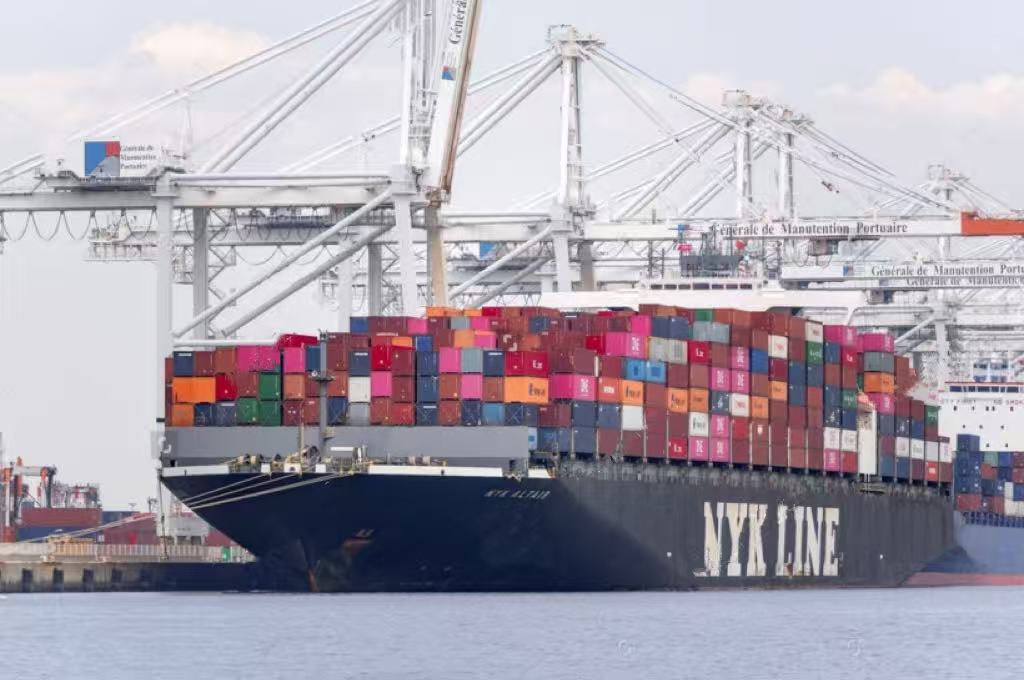
Sea freight from China to France plays a crucial role in facilitating trade between these two major global economies. Cargo vessels regularly traverse the transcontinental route, connecting key industrial hubs via prominent ports such as Shanghai, the busiest in China, and Le Havre, France's largest container port. This mode of transportation is highly favored by businesses, especially those dealing with bulk shipments, as it provides a cost-efficient solution despite being slower than air transport.
However, the process of shipping goods between these nations is often far from straightforward. Businesses frequently encounter challenges such as navigating complex paperwork, managing intricate customs procedures, or selecting unsuitable shipping methods. Each step in the logistics process demands careful coordination and timing. To help you avoid costly missteps, let us guide you through the nuances of international trade logistics.
The Main Shipping Ports in China
Port of Shanghai
Situated in the Yangtze River Delta in eastern China, the Port of Shanghai stands as the world's busiest port by cargo tonnage, managing approximately 43.3 million TEUs annually.
The port maintains robust trade relationships with key partners like the USA, South Korea, and Japan. Apart from its global status, it holds significant strategic value in regional commerce, serving as a cornerstone of the Belt and Road Initiative.
For enterprises looking to facilitate large-scale shipments to East Asia or the USA, the Port of Shanghai offers unmatched capacity and connectivity. Its strategic location positions it as a vital hub for East-West trade flows.
Port of Ningbo-Zhoushan
Positioned on the southeastern fringe of the Yangtze River Delta, the Port of Ningbo-Zhoushan handles nearly 29 million TEUs annually.
This port plays a vital role in bridging trade between China, APEC countries, and the European Union. It is particularly prominent for trading commodities such as iron and crude oil.
Companies dealing in iron, crude oil, or seeking efficient access to APEC and EU markets will find the Port of Ningbo-Zhoushan an optimal logistics hub due to its location and specialized capabilities.
Port of Shenzhen
Located in Guangdong province, the Port of Shenzhen ranks as the third busiest in China, with an annual throughput of around 25 million TEUs.
The port’s major trading partners include East Asian countries, the USA, and nations within the European Union. It supports a variety of industries, emphasizing electronics and apparel.
For those in the electronics or textile sectors targeting global markets, the Port of Shenzhen provides a comprehensive trading platform with strong connections across multiple regions.
Port of Guangzhou
Situated northwest of Hong Kong, the Port of Guangzhou handles around 21 million TEUs annually.
Its trade network spans Asia, Europe, and North America, earning recognition from the World Economic Forum as one of the most dynamic ports globally.
Companies pursuing diverse global trade opportunities can benefit from utilizing the Port of Guangzhou for its high capacity and dynamic logistics environment.
Port of Qingdao
Located along China's eastern coast, the Port of Qingdao processes approximately 19 million TEUs each year.
It sustains strong trade ties with Japan, South Korea, and the USA, excelling in handling a variety of goods such as agricultural products and machinery.
Enterprises focusing on agriculture or machinery exports to markets like Japan, Korea, and the USA should consider leveraging the Port of Qingdao for its specialized facilities and strategic position.
Port of Tianjin
Positioned east of Beijing, the Port of Tianjin manages an annual volume of 16 million TEUs.
The port is a critical connection point for trade involving East Asia and Europe, while also supporting access to central and western China.
For businesses targeting both domestic Chinese regions and European markets, the Port of Tianjin offers powerful strategic advantages through its extensive trade network and central positioning.
The Main Shipping Ports in France
Port of Marseille
Positioned on France’s southeastern coast, the Port of Marseille serves as a pivotal gateway in the Mediterranean, managing over 1.2 million TEUs annually.
The port primarily trades with Mediterranean countries, North Africa, and Asia, notably China. Its central role in global oil transportation makes it a critical node for the energy sector.
Companies targeting the Mediterranean or African markets can leverage Marseille's robust connections and infrastructure to enhance their shipping strategies.
Port of Le Havre
As France’s second-largest port, Le Havre lies on the northern coast along the English Channel at the Seine estuary, handling approximately 2.3 million TEUs annually.
This port boasts prominent trade links with Europe, the Americas, and Asia in fields like raw materials, oil, automotive products, and container shipping.
Businesses focusing on European or American markets may find Le Havre’s strategic location and diverse capabilities essential for efficient logistical operations.
Port of Fos-sur-Mer
Falling under the Marseille-Fos Port Authority, Fos-sur-Mer is set along the Mediterranean coast in southern France, handling over 1 million TEUs each year.
With its strong ties to European and North African markets, this port specializes in bulk goods and energy commodities.
If your sector involves energy or bulk materials, Fos-sur-Mer offers specialized infrastructure tailored to meet these demands.
Port of Dunkirk
Located in northern France near the Belgian border, the Port of Dunkirk is France's third-largest port, managing close to 400,000 TEUs annually.
Notable trade relationships include the UK, Russia, and other European countries. The port excels in bulk handling as well as cross-Channel traffic.
For companies engaging with key European markets or dealing in bulk cargo, Dunkirk provides valuable connectivity and sector-specific expertise.
Port of Paris
Situated inland on the Seine River, the Port of Paris is France’s largest inland port. It facilitates the transportation of over 20 million tons annually, emphasizing construction materials, containers, and diverse goods.
The port primarily serves the French domestic market and neighboring Western European countries.
For those targeting the Paris metropolitan area or aiming to integrate river transportation within their supply chain, the Port of Paris is a strategic asset.
Port of Nantes-Saint-Nazaire Situated on the Loire River estuary in western France, this is the largest port on France’s Atlantic coastline, accommodating around 3,000 vessel calls each year.
The port’s major trade routes connect to Europe, Africa, the Caribbean, and South America. It has a niche specialization in handling oversized industrial cargo such as wind turbines and aircraft components.
Companies dealing with large industrial shipments or looking to engage with European, African, or South American markets will find Nantes-Saint-Nazaire’s capabilities highly advantageous.
Should I choose FCL or LCL for shipping from China to France ?
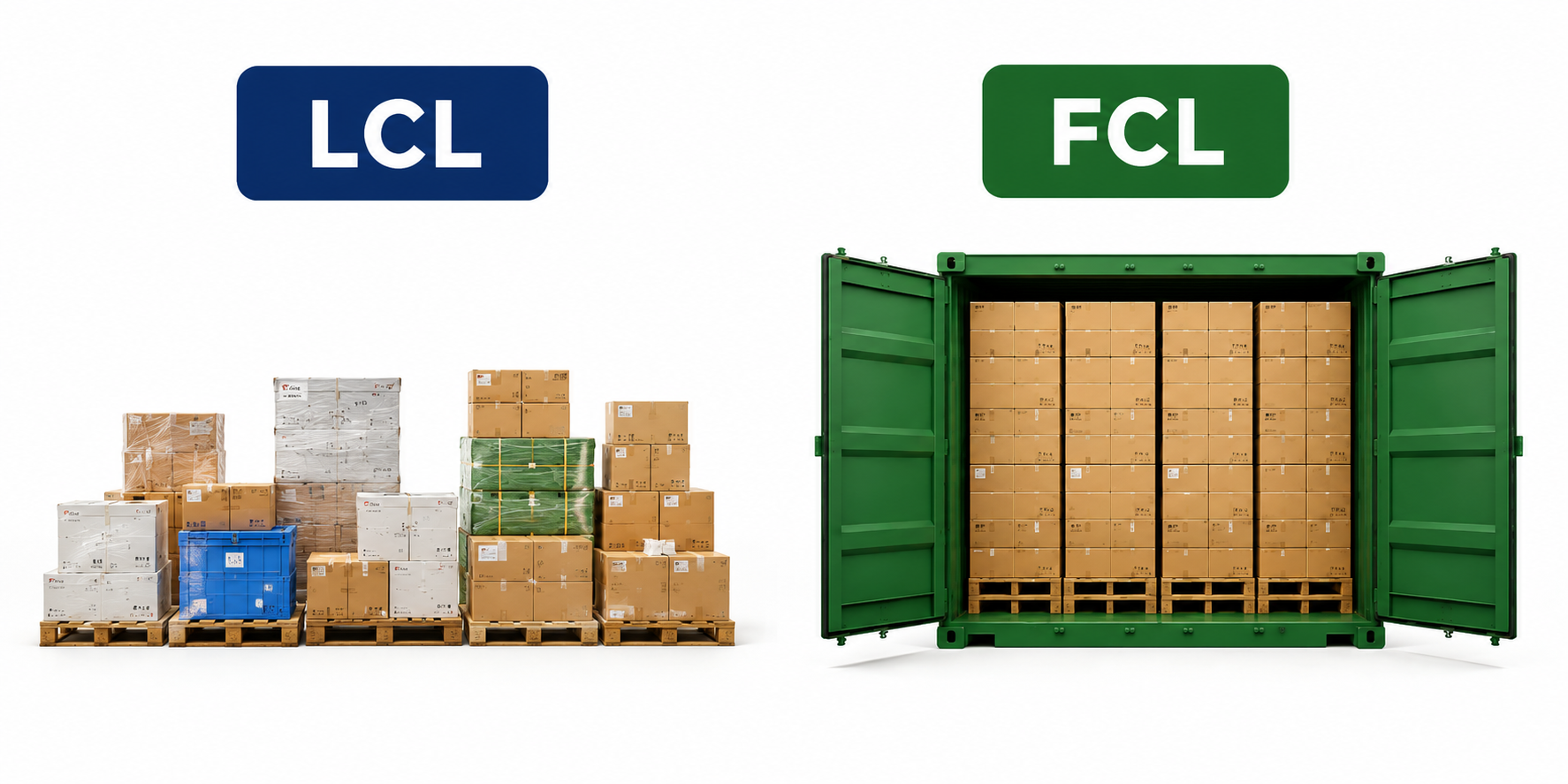
Deciding between Full Container Load (FCL) and Less than Container Load (LCL) hinges on your unique shipping needs. Each option offers distinct advantages in terms of cost-efficiency, delivery speed, and goods volume management for your logistics journey from China to France. The proper choice depends on factors such as shipment size and urgency:
LCL: Less than Container Load
Definition: LCL, or less-than-container-load, refers to a shipping method where your cargo shares space with other shipments in the same container. It’s a cost-effective solution for goods that are insufficient to fill an entire container on their own.
Opt for LCL shipping between China and France when your total shipment volume is less than 13-15 cubic meters (CBM). This method offers flexibility, enabling you to ship items as they're ready rather than waiting to accumulate enough cargo to justify a full container.
Example: Consider a boutique fashion retailer importing unique pieces from China. Since orders might be irregular and too small to fill a full container, LCL shipping allows the retailer to optimize freight costs while maintaining manageable inventory levels.
With LCL freight, you only pay for the portion of the container your goods occupy. While the cost per unit might be higher compared to Full Container Load (FCL) shipping, the overall expenses for smaller or sporadic shipments are often lower. Additionally, the flexibility and reduced upfront financial commitment can make LCL a more practical choice for businesses with modest or inconsistent shipping needs.
FCL: Full Container Load
Definition: FCL, or Full Container Load, is a shipping method wherein an entire container, typically 20 ft or 40 ft, is allocated to one shipment. With greater security, the cargo remains sealed from pickup at origin to delivery at its final destination.
FCL is most suitable for larger shipments exceeding 13-15 CBM. This approach becomes more cost-effective due to economies of scale, where higher volumes reduce the per-unit freight cost.
Example: Imagine shipping a large consignment of electronics from Shanghai to Paris. The size and high value of the goods make FCL ideal, as it keeps the entire shipment within a dedicated container, minimizing risks of damage or loss during transit.
In FCL shipping, you bear the cost of the entire container. Although this may seem expensive initially, it becomes cost-efficient for high-volume shipments as the cost per CBM decreases significantly. It’s advisable to request an FCL shipping quote to assess overall costs. This typically includes terminal handling fees at both the origin and destination, freight charges, and any surcharges specific to the cargo type or shipping route.
How long does sea freight take from China to France ?
Sea freight from China to France generally takes between 20 and 40 days. The duration can vary based on factors such as the specific ports involved, the size and weight of the shipment, and the type of goods being transported. While these are typical timeframes, contacting a professional freight forwarder like GB FREIGHT can provide a more precise estimate tailored to your requirements
Le Havre | Marseille | Bordeaux | Lyon | |
Port of Shanghai | 26 days | 27 days | 35 days | 32 days |
Port of Ningbo | 30 days | 26 days | 35 days | 26 days |
Port of Shenzhen | 26 days | 32 days | 28 days | 32 days |
Port of Guangzhou | 28 days | 34 days | 28 days | 28 days |
Port of Tianjin | 31 days | 30 days | 37 days | 35 days |
Port of Qingdao | 32 days | 29 days | 34 days | 32 days |
** Please note that the transit times provided are estimates and may differ from actual delivery times. For the most accurate information, consult your freight forwarder.
How much does it cost to ship a container from China to France?
Ocean freight rates from China to France can vary widely depending on factors such as the points of loading and destination, the carrier chosen, the type of goods being transported, and market price fluctuations on a monthly basis. While pinpointing an exact cost immediately may be challenging, it’s important not to feel overwhelmed. You can contact us to provide personalized quotes tailored to your specific needs, ensuring the best value for your shipping budget. You can rely on our expertise to handle the complexities, freeing you to focus on other priorities.
Special Transportation Services
Out of Gauge (OOG) Containers
These containers are designed for oversized cargo that exceeds standard dimensions.
Suitable for: Heavy, large, or irregularly shaped items that cannot be disassembled.
Examples: Heavy machinery, construction equipment, large boats, and wind turbine parts.
Why choose this option: An OOG container provides suitable space for dimensionally challenging cargo, making transportation efficient and hassle-free.
Break Bulk Shipping
This method involves shipping goods individually or using pallets, skids, or crates instead of containers. Special vessels are utilized for such loose cargo.
Suitable for: Cargo that is too big for containers but doesn’t require bulk carriers.
Examples: Construction materials, manufacturing equipment, or oversized vehicle parts.
Why choose this option: Break bulk shipping offers flexibility for handling non-containerized, awkward-to-move cargo.
Dry Bulk Shipping
Dry bulk allows the transportation of loose commodities directly in vessel holds without packaging.
Suitable for: Large quantities of homogeneous goods that can be poured into the ship’s hold.
Examples: Grain, coal, gravel, and similar materials.
Why choose this option: It's a cost-effective solution for bulk shipments of granulated or loose products.
Roll-on/Roll-off (Ro-Ro) ShippingThis option involves loading vehicles or machinery onto vessels by driving them directly onboard and securing them for transit.
Suitable for: Self-propelled or wheeled/tracked vehicles.
Examples: Automobiles, trucks, trailers, or railroad cars.
Why choose this option: Ro-Ro simplifies the transportation of large machinery or vehicles that move under their own power.
Reefer Containers
These are temperature-controlled containers used to transport perishable goods that require a constant environment.
Suitable for: Temperature-sensitive items such as food products and pharmaceuticals.
Examples: Seafood, meat, dairy products, fruits, flowers, and medical supplies.
Why choose this option: Reefer containers ensure your goods arrive in optimal condition by maintaining a controlled temperature throughout transit.
When shipping between China and France, selecting the right option depends on your specific cargo and business needs. GB FREIGHT is ready to assist in determining the most suitable solution. Reach out to us today for a free shipping quote tailored to your requirements.
Air freight from China to France
Air freight connecting China and France stands out for its speed and dependability, providing an ideal solution for shipping small, high-value goods. Picture items like luxury fashion garments, precision instruments, or consumer electronics—products that not only represent significant monetary value but also demand time-sensitive delivery. In such cases, air freight emerges as a cost-effective alternative when rapid service is crucial and time truly equates to money.
Yet, navigating the world of air freight isn’t always straightforward. Many shippers inadvertently complicate matters, leading to elevated costs. A common pitfall includes misinterpreting weight-based pricing calculations, which can transform an economical choice into an unexpectedly pricey venture. Neglecting established industry practices only compounds these challenges, akin to flying a plane without navigation tools—far from ideal. In the sections ahead, we’ll identify these common errors and provide a clear, actionable guide for managing air freight successfully.
Should I choose Air Freight from China to France ?
Opting for air cargo from China to France can be a practical and reliable approach. Established carriers like Air China and Air France specialize in robust freight services, making them trusted options. Air cargo is most advantageous for shipments starting at 100/150 kg (220/330 lbs), balancing cost-efficiency with reliability. While the reliance on scheduled flights may slightly extend transit times, the dependable service and tracking capabilities offered by these airlines often outweigh such concerns. For businesses looking to optimize their shipping strategy without straining their budget, air cargo may fit the bill—even when factoring in its fixed scheduling constraints.
The Main International Airports in China
Airports in China | Advantages |
Beijing Capital International Airport | Major cargo hub with strong global connections and advanced facilities for sensitive cargo |
Pudong International Airport, Shanghai | China’s leading cargo airport with efficient sea-air connections and fast logistics services |
Guangzhou Baiyun International Airport | Important South China gateway with strong Southeast Asia connectivity |
Chengdu Shuangliu International Airport | Key hub for Western China with excellent cold chain logistics |
Shenzhen Bao’an International Airport | Ideal for electronics and high-value cargo with strong e-commerce logistics support |
The Main International Airports in France
Airports in France | Advantages |
Charles de Gaulle Airport | France’s largest cargo airport with extensive international flight connections |
Lyon-Saint Exupéry Airport | Strategic European distribution hub with 24/7 cargo operations |
Marseille Provence Airport | Efficient gateway for Mediterranean, African, and Asian trade |
Toulouse-Blagnac Airport | Strong aerospace and high-tech cargo handling capabilities |
Nice Côte d’Azur Airport | Suitable for luxury goods and time-sensitive deliveries |
How long does air freight take from China to France?
Transit times from China to France usually range between 3 to 5 days via air freight. However, specific timings are subject to variables such as the chosen airports, shipment weight, and type of goods being transported.
How much does it cost to ship a parcel from China to France using air freight?
The cost of air freight from China to France typically falls between €5 and €15 per kilogram. However, final pricing depends on multiple factors including the departure and arrival locations, parcel size, weight, and the nature of the shipment. To get an accurate cost estimate tailored to your specific requirements, reach out to our team for a free quote designed to suit your needs efficiently.
What is Gross weight?
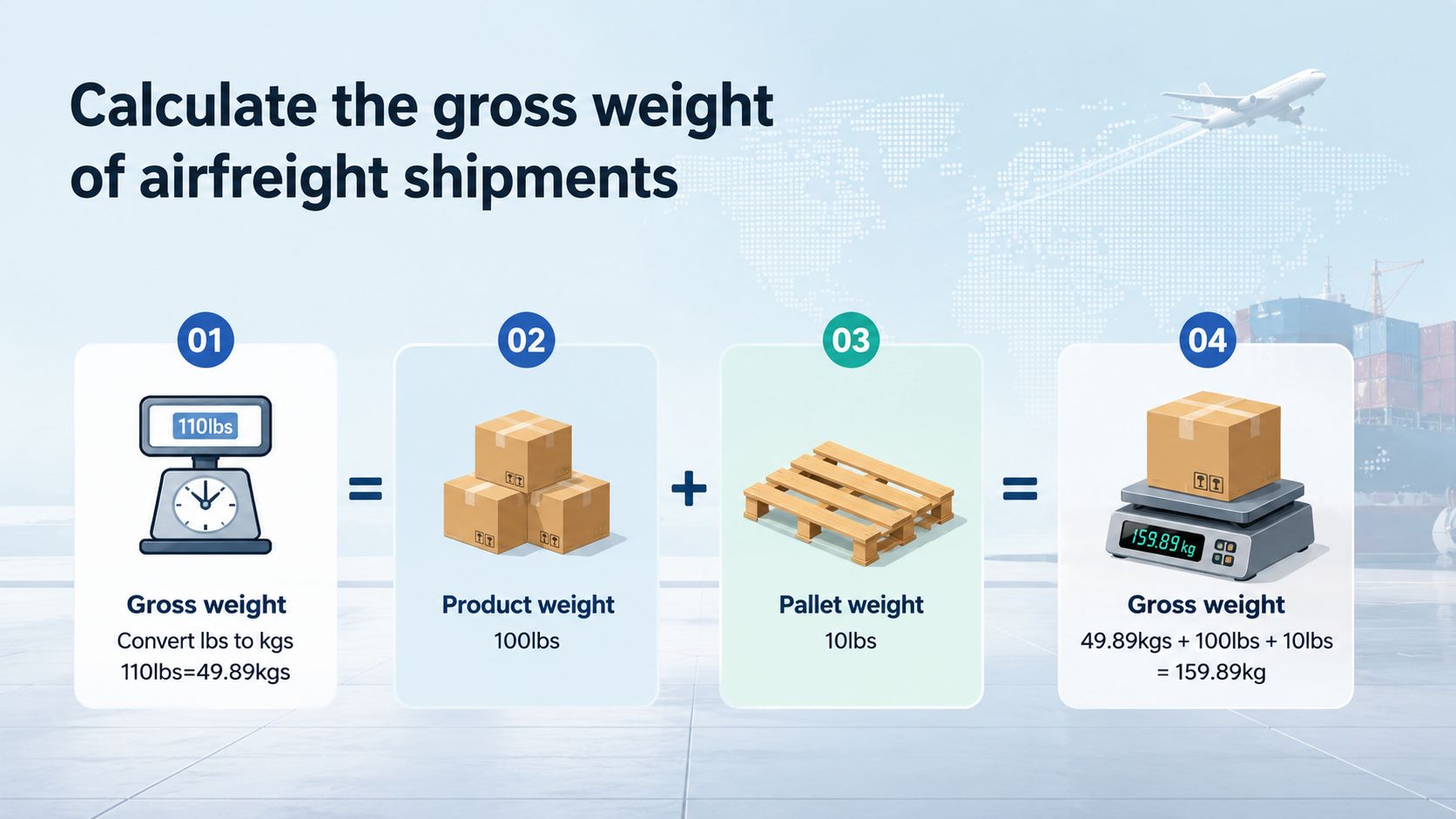
Gross weight refers to the actual weight of the shipment, including its contents, packaging, and any pallets, typically measured in kilograms (kg) using a standard scale.
What is Volumetric weight?
Volumetric weight, or dimensional weight, accounts for the physical space a shipment occupies during transport rather than its mass. This theoretical calculation helps ensure that lightweight, bulky items are charged in proportion to the space they consume. In air freight, volumetric weight is determined by multiplying the shipment's dimensions (length x width x height in centimeters) and dividing by 6000—a standard divisor in the air cargo industry. For instance, a parcel measuring 100 cm x 100 cm x 100 cm would have a volumetric weight of (100 x 100 x 100)/6000 = 166.67 kg, which equals approximately 367 lbs. Express air freight services may use a different divisor, like 5000, yielding a volumetric weight of 200 kg or roughly 441 lbs under the same dimensions.
Freight carriers charge based on the higher value between gross and volumetric weight, emphasizing the significance of this calculation when shipping lightweight yet bulky items. This approach optimizes logistics efficiency and controls costs by linking pricing to spatial demand.
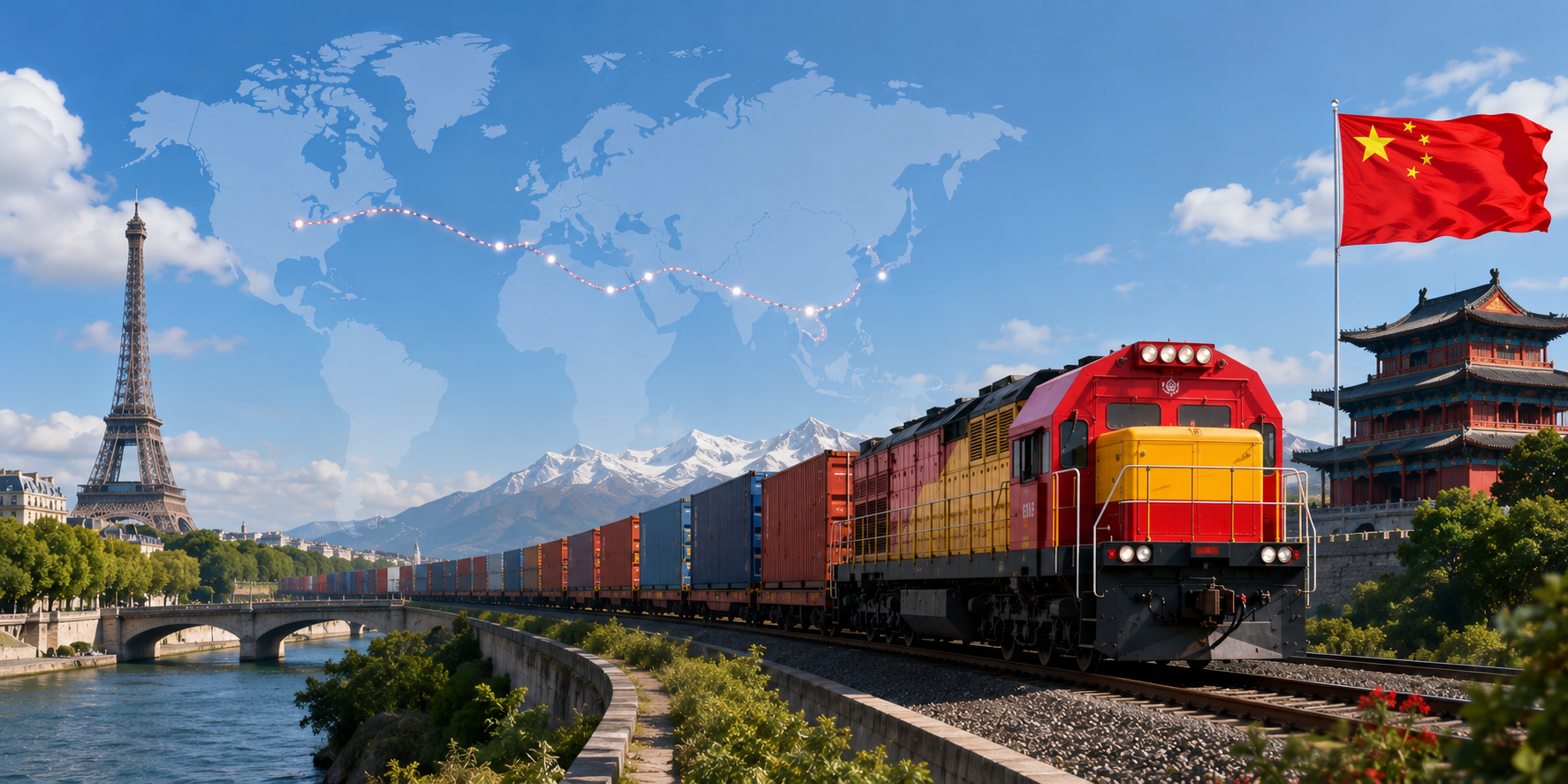
Rail freight from China to France
It is referred to as the "Iron Silk Road"—is an alternative modality balancing cost efficiency and transit times compared to sea and air freight. This route connects East and West economies through countries such as Russia, Germany, and Poland, facilitating the movement of electronics, textiles, and auto parts. While rail freight is eco-friendly and promising for trade, customs clearance can present challenges due to complex regulations and border transitions, which demand thorough logistical planning.
The main train stations in China
Guangzhou South Railway Station
Zhengzhou International Hub Development and Construction Co., Ltd. Station
Chengdu Railway Station
Chongqing Xi Railway Station
The main train stations in France
Gare de Lyon
Strasbourg-Ville Train Station
Gare de Lille-Europe
Le Havre Train Station
How long does rail freight take from China to France ?
Transit times for rail freight from China to France depend on multiple factors, including customs procedures and the type of goods being shipped. Typically, shipments take approximately 16-20 days. To assist your planning, we’ve curated a list of rail networks connecting the two countries, complete with departure schedules and estimated durations. Keep in mind that these timelines are approximate; real-world variables may result in delays.
Departure Route | Destination | Estimated Transit Time |
Zhengzhou | Hamburg, Germany | 15–17 days |
Zhengzhou | Munich, Germany | 17–18 days |
Zhengzhou | Liège, Belgium / Milan, Italy | 20 days |
Chongqing | Duisburg, Germany | 16–17 days |
Yiwu | Hamburg, Germany | 16–18 days |
Yiwu | Duisburg, Germany | 16–18 days |
Yiwu | Madrid, Spain | 20 days |
Wuhan | Hamburg, Germany | 17–19 days |
Wuhan | Duisburg, Germany | 17–19 days |
Chengdu | Tilburg, Netherlands | 18 days |
Suzhou | Hamburg, Germany | 18–20 days |
Suzhou | Duisburg, Germany | 18–20 days |
Xian | Duisburg, Germany | 18–20 days |
Advantages of rail transport from China to France
Rail transport offers compelling benefits for trade from China to France. It’s the perfect middle ground between cost and time efficiency—faster than ocean freight yet far cheaper than air transport. While sea freight can take up to 45 days and air freight might triple costs, rail shipments arrive within 14-16 days, offering a balanced solution. This is particularly advantageous for products where cost-effectiveness is key but timing can’t be compromised. For businesses looking to optimize expenses without sacrificing delivery speed, rail freight strikes an ideal balance.
How much does shipping goods by train from China to France cost?
Predicting the cost of rail freight isn’t straightforward since it depends on variables like weight, volume, and type of goods being transported. Pricing is tailored based on individual requirements. Our experts carefully assess your business needs to provide customized quotes that offer maximum value along with competitive rates, ensuring your shipment achieves both cost-effectiveness and efficiency.
Door-to-Door Shipping from China to France
Door-to-door shipping services provide a stress-free way of transporting goods from China to France. By handling all logistics from origin to destination—including customs clearance—this method eliminates complexity and saves time. Ideal for businesses needing convenience and reliability, door-to-door shipping minimizes hassles across global trade channels.
The Basics of Door-to-Door Shipping
Shipping goods via door-to-door services from China to France streamlines logistics significantly. This end-to-end solution handles autonomous management of transit-related challenges, from customs compliance to final delivery. Although slightly more expensive, its convenience often outweighs higher costs—a factor contributing to its popularity among GB FREIGHT clients. However, extended delivery times due to multiple handling points could be a trade-off worth considering based on your company’s goals and priorities. For businesses looking to reduce logistical headaches while ensuring safe transport, door-to-door services serve as an effective option for navigating global trade seamlessly.
Why choose a Door-to-Door service from China to France?
Effortless Logistics: From the bustling streets of China to the charming corners of France, every step of your shipment is managed by the service provider. No more juggling between multiple transport companies; just smooth, hassle-free logistics.
On-Time Delivery: When punctuality matters, whether it’s luxury fashion items for a Paris showcase or critical electronic components, Door-to-Door shipping ensures timely delivery. With a streamlined network of trusted carriers, your shipments will always stay on schedule.
Expert Handling: Shipping delicate or complex cargo? Leave it to the professionals. This service offers specialized handling to guarantee your goods arrive in perfect condition. Say goodbye to cargo-related worries and focus on your business instead!
Ultimate Convenience: Customs clearance? Paperwork? Freight pick-up and drop-off? Consider it all handled. Door-to-Door services take care of every detail, moving your goods seamlessly from your warehouse in China to their final stop in France.
Transparent Pricing: Say goodbye to unclear fees or surprise charges. With a single, straightforward price covering the entire process, you can count on transparency from start to finish.
In summary, Door-to-Door shipping acts as your personal logistics concierge, offering reliable delivery, exceptional care, unmatched convenience, and clear pricing.
GB FREIGHT – Specialists in Door-to-Door Shipping
Simplify your shipments with GB FREIGHT’s comprehensive Door-to-Door service. We handle everything from packing to customs and delivery, whether via air, sea, or land transport. With a dedicated Account Executive by your side, we’re here to provide tailored advice and flawless execution for all your shipping needs. Contact GB FREIGHT today for stress-free shipping!


