
 |


| Quantity: | |
|---|---|
GERMANY
Freight Shipping from China to GERMANY
When arranging freight shipping from China to Germany, even small mistakes at the origin can lead to delays at the destination. These issues can affect your transit time, cargo handling, and overall shipping efficiency.
If you need professional support, GB FREIGHT can manage the entire shipping process for you, from supplier pickup in China to final delivery in Germany.
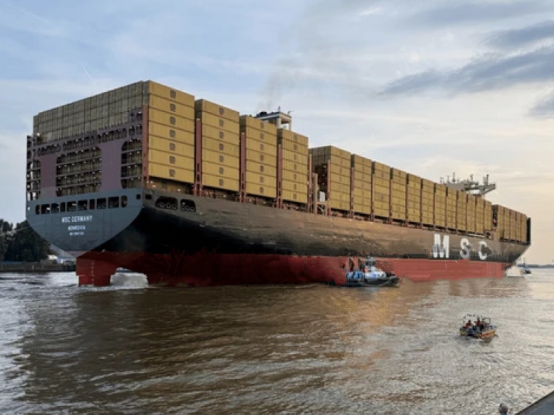
Sea freight from China to Germany
Sea freight from China to Germany is a vital link in the robust trade relationship shared by these two industrial powerhouses. Acting as the backbone of their import-export activities, it connects major ports such as Shanghai and Hamburg. While sea freight may not be the swiftest mode of transport, it proves indispensable for moving large volumes of goods efficiently and cost-effectively.
The Main Shipping Ports in China
Port of Shanghai
Situated at the mouth of the Yangtze River in Shanghai, this port is a cornerstone for the thriving eastern provinces, handling 43.3 million TEUs annually. It has been the world’s busiest container port since 2010, thanks to its extensive Yangshan Deep-Water Port and strong global connectivity. With key trading links to the United States, Europe, and ASEAN nations, the port is ideal for accessing eastern China’s consumer markets and ensuring seamless international shipping operations.
Port of Ningbo-Zhoushan
Located in Zhejiang province, this port supports the region’s dynamic manufacturing sectors by handling 27.5 million TEUs. As one of the largest bulk cargo ports globally and positioned within the Zhejiang Free Trade Zone, it is an essential hub for bulk commodity trade. Its primary trading partners include the United States, Japan, and South Korea. Businesses dealing in bulk goods or seeking efficient regional logistics can benefit significantly from Ningbo-Zhoushan's specialized infrastructure.
Port of Shenzhen
Stretching along Shenzhen’s coastline in Guangdong province, the Port of Shenzhen serves as a vital gateway for the dense industrial areas of the Pearl River Delta, processing 25.2 million TEUs annually. With key trading relations to ASEAN countries, the United States, and Europe, it is rapidly growing as a central node in China’s Belt and Road Initiative. For operations requiring fast turnaround times and extensive connectivity, this port offers an ideal solution within China’s bustling industrial heartland.
Port of Guangzhou
Nestled on the Pearl River in southern China, the Port of Guangzhou handles 21.9 million TEUs and plays a pivotal role in the Guangdong Free Trade Zone. Trading links to Australia, the U.S., and ASEAN countries make it essential for reaching affluent southern markets. Serving as a comprehensive hub, Guangzhou offers businesses a strategic advantage for logistics targeting southern China's bustling economy.
Port of Qingdao
Located on the Yellow Sea in Shandong province, this port processes 18.3 million TEUs annually and provides cutting-edge deep-water facilities for maximum efficiency. It specializes in handling refrigerated goods and hazardous materials while maintaining prominent trade ties with the U.S., ASEAN countries, and Australia. Businesses focusing on specialized cargo can leverage Qingdao’s expertise and reliable infrastructure to optimize their shipping plans.
Port of Tianjin
At the junction of the Grand Canal and Haihe River, the Port of Tianjin plays a critical role in northern China’s logistics, managing 16 million TEUs annually. As Beijing’s maritime gateway, it holds strategic importance with links to major trading partners like the EU, ASEAN countries, and the U.S. Ideal for businesses targeting northern markets or requiring integrated rail and road connections, Tianjin operates as a key logistics hub with extensive domestic and international reach.
The Main Shipping Ports in Germany
Port of Hamburg
Situated in the Hamburg-Mitte quarter, the Port of Hamburg serves as a vital gateway to central and eastern Europe. It processes over 8.7 million TEUs annually, making it one of the busiest ports in the region.
Major trading partners include China, the USA, and Russia, highlighting its global significance. Equipped with advanced facilities, the port handles a diverse range of cargo, including containers, bulk goods, and break-bulk shipments.
For businesses targeting European markets, the Port of Hamburg offers extensive hinterland connections and flexible cargo handling solutions, making it an integral part of efficient shipping strategies.
Bremerhaven Port
Located in the city of Bremerhaven, this port is one of Europe’s largest automobile hubs, managing around 5.1 million TEUs annually.
The port facilitates trade with key markets like the US, South America, and Russia. Its proximity to North Sea shipping lanes provides a strategic edge for transatlantic operations.
For companies in the automotive sector or those trading with North America, Bremerhaven Port’s specialization and strategic location can significantly improve logistical efficiency.
Rostock Port
Found in northeastern Germany, Rostock Port is a multi-modal hub that handles roughly 2 million TEUs per year.
Its primary trading partners include Scandinavian and Baltic nations, along with Russia. Thanks to its access to the Baltic Sea, the port plays a central role in regional commerce.
Businesses targeting Scandinavian, Baltic, or Russian markets may find Rostock Port advantageous due to its strong regional connectivity and versatile transport capabilities.
Port of Wilhelmshaven
Situated at the Jade Bight along the North Sea, Wilhelmshaven is Germany’s foremost deep-water port with an annual capacity of approximately 2.7 million TEUs.
The port serves several Asian nations, particularly China. Its ability to accommodate ultra-large vessels makes it a critical asset in European maritime logistics.
Companies managing high-volume freight or focusing on Asian markets will benefit from Wilhelmshaven’s deep-water facilities and robust handling capacity designed for large ships.
Port of Kiel
Based in Schleswig-Holstein’s capital, the Port of Kiel specializes in passenger and cargo services, handling about 7.5 million tons of freight annually.
With strong trade links to the Baltic nations, Russia, and Scandinavian countries, Kiel serves as a key hub for northern European commerce.
Businesses dealing in high-value or fast-moving consumer goods destined for northern Europe will find the Port of Kiel highly efficient, thanks to its reliable RoRo and passenger services.
Port of Lübeck
Located in Schleswig-Holstein, the Port of Lübeck is a key roll-on-roll-off (RoRo) port with annual freight traffic exceeding 26 million tons.
Sweden and Finland are essential partners. The port's strategic location serves as a gateway to the Baltic region for northern Europe.
Companies frequently shipping vehicles, machinery, or other RoRo cargo to Scandinavian or Baltic countries can optimize operations using Lübeck's specialized facilities tailored to such transport needs.
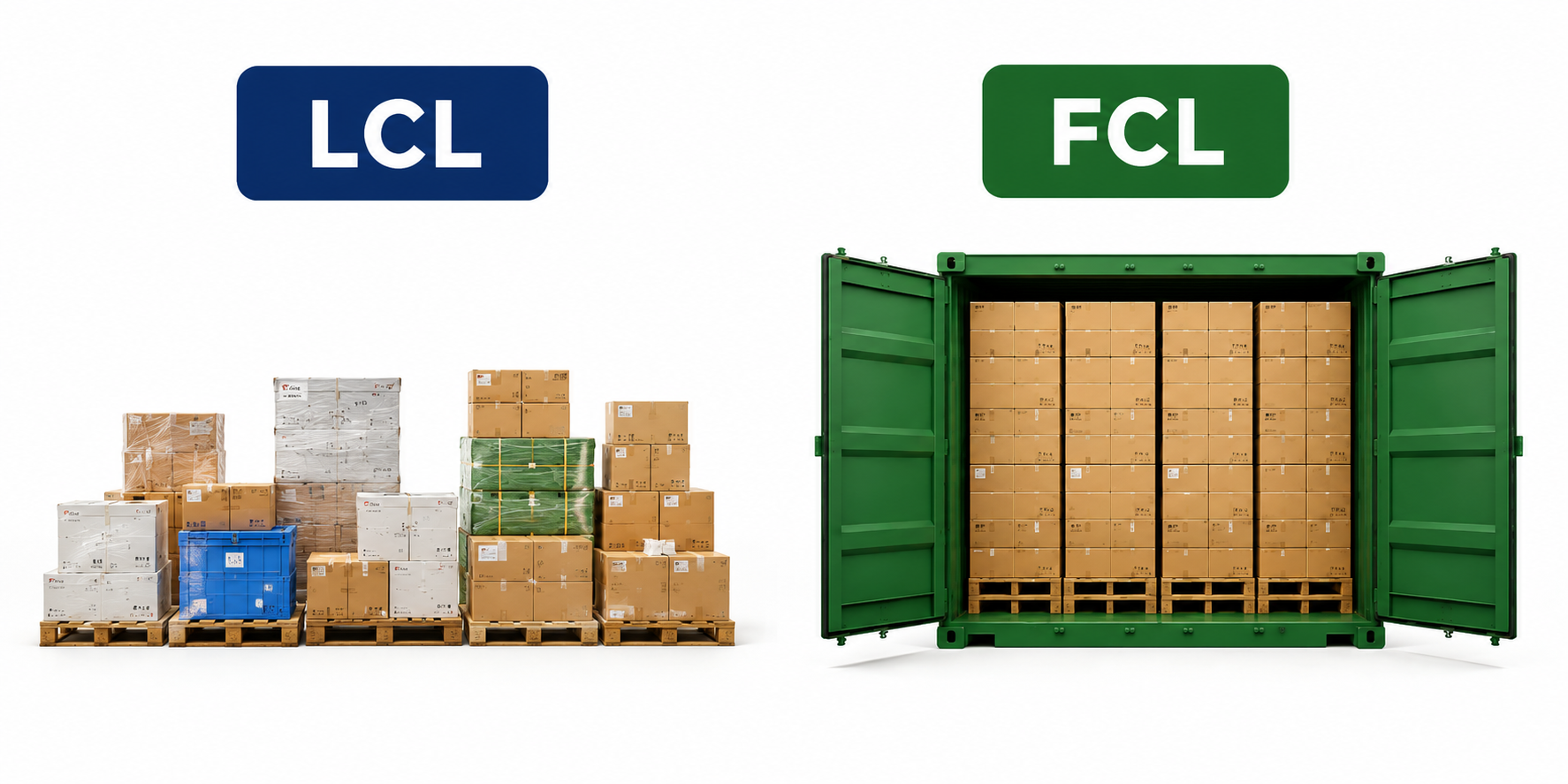
Should you choose FCL or LCL for shipping from China to Germany?
When it comes to sea freight between these two countries, you have two primary options: Full Container Load (FCL) or Less than Container Load (LCL). The decision largely depends on your business’s specific shipping needs, as it can significantly impact costs, delivery timelines, and the overall success of your logistical operations. Understanding the nuances of FCL and LCL is key to making an informed choice—it’s both a strategic and practical decision. Below, we offer insights to help you differentiate between the two and determine which option aligns best with your requirements, helping you save time, reduce expenses, and ensure a hassle-free shipping process.
LCL: Less than Container Load
Definition: LCL, or Less than Container Load, is a shipping method where cargo from multiple shippers is consolidated into a single container. This approach provides a cost-effective solution for businesses that don’t have enough goods to fill an entire container on their own.
LCL shipping is ideal for shipments occupying less than 13–15 cubic meters (CBM). It offers flexibility for smaller shipments, eliminating the need to wait until you have enough cargo to fill a 20 or 40-foot container.
Example: Imagine you’re a retailer in Germany importing custom furniture from various small manufacturers in China. Each supplier contributes only a small quantity—perhaps one or two CBM. Instead of delaying shipments or covering the expense of an unfilled container, opting for LCL services enables you to maintain your supply chain efficiently and cost-effectively.
Although the per-CBM rate for LCL may appear higher compared to FCL (Full Container Load), the overall cost is usually lower due to shared container space. However, it’s important to factor in additional fees, as LCL involves more handling activities, which may result in extra customs, terminal, transport, and clearance charges. Weigh these aspects carefully when choosing your shipping method.
FCL: Full Container Load
Definition: Full Container Load (FCL) shipping is a method of transporting large volumes of goods where one container is used exclusively for a single consignee. In FCL shipping, you reserve either a 20’ft container or a 40’ft container for your cargo only.
FCL shipping is most cost-effective and safe when the cargo size is more than 13/14/15 CBM. As you’d have exclusive use of the FCL container, it remains sealed from origin to destination, providing high security for your goods.
Example: Consider Firm A that exports machinery parts from China to Germany. Their goods fill at least half a container. In this case, opting for FCL and getting an FCL shipping quote would be smart. It would ensure their goods are safely sealed away, reducing the risk of damage during transit.
Although the upfront cost of FCL may be higher than Less Container Load (LCL), it proves to be cheaper, as you’re shipping in high volume. You’re paying for the whole container, irrespective of whether it’s filled completely or not. Keep in mind that a 20’ft container can carry about 25-28 CBM and a 40’ft container can load 55-60 CBM.
How Long Does Sea Freight Take from China to Germany?
Shipping goods from China to Germany via sea freight usually takes an average of 30-40 days. These transit times can fluctuate depending on factors like the specific ports of origin and destination, the weight and nature of the goods being transported. For a tailored quote designed to meet your business’ specific needs, reaching out to a freight forwarder like GB FREIGHT would be an excellent step forward.
China Ports | Germany Ports | Average Transit Time |
Port of Shanghai | Port of Hamburg | 48 days |
Port of Ningbo | Port of Bremen | 46 days |
Port of Shenzhen | Port of Wilhelmshaven | 36-48 days |
Port of Guangzhou | Port of Rostock | 36-43 days |
These times represent general averages and may vary due to various factors. For a more accurate estimate, it’s recommended to request a customized quote.
How much does it cost to ship a container from China to Germany?
Understanding the cost of shipping a container from China to Germany is a crucial aspect of logistics planning. However, due to several influencing factors like the point of loading, destination, type of goods, carrier choice, and market fluctuations, determining an exact ocean freight rate can be quite complex. Shipping costs per cubic meter (CBM) may vary significantly, making it difficult to accurately predict expenses. Nevertheless, our dedicated shipping specialists are here to help. They assess each case individually to provide you with the most competitive and tailored rates based on your specific shipping requirements.
Specialized Transportation Services
Out of Gauge (OOG) Container
An Out of Gauge container is a specialized shipping solution designed for cargo that exceeds standard container dimensions in length, height, or width.
Suitable for: Items with non-standard shapes or oversized equipment, such as machinery, vehicles, construction materials, or large pre-assembled parts.
Examples: For instance, a yacht that surpasses the size of standard containers requires Out of Gauge cargo options for safe transportation.
Why choose this option: If your shipment doesn’t conform to typical container sizes, OOG containers provide a secure and reliable solution to transport non-standard items between China and Germany.
Break Bulk
Break bulk refers to individual items of cargo that are packed separately and loaded directly onto the vessel without using containers.
Suitable for: Best for heavy or voluminous cargo that cannot fit inside standard containers.
Examples: Large industrial machinery, construction steel, or oversized generators are ideal candidates for break bulk shipping.
Why choose this option: For cargo that is too large for conventional containers, break bulk shipping offers an effective and flexible solution, simplifying the loading and unloading process.
Dry Bulk
Dry bulk involves transporting loose, unpackaged cargo in large quantities, such as grains, coal, or minerals.
Suitable for: Perfect for materials like grain, gravel, or other bulk commodities that can be easily loaded and unloaded in large volumes.
Examples: Businesses shipping significant amounts of coal or grain from China to Germany would benefit from dry bulk solutions.
Why choose this option: If your shipment consists of large quantities of raw materials or loose cargo, dry bulk offers a cost-effective and efficient mode of transportation.
Roll-on/Roll-off (Ro-Ro)
The Roll-on/Roll-off method (Ro-Ro) involves rolling cargo onto specialized vessels on wheels or via platform vehicles.
Suitable for: Ideal for vehicles or machinery that are designed to move on wheels, such as cars, trucks, trailers, and rail cars.
Examples: Auto manufacturers shipping new vehicles from Germany to China often use the Ro-Ro method for its simplicity and efficiency.
Why choose this option: Ro-Ro shipping eliminates the need for complicated loading and unloading procedures by enabling vehicles or machinery to be driven on and off the vessel with ease.
Reefer Containers
Reefer containers are temperature-controlled containers designed for the transportation of perishable goods that require refrigeration during transit.
Suitable for: Ideal for temperature-sensitive goods like meats, seafood, dairy products, fruits, and vegetables.
Examples: A company exporting German dairy products to China would benefit from reefer containers to keep their goods fresh during transport.
Why choose this option: For perishable items requiring specific temperature maintenance to ensure freshness upon arrival, reefer containers are essential for protecting your products during long-distance shipping from China to Germany.
For all your shipping needs from China to Germany, GB FREIGHT offers a range of tailored solutions to meet your shipping requirements. Contact us today for a free shipping quote for your business.
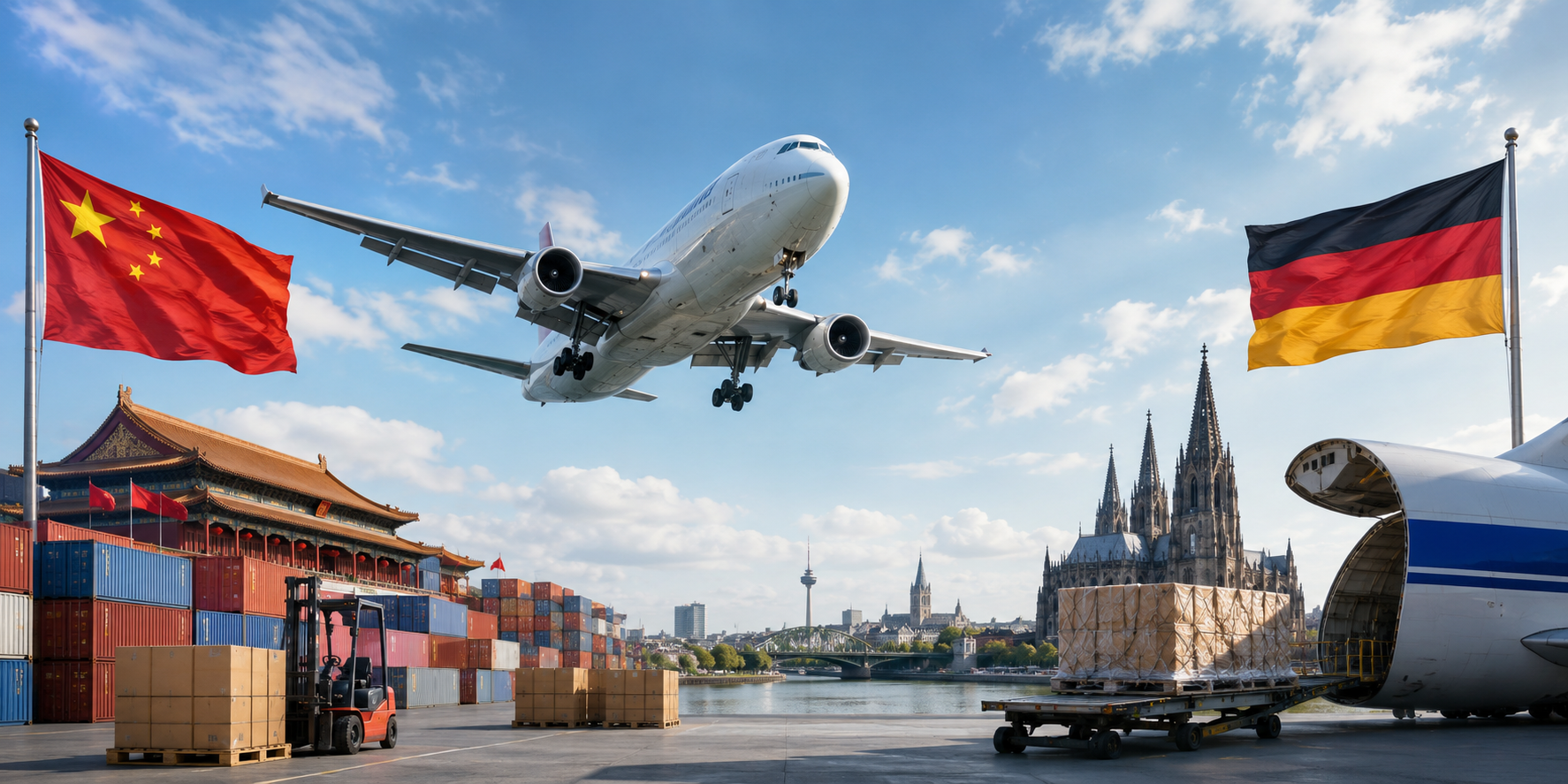
Air Freight from China to Germany
Air Freight is suitable for high-value goods such as electronics and luxury items. Known for its speed and reliability, this route is particularly cost-efficient for smaller, premium shipments. However, many shippers encounter turbulence due to common misconceptions along the way.
One frequent error involves miscalculating the cost of goods, akin to packing a suitcase without knowing its weight. Accurate weight calculations using proper formulas are essential to avoid unexpected expenses. Similarly, overlooking best practices can inflate costs quicker than a jet climbing at full throttle.
Should I choose Air Freight from China to Germany?
Air cargo is a dependable and efficient option for transporting goods from China to Germany. Leading carriers such as Air China and Lufthansa offer services with fixed schedules that guarantee reliability, although this might sometimes mean extended transit times. For shipments weighing around 100 to 150 kg or 220 to 330 lbs, air cargo becomes a particularly appealing choice. However, regardless of the weight of your shipment, evaluating both your budget and delivery deadlines is crucial in making the right decision. Additional details can be found on the official websites of Air China and Lufthansa.
The Main international airports in China
Airport | Code | Advantages |
Baiyun International Airport | CAN | Major air freight hub serving Southern China and international cargo routes |
Pudong International Airport | PVG | One of the world’s busiest cargo airports with extensive global connections |
Beijing Capital International Airport | PEK | Important international cargo gateway with strong worldwide flight coverage |
Shenzhen Bao’an International Airport | SZX | Key logistics hub for electronics, e-commerce, and export cargo shipments |
Chengdu Shuangliu International Airport | CTU | Strategic airport connecting Western China with global air freight networks |
The Main international airports in Germany
Airport | Code | Advantages |
Frankfurt Airport | FRA | Germany’s largest cargo airport with extensive international freight connections |
Munich Airport | MUC | Major international hub offering efficient cargo handling and global flight routes |
Cologne Bonn Airport | CGN | Important European cargo hub with strong express and e-commerce freight operations |
Hamburg Airport | HAM | Key logistics gateway serving Northern Germany and international cargo markets |
Leipzig/Halle Airport | LEJ | One of Europe’s leading air cargo hubs with strong overnight and express freight capacity |
How long does air freight take from China to Germany?
Air freight from China to Germany typically takes around 3-5 days. However, this duration can vary based on factors such as the departure and destination airports, the cargo's weight, and the type of goods being shipped. These variables can influence the total transit time.
How much does it cost to ship a parcel from China to Germany with air freight?
The cost of shipping a parcel via air freight from China to Germany typically ranges from $3 to $8 per kilogram. This variation depends on factors such as the distance to and from airports, the dimensions and weight of the parcel, and the nature of the goods being shipped, making precise cost estimation challenging. However, our team is here to provide customized, competitive quotes tailored specifically to your needs. Get in touch with us, and get a free quote to help you secure the best possible rates.
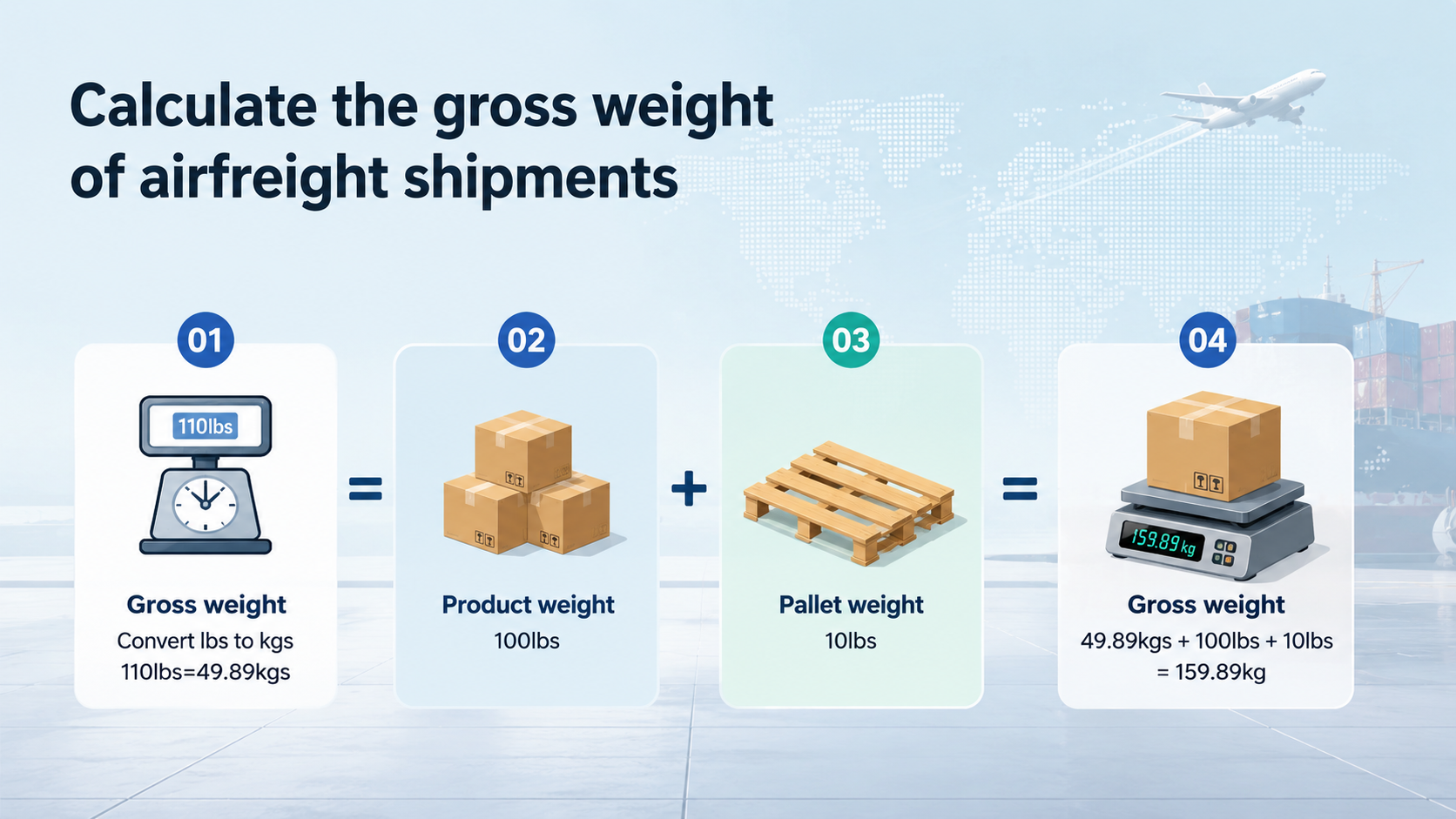
What is the difference between volumetric and gross weight?
Gross weight is the actual weight of your shipment, including all packaging materials and pallets. On the other hand, volumetric weight, also referred to as dimensional weight, is a metric used to assess the package's density and space occupied.
For air cargo, volumetric weight is calculated by multiplying the package's dimensions (length × width × height in centimeters) and dividing the result by a standard divisor of 6000. With express air freight services, the typical divisor used is 5000. For instance, consider a parcel with dimensions of 40 cm × 30 cm × 20 cm and a gross weight of 8 kg (approximately 18 lbs). For air cargo, its volumetric weight would be calculated as (20 × 30 × 40) ÷ 6000 = 4 kg (or 9 lbs).
For express air freight, the volumetric weight would be (20 × 30 × 40) ÷ 5000 = 4.8 kg (around 11 lbs)
This distinction matters because shipping charges rely on whichever measurement is higher—the gross weight or the volumetric weight. In this example, for both air cargo and express air freight services, costs would be based on the gross weight of 8 kg, as it surpasses the computed volumetric weight. Understanding these calculations helps in accurately estimate your shipping expenses and optimizing logistical processes.
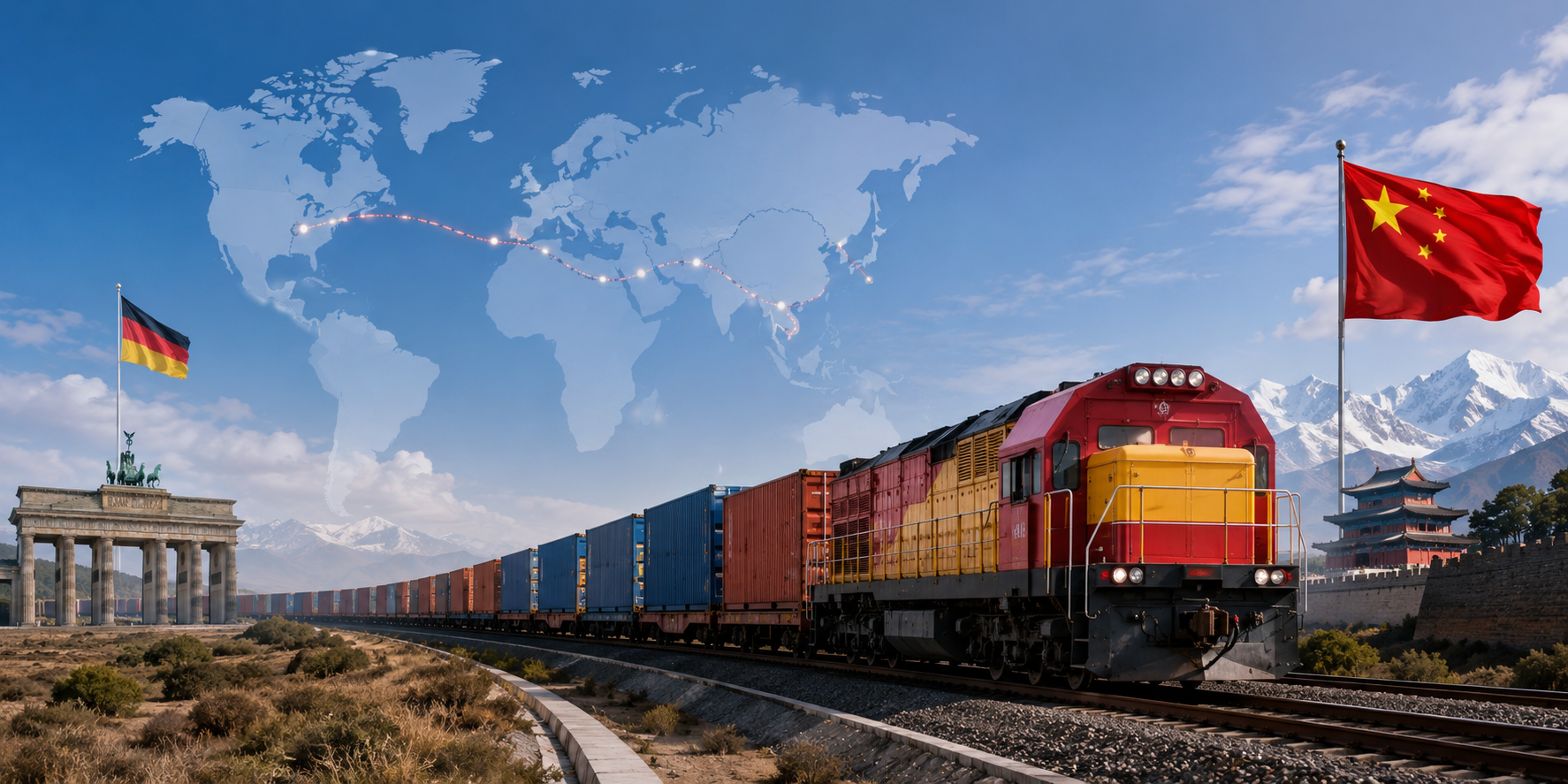
Rail freight from China to Germany
Since around 2008, a transformative rail freight connection has linked China and Germany, forging an economic bridge that spans Asia and Europe. This robust rail line transports a wide array of goods, including electronics and automotive parts, boosting economies from Kazakhstan to Poland along the way.
China and Germany's rail collaboration has flourished, forming a partnership as dependable as a high-speed locomotive. Although rail freight typically takes longer than air transport, it’s significantly more cost-effective.
The main train stations in China
Zhengzhou International Land Port Development and Construction Co.
Yiwu Railway Station
Chongqing Xiyong Integrated Free Trade Zone
Shenyang China-Europe Railway Terminal
The main train stations in Germany
Duisburg Intermodal Terminal
Leipzig/Halle Airport Cargo Center
Maschen Rail Freight Centre
Munich Riem Marshalling Yard
How long does rail freight take from China to Germany?
Transit times for rail freight from China to Germany vary due to factors such as customs clearance, weather conditions, and cargo types. On average, shipments typically take 15 to 20 days.
Departure Route | Destination | Estimated Transit Time |
Zhengzhou | Hamburg, Germany | 15–17 days |
Zhengzhou | Munich, Germany | 17–18 days |
Zhengzhou | Liège, Belgium / Milan, Italy | 20 days |
Chongqing | Duisburg, Germany | 16–17 days |
Yiwu | Hamburg, Germany | 16–18 days |
Yiwu | Duisburg, Germany | 16–18 days |
Yiwu | Madrid, Spain | 20 days |
Wuhan | Hamburg, Germany | 17–19 days |
Wuhan | Duisburg, Germany | 17–19 days |
Chengdu | Tilburg, Netherlands | 18 days |
Suzhou | Hamburg, Germany | 18–20 days |
Suzhou | Duisburg, Germany | 18–20 days |
Xi'an | Duisburg, Germany | 18–20 days |
Advantages of rail transport from China to Germany
If you're shipping electronic components that are too fragile for sea freight or too expensive to transport by air, rail provides an optimal alternative. Utilizing the New Silk Road routes, your cargo can be delivered in as little as 14-20 days, significantly faster than the 30-50 days often required for sea transport. Additionally, rail is up to 60% cheaper than air freight, making it an attractive option for shipping larger quantities. Amid rising costs in global logistics, including air and sea freight, rail has emerged as a dependable and economical choice. Its lower carbon emissions also align with growing sustainability goals, offering an eco-friendly solution without compromising efficiency. Combining speed, affordability, and environmental benefits, rail freight could perfectly match the logistics needs of your business.
How much does shipping goods by train From China to Germany cost?
Calculating the cost of rail freight From China to Germany involves considering several factors, such as the type of goods being shipped, the urgency of delivery, and fluctuating rail fees.
While it’s difficult to provide a standardized price upfront due to these variables, our team specializes in crafting customized shipping solutions tailored to your specific requirements. We ensure transparency while offering competitive rates designed to meet your needs. Contact us now for details and let us take care of your cargo with expertise and reliability.
Door-to-door shipping from China to Germany
Think of door-to-door shipping as the ultimate global delivery, like getting a burger delivered straight to your doorstep but on an international scale. From bustling factories in China to your delivery address in Germany, this service streamlines the entire logistical process.
Door-to-Door Shipping
Managing complex international logistics from China to Germany can feel overwhelming, but door-to-door shipping simplifies everything. This all-encompassing service handles every detail from pick-up to final delivery, easing the burden of paperwork, customs duties, and potential headaches. While it may come at a slightly higher cost and require a bit of patience, the convenience it offers far outweighs these drawbacks. It’s no wonder GB FREIGHT’s clientele consistently choose this solution—it’s reliable, straightforward, and as easy as answering a doorbell.
Why Choose Door-to-Door Shipping from China to Germany?
Eliminate Stress: Your business should focus on its strengths, not navigating the intricacies of international shipping. Door-to-door services take on the complicated logistics, freeing you up to concentrate on what truly matters—scaling your business.
Timely Deliveries: When time is of the essence, this service ensures your shipments arrive punctually by coordinating closely with all transport parties. It’s ideal for urgent deliveries where every second counts.
Specialized Expertise for Complex Cargo: Not all shipments are created equal—delicate or specialized cargo demands extra care. Door-to-door services are equipped to manage these challenges with precision, ensuring your goods are handled properly from start to finish.
Unparalleled Convenience: With a team managing every aspect of the shipping process—even the intricate on-ground logistics—you can sit back and relax with your favorite cup of coffee while they handle the heavy lifting.
Comprehensive Delivery Solutions: No matter where your goods are headed in Germany, door-to-door services take them exactly where they need to be. You won’t be left puzzling over how to transport shipments from a port or airport to their final destination.
In conclusion, Door-to-Door Shipping takes away your logistics headaches and make it more simplify to your logistics process.
GB FREIGHT, Your Door-to-Door Expert for Shipping from China to Germany
Shipping with GB FREIGHT, your trusted partner for managing the entire journey of your goods from China to Germany. We handle every detail from start to finish, including packing, transportation, customs clearance, and beyond, offering tailored solutions for all your shipping requirements. Contact us today for a free quote and take a expert consultancy for free.


