
 |


| Quantity: | |
|---|---|
Hungary
Freight Shipping From China to Hungary
Underestimating transit time variability or overlooking customs documentation can quickly disrupt your entire supply chain when shipping from China to Hungary. While this route may seem simple on a map, the reality involves navigating long-haul sea routes, rail networks across Central Europe, and stringent EU import regulations.
If you're evaluating freight options between these two regions, it's essential to focus on the critical decision factors: balancing cost versus speed, choosing the right port, assessing rail capacity, and understanding how VAT and duties impact your financial flow. This guide provides a clear breakdown of air, sea, rail, and road transport solutions. Whether you want to map out the process yourself or need end-to-end service, we're ready to assist at any stage.
Sea Freight From China to Hungary
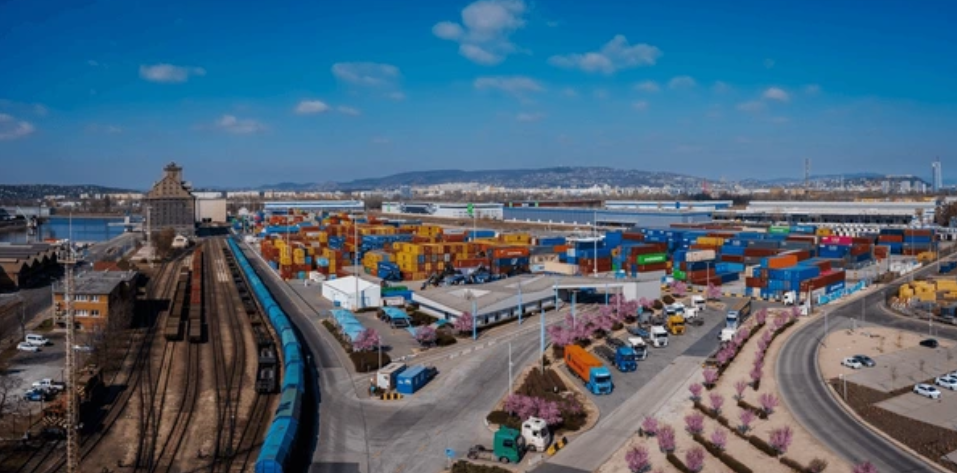
Welcome to the world of ocean shipping from China to Hungary. At the heart of this prosperous trade route lies sea freight, arteries of global commerce that link major industrial hubs like the Port of Huangpu in Guangzhou with Csepel Freeport in Budapest. While sea freight may not be the quickest mode of transport, it remains a favored choice, offering a cost-effective solution for transporting high-volume goods.
However, navigating the complexities of international shipping can feel akin to solving a convoluted puzzle. From selecting the right Incoterms to managing the intricate process of customs clearance, businesses often find themselves facing unforeseen challenges. Mistakes can be expensive, but rest assured, there’s guidance available. In this portion of our guide, we shed light on the best practices and key considerations that can transform your shipping experience into a seamless journey. Think of it as your navigation tool, steering you toward streamlined and efficient shipping solutions. Stay tuned for detailed insights that will help you chart a course to success in the vast world of international maritime trade.
Main Shipping Ports in China
Port of Shanghai
Situated in the heart of the Yangtze River Delta, the Port of Shanghai ranks as the busiest port globally, with an impressive annual cargo volume surpassing 40 million TEUs.
This port connects to over 500 ports worldwide, with primary trade routes to the United States, Japan, and South Korea. Its advanced facilities and deep-water harbors enable it to accommodate some of the world’s largest vessels.
For companies and manufacturers handling significant volumes of cargo, the Port of Shanghai offers efficient operations and cutting-edge infrastructure to ensure timely and smooth logistics.
Port of Ningbo-Zhoushan
Located along East China’s Zhejiang Province coastline, this port holds the distinction of being the world leader in cargo tonnage, managing over 1 billion tonnes annually.
With connectivity to more than 600 international ports across roughly 100 countries, this facility plays a pivotal role in global iron ore trade with key partners like Australia and Brazil.
Companies dealing with heavy raw materials such as steel and iron can benefit immensely from the port’s high capacity and efficient handling capabilities.
Port of Shenzhen
Based in Guangdong Province, the Port of Shenzhen is China’s third-largest in terms of container throughput, handling more than 25 million TEUs annually.
The port boasts connections with over 130 international ports and offers the largest number of shipping routes across mainland China, acting as a critical gateway to the Pearl River Delta region.
Enterprises looking for seamless access to South China’s vast consumer market should integrate Shenzhen into their export strategy to capitalize on its unparalleled connectivity.
Port of Guangzhou
Strategically located on the Pearl River, Guangzhou is a versatile multi-purpose port that handles over 20 million TEUs yearly.
This port serves as a vital transit hub for goods bound for Southeast Asia and Europe, with links to more than 300 international ports.
Companies aiming to maximize their reach across domestic and international markets, particularly in Southeast Asia and Europe, will find this port an excellent logistics hub.
Port of Qingdao
Nestled in Shandong Province along the Maritime Silk Road, Qingdao operates at full capacity with approximately 19 million TEUs handled annually.
Its critical trade operations with nations such as the United States, Australia, and Japan position Qingdao as an east-west gateway for global commerce.
Businesses engaging in trade within Asia’s eastern coast or participating in China’s Belt and Road Initiative can leverage Qingdao’s strategic location for expanded trade opportunities.
Port of Tianjin
Found at the upper reaches of the Haihe River, the Port of Tianjin boasts a capacity exceeding 16 million TEUs in recent years.
Functioning as Beijing’s primary maritime gateway, this port facilitates trade relations with more than 600 ports across 180 countries globally.
Enterprises requiring direct entry points to Beijing or northern Chinese provinces can benefit from the efficient access provided by this well-connected port hub.
Main Shipping Ports in Hungary
Port of Csepel
Positioned along the Danube River in Budapest, the Port of Csepel serves as a vital hub for commercial shipping operations in Hungary. It manages significant volumes of cargo, including bulk and general freight, solidifying its role in regional trade.
The port’s strategic location enables efficient trade with countries like Slovakia, Austria, Southern Germany, and Serbia. Its accessibility to key European markets makes it a reliable gateway for intra- and extra-EU commerce.
For companies seeking to expand into major European markets, the Port of Csepel offers both an ideal geographic location and extensive logistics capabilities. Its robust infrastructure supports efficient supply chain operations, providing a competitive edge in navigating European trade networks.
Port of Dunaújváros
Located near Dunaújváros, a prominent industrial city in Hungary, the port plays a critical role in freight movement. It handles substantial volumes of both inbound and outbound cargo, acting as a core transit point.
The port forms strong trading connections with Germany, Austria, Slovakia, and Croatia. Its proximity to Dunaújváros’ industrial zones ensures seamless transfer of goods, making it an essential node in international logistics.
If your company operates within or alongside Hungary’s industrial sectors, the Port of Dunaújváros is a practical choice for meeting shipping demands. Its strategic location near industrial hubs facilitates streamlined operations, boosting efficiency and ensuring reliable delivery timelines.
Port of Baja
Situated in Baja near Hungary’s southern border, this port specializes in managing general and bulk cargo. Its prime location on the Danube River supports a steady flow of trade activity.
The Port of Baja maintains strong trade ties with Germany, Austria, Croatia, and particularly Serbia due to its southern position. It is an integral link along international trade routes, facilitating smooth navigation and transportation across borders.
For enterprises targeting partnerships or market expansion in Southern Europe, the Port of Baja offers strategic advantages. Its connectivity to critical markets and efficient operations make it an attractive option for businesses prioritizing flexibility and regional reach in their logistics strategies.
Should I Choose FCL or LCL for Shipping From China to Hungary?
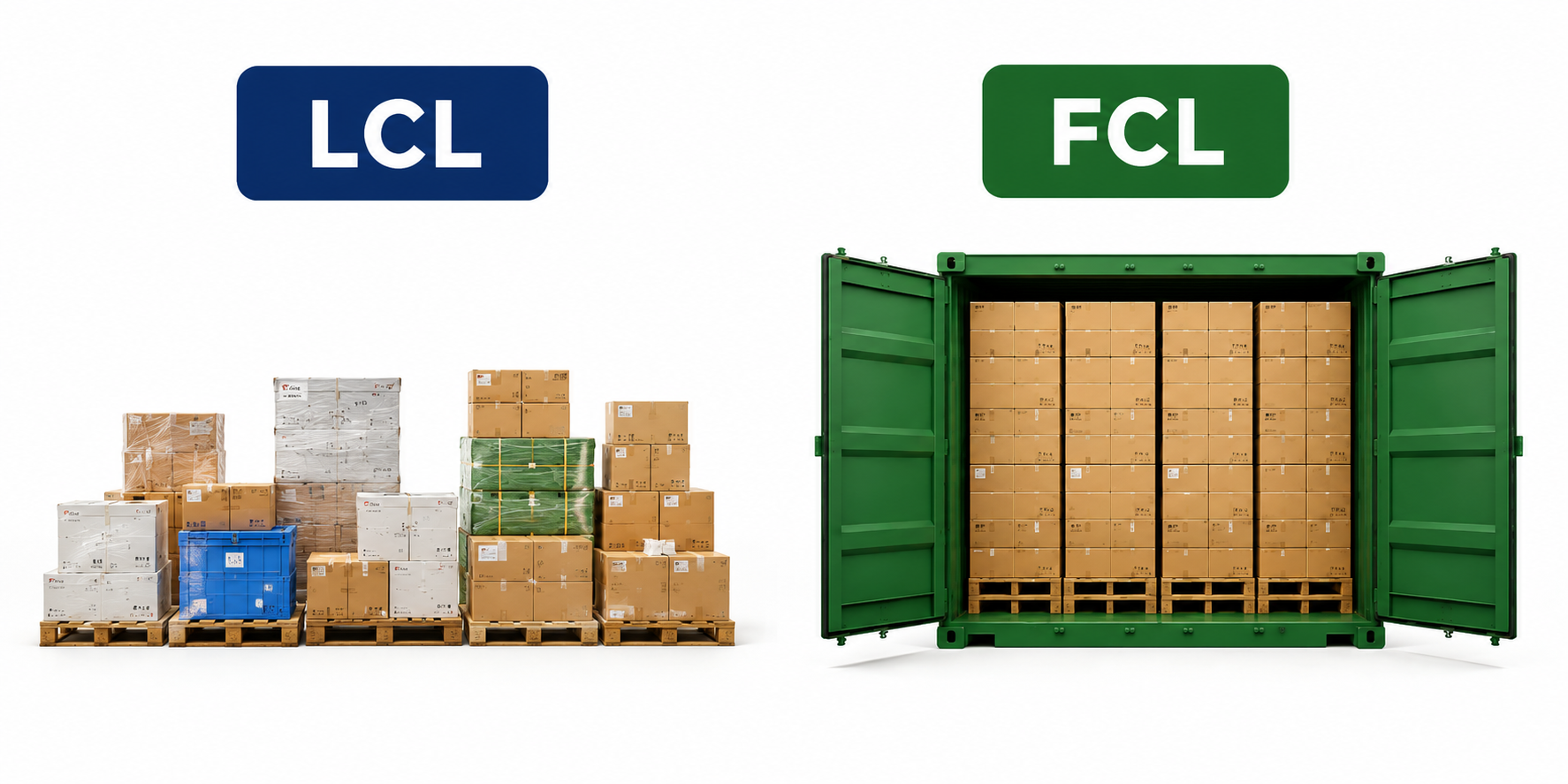
Deciding between Full Container Load (FCL) and Less than Container Load (LCL) for shipping goods from China to Hungary is crucial, as it impacts costs, delivery times, and overall efficiency. Each business has distinct logistics requirements, so it's essential to assess which method best aligns with your needs. Below is a straightforward comparison of these two options to help you make an informed choice.
LCL: Less than Container Load
Definition: LCL allows multiple shippers to share container space, making it a cost-effective option for smaller shipments that don't require a full container.
If your cargo totals less than 13–15 cubic meters (CBM), LCL can be the ideal solution. This approach is particularly suitable for businesses with smaller, frequent shipments.
Example: Consider a boutique furniture retailer in Hungary importing handcrafted items from Shanghai in limited quantities every two months. Opting for LCL would provide a flexible and budget-friendly shipping method without excess inventory concerns.
With LCL, costs are based on the volume or weight of your cargo. While smaller shipments are generally cheaper, additional fees for packing, loading, and delivery may apply. This makes it a good choice for businesses looking to optimize costs in line with demand.
FCL: Full Container Load
Definition: FCL refers to shipping a full container (either 20-foot or 40-foot) exclusively filled with your goods. It offers security since the sealed container stays intact from departure to arrival.
FCL works well for large shipments, typically between 13–15 CBM or more and provides economical shipping for bulk goods.
Example: A toy manufacturer in Guangzhou shipping 15 CBM of toys to Budapest would benefit from using FCL due to reduced per-unit costs and higher security during transit.
The cost is generally offered as a flat rate, making FCL a more economical choice for high-volume shipments. You avoid "per CBM" or "per weight" charges, and overall expenses tend to be competitive when transporting large quantities.
How long does sea freight take from China to Hungary?
The average journey duration via sea freight ranges from 32 to 38 days. Variations depend on factors like ports of origin and destination, cargo type, and weight. To ensure accurate planning, partnering with a reliable freight forwarder like GB FREIGHT, can help you secure tailored transit times and quotes for your shipment.
China Port | Hungary Port | Average Transit Time |
Shanghai | Budapest | 35 days |
Ningbo-Zhoushan | Budapest | 39 days |
Shenzhen | Budapest | 54 days |
Guangzhou | Budapest | 36 days |
**These times represent general averages and may vary due to various factors. For a more accurate estimate, it’s recommended to request a customized quote.
How much does it cost to ship a container from China to Hungary?
Determining exact shipping costs can be complex due to fluctuating ocean freight rates influenced by factors such as origin and destination points, carrier choice, type of goods, and market trends. Broadly speaking, costs might range between $2 to $20 per CBM.
For a precise calculation suited to your unique requirements, consulting experienced shipping professionals is recommended to secure competitive pricing and efficient solutions.
Specialized Transportation Services
Out of Gauge (OOG) Container
OOG containers are tailored for oversized cargo that exceeds the dimensions or weight limit of standard shipping containers. These feature open tops or removable sides to accommodate unconventional loads.
Suitable for: Heavy, oversized goods such as machinery and equipment.
Examples: Construction machinery, large vehicles, oversized industrial equipment.
Why choose this: If you need to transport large machinery or equipment from China to Hungary that doesn't fit into standard containers, OOG containers are a practical solution.
Break Bulk
Break bulk involves transporting cargo as individual units rather than within containers, typically packaged in pallets, bags, barrels, boxes, or drums. Ideal for loads that cannot be containerized due to their size or shape.
Suitable for: Non-containerized cargo, items that are individually marked and counted during shipment.
Examples: Construction equipment, oil/gas materials, wind turbine components, manufacturing, and agricultural goods.
Why choose this: If your shipment consists of irregularly shaped or bulky items, break bulk shipping is an efficient alternative.
Dry Bulk
Dry bulk refers to unprocessed goods shipped in massive quantities, directly loaded into the ship’s hold without specific packaging.
Suitable for:Homogeneous cargo like coal, grain, or minerals transported in large volumes.
Examples: Loose materials such as coal, grain, or minerals unloaded directly into the ship’s hold.
Why choose this: If you handle substantial amounts of uniform cargo like grain or coal, dry bulk shipping provides an economical and streamlined solution.
Roll-on/Roll-off (Ro-Ro)
Ro-Ro shipping is designed for cargo that can be rolled onto and off a vessel under its own power or guided by towing equipment.
Suitable for: Vehicles and wheeled machinery like cars, trucks, trailers, and agricultural equipment.
Examples: Cars, buses, trucks, trailers, tractors, and construction machinery.
Why choose this: When shipping vehicles or other wheeled equipment, Ro-Ro offers an efficient and cost-effective method.
Reefer Containers
Reefer containers are refrigerated units designed for transporting goods that require controlled temperature settings throughout transit.
Suitable for: Temperature-sensitive items and perishable goods.
Examples: Fruits, vegetables, dairy products, pharmaceuticals.
Why choose this: For perishable goods or products requiring specific temperature conditions during shipping from China to Hungary, reefer containers ensure optimal preservation during transit.
At GB FREIGHT, we prioritize your unique shipping requirements by offering customized solutions that cater to your needs. Reach out to us today for a detailed quote to simplify your shipment from China to Hungary.
Air Freight From China to Hungary
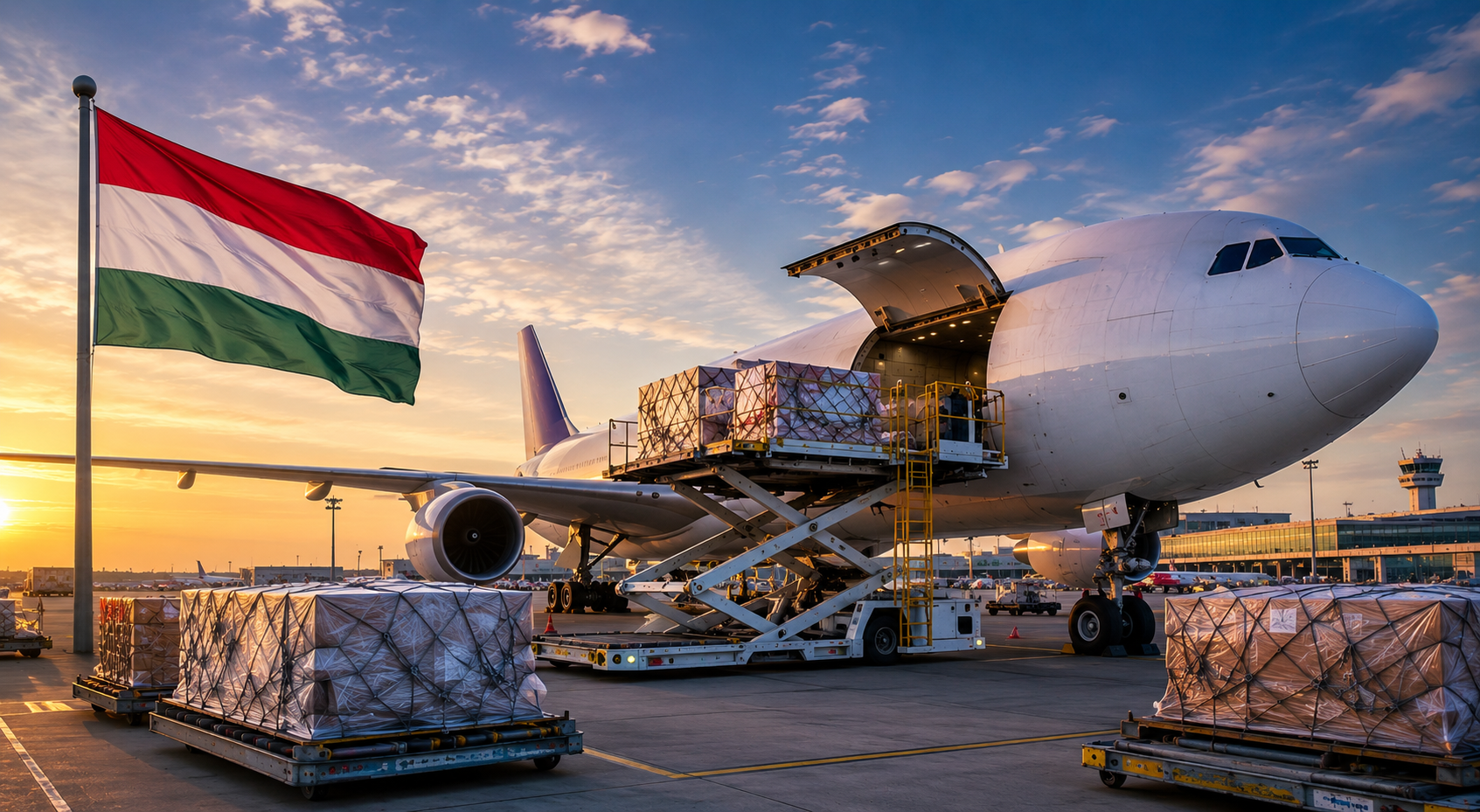
Air freight from China to Hungary is an efficient and reliable option for transporting goods, particularly compact, high-value items such as electronics and designer apparel. If, for example, you operate an express delivery service for luxury fashion brands, air freight ensures swift and secure delivery of your valuable shipments, guaranteeing they reach their destination promptly.
However, speed and reliability are not the only factors to consider when opting for air freight. Many businesses make costly mistakes in their shipping decisions. In this guide, we’ll explore often-overlooked aspects of air freight shipping to help you minimize unnecessary expenses. Navigating the intricacies of air shipping effectively can deliver significant cost savings for your business.
The Main international airports in China
Airport | Code | Advantages |
Beijing Capital International Airport | PEK | Major global cargo hub in China’s capital, ideal for urgent and high-value shipments with advanced cargo facilities and worldwide connections |
Shanghai Pudong International Airport | PVG | China’s busiest cargo airport with one of the world’s largest cargo terminals and extensive global air freight networks |
Guangzhou Baiyun International Airport | CAN | Important South China export hub located near major manufacturing centers and supported by carriers like UPS and FedEx |
Chengdu Shuangliu International Airport | CTU | Strategic gateway for Western China with growing international cargo capacity and strong access to emerging markets |
Shenzhen Bao’an International Airport | SZX | Leading logistics hub for electronics, e-commerce, and high-tech cargo within the Greater Bay Area |
The Main international airports in Hungary
Airport | Code | Advantages |
Budapest Ferenc Liszt International Airport | BUD | Hungary’s largest cargo airport with strong European distribution capabilities and a major DHL regional hub |
Debrecen International Airport | DEB | Alternative cargo gateway for Eastern Europe with less congestion, modern cargo facilities, and efficient road connectivity |
Should I Choose Air Cargo From China to Hungary?
Air cargo presents a cost-effective and dependable option for transporting goods from China to Hungary. Airlines such as Air China Cargo and Cargolux specialize in this route. Air China Cargo offers direct flights, while Cargolux operates an extensive global freight network. Though associated with longer transit times due to fixed schedules, air cargo is particularly advantageous when transporting shipments weighing 100 to 150 kilograms (220 to 330 pounds) or more. With these well-established options, finding a solution tailored to your budget and efficiency needs should be straightforward.
How long does it take to ship air freight from China to Hungary?
Shipping goods by air freight from China to Hungary typically takes 1 to 4 days, depending on factors such as the departure and arrival airports, the weight of the shipment, and the nature of the goods being transported. To obtain an accurate delivery timeline specific to your needs, consulting a professional freight forwarder like GB FREIGHT is recommended.
How much does air freight cost from China to Hungary?
Air freight costs from China to Hungary usually range between $4 and $8 per kilogram. However, precise pricing depends on several factors including the distance between pickup and destination airports, as well as parcel dimensions, weight, and type of goods. For a tailored solution, our experienced team evaluates each case individually to ensure you get the most cost-effective option possible. Ready to ship? Reach out to us today to receive a free quote.
Volumetric Weight vs. Gross Weight
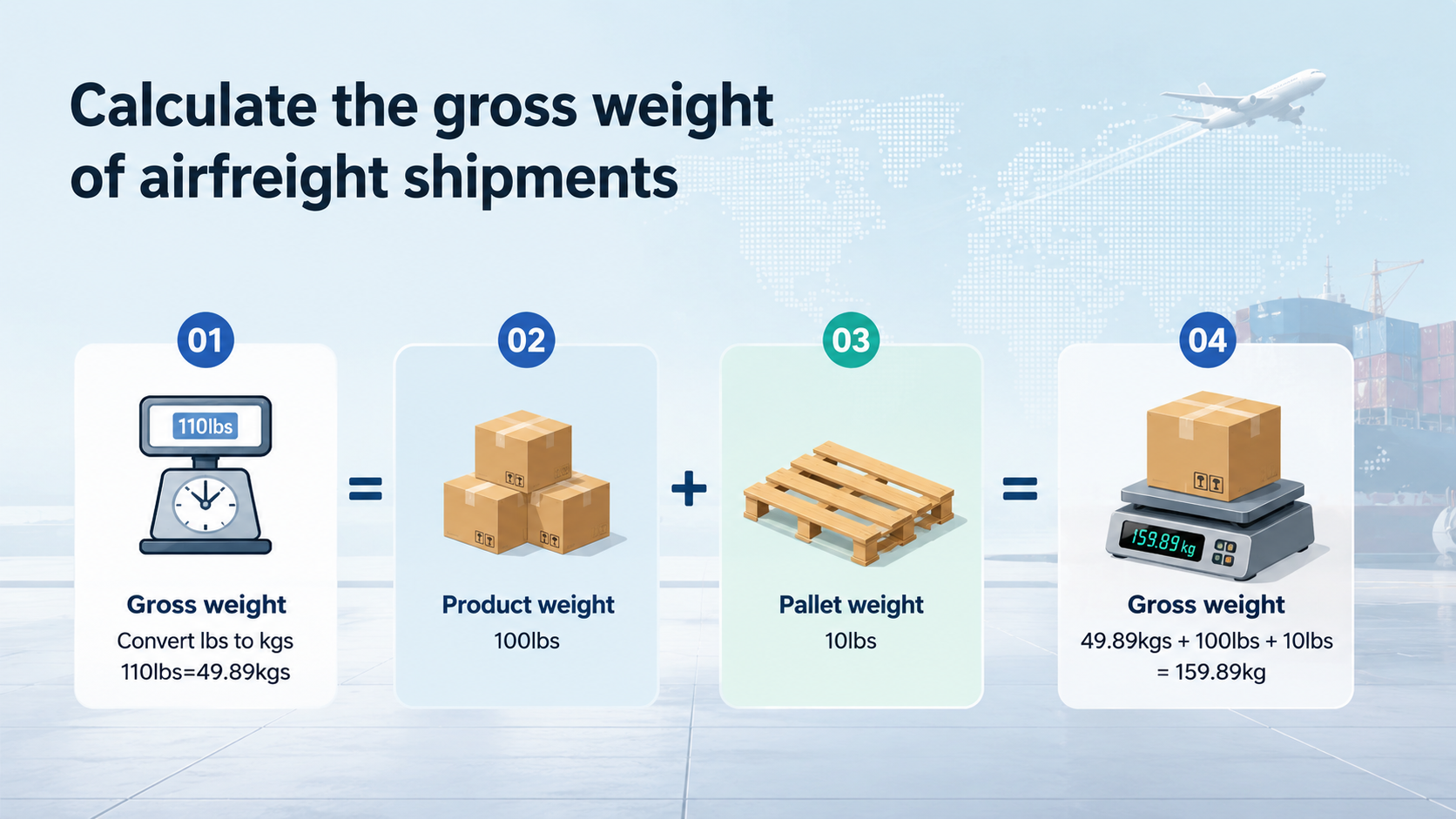
When shipping via air freight, it is essential to understand the difference between volumetric weight and gross weight:
Gross Weight: This is the actual weight of the shipment, including its packaging.
Volumetric Weight: Also called dimensional weight, this measurement considers the package's volume in relation to its weight.
Gross Weight Calculation
Simply weigh your shipment, including all packaging. For example, if the total weight is 25 kilograms (55.12 pounds), that’s your gross weight.
Volumetric Weight Calculation
Air Cargo, use the formula:
*(Length × Width × Height in cm) ÷ 6,000*
Example: A package measuring 50 cm × 40 cm × 30 cm results in:
*(50 × 40 × 30) ÷ 6,000 = 10 kg (22.04 lbs)*.
By understanding these distinctions and accurately calculating the weights, you can plan more cost-efficient shipping strategies for your business needs.

Rail freight From China to Hungary
Did you know that railroads can narrate stories of global connection? Embark on a journey along the Iron Silk Road, the essential rail link established in 2013 between China and Hungary. This vital trade route is more than just a transportation network; it’s a thread stitching together cultures and economies through the movement of goods like raw materials, electronics, and countless other products.
This route meanders through Kazakhstan, Russia, Ukraine, and Slovakia, revealing a vibrant mosaic of markets and trading possibilities. Along the way, strategically placed inspection posts, each with their distinct customs rules, bring both hurdles and opportunities.
However, it’s all about striking a balance. Rail freight offers an economical alternative to air freight, but patience is often required to enjoy this cost efficiency.
The Main Train Stations in China
Shanghai Railway Station
Beijing Railway Station
Wuhan Railway Station
Shenzhen Railway Station
The Main Train Stations in Hungary
Budapest Keleti (Eastern Railway Station)
Budapest Nyugati (Western Railway Station)
Budapest Déli (Southern Railway Station)
Budapest-Kelenföld
How long does rail freight take From China to Hungary?
When transporting goods via rail from China to Hungary, transit time depends on various factors, such as customs clearance and the selected route. On average, shipments take approximately 15-20 days.
Considering the diverse rail networks connecting China and Europe, transit times can vary based on the route and frequency of departures. Keep in mind that these timeframes are typically estimates, as shipping schedules can often be subject to unforeseen delays.
Origin (China) | Destination (Europe) | Transit Time (Approx.) |
Zhengzhou | Hamburg (Germany) | 15–17 days |
Zhengzhou | Munich (Germany) | 17–18 days |
Zhengzhou | Liège (Belgium) / Milan (Italy) | ~20 days |
Chongqing | Duisburg (Germany) | 16–17 days |
Yiwu | Hamburg (Germany) | 16–18 days |
Yiwu | Duisburg (Germany) | 16–18 days |
Yiwu | Madrid (Spain) | ~20 days |
Wuhan | Hamburg (Germany) | 17–19 days |
Wuhan | Duisburg (Germany) | 17–19 days |
Chengdu | Tilburg (Netherlands) | ~18 days |
Suzhou | Hamburg (Germany) | 18–20 days |
Suzhou | Duisburg (Germany) | 18–20 days |
Xi’an | Duisburg (Germany) | 18–20 days |
What are the advantages of rail transport From China to Hungary?
Rail transport strikes an effective middle ground between sea and air freight when moving goods from China to Hungary. It balances cost-effectiveness with speed, making it an excellent choice for businesses that prioritize both savings and timelines. For instance, while sea freight might take 30-40 days, rail freight can significantly reduce this duration to around 18-20 days. This speed can be crucial when meeting tight deadlines without resorting to the higher costs of air shipping.
Moreover, rail transport boasts environmental advantages. Its lower carbon footprint compared to air freight makes it an attractive choice for businesses that value sustainability. By opting for rail freight, companies can achieve an efficient, eco-friendly, and cost-effective method of transporting goods across continents.
How much does shipping goods by train From China to Hungary cost?
Determining the cost of rail freight from China to Hungary is not as straightforward as a flat rate. Pricing depends on factors such as the type of cargo, its weight, shipping deadlines, and even seasonal fluctuations. The good news? Our experienced team will assess these variables to deliver a custom quote tailored to your specific needs. Each case is unique, ensuring you get the best value for your shipping requirements. Interested? Contact us today, and we’ll provide a free quote within 24 hours.
Door-to-Door Shipping From China to Hungary
Engaging in international trade can often prove complex, but Door-to-Door shipping simplifies the process considerably. This all-in-one service includes everything from picking up your goods in China to delivering them directly to their destination in Hungary. No need to coordinate with multiple carriers or manage complicated logistics.
Door-to-Door Shipping
Choosing Door-to-Door shipping from China to Hungary relieves you of much of the stress involved in overseas trade. This seamless service takes charge of every logistical detail—customs clearance, duties to leaving you free to focus on growing your business. While slightly higher costs and occasional delays may occur, this streamlined approach ensures peace of mind.
For businesses navigating the nuanced world of global logistics, Door-to-Door shipping provides confidence and ease by transforming potential challenges into manageable solutions.
Why should I use a Door to Door service From China to Hungary?
Swing Past the Stress: Worried about the logistics labyrinth? Door-to-door service is your personal Minotaur, skillfully navigating your goods from pickup to delivery. So sit back and let us tackle the maze.
Your Time Lords: Gotta ship faster than Usain Bolt runs? With a delivery timeline designed to meet your needs, your hydraulic machine parts or handcrafted toys will teleport from Beijing to Budapest in no time.
The Cargo Whisperers: If your freight has more quirks than a Quentin Tarantino movie, rest easy! Door-to-door providers specialize in handling complex cargoes like glassware, machinery, or your arsenal of Hungaro voodoo dolls. Carefully, of course!
The Convenience Kings: No more dashing between different companies to manage parts of your shipment. With Door-to-Door service, we’re handling the whole journey, including trucking to your final destination. How’s that for a life hacking?!
Safety-Superheroes: Forget about sleepless nights worrying about your cargo. Door-to-Door delivery minimizes handling by other parties ensuring your freight is as safe as a chicken nugget in a vegetarian convention.
Just remember, your freight doesn’t have to be as complicated as a Rubik’s cube. Let the door-to-door service become your logistics beast of burden. After all, you have a business to run, and we have freight to ace!
GB FREIGHT – Door to Door specialist From China to Hungary
Experience stress-free, comprehensive shipping from China to Hungary with GB FREIGHT’s expert services. We specialize in door to door transportation, coordinating everything from packaging to customs clearance across all shipping methods. Contact us today for a quote and take a consultancy for free.


