
 |


| Quantity: | |
|---|---|
India
Freight Shipping From China to India
Shipping goods from China to India may look simple on the map, but in reality, freight rates, transit times, and customs procedures can quickly become complicated. Even small mistakes in documentation or shipping planning can increase costs and reduce profit margins.
To avoid delays and unexpected expenses, it’s important to understand shipping costs, transit times, customs duties, and the available transport options before arranging your shipment. Choosing the right shipping method is not only about speed. While overland transport can be challenging, sea freight remains a practical and cost-effective solution for moving large cargo volumes from China to India.
Sea freight from China to India
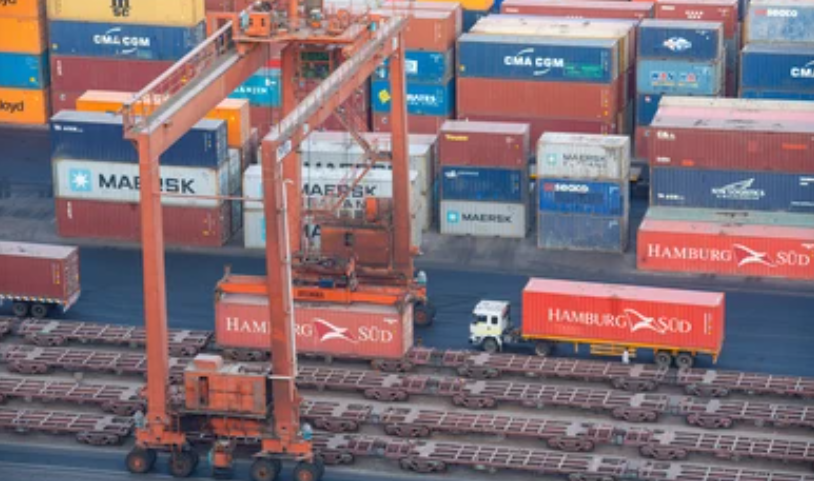
Sea freight from China to India plays an important role in trade between the two countries, offering a reliable and cost-effective solution for transporting large volumes of cargo. Major China ports such as Shanghai and Ningbo are well connected to key Indian ports like Nhava Sheva and Chennai, supporting steady international trade flows.
Although sea freight is not the fastest shipping method, it is widely preferred for heavy and high-volume cargo because of its lower transportation costs. However, customs procedures, documentation errors, and unfamiliar regulations can sometimes cause delays or unexpected issues during shipping.
With proper planning and efficient logistics management, businesses can reduce risks, avoid common shipping mistakes, and improve overall transportation efficiency when shipping from China to India.
Main Shipping Ports in China
Port of Shanghai
Situated on the East China Sea, the Port of Shanghai serves as a critical node in global shipping, handling over 47.03 million TEU annually.
As the world's busiest port, it facilitates substantial trade with major partners such as the USA, Japan, South Korea, and European nations.
Businesses targeting large consumer markets can leverage the Port of Shanghai as a pivotal component of their strategy due to its extensive connections and high trading capacity.
Port of Ningbo-Zhoushan
Strategically located at the convergence of inland and coastal shipping routes, the Port of Ningbo-Zhoushan boasts an annual throughput exceeding 33 million TEU.
This port maintains robust trade relationships with the USA, Australia, and Southeast Asian countries. It features China's largest number of deep-water berths for accommodating massive vessels.
For enterprises focusing on markets like Australia and Southeast Asia, leveraging the Port of Ningbo-Zhoushan is advantageous due to its geographic location and shipping capacity.
Port of Shenzhen
Located in Guangdong province, the Port of Shenzhen handles approximately 30 million TEU annually.
It serves as a crucial point for trade with North America, Asia, and Europe, supported by a large number of terminals integral to global supply chains.
Companies targeting North American or Asian markets will find the Port of Shenzhen essential due to its extensive trade linkages and key positioning along international routes.
Port of Guangzhou
Situated in Guangdong province, this busy port manages an annual volume of around 24.18 million TEU.
The Port of Guangzhou specializes in commodity shipments to Asia, the Americas, and Europe, being South China’s largest comprehensive hub port.
For commodity-centered businesses, this port’s status as a significant trading hub makes it an ideal logistics solution to reach global markets efficiently.
Port of Qingdao
Based in Shandong province, the Port of Qingdao processes approximately 25.75 million TEU per year.
With strong trade volumes involving the USA, Brazil, and Australia, this port’s strategic importance is underscored by its position along the busiest global shipping lane.
Enterprises targeting North or South American markets can benefit from the Port of Qingdao’s extensive sea route connections for optimized supply chain integration.
Port of Tianjin
Found in Tianjin municipality, this port handles close to 20 million TEU annually.
Acting as China’s maritime gateway to Beijing, it supports cargo exchanges with Europe, the Americas, and Asia.
Businesses with interests in Beijing should carefully consider the Port of Tianjin in their shipping plans due to its proximity to the capital and its central role in regional logistics.
Main Shipping Ports in India
Port of Nhava Sheva (Jawaharlal Nehru Port)
Situated on the west coast of India in Maharashtra near Mumbai, this port is strategically positioned close to India’s commercial capital. It handles over 5.68 million TEUs annually.
Major trading routes connect with ASEAN nations, the U.S., and the Middle East. The port facilitates approximately 40% of India’s maritime trade, showcasing its critical role in international commerce.
Businesses aiming to expand trade ties with South-East Asia or seeking an efficient gateway into the Indian market should consider leveraging this port's vast handling capacity and established trade links.
Port of Mundra
Located on Gujarat’s northern Arabian Sea coastline, Port of Mundra is India's largest commercial port, processing over 7 million TEUs annually (as of 2020).
The port engages significantly with nations like the UAE, Saudi Arabia, the U.S., and China, promoting cross-border bulk cargo trading. Its advanced infrastructure enhances its pivotal role in boosting efficiency.
With its world-class facilities, the Port of Mundra is ideal for businesses aiming to streamline shipments to and from India, particularly when dealing with Middle Eastern markets or large-scale logistics operations.
Port of Chennai
One of India’s oldest ports, the Port of Chennai lies along the Coromandel Coast in South-East India. It handles around 1.45 million TEUs annually.
A hub for trade with Bay of Bengal nations such as Bangladesh, Myanmar, and Thailand, it boasts modernized container and cargo terminals for versatile operations.
Companies requiring a deep-water port with robust connectivity for diverse cargo types will find value in the Port of Chennai’s location and longstanding infrastructure.
Port of Visakhapatnam
Positioned on India’s eastern seaboard, this port handles over 72.72 million TEUs annually, making it a vital maritime gateway for exports and imports on the east coast.
Trading activity revolves around key partners like Singapore, China, Malaysia, and the U.S. It holds a central position in South Asia, providing access to prominent global sea routes.
Firms focusing on expanding into ASEAN or other Far East markets can leverage Visakhapatnam Port’s strategic location and strong international connectivity.
Port of Haldia
Found in West Bengal’s Hooghly Estuary, the Port of Haldia processes approximately 45.24 million TEUs per year, driving a significant portion of eastern India’s maritime trade.
Engaging with South-East Asia, the Middle East, and Europe, it plays a crucial role in supporting Nepal’s trade.
Enterprises looking to target the eastern Indian or South-East Asian markets can benefit from Port of Haldia's accessibility and specialization in chemical and petrochemical handling.
Port of Kandla (Deendayal Port)
Located in Gujarat within the Gulf of Kutch, it is among India's largest ports by volume, handling over 135 million TEUs.
This port specializes in commodities such as grains, salt, and textiles while facilitating trade with the Middle East and Africa. Its role as a primary hub for high-volume cargo reinforces its importance to India’s economy.
For businesses handling large volumes of bulk goods or importing/exporting products like grains or textiles from western markets, Kandla Port’s extensive cargo capabilities make it an excellent logistics choice
Should I choose FCL or LCL for shipping From China to India?
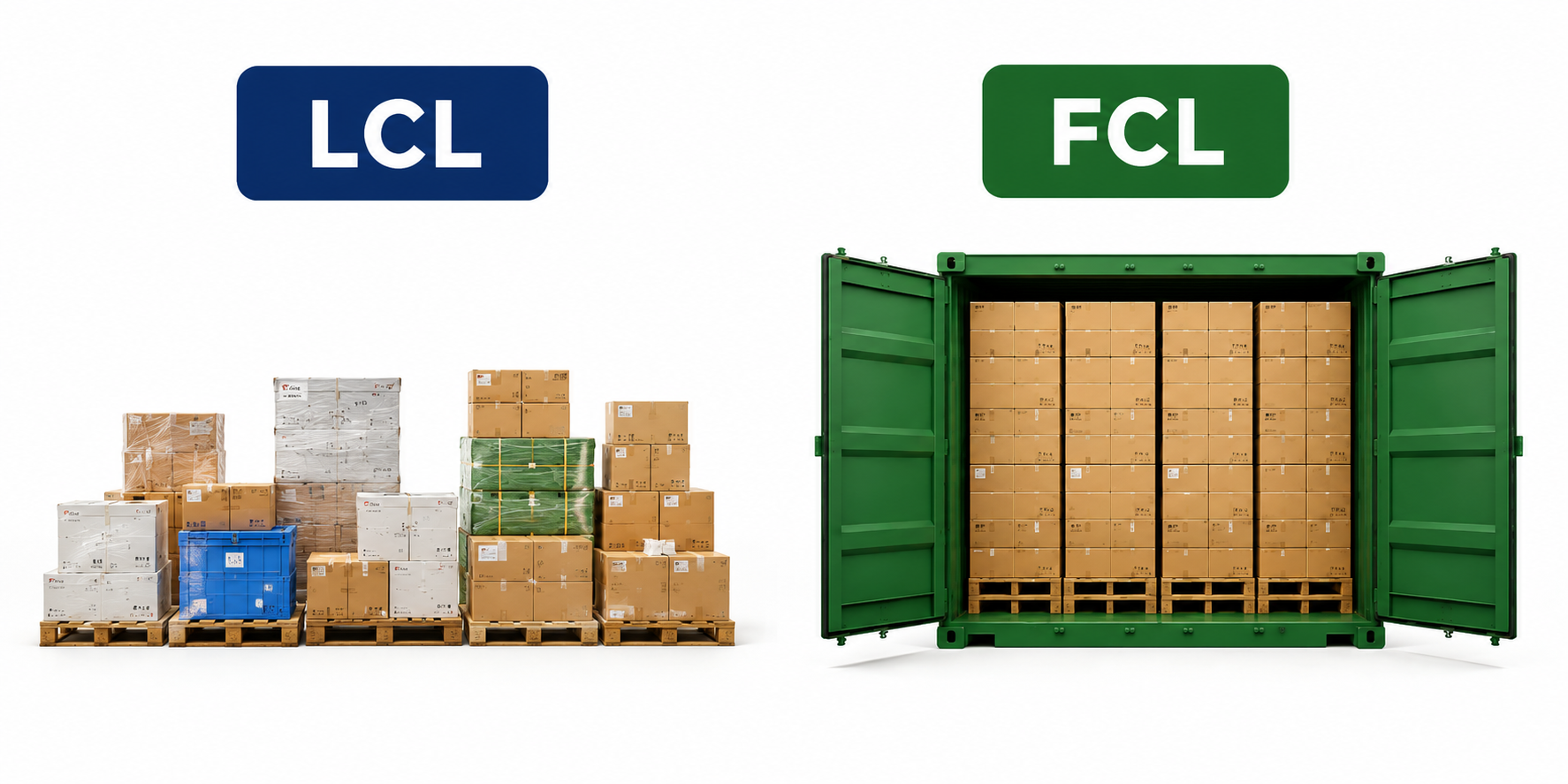
Deciding between FCL (Full Container Load) and LCL (Less than Container Load) for shipping goods from China to India is a critical decision that can significantly influence your costs, delivery timeline, and overall logistics efficiency. Choosing the right option depends on your shipment's specific requirements and volume.
LCL: Less than Container Load
Definition: LCL refers to cargo consolidation, where shipments from multiple shippers are combined into one container. It's ideal for smaller consignments that do not require a full container.
For cargo volumes under 13-15 cubic meters (CBM), LCL is a practical and cost-effective solution. It is especially suitable for businesses with smaller, less frequent shipments.
Example: A Chinese bicycle manufacturer shipping 50 bikes (each bike taking up approximately 0.5 CBM) to India would opt for LCL. A 20-foot container holds around 28 CBM, making it excessive for this small shipment.
While LCL is cost-efficient for small loads—since you pay only for the space you use—additional charges may apply for services like handling, consolidation, and customs clearance. Despite these add-ons, it often remains a budget-friendly choice for small shipments.
FCL: Full Container Load
Definition: FCL involves booking an entire container exclusively for your goods, without sharing space with other shippers.
FCL is optimal for larger shipments exceeding approximately 13-15 CBM or when you require better security and minimal handling of goods. With FCL, the container is sealed at the point of origin and remains unopened until it reaches its destination.
Example: A furniture producer shipping over 300 chairs from China to India would benefit from FCL. Depending on the chair dimensions, they could fill either a 20-foot or a 40-foot container, ensuring all items are transported together safely and efficiently.
Although FCL may initially appear more expensive, it becomes economical for bulk shipments. The cost includes the entire container, eliminating additional fees for consolidation or deconsolidation. Shipping companies also tend to offer better rates for full containers, making FCL a cost-effective choice when shipping large volumes.
Your choice between LCL and FCL depends on your shipment size and business priorities. If your cargo is small and lightweight or you need flexibility, LCL is the way to go. However, for larger shipments or when ensuring your goods’ safety during transit is paramount, FCL offers better value for money.
How long does it take to ship from China to India?
The transit time for sea freight from China to India can vary, typically averaging 3-4 weeks. Factors such as the choice of ports, the weight, and nature of the goods being shipped can influence these times. For precise timing, please consult GB FREIGHT for a customized quote based on your specific shipping needs.
Here is an overview of average transit times from China ports to India ports:
Shanghai to Nhava Sheva: 19 days
Shenzhen to Chennai: 14 days
Ningbo to Mundra: 20 days
Qingdao to Kolkata: 18 days
Please keep in mind that these are average estimates and actual transit times might differ due to factors like port congestion, customs procedures, or other unforeseen events.
How much does it cost to ship a container From China to India?
Determining the cost of shipping a container from China to India can be complex due to various influencing factors. Elements such as the location of loading and destination, the carrier chosen, the type of goods being transported, and fluctuating market rates all play a role in shaping the final price, which makes it difficult to specify a fixed rate. Ocean freight costs per cubic meter (CBM) can vary significantly within this context.
Special Transportation Services
Out of Gauge (OOG) Containers
An Out of Gauge (OOG) container is a specialized shipping container designed to accommodate oversized goods that cannot fit into standard containers due to their dimensions or weight.
Suitable for: Perfect for transporting large machinery, industrial equipment, construction materials, or any oversized items that are wider, taller, or heavier than standard cargo.
Examples: Common items shipped in OOG containers include large turbines, prefabricated housing segments, and oversized machinery parts.
OOG containers allow you to efficiently and securely transport oversized cargo, making them ideal when standard shipping options are inadequate for your shipping needs.
Break Bulk Shipping
Break bulk shipping refers to transporting goods that aren’t containerized but are instead individually loaded onto a vessel. Upon arrival, these loads are separated, or ‘broken up,’ for individual delivery.
Suitable for: Best for cargo that is exceptionally large, heavy, or irregularly shaped and cannot fit inside standard containers.
Examples: Items like wind turbine components, heavy machinery, and large farming equipment are commonly shipped as break bulk cargo.
Break bulk offers flexible handling for unique and bulky cargo, ensuring even the most cumbersome items can be shipped without constraints.
Dry Bulk Shipping
Dry bulk involves transporting large quantities of unpackaged goods in a mass rather than in specific containers.
Suitable for: Ideal for granular or powdered commodities such as grains, coal, iron ore, or other similar materials.
Examples: Common items transported via dry bulk include corn, rice, coal, and sand.
For businesses dealing with substantial volumes of loose dry items, dry bulk shipping is often the most efficient and cost-effective solution.
Roll-on/Roll-off (Ro-Ro) Shipping
Roll-on/Roll-off (Ro-Ro) refers to vessels where wheeled cargo is loaded and unloaded by driving directly onto ramps or platform vehicles built into the ship.
Suitable for: Designed for mobile cargo such as cars, trucks, trailers, buses, and similar wheeled vehicles.
Examples: Automobiles, construction vehicles, and semi-truck trailers are typically shipped via Ro-Ro vessels.
Ro-Ro shipping is ideal for safely and easily transporting wheeled cargo, offering convenience and time efficiency for mobile goods.
Reefer Containers
Reefer containers are refrigerated shipping containers designed to maintain specific temperature settings during transit to preserve perishable goods or temperature-sensitive products.
Suitable for: Best suited for items requiring controlled temperatures, including fresh produce, dairy products, meats, seafood, and pharmaceuticals.
Examples: Perishables like seafood from the East China Sea or fresh mangos from India are commonly shipped in reefer containers.
Reefer containers ensure your perishable goods remain in optimal condition throughout transit, safeguarding both quality and freshness.
For tailored solutions and professional guidance on shipping from China to India, please contact GB INTL FRIGHT AGENCY to receive a quote for free.
Air Freight From China to India
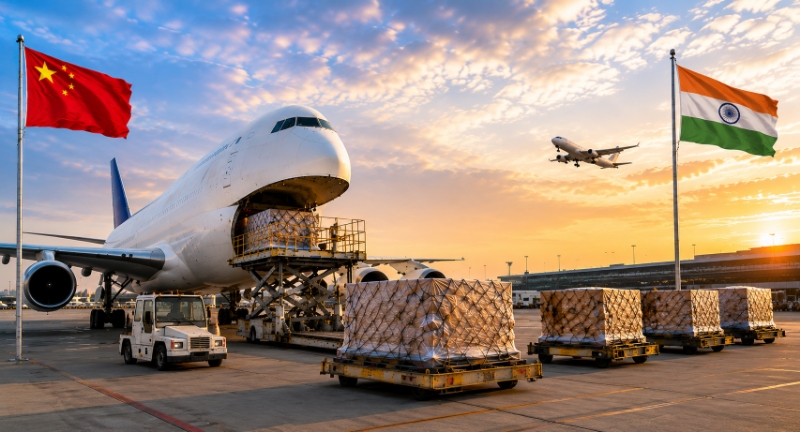
Air freight from China to India is akin to a high-speed racehorse within the logistics realm. Picture sending an essential electronic component or luxurious designer apparel flying across borders as swiftly and accurately as possible, much like a superhero on a mission. This method is the go-to for shipping small, high-value items where speed trumps cost considerations. However, even this stellar option presents its share of complexities.
The Main International Airports in China
Airport | Code | Advantages |
Beijing Capital International Airport | PEK | Major cargo gateway connecting North China with global freight routes |
Shanghai Pudong International Airport | PVG | China’s busiest cargo airport with extensive worldwide air freight connections |
Guangzhou Baiyun International Airport | CAN | Important logistics hub serving South China and international cargo markets |
Shenzhen Bao’an International Airport | SZX | Key air freight center for electronics, e-commerce, and export cargo |
Chengdu Shuangliu International Airport | CTU | Strategic airport linking Western China with Europe and global trade routes |
The Main International Airports in India
Airport | Code | Advantages |
Indira Gandhi International Airport | DEL | India’s busiest cargo airport with strong international freight connectivity |
Chhatrapati Shivaji Maharaj International Airport | BOM | Major gateway for international cargo and trade in Western India |
Kempegowda International Airport | BLR | Important hub for IT, e-commerce, and express cargo shipments |
Chennai International Airport | MAA | Key cargo airport serving South India’s industrial and automotive sectors |
Rajiv Gandhi International Airport | HYD | Leading pharmaceutical and temperature-controlled cargo hub in India |
Should You Choose Air Cargo From China to India?
Opting for air cargo to transport shipments from China to India is often a practical choice. Established airlines like Air China and Air India manage significant freight volumes, ensuring reliable service and fast delivery despite sometimes longer transit times due to fixed schedules.
For shipments weighing over 100–150 kg (220–330 lbs), air freight becomes more advantageous in terms of cost-effectiveness. Consider these factors when planning your logistics and budget to identify the best options tailored to your shipping needs.
How Long Does Air Freight Take From China to India?
The transit time for air freight shipments from China to India typically ranges from 3 to 5 days. However, this time frame isn’t set in stone, as variables such as the specific airports, shipment weight, and nature of the goods can influence the duration.
Since multiple factors could extend or reduce transit times, you can contact GB FREIGHT and receive with a clearer timeline from us.
How Much Does It Cost to Ship by Air Freight?
Shipping costs for air freight from China to India usually range between $3–$8 per kilogram but are subject to variability. Factors such as the distance between departure and destination airports, the dimensions and weight of the parcel, and the type of goods shipped will impact the final price. Instead of offering flat fees, our team provides personalized quotes tailored to your shipment's specific requirements. Get in touch with us for a free!
Understanding Volumetric vs. Gross Weight
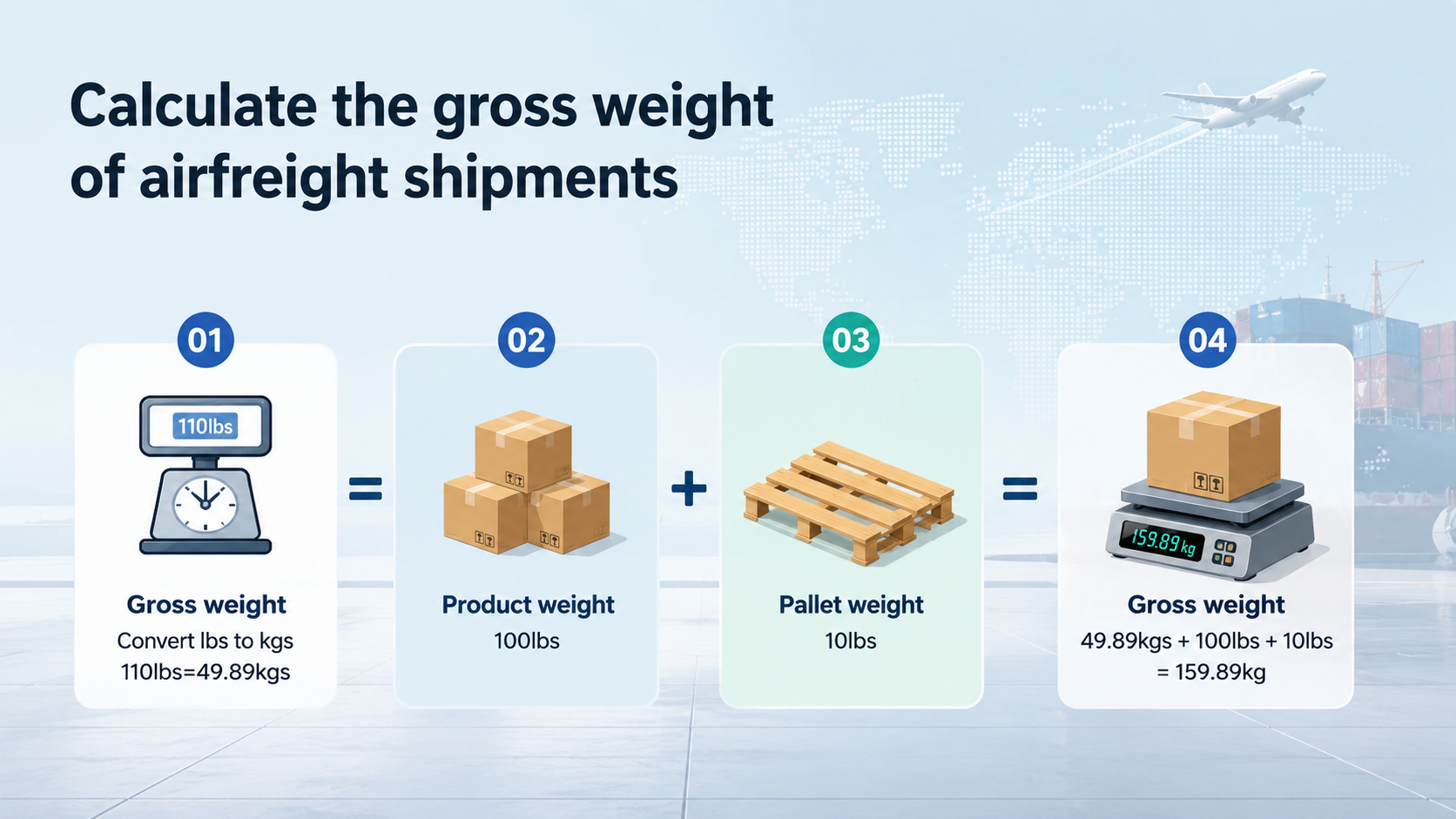
Two primary metrics determine air freight charges: gross weight and volumetric weight.
- Gross Weight refers to the actual physical weight of your shipment, measured in kilograms (kg). It’s what the scale shows when you weigh your parcel.
- Volumetric Weight measures how much space your shipment occupies in an aircraft rather than its physical mass. It’s calculated using this industry-standard formula:
Volumetric Weight = (Length x Width x Height in cm) / 6000
For example, if your package dimensions are 100 cm x 50 cm x 50 cm and weighs 40 kg:
Volumetric Weight = (100 x 50 x 50) / 6000 = 41.67 kg (approx. 91.8 lbs)
Gross Weight = 40 kg (approx. 88.2 lbs)
Why does this matter? Air freight charges depend on the chargeable weight, which is determined by comparing gross weight and volumetric weight. The higher value is used so airlines can balance efficient cargo space utilization with operational costs like fueling. Knowing this helps you better plan your logistics budget and optimize packaging to minimize expenses associated with air shipping.
Door-to-door shipping From China to India
Door-to-door shipping from China to India offers the ultimate convenience. It is a seamless solution that handles every step of the logistics process, from pick-up in China to delivery in India. This comprehensive service combines efficiency, transparency, and professional management, ensuring a smooth journey for your cargo. Curious about how it works? Let’s explore the advantages in more detail.
Door-to-Door Shipping
Are you facing the challenges of coordinating shipments between multiple carriers when transferring goods from China to India? Door-to-door shipping is a streamlined option that takes care of the entire process for you like pick-up, transit, and even customs clearance. Although it might involve a higher cost compared to other methods, its simplicity and hassle-free approach make it a preferred choice.
While delays can occasionally occur, the overall benefits far outweigh the risks. With this service, you're investing in peace of mind and efficiency for your global logistics. Keep reading to see how door-to-door delivery can revolutionize your shipping approach. Remember, with the right solution, no shipment is too complex.
Why Choose Door-to-Door Shipping From China to India?
Unmatched Convenience: Imagine sipping your favorite beverage while professionals handle everything from picking up your goods at their origin in China to delivering them directly to India. Door-to-door service transforms this vision into reality.
Stress-Free Operations: Dealing with customs paperwork and complex logistics can be a headache. With this service, administrative and organizational tasks are fully managed, leaving you free to focus on growing your business.
Punctual Deliveries: Time-sensitive shipments demand reliable execution. Thanks to a structured workflow and prioritization of key operations, this service minimizes delays and ensures your goods arrive on schedule.
Tailored Handling for Sensitive Cargo: If your shipment includes fragile or intricate items, rest assured they’ll get extra care during transit. Door-to-door solutions employ specialized handling to mitigate risks of damage.
Real-Time Tracking: Tired of not knowing where your shipment is? Door-to-door services come with comprehensive tracking mechanisms so you can monitor your shipment every step of the way until it reaches its destination.
By opting for door-to-door services from China to India, you can reallocate your efforts to what truly matter, while leaving logistical concerns to capable hands.
GB FREIGHT, Your Trusted Partner
Our experienced team takes charge of every stage, from packaging and transport to customs clearance and across various shipping methods. Whether by air, sea, or road, we ensure a worry-free experience.
Curious about pricing? Request a free quote or consult our experts for free. Simplify your logistics today with GB INTL FREIGTH AGENCY reliable solutions.


