
 |


| Quantity: | |
|---|---|
Indonesia
Freight Shipping From China to Indonesia
When planning to ship goods from China to Indonesia, one of the first challenges you'll face is that even minor paperwork errors or an incorrect port selection can delay cargo for weeks. This is a common issue, often resulting from regulations that seem straightforward on paper but function quite differently in practice.
This guide provides an in-depth look at the logistics of freight from China to Indonesia. It covers topics such as choosing the right transportation mode for your cargo, identifying common sources of delays, and understanding the key factors affecting costs and compliance. Whether you're budgeting, managing your first shipment, or optimizing an established route, this guide offers practical insights to streamline your shipping process.
Sea Freight From China to Indonesia
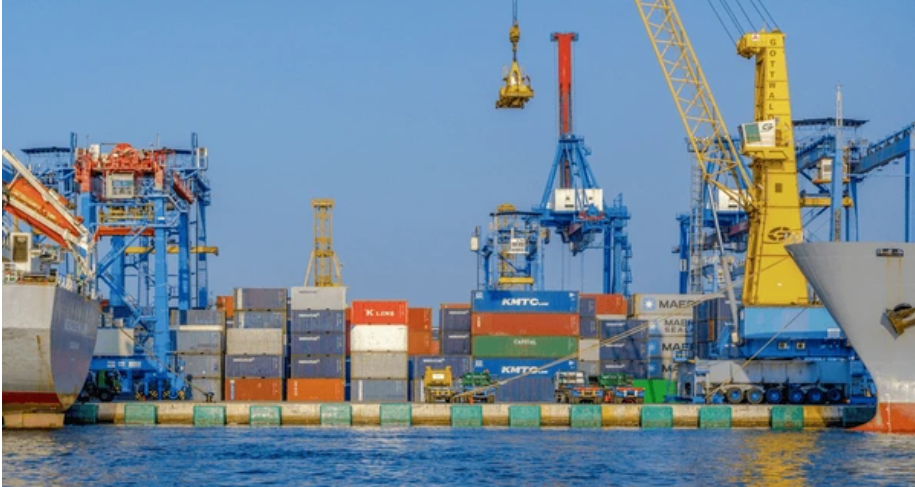
Sea freight is a popular choice for shipping goods from China to Indonesia because it is cost-effective and suitable for large cargo volumes. In recent years, trade between the two countries has grown rapidly, increasing the importance of reliable sea freight services. However, businesses still face challenges such as customs procedures, port congestion, transit delays, and changing tariffs.
Major China ports such as Shanghai, Ningbo, and Shenzhen are key gateways for exports to Indonesia, while Indonesian ports like Tanjung Priok and Tanjung Perak receive large volumes of cargo from China. Trade between China and Indonesia reached nearly USD 114 billion in 2021, reflecting the strong economic relationship between the two countries.
To support smoother trade operations, both countries are improving logistics connectivity, streamlining shipping processes, and promoting sustainable development through initiatives like the Belt and Road Initiative (BRI) and the ASEAN-China Free Trade Area (ACFTA)
Main Shipping Ports in China
Port of Shanghai
The Port of Shanghai is the world’s busiest container port and one of the most important international shipping hubs in China. Located at the mouth of the Yangtze River, it provides excellent access to China’s major industrial and manufacturing regions. The port handles millions of containers every year and plays a key role in global trade and international logistics.
Port of Shenzhen
The Port of Shenzhen is one of China’s largest and busiest ports, strategically located in South China near Hong Kong. It serves as a major export gateway for electronics, e-commerce products, and manufacturing cargo. With modern terminals and strong international shipping connections, Shenzhen is an essential hub for global trade.
Port of Ningbo-Zhoushan
The Port of Ningbo-Zhoushan is a major deep-water port in Eastern China, well known for its massive cargo handling capacity. It is an important gateway for bulk cargo, container shipping, and international trade. Its strategic location near the Yangtze River Delta strengthens its role as one of China’s leading shipping ports.
Port of Guangzhou
The Port of Guangzhou is a key international shipping hub in the Pearl River Delta region. It handles large volumes of industrial cargo, machinery, and consumer goods every year. With strong domestic and international shipping networks, the port plays a vital role in South China’s import and export activities.
Port of Qingdao
The Port of Qingdao is one of the leading ports in Northern China and an important center for international trade. Located along the Yellow Sea, it offers strong container handling capabilities and efficient logistics services. The port is widely used for industrial cargo, agricultural products, and bulk shipments.
Main Shipping Ports in Indonesia
Port of Tanjung Priok (Jakarta)
Tanjung Priok is the largest and most significant seaport in Indonesia, strategically located on the northwest coast of Java. Renowned for its excellent accessibility for seagoing vessels, it serves as a vital gateway to Jakarta, the nation’s capital, and the surrounding metropolitan area. Handling millions of tons of cargo annually, this port contributes to over 10% of Indonesia’s overall port traffic.
Port of Tanjung Perak (Surabaya)
Situated on Java’s northern coast, Tanjung Perak is a key seaport for Indonesia's trade activities. Its strategic location offers convenient access to Surabaya, the second-largest city in the country, and its nearby regions. With millions of tons of cargo processed each year, this port plays a crucial role in supporting industrial activities and regional commerce.
Port of Belawan (Medan)
Located on Sumatra’s northeastern coast, the Port of Belawan is an essential hub for regional and international trade. The port is well-connected to Medan, Indonesia’s third-largest city, and its surrounding industrial zones. Each year, it processes millions of tons of goods, solidifying its importance in supporting the region’s economic and commercial activities.
Should You Choose FCL or LCL When Shipping From China to Indonesia?
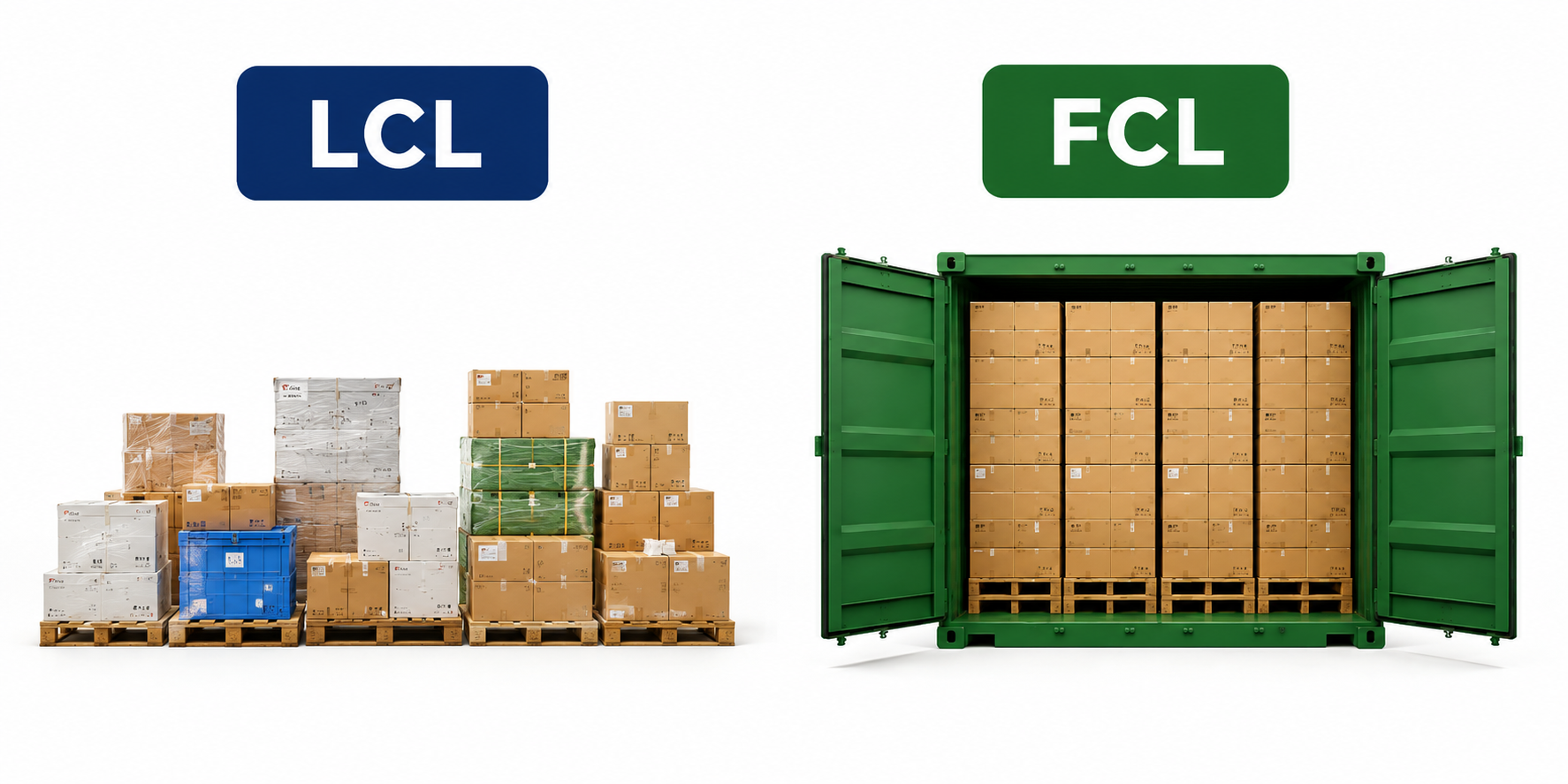
LCL (Less than Container Load)
It is ideal for smaller volumes of goods that don't require an entire container. This method is cost-effective, as multiple shipments from different shippers are consolidated into one container to optimize space and reduce shipping costs. It suits businesses shipping goods in quantities between 2 m³ and approximately 13–14 m³. Additionally, LCL is a good choice if you need to consolidate multiple shipments or deliver to various locations upon arrival. However, keep in mind that LCL may involve longer delivery times since the container must be deconsolidated at the destination port.
FCL (Full Container Load)
It is more suitable for larger shipments that can fill at least half of a container, making it cost-efficient. It offers faster delivery and fewer handling risks, as the container remains sealed from origin to destination. FCL also minimizes additional charges associated with deconsolidation and reduces damage risks during transit. If your shipment volume justifies the use of a full container or if time and security are priorities for your business, FCL would be the preferred choice.
Ultimately, your decision should weigh factors like shipment size, cost considerations, delivery speed, security requirements, and flexibility needed for distribution upon arrival. For smaller or irregular shipments, LCL could be advantageous. For larger consignments or those needing streamlined logistics, FCL is likely the better option.
How long does sea freight take from China to Indonesia?
The average sea freight duration from China to Indonesia typically ranges from 6 to 20 days. This timeframe depends on various factors, such as customs processes, the distance between ports, and other logistical considerations.
Below is an example of shipping times between specific ports:
Indonesia port | Transit time |
Tanjung Priok | Shanghai: 12 days |
Tanjung Perak | Shanghai: 10 days |
Belawan | Shanghai: 12 days |
How much does it cost to ship a container from China to Indonesia?
The average sea freight cost from China to Indonesia for a 20-foot container (FCL) usually ranges from USD 500–1,500, while a 40-foot container generally costs around USD 800–2,500. For LCL (Less than Container Load) shipments, pricing depends on the cargo volume and weight. Actual shipping costs may vary based on shipment details, routes, and market conditions.
Freight charges from China to Indonesia are often calculated using the weight/volume ratio, also known as volumetric weight. This method helps carriers determine the chargeable weight by comparing the cargo’s actual weight with the space it occupies.
To calculate volumetric weight, multiply the shipment’s length, width, and height, then divide by the volumetric factor. The higher value between actual weight and volumetric weight becomes the chargeable weight used for pricing.
For example, if a shipment weighs 500 kg and has a volume of 2 cubic meters, the volumetric weight may still be lower than the actual weight. In that case, shipping costs would be based on the actual cargo weight. This system ensures fair pricing and efficient use of cargo space, especially for lightweight but bulky shipments.
Special Transportation Services
Reefer Container
Reefer containers are designed for transporting perishable goods or chemical products that require controlled temperature settings. Available in various sizes, these containers are equipped with high-quality systems to regulate both temperature and humidity, ensuring optimal conditions for the cargo.
OOG (Out of Gauge)
Out of Gauge (OOG) items are those that exceed the dimensions of standard shipping containers. This category includes oversized equipment like large machinery, construction materials, wind turbine blades, boats, and yachts. Shipping such items requires specialized containers, such as open-top or flat-rack containers. Shipping lines may impose additional OOG fees for these shipments. Using these containers saves time and facilitates the transport of non-standard goods efficiently.
Bulk Cargo
Bulk cargo transportation involves shipping large quantities of goods, typically stored in a vessel's hold. Unlike general freight, bulk cargo is comprised of unpackaged solid or liquid commodities such as coal, oil, and minerals. Vessels specialized for this purpose are often referred to as bulk carriers, designed for efficient handling of these types of materials.
Ro-Ro (Roll-on/Roll-off)
Ro-Ro transportation refers to the movement of wheeled cargo—such as cars, trucks, trailers, and train cars—on specialized vessels equipped with ramps or platforms. These enable vehicles and machinery to be driven or rolled on and off effortlessly during loading and unloading. Renowned for its efficiency in handling large volumes of cargo, Ro-Ro shipping is a popular option for international trade involving automobiles and heavy equipment.
Air Freight from China to Indonesia
Air freight is a popular choice for businesses aiming to transport goods between countries swiftly and efficiently. This is particularly relevant for trade between China and Indonesia, where the air freight sector has seen notable growth in recent years. Despite its many benefits, air freight also involves certain challenges, such as navigating customs regulations and managing detailed documentation requirements.
Main Airports in China
Airport Code | Airport Name | Advantages |
CTU | Chengdu Shuangliu International Airport | Strategic Western China cargo hub with growing international routes |
SZX | Shenzhen Bao’an International Airport | Major logistics hub for electronics and e-commerce cargo |
PEK | Beijing Capital International Airport | One of China’s leading international cargo gateways with extensive global connections |
CAN | Guangzhou Baiyun International Airport | Important South China airport serving manufacturing and export industries |
PVG | Shanghai Pudong International Airport | China’s busiest cargo airport with strong worldwide air freight connectivity |
Main Airports in Indonesia
Airport Code | Airport Name | Advantages |
CGK | Soekarno-Hatta International Airport | Indonesia’s busiest cargo airport with advanced handling facilities and strong international connections |
DPS | Ngurah Rai International Airport | Major Bali airport handling perishables, textiles, and handicraft exports |
SUB | Juanda International Airport | Important cargo hub in Surabaya with strong capabilities for electronics and automotive cargo |
UPG | Sultan Hasanuddin International Airport | Key airport in Eastern Indonesia specializing in seafood and agricultural exports |
Should I choose Air Freight from China to Indonesia?
Air cargo from China to Indonesia is the best option for those busy business that demand a quick, dependable and safe delivery. In contrast to sea freight, air shipping has the advantage of much faster transit times, which is suitable for rush goods, high-value items, electronic products, fashion goods and time-critical shipments.
While air freight tends to be more costly than sea freight, it can alleviate inventory strain, enable delivery compression and increase supply chain efficiency. If your business focus is on speed, cargo safety and predictable transit, Air Freight from China to Indonesia maybe the right logistics solution for you.
How long does air freight take From China to Indonesia?
The transit time for airfreight from China to Indonesia typically ranges from 2 to 5 days, making it an efficient option for companies requiring quick and reliable delivery. Unlike marine freight, which can take several weeks or even months, air transportation significantly reduces the delivery timeline.
How much does it cost to ship a parcel via air freight?
When considering the cost of airfreight from China to Indonesia, the average rate for a shipment weighing 100 kg usually falls between $3 and $8 per kilogram. This results in a total estimated cost of $300 to $800, though the final price may vary depending on specific shipment requirements and additional criteria. Airfreight charges are generally based on the greater value between the shipment’s actual weight and its volumetric weight. Volumetric weight, or chargeable weight, is calculated by factoring in the shipment’s dimensions length, width, and height, to determine if it exceeds the actual weight. This ensures accurate pricing based on the cargo's space utilization in the aircraft.

How to calculate the volumetric weight
Volumetric weight is an important factor in calculating air freight costs. Airlines charge based on whichever is higher: the actual weight or the volumetric weight of the shipment.
To calculate volumetric weight, measure the package’s length, width, and height, then multiply these dimensions to get the total volume. After that, divide the volume by the air freight conversion factor. The standard factor is usually 6,000 for measurements in cubic centimeters or 167 for cubic inches.
Accurate volumetric weight calculation is important because if the volumetric weight is higher than the actual weight, the airline will use the higher value to calculate shipping charges.
Door-to-Door Shipping From China to Indonesia
Door-to-door shipping from China to Indonesia provides a convenient and cost-effective logistics solution by collecting cargo from the origin and delivering it directly to the final destination. The logistics provider manages the entire process, including transportation, customs clearance, documentation, and final delivery, ensuring goods arrive safely and on time.
This service is available for sea freight, air freight, and express shipping, offering businesses a simpler and more efficient shipping experience. Key benefits include direct pickup and delivery, a single point of contact, better shipment tracking, reduced risk of cargo damage or loss, faster transit times, and hassle-free customs procedures.
Door-to-door delivery helps businesses save time while ensuring smooth and reliable international shipping from China to Indonesia.
What is Door-to-Door Shipping?
Door-to-door shipping is a logistics service where goods are collected directly from the sender’s location and delivered straight to the receiver’s address. The freight forwarder handles the entire shipping process, including pick-up, transportation, customs clearance, documentation, and final delivery, ensuring a smooth and efficient end-to-end solution.
Why Choose GB FREIGHT for Door-to-Door Shipping?
GB FREIGHT provides reliable and efficient door-to-door shipping solutions from China to Indonesia, offering a complete end-to-end logistics service. We manage every step of the process, including pickup, transportation, customs clearance, documentation, and final delivery, ensuring a smooth and hassle-free experience for our clients.
With a professional logistics team and strong carrier network, we are able to provide cost-effective shipping options by air, sea, or express, depending on your cargo needs. Our service helps reduce delays, improve shipment visibility, and ensure goods are delivered safely and on time.
By choosing GB FREIGHT , you benefit from a single point of contact, faster response times, and tailored logistics solutions designed to support your business growth in international trade.


