
 |


| Quantity: | |
|---|---|
Italy
Freight Shipping from China to Italy
Are you looking to ship freight to Italy? Wondering how to transport your products from China and import them into Italy? You might be asking yourself, is the process challenging? In this article, you’ll learn about transit times for air, rail, and ocean freight between China and Italy ports. You've found the right resource. Stick with this article, and you might discover something unexpected.
If you need professional support, GB FREIGHT can manage the entire shipping process for you, from supplier pickup in China to final delivery in Germany.
Sea Freight From China to Italy
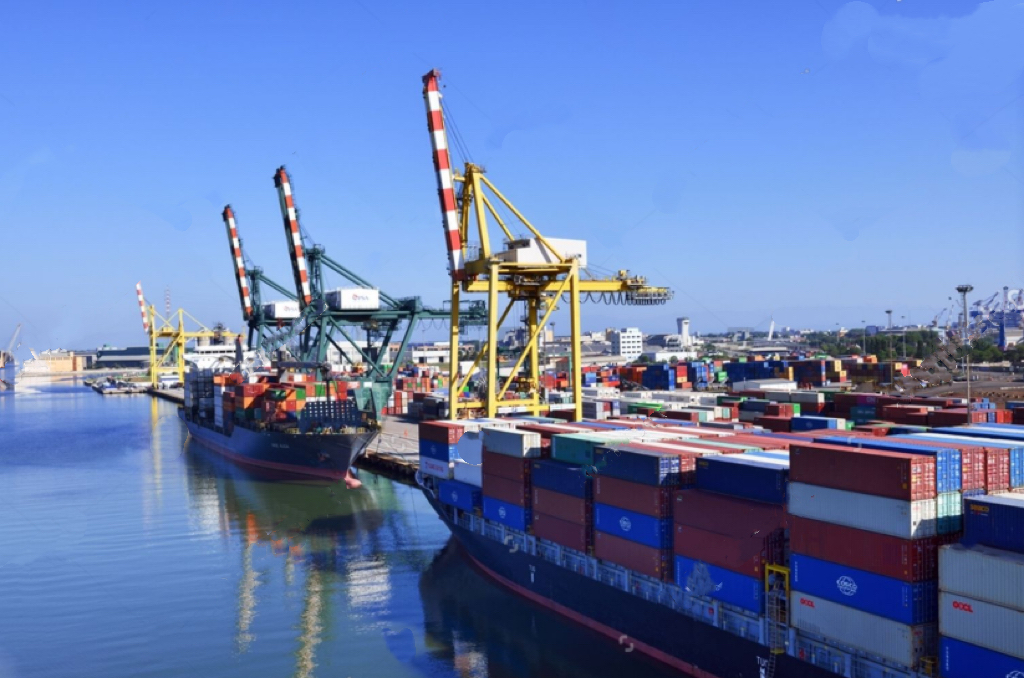
China and Italy maintain strong trade relations, with sea freight serving as one of the most reliable and cost-effective shipping solutions between the two countries. Major ports such as Shanghai and Genoa connect China’s manufacturing centers with Italy’s industrial and consumer markets.
Italy imports a wide range of products from China, including furniture, machinery, electronics, textiles, fashion products, home appliances, building materials, and auto parts. Sea freight is especially suitable for bulky, high-volume, and non-urgent cargo, helping businesses lower transportation costs while ensuring stable and efficient delivery.
Although international shipping can involve customs procedures and documentation requirements, proper logistics planning can make the entire shipping process smooth and hassle-free.
The Main Shipping Ports in China
Port of Shanghai
Located at the mouth of the Yangtze River, the Port of Shanghai is the world’s busiest container port, handling over 49 million TEUs annually. With extensive global shipping connections and direct services to major Italian ports such as Genoa, La Spezia, and Trieste, it is a key gateway for exporting electronics, machinery, textiles, and consumer goods from China to Italy.
Port of Ningbo-Zhoushan
Situated in Zhejiang province, the Port of Ningbo-Zhoushan handles more than 35 million TEUs every year and plays a major role in China-Europe trade. Known for its efficient container operations and strong Mediterranean shipping routes, it is widely used for exporting industrial equipment, furniture, and manufacturing products to Italy.
Port of Shenzhen
Located in Guangdong province within the Pearl River Delta, the Port of Shenzhen processes over 30 million TEUs annually. As one of China’s leading export hubs for electronics, garments, and high-tech products, Shenzhen offers reliable sea freight connections to Italy and other major European markets.
Port of Guangzhou
Positioned along the Pearl River in southern China, the Port of Guangzhou handles approximately 25 million TEUs each year and supports one of China’s largest manufacturing regions. The port maintains stable shipping services to Italy, making it an important gateway for machinery, building materials, automotive parts, and consumer goods exports.
Port of Qingdao
Located on China’s eastern coast in Shandong province, the Port of Qingdao handles over 28 million TEUs annually and is recognized for its modern deep-water facilities. It specializes in refrigerated cargo, agricultural products, chemicals, and industrial goods, with regular shipping services connecting China to Italy and other European destinations.
Port of Tianjin
Serving as the main maritime gateway for northern China and Beijing, the Port of Tianjin manages more than 22 million TEUs each year. With strong rail and road logistics connections, Tianjin is an important export hub for machinery, automotive products, steel, and industrial equipment shipped to Italy and Europe.
The Main Shipping Ports in Italy
Port of Gioia Tauro
Located in Calabria in southern Italy, the Port of Gioia Tauro is one of the largest container transshipment hubs in the Mediterranean region. Thanks to its strategic location along major East-West shipping routes and water depths reaching up to 18 meters, the port is capable of handling Ultra Large Container Ships (ULCS). It plays a vital role in international container transportation between Asia and Europe.
Port of Genoa
Situated on Italy’s northwestern coast, the Port of Genoa is Italy’s busiest commercial seaport and one of the country’s most important logistics gateways. It maintains strong shipping connections with China and serves as a major hub for machinery, automotive products, industrial cargo, and containerized goods entering southern and central Europe.
Port of La Spezia
Located along the Ligurian coast in northern Italy, the Port of La Spezia is known for its highly efficient container operations and advanced logistics infrastructure. The port has strong trade links with Asia and is widely used for importing electronics, consumer goods, and manufacturing products from China.
Port of Trieste
Positioned near the Adriatic Sea in northeastern Italy, the Port of Trieste is a major gateway connecting Italy with Central and Eastern Europe. Its strategic rail connections and deep-water facilities make it an important hub for container cargo, industrial products, and railway freight arriving from China.
Port of Venice
Located in northeastern Italy, the Port of Venice plays an important role in both commercial shipping and regional distribution. It handles a wide range of cargo including machinery, chemicals, consumer goods, and project cargo, while offering strong access to central European markets through inland transportation networks.
Port of Naples
Situated in southern Italy along the Tyrrhenian Sea, the Port of Naples is one of the country’s key commercial and container ports. It supports trade between Asia and the Mediterranean region, handling cargo such as textiles, food products, machinery, and general containerized shipments from China.
Should I Choose FCL or LCL for Shipping From China to Italy?
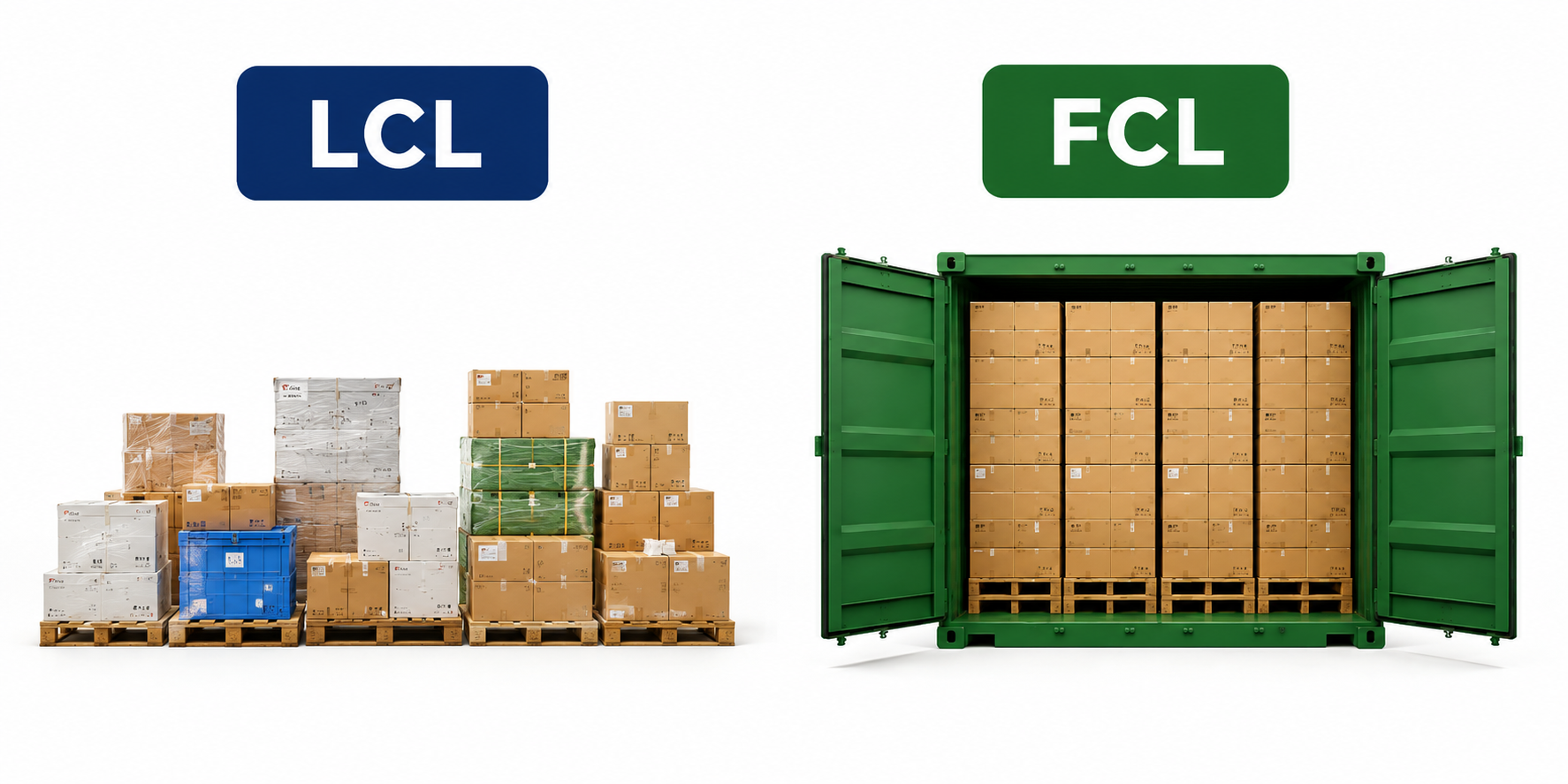
When shipping sea cargo from China to Italy, businesses generally choose between two main sea freight options: Full Container Load (FCL) and Less than Container Load (LCL). The right choice depends on your shipment volume, budget, delivery schedule, and cargo requirements. Selecting the correct shipping method can help reduce transportation costs, improve efficiency, and avoid unnecessary delays during the shipping process.
There are three common container sizes used in international shipping:
Container type | Capacity (unit: CBM) |
20ft Container | 33 |
40ft Container | 67 |
40ft High Cube Container (40HQ) | 76 |
Before arranging your shipment, it is important to understand the differences between LCL and FCL shipping services.
LCL: Less than Container Load
Definition: LCL (Less than Container Load) is a shipping method where cargo from multiple shippers is consolidated into one container. It is designed for smaller shipments that do not require a full container.
LCL shipping is usually suitable for cargo volumes under 13–15 CBM. The carrier collects goods from different suppliers, consolidates them at a Container Freight Station (CFS), and ships them together in one container. Once the shipment arrives in Italy, the cargo is unpacked and distributed separately to each consignee.
Example: Imagine you are importing small batches of home decoration products from several suppliers in China to Italy. Each supplier only provides a few CBM of cargo. Instead of waiting to fill an entire container, LCL shipping allows you to move your goods faster while controlling shipping costs.
LCL is often more flexible and affordable for small shipments because you only pay for the space your cargo occupies. However, additional handling, consolidation, and customs procedures may increase local charges and slightly extend transit times.
FCL: Full Container Load
Definition: FCL (Full Container Load) means one shipper exclusively uses an entire container for their cargo. The shipment remains sealed from origin to destination, providing greater security and efficiency during transportation.
FCL shipping is generally recommended when cargo volume exceeds 13–15 CBM. The shipper is responsible for loading, packing, counting, and sealing the container before export from China.
Example: Suppose an Italian importer purchases a large quantity of furniture or machinery from China. Since the cargo volume is large enough to occupy most of a container, choosing FCL shipping helps reduce the risk of cargo damage and improves shipping efficiency.
Although the total upfront cost of FCL is higher because you pay for the entire container, the cost per CBM becomes much lower for larger shipments. A 20ft container usually carries around 25–28 CBM, while a 40ft container can load approximately 55–60 CBM of cargo.
How long does sea freight take from China to Italy ?
Sea freight from China to Italy generally takes around 22 to 42 days, depending on the shipping route, departure port in China, destination port in Italy, vessel schedule, weather conditions, and peak shipping seasons.
Major destination ports in Italy include Gioia Tauro, Venice, Bari, and Naples. Transit times may vary based on the carrier and transshipment arrangements.
Port of Loading | Gioia Tauro | Venice | Bari | Naples |
Shanghai | 26 Days | 27 Days | 31 Days | 30 Days |
Shenzhen | 22 Days | 32 Days | 25 Days | 35 Days |
Guangzhou | 25 Days | 27 Days | 26 Days | 27 Days |
Qingdao | 27 Days | 28 Days | 32 Days | 33 Days |
Tianjin | 30 Days | 32 Days | 42 Days | 35 Days |
Ningbo | 30 Days | 30 Days | 33 Days | 27 Days |
Dalian | 29 Days | 29 Days | 38 Days | 32 Days |
Please note that the above transit times are for sea freight only and do not include packing, customs clearance, or final delivery. Delays may occur due to port congestion or unforeseen circumstances. For the latest schedule and exact transit time, please contact GB FREIGHT
How much does it take to ship from China to Italy?
Shipping goods from China to Italy via sea freight generally takes 22 to 42 days, depending on multiple factors such as the departure and arrival ports, chosen shipping method, seasonal variations, and weather conditions. This estimated time does not include processes like packing and customs clearance, which may require additional time. It is wise to account for potential delays to ensure a smooth shipping experience.
If your shipment involves specialized items or has particular storage requirements, you may need to explore different container types. Here are some options for your reference:
How much does it cost to ship a container from China to Italy?
Sea freight costs from China to Italy can vary depending on several factors, including the type of cargo, shipment volume, container size, shipping route, seasonal market conditions, and the final destination in Italy. Whether you choose LCL or FCL shipping, the overall price will be different based on your logistics requirements and the type of goods you are importing. To receive an accurate and competitive shipping quotation tailored to your cargo needs, simply contact GB FREIGHT and our team will provide you with a fast and free quote together with the most suitable shipping solution for your business.
Special Transportation Services
Out of Gauge (OOG) Containers
OOG (Out of Gauge) containers are specially designed for oversized cargo that exceeds the standard dimensions of regular shipping containers. These shipments are usually loaded onto flat racks or special platforms for secure transportation.
Suitable for: Large, heavy, or irregularly shaped cargo that cannot be dismantled.
Examples: Construction machinery, industrial equipment, large boats, and oversized project cargo.
Why choose this option: OOG shipping provides a practical and efficient solution for transporting dimensionally challenging cargo between China and Italy safely.
Break Bulk Shipping
Break bulk shipping refers to transporting goods individually or on pallets, crates, or skids instead of loading them into standard containers. Specialized vessels are commonly used for this type of cargo.
Suitable for: Cargo that is too large or unsuitable for container shipping.
Examples: Manufacturing equipment, steel products, construction materials, and oversized machinery parts.
Why choose this option: Break bulk shipping offers flexibility for handling heavy or difficult-to-containerize cargo efficiently.
Dry Bulk Shipping
Dry bulk shipping is used for transporting unpackaged loose commodities directly inside a vessel’s cargo hold.
Suitable for: Large quantities of homogeneous bulk cargo.
Examples: Coal, grain, ores, sand, gravel, and other raw materials.
Why choose this option: It is a highly cost-effective transportation method for large-volume loose commodities.
Roll-on/Roll-off (Ro-Ro) Shipping
Ro-Ro shipping involves driving vehicles or wheeled cargo directly onto specialized vessels for transportation. Cargo is secured inside the vessel during transit for safe delivery.
Suitable for: Self-propelled or wheeled machinery and vehicles.
Examples: Cars, trucks, trailers, buses, forklifts, and heavy machinery.
Why choose this option: Ro-Ro shipping simplifies the loading and unloading process while reducing cargo handling risks.
Reefer Containers
Reefer containers are temperature-controlled shipping containers designed to transport goods requiring stable temperature conditions throughout transit. Temperature settings can usually range from approximately -60°C to +30°C depending on the cargo requirements.
Suitable for: Temperature-sensitive or perishable products.
Examples: Frozen seafood, meat, dairy products, fruits, chocolate, pharmaceuticals, and flowers.
Why choose this option: Reefer containers help preserve product quality and freshness during transportation from China to Italy.
When shipping from China to Italy, selecting the correct transportation solution depends on the size, nature, and handling requirements of your cargo. GB FREIGHT can help you choose the most suitable shipping method based on your business needs. Contact us today for a fast and free shipping quotation.
Air Freight from China to Italy
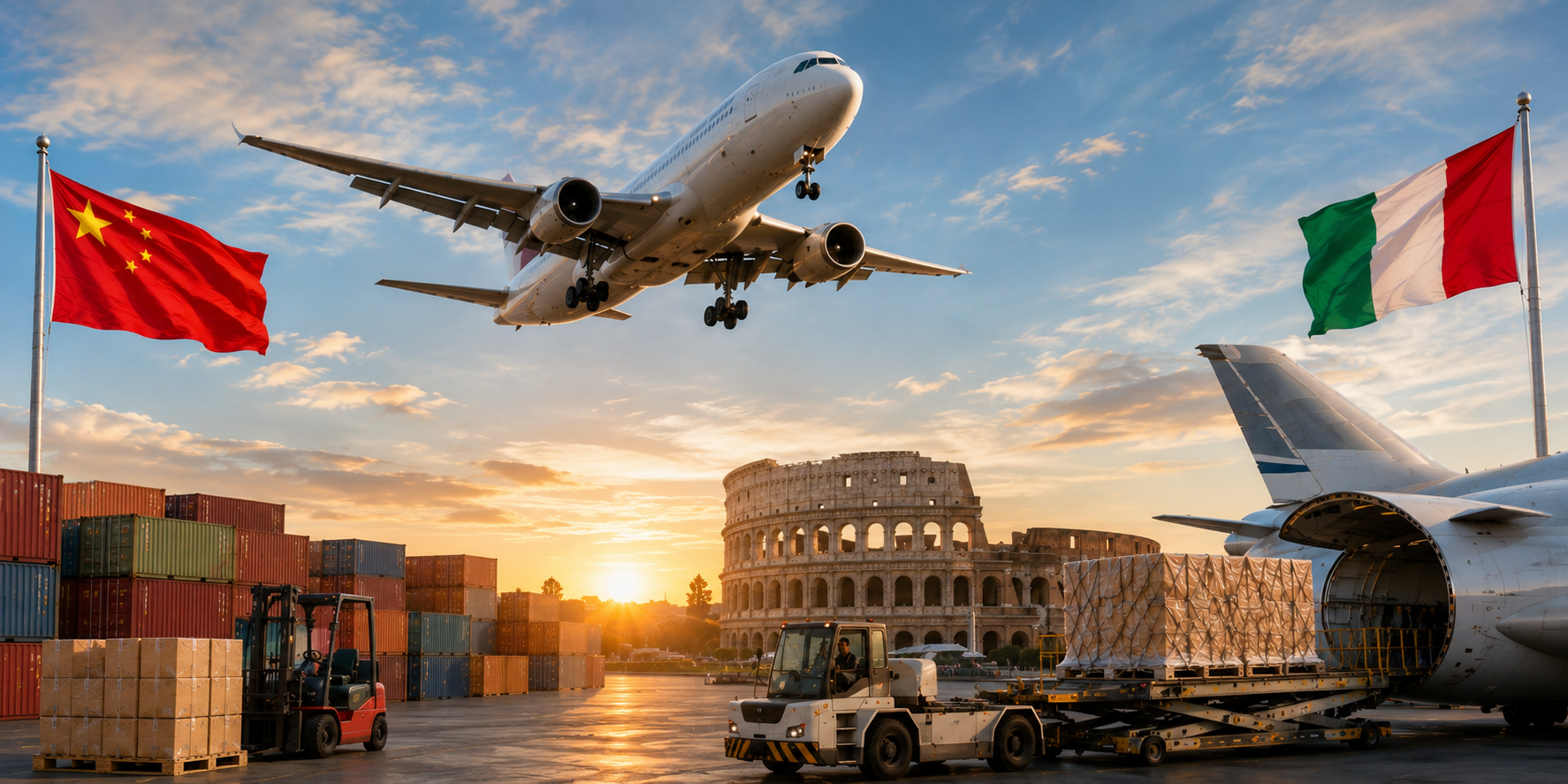
Air freight from China to Italy is ideal for urgent and high-value goods such as electronics, fashion products, and automotive parts. It offers faster transit times and reliable delivery, making it a preferred option for time-sensitive shipments.
However, incorrect cargo dimensions, volumetric weight miscalculations, and incomplete documents can increase shipping costs or cause delays. Proper shipment planning is essential for smooth and efficient air freight operations.
Should I choose Air Freight from China to Italy?
Air transport is often the preferred option for shipping goods due to its speed and efficiency. For example, when shipping from China to Italy, air freight typically takes 3–7 days, with most shipments completed in just 3–5 days. This is significantly faster compared to sea freight, which can take up to one month.
However, it’s important to note that this timeframe only covers the transit duration and does not include the entire import process, which might involve customs and other procedures. For accurate estimations and support with additional steps in the shipping process, you can reach out to GB FREIGHT.
The Main international airports in China
Airport | Code | Advantages |
Beijing Capital International Airport | PEK | Major international cargo hub with extensive worldwide air freight connections |
Guangzhou Baiyun International Airport | CAN | Key gateway for Southern China export and import cargo shipments |
Shanghai Pudong International Airport | PVG | One of the world’s busiest air cargo airports with strong global logistics networks |
Shanghai Hongqiao International Airport | SHA | Important domestic and regional airport supporting fast cargo distribution |
Chengdu Shuangliu International Airport | CTU | Strategic air freight hub connecting Western China to international markets |
Shenzhen Baoan International Airport | SZX | Major airport for electronics, e-commerce, and high-value cargo transportation |
The Main International Airports in Italy
Airport | Code | Advantages |
Roma Airport | FCO | Italy’s major international gateway with strong global cargo and passenger connections |
Milan Airports | SEA | Important logistics hub serving Northern Italy and international freight shipments |
Venice Airports | VCE | Key airport supporting cargo transportation and trade in Northeastern Italy |
Florence Airports | FLR | Regional airport serving central Italy with efficient domestic and European connections |
Naples Italy Airport | NAP | Strategic airport for Southern Italy cargo and commercial shipments |
Sicily Italy Airport | CTA | Major airport in Sicily supporting international cargo and regional distribution |
How long does it take to ship air freight from China to Italy?
On average, air cargo from China to Italy takes 5–7 days for delivery. This may vary depending on factors such as airline choice, weather conditions, customs clearance procedures, and specific locations of departure and arrival. For precise shipping timelines tailored to individual requirements, contacting GB FREIGHT or the airline is strongly recommended.
While air freight is the fastest transportation option, it is also the most expensive. As industry professionals, we’re equipped to help you find cost-efficient solutions that ensure timely delivery. Fill out our online form for a free quote and quick guidance.
How much does air freight cost from China to Italy?
Costs for air freight differ based on whether you opt for traditional air freight or express air freight services. Traditional air freight tends to be more affordable since it involves fewer fixed costs compared to express services. Pricing also depends on whether charges are based on actual weight or volumetric weight.
How to calculate the volumetric weight?
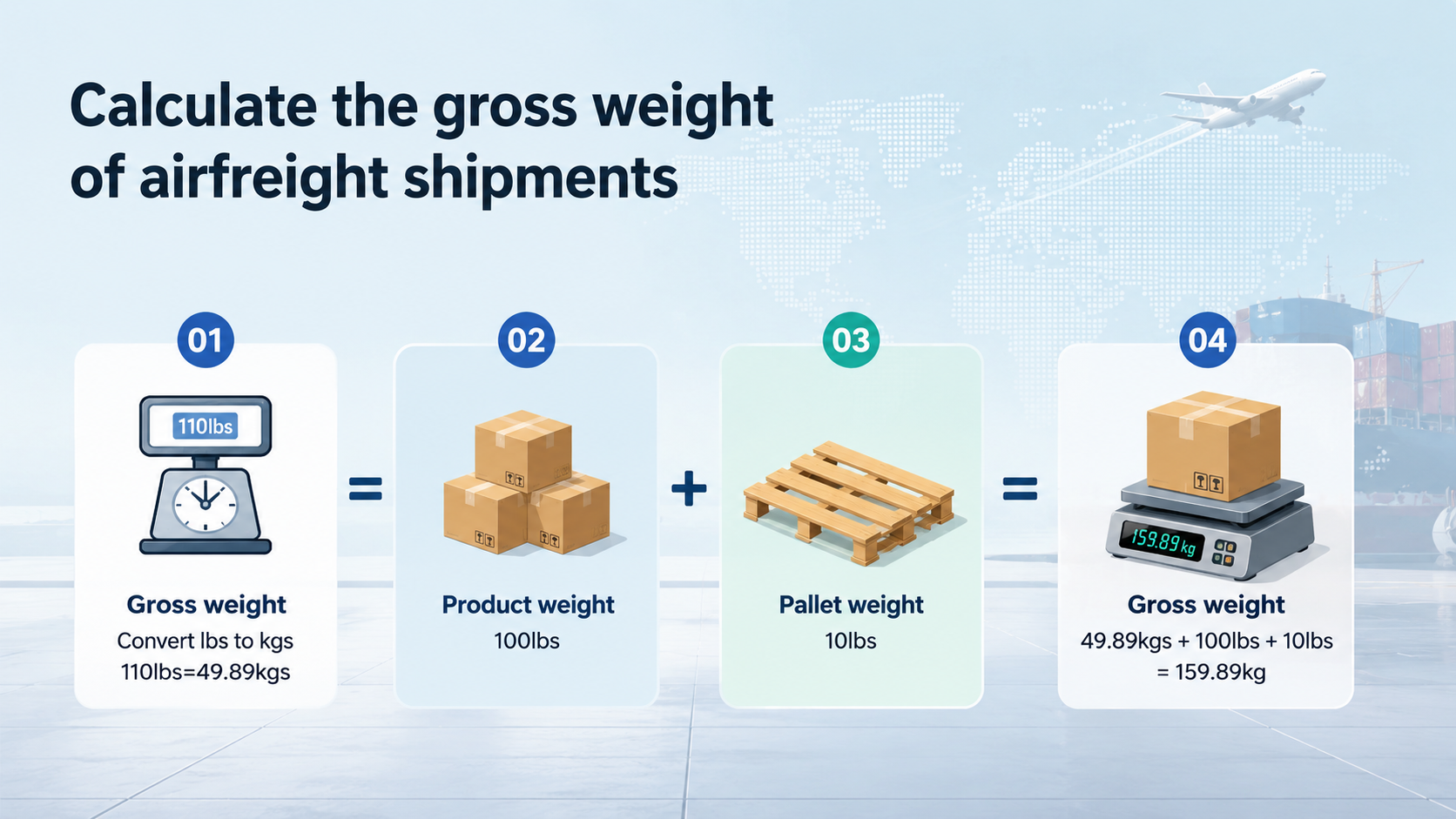
Volumetric weight applies to goods where their size is more significant than their actual weight, such as wooden chairs, plastic products, cotton, or sponges. The transportation industry uses a flat-rate volumetric weight formula:
Volumetric weight = (length cm × width cm × height cm) ÷ 6000
When the volumetric weight of goods exceeds the actual weight, charges are calculated based on volumetric weight. Otherwise, the actual weight is used.
Rail freight from China to Italy
On June 5, 2017, China’s "Long-Term Group" partnered with Mortara's logistics company to establish a direct rail line connecting Chengdu in China, passing through Warsaw in Poland, and terminating in Mortara, Pavia, Italy. This extensive rail corridor spans 10,800 kilometers.
The head of the "Long-Term Group" highlighted significant advantages of rail transport, noting that it saves roughly two-thirds of the transit time compared to ocean shipping, while costs are reduced by up to three-quarters compared to air freight. Previously, rail shipments from China to Italy required around 1.5 months, presenting challenges for transporting Italian specialty goods such as furniture and wine due to extended delivery times. The inauguration of this dedicated rail line represents a transformative advancement in promoting Sino-Italian trade and enhancing logistics efficiency.
Beijing West Railway Station
Shanghai Hongqiao Railway Station
Guangzhou South Railway Station
Shenzhen North Railway Station
Chengdu East Railway Station
Roma Termini Railway Station
Milano Centrale Railway Station
Napoli Centrale Railway Station
orino Porta Nuova Railway Station
Bologna Centrale Railway Station
How long does rail freight take from China to Italy?
Transit times for rail freight from China to Italy depend on customs clearance, rail routing, and cargo type. On average, shipments take approximately 18–22 days. Rail freight is generally faster than sea freight and more cost-efficient than air freight for medium and large shipments. However, actual delivery times may vary due to operational conditions and border procedures.
To help with planning, here are common rail routes connecting China to Italy with estimated transit durations:
Departure Route | Destination | Estimated Transit Time |
Zhengzhou | Milan, Italy | 20–22 days |
Chongqing | Milan, Italy | 18–21 days |
Yiwu | Milan, Italy | 19–22 days |
Xi’an | Milan, Italy | 18–20 days |
Chengdu | Milan, Italy | 19–21 days |
Keep in mind that these are approximate transit times. Real-world factors such as customs inspections, rail congestion, and seasonal demand may affect final delivery schedules.
The Advantages of rail freight take from China to Italy
Railway transport has increasingly proven to be a competitive option for shipping goods from China to Italy. For imports, particularly light industrial products from China, air freight is often an expensive solution. Railways provide a cost-effective alternative that is significantly faster than ocean freight systems.
Under the Belt and Road Initiative framework, rail transport offers additional benefits: its high capacity allows long-distance carriage of large quantities of low-value goods efficiently. Moreover, with the variety of railcar types available, commodities of varying weights and sizes can be easily accommodated. This makes rail transport a versatile and effective choice for international trade.
Door to Door Shipping from China to Italy
Door to door shipping from China to Italy is a complete logistics solution that covers pickup from the supplier, export handling, international transport, customs clearance, and final delivery to your address in Italy. It is widely used for both commercial and personal shipments, offering convenience and time savings by reducing the need to coordinate multiple service providers.
This service is suitable for sea freight, air freight, and rail freight depending on shipment urgency, cost, and cargo type. Transit times vary based on the selected mode of transport, customs processing, and last-mile delivery conditions in Italy. Proper documentation and accurate cargo details are essential to ensure smooth clearance and timely delivery.
The Basic of Door-to-door Shipping
The concept of "door-to-door" service reflects the seamless nature of modern logistics. Businesses can focus entirely on core operations such as sourcing goods or marketing strategies while leaving shipment tasks to professional logistics agents.
At GB FREIGHT, we specialize in handling all aspects of transportation logistics for our clients. Simply provide us with your pickup and delivery addresses as well as your shipment dimensions and volume. From packing and storage to customs clearance, international freight services, and trucking, our experienced team will manage everything on your behalf.
Why Choose Door-to-Door Shipping from China to Italy?
Efficiency is key in business operations, and time equals money. Door-to-door service ensures hassle-free logistics management so businesses can dedicate their resources to growth and development.
This comprehensive service involves handling goods from collection at the shipper's designated location through delivery at the consignee's door. The process encompasses all stages: pick-up, transport, unloading, customs procedures, and final delivery. With streamlined operations involving centralized charge systems and one-stop management, door-to-door rail transport guarantees convenience and reliability throughout the shipping journey.


