
 |


| Quantity: | |
|---|---|
Malaysia
Freight Shipping From China to Malaysia
If you're planning to ship goods from China to Malaysia, working with a professional China Logistics provider can help reduce delays, control shipping costs, and simplify customs procedures. One important thing to keep in mind is that even minor mistakes in choosing the transportation mode, understanding Incoterms, or preparing the necessary paperwork can inadvertently increase your costs and delay your shipments. You’ll quickly realize that factors like shipping rates and transit times can vary significantly depending on the specific ports, cargo type, and season.
This guide provides you with essential operational insights, covering freight options and realistic transit timelines in Malaysia. If you're looking for reliable benchmarks and actionable tips based on regular experience from China to Malaysia shipments, you've come to the right place.
Sea Freight From China to Malaysia
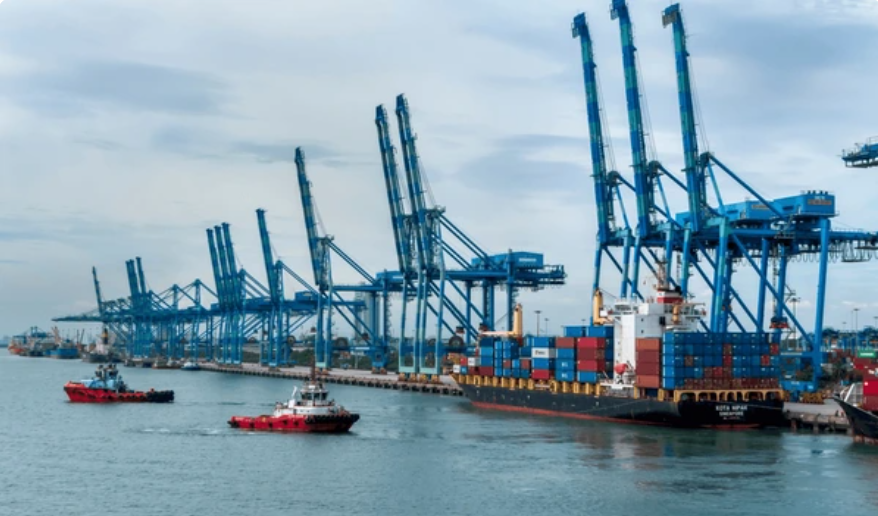
The strong trade connections from China to Malaysia are supported by busy sea freight routes. Major China ports like Shanghai and Guangzhou have direct links to Malaysian hubs such as Port Klang and Johor Port. Sea shipping is usually the most cost-effective option for high-volume cargo, especially when supported by an experienced China Freight Forwarder familiar with Malaysia trade routes, though it tends to be slower compared to other methods. As practical as sea freight is, it comes with its own set of challenges.
Main Shipping Ports in China
Port of Shanghai
Positioned at the mouth of the Yangtze River, the Port of Shanghai serves as a key transport hub for the dynamic Yangtze River Valley economies and China’s largest city. It handles over 47.3 million TEUs annually, making it the world’s busiest port by cargo tonnage.
The port primarily engages in trade with Europe, the Americas, and Asia Pacific, linking Chinese and global businesses.
For companies aiming to expand into major global markets, the Port of Shanghai stands out due to its extensive network and unparalleled handling capabilities.
Port of Ningbo-Zhoushan
Centrally located along China’s coastline, the Port of Ningbo-Zhoushan ranks as the busiest in the world by cargo tonnage, moving over 1 billion tonnes of cargo annually.
The port connects with major economies, such as the United States, the European Union, and Australia, making it a vital hub for international trade.
If your supply chain targets Western markets or Australia, this port’s immense cargo capacity and strategic location make it a critical choice.
Port of Hong Kong
Situated on the South China Sea at the Pearl River Delta’s mouth, the Port of Hong Kong, while no longer the world’s busiest, still processes about 38.3 million TEUs annually.
Functioning as China’s gateway to the West, it supports trade with the United States, Europe, and Asia.
For businesses focusing on Western markets, incorporating the Port of Hong Kong into your logistics planning could provide substantial advantages.
Port of Shenzhen
Located just north of Hong Kong, the Port of Shenzhen spans 260 kilometers along southern China’s coast and handles around 16 million TEUs each year.
The port has significant trading connections with North America, Europe, and East Asia, contributing to China’s Belt and Road Initiative.
Companies targeting Asian and Western markets should consider the Port of Shenzhen due to its robust cargo volume and strategic importance.
Port of Guangzhou
Found on the Pearl River, the Port of Guangzhou is China’s third busiest port with an annual throughput exceeding 30 million TEUs.
This port is vital for trade between mainland China and Hong Kong and engages with Southeast Asia, Europe, and the USA.
If your business focuses on accessing Southeast Asian markets or bridging trade between Hong Kong and mainland China, the Port of Guangzhou offers significant logistical value.
Port of Qingdao
Situated on the Yellow Sea near South Korea and Japan, the Port of Qingdao handles approximately 26.2 million TEUs annually.
The port plays a central role in trade across China, Japan, Korea, and other Asia-Pacific regions.
For ventures targeting Asia-Pacific markets, leveraging Qingdao’s strategic location is highly advantageous due to its strong regional connections.
Main Shipping Ports in Malaysia
Port Klang
Located in Selangor’s Klang district, Port Klang is Malaysia’s busiest port, managing around 23.7 million TEUs per year.
Serving as a key hub for trade with China, Singapore, Japan, India, and the United States, Port Klang benefits from its strategic location near Klang Valley, Malaysia’s primary economic center.
If expanding into Asian or U.S. markets is part of your strategy, Port Klang plays a key role in China Logistics networks connecting China with Southeast Asia and global markets, making it essential to your operations.
Port of Tanjung Pelepas
Nestled at the eastern mouth of the Pulai River in southwestern Johor, the Port of Tanjung Pelepas handles an impressive 11.2 million TEUs annually.
This port collaborates with critical trading partners like the Netherlands, Singapore, China, and Hong Kong. As Malaysia's second-largest port, it has become a benchmark for excellence as a global transshipment hub.
Tanjung Pelepas is an attractive option for businesses targeting European and Far Eastern markets. Positioned along primary east-west shipping lanes and boasting a strong reputation, this port can help optimize shipping operations efficiently.
Penang Port
Located on Penang Island, Penang Port processes approximately 1.8 million TEUs each year.
The port's primary trading connections include China, Singapore, and Japan. It functions as a pivotal multi-purpose port for northern Malaysia, serving both industrial activities and surrounding regional demand, including neighboring countries.
For businesses aiming to access Northern Malaysia and ASEAN markets, Penang Port offers significant benefits through its versatile cargo-handling facilities, robust regional connectivity, and integrated logistics systems.
Johor Port
Situated in Pasir Gudang, Johor, Johor Port operates as a multipurpose facility handling about 1.1 million TEUs annually.
With Indonesia, Thailand, and Vietnam as its main trading partners, Johor Port caters to a wide industrial and commercial hinterland of Peninsular Malaysia as the country's first multipurpose port.
Companies expanding into the ASEAN region, specifically Indonesia and Thailand may find Johor Port's diverse cargo capabilities and strong ferry network highly beneficial.
Kuantan Port
Found in Kuantan, the capital city of Pahang, Kuantan Port handles over 0.9 million freight weight tonnes (FWT) each year.
Major trade routes include China, Indonesia, and Australia. The port serves as the gateway to the East Coast Economic Region (ECER), encompassing Pahang, Terengganu, Kelantan, and part of Johor’s Mersing district.
Companies looking to venture into Asian markets or expand within the ECER region can leverage Kuantan Port's planned growth initiatives and strong ties with Chinese business networks to bolster their reach.
Bintulu Port
Based in Bintulu, Sarawak, Bintulu Port handles around 0.5 million FWT of goods annually.
Its main trading partners include China, South Korea, and Japan. With state-of-the-art facilities for liquefied natural gas (LNG) exports, this port plays a crucial role in Malaysia’s energy sector.
If your business is focused on the energy sector or intends to establish a stronger presence in East Malaysia, Bintulu Port's specialization in LNG exports and support for industries like oil, gas, and timber could be indispensable to your logistics plans.
Should You Choose FCL or LCL When Shipping From China to Malaysia?
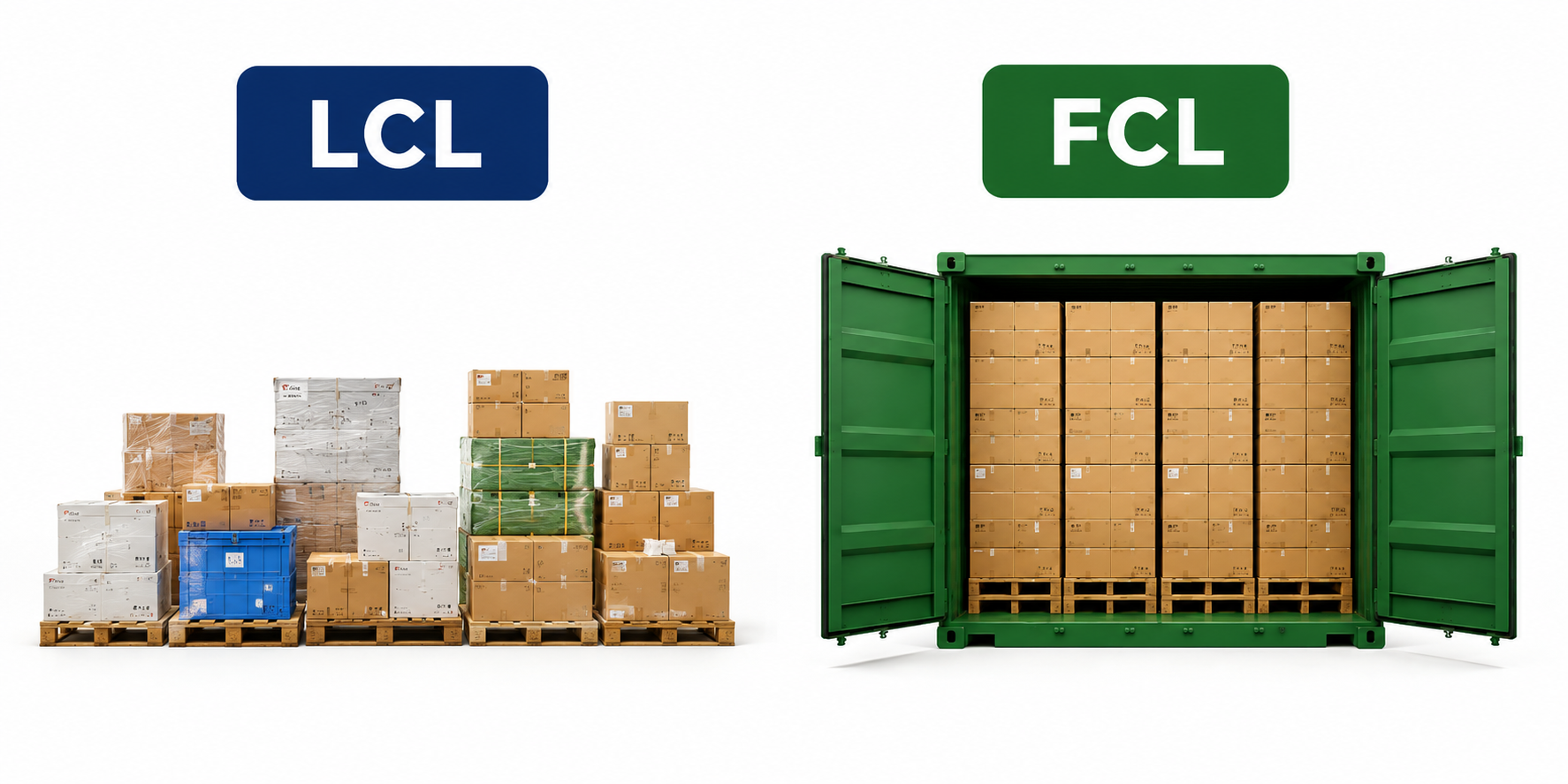
When shipping goods from China to Malaysia, deciding between Full Container Load (FCL) or Less-than-Container Load (LCL) is crucial as it can significantly impact costs, delivery timelines, and overall logistic success.
FCL shipping involves reserving an entire container for your shipment, even if it's not fully utilized it offering faster transit times and additional security for high-volume goods. On the other hand, LCL allows you to share container space with other shippers, which is cost-effective for smaller shipments but might involve longer transit due to consolidation requirements.
LCL: Less than Container Load
Definition: LCL (Less than Container Load) shipping is a cost-effective option for transporting smaller shipments that do not fill an entire container. By sharing container space with goods from other shippers, you pay only for the space you need.
LCL is ideal when your cargo volume is less than 13-15 CBM and does not require a full shipping container. This method is particularly advantageous when shipping smaller goods from countries like China to Malaysia, offering flexibility and often reduced costs.
Example: Imagine being a electrical manufacturer in China wanting to send a limited selection of items to a retailer in Malaysia. If your goods occupy only 10 CBM, using LCL shipping allows your products to be combined with other consignments headed to the same destination, optimizing cost and space.
LCL shipping costs are calculated based on the proportion of the container space your cargo occupies, sharing the overall container cost. However, additional expenses can arise from services like cargo handling. While it’s less cost-efficient than FCL for large shipments, LCL remains a practical choice for smaller volumes, offering notable savings.
FCL: Full Container Load
Definition: FCL (Full Container Load) shipping involves renting an entire container exclusively for one shipment. Best suited for sizable cargo exceeding 13-15 CBM, FCL ensures that the whole container is reserved for your goods, which remain sealed from origin to destination.
FCL is perfect for high-volume shipments. For instance, if a business in China is exporting hundreds of electric bike to Malaysia, they can use a 20ft or 40ft container, ensuring safety and consolidating all goods in one place.
While the upfront quote for FCL tends to be higher than LCL, it becomes more cost-efficient for larger shipments since the cost per cubic meter decreases as the shipped volume increases. For example, renting a bus for a large group initially seems expensive but is more economical per person compared to renting multiple vans. Similarly, with FCL, the cost efficiency improves with larger loads.
It's worth noting that additional costs such as packing, transportation to the dock, crane usage, and customs fees may apply. Nevertheless, FCL is often recommended by experienced China Freight Forwarder companies for bulk shipments due to its efficiency and enhanced cargo security.
How long does sea freight take from China to Malaysia?
Shipping goods by sea freight from China to Malaysia generally takes 6 to 14 days, though exact transit times can vary based on factors like the specific ports involved, the type and weight of the cargo, and unforeseen circumstances.
China Ports | Malaysia Ports | Average Shipping Time |
Shanghai | Port Klang | 12 |
Shenzhen | Penang | 10 |
Guangzhou | Miri | 6 |
Qingdao | Johor Port | 12 |
** Please note that the transit times provided are estimates and may differ from actual delivery times. For the most accurate information, consult your freight forwarder.
How much does it cost to ship a container from China to Malaysia?
Determining the cost of shipping a container from China to Malaysia involves several variables, including the specific loading and destination points, carrier choices, type of goods, and market conditions. While exact rates are hard to predict, you might encounter costs ranging between $50 and $200 per cubic meter.
Special Transportation Services
Out of Gauge (OOG) Containers
Designed for oversized or heavy cargo, OOG containers are perfect for large machinery or equipment that exceeds standard container dimensions. This solution is ideal for businesses shipping items like cranes, excavators, or manufacturing components when disassembly isn’t feasible.
Break Bulk Shipping
This method accommodates goods loaded individually rather than in containers, such as bags, crates, boxes, or oversized items. It’s suitable for diversified cargo or heavier items that don’t fit conventional containers—an economical choice for mixed loads like grain sacks, fruit crates, or construction materials.
Dry Bulk Shipping
Focused on transporting unpackaged goods in massive quantities, dry bulk is typically utilized for commodities like agricultural products (e.g., rice or wheat), building materials (e.g., sand or gravel), or minerals (e.g., coal and iron). It’s a practical solution for businesses handling high-volume goods.
Roll-on/Roll-off (Ro-Ro) Shipping
This option is tailored for wheeled cargo like cars, trucks, trailers, or buses. The vehicles are driven onto and off the vessel using their wheels or flatbed trailers. Ro-Ro shipping is a faster and often cost-effective solution as it eliminates the need for cranes or lifting equipment.
Reefer Containers
For perishable products requiring temperature control during transit, reefer containers are an excellent choice. They ensure safe transportation of temperature-sensitive goods such as fruits, seafood, pharmaceuticals, and dairy products.
GB FREIGHT specializes in helping businesses select the most appropriate shipping options and provides tailored solutions efficiently. Reach out with your requirements to receive a free shipping quote.
Air Freight From China to Malaysia
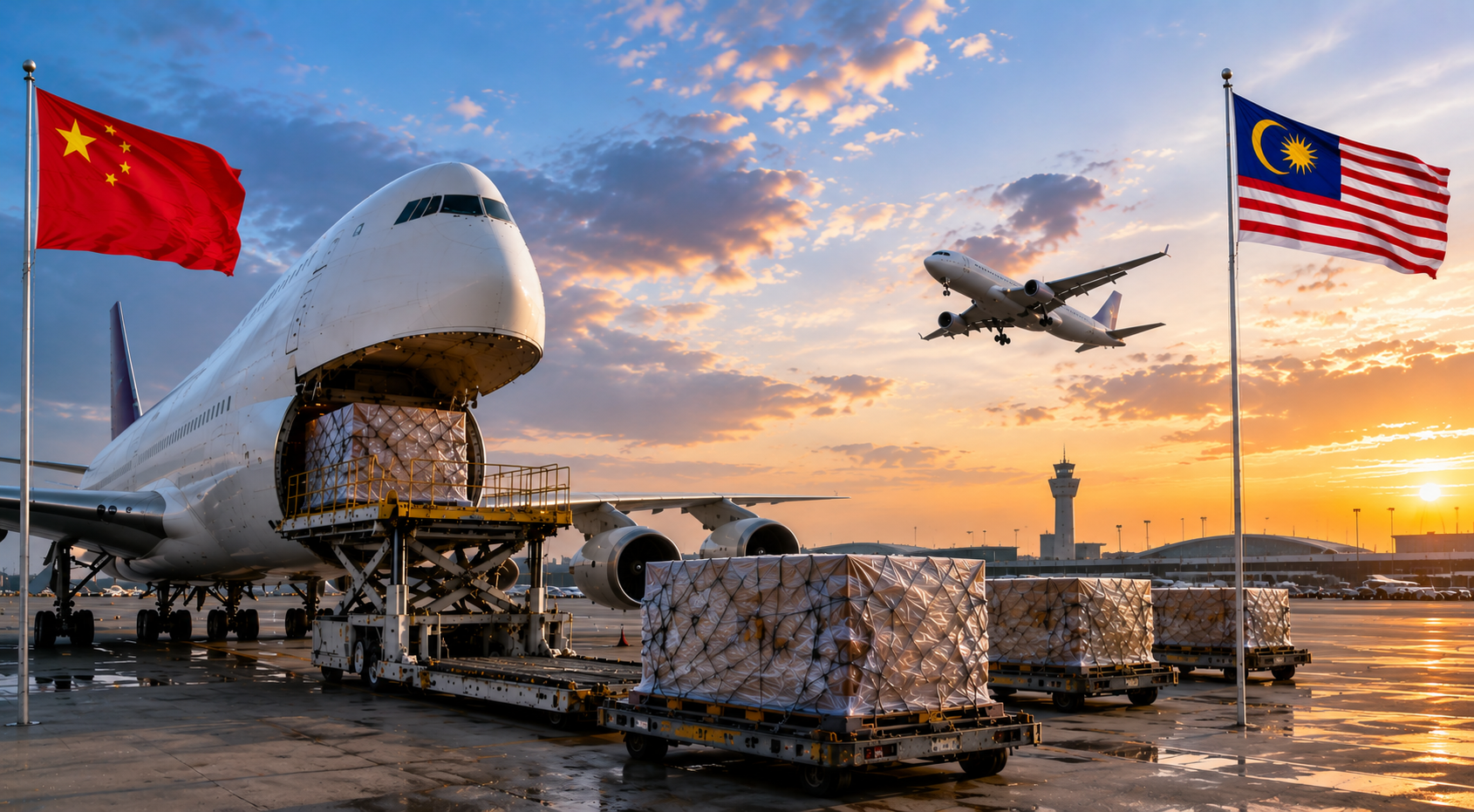
Air freight from China to Malaysia offers a fast and reliable solution for shipping high-value, small consignments. It’s like a high-speed bullet train for your goods, ensuring they reach their destination quickly and safely. Products like cutting-edge electronic gadgets or luxury fashion items are ideal candidates for this mode of transportation. However, navigating air freight isn’t without its challenges.
Main International Airports in China
Airport | Code | Advantages |
Beijing Capital International Airport | PEK | Major international cargo hub with strong global flight connections |
Shanghai Pudong International Airport | PVG | One of the world’s busiest cargo airports with extensive international routes |
Guangzhou Baiyun International Airport | CAN | Important South China export gateway serving major manufacturing regions |
Shenzhen Bao’an International Airport | SZX | Key logistics hub for electronics, e-commerce, and high-tech cargo |
Chengdu Shuangliu International Airport | CTU | Strategic airport connecting Western China with global markets |
Hong Kong International Airport | HKG | Leading international cargo airport with advanced express and cold-chain facilities |
Main International Airports in Malaysia
Airport | Code | Advantages |
Kuala Lumpur International Airport | KUL | Malaysia’s largest airport and main international cargo gateway |
Penang International Airport | PEN | Important hub for electronics and semiconductor exports |
Senai International Airport | JHB | Strategic logistics airport serving Southern Malaysia and Singapore markets |
Kota Kinabalu International Airport | BKI | Key cargo gateway for East Malaysia and regional trade |
Kuching International Airport | KCH | Important airport supporting cargo distribution in Sarawak |
Langkawi International Airport | LGK | Regional airport supporting tourism and light cargo operations |
Should I choose Air Freight from China to Malaysia?
Choosing air cargo for shipments from China to Malaysia can offer a great balance of cost-effectiveness and reliability, especially for larger consignments. Reputable carriers like China Southern Airlines and Malaysia Airlines provide fixed schedules, albeit with slightly longer transit times, yet they ensure efficient handling of bulk shipments. This option is particularly advantageous for cargo exceeding 100–150 kilograms, making it an excellent choice for businesses looking to optimize their shipping budget without compromising efficiency.
How Long Does Air Freight Take From China to Malaysia?
Typically, air freight from China to Malaysia takes between 3 to 5 days. This timeframe can fluctuate based on factors such as the origin and destination airports, the weight of the cargo, and the nature of the goods being transported. For a precise estimate tailored to your needs, please consult GB FREIGHT to gain more accurate estimates.
What Is the Cost of Air Freight Shipping From China to Malaysia?
On average, air freight rates From China to Malaysia range from $3 to $5 per kilogram. However, the exact cost can vary widely depending on factors like shipment weight, dimensions, departure and arrival airports, and specific cargo characteristics. Every shipment is unique, so providing accurate details upfront allows for more precise pricing.
The Difference Between Volumetric and Gross Weight
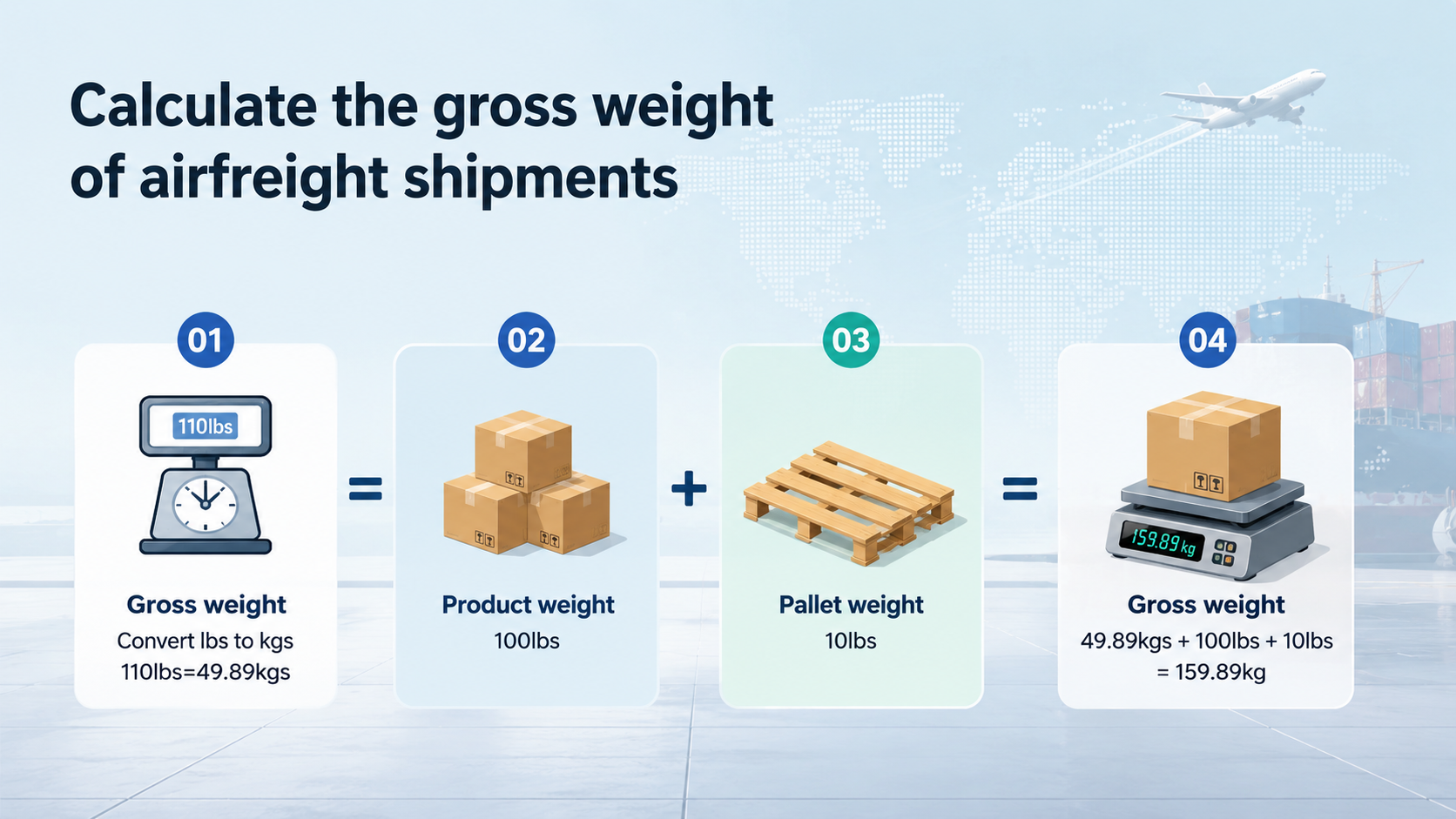
Gross Weight: This is the shipment’s actual physical weight, including packaging. You simply weigh the parcel to determine this figure.
Volumetric Weight: This calculation accounts for the space occupied by the shipment on an aircraft. The formula used is Length × Width × Height (cm) ÷ 5000 for standard air freight or express services alike.
For example: If your package measures 50 x 50 x 50 cm, then the Volumetric Weight is 50 × 50 × 50 ÷ 5000 = 25 kg (or 55 lbs)
Door-to-Door Shipping From China to Malaysia
Discover the ease and efficiency of Door-to-Door shipping, a comprehensive solution that simplifies the process of moving goods from China to Malaysia. This service handles every step from pickup to delivery, offering unmatched convenience and optimized logistics. With notable advantages in saving time and cost, it’s an ideal choice for anyone looking for seamless shipping solutions. Let’s explore the details to see why this approach is so appealing.
What is Door-to-Door Shipping
The Door-to-Door shipping service is designed to eliminate the usual stress attached to international logistics. Picture your shipment arriving at your doorstep without worrying about customs clearance or coordinating various transport stages, that’s the beauty of this approach. Although occasional hiccups, such as potential delivery delays, can occur, the overall benefits make it a preferred option for many businesses.
Why Using a Door-to-Door Service From China to Malaysia?
Simplified Logistics: From picking up goods in China to delivering them in Malaysia, this service takes care of every detail. It removes the burden of coordinating multiple steps, turning international shipping into a stress-free experience.
Prompt Deliveries: If timing is critical for your shipments, Door-to-Door services excel in meeting tight deadlines, ensuring reliable and punctual deliveries tailored to your needs.
Safe Handling of Complex Goods: Managing delicate or intricate cargo doesn’t have to invite worry anymore. The service ensures careful handling every step of the way, maintaining the integrity of even your most complicated shipments.
Convenience Made Easy: With everything managed under one provider, there’s no need to juggle tasks with several logistics companies. This end-to-end approach saves time and minimizes headaches.
Peace of Mind: Let go of shipping uncertainties and enjoy complete confidence knowing that your goods are being managed by professionals with expertise and care.
Choose Door-to-Door services for your shipments from China to Malaysia, it’s the logical way to simplify logistics while enjoying smooth and efficient deliveries.
GB FREIGHT: Your Door-to-Door Expert
As a trusted China Logistics and China Freight Forwarder company, GB FREIGHT simplifies shipping From China to Malaysia with specialized Door-to-Door services. Our team handles every aspect of the process, including packing, transportation, and customs clearance across all modes of shipping. If you are searching for reliable China Logistics solutions or a professional China Freight Forwarder for shipping From China to Malaysia, GB FREIGHT is ready to support your business with efficient and cost-effective international shipping services. Reach out today for a free estimate or connect with our shipping consultants for expert advice.


