
 |


| Quantity: | |
|---|---|
Netherlands
Freight Shipping from China to Netherlands
Planning to ship from China to the Netherlands involves strategic decision-making around mode, timing, and customs processes. Small choices in these areas can have a big impact on costs and potential delays. It’s more than just arranging freight, this is about navigating one of Europe’s busiest entry points via Rotterdam and Schiphol efficiently.
You’ll need clear information to plan your imports efficiently. This guide covers sea, air and rail freight from China to the Netherlands, helping you better understand the shipping process, timelines, and potential costs. If you need professional support, GB FREIGHT can manage the entire logistics process to ensure smooth and reliable delivery.
Sea Freight From China to Netherlands
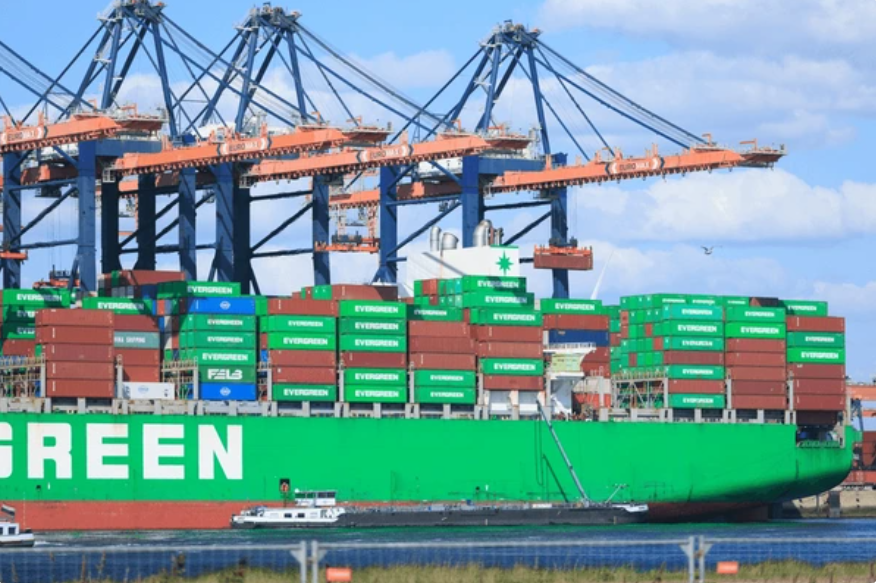
Sea freight from China to Netherlands play a significant role in their flourishing trade relationship, with crucial ports like Shanghai and Rotterdam serving as major hubs. While sea freight is often cost-effective for high-volume shipments, it’s also the slowest option and can involve complex logistical challenges.
As a shipper, common issues like paperwork errors and inconsistent handling can impact timelines. With the right insights into best practices and common pitfalls, however, you can transform potential stumbling blocks into opportunities for efficient shipping. This section aims to equip you with actionable knowledge to simplify your sea freight experience and give you greater control over your shipping operations. Let’s explore further.
Main Shipping Ports in China
Port of Shanghai
Location and Volume: Positioned at the heart of the Yangtze River Delta, the Port of Shanghai is the world's leading shipping hub, processing over 43.30 million TEU annually.
The port maintains robust trade networks with North America and Europe. Its strategic significance lies in its expansive service capabilities and coverage of China's vast domestic market.
For companies aiming to venture into the booming East Asian markets, the Port of Shanghai's extensive connectivity and efficient services make it a cornerstone of any robust logistics strategy.
Port of Shenzhen
Located in Guangdong Province, the Port of Shenzhen handles approximately 27.74 million TEU each year.
Major trading partners include Southeast Asia, Europe, and the United States. Its strategic value is rooted in its advanced deep-water ports and state-of-the-art container-berth facilities.
Businesses focusing on Southeast Asia or managing significant container shipments will benefit from the Port of Shenzhen's modern infrastructure, which streamlines logistics operations.
Ningbo-Zhoushan Port
Situated in Zhejiang Province, Ningbo-Zhoushan Port processes over 29 million TEU annually.
The port's primary trading partners are Southeast Asia, the United States, and Europe. Its strategic advantage comes from its diverse capabilities in handling a wide range of imports and exports.
For businesses serving varied markets, Ningbo-Zhoushan Port offers versatility, making it a valuable asset in any shipping plan.
Port of Guangzhou
Located in the Pearl River Delta, the Port of Guangzhou is a vital comprehensive hub port with annual volumes exceeding 22 million TEU.
This port builds strong trade ties with Southeast Asia, the United States, and Europe. It plays a critical role due to its extensive storage capacity and efficient transportation systems.
Companies requiring a reliable network for shipping to these vital regions should consider integrating the Port of Guangzhou into their logistics strategy.
Port of Qingdao
Location and Volume: Found in Shandong Province, the Port of Qingdao is an essential hub, handling over 19 million TEU every year.
With deep trading relationships with Japan and South Korea, this port is strategically well-positioned to manage a variety of cargo types effectively.
Businesses targeting Northeast Asian markets could leverage the Port of Qingdao’s adaptability as part of a tailored logistics strategy.
Port of Tianjin
Conveniently situated in Northern China, the Port of Tianjin is a key international trade and logistics center that manages over 16 million TEU annually.
Its main trading partners include Japan, South Korea, and the United States. Tianjin is Northern China's largest port, offering excellent access to global markets.
Companies seeking to establish a presence in Northern China should consider using the Port of Tianjin for its extensive range of services and strategic location.
Main Shipping Ports in Netherlands
Port of Rotterdam
Situated in the province of South Holland, the Port of Rotterdam is the largest seaport in Europe. Its prominence stems from its strategic position along the Rhine and Meuse rivers. In 2018, it handled an impressive shipping volume of 14.5 million TEUs.
The port plays a central role in the Heartland strategy, with Germany and Belgium being significant trade partners. Its ideal location facilitates connectivity with over 500 international ports, cementing its importance in global logistics.
Businesses aiming to connect European and global markets would benefit greatly from the Port of Rotterdam’s advanced technological infrastructure and vast network of shipping routes.
Port of Amsterdam
Located to directly link the North Sea to key Dutch canals, the Port of Amsterdam stands as the Netherlands' second-largest port. In 2018, it recorded a shipping volume of 1.7 million TEUs.
Germany, Belgium, and the United Kingdom are among its primary trade partners. The port is critical for Dutch imports, exports, and energy supply chains.
Companies engaged in energy, or those dealing with large, heavy goods like coal, cocoa, or oil-based products, will find the Port of Amsterdam well-suited to their supply chain requirements.
Port of Zeeland
Positioned in the southwestern province of Zeeland, this port collective includes Vlissingen and Terneuzen. Together, they manage more than 3.1 million TEUs annually.
Germany, the UK, and Belgium serve as pivotal trade partners for Zeeland Seaports. The port is especially crucial for industries such as chemicals, automotive, and paper production.
Companies specializing in chemicals or paper manufacturing—or those requiring optimal rail connectivity to Germany and Belgium—will find the Port of Zeeland to align well with their logistical needs.
Port of Groningen
This regional port in Northern Netherlands connects seamlessly with the North Sea. While smaller in volume, the Port of Groningen specializes in handling niche cargo types.
Its key trade network focuses on surrounding European and Scandinavian countries. The port serves as a lifeline for local industries, particularly agriculture.
Businesses serving Scandinavian or Northern European markets, or operating in agriculture, can benefit from Groningen's specialized shipping options and export routes.
Port of Moerdijk
Found at the confluence of the Rhine and Meuse rivers, the Port of Moerdijk functions as a versatile hub centered on logistics and the chemical industry. In 2018, it handled approximately 500,000 TEUs.
Key trade destinations include Germany, Belgium, and other European Union countries. The port’s strategic location provides excellent multi-modal transport options across Europe, making it a vital contributor to the Dutch economy.
Organizations that require adaptable transportation solutions or specialize in chemical processes will find Moerdijk’s strong connectivity within Europe an asset to supply chain efficiency.
Port of Delfzijl
Though smaller in scale, the Port of Delfzijl remains valuable for regional trade activities. It is positioned at the Ems River's mouth, managing about 200,000 TEUs in 2018.
The port facilitates trade primarily with Germany and Scandinavian nations, supporting industries such as agri-food and chemicals.
If you operate within Northern Netherlands’ or Germany’s agri-food or chemical sectors, Delfzijl offers a practical gateway into local markets due to its strategic position.
Should you choose FCL or LCL for shipping From China to Netherlands?
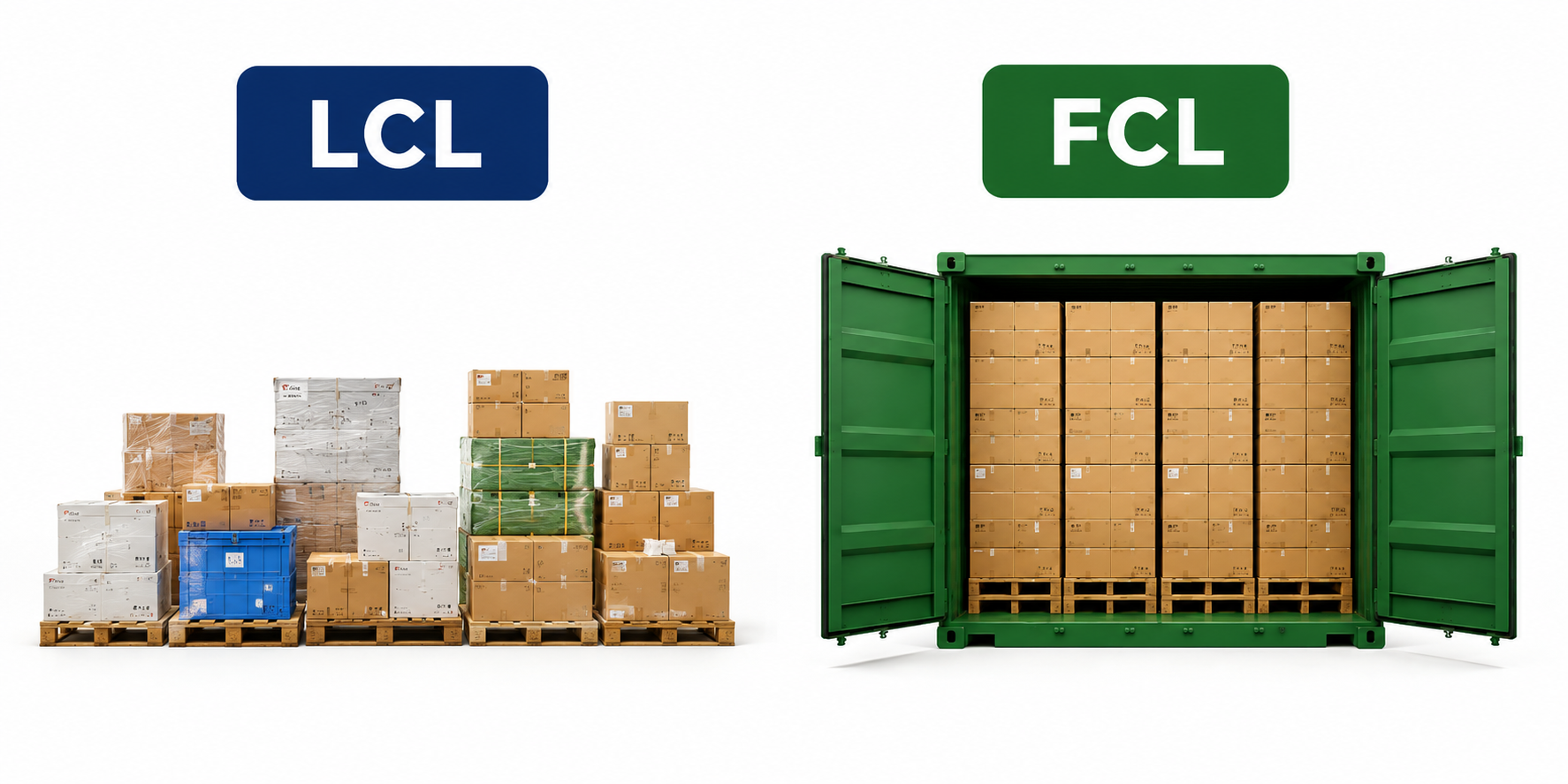
Deciding between Full Container Load (FCL) and Less than Container Load (LCL) shipping is a pivotal choice when moving goods from China to the Netherlands. Each option comes with unique cost structures, time requirements, and logistical implications. Understanding these differences will help you choose the solution that best aligns with your business needs.
FCL: Full Container Load
Definition: Full Container Load shipping involves renting an entire container exclusively for your cargo. This option guarantees better security and integrity of goods since the container remains sealed from origin to destination.
FCL is ideal for large shipments exceeding approximately 13–15 CBM. Depending on your cargo size, you may require either a 20-foot or 40-foot container.
Example: If you’re a furniture company importing bulky items like 400 chairs from China, FCL provides adequate space for your cargo in a single shipment while minimizing potential damage during transit.
While FCL may seem like a larger upfront expense, it becomes cost-efficient for high-volume shipments as the per-unit cost decreases significantly. Think of it as an investment in secure transport and timely delivery.
LCL: Less than Container Load
Definition: Less than Container Load allows multiple shippers to share a container, each paying only for the space their goods occupy. This solution is both flexible and budget-friendly for smaller cargo volumes.
Choose LCL if your shipment totals less than 15 CBM. It works well when you don’t need an entire container for your goods.
Example: If you're a clothing retailer importing 11 CBM of garments from China, LCL enables you to share container space, leading to significant cost savings compared to FCL.
While LCL typically saves money for smaller shipments, costs may increase as your cargo size grows. Additionally, clearing consolidated cargo may involve extra handling fees and longer processing times. LCL is best suited for smaller shipments that are less time-sensitive.
By understanding the features and trade-offs of both FCL and LCL options, you can optimize your shipping process to align with your volume needs, deadlines, and budget goals.
How long does sea freight take From China to Netherlands?
The average transit time for sea freight From China to Netherlands varies considerably based on factors like the specific ports involved, the weight and type of cargo, and the shipping route. For an accurate, tailored estimate, it’s best to consult a reliable freight forwarder, such as GB FREIGHT.
China | Netherlands | Average Transit Time |
Shanghai | Rotterdam | 30 |
Ningbo-Zhoushan | Amsterdam | 35 |
Shenzhen | Rotterdam | 28 |
Qingdao | Amsterdam | 32 |
*Please note that these are averages. For the accurate information please contact with your freight forwarder or contact us for more further.
How much does it cost to ship a container From China to Netherlands?
Estimating ocean freight costs From China to Netherlands can be complex due to a range of variables. Rates typically fall between $10 and $150 per CBM (cubic meter), influenced by factors such as the loading and destination points, carrier choice, type of goods, and even market fluctuations from month to month.
Exact costs can vary, but you’re not alone in tackling this process. Our expert shipping team specializes in providing customized quotes to meet your specific shipping needs. Let us simplify this process and help you navigate international shipping with ease.
Special Transportation Services
Out of Gauge (OOG) Container
OOG refers to cargo that exceeds standard container dimensions due to size or weight. These items typically require special equipment, such as Flat Rack or Open Top containers, to ensure safe transport.
Suitable for: Oversized or heavy items like machinery, artwork, boats, and industrial equipment.
Examples: Mining equipment, wind turbine blades, factory components.
Why choose this: If your cargo is too large or heavy for conventional containers or needs specialized handling, OOG containers are ideal.
Break Bulk
Break bulk refers to shipping goods that are not containerized but are loaded individually onto vessels.
Suitable for: Irregularly shaped or oversized items like construction materials and heavy machinery.
Examples: Cranes, steel beams, large pipes.
Why choose this: Perfect for large or unconventional items that cannot fit into standard containers, allowing tailored handling for each piece.
Dry Bulk
The transportation of unpackaged goods in large volumes, typically loaded directly into a vessel’s hold.
Suitable for: Non-perishable commodities shipped in bulk quantities like coal, grain, or metal ores.
Examples: Barley, quartz stone.
Why choose this: An efficient and cost-effective way to move massive quantities of granular materials.
Roll-on/Roll-off (Ro-Ro)
Loading and unloading vehicles or wheeled cargo using built-in ramps on a specialized vessel.
Suitable for: Self-propelled equipment such as cars, trucks, trailers, and buses.
Examples: Automobiles, tractors, buses.
Why choose this: Ideal for wheeled cargo that can be driven or towed onto the vessel—offering simplicity and convenience.
Reefer Containers
Refrigerated containers designed for temperature-controlled shipping to preserve perishable goods during transit.
Suitable for: Perishable products such as fresh/frozen foods, dairy items, fruits, vegetables, flowers, and pharmaceuticals.
Examples: Frozen fish, fresh flowers, Covid-19 vaccines.
Why choose this: Best suited for temperature-sensitive goods requiring controlled conditions to prevent spoilage during transport.
Still unsure? Let GB FREIGHT assist in simplifying your logistics process. Contact us today for a free quote and enjoy a smooth, efficient shipping experience tailored specifically for you!
Air Freight From China to Netherlands
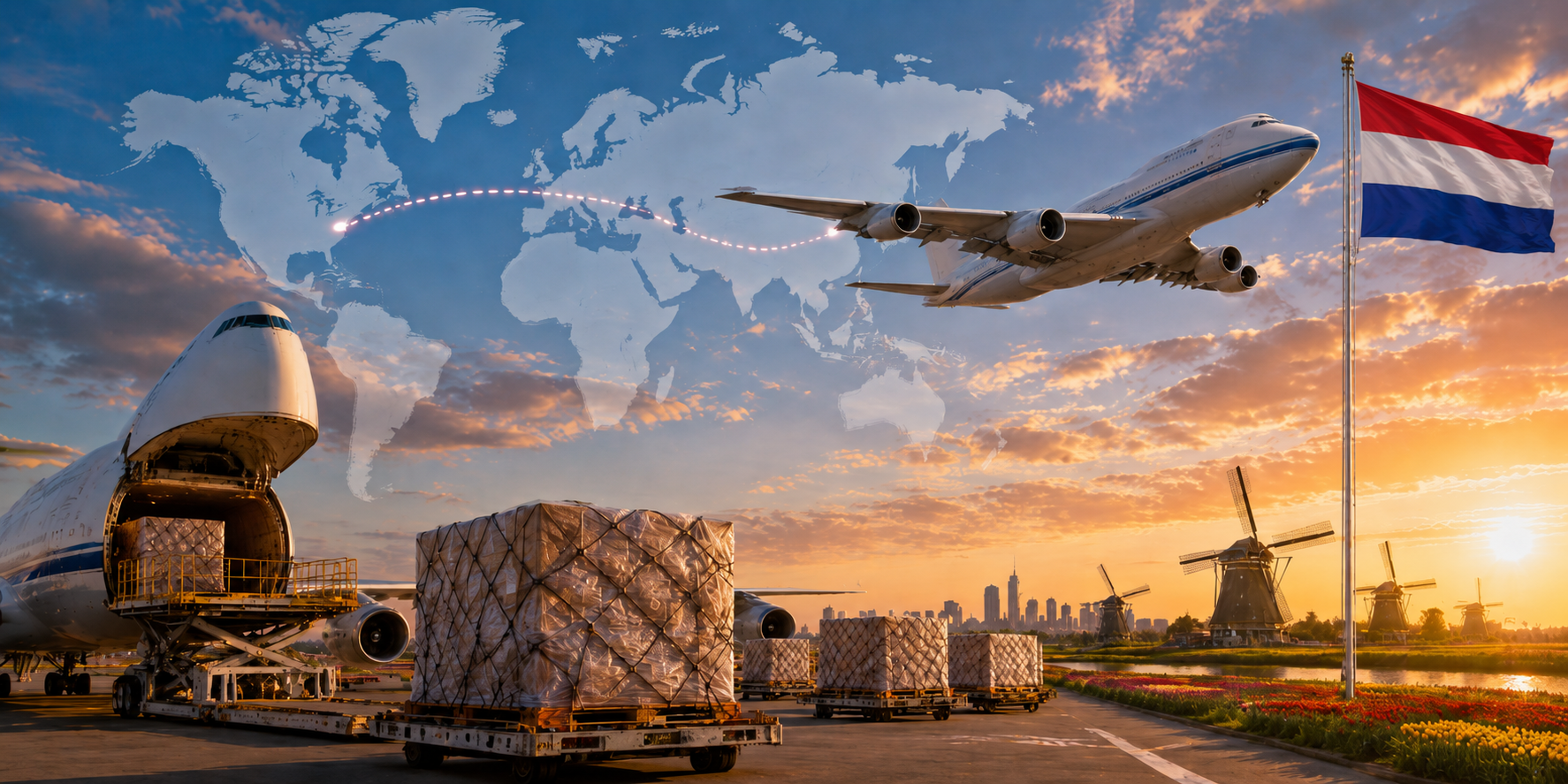
When you need to swiftly transport valuable cargo from China to the Netherlands, air freight emerges as a speedy and reliable solution. Imagine sleek gadgets and luxury designer goods, compact, precious, and ready to hit the market quickly. This is where air freight excels, delivering items in record time and bypassing the slower pace of sea transport.
However, like entering a marathon unprepared, air freight can become problematic if not managed properly. Ignoring weight calculations or industry best practices can quickly turn a cost-effective option into an expensive ordeal.
Main international airports in China
Airport | Code | Advantages |
Shanghai Pudong International Airport | PVG | China’s busiest cargo airport with extensive global freight connections and advanced cargo handling facilities |
Beijing Capital International Airport | PEK | Major international aviation hub serving Northern China with reliable worldwide cargo routes |
Guangzhou Baiyun International Airport | CAN | Key logistics gateway for Southern China and Southeast Asia with modern cargo infrastructure |
Chengdu Shuangliu International Airport | CTU | Strategic cargo hub connecting Western China with Europe and Central Asia markets |
Hangzhou Xiaoshan International Airport | HGH | Important freight airport serving the Yangtze River Delta with efficient customs clearance and cargo operations |
Main international airports in Netherlands
Airport | Code | Advantages |
Amsterdam Airport Schiphol | AMS | One of Europe’s busiest cargo airports with extensive global freight connections |
Maastricht Aachen Airport | MST | Major cargo hub offering 24/7 full freighter operations and flexible cargo handling |
Rotterdam The Hague Airport | RTM | Strategic multimodal hub located near Europe’s largest seaport |
Eindhoven Airport | EIN | Important regional airport supporting high-value and technology-related cargo |
Groningen Airport Eelde | GRQ | Regional cargo airport serving Northern Netherlands and nearby European markets |
Should I choose Air Freight from China to Netherlands ?
Opting for air cargo from China to Netherlands can be cost-effective and reliable, particularly for shipments over 100 kg (220 lbs). While fixed schedules might lead to longer transit times, the potential savings often make it worthwhile. Renowned airlines offering these services include China Airlines and KLM Royal Dutch Airlines. Visiting their websites can give you a deeper insight into their offerings. This air freight solution could fit well within your budget while ensuring your shipment is handled by skilled international freight professionals.
How Long Does Air Freight Take From China to Netherlands?
Shipping goods by air freight typically takes around 3-5 days for transit from China to Netherlands. However, these times may vary based on factors such as specific airports, shipment weight, and the type of goods being transported. To get the most accurate shipping times, please contact us for more information.
How much does air freight cost From China to Netherlands
For shipments from China to Netherlands, air freight rates usually range between $4 and $8 per kilogram. But keep in mind that the actual cost may vary based on factors such as distance, package dimensions, weight, and nature of the goods. Our services focus on crafting tailored solutions to ensure efficient and budget-friendly shipments for every client’s specific needs.
Understanding Volumetric and Gross Weight
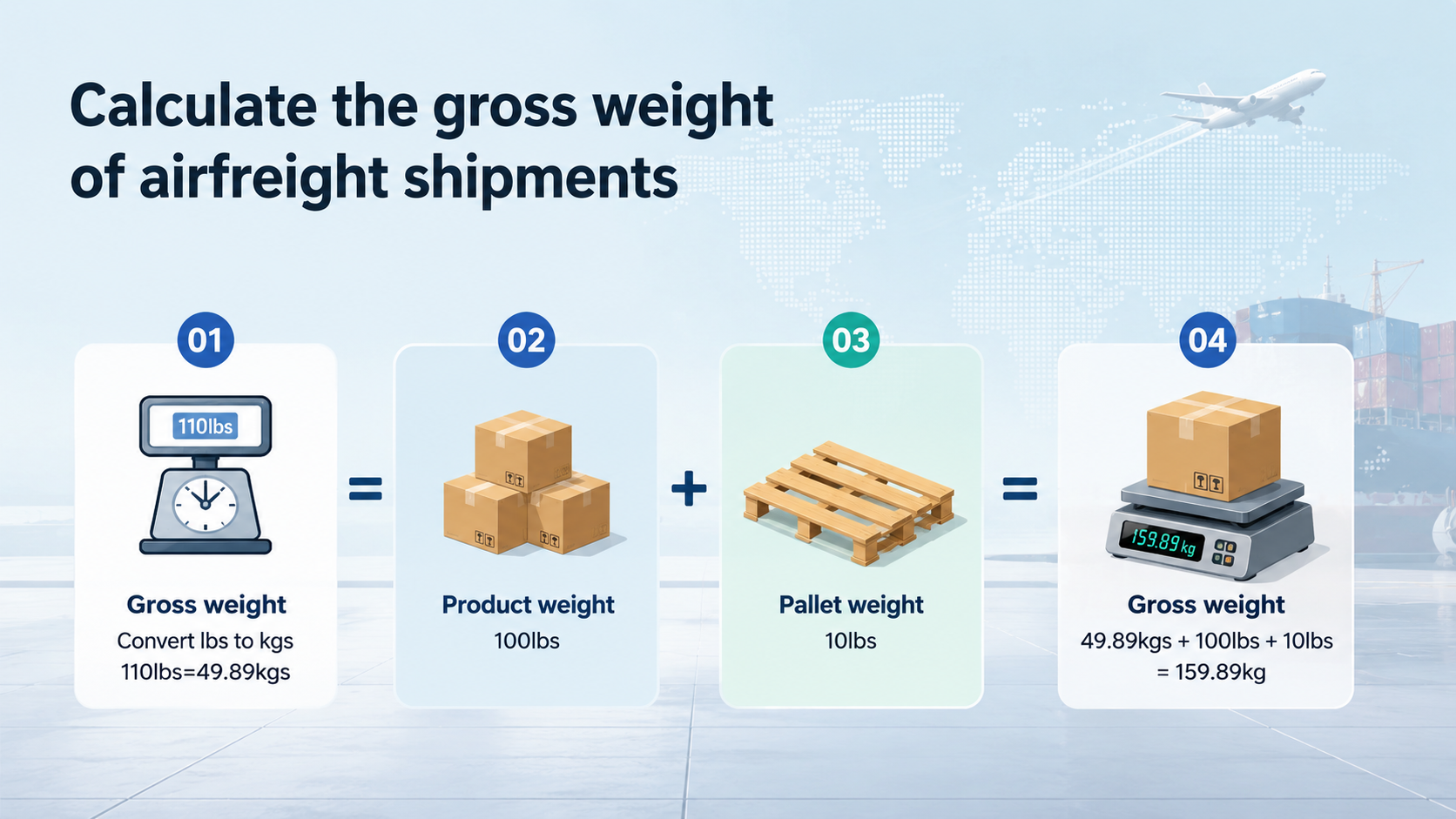
Gross weight represents the actual weight of your shipment, including packaging. Volumetric weight, conversely, is calculated based on your shipment's overall dimensions. In air cargo, volumetric weight is determined by multiplying the package's length, width, and height (in cm) and dividing by 6000. In express air freight services, divide by 5000 instead. For example, a box measuring 40cm x 30cm x 20cm has a volumetric weight of 4kg in air cargo (40 x 30 x 20 / 6000) and 4.8kg in express air freight (40 x 30 x 20 / 5000), which translates to roughly 8.8 lbs and 10.6 lbs respectively.
Freight charges are based on the greater of the two weights—gross or volumetric, ensuring the airline is compensated for the space your package occupies in the aircraft. Understanding this concept is crucial for managing shipping costs effectively.
Rail Freight From China to Netherlands
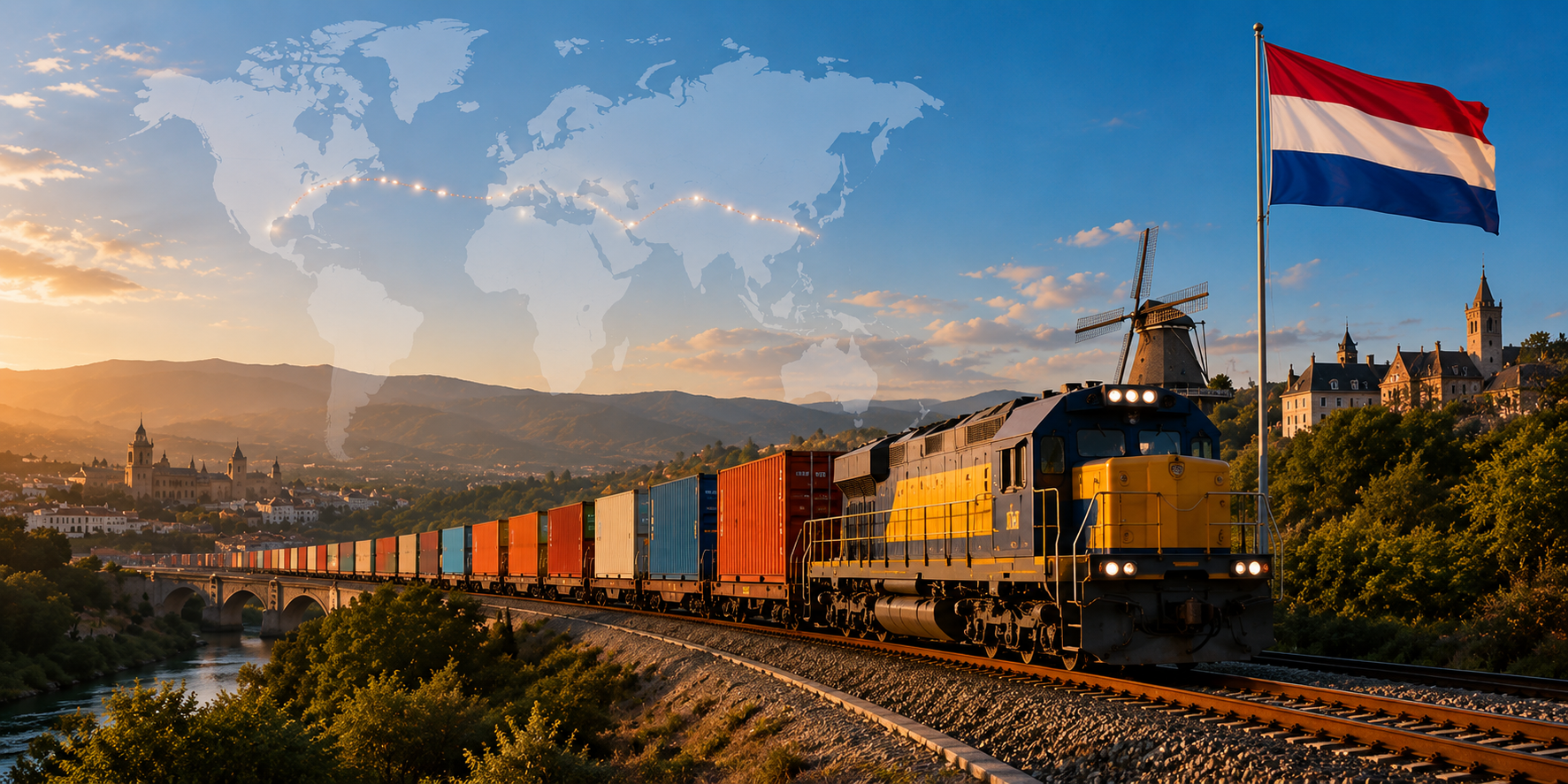
Rail freight from China to the Netherlands offers a fast and cost-effective shipping solution between Asia and Europe. It is faster than sea freight and more affordable than air freight, making it ideal for electronics, machinery, automotive parts, and consumer goods. With stable transit times and reliable rail networks across Eurasia, rail transport is a popular choice for businesses that need efficient and balanced logistics services.
The Main Train Stations in China
Zhengzhou International Hub
Xi’an International Port Station
Chongqing Railway Station
Chengdu International Railway Port
Yiwu Railway Station
The Main Train Stations in Netherlands
Rotterdam Rail Terminal
Tilburg Rail Terminal
Amsterdam Logistics Hub
Venlo Rail Terminal
Moerdijk Logistics Center
How Long Does Rail Freight Take from China to Netherlands?
Rail freight transit time from China to the Netherlands generally ranges from 16 to 22 days, depending on the departure city, destination terminal, cargo type, customs clearance, and railway schedule. Seasonal congestion and border procedures may also affect the final delivery timeline.
Departure Route | Destination | Estimated Transit Time |
Zhengzhou | Rotterdam | 18–20 days |
Chongqing | Rotterdam | 17–20 days |
Xi’an | Tilburg | 16–19 days |
Chengdu | Rotterdam | 18–21 days |
Yiwu | Amsterdam | 18–22 days |
These times represent general averages and may vary due to various factors. For a more accurate estimate, it’s recommended to request a customized quote.
The Advantages of Rail Transport From China to Netherlands
Rail freight offers businesses a reliable middle-ground solution between sea freight and air freight. Compared with ocean shipping, rail transport significantly reduces transit time, while remaining much more cost-effective than air cargo. This makes rail shipping especially suitable for electronics, machinery, automotive components, retail goods, and industrial products.
On average, rail from China to Netherlands takes around half the transit time of sea freight while costing considerably less than air freight. In addition, railway transport provides stable schedules, lower carbon emissions, and reduced risk of port congestion, making it an increasingly preferred logistics solution for European trade.
How Much Does It Cost to Ship by Rail from China to Netherlands?
Rail freight costs from China to the Netherlands depend on several factors, including cargo volume, weight, container type, departure city, destination terminal, customs requirements, and seasonal market conditions. Because every shipment is different, transportation costs may vary accordingly.
GB FREIGHT provides customized rail freight solutions based on your cargo requirements. Our team can assist with railway booking, customs clearance, warehousing, and door-to-door delivery to ensure a smooth and efficient shipping process from China to the Netherlands.
Door-to-door shipping From China to Netherlands
Door-to-door shipping from China to Netherlands is a streamlined service that manages the entire logistics process, from picking up your goods in China to delivering them directly to your destination in the Netherlands. With a single provider handling everything, you avoid the hassles of customs clearance, dealing with multiple carriers, or unexpected costs, making it a highly convenient option for international shipping.
Door-to-Door Shipping
Shipping internationally can be a challenging maze of paperwork, coordination, and logistics, especially when navigating the complexities of moving goods from China to Netherlands. This is where door-to-door shipping emerges as a stress-free solution. By addressing the administrative, logistical, and regulatory demands of such operations, this service ensures every step is covered. While it may come at a slightly higher cost, the convenience and peace of mind are well worth it. With your goods seamlessly transported from Point A to Point B, you won’t have to worry about the details, just trust the experts to handle the journey for you.
Why Choose Door-to-Door Shipping from China to the Netherlands?
Ease and Convenience: With a door-to-door service, all the heavy lifting is off your plate—literally and figuratively. From pick-up at the origin to delivery at your doorstep, every step is managed by a single logistics partner. No more exhausting hours spent coordinating between carriers and timelines.
Time Efficiency: Time is of the essence, especially when meeting tight deadlines. Door-to-door services ensure quick and smooth operations, cutting out delays caused by long logistics chains. Rushed shipments? No problem, your timeline becomes our mission.
Custom Solutions for All Cargo Types: Whether you're shipping breakable goods or something as unique as astrological equipment, door-to-door services offer personalized attention to ensure your cargo arrives safely and in perfect condition. Your concerns are met with tailored solutions, and peace of mind is always included.
Simplified Communication: Coordinating with multiple companies can lead to miscommunication or delays. With a door-to-door service, one company handles everything: trucking, air delivery, customs clearance, and final handoffs. You'll have a single contact point throughout the process.
Focus on What Matters: Free up your time and resources for what truly matters. With logistics managed by professionals, you’re left with more time to concentrate on growth strategies while knowing your shipment is in capable hands.
Opting for a door-to-door service isn’t just shipping, it’s gaining a logistics partner who takes care of your needs from start to finish.
GB FREIGHT - Your Trusted Partner for Door-to-Door Shipping
Experience hassle-free shipping from China to the Netherlands with GB FREIGHT, your reliable partner in freight logistics. We manage every aspect of your shipment, from packaging design and transportation to customs clearance to ensuring everything runs seamlessly from A to Z. With personalized support from dedicated account executives, we tailor solutions to meet your unique needs and deadlines. Contact us today for a free quotation or consult with our experts at no additional cost.
At GB FREIGHT, your satisfaction and peace of mind are always our top priorities.


