
 |


| Quantity: | |
|---|---|
Nigeria
Freight Shipping From China to Nigeria
When planning to ship goods from China to Nigeria, one key point to understand is that even minor gaps in preparation can lead to significant delays at Nigerian ports. The most common setbacks don’t typically involve transportation itself but arise from issues like incomplete documentation, unrealistic transit expectations, and underestimating import duties.
If you're seeking clarity on costs, timelines, and a smoothly managed process, this guide provides essential insights into freight rates, transit durations, sea freight, air freight, and multimodal options. With this information, you’ll be equipped to create a solid shipping budget and timeline.
For a streamlined solution, consider reaching out to GB FREIGHT. We offer comprehensive freight forwarding services from China to Nigeria, managing everything from supplier pickup to final delivery.
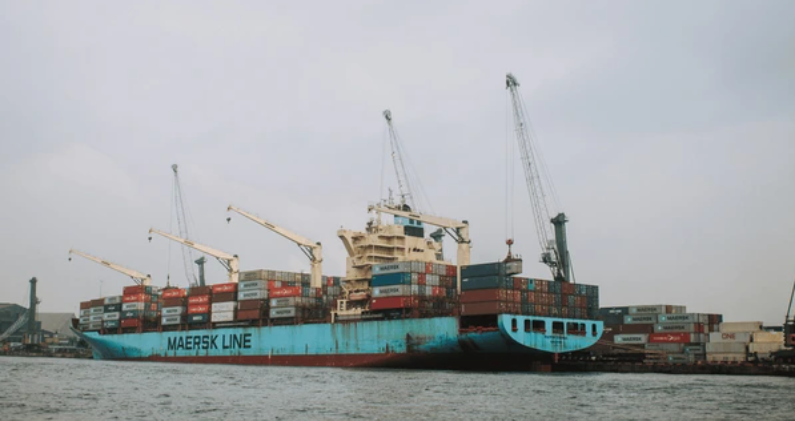
Sea Freight From China to Nigeria
Trade between China and Nigeria relies heavily on sea freight as a cost-effective solution for transporting large cargo volumes. Although slower than air freight, ocean shipping remains one of the most practical options for international trade between the two countries.
However, challenges such as customs procedures, documentation errors, and logistics coordination can still cause delays and unexpected costs. With proper planning and a clear understanding of shipping requirements, businesses can achieve smoother and more efficient sea freight operations from China to Nigeria.
Main Shipping Ports in China
Port of QingdaoPositioned strategically within China’s trade infrastructure, the Port of Qingdao plays a vital role in importing resources like sulphur and rubber. This makes it especially valuable for industries such as textiles and tyre manufacturing. Including Qingdao in your supply chain could provide significant advantages if your operations depend heavily on these materials.
Port of Tianjin Recognized as the largest port in Northern China and serving as Beijing’s primary maritime gateway, the Port of Tianjin boasts cutting-edge infrastructure and handles over 16 million TEU annually. Its connectivity extends to over 180 global destinations, placing it firmly within the international trade network. Businesses targeting markets in Northern or Central Asia—or dealing extensively with industrial and mineral industries—will find Tianjin’s strategic location and advanced capacity indispensable for efficient operations.
Main Shipping Ports in Nigeria
Apapa Port
Situated in Lagos, Apapa Port serves as a principal gateway to numerous West African countries, managing an annual shipping volume of approximately 1 million TEUs.
This port plays a pivotal role in facilitating trade between Nigeria and major regions such as Europe, Asia, and America. It is also instrumental in the export of oil, a cornerstone of Nigeria’s economy.
For companies seeking to engage with the West African market, Apapa Port’s extensive network and significant shipping capacity present substantial opportunities for international trade.
Tin Can Island Port
Also located in Lagos, Tin Can Island Port ranks as Nigeria's second busiest port, with an annual throughput of around 800,000 TEUs.
The port is vital for Nigeria’s trade with European and Asian countries, focusing on exports of oil and agricultural products.
Organizations targeting the petroleum or agriculture industries will find Tin Can Island Port an advantageous point of access to the Nigerian market.
Calabar Port
Found in South-Eastern Nigeria, Calabar Port caters primarily to smaller vessels due to its shallow waters, handling roughly 100,000 TEUs annually.
Despite its modest size, the port supports trade with both African and European partners, particularly in natural resources.
Enterprises seeking to connect to local markets or manage smaller-scale shipments might find Calabar Port a profitable option to establish ties within the region.
Delta Port
Positioned in Southern Nigeria, Delta Port facilitates a moderate volume of approximately 300,000 TEUs per year.
This port maintains robust trade links with Europe, specializing in petroleum, metal ores, and agricultural products.
Companies exploring opportunities in Nigeria’s oil or agricultural sectors will benefit from Delta Port's strategic positioning and industry focus.
Rivers Port
Located in Port Harcourt, this port handles an estimated 400,000 TEUs annually.
Rivers Port boasts strong trade connections with Asian and American markets, with a focus on petroleum, agriculture, and manufacturing goods.
Businesses interested in distributing products to urban centers or focusing on manufactured goods could find Rivers Port a convenient base for their operations.
Onne Port
Based in Southern Nigeria, Onne Port specializes in oil and gas freight, dealing with more than 600,000 TEUs annually.
The port’s principal trade channels extend across Europe, underscoring its essential role in the global oil trade.
For enterprises aiming to access the oil and gas market in Europe specifically, Onne Port offers a crucial logistical advantage due to its robust oil export network.
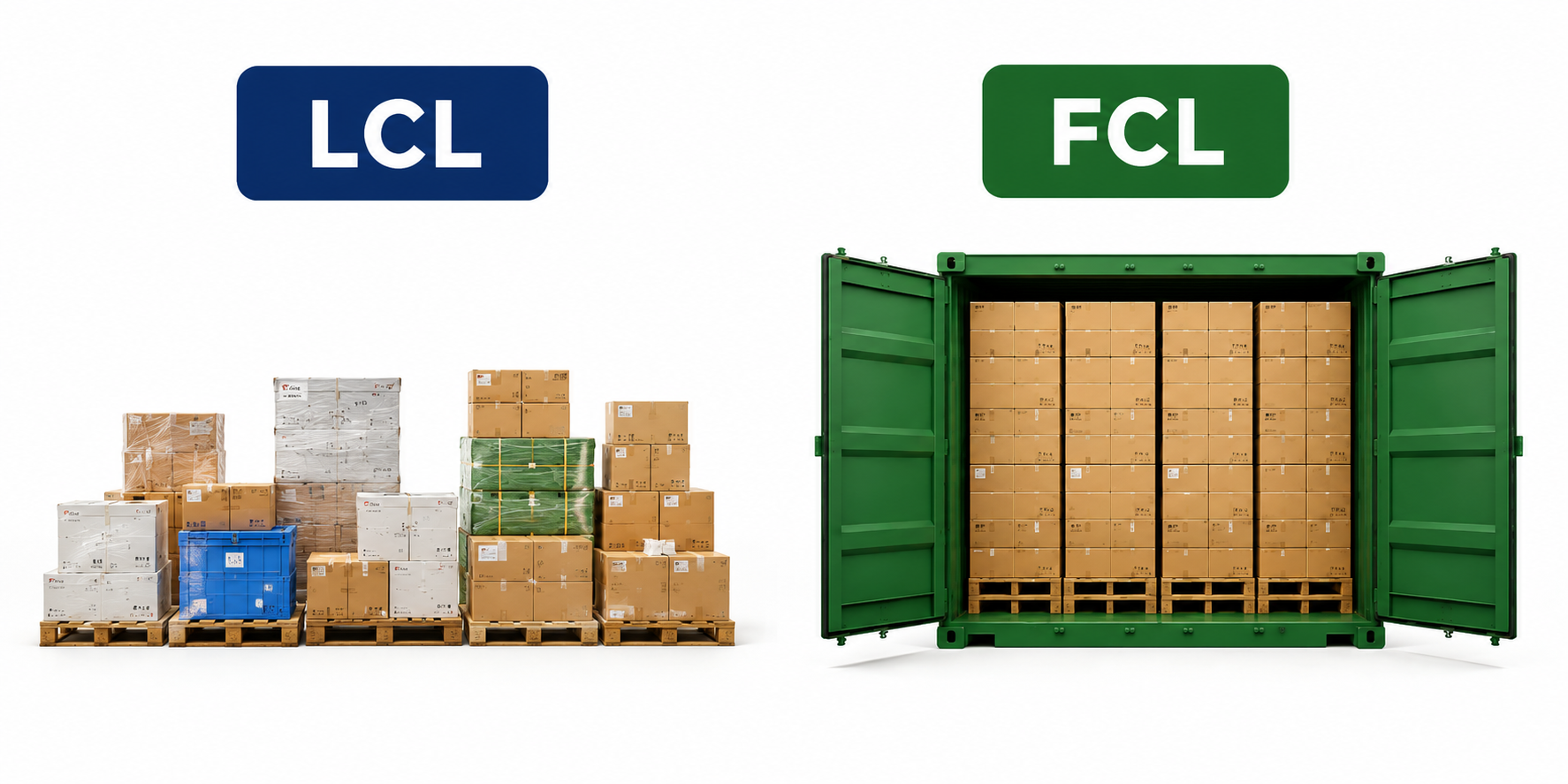
Should I choose FCL or LCL for shipping From China to Nigeria?
Deciding whether to opt for Full Container Load (FCL) or Less than Container Load (LCL) shipping from China to Nigeria is crucial, as it impacts your shipping costs, delivery time, and the overall effectiveness of your logistics. Breaking down these options can help you make the most suitable and economical choice for your freight needs.
LCL: Less than Container Load
Definition: LCL shipping involves sharing container space with goods from other shippers. This option is ideal for shipments that don’t require filling an entire container, offering flexibility and cost savings.
If your shipment size is between 13 to 15 CBM (cubic meters) or less, LCL is an excellent choice. It’s particularly beneficial for low-volume shippers who need flexibility and fast turnaround without waiting to fill a full container.
Example: A company importing 10 CBM of electronic components from Suzhou, China, to Kuwait City might find LCL to be the most practical and cost-efficient option.
LCL shipping cost per unit may appear higher compared to FCL, but you only pay for the space you use, which can save money for smaller shipments. Be mindful of additional fees for handling during cargo consolidation and deconsolidation, which are common with LCL shipping.
FCL: Full Container Load
Definition: FCL shipping allows you to transport goods in a container exclusively used for your cargo. This method offers better security and is generally more cost-effective for bulk shipments. Available container sizes usually include 20-ft or 40-ft options.
FCL is more suitable when your cargo exceeds around 14 CBM. It becomes more economical for large shipments and adds extra security since the container is sealed at the origin and remains untouched until it arrives at its destination.
Example: A furniture manufacturer in China shipping a large volume of chairs and tables to a retail store in Nigeria would benefit from FCL. Renting an entire 20-ft or 40-ft container can transport their goods securely and affordably.
While FCL may have higher upfront costs due to flat container rates, it is often cheaper than splitting a large shipment into multiple LCL consignments. For high-volume shipments, this is generally the preferred option.
How long does sea freight take from China to Nigeria?
Sea freight from China to Nigeria typically requires 30 to 40 days on average. However, actual transit times can vary based on a range of factors, including the specific ports involved, shipment weight, and the type of goods being transported.
For a more accurate estimate based on your shipment details, you can contact GB FREIGHT for a free personalized quote.
Below is an approximate guide to sea freight transit times between particular ports in China and Nigeria:
China Ports | Nigeria Ports | Transit Time |
Shanghai | Lagos | 35-40 days |
Ningbo | Port Harcourt | 30-35 days |
Shenzhen | Warri | 25-30 days |
Guangzhou | Calabar | 20-25 days |
Note that these are estimated times and may fluctuate depending on the factors mentioned above. For precise details, reaching out to a professional freight forwarder is advisable.
How much does it cost to ship a container from China to Nigeria?
The cost of shipping a container from China to Nigeria varies greatly, as numerous factors influence ocean freight rates. These factors include the point of loading, destination, the chosen carrier, the nature of the goods, and fluctuations in market conditions.
While it’s challenging to provide an exact cost here, our shipping experts specialize in offering customized, competitive quotes based on your distinctive shipping requirements. Let us assist you in getting the best possible rates for your business needs.
Special Transportation Services
Out of Gauge (OOG) Container
Designed for cargo that exceeds the standard dimensions of a container, also called oversized or "Out of Gauge cargo."
Suitable for: Heavy machinery, industrial equipment, large vehicles.
Examples: Shipping tractors for farming, construction cranes, or wind turbines from China to Nigeria.
Recommended if your oversized cargo needs the security of containerized shipping.
Break Bulk
A method where goods are loaded individually instead of being packed in containers, generally used for items too large or heavy for standard containers.
Suitable for: Timber, steel, large equipment, or any bulky items that cannot be disassembled.
Examples: Shipping bridge components, construction machinery, or wooden logs.
Ideal for cargo too large or heavy for traditional containers.
Dry Bulk
Unpackaged goods shipped in large quantities directly in the vessel's hold; often referred to as "loose cargo load."
Suitable for: Commodities such as grain, coal, cement, ores, or minerals.
Example: Importing wheat or barley for bread production in Nigeria.
Perfect for handling significant volumes of loose, dry materials.
Roll-on/Roll-off (Ro-Ro)
Ro-Ro vessels are designed for wheeled cargo like cars, trucks, trailers—vehicles driven on and off the ship.
Suitable for: Mobile machinery and vehicles like cars and tractors.
Examples: Automakers exporting cars, motorbikes, or agricultural businesses transporting tractors.
Straightforward solution with reduced handling for mobile goods.
Reefer Containers
Refrigerated containers used for temperature-sensitive goods during transportation.
Suitable for: Perishable items such as pharmaceuticals, fresh produce, dairy products, or frozen foods.
Example: Exporting seafood like frozen fish or shipping temperature-sensitive medicines from China to Nigeria.
Necessary for maintaining specific temperatures while shipping perishables or sensitive products.
If you have any additional questions or are ready to start planning your shipment, contact GB FREIGHT today! We can provide a free shipping quote and ensure your sea freight from China to Nigeria is handled seamlessly.
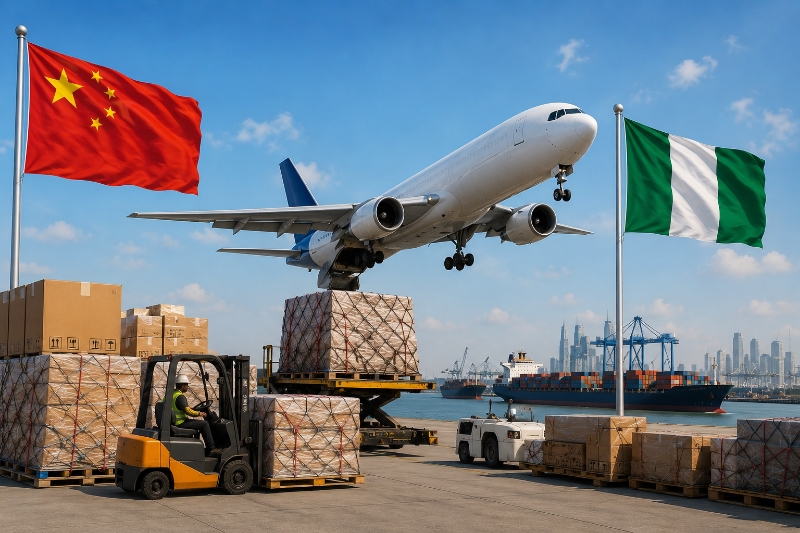
Air Freight From China to Nigeria
Air freight from China to Nigeria is a fast, reliable, and efficient solution for shipping high-value or time-sensitive goods such as electronics, fashion products, and luxury items. Its speed and secure handling make it an ideal choice for businesses that require quick delivery and dependable logistics services.
However, successful air freight shipping requires careful planning. Incorrect weight calculations, incomplete documentation, or poor shipment preparation can quickly increase costs and cause delays. Understanding cargo requirements and following proper shipping procedures can help businesses reduce expenses and achieve smoother air freight operations from China to Nigeria.
The Main International Airports in China
Airport | Code | Advantages |
Beijing Capital International Airport | PEK | Major global cargo hub with advanced handling facilities and strong international connections |
Shanghai Pudong International Airport | PVG | China’s busiest cargo airport with extensive global freight routes and modern cargo systems |
Guangzhou Baiyun International Airport | CAN | Important South China cargo hub ideal for pharmaceuticals and perishable goods |
Shenzhen Bao’an International Airport | SZX | Leading e-commerce logistics airport with efficient export cargo handling |
Chengdu Shuangliu International Airport | CTU | Strategic gateway to Western China with direct cargo links to Europe and Asia |
The Main International Airports in Nigeria
Airport | Code | Advantages |
Murtala Muhammed International Airport | LOS | Nigeria’s largest cargo airport with strong international freight connections |
Nnamdi Azikiwe International Airport | ABV | Key gateway to Abuja with upgraded cargo handling facilities |
Mallam Aminu Kano International Airport | KAN | Suitable for bulky cargo and seasonal high-capacity freight operations |
Port Harcourt International Airport | PHC | Important logistics hub for oil and gas cargo in Southern Nigeria |
Should I Choose Air Cargo From China to Nigeria?
For shipments from China to Nigeria, air cargo often strikes an excellent balance between cost-effectiveness and reliability. Key providers for this route include China Southern Airlines and Arik Air, known for their extensive networks that ensure timely deliveries, even if fixed schedules may occasionally extend transit times.
Air freight becomes especially appealing when your shipment weighs between 100 and 150 kilograms (220 to 330 pounds). Use this guide to make an informed decision that aligns with both your budget and business requirements, ensuring smooth logistics every step of the way.
How long does air freight take From China to Nigeria?
Air freight shipping times from China to Nigeria typically range from 6 to 10 days. However, these durations may vary depending on factors such as the specific airports used, the weight and dimensions of your shipment, and the type of goods being transported.
To get the most accurate estimate tailored to your needs, it’s advisable to consult a reliable freight forwarder, such as GB FREIGHT, who can evaluate these variables and provide specialized advice.
How much does it cost to ship a parcel From China to Nigeria with air freight?
The cost of shipping via air freight from China to Nigeria generally falls between $3 and $10 per kilogram. However, exact pricing depends on numerous factors, including the distance between the airports, shipment dimensions, weight, and the nature of the goods being transported.
For an accurate and detailed quote, you can contact us to receive a free quote and benefit from competitive rates tailored to your shipping requirements.
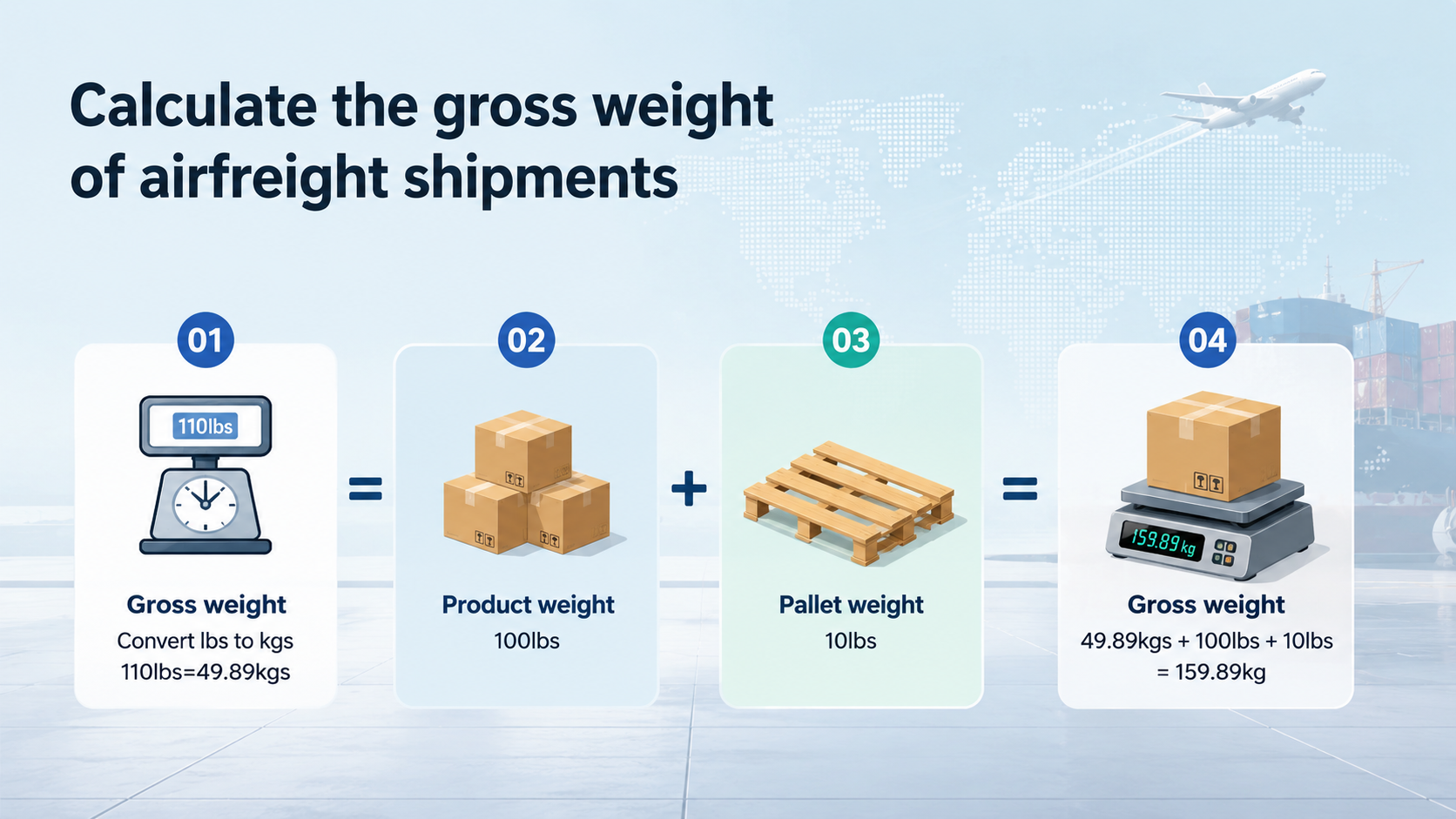
What is the difference between volumetric and gross weight?
Gross weight is the actual physical weight of your shipment measured using a scale. In contrast, volumetric weight, also known as dimensional weight, considers not just the physical weight but also the amount of space the package occupies. This is especially important in air freight, where both space and weight are limited resources.
Calculating gross weight is straightforward—place your shipment on a scale and record its weight. For example, if your package weighs 30 kg, that is its gross weight.
For volumetric weight, the calculations differ based on the type of air freight:
- Air cargo: Volumetric weight = (L × W × H) / 6000
- Express air freight: Volumetric weight = (L × W × H) / 5000
In both cases, L (length), W (width), and H (height) are measured in centimeters. For instance, if your package measures 50 cm × 40 cm × 30 cm:
- For air cargo: (50 × 40 × 30) / 6000 = 10 kg (22.05 lbs)
- For express air freight: (50 × 40 × 30) / 5000 = 12 kg (26.46 lbs)
Why is this important? Freight carriers base their charges on the greater of either the gross or volumetric weight. This ensures efficient use of cargo space and covers costs for transporting items that are light but bulky. Understanding these calculations can help you avoid unnecessary expenses.
Door-to-door shipping from China to Nigeria
Door-to-door shipping from China to Nigeria offers a straightforward, hassle-free solution for navigating the complexities of international freight. This service ensures your shipment is picked up from its origin and delivered directly to your destination, eliminating the typical stress of logistics, reducing paperwork, and providing unmatched convenience. It’s a transformative option for seamless shipping.
What is Door-to-Door Shipping?
Shipping from China to Nigeria often presents logistical hurdles, but opting for a door-to-door service can simplify the entire process. This comprehensive solution manages everything from pickup to delivery, turning a potential headache into a smooth experience. GB FREIGHT specialize in such services, giving our clients the ease and convenience of end-to-end shipping.
That said, it’s worth noting that such premium services may come with a higher cost. Think of it as hiring a dedicated assistant to manage your shipments with care and efficiency. For many, the added peace of mind is well worth the investment.
Why Choose Door-to-Door Service From China to Nigeria?
A Stress-Free Experience: Forget the headaches of coordinating multiple providers or scheduling transportation. Door-to-door services manage every aspect of the shipment with precision, allowing you to focus on other priorities.
Punctual Deliveries When Time Is Key: For urgent shipments where timing is critical, this service ensures prompt transit from the manufacturer in China directly to your doorstep in Nigeria—perfect for time-sensitive deliveries.
Specialized Care for Complex Cargo: Whether it’s oversized machinery or fragile electronics, door-to-door shipping adapts to the unique requirements of specific cargo. Packing, palletizing, or containerizing—it’s all expertly handled.
Streamlined Paperwork: International shipping often entails overwhelming amounts of paperwork and customs procedures. With door-to-door services, those administrative burdens are managed for you, saving time and effort.
End-to-End Tracking: Enjoy peace of mind with real-time tracking that keeps you informed about your shipment's location and status along every step of its journey.
Choosing a door-to-door service means putting your shipments on autopilot while you relax. It’s a smart move for stress-free and reliable global logistics.
Why Choose GB FREIGHT for Door-to-Door Shipping?
GB FREIGHT makes moving goods from China to Nigeria effortless with its specialized services tailored to meet your needs. From packaging and transportation to customs clearance, every step is overseen by experienced professionals.
So, leave the hassles behind and trust GB FREIGHT to handle your shipping needs efficiently and reliably, international freight just became simpler!


