
 |


| Quantity: | |
|---|---|
Philippines
Freight Shipping From China to Philippines
Are you planning to ship goods from China to the Philippines? If so, you might be interested in learning all the essential details to ensure a smooth freight shipping experience between the two countries.
The process isn’t overly complicated, what’s required is a proper understanding of the available transportation options and the necessary documentation. In this guide, we’ll break down the most important aspects of freight shipping from China to the Philippines, offering you insights and practical advice.
Sea Freight from China to Philippines
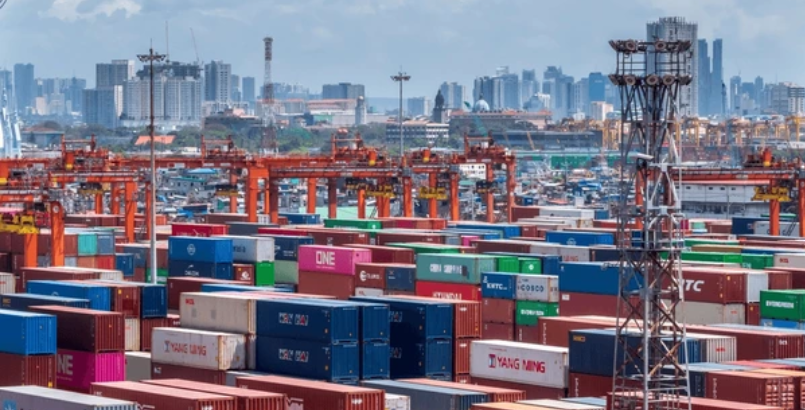
The trade relationship between China and the Philippines spans centuries, marked by historically significant exchanges that have proven mutually beneficial. Maritime transport has consistently played a crucial role in fostering and strengthening these economic connections.
In recent years, bilateral trade between the two nations has experienced notable growth, fueled by their respective economic progress. Sea freight has become the favored method for transporting a diverse range of goods, including manufactured products, raw materials, electronics, and everyday consumer items. To accommodate this increasing demand, major ports in both China and the Philippines have undergone significant modernization efforts, optimizing their infrastructure and operations to support efficient maritime activities.
This overview explores key aspects of sea freight from China to the Philippines, including the primary ports, typical transit times, various container types used, and an outline of transport costs involved.
Main Ports of China
Port of Shanghai
The Port of Shanghai is the world’s largest container port, with an annual capacity exceeding 40 million TEUs. In 2020, it handled around 43.5 million TEUs, making it a key global hub for international shipping and trade.
Port of Ningbo-Zhoushan
The Port of Ningbo-Zhoushan is China’s second-largest container port, with a capacity of about 30 million TEUs per year. It recorded nearly 28.8 million TEUs in 2020, supporting strong bulk and container cargo operations.
Port of Shenzhen
The Port of Shenzhen is one of China’s busiest export ports, with a capacity of around 25 million TEUs annually. In 2020, it handled over 25.2 million TEUs, mainly supporting electronics and manufacturing exports.
Port of Tianjin
The Port of Tianjin is one of Northern China’s major ports, with a capacity of about 17 million TEUs per year. In 2020, it handled more than 17.6 million TEUs, serving Beijing and surrounding industrial regions.
Port of Qingdao
The Port of Qingdao has a capacity of around 18 million TEUs annually and handled approximately 18.5 million TEUs in 2020. It is an important gateway for industrial and international trade in Northern China.
Main Ports of Philippines
Port of Manila
The Port of Manila is one of the most important seaports in the Asia-Pacific region, playing a key role in the Philippines’ international trade. It handles a wide range of goods such as electronics, textiles, automotive parts, and food products. Due to its strategic location, it serves as a major gateway for trade between China and the Philippines, supporting continuous import and export flows.
Port of Cebu
The Port of Cebu is a major maritime hub in Central Philippines and plays a vital role in regional economic development. It features modern facilities and handles a large volume of international cargo. As China is one of its main trading partners, the port is important for importing China goods and supporting bilateral trade growth.
Port of Davao
The Port of Davao is the third-busiest port in the Philippines, located in the Mindanao region. It plays a significant role in China–Philippines trade, especially in agricultural and industrial goods. Chinese investments have also contributed to the modernization of its port infrastructure, strengthening trade connectivity.
Port of Subic Bay
The Port of Subic Bay has strong strategic importance due to its location near major South China Sea shipping routes. It serves as a key logistics hub for trade between China and ASEAN countries, supporting both import and export activities with efficient maritime connections.
Port of Batangas
The Port of Batangas is an important port in the southern Luzon region of the Philippines. It plays a key role in facilitating trade with China and supports the movement of various cargo types, helping strengthen economic relations between the two countries.
Should You Choose FCL or LCL For Shipping From China to Philippines?
There are some types of shipping containers, but the three most commonly used are as follows:
The 20-foot container, which has a capacity of 33 CBM.
The 40-foot container, offering a capacity of 67 CBM.
The 40-foot HQ container, with a capacity of 76 CBM.
There are two shipping methods are available:
LCL (Less than Container Load)
This method involves maritime consolidation, allowing goods to be shipped even when you don't have enough cargo to fill an entire container. The remaining space is shared with other customers, making it a cost-effective option for quantities below 15 CBM.
FCL (Full Container Load)
With this method, the container is exclusively used for the goods of one shipper. While filling the entire container isn't mandatory, shipments above 15 CBM generally become economically feasible.
How long does sea freight take from China to Philippines?
Shipping time from China to the Philippines varies depending on the specific ports involved. Below is a table summarizing the average transit times between major ports in China and key ports in the Philippines.
Philippine Ports | Shanghai | Ningbo-Zhoushan | Shenzhen | Tianjin | Qingdao |
Manila | 10 days | 4 days | 9 days | 12 days | 11 days |
Cebu | 11 days | 4 days | 10 days | 13 days | 12 days |
Davao | 12 days | 4 days | 11 days | 14 days | 13 days |
Batangas | 10 days | 4 days | 9 days | 12 days | 11 days |
How much does it cost to ship a container from China to Philippines?
The cost of sea freight from China and the Philippines depends on various factors, such as the volume of goods, the type of cargo, the selected shipping method, and the specific route. Freight rates can also be influenced by market changes and other external conditions. Complete our form with your details to get a free quote.
Air Freight from China to Philippines
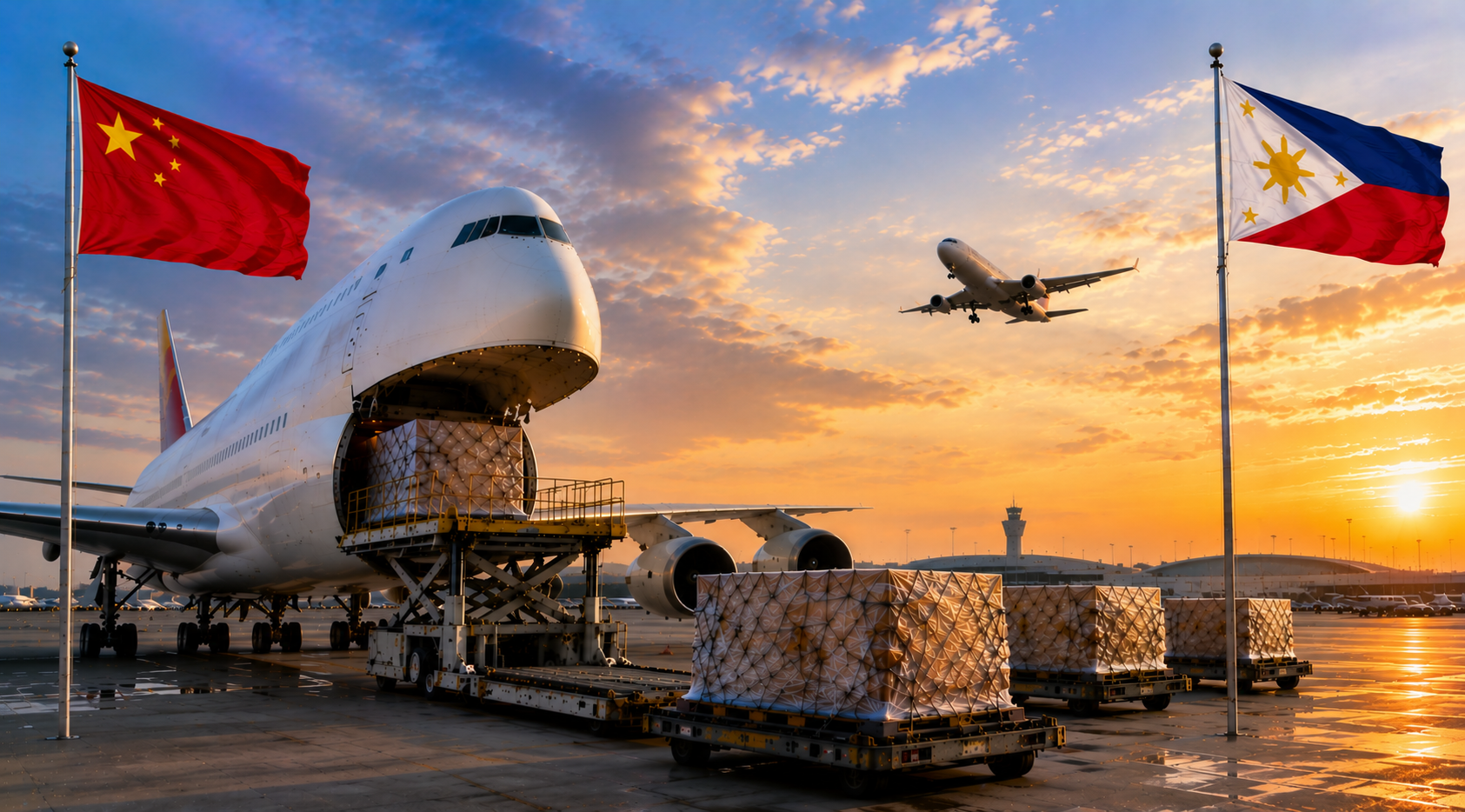
Air freight is an important logistics solution for transporting time-sensitive and high-value goods from China to the Philippines. With strong aviation links and frequent flight connections, the Philippines serves as a key air cargo destination in the region.
Many airlines operate regular routes between major China cities and the Philippines, providing efficient and reliable transport options for both import and export shipments.
There are two main air freight options to choose from:
Standard Air Freight
This option uses available cargo space on commercial passenger flights. Airlines such as British Airways, Cathay Pacific, and Emirates commonly carry freight as part of their scheduled services. It is a more economical choice for businesses that do not require urgent delivery.
Express Air Freight
Express air freight is designed for urgent or high-priority shipments. Although it is more expensive, it offers faster transit times and dedicated handling through logistics providers such as DHL, FedEx, and UPS.
The choice between standard and express air freight depends on your shipment’s urgency, budget, and delivery requirements.
Main International Airports in China
Airport Code | Airport Name |
PEK | Beijing Capital International Airport |
CAN | Guangzhou Baiyun International Airport |
PVG | Shanghai Pudong International Airport |
SHA | Shanghai Hongqiao International Airport |
CTU | Chengdu Shuangliu International Airport |
KMG | Kunming Changshui International Airport |
XIY | Xi’an Xianyang International Airport |
HKG | Hong Kong International Airport |
Main International Airports in the Philippines
Airport Code | Airport Name |
MNL | Ninoy Aquino International Airport |
CEB | Mactan–Cebu International Airport |
DVO | Francisco Bangoy International Airport |
CRK | Clark International Airport |
ILO | Iloilo International Airport |
PPS | Puerto Princesa International Airport |
KLO | Kalibo International Airport |
TAG | Bohol–Panglao International Airport |
How long does air freight take from China to the Philippines?
Air freight from China to the Philippines usually takes around 1 to 5 days, depending on the departure airport, destination airport, airline schedule, and customs clearance process.
Major Chinese airports such as Shanghai, Guangzhou, Shenzhen, Beijing, and Hong Kong offer frequent cargo flights to key Philippine airports including Manila, Cebu, Clark, and Davao. Direct flights are generally faster, while transshipment services may require additional transit time.
Factors such as peak shipping seasons, flight availability, customs inspections, and cargo type can also affect the final delivery time. For urgent and high-value shipments, air freight remains one of the fastest and most reliable shipping methods.
How much does it cost to ship a parcel via air freight?
The cost of air freight from China to the Philippines varies based on several factors, including the weight and size of the shipment, the distance between the origin and destination airports, delivery urgency, and prevailing market rates.
Air freight charges are generally calculated based on either volumetric weight or gross weight, depending on which is larger. Costs can range from a few hundred dollars to several thousand dollars, depending on these specifications.
Calculating the volumetric weight of your shipment:
Gross weight accounts for the weight of the items along with their packaging or pallet. Volumetric weight, on the other hand, reflects the space occupied by the shipment, derived from its dimensions. To calculate volumetric weight, measure the length, width, and height of the package in centimeters. Convert these measurements into cubic meters and apply the following formula:
Volumetric weight = (length x width x height) / 5000
Note: The factor 5000 is a standard conversion unit in air freight calculations.
Door-to-door Shipping From China to Philippines
The transportation of products from the place of origin to the ultimate destination, including the collection, transportation, and delivery of goods, is referred to as a door-to-door delivery service. Shippers benefit from this service since they no longer have to worry about the logistics of shipping their goods. E-commerce shipments, package deliveries, and other small to medium-sized items are frequently delivered door-to-door.
Why Choose GB FREIGHT for Door-to-Door Shipping?
At GB INTL FREIGHT AGENCY, we handle the entire shipping process smoothly and efficiently. Our experienced logistics team, together with our global partners, is committed to providing professional, reliable, and high-quality freight solutions tailored to your needs. Contact GB FREIGHT today for a free quotation or consult with our specialists for expert shipping support and guidance.


