
 |


| Quantity: | |
|---|---|
Poland
Freight Shipping From China to Poland
If you're planning to ship goods from China to Poland , it's crucial to understand how small decisions like choosing the right shipping mode, Incoterms, or accurately completing customs paperwork can significantly affect your costs and timelines. Delays on this route are rarely caused by the distance itself but are often a result of inadequate planning and coordination.
You likely came here looking for clear insights on freight rates and realistic transit times. This guide will walk you through the main transport options: air freight, sea freight, and rail freight. With this information, you can make informed decisions and avoid unexpected surprises.
Sea Freight From China to Poland
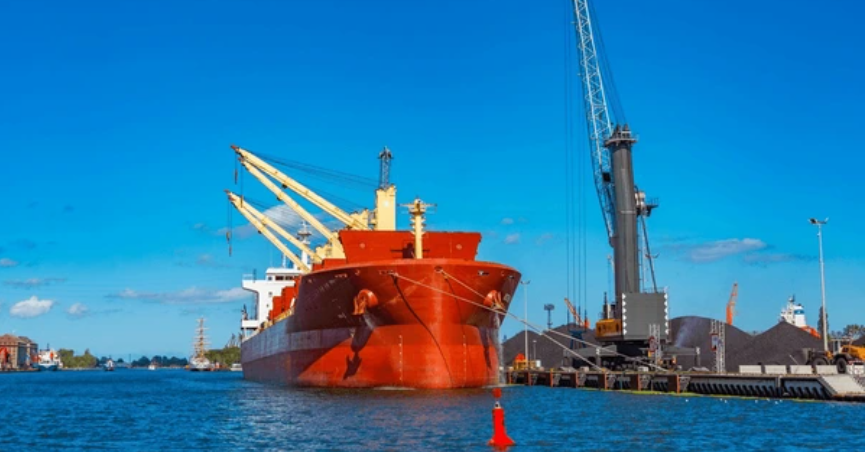
When it comes to international trade, sea freight plays a key role in the exchange of goods from China to Poland. Major China ports such as Shanghai, Ningbo-Zhoushan, and Shenzhen are hubs bustling with cargo that eventually makes its way to Polish industrial ports such as Gdansk or Gdynia. This ocean-based supply chain reflects the strong economic ties between these nations.
While sea freight may be slower compared to air or rail transport, it is significantly more cost-effective for large-volume shipments. This guide covers all the essential tips and best practices to help you tackle these challenges head-on and ensure smoother shipping operations.
Main Shipping Ports in China
Port of Shanghai
Located on China’s eastern coastline, the Port of Shanghai handled 15 million TEUs in the first four months of 2023, recording a 30.2% year-on-year increase. As the world’s busiest container port, it plays a vital role in global trade, especially with the United States, Europe, and Asia. Its extensive shipping network and advanced infrastructure make it an important logistics hub for international businesses.
Port of Shenzhen
Situated in the Guangdong-Hong Kong-Macao Greater Bay Area, the Port of Shenzhen processed over 30 million TEUs in 2022. It is a key gateway for trade with Southeast Asia, Europe, and North America, supported by modern terminals and expanding logistics infrastructure. Shenzhen is especially important for businesses connected to Southern China and the Belt and Road Initiative.
Port of Ningbo-Zhoushan
Located in Zhejiang province, Ningbo-Zhoushan Port handled 33.35 million TEUs in 2022 and remained the world’s leading port by cargo throughput. With over 300 global shipping routes, it is a major logistics center connecting North America, Europe, and Southeast Asia. Its strong sea-rail intermodal services make it ideal for high-volume international cargo transportation.
Port of Guangzhou
Positioned in the Pearl River Delta, the Port of Guangzhou processed 24.6 million TEUs in 2022. As one of the world’s busiest container ports, it serves as a major logistics gateway connecting South China with Asia, Europe, Australia, and North America. Its efficient multimodal transport network supports regional and international trade growth.
Port of Qingdao
Located in Shandong province, Qingdao Port handled 26.82 million TEUs in 2022, reflecting strong annual growth. The port maintains extensive trade links with Asia, Europe, and the Americas, making it one of China’s fastest-growing international shipping hubs with efficient global connectivity.
Tianjin Port
Situated in Bohai Bay, Tianjin Port is Northern China’s largest seaport and an important gateway for international trade. The port handled over 21 million TEUs in 2022 and maintains strong shipping connections with Europe, North America, ASEAN countries, and Northeast Asia, supporting regional and global supply chains.
Main Shipping Ports in Poland
Port of Gdansk
Located on the Baltic Sea, the Port of Gdansk is Poland’s largest seaport and a key gateway for Northern European trade. It handles large cargo volumes and maintains strong shipping connections with Germany, Sweden, the UK, and other European markets.
Port of Gdynia
Situated on the southern Baltic coast, the Port of Gdynia is an important logistics hub for Central Poland. The port supports extensive international trade and offers efficient cargo distribution services across Europe.
Port of Szczecin
Located near the Oder River, the Port of Szczecin serves as an important multimodal transport hub with strong rail and sea freight connections. It plays a major role in Central European trade and logistics operations.
Port of Świnoujście
Positioned near the German border on the Baltic Sea, the Port of Świnoujście is a strategic shipping gateway connecting Poland with Scandinavia and Germany. The port is known for its growing container handling capacity and modern infrastructure.
Port of Police
Located along the Oder River, the Port of Police mainly supports bulk cargo and industrial shipments. It plays an important role in Poland’s chemical and agricultural logistics sector.
Port of Władysławowo
Situated in Northern Poland on the Baltic coast, the Port of Władysławowo mainly supports regional and Scandinavian trade routes. It is suitable for smaller and more frequent cargo shipments.
Should I Choose FCL or LCL When Shipping From China to Poland ?
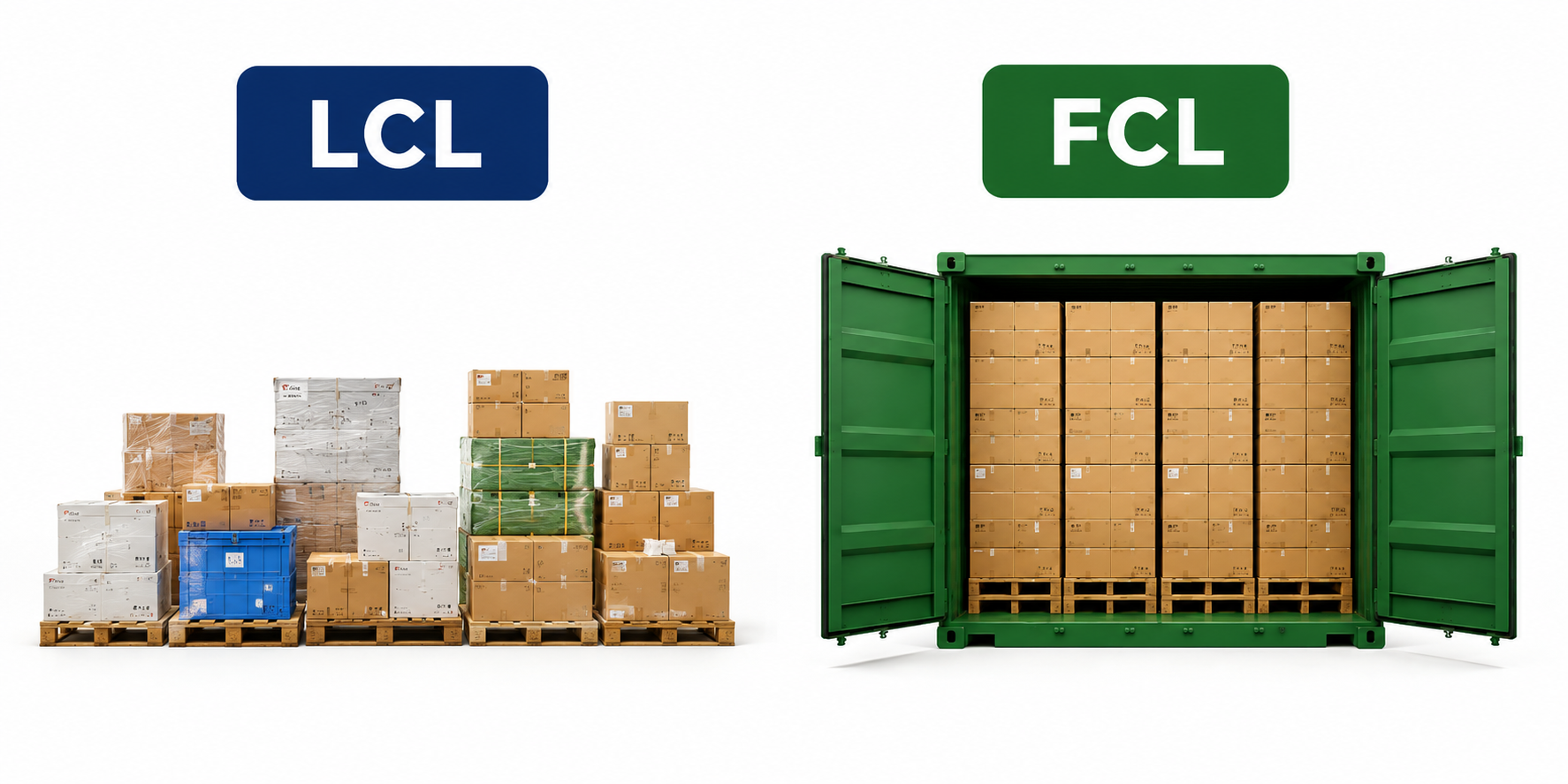
One of the most critical decisions when using sea freight is selecting between Full Container Load (FCL) and Less-than Container Load (LCL). The choice has a direct impact on costs, delivery deadlines, and the overall efficiency of your logistics process.
In this section, we’ll break down the differences between FCL and LCL shipments so you can weigh your options confidently. By understanding these distinctions and applying tailored strategies to meet your specific business requirements, you'll gain clarity amid the complexities of international shipping.
LCL: Less than Container Load
Definition: Less than Container Load (LCL) refers to a method of shipping where cargo from multiple shippers is combined into a single container. This approach allows businesses to share transportation costs, making it an economical solution for smaller shipments.
LCL is highly recommended for businesses shipping from China to Poland with cargo volumes below 13–15 CBM (cubic meters). This option provides flexibility, allowing companies to transport smaller quantities without committing to the higher expense of a full container.
Example: An online retailer in Gdansk, Poland, specializing in artisanal porcelain tableware, sources products from Chaozhou, China. Since their orders are typically smaller than 10 CBM, LCL shipping gives them the advantage of transporting their goods in smaller batches. This helps them maintain steady inventory levels while minimizing capital outflow.
Unlike Full Container Load (FCL) shipping, LCL costs are calculated based on the volume of the cargo. Smaller cargo takes up less space, resulting in lower shipping costs. However, additional charges like shipment consolidation fees may apply. Overall, LCL offers cost-effective options for businesses dealing with smaller cargo volumes and eliminates the need to pay for unused container space.
How Long Does Sea Freight Take From China to Poland?
Shipping by sea from China to Poland typically requires approximately 31 days. Actual transit times may vary depending on port locations, cargo weight, and the nature of goods being shipped. For a more accurate estimate tailored to your requirements, it’s best to consult a freight forwarding company like GB FREIGHT.
Here’s a breakdown of estimated transit times from China port to Gdansk port:
China Port | Poland Port | Average Transit Time |
Shanghai | Gdansk | 28-30 |
Shenzhen | Gdansk | 30-32 |
Ningbo-Zhoushan | Gdansk | 32-34 |
Qingdao | Gdansk | 34-35 |
How Much Does It Cost to Ship a Container From China to Poland?
The cost of shipping containers from China to Poland is influenced by several factors such as the loading point, type of cargo, chosen carrier, and prevailing market conditions. Rates can range from a few hundred to several thousand dollars per CBM, fluctuating monthly due to market dynamics.
To provide competitive and tailored shipping rates, freight forwarders evaluate each shipment individually based on cargo size, weight, and route planning. Contact trusted logistics providers like GB FREIGHT for personalized shipping solutions that match your business needs.
Special Transportation Services
Break Bulk
Break bulk shipping involves handling cargo as individual items rather than pre-packed within containers.
Suitable for: Best suited for large, heavy goods that are challenging to containerize and where time sensitivity isn’t a critical factor.
Examples: Construction equipment, manufacturing materials, or oversized items that simply cannot fit into traditional shipping containers.
Why choose this: When containerization is impractical and flexible shipment timing is acceptable, break bulk shipping can fulfill your logistical requirements efficiently.
Dry Bulk
Dry bulk is the transport of uniform, unpackaged, non-liquid commodities in large-scale loose cargo loads.
Suitable for: Commodities like coal, grain, minerals, and other raw materials shipped in bulk.
Examples: Ideal for importing metal ores, gravel, sand, or other loose raw materials.
Why choose this: For businesses dealing with the bulk import and export of raw goods, dry bulk shipping offers a cost-effective and efficient solution.
Roll-on/Roll-off (Ro-Ro)
Roll-on/Roll-off shipping involves loading vehicles or machinery directly onto specialized vessels by driving or towing them aboard.
Suitable for: Primarily used to transport cars, trucks, trailers, railroad cars, and other wheeled cargo.
Examples: Companies shipping mobile machinery, automobiles, or other wheeled equipment benefit greatly from this method.
Why choose this: If your operation requires transporting vehicles or mobile machinery, Ro-Ro provides easy and convenient handling while ensuring secure transit.
Reefer Containers
Reefer containers are temperature-controlled shipping solutions designed to protect goods requiring refrigeration during transit.
Suitable for: Essential for transporting food products, pharmaceuticals, and other perishable or sensitive items.
Examples: Often used for goods such as meat, fish, fruits, dairy products, medicines, and biological materials.
Why choose this: Businesses handling temperature-sensitive products can rely on reefer containers to maintain quality and safety during shipping, especially over long distances like from China to Poland.
To find the most suitable option tailored to your needs, GB FREIGHT is here to assist with expert guidance and personalized services. Contact us today for a free shipping quote!
Air Freight From China to Poland
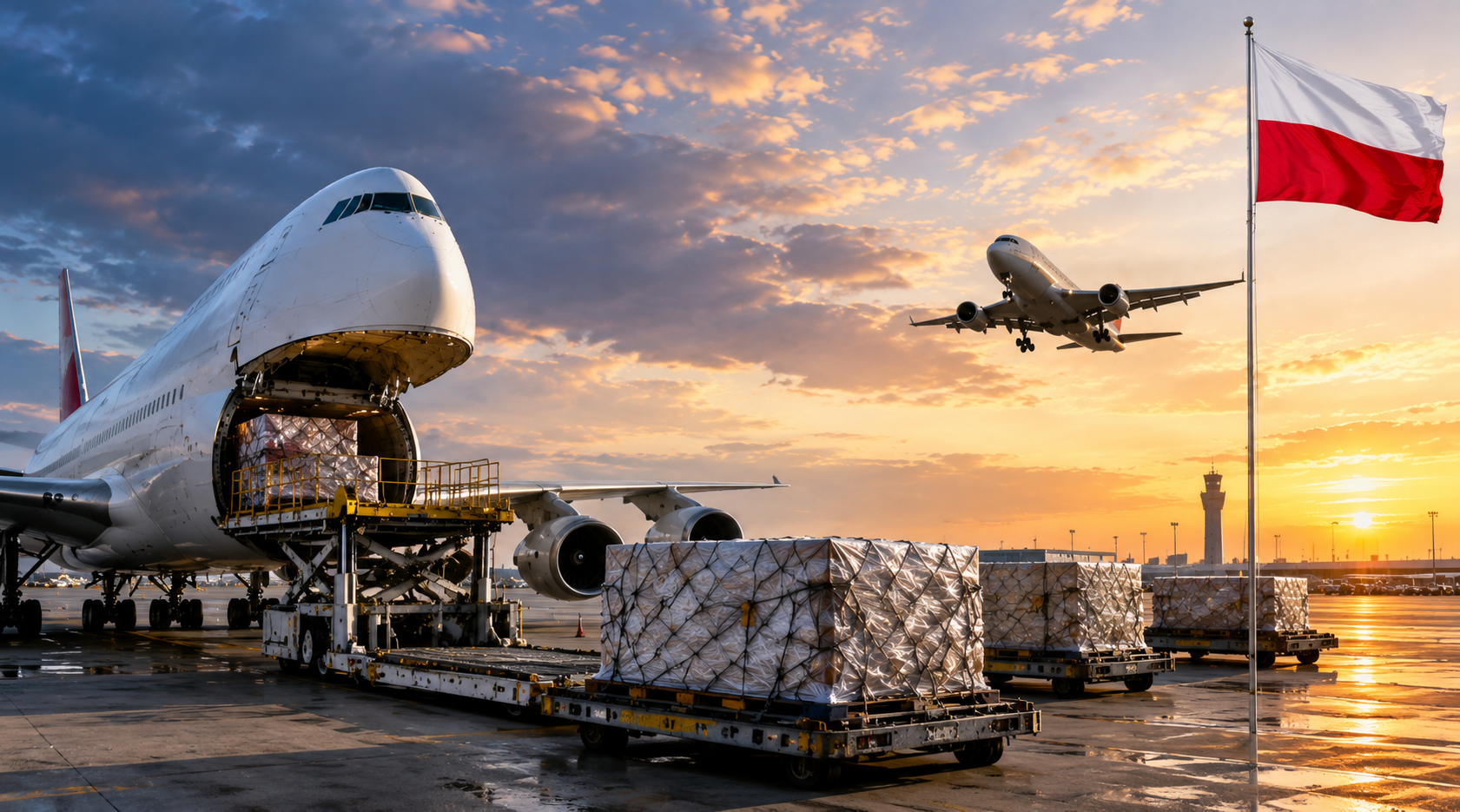
For fast, secure deliveries from China to Poland , air freight is an excellent option. Ideal for small yet high-value goods such as electronics or designer apparel, air freight combines speed with security.
However, shippers should stay aware of potential cost pitfalls, like miscalculating weight-based pricing or overlooking opportunities to reduce costs. To maximize efficiency while avoiding unnecessary expenses, freight experts recommend carefully assessing shipment weights and adhering to best practices in packaging and logistics. Air freight might cost more than sea transport but offers unmatched rapidity for time- sensitive or valuable shipments.
Main international airports in China
Airport | Code | Advantages |
Beijing Capital International Airport | PEK | Major international cargo hub with advanced handling systems and extensive global flight connections |
Shanghai Pudong International Airport | PVG | One of the world’s busiest cargo airports with efficient cargo terminals and frequent international flights |
Guangzhou Baiyun International Airport | CAN | Key export gateway in Southern China with strong manufacturing and cargo support |
Chengdu Shuangliu International Airport | CTU | Strategic air freight hub serving Western China and international trade routes |
Shenzhen Bao’an International Airport | SZX | Important logistics hub for electronics, technology products, and fast-moving cargo |
Main international airports in Poland
Airport | Code | Advantages |
Warsaw Chopin Airport | WAW | Poland’s main international cargo hub with strong European logistics connections |
Gdansk Lech Walesa Airport | GDN | Important airport supporting Baltic Sea trade and Northern European logistics |
John Paul II Kraków-Balice International Airport | KRK | Key airport serving Southern Poland with strong regional transport connections |
Katowice Airport | KTW | Major cargo airport for the industrial Silesia region with modern freight facilities |
Wrocław–Copernicus Airport | WRO | Strategic airport for Central European distribution and cross-border cargo transport |
Should I choose Air Freight From China to Poland ?
Air cargo offers a fast and reliable connection from China to Poland, with trusted airlines such as China Southern, known for their dependability, and LOT Polish Airlines, celebrated for their affordability. While fixed schedules can sometimes result in longer transit times, air freight is an attractive option for shipments exceeding 100 to 150 kg (220 to 330 lbs). This method strikes a favorable balance between speed and cost, potentially aligning with your budget constraints. While sea freight offers broader capacity, air cargo stands as a compelling alternative. Assess your business needs and the specific route your cargo must take from factory to fulfillment, when making your decision.
How long does air freight take From China to Poland?
Air freight transit time from China to Poland typically ranges between 3 to 5 days, depending on factors such as the origin and destination airports, shipment weight and dimensions, and the type of goods being transported. For precise delivery estimates based on your unique requirements, it's advisable to consult a freight forwarder, such as DocShipper, to ensure accurate timelines that align with your operations.
How much does shipping a parcel From China to Poland via air freight cost?
Air freight costs from China to Poland generally range from $3 to $7 per kg, but these costs can vary based on several factors, including the departure and arrival locations, the size and weight of the parcel, and the nature of the goods being shipped. These figures represent averages, so obtaining a personalized quote is key to understanding the exact costs for your specific shipment.
What is the difference between volumetric and gross weight?
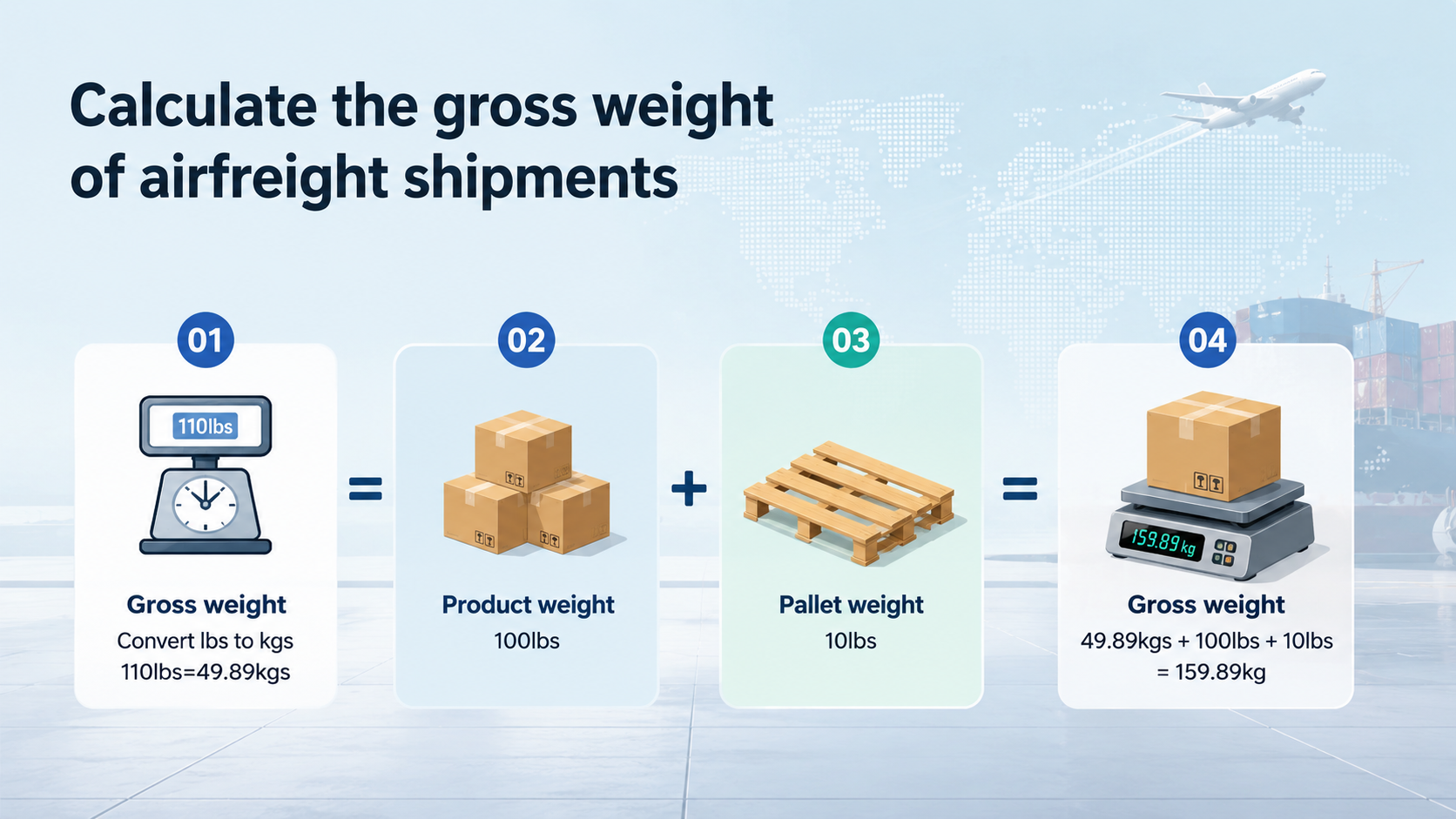
Gross weight refers to the actual weight of your items plus packaging, while volumetric weight considers the amount of space your shipment occupies on the aircraft. Volumetric weight is calculated using a formula: length(cm) × width(cm) × height(cm) ÷ 6000.
For example, a carton measuring 100 cm × 50 cm × 50 cm would have a volumetric weight of (100 × 50 × 50) ÷ 6000 = 41.6 kg (91.5 lbs). However, express air freight services often use a slightly different formula, dividing by 5000 instead of 6000. Using this formula, the volumetric weight for the same carton would be (100 × 50 × 50) ÷ 5000 = 50 kg (110 lbs).
In air freight, the higher of the gross weight or volumetric weight is used for calculating costs. This ensures carriers optimize their space utilization while maintaining profitability. Shippers can manage costs more efficiently by packaging their items effectively and avoiding excess volume.
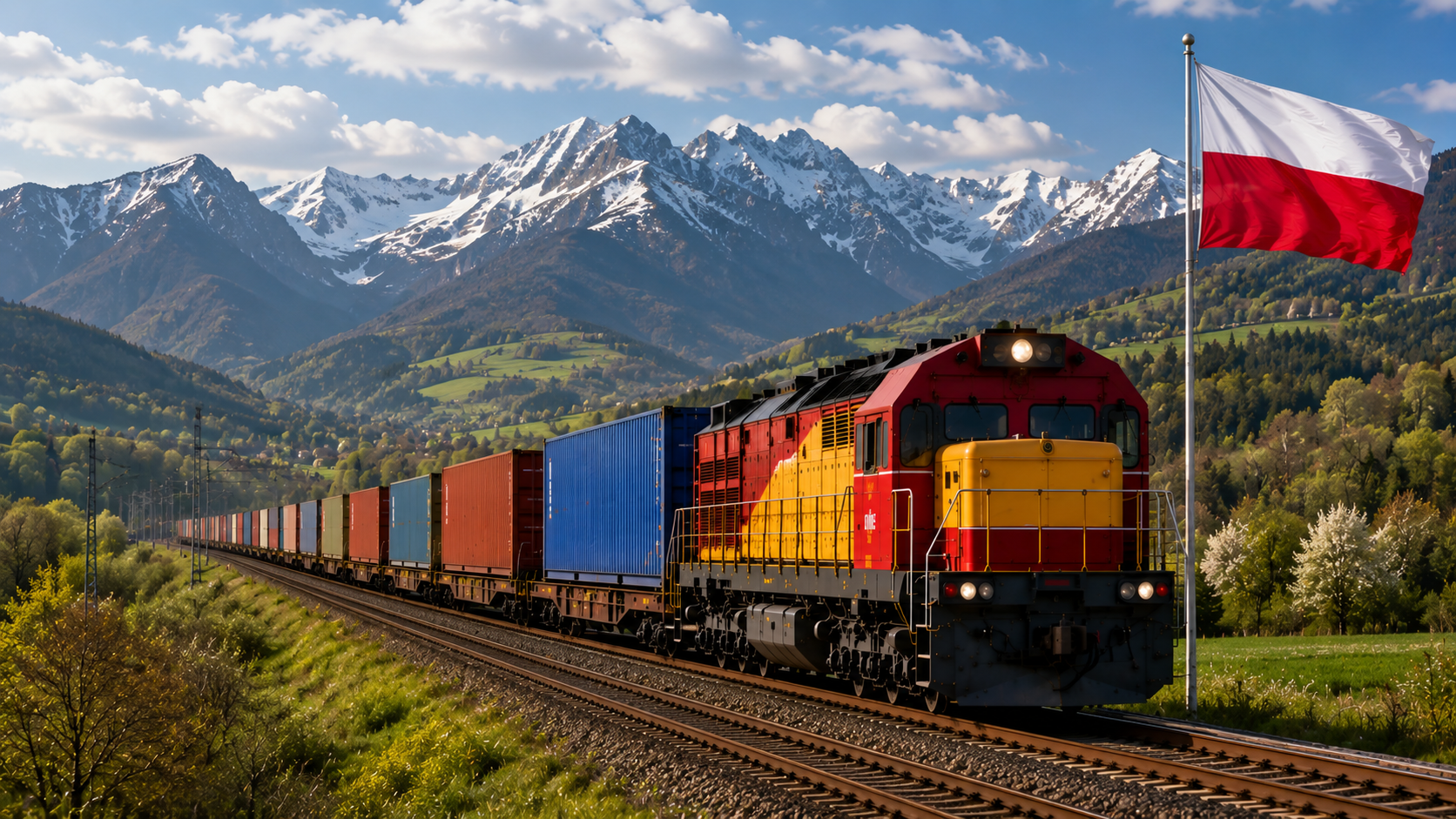
Rail freight From China to Poland ?
The Silk Railroad serves as a modern trade lifeline from China to Poland , reactivating ancient trade routes since its inauguration in 2013. This rail connection passes through countries such as Kazakhstan, Russia, Belarus, and finally arrives in Poland. It facilitates the transport of diverse goods like electronics and apparel, underpinning economic partnerships.
While rail freight is slower than air freight, it offers significant cost advantages over sea freight. However, navigating customs procedures across multiple countries can become complex due to differing laws, language barriers, and varied cargo inspections. Businesses considering this method should evaluate whether cost savings outweigh the longer transit times and potential challenges with cross-border regulations. If you are ready to tackle these complexities, rail freight may be an efficient option for your international trade needs. Take time to align this choice with your business priorities to determine whether it's the right route for your shipping operations.
The Main Train Stations in China
Shanghai Railway Station
Beijing West Railway Station
Chengdu Railway Station
Chongqing Railway Station
The Main Train Stations in Poland
Łódź Kaliska Railway Station
Gdańsk Główny Railway Station
Warsaw West County Railway Station
Kraków Główny Station
How long does rail freight take From China to Poland?
The transit time for rail freight from China to Poland depends on several factors, including the type of goods being shipped, railway infrastructure, and customs procedures. Typically, shipping takes around 14 to 20 days. Up next, we’ll delve into the specifics of the rail networks connecting China and Europe, along with their respective transit times and departure schedules.
Departure Route | Destination | Estimated Transit Time |
Zhengzhou | Hamburg, Germany | 15–17 days |
Zhengzhou | Munich, Germany | 17–18 days |
Zhengzhou | Liege, Belgium / Milan, Italy | Around 20 days |
Chongqing | Duisburg, Germany | 16–17 days |
Yiwu | Hamburg, Germany | 16–18 days |
Yiwu | Duisburg, Germany | 16–18 days |
Yiwu | Madrid, Spain | Around 20 days |
Wuhan | Hamburg, Germany | 17–19 days |
Wuhan | Duisburg, Germany | 17–19 days |
Chengdu | Tilburg, Netherlands | Around 18 days |
Suzhou | Hamburg, Germany | 18–20 days |
Suzhou | Duisburg, Germany | 18–20 days |
Xi’an | Duisburg, Germany | 18–20 days |
*Please note that these are averages. For the accurate information please contact with your freight forwarder or contact us for more further.
What are the advantages of rail transport from China to Poland?
Rail transport offers a middle ground between sea and air freight for goods moving from China to Poland. It’s faster than sea freight, bypassing the extended transit times associated with ocean shipping, while generally being more cost-effective than air freight. With typical delivery times ranging from 14 to 20 days, rail freight is well-suited for businesses that need a balance of speed and affordability. For instance, if you're shipping electronics that demand swift delivery at manageable costs, rail transport proves to be an excellent choice. Its benefits in terms of efficiency, budget-friendliness, and logistics management make it a reliable option to meet various shipping needs.
How much does shipping goods by train From China to Poland cost?
Estimating exact costs for rail freight from China to Poland is complex, as prices vary based on factors like container type, shipment volume, and the specific route chosen. However, you can rest assured that our team is ready to guide you through the pricing landscape with personalized quotes tailored to your requirements. Whether you're looking for competitive rates or comprehensive service options, we aim to make rail freight work for your business. Reach out today for a free and let us help you with your global shipping needs.
Door-to-Door Shipping From China to Poland
International door-to-door shipping simplifies the process from start to finish, encompassing pickup in China and delivery directly at your location in Poland. It eliminates logistical headaches by ensuring timely handling and safe transport of your goods. Let's explore why this service could be ideal for your business and how it streamlines cross-border shipping from China to Poland.
Why Choose Door-to-Door Shipping From China to Poland?
Streamlined Logistics: Say goodbye to coordinating multiple carriers or navigating confusing processes. This service handles everything,from origin to destination and making logistics effortless.
On-Time Delivery: Ideal for time-sensitive shipments, whether it’s vital business documents or product launches, ensuring your goods arrive precisely as scheduled.
Specialized Handling: For shipments requiring extra care or unique management, this service ensures detailed attention throughout transit.
Maximum Convenience: From customs clearance to doorstep delivery, all aspects are managed for you, allowing you to focus on other priorities.
Real-Time Tracking: Stay informed with full-service tracking updates that eliminate uncertainties from dispatch to final delivery.
In summary, door-to-door shipping transforms logistical challenges into a hassle-free process, providing speed, care, and transparency every step of the way. Why wait to optimize your international deliveries? Let us help you simplify your operations now!
GB FREIGHT – Specialists in Door-to-Door Shipping
Discover seamless shipping solutions from China to Poland with GB FREIGHT. As specialists in door-to-door logistics, we handle the intricate details of transportation so you can focus on what matters. From packaging and transit to customs clearance and beyond, we optimize every shipping method for maximum efficiency. Each shipment is supported by a dedicated Executive, ensuring stress-free international logistics tailored to your needs. Contact us now for a free quote or consult with our experienced team for expert assistance for free .


