
 |


| Quantity: | |
|---|---|
South Africa
Freight Shipping From China to South Africa
Shipping goods from China to South Africa involves far more than simply booking a container and waiting for its arrival. The process is riddled with challenges like port congestion, fluctuating freight rates, and stringent customs regulations on both sides.
If your shipment routes through major ports such as Shanghai, Shenzhen, Durban, or Cape Town, it’s essential to understand factors like transit times, shipping costs, and applicable duties before confirming anything with your supplier. A single misstep in understanding Incoterms or completing documentation could delay your cargo for weeks, disrupting your supply chain.
This guide offers key insights into managing sea freight, air cargo, customs processes, and tax considerations specific to this trade route. For real-time updates on available capacity, pricing trends, or the most suitable shipping options for your cargo, we’re here to provide expert support every step of the way.
Sea Freight From China to South Africa
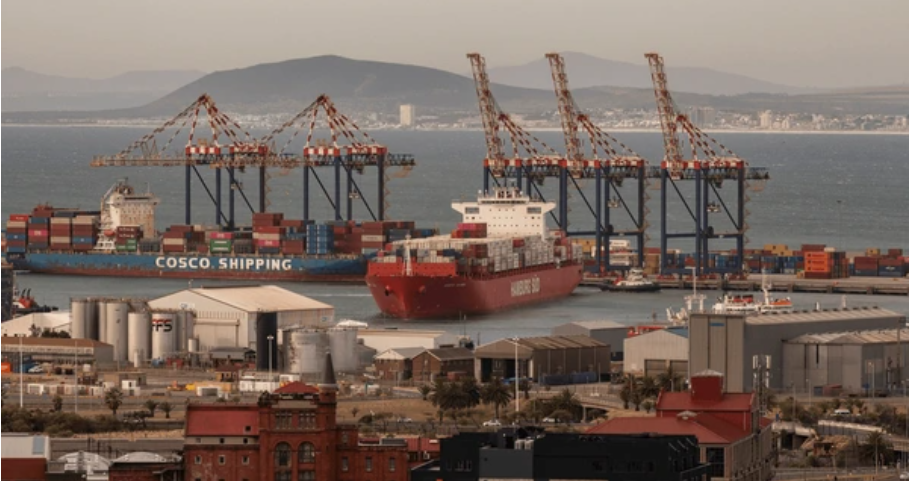
Sea freight from China to South Africa is a vital part of international trade, connecting major ports such as Shanghai and Cape Town through cost-effective shipping routes for large cargo volumes. Although slower than air freight, ocean shipping remains the preferred solution for businesses transporting bulk goods and commercial cargo.
However, shipping between the two countries can involve challenges such as customs regulations, documentation requirements, and logistics coordination. With proper planning and the right shipping strategy, businesses can reduce delays, avoid common freight issues, and achieve smoother and more efficient shipping operations.
Main Shipping Ports in China
Port of Shanghai
Positioned at the mouth of the Yangtze River, the Port of Shanghai is the world's busiest port in container traffic, with an annual shipping volume surpassing 49 million TEUs.
As a vital logistics hub in East Asia, this port facilitates the shipment of goods from China to global destinations. It plays a crucial role in trade with major partners such as the United States, the European Union, and ASEAN countries.
For enterprises aiming to expand operations and tap into an extensive global network, the Port of Shanghai offers unmatched capabilities due to its advanced technology, massive handling capacity, and prime strategic location. Port of Shenzhen
Located in Guangdong province's Pearl River Delta, the Port of Shenzhen ranks as the world's third busiest container port, managing over 30 million TEUs annually.
This port serves as a critical node in international trade routes linking Asia, Europe, and America, amplifying its strategic importance within the global supply chain.
If your business plans involve expansion into Southeast Asia or leveraging access to China’s vast consumer market, the Port of Shenzhen can be an essential component of your logistical strategy. Port of Ningbo-Zhoushan
Situated on Zhejiang province's East China Sea coastline, the Port of Ningbo-Zhoushan is the world’s busiest port by cargo tonnage, handling nearly 1.5 billion metric tons annually, along with over 33 million TEUs, making it fourth busiest in container traffic.
The port facilitates an extensive exchange of commodities with key partners such as the United States, South Korea, and Australia. It is particularly well-regarded for handling bulk cargo like crude oil and iron ore.
Companies dealing in raw materials such as coal, iron ore, or crude oil, will find this port indispensable due to its specialized capabilities and significant strategic relevance.
Main Shipping Ports in South Africa
Port of Durban
Situated in Durban, along South Africa's eastern coast, this port is a critical hub for international trade, handling over 3 million TEUs annually.
The port supports robust trade relations with major global economies like China, the USA, and India. Its prime location benefits countries within the Southern African Development Community (SADC), solidifying its position as a cornerstone of South Africa's maritime economy.
For companies seeking access to African markets, the Port of Durban offers efficient container handling, extensive global connectivity, and a strategic edge in logistics and supply chain management.
Port of Richards Bay
Found in Richards Bay, this port is globally recognized as the largest coal export terminal, shipping over 79 million tons of coal in 2020.
The port predominantly trades with countries reliant on coal, such as China, India, and South Korea, reinforcing its role in the global energy market.
Companies involved in energy or coal-related industries will find ample opportunities at Richards Bay, making it a vital link in their supply chain strategies. Port of Cape Town
Strategically located at the intersection of the Atlantic and Indian Oceans, the Port of Cape Town processes more than 900,000 TEUs each year, serving as a major gateway for international trade.
With strong connections to China, the USA, and Germany, the port thrives in sectors such as fresh fruit exports and the fishing industry, thanks to its advanced cold-chain infrastructure.
Companies specializing in perishable goods—particularly fresh produce or seafood—can greatly benefit from using the Port of Cape Town to optimize their shipping processes. Port of Saldanha Bay
Located along South Africa's west coast, Saldanha Bay is the largest natural deep-water port in the region, chiefly renowned for its significant iron ore exports.
Given its focus on iron ore exports, its primary trading partners include countries like China, Japan, and South Korea that drive iron ore demand.
Businesses centered around the iron ore trade or dependent on raw material exports will find Saldanha Bay to be a key player in supporting their supply chain operations.Port of East London
Situated on South Africa’s southeastern coast, the Port of East London specializes in motor vehicle exports and serves as a mid-sized port notable for its efficiency in the automotive sector.
The port maintains strong trading relations with Germany, Japan, and the USA, specifically within the automobile industry.
For organizations operating in automobile exports or related industries, leveraging the Port of East London can optimize logistics and enhance market penetration. Port of Ngqura
The newest addition to South Africa’s maritime landscape, Ngqura is located in the Coega Industrial Development Zone near Port Elizabeth. It has been designed to handle over 2 million TEUs annually.
This state-of-the-art port acts as a key gateway to markets in the USA, Middle East, and Far East regions, supporting substantial trade flows.
With its cutting-edge infrastructure and vast capacity, the Port of Ngqura is an excellent option for businesses targeting expansion into growing international markets.
Should I choose FCL or LCL for shipping From China to South Africa?
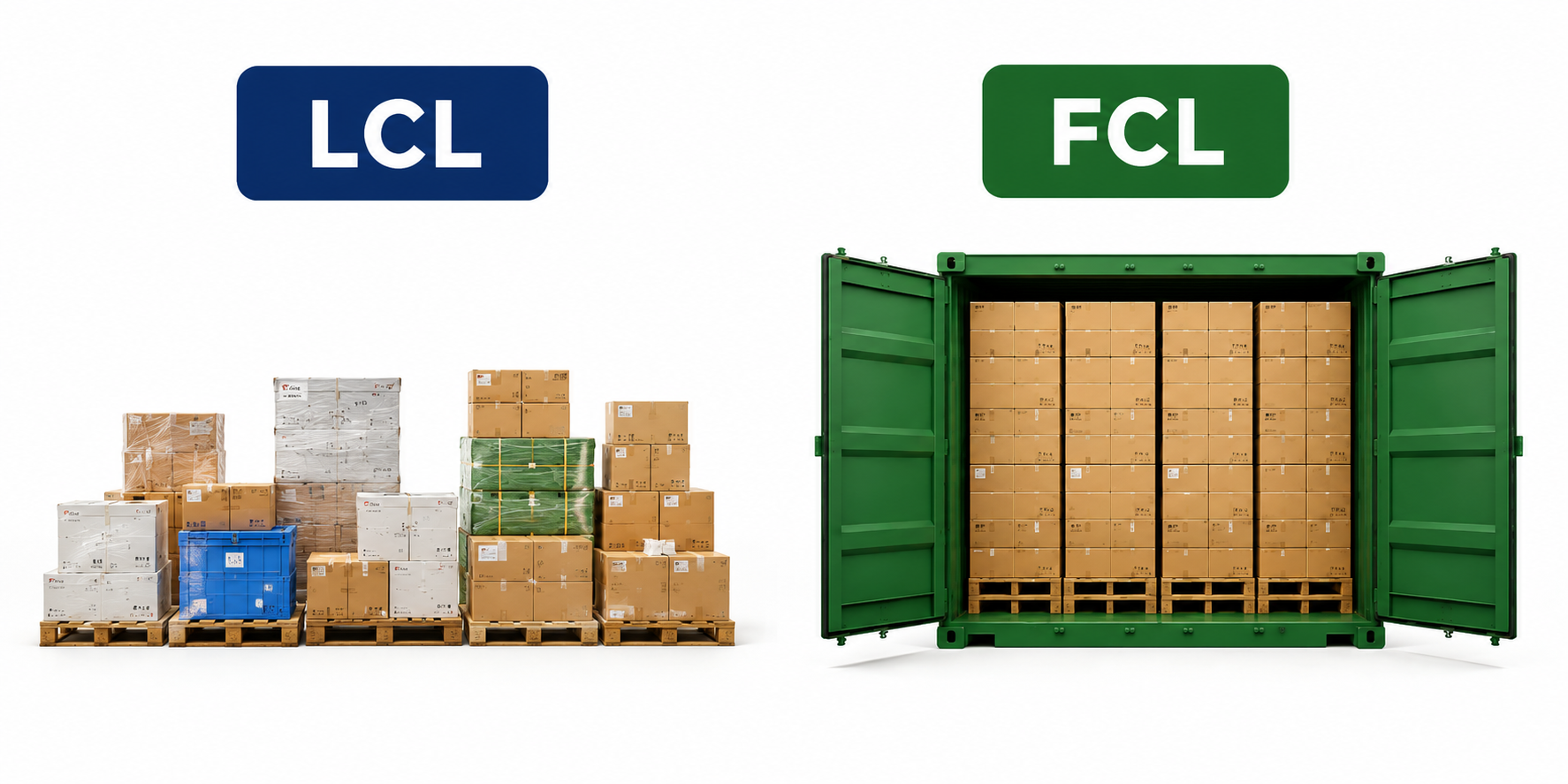
Deciding between Full Container Load (FCL) and Less than Container Load (LCL) for your sea freight from China to South Africa involves assessing factors such as cost, delivery time, security, and the volume of your goods. Here's what you need to know to choose the right option.
LCL: Less than Container Load
Definition: LCL involves sharing container space with shipments from other shippers. It's an economical and flexible solution for smaller shipments.
Ideal for cargo under 13-15 cubic meters (CBM). Beyond this, FCL may become more cost-effective.
Example: Suppose you're importing handmade crafts with a total volume of 10 CBM. This load is insufficient for a full 20-foot container, making LCL a better choice as you only pay for your occupied space.
LCL is generally cost-effective for small-scale shipping because the container's charges are divided among users. However, extra handling fees at ports might increase costs depending on the shipment's volume.
FCL: Full Container Load
Definition: With FCL, the container is exclusively reserved for your goods, offering added security and efficiency.
Recommended for shipments exceeding 13-15 CBM. FCL is economical for bulk shipments as the entire container is utilized and sealed until its arrival at the destination.
Example: If you're transporting 200 chairs from Beijing to Cape Town, the large volume makes FCL more practical and cost-efficient than LCL services.
FCL pricing is based on a flat rate per container rather than CBM, making it cheaper per unit as shipment sizes increase. Additional expenses such as port and customs charges should also be factored into the final cost.
Sea Freight Transit Times From China to South Africa
Transit times can vary between 25 and 30 days, influenced by the ports of departure and arrival, the nature of goods, weather conditions, and other external factors. Below is an indicative table for major port-to-port transit times:
Port of China | Port of South Africa | Average Transit Time |
Shanghai | Durban | 35 days |
Shenzhen | Port Elizabeth | 26 days |
Guangzhou | Cape Town | 50 days |
Tianjin | Richards Bay | 52 days |
Please noted that shipping duration may vary due to unforeseen delays.
Cost of Shipping a Container From China to South Africa
Ocean freight rates typically range between $40 and $100 per CBM. These costs depend on several factors including departure and destination ports, carriers, type of goods, market trends, and other logistical specifics. To get an accurate quote tailored to your shipment requirements, contacting a reliable freight forwarder can help you secure competitive rates and ensure smooth transaction handling.
Special Transportation Services
Out of Gauge (OOG) Containers
Out of Gauge containers are designed to accommodate cargo that exceeds the standard dimensions and weight limits of conventional shipping containers. These specialized containers, such as open-top and flat-rack types, are tailored for oversized or irregularly shaped goods.
Ideal for: Machinery, industrial parts, or any large items requiring additional space.
Examples: Heavy machinery, construction equipment, large pipes, wind turbines.
These containers offer enhanced security and flexibility, ensuring your oversized or heavy goods reach their destination safely and efficiently. Break Bulk
Break bulk shipping involves loading individual, non-containerized cargo items directly onto a vessel it is a method reserved for goods unsuitable for standard containers.
Ideal for: Loose cargo or goods with non-standard shapes and sizes, like raw materials or heavy industrial items. Examples: Steel beams, bags of cement, bales of hay, wooden logs, pallets of bricks.
This method enables customizable and flexible packing solutions, making it well-suited for diverse and irregular cargo. Dry Bulk
Dry bulk shipping specializes in handling large quantities of loose, unpackaged commodities. Goods are loaded directly into the ship’s hold, bypassing packaging entirely.
Ideal for: Homogeneous goods in bulk such as grains, coal, or minerals. Example: Items like wheat or corn, coal, sand.
Dry bulk shipping ensures efficient transportation of large quantities while cutting packaging costs. Roll-on/Roll-off (Ro-Ro)
Roll-on/Roll-off vessels are equipped with ramps that enable wheeled and self-propelled cargo to be driven on and off the ship effortlessly.
Ideal for: Businesses handling vehicles or mobile machinery. Examples: Cars, trucks, semi-trailers, railroad cars.
Ro-Ro provides seamless handling by minimizing the risk of damage and ensuring secure transport for your wheeled or tracked vehicles. Reefer Containers
Reefer containers are specialized temperature-controlled units designed for the shipment of perishable goods needing precise temperature management.
Ideal for: Goods requiring a controlled climate during transport. Examples: Fresh produce like fruits and vegetables, dairy products, meat, frozen foods, pharmaceuticals.
Reefer containers ensure optimal product quality during transit by maintaining necessary temperatures and protecting against climate variations.
From oversized machinery to temperature-sensitive products, understanding your shipping options is essential for safe and cost-effective freight transportation. At DocShipper, we are committed to helping you find the most suitable solutions for your logistics needs. Contact us today for a free shipping quote to ensure your goods reach their destination securely.
Air Freight from China to South Africa
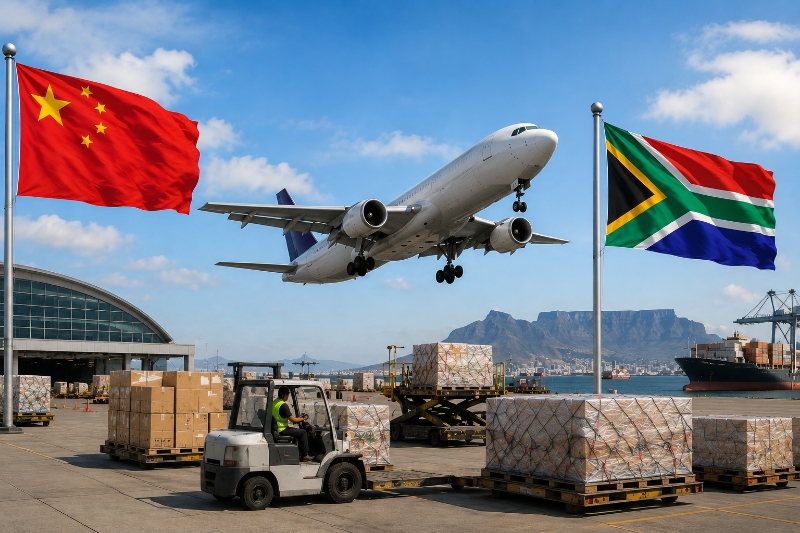
If your business demands a swift and dependable shipping solution from China to South Africa, air freight might be your best option. This method combines speed with reliability, making it ideal for high-value and smaller-sized shipments like smartphones or delicate machine components.
With minimal space consumption, air freight keeps transportation costs manageable. However, calculating costs can be tricky due to weight formulas and industry practices that are prone to misunderstanding, potentially leading to costly miscalculations.
The Main International Airports in China
Airport | Code | Advantages |
Beijing Capital International Airport | PEK | Major global cargo hub with advanced handling facilities and strong international connections |
Shanghai Pudong International Airport | PVG | China’s busiest cargo airport with extensive international freight capacity |
Guangzhou Baiyun International Airport | CAN | Key South China cargo hub with excellent perishables handling facilities |
Chengdu Shuangliu International Airport | CTU | Strategic gateway connecting Western China with Asia, Europe, and Africa |
Shenzhen Bao’an International Airport | SZX | Important export airport near major manufacturing hubs and Hong Kong |
The Main International Airports in South Africa
Airport | Code | Advantages |
O. R. Tambo International Airport | JNB | Africa’s busiest cargo airport with strong international freight connections |
Cape Town International Airport | CPT | Major regional cargo hub with dedicated perishables handling facilities |
King Shaka International Airport | DUR | Important gateway for trade with Asia, Africa, and the Middle East |
Port Elizabeth International Airport | PLZ | Specialized cargo facilities supporting the automotive industry |
East London Airport | ELS | Ideal for smaller and specialized cargo shipments in Eastern Cape regions |
How long does air freight take From China to South Africa?
The typical transit time for air freight shipping from China to South Africa ranges from 3 to 5 days. However, this duration can vary depending on factors such as the specific origin and destination airports, the size and weight of your shipment, and the type of goods being transported. For the most accurate and up-to-date information, consult with GB FREIGHT.
How much does it cost to ship a parcel From China to South Africa using air freight?
Air freight costs from China to South Africa generally range from $4 to $8 per kilogram. This variation depends on factors such as the departure and arrival locations, the dimensions and weight of your package, and the nature of the items being shipped. Each shipment is assessed individually to determine the best shipping rate, offering a customized solution rather than a standard fixed price.
Want to know how much your shipment might cost? Contact us for a free. Let us guide you toward the most suitable shipment plan.
What is the difference between volumetric and gross weight?
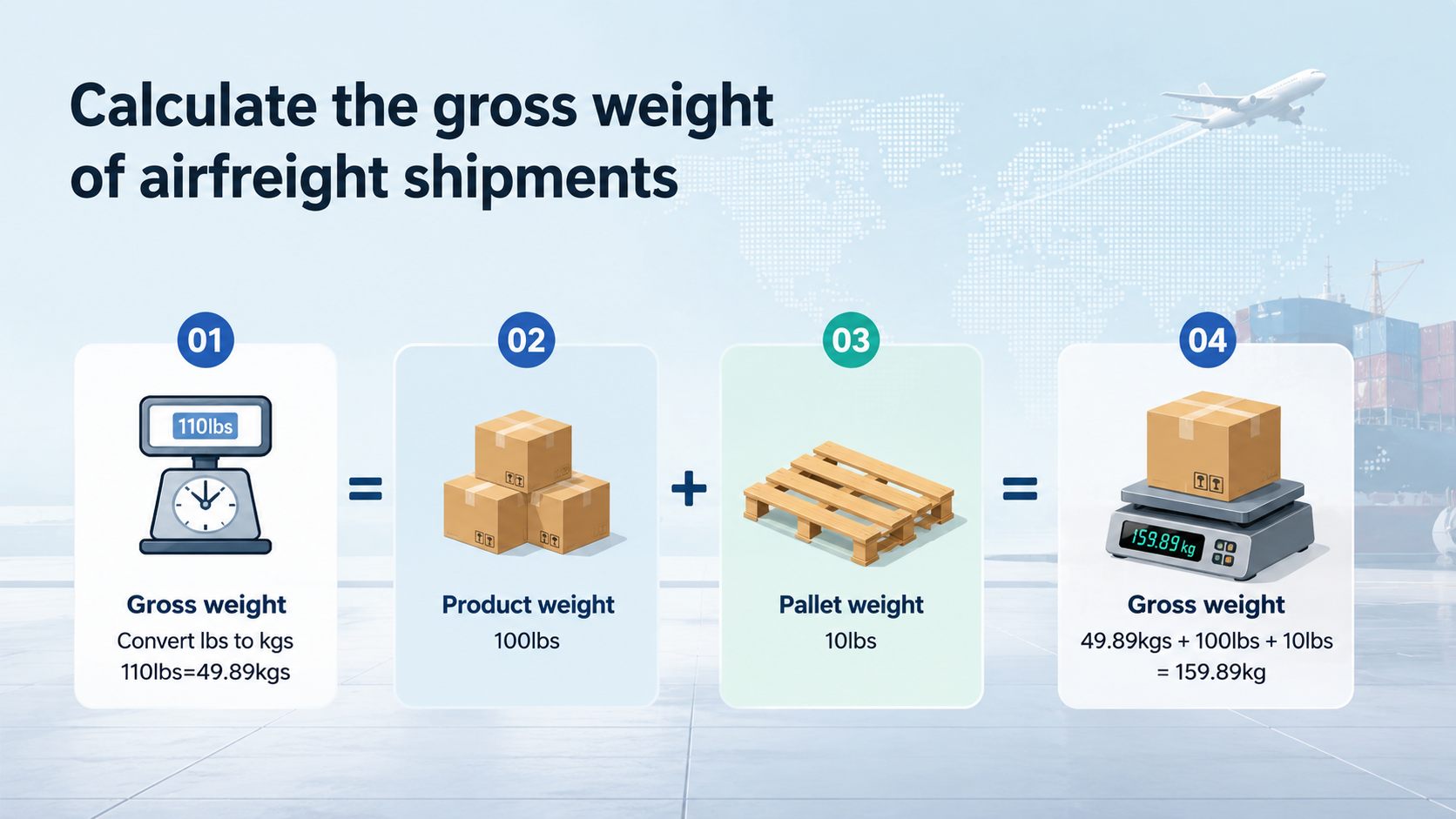
Gross weight represents the total weight of the goods along with their packaging, while volumetric weight evaluates the space the package occupies. For air cargo services, volumetric weight is calculated by multiplying the package's dimensions (length x width x height in centimeters) and dividing by 6000. This calculation accounts for bulky items that may occupy significant aircraft space despite being light in weight.
For example, consider a box with dimensions of 40 cm (L) x 30 cm (W) x 50 cm (H). The volumetric weight is calculated as: (40 x 30 x 50) / 6000 = 10 kg (approximately 22 lbs).
In express air freight services, the divisor used is usually 5000 instead of 6000. With the same example box, the calculation would be: (40 x 30 x 50) / 5000 = 12 kg (approximately 26.5 lbs).
By contrast, gross weight is simply the measurable weight of the goods plus their packaging. If the box in this example weighs 14 kg (about 31 lbs), that is its gross weight.
Freight companies typically use whichever value, volumetric or gross weight—is greater when determining shipping charges. Therefore, lightweight but bulky goods (larger volumetric weight) may result in higher shipping costs compared to smaller but heavier goods (greater gross weight). Understanding these calculations can help you better manage your shipping expenses.
Door-to-Door Shipping From China to South Africa
International shipping might feel complex, but door-to-door services simplify the entire process. This reliable solution takes care of your goods from pick-up in China to delivery in South Africa, covering every step along the way. It’s a seamless process that offers unmatched convenience, transparency, and cost predictability. Curious to discover how easy and beneficial this one-stop service can be? Let’s break it down further.
Door-to-Door Shipping
Choosing door-to-door shipping from China to South Africa relieves you of the burdensome logistics and procedural complexities. This comprehensive service encompasses everything, from the initial pickup to the final delivery. Even customs processes are handled professionally, ensuring smooth clearance and delivery timelines.
Yes, this premium service can come with higher costs, but the comfort and time saved often outweigh the expense. For many businesses, this all-inclusive solution is a game-changer, offering peace of mind and efficiency. If you’re looking for a hassle-free way to navigate international shipping, exploring door-to-door options could be the perfect step.
Why Choose Door-to-Door Shipping
Seamless Freight Forwarding: Starting from pick-up in China to doorstep delivery in South Africa. Say goodbye to complexity and hello to effortless transitions between providers and processes.
Punctual Deliveries: Timing is crucial, especially for urgent shipments. Door-to-door services streamline logistics across all transport modes, ensuring your goods arrive on schedule—no delays, no worries.
Specialized Cargo Handling: Oversized, fragile, or uniquely customized shipments get the attention they deserve with specialized handling throughout the journey. Door-to-door services treat your cargo with the utmost care, overcoming challenges posed by international shipping.
Comprehensive Management: From completing import/export documentation to navigating customs clearance, every administrative hassle is taken off your plate. Provide the required paperwork, and experts will handle the rest with precision.
Unmatched Convenience: No need to juggle container trucking or concern yourself with terminal fees. Once your shipment arrives, it’s delivered straight to your specified location—saving you time and effort on logistics coordination.
Why Choose GB FREIGHT?
At GB FREIGHT, we’ve mastered the art of door-to-door shipping from China to South Africa. From packing and transport to customs clearance and selecting the best shipping method, our team of experts handles it all seamlessly.
We make international shipping simple and stress-free for you. Contact us today for a free quote or consult our experts for tailored advice. Let GB FREIGHT handle your logistics needs, because when it comes to reliable shipping from A to Z, we’ve got you covered!


