
 |


| Quantity: | |
|---|---|
South Korea
Freight Shipping From China to South Korea
Shipping from China to South Korea involves more than just sending a letter, it requires weighing options based on your needs and cargo. Air freight is swift but expensive, while sea freight is more economical and suited for heavy loads, though it demands patience, much like a leisurely boat ride. For smaller shipments, road transport offers flexibility, albeit with its own hurdles. Choosing the right method is akin to selecting the fastest and most efficient ride at an amusement park. What’s the best match for your cargo journey?
Sea Freight from China to South Korea
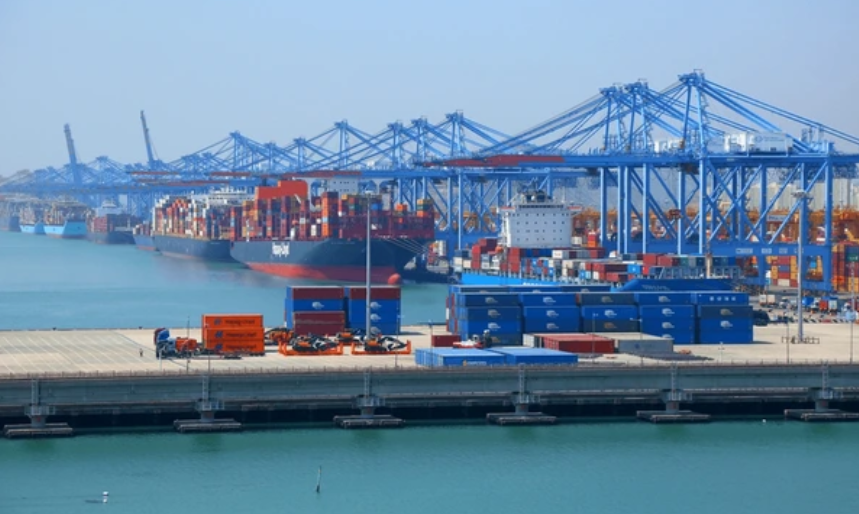
When shipping goods by sea freight from China to South Korea, it’s important to know that this is one of East Asia’s busiest and most efficient shipping routes. The short transit distance makes it a cost-effective solution for transporting larger cargo volumes such as pallets, cartons, and machinery, especially when delivery is not urgent. However, despite the lower costs compared to air freight, sea shipping still comes with logistical challenges.
Many importers assume that shorter distances mean fewer risks, but port-to-port shipping still involves export clearance, terminal handling, shipping documentation, and destination charges. Problems such as incorrect Incoterms, delayed shipping instructions, or selecting an unsuitable destination port can still result in delays and additional inland transport costs in South Korea.
This guide will help you decide whether ocean freight is the right option for your shipment while explaining key considerations, common issues, and practical tips for smoother shipping from China to South Korea.
Main Ports of China
Port of Shanghai
The Port of Shanghai is the world’s largest container port, handling over 40 million TEUs annually. In 2020, it processed around 43.5 million TEUs, making it a key global hub for international trade and shipping.
Port of Ningbo-Zhoushan
China’s second-largest port, with a capacity of about 30 million TEUs per year. In 2020, it handled nearly 28.8 million TEUs, supporting strong bulk and container operations.
Port of Shenzhen
One of China’s busiest export ports, handling around 25 million TEUs annually. In 2020, it processed over 25.2 million TEUs, mainly for electronics and manufacturing exports.
Port of Tianjin
A major northern China port with a capacity of about 17 million TEUs per year. In 2020, it handled more than 17.6 million TEUs, serving Beijing and surrounding industrial regions.
Port of Qingdao
An important northern gateway with a capacity of around 18 million TEUs annually. In 2020, it handled approximately 18.5 million TEUs, supporting strong industrial and international trade flows.
Main Ports of South Korea
Port of Busan
The largest port in South Korea and one of the busiest in the world, handling over 22 million TEUs annually. It is a key transshipment hub in Northeast Asia and a major gateway for exports and imports.
Port of Incheon
Located near Seoul, Incheon Port handles around 3 million TEUs annually. It plays an important role in serving the capital region and supporting industrial cargo flows.
Port of Gwangyang
A major industrial port specializing in bulk cargo and steel-related shipments. It handles around 2 million+ TEUs annually and supports heavy manufacturing industries.
Port of Pyeongtaek-Dangjin
An important hub for automotive and industrial cargo, handling around 1.5–2 million TEUs annually. It connects major manufacturing zones in South Korea.
Port of Ulsan
A key energy and industrial port, focusing on petrochemicals, automobiles, and heavy industry cargo, supporting South Korea’s major industrial base.
Should I Choose FCL or LCL for Shipping From China to South Korea?
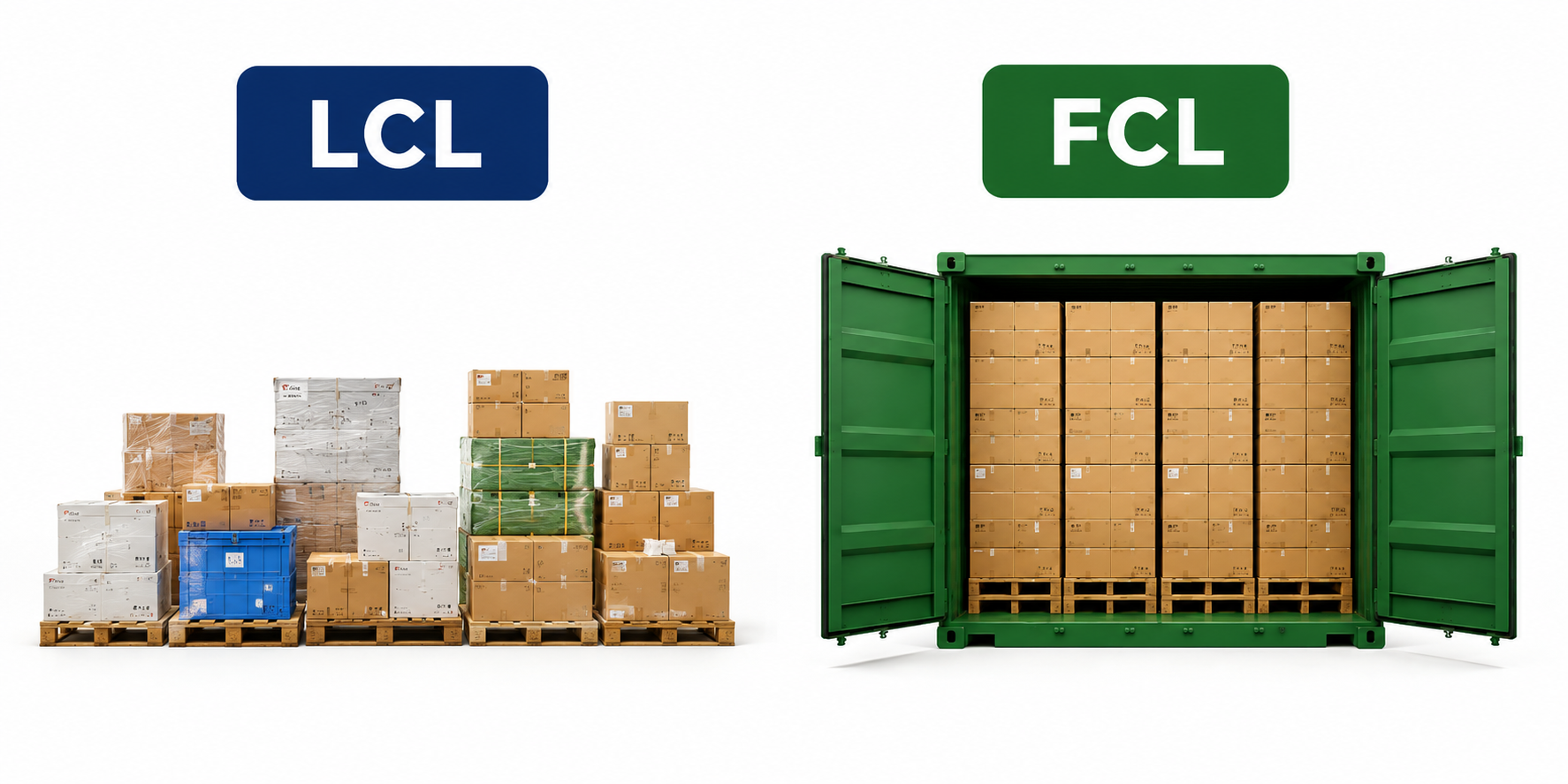
When it comes to shipping goods like car parts, electronics, or textiles from China to South Korea, one key decision you’ll face is whether to opt for Full Container Load (FCL) or Less than Container Load (LCL). This is more than just a logistical matter, it’s a strategic decision that impacts your shipping costs, delivery times, and the ultimate success of your shipment. Let’s take a closer look at both options to help you make an informed choice that ensures your cargo reaches its destination efficiently and economically.
LCL: Less than Container Load
Definition: LCL shipping involves sharing container space with goods from other shippers. Your cargo takes up only a portion of the container.
If your shipment is smaller, typically less than 13–15 cubic meters (CBM), LCL is often the better choice. This method is ideal for small to medium-sized businesses due to its cost flexibility and suitability for low-volume shipments.
Example: Suppose you’re a toy manufacturer in Beijing, shipping 10 CBM of toys to a distributor in Seoul. Instead of renting an entire container that you don’t need, you can opt for LCL shipping, sharing the space and costs with other shippers.
The main advantage of LCL is that you only pay for the space your cargo occupies. This can reduce expenses significantly for smaller shipments. However, remember that additional charges such as LCL handling fees may apply, potentially increasing the total cost. To avoid surprises, request an all-inclusive LCL quote before proceeding.
FCL: Full Container Load
Definition: FCL involves reserving an entire container—either a 20-foot or 40-foot size—for your shipment. The container remains sealed throughout its journey from origin to destination.
FCL is the preferred choice for larger shipments exceeding the 13–15 CBM range. It is more cost-effective for high-volume cargo and provides additional security since your goods are not mixed with those of other shippers.
Example: Imagine you’re shipping 500 boxes of toys from China to South Korea, filling up a 20-foot container entirely. In this case, choosing FCL ensures your goods are securely packed and sealed at the origin, reducing the risk of damage or loss during transit.
For higher volumes, FCL tends to be more economical on a per-unit basis compared to LCL. That’s because LCL charges are based on the volume (CBM), while FCL covers the entire container. However, if the container is underutilized, costs may become disproportionally high. Choosing the right container size—20-foot versus 40-foot—is key to maximizing cost efficiency.
how long does it take to ship a container from China to South Korea?
Shipping from China to South Korea usually has a short transit time, often under a week for port-to-port sea shipments. However, total shipping lead time can vary depending on several factors. LCL shipments often take longer due to consolidation processes, while FCL shipments are faster but still depend on vessel schedules and terminal handling.
Congestion on this route is generally manageable, though delays may happen during peak export seasons or when transshipments through Busan are required. Direct services are frequent, but some South China shipments may still involve transshipment, increasing variability. It’s recommended to treat transit times as estimates and include time buffers in your planning.
Route | FCL sea transit time | LCL sea transit time |
Shanghai → Busan | 2–4 days | 3–5 days |
Ningbo → Incheon | 3–5 days | 4–6 days |
Qingdao → Busan | 2–4 days | 3–5 days |
Shenzhen → Busan | 4–6 days | 5–7 days |
How much does a sea freight shipment cost from China to South Korea?
LCL shipments (1–5 CBM) typically cost around USD 20–40 per CBM, while a 20ft FCL container ranges from USD 250–480 and a 40ft FCL container from USD 400–850.
These prices are general estimates rather than final shipping costs. Rates on the China to South Korea route mainly depend on the ports, container availability, and whether you choose FCL or LCL shipping. Although the short distance keeps ocean freight rates relatively low, destination charges and LCL handling fees in South Korea can still increase the total cost.
It’s also important to remember that the quoted freight rate often only covers the ocean transport. Additional costs such as terminal handling, documentation, and inland delivery can make up a significant part of the final shipping expense.
Air freight from China to South Korea
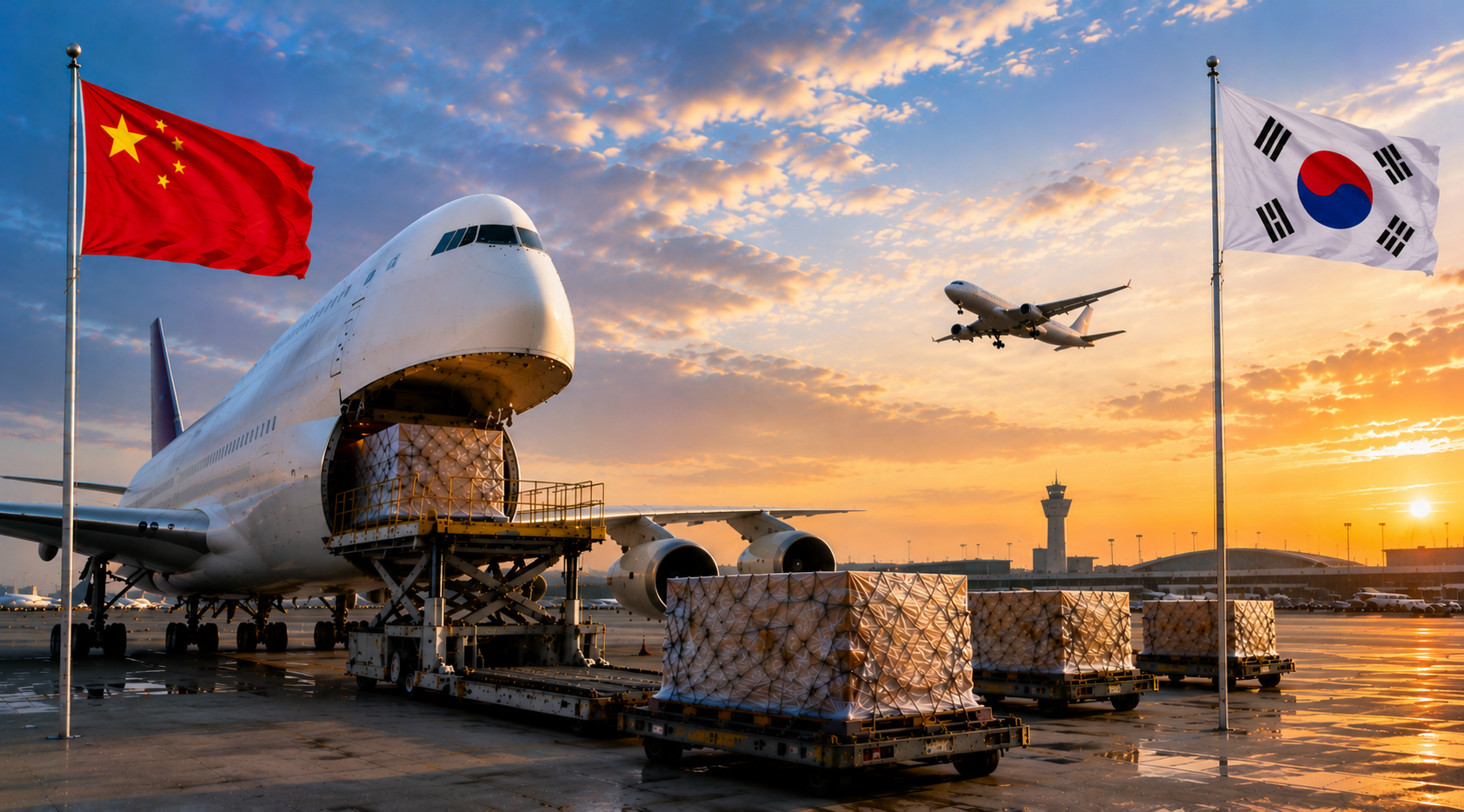
When shipping by air from China to South Korea, the focus is typically on speed over cost savings from ocean freight. This option is ideal for high-value goods, urgent restocking needs, electronics, components, or items that cannot afford the lengthy transit times of sea freight. However, air freight only delivers on its promise of speed if your shipment is fully prepared, properly packed, accurately documented, and ready to go. Otherwise, delays can quickly undermine the advantages.
The reality we encounter often highlights that while air freight is fast, it leaves no room for error. Cut-off times are strict, security screenings can result in last-minute holds, and costs are calculated based on chargeable weight rather than physical weight alone. The priciest mistakes on this route often stem from errors in dimensional calculations, insufficient packaging rejected during cargo inspections, or mismatched export documents and air waybills.
Main International Airports in China
Airport | Code | Advantages |
Shanghai Pudong International Airport | PVG | Major international cargo hub with frequent flights to South Korea and strong cargo handling capacity |
Guangzhou Baiyun International Airport | CAN | Important export gateway in Southern China with reliable air freight operations |
Shenzhen Bao’an International Airport | SZX | Key logistics hub for electronics, technology cargo, and fast-moving shipments |
Beijing Capital International Airport | PEK | Large international airport with extensive cargo connections and efficient security screening |
Main International Airports in South Korea
Airport | Code | Advantages |
Incheon International Airport | ICN | South Korea’s main air cargo gateway with efficient import handling and support for high-value and temperature-sensitive freight |
Gimhae International Airport | PUS | Important airport for Southern Korea and suitable for regional distribution and sea-air cargo flows |
How long does air freight take from China to South Korea?
Standard air cargo from China to South Korea generally costs around USD 3 to 7 per kg, while express air freight usually ranges between USD 6 and 10 per kg.
Air freight rates mainly depend on cargo capacity, shipment urgency, and chargeable weight. Compact and heavy cargo often has a lower cost per kg compared to large but lightweight cartons. The final shipping price can also be affected by the departure airport in China, inland transportation before export, and last-mile delivery arrangements in South Korea.
What is the difference between volumetric and gross weight?
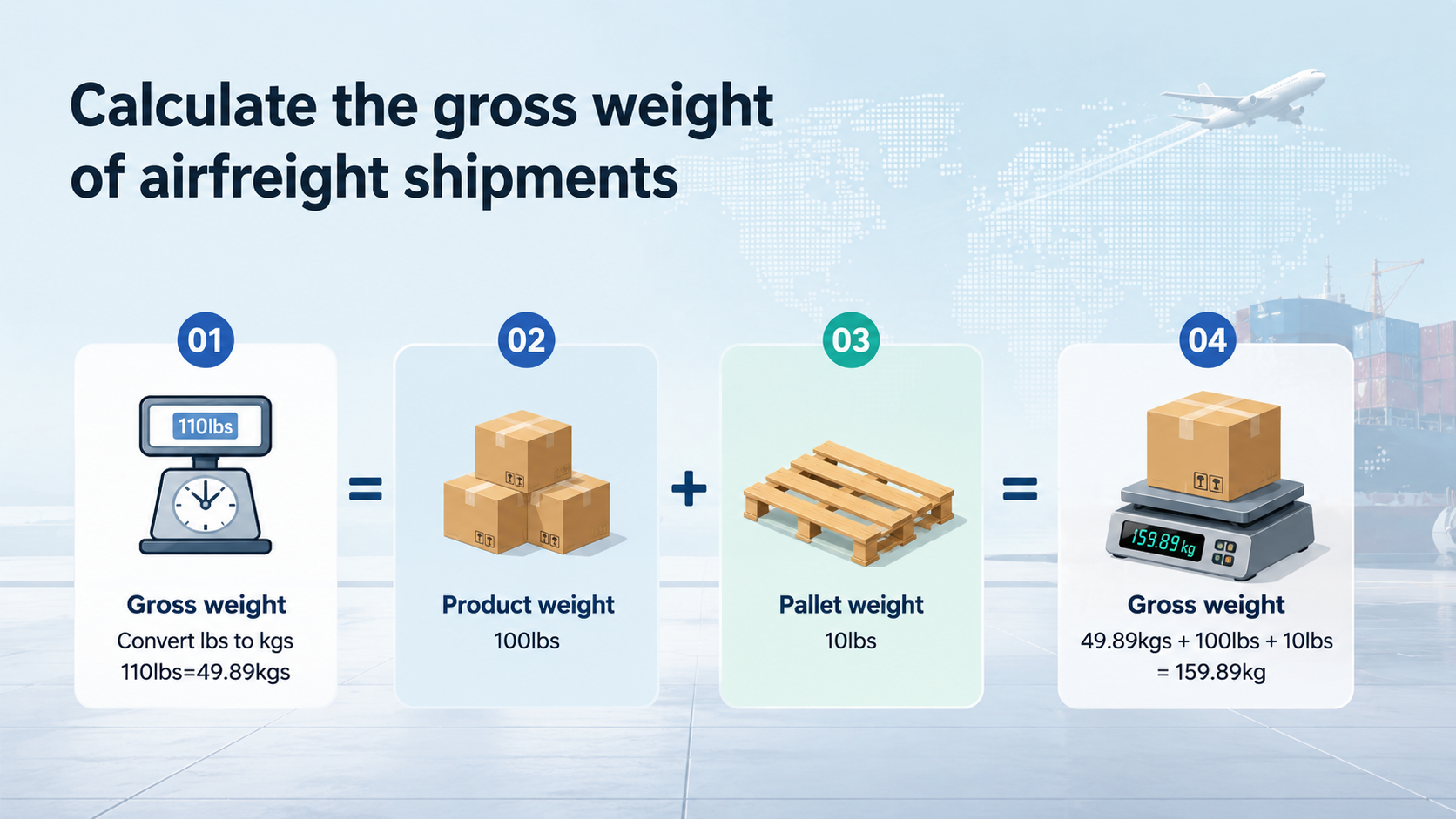
The difference between volumetric and gross weight lies in how they are measured and applied in shipping costs. Airlines don't base their pricing solely on how heavy a shipment feels but on the space it occupies. Understanding this distinction is essential before booking air cargo.
Gross weight refers to the actual weight of the shipment as measured on a scale. Volumetric weight, also known as dimensional weight, is calculated based on the amount of space the shipment takes up.
To calculate volumetric weight for air cargo:
Length × Width × Height (in cm) ÷ 6000 = Volumetric Weight (kg)
For example: A package measuring 50 × 50 × 50 cm would result in a volumetric weight of 20.8 kg (50 × 50 × 50 ÷ 6000).
Standard divisors are used to convert volume into weight:
- Air cargo: 1 cubic meter = 167 kg (using divisor 6000)
- Express shipments: 1 cubic meter = 200 kg (using divisor 5000)
Common errors include overlooking pallet height, using loose packaging that unnecessarily increases the volume, or assuming that express shipment calculations are the same as those for air cargo. Airlines will always charge based on the higher value between gross weight and volumetric weight, which is why efficient packaging plays a key role in reducing air cargo costs.
Door-to-door shipping From China to South Korea
With a complete logistics service solution, every step is taken care of, from cargo pickup in China to final delivery in South Korea. The result is lower shipping costs, less operational effort, and smoother customs clearance. Ready to discover how it works? Let’s get started!
Door-to-Door Shipping
Planning shipments from China to South Korea? A door-to-door service offers a hassle-free way to transport goods directly from a warehouse to your desired location. Our clients prefer this method because it bypasses complicated processes, simplifies customs clearance, and makes logistics more efficient and convenient. While the cost might be slightly higher, the trade-off is worth it, more time and resources for your business priorities. If peace of mind is a top priority, let professionals handle the complexity for you.
Why Choose Door-to-Door Service From China to South Korea?
Effortless Logistics: No need to coordinate multiple transit modes. This service covers every aspect – collection, freight, customs, and delivery – from start to finish.
Timely Delivery: Need quick shipments? No worries! Coordinated schedules ensure your goods arrive promptly, as planned.
Specialized Handling: Whether you’re shipping high-value electronics or delicate ceramics, the service ensures items are managed with the utmost care.
Local Expertise: Navigating foreign documentation can be tricky, but native professionals handle paperwork efficiently, guaranteeing smooth customs clearance.
Convenience & Simplicity: From trucking your goods from the warehouse to delivering them to their destination, everything is taken care of for you.
Instead of juggling logistical challenges, focus on growing your business and leave the heavy lifting to the experts!
GB FREIGHT– Your Door-to-Door Shipping From China to South Korea
At GB FREIGHT, you can sit back and relax while we manage shipments from China to South Korea with ease. From packing and transport to customs clearance and selecting the ideal shipping method, we oversee every detail for a smooth process. Get a free quote or consult our expert team now.


