
 |


| Quantity: | |
|---|---|
Spain
Freight Shipping from China to Spain
Are you planning to ship freight from China to Spain? Whether you are a new importer or an experienced business, choosing the right shipping method is essential for balancing cost, transit time, and efficiency. From sea freight to air freight, every logistics solution comes with its own advantages depending on your cargo and delivery requirements.
Understanding the shipping process, customs procedures, and transportation options can help you avoid delays and reduce unnecessary costs. GB FREIGHT provides reliable freight forwarding services from China to Spain, including cargo pickup, customs clearance, and final delivery, ensuring a smooth and efficient shipping experience.
Sea Freight From China to Spain
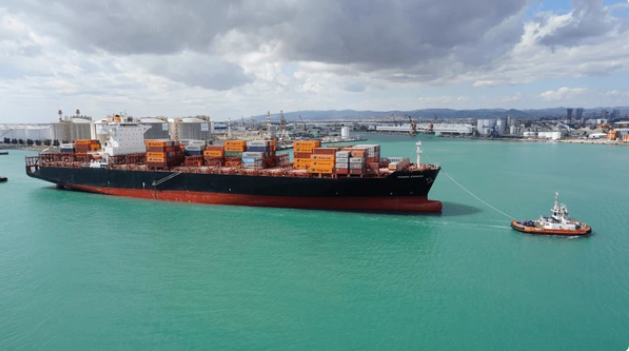
China and Spain share a vibrant trade partnership, with much of their goods transported through ocean freight, an economical choice for large-scale shipments. Picture this as two colossal neighbors exchanging packages over a metaphorical fence but in this case, the fence spans thousands of miles of ocean, and the packages are massive shipping containers. Ports like Shanghai in China and Valencia in Spain serve as bustling gateways, linking industrial hubs and driving multinational trade.
However, just as in any complex exchange, challenges arise, packages might be delayed, misplaced, or even rerouted. As a shipper, you may have firsthand experience with such hurdles, often stemming from errors in the shipping process. But fear not—this guide aims to simplify these complexities with clear strategies and best practices, transforming obstacles into opportunities.
The Main Shipping Ports in China
Port of Shanghai
Positioned on the East China Sea, the Port of Shanghai is a key global trade hub, managing an immense shipping volume of 43.3 million TEUs in 2020.
The port has strong trade links with the Americas, Europe, and the Asia-Pacific, and has been ranked as the world’s largest container port since 2010, underlining its critical role in global commerce.
Context for Businesses: For companies aiming to tap into international markets or China’s fast-growing domestic economy, the Port of Shanghai is a crucial logistical asset, offering unparalleled reach and advanced technological capabilities.
Port of Ningbo-Zhoushan
Found in Zhejiang province along China’s eastern coastline, the Port of Ningbo-Zhoushan handles over 27 million TEUs annually, placing it among the world’s busiest ports.
This port is a vital link for trade with Europe, North America, and Oceania, and specializes in the transport of bulk commodities like iron ore, crude oil, and coal.
Companies involved in the trade of raw materials or looking to access North American and European markets will find valuable infrastructure at this port, particularly through its specialized terminals.
Port of Shenzhen
Located in Guangdong province, near Hong Kong, the Port of Shenzhen processed approximately 25.2 million TEUs in 2020.
With robust trading links to the Americas, Europe, and Southeast Asia, this port plays a key role in supporting technology and manufacturing sectors due to Shenzhen’s thriving industrial base.
Firms in technology, manufacturing, or creative industries can benefit significantly from this port’s proximity to industrial hubs and its advanced technological resources.
Port of Guangzhou
Situated within the Pearl River Delta region, the Port of Guangzhou handles over 21 million TEUs annually.
Primary trading partners include countries in Southeast Asia, the Americas, and Australia. The port supports a variety of industries in southern China, including automobile production and petrochemicals.
Ideal for automotive, petrochemical, or retail companies targeting Southeast Asian markets, the Port of Guangzhou’s strategic location and specialized facilities make it an excellent choice for efficient logistics operations.
Port of Hong Kong
Located on the South China Sea, the Port of Hong Kong processes more than 18 million TEUs annually.
Known for its extensive feeder network and diverse trade relationships with Southeast Asia, Europe, and North America, the port ranks among the busiest transshipment hubs worldwide.
For operations that rely on transshipment to connect with secondary ports in Asia, the Port of Hong Kong offers well-developed connections that are essential for streamlining supply chains.
Port of Qingdao
Located on the Yellow Sea, the Port of Qingdao manages over 18 million TEUs annually.
The port maintains strong trade connections with Japan, South Korea, and the Americas. It is particularly renowned for its grain and oil handling capabilities, serving as a cornerstone for Shandong province’s agricultural output.
If your operations involve agriculture, automotive products, or energy sectors targeting Northeast Asia or American markets, the Port of Qingdao offers valuable logistics advantages through its specialized facilities and geographic position.
Main Shipping Ports in Spain
Port of Valencia
Situated on Spain’s eastern coast, the Port of Valencia is the busiest container port in the country and ranks as the fifth busiest in Europe, managing approximately 5.42 million TEU annually.
Crucial trading partners include Italy, China, and the United States. This port is instrumental for Spain’s export sectors, particularly ceramics, furniture, and food products.
If your objective is to penetrate the European market via ocean freight, the Port of Valencia’s extensive connectivity and robust handling capacity provide a significant advantage.
Port of Algeciras
Location and Volume: Positioned at Spain’s southern extremity near Gibraltar, the Port of Algeciras handles around 5 million TEU yearly.
Major trading connections are with Morocco and China. Its strategic position makes it a vital transshipment hub, offering seamless links to North Africa and the Mediterranean.
For supply chains requiring smooth transitions between the Atlantic and Mediterranean regions, the efficiency of the Port of Algeciras in transshipment operations makes it an ideal option.
Port of Barcelona
Located along Spain’s northeastern coast, the Port of Barcelona processes about 3.4 million TEU annually.
Leading trade partners include China, Italy, and Turkey. Its comprehensive cargo handling facilities, combined with excellent highway and rail connections, position it as a premier Mediterranean logistics hub.
If your focus is on Spain’s domestic market, the Port of Barcelona offers outstanding inland connectivity to facilitate efficient distribution of goods.
Port of Bilbao
Found in northern Spain, the Port of Bilbao manages roughly 500,000 TEU per year.
This port mainly trades with the UK, the Netherlands, and the USA. It is pivotal to Spain’s mining and metal industries due to the region’s abundant iron resources.
For enterprises dealing in metallic goods or targeting markets in the UK or Northern Europe, the Port of Bilbao provides a reliable shipping solution.
Port of Las Palmas
Based in the Canary Islands off Africa’s western coast, the Port of Las Palmas processes around 1 million TEU each year.
Its primary trading relationships are with countries in West Africa, making it an essential hub for Afro-Eurasian trade routes.
If you’re planning to expand into African markets, the strategically located Port of Las Palmas offers excellent connectivity and access to these regions.
Port of TarragonaLocated on Spain’s northeastern coast, the Port of Tarragona handles approximately 100,000 TEU annually.
Key trading partners include Italy, China, and the United States. The port specializes in bulk cargo, particularly chemicals and petrochemicals.
Companies dealing in bulk chemicals or petrochemicals will find the Port of Tarragona’s tailor-made facilities suitable for optimizing their shipping operations.
Should i choose FCL or LCL for shipping From China to Spain?
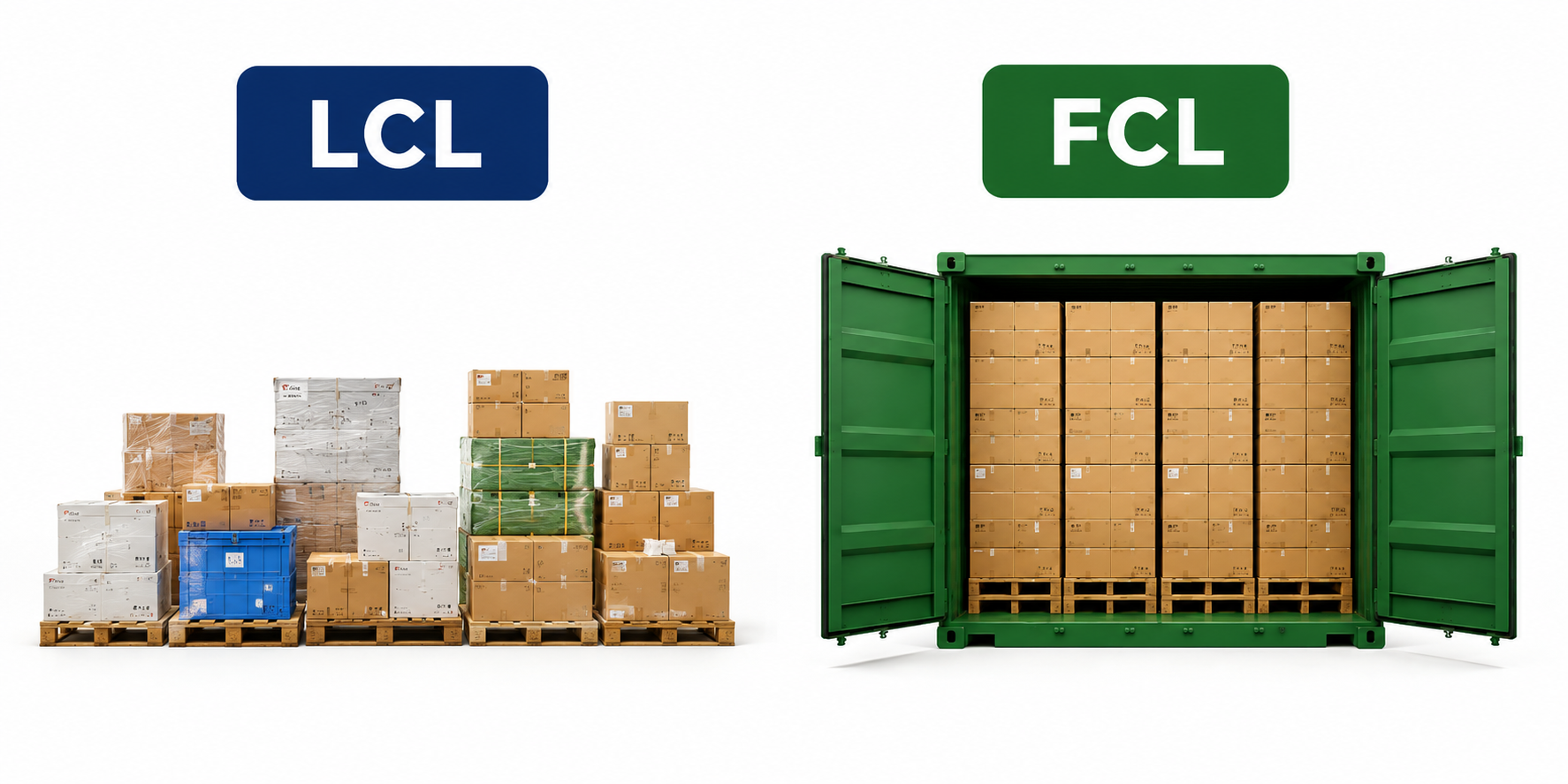
Deciding between Full Container Load (FCL) and Less than Container Load (LCL) shipping depends on your specific logistics needs. This decision directly impacts your shipping costs, delivery timeline, and overall efficiency. Below is a guide to help you understand the differences between these shipping methods and choose the best option for your cargo.
LCL: Less than Container Load
Definition: LCL involves sharing a container with goods from other shippers. Your cargo occupies only the portion of the container space it requires.
LCL is ideal for smaller shipments typically under 13–15 cubic meters (CBM). It provides flexibility and cost savings for businesses that do not need a full container.
Example: A Spanish business importing specialized machinery parts from several suppliers in Shanghai can benefit from LCL. Since their order volume doesn’t justify a full container, they can consolidate their cargo with that of other shippers.
With LCL, charges are based on the cargo volume rather than the entire container. This makes it a cost-effective solution for low-volume shipments. However, keep in mind that additional handling steps are often involved, which can slightly increase logistical costs and transit times.
FCL: Full Container Load
Definition: FCL allows a single shipper to occupy an entire container, such as a 20-ft or 40-ft container, exclusively for their goods.
This option is suitable for high-volume shipments exceeding 13–15 CBM. FCL ensures that your cargo remains sealed from origin to destination and often works out as the more economical choice for larger loads.
Example: A China manufacturer shipping 5,000 plush toys to a Spanish retailer might opt for FCL. If each toy occupies 0.005 CBM, the total shipment would take up approximately 25 CBM, making it a perfect fit for a 20-ft container while ensuring the cargo is transported safely and without sharing space with other goods.
FCL pricing usually involves a flat rate for the entire container, making it more affordable than LCL for large shipments. While the upfront cost may be higher, the per-unit cost is often significantly lower when filling most or all of the container's capacity.
By understanding the distinctions between these two shipping methods, you can select the one that aligns best with your shipment size and business priorities. Whether it’s the cost-effective and flexible LCL or the secure and capacity-rich FCL, choosing the right option will lead to a smoother and more successful shipping experience.
How long does sea freight take from China to Spain?
Sea freight from China to Spain typically takes an average of 30-36 days. However, transit times can vary depending on factors such as specific ports involved, the type and weight of goods, and other logistical considerations. For a precise estimate tailored to your requirements, it's best to consult a reliable freight forwarder like GB FREIGHT. Below is a breakdown of key shipping options for transporting goods from China to Spain.
China Ports | Spain Ports | Average Transit Time |
Port of Shanghai | Port of Barcelona | 32 |
Port of Shenzhen | Port of Valencia | 30 |
Port of Ningbo-Zhoushan | Port of Algeciras | 31 |
Port of Guangzhou | Port of Bilbao | 34 |
*Please note that these are averages. For the accurate information please contact with your freight forwarder or contact us for more further.
How much does it cost to ship a container from China to Spain?
The cost of shipping from China to Spain depends on multiple variables, including the points of origin and destination, the type of carrier, the nature of the cargo, and fluctuating market rates. Ocean freight prices are especially subject to market trends, making it challenging to provide a blanket estimate. However, GB FREIGHT takes a case-specific approach, offering personalized rates to meet your unique shipping needs while maintaining quality. Whether you're shipping small parcels or full-container loads, we ensure secure and cost-effective solutions.
Special Transportation Services
Out of Gauge (OOG) Containers
OOG containers are designed for oversized items that exceed standard container dimensions.
Suitable for: Irregularly-shaped or large goods that cannot fit into standard containers.
Examples: Machinery parts, yachts, tractors, wind turbine blades.
Why Choose This Option: Ideal for shipping oversized or uniquely shaped cargo requiring added flexibility.
Break Bulk
Break Bulk refers to individual shipping of oversized or heavy cargo outside standard containers.
Suitable for: Large, heavy items that cannot be accommodated in containers.
Examples: Large vehicles, steel beams, construction equipment.
Why Choose This Option: Offers an excellent solution for individually packed heavy goods unconstrained by container dimensions.
Dry Bulk
This method involves shipping loose dry cargo in large quantities directly into a vessel’s hold.
Suitable for: Transporting large amounts of loose, dry materials.
Examples: Grain, coal, sugar, iron ore.
Why Choose This Option: Perfect for exporters dealing in bulk non-liquid cargo like agricultural or raw materials.
Roll-on/Roll-off (Ro-Ro)
Ro-Ro vessels allow wheeled cargo to be driven on and off the vessel with ease.
Suitable for: Vehicles, trailers, heavy machinery, or other rolling equipment.
Examples: Cars, trucks, farming or construction equipment.
Why Choose This Option: Simplifies transportation of vehicles or wheeled cargo without the need for disassembly.
Reefer Containers
These are temperature-controlled containers designed to transport perishable items.
Suitable for: Temperature-sensitive goods requiring refrigeration during transit.
Examples: Meat, dairy products, fruits, vegetables.
Why Choose This Option: Ensures perishable goods arrive fresh and intact from China to Spain by maintaining the necessary temperature throughout transit.
If you’re looking to ship cargo From China to Spain and need guidance selecting the right option. Contact us today for a free quote tailored to your specific shipping requirements, GB FREIGHT is here to help.
Air Freight from China to Spain
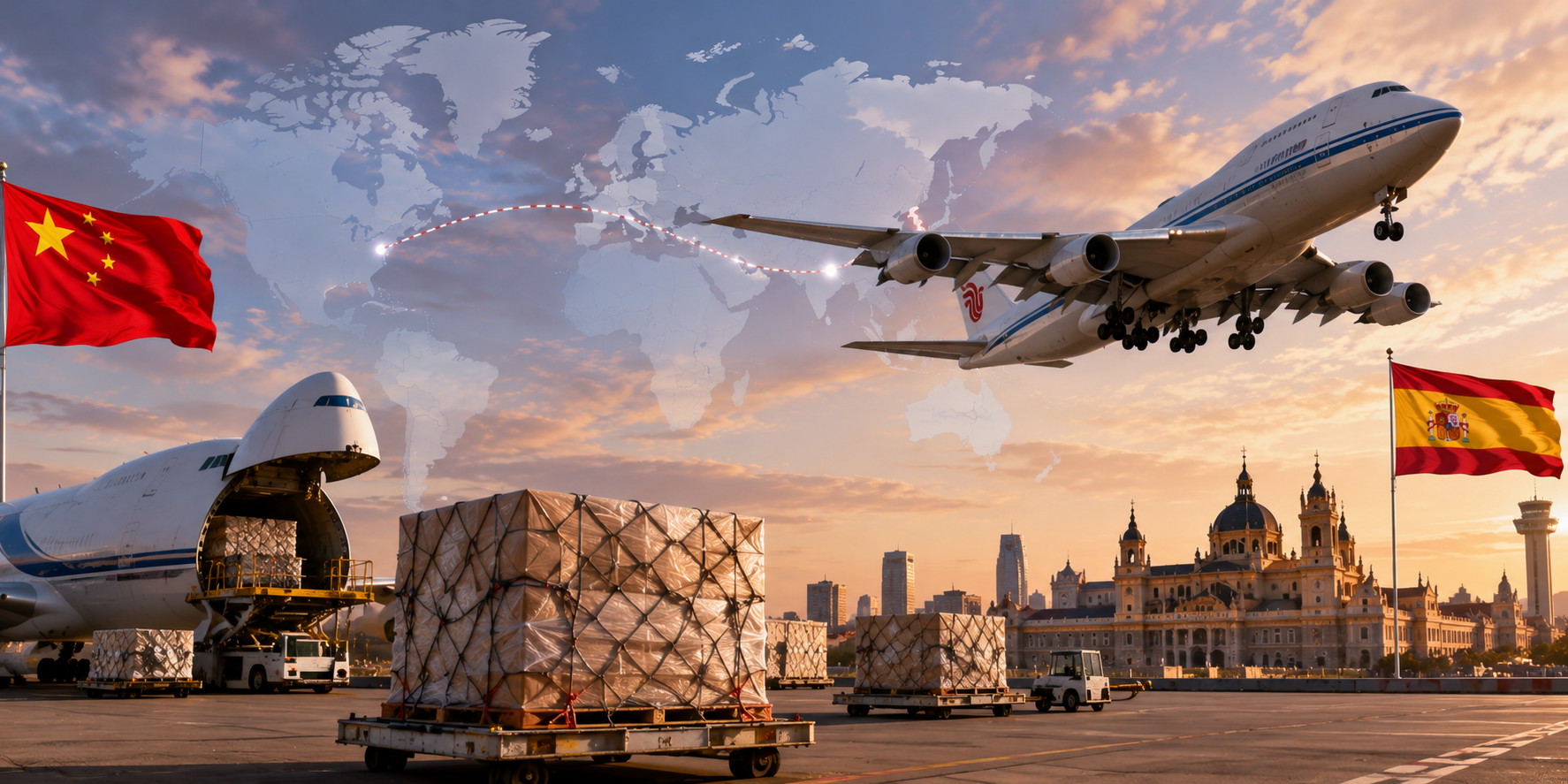
Air freight offers a rapid and dependable solution for transporting goods from China to Spain, especially for smaller and high-value shipments. Even though it's precision components bound for a Madrid-based tech company or delicate ceramic art, this mode of shipping ensures speedy deliveries, minimizing delays and meeting tight timelines.
However, it's crucial to fully grasp the nuances of air freight. Misunderstanding weight calculations or other intricacies can lead to unwelcome surprises, often in the form of higher costs than anticipated. Think of it like ordering an expensive food at a restaurant without checking the price first.
Should I choose Air Freight from China to Spain ?
Air cargo can be an excellent choice if your shipping priorities are speed and reliability balanced with cost-effectiveness. Collaborating with trusted airlines such as Air China or Iberia ensures dependable service tailored to your needs.
For instance, Air China specializes in handling large consignments, which makes it ideal for shipments exceeding 100 to 150 kilograms (220 to 330 pounds). However, bear in mind that fixed schedules may result in slightly longer transit times. Iberia complements the strengths of air freight with comprehensive services designed to optimize the experience. Together, these factors make air cargo a strong contender when fast transit and reliability are key drivers for your shipping requirements.
The Main international airports in China
Airport | Code | Advantages |
Beijing Capital International Airport | PEK | Major global cargo hub with extensive international routes |
Shanghai Pudong International Airport | PVG | One of the busiest cargo airports in the world |
Guangzhou Baiyun International Airport | CAN | Key gateway for Southern China shipments |
Shenzhen Bao’an International Airport | SZX | Strong electronics and e-commerce cargo capacity |
Chengdu Shuangliu International Airport | CTU | Important hub for Western China logistics |
The Main International Airports in Spain
Airport | Code | Advantages |
Adolfo Suárez Madrid-Barajas Airport | MAD | Spain’s largest international airport with extensive global cargo connections |
Barcelona El Prat Airport | BCN | Major logistics gateway connecting Europe, Latin America, and Asia |
Zaragoza Airport | ZAZ | Important cargo hub with strong logistics and distribution capabilities |
Vitoria Airport | VIT | Specialized in handling large cargo, perishable goods, and express freight |
Valencia Airport | VLC | Key airport serving Mediterranean and Southern European cargo markets |
How Long Does Air Freight Take From China to Spain?
Air freight transit times from China to Spain typically range from 3 to 5 business days. However, exact durations may vary based on factors such as departure and arrival airports, shipment weight, and the type of goods being transported. Contact us for the most accurate timeline tailored to your shipment.
How much does air freight cost From China to Spain
Shipping costs for air freight parcels from China to Spain usually fall between $4 and $10 per kilogram. Exact pricing depends on variables like parcel dimensions, weight, distance between airports, and the nature of the goods being shipped. To eliminate uncertainty, experienced professionals are available to help secure competitive rates customized to your needs. Case-by-case quotes ensure clarity on costs and requirements. Simply reach out for a free estimate tailored to your shipment.
Understanding Volumetric vs. Gross Weight
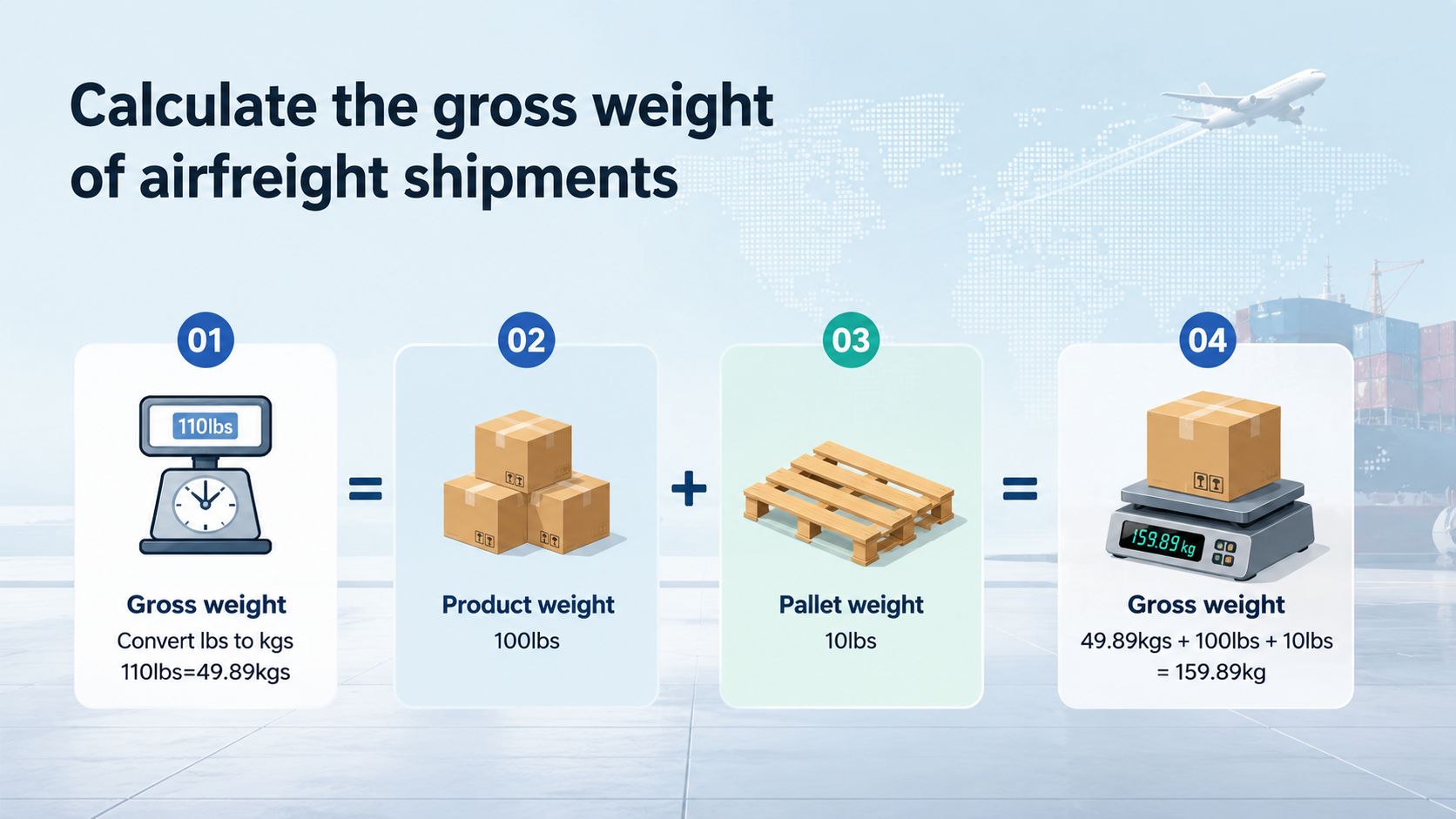
A clear understanding of weight calculations is important in air freight as rates are determined by the higher value between volumetric weight and gross weight.
Gross weight is straightforward, it includes the entire weight of your shipment with packaging and any loading materials. For example, if your shipment totals 150 kg (330.7 lbs with conversion), that's your gross weight.
Volumetric weight considers the space your items occupy within the aircraft. For standard air freight, it is calculated by multiplying the dimensions of your package (length x width x height in centimeters) and dividing by 6000. For example, a package with dimensions 120 cm x 100 cm x 110 cm would result in a volumetric weight of 264 kg (582 lbs). For express air freight, the calculation changes slightly—the divisor becomes 5000. Using the same dimensions, the volumetric weight would be higher at 316.8 kg (698.5 lbs).
The greater of the two, gross or volumetric—is used to determine costs, making an understanding of these calculations essential for accurate budgeting.

Rail Freight From China to Spain
Efficient and Steady Rail freight offers a unique alternative, connecting China and Spain via the Silk Railway established in 2014. This critical trade route boosts economic cooperation by transporting goods like electronics, clothing, and automobile parts across Eurasia, passing through Kazakhstan, Russia, Belarus, Poland, and Germany.
Though rail freight bridges the gap between the speed of air transport and the affordability of ocean shipping, it does come with its complexities, such as navigating customs procedures and planning around transit times. Understanding these challenges is vital to ensure smooth shipments without encountering unwanted obstacles along the way.
For businesses seeking a cost-efficient way to transport their goods while striking a balance between speed and price, rail freight could offer significant advantages. Carefully evaluating your business needs in light of these factors will reveal whether this established trade route is your ideal choice.
The main train stations in China
Zhengzhou International Hub
Xi’an Train Station
Shenzhen Train Station
Chongqing Train Station
The main train stations in Spain
Madrid Abroñigal
Barcelona Morrot
Zaragoza Plaza
Valencia Fuente San Luis
How long does rail freight take from China to Spain?
The rail freight from China to Spain can vary significantly, depending on factors such as the departure and arrival points, the type of cargo, and even seasonal conditions. Typically, the transit time averages around 20 to 24 days. To set realistic expectations, let’s explore some major rail routes connecting China and Europe, typical travel durations, and their service frequency. Keep in mind, however, that these are general estimates, and actual transit times can be subject to unforeseen logistical challenges.
Departure Route | Destination | Estimated Transit Time |
Zhengzhou | Milan, Italy | 20–22 days |
Chongqing | Milan, Italy | 18–21 days |
Yiwu | Milan, Italy | 19–22 days |
Xi’an | Milan, Italy | 18–20 days |
Chengdu | Milan, Italy | 19–21 days |
The Advantages of Rail Transport From China to Spain
When considering your options for shipping from China to Spain, rail freight presents a highly attractive middle ground. It bridges the gap between the slower speeds of sea freight and the high costs of air freight. For industries like electronics, manufacturing machinery, or automotive parts, where time sensitivity is critical but cost efficiency remains a priority.
On average, trains within the China-Europe rail network deliver goods between these two regions in about 18–20 days, approximately half the time it takes via sea freight. Plus, at about 50–60% of the cost of air freight, rail provides significant savings. This balance of speed and affordability makes rail transport an excellent option for businesses seeking efficient and budget-conscious logistics solutions.
How Much Does It Cost to Ship by Rail from China to Spain?
Determining the exact cost of shipping goods by rail isn’t straightforward it is similar to air or sea freight. Several variables come into play, such as shipment size, nature of the cargo, point of origin, destination, and more. However, there’s no need to worry!
Our dedicated team is skilled at tackling these complexities and will work tirelessly to provide you with a tailored quote that meets your unique needs. You’ll only pay for what you truly require with no hidden charges or unnecessary extras. Reach out today and receive a free quote. Let’s make your logistics experience seamless and cost-effective.
Door-to-Door Shipping from China to Spain
Managing international shipping can be a daunting process, but a Door-to-Door service simplifies everything, especially for long-haul routes like those From China to Spain. This all-in-one solution collects your goods from your location and delivers them directly to the end recipient, offering unparalleled convenience.
What Does Door-to-Door Service Include?
Our Door-to-Door service is designed to manage every step of the shipping process for you, including pick-up, transportation, customs clearance, and final delivery. While this option may come with a slightly higher price tag, it provides considerable benefits such as time savings and reduced coordination hassles. That’s why it’s one of the most sought-after services we offer at GB FREIGHT.
It's important to note that while this service handles most logistical challenges seamlessly, potential delays may still arise due to stringent customs procedures. Nonetheless, Door-to-Door shipping remains an immensely reliable and customer-favored option.
Why Choose Door-to-Door Service From China to Spain?
International shipping can often feel like navigating a maze and not an easy one at that. Thankfully, Door-to-Door service offers a streamlined alternative that eliminates many common headaches. Here’s how it can transform your logistics journey:
Hassle-Free Logistics: From managing complex paperwork to arranging transportation, Door-to-Door services handle every aspect behind the scenes. This allows you to focus on growing your business rather than stressing over logistics.
Reliable Delivery Timeframes: Stuck shipments can cost precious time and cause tremendous frustration. Experienced freight forwarders ensure your cargo stays on track for timely delivery.
Specialized Handling for Unique Goods: Whether you’re shipping intricate machinery or fragile artworks, Door-to-Door services provide expert handling to ensure your items arrive in perfect condition.
End-to-End Convenience: The "door-to-door" aspect means your shipment is picked up at its origin in China and delivered straight to its destination in Spain—no extra steps or hassle.
Simplified Customs Clearance: Tackling intricate customs documentation can feel overwhelming. With professional assistance included in Door-to-Door service, you won’t face these challenges alone.
If you’ve ever found yourself lost in the complexities of cross-border shipping, consider Door-to-Door service your ultimate ally, streamlined logistics designed to make your supply chain smoother, more efficient, and absolutely stress-free.


