
 |


| Quantity: | |
|---|---|
United Arab Emirates
Freight Shipping From China to UAE
When shipping from China to the UAE, one common mistake is assuming this route is straightforward. It’s not. Costs, transit times, and customs processes can fluctuate significantly between China export hubs and UAE entry points.
You’re likely seeking concrete numbers, accurate timelines, and clarity on duties. We’ll guide you through freight options decisions that will define your shipment, ensuring you’re not caught off guard during the process.
If you've encountered suppliers offering unclear Incoterms or freight quotes that change unexpectedly, you’ll quickly understand why these factors are crucial. If you prefer a team that tracks capacity, rates, and regulations in real time, we’re here to ensure your shipments from China to the UAE proceed smoothly and as planned.
Sea Freight From China to UAE
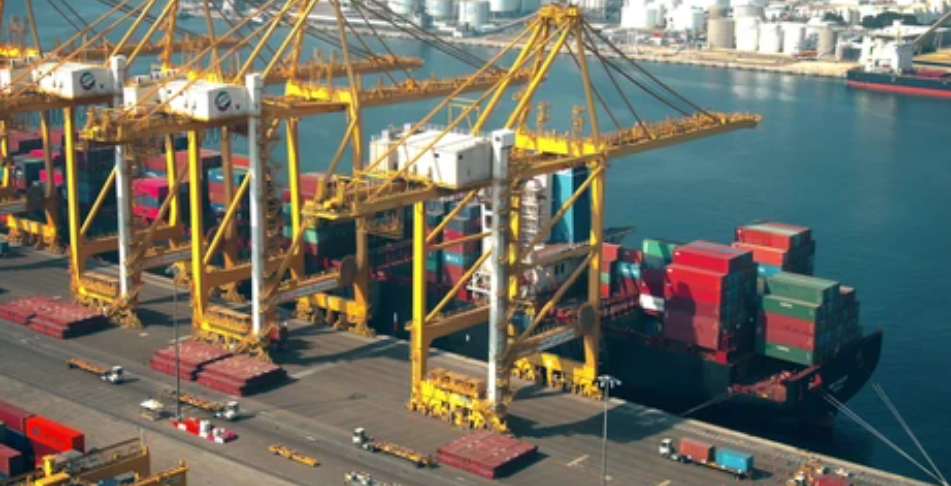
Sea freight is an important trade link between China and the UAE, connecting major China ports such as Shanghai, Guangzhou, and Shenzhen with key UAE hubs like Dubai and Abu Dhabi. It is a cost-effective solution for transporting large and heavy cargo, making it a preferred choice for international trade despite longer transit times than air freight.
However, businesses may still face challenges such as customs procedures, shipping documentation, and compliance requirements. With proper planning and efficient logistics management, companies can avoid common shipping issues and achieve smoother trade operations from China to the UAE.
The Main Shipping Ports in China
Port of Shanghai
The Port of Shanghai lies at the Yangtze River's mouth and is the world's busiest port by cargo tonnage, managing over 47.3 million TEUs (Twenty-Foot Equivalent Units) annually.
As a deep-water seaport, it serves as a vital gateway for trade between East Asia, Europe, and America. Its primary trading partners include the USA, Germany, Japan, South Korea, and Vietnam.
For companies seeking access to major trade hubs in East Asia, Europe, or America, the massive capacity and connectivity of the Port of Shanghai offer exceptional distribution opportunities.
Port of Ningbo-Zhoushan
Positioned in Zhejiang province's eastern region, the Port of Ningbo-Zhoushan ranks among the busiest globally, handling more than 15 million TEUs annually.
With connections to over 600 ports across 100 nations, this port plays a critical role in transporting goods such as iron ore, crude oil, and liquid chemicals.
The Port of Ningbo-Zhoushan is especially well-suited for businesses in raw materials like iron or crude oil, offering streamlined international distribution to numerous destinations worldwide.
Port of Shenzhen
Found in Guangdong Province in southern China, the Port of Shenzhen handles upwards of 13.5 million TEUs each year.
With links to over 300 ports across 100 countries and territories, Shenzhen has established itself as a crucial gateway for South China's global trade activities.
Companies focusing on Asian trade can leverage the extensive network of the Port of Shenzhen to address logistical needs across the region efficiently.
Port of Hong Kong
Located in the South China Sea, the Port of Hong Kong has long been a significant international shipping hub, processing around 17 million TEUs annually.
Its major trading partners include mainland China, Singapore, Taiwan, the USA, and Korea. The port’s strategic location further bolsters its role in global trade.
For businesses targeting markets around the South China Sea region, the Port of Hong Kong offers world-class infrastructure and wide-reaching connectivity to enhance distribution capabilities.
Port of Guangzhou
Situated at the Pearl River's mouth in Guangdong Province, the Port of Guangzhou handles over 25.5 million TEUs yearly.
The port’s key trading partners include Taiwan, Hong Kong, Singapore, and the USA, with an emphasis on automobile and heavy industry shipments.
Enterprises specializing in heavy industries or automobile exports can benefit from the tailored facilities and strong global trading links provided by the Port of Guangzhou.
Port of Qingdao
This port is located on the Yellow Sea near Qingdao in Shandong Province and processes over 18.5 million TEUs annually.
A major hub in East Asia, it maintains pivotal trade relations with countries such as the USA, Australia, and Japan. The port is renowned for bulk grain and oil shipments.
For businesses dealing with grain or oil logistics, the Port of Qingdao offers specialized services and a well-established network to optimize supply chain operations.
Main Shipping Ports in the UAE
Port of Jebel Ali
Situated in Dubai, Jebel Ali stands as the largest port in the UAE and ranks as the 9th busiest globally, with a capacity to handle up to 19.3 million TEU.
The port serves as a vital hub for the Indian subcontinent, Africa, and the Middle East. Its cutting-edge facilities, including an automated container terminal, enhance operational efficiency.
For companies planning to expand into Middle Eastern or African markets, Jebel Ali offers an extensive network and advanced facilities to ensure smooth and timely shipping operations.
Port of Khalifa
Located in Abu Dhabi, Port Khalifa handles approximately 7.8 million TEU annually. Positioned halfway between Dubai and the Saudi Arabian border, it is emerging as a crucial regional hub.
Primary trade partners include India, China, Japan, and neighboring Gulf nations. The port plays a pivotal role in connecting markets across the Middle East, North Africa, and South Asia.
With its strategic location and robust logistics capabilities, Port Khalifa is ideal for businesses requiring excellent connectivity and faster supply chain processes between East and West.
Port Zayed
Situated in the city of Abu Dhabi, Port Zayed handles around 1 million tons of cargo annually. While smaller in volume than Jebel Ali or Khalifa, it remains integral to UAE’s maritime trade landscape.
Its activities primarily cater to the Middle East market, providing invaluable connections for local and regional trade. The port’s location within the UAE capital adds to its importance.
Businesses seeking a strategic entry point to Middle Eastern markets will find Port Zayed suitable for its close proximity to Abu Dhabi city and established links with regional ports.
Port of Fujairah
Situated on the UAE’s eastern coast, Port Fujairah handles over 720,000 TEU along with more than 60 million tons of general and bulk cargo annually.
The port serves markets in the Indian Subcontinent, Africa, and the Red Sea region. Its oil terminals highlight its significance in global energy logistics, making it one of the world’s top three ship bunkering hubs.
Companies within the oil and related industries benefit greatly from Fujairah’s specialized facilities that support energy-sector shipping strategies effectively.
Port Rashid
Centrally located in Dubai, Port Rashid is a key player in both cargo handling and cruise tourism, managing over 1.5 million TEU annually.
Serving primarily the Middle East region, it is also one of the most prominent hubs for cruise tourism within the area alongside cargo operations.
Ideal for businesses seeking solutions that combine cargo shipping with passenger transport or those targeting the Middle East market. Port Rashid accommodates diverse logistical needs seamlessly.
Sharjah Container Terminal (SCT)
Based in Sharjah, SCT holds the distinction of being the UAE's first container terminal. While smaller compared to larger counterparts like Jebel Ali, it handled more than 400,000 TEU in 2020.
It primarily caters to markets such as the Indian Subcontinent, East Africa, and the Red Sea region.
Small to mid-sized businesses can leverage SCT’s efficient yet smaller-scale operations for cost-effective logistics solutions tailored to regional needs.
Should I choose FCL or LCL for shipping From China to UAE?
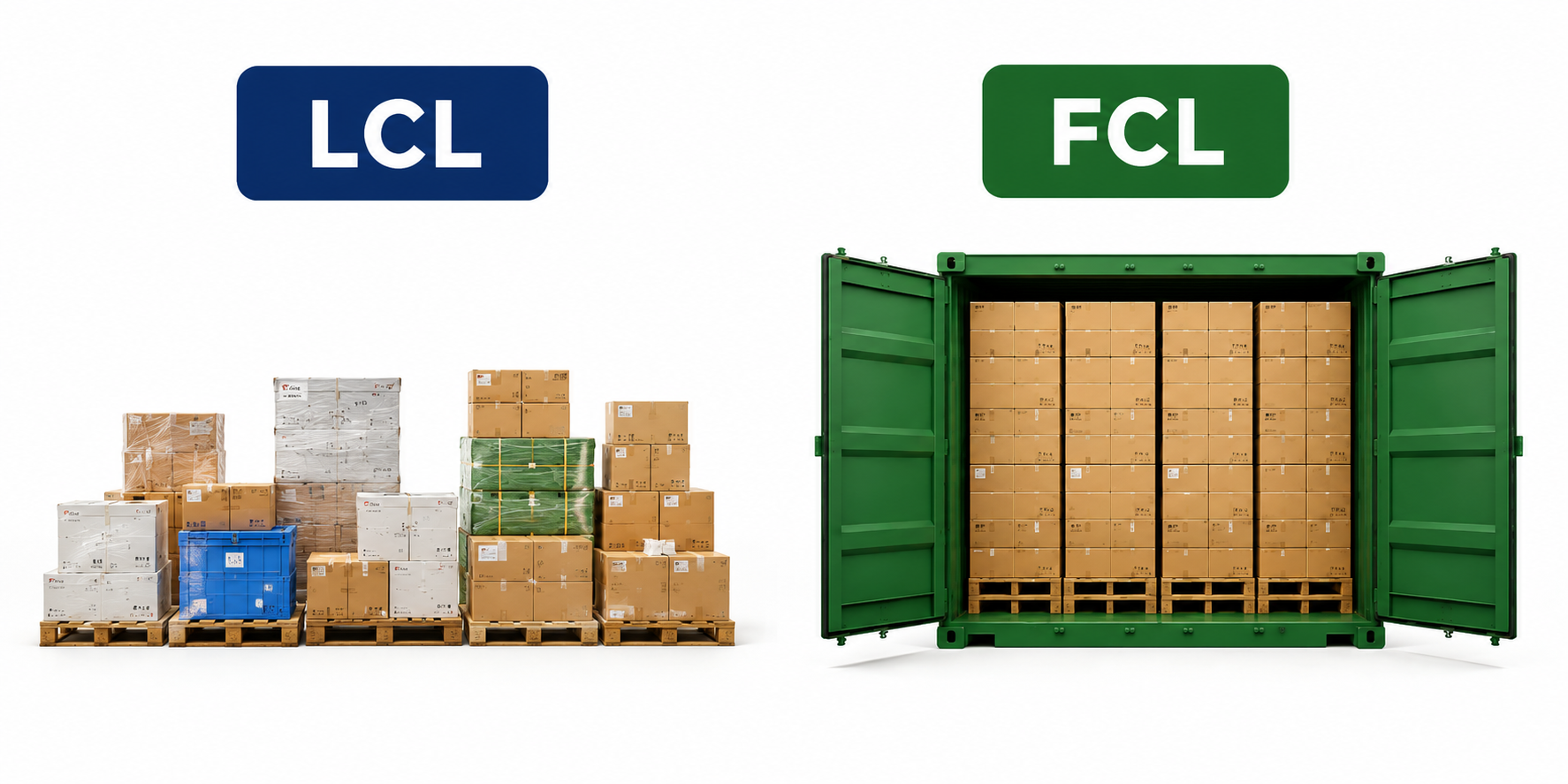
Choosing between FCL (Full Container Load) and LCL (Less than Container Load) for shipping goods from China to the UAE depends on factors such as shipment size, budget, urgency, and security requirements. Both options have distinct advantages and are suited for different situations. Here’s what you need to consider:
LCL: Less than Container Load
Definition: LCL allows you to share container space with other shippers. Your cargo occupies only part of the container.
Opt for LCL if your shipment volume is small, typically less than 13–15 cubic meters (CBM). This method suits businesses shipping lower quantities without waiting to fill an entire container.
Example: A retailer in Dubai importing 10 CBM of mobile accessories from Shenzhen can choose LCL over waiting for enough goods to fill a 20-foot container (capacity: 25–28 CBM).
You pay only for the space your goods use, which is cost-effective for small volumes. However, because LCL shipments involve consolidation and deconsolidation processes, transit times may be longer, and extra handling fees might apply.
FCL: Full Container Load
Definition: FCL entails renting an entire container exclusively for your shipment. The container remains sealed from origin to destination.
If your cargo exceeds 13–15 CBM or involves high-value or fragile goods that require dedicated space, FCL is ideal. It is particularly economical for large shipments due to fixed container costs.
Example: A wholesaler shipping 5,000 pairs of shoes from Shenzhen to Abu Dhabi can fill a 20-foot container, making FCL a cost-effective and secure option.
With FCL, you pay a flat rate for the entire container, whether it’s a 20-foot or 40-foot one. Larger shipment volumes reduce the cost per unit. Additional charges like customs duties and destination fees remain constant, further maximizing savings for high-volume cargo.
For smaller shipments, LCL offers flexibility and cost savings but may involve longer delivery times. On the other hand, FCL is better suited for larger shipments that require faster transit and secure handling.
How long does it take to ship from China to UAE?
Sea freight transit times from China to the UAE usually range from 15 to 22 days, depending on factors such as the specific ports involved, the weight of the cargo, and the type of goods being shipped. To get a more accurate estimate, please consult GB FREIGHT for a personalized quote for free.
Below is a general table highlighting transit times from major ports. Keep in mind that these times are approximate and may vary based on real-world conditions.
China | UAE | Average Transit Time |
Port of Shanghai | Port of Jebel Ali | 17 days |
Port of Ningbo | Port of Jebel Ali | 19 days |
Port of Shenzhen | Port of Jebel Ali | 16 days |
Port of Qingdao | Port of Jebel Ali | 20 days |
How much does it cost to ship a container From China to UAE?
Understanding the cost of shipping a container from China to the UAE can be a complex process, as rates vary based on several factors. These include the Point of Loading, Point of Destination, chosen carrier, type of goods being shipped, and fluctuating monthly market trends. A fixed quote is often impractical due to these variables, but our experienced shipping specialists are well-equipped to navigate this dynamic landscape. By tailoring quotes to each individual shipment, we ensure the best rates and a seamless experience for your cargo transportation needs.
Special transportation services
Out of Gauge (OOG) Containers
OOG containers cater to oversized cargo that cannot fit within standard container dimensions. Featuring open-top or flat-rack designs, they are ideal for items such as cranes, generators, and large machinery. This option minimizes risks during loading and unloading and streamlines logistics for businesses handling oversized goods.Break Bulk
For cargo too large or heavy for containers, break bulk shipping involves loading items individually onto vessels using cranes or manpower. Suitable for large equipment, raw materials, or irregular cargo like locomotives and yachts, break bulk offers a flexible and cost-effective solution for challenging shipments.
Dry Bulk
Dry bulk shipping is designed for loose, unpackaged goods transported in large quantities, such as grains, cement, or coal. Companies dealing with high-volume homogeneous materials benefit from the efficiency and affordability of this method.
Roll-on/Roll-off (Ro-Ro)
Ro-Ro shipping is perfect for cars, trucks, trailers, and other wheeled cargo that can roll on and off vessels. This method reduces handling and minimizes the risk of damage during transport, making it ideal for motorized vehicles or wheeled equipment.
Reefer Containers
Reefer containers are refrigerated solutions for temperature-sensitive goods like fresh produce, meat, dairy products, pharmaceuticals, or chemical items that require temperature control. They help maintain product quality throughout transit.
Still unsure which shipping solution fits your needs? Contact us today for personalized advice and a free shipping quote.
Air Freight From China to UAE
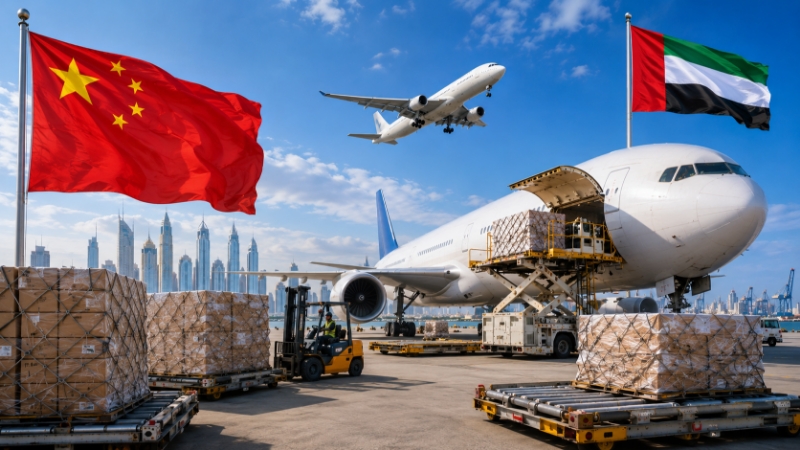
The air freight from China to the UAE is a fast and dependable solution for businesses, particularly those handling small yet high-value shipments like electronics, designer apparel, or critical documents. When time is of the essence and size isn't a major constraint, air freight proves to be a practical and advantageous choice.
However, despite its advantages, many shippers make costly mistakes by misjudging air freight expenses due to incorrect weight calculations. This oversight can result in significant financial losses. The goal is for your shipping experience to feel secure and predictable, not like taking a risky gamble.
Why Choose Air Cargo From China to UAE?
Air cargo transportation between these two destinations stands out as an efficient, reliable, and often cost-effective option, especially for shipments weighing over 100–150 kilograms (220–330 lbs). Leading providers like China Southern Airlines and Emirates SkyCargo are known for their quality service. While fixed schedules might occasionally stretch transit times, these airlines still deliver solid value for businesses seeking affordability coupled with dependability. For those balancing budget considerations with reliability, air cargo is a noteworthy option.
How Long Does Air Freight Take From China to UAE?
The duration for air freight between China and the UAE generally ranges from 5 to 8 days. However, this timeline might vary based on factors such as the specific airports involved, shipment weight, and the nature of the goods transported. Each case comes with its own variables that demand tailored attention. For an accurate estimate tailored to your shipment requirements, please consult GB FREIGHT for a personalized quote for free.
What Are the Costs of Shipping via Air Freight From China to UAE?
Generally, air freight rates from China to the UAE vary between $4 and $7 per kilogram. However, calculating exact costs requires considering multiple elements, such as the distance between departure and destination airports, dimensions and weight of the parcel, and characteristics of the goods being shipped. To set your shipment on the right track without unnecessary stress, our team can guide you in arranging cost-effective transportation options aligned with your needs. Reach out today to receive a detailed quote!


