
United Kingdom
Freight Shipping From China to United Kingdom
If you're planning to ship goods from China to the UK, it's important to understand that this process is far from a straightforward "plug-and-play" operation. Changes introduced by Brexit have impacted customs procedures, documentation requirements, and VAT handling. These adjustments mean that any misalignment in your paperwork could lead to delays or penalties.
Rather than grappling with abstract theories, you need a clear and actionable strategy that covers transit times, and the best freight options right from the start. Whether you're a first-time importer or looking to streamline an established supply chain, we provide end-to-end freight shipping solutions tailored to your needs. Simply share details about what you're shipping, your deadlines, and any specific constraints, then leave the rest to us. From coordinating transportation and customs clearance to managing cost structures, we ensure every aspect of the process is handled seamlessly so you’re prepared for any challenge.
Sea Freight from China to United Kingdom
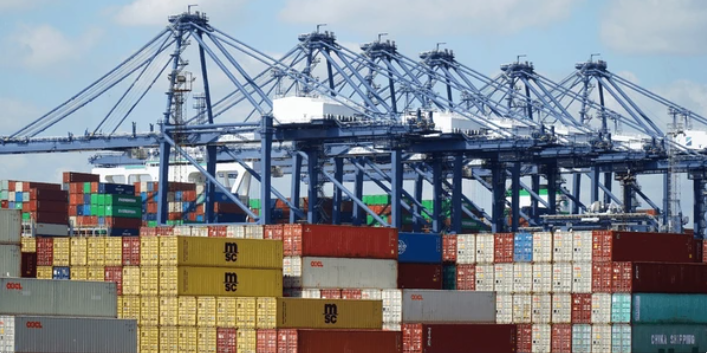
Opting for sea freight is a common choice for transporting goods from China to the UK. If this method appeals to you, one of your first considerations might be identifying the most suitable UK port for your shipment. Sea freight costs between these two countries depend on various factors, including cargo size, weight, type, and the distance it needs to travel. A common initial question is often: "Which port should my shipment go through based on its final destination?"
There are some major ports in the UK that handle cargo arriving from China. While Felixstowe is the primary hub for most shipments, other ports are also viable entry points depending on your specific logistics needs. Below is an overview of these alternative ports and their typical roles in facilitating shipments from China to the UK.
Main Shipping Seaports in the United Kingdom
Port of Felixstowe
Located on England’s east coast, the Port of Felixstowe is the UK’s largest and busiest container port and one of Europe’s leading ports. It is a key entry point for goods from Asia. Its location supports efficient nationwide UK distribution.
It handles over 4 million TEUs annually and connects to more than 700 global ports. The port plays a vital role in UK trade and supports industry, customers, and local communities.
Port of Southampton
The Port of Southampton is the UK’s second-largest container terminal, located on the south coast. It is Britain’s main deepwater port and handles over 1.5 million TEUs per year. It also serves as the UK’s top vehicle hub and Europe’s leading cruise port.
Operated by DP World Southampton, it features a 500-meter deepwater quay designed for the world’s largest vessels. It is highly efficient and supports multiple cargo types.
Port of London Gateway
London Gateway is the UK’s most modern port, located on the River Thames near London. It offers strong logistics advantages for businesses around the capital and includes Europe’s largest logistics park. It specializes in perishable and temperature-sensitive cargo.
Operated by DP World, it features a 2,700-meter quay and advanced automation, including cranes handling up to 25 container rows. Its annual capacity reaches 3.5 million TEUs, helping reduce inland transport costs for London-based businesses.
Port of Tilbury
Tilbury is London’s oldest operational port, located on the River Thames in Essex. It mainly handles forest products, grain, and bulk cargo.
It is also home to the London Container Terminal, Europe’s largest reefer hub, with 1,400 reefer points and a 25,000-pallet cold storage facility operated by NFT. However, it now faces strong competition from nearby London Gateway.
Port of Grangemouth
Grangemouth is Scotland’s main container port, located between Glasgow and Edinburgh. It handles around 150,000 containers annually and is the only UK port with higher exports than imports. About 30% of Scotland’s GDP passes through this port.
It is well connected to the M9 motorway and rail network, ensuring efficient inland transport. While import transit may take slightly longer, it significantly reduces domestic transport costs for Scottish distribution.
Port of Liverpool
The Port of Liverpool is located on both sides of the River Mersey in northwest England. It serves major industrial cities such as Liverpool and Manchester. However, limited direct links with Asia can increase transit time and cost.
The port is currently expanding its infrastructure to strengthen its role in UK international trade and improve future competitiveness.
Main Ports in China
Port of Shenzhen (Shekou / Yantian)
One of South China’s busiest export hubs. It handles large volumes of container cargo, especially electronics and consumer goods. Strong global connections make it a key gateway for international shipping.
Port of Guangzhou (Huangpu / Nansha)
A major South China port serving manufacturing clusters in the Pearl River Delta. It supports a wide range of cargo types and offers efficient access to global trade routes.
Port of Ningbo-Zhoushan
One of the world’s busiest ports by cargo volume. It is highly efficient for bulk and container shipping with strong deep-water capabilities and global connectivity.
Port of Shanghai
China’s largest container port and one of the busiest in the world. It offers extensive international routes and advanced terminal facilities, making it a key hub for global trade.
Port of Tianjin
The main port serving Northern China, including Beijing. It plays an important role in industrial exports and imports with strong connections to global shipping networks.
Port of Qingdao
A major port in Eastern China known for efficient operations and strong industrial support. It handles container, bulk, and energy-related cargo.
Port of Xiamen / Fuzhou
An important Southeast China port group serving cross-strait and international trade. It is well-positioned for electronics, textiles, and regional exports.
Should i Choose FCL or LCL for Shipping From China to United Kingdom?
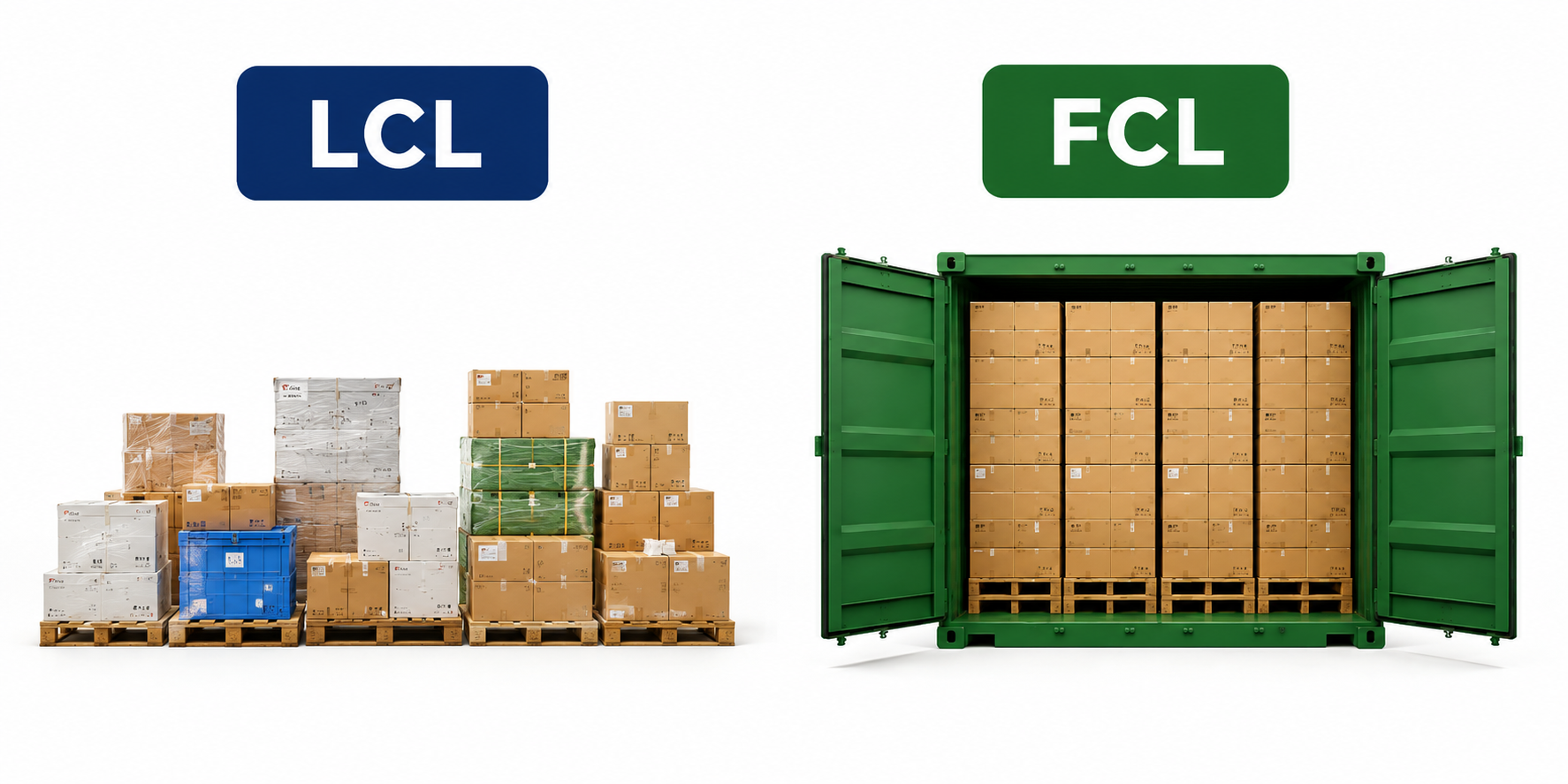
When shipping from China to the UK, you have two main transportation options: consolidation (LCL) or full container load (FCL). To determine the best fit for your needs, consider the volume and weight of your goods as well as your budget.
Standard containers commonly used for shipping dry goods include:
20-foot container (33 cubic meters capacity)
40-foot container (67 cubic meters capacity)
40-foot High Cube container (76 cubic meters capacity)
Now, let's explore the two primary shipping options:
LCL (Less than Container Load)
This option is ideal if you don’t have enough goods to fill an entire container. It allows you to pay only for the space you use, making it cost-effective for smaller shipments. Your goods will share container space with shipments heading to the same destination.
FCL (Full Container Load)
FCL refers to reserving an entire container exclusively for your shipment. This method ensures reduced handling, enhanced security, and fewer risks since the container is sealed from the supplier’s premises to its final destination. It’s a suitable choice if you plan to transport larger quantities of goods. Even if your shipment doesn’t entirely fill the container, an FCL can be more cost-effective starting from 15 cubic meters compared to LCL, while offering better protection.
How long does sea freight take from China to United Kingdom?
Sea freight typically takes anywhere from 3 to 6 weeks to reach the UK, depending on specific routes and port schedules.
Origin (China) | Felixstowe | Southampton | London Gateway | Tilbury | Grangemouth | Liverpool |
Shanghai | 29 | 29 | 32 | 32 | 39 | 38 |
Shenzhen | 25 | 25 | 30 | 30 | 37 | 34 |
Guangzhou | 25 | 25 | 31 | 31 | 37 | 34 |
Qingdao | 37 | 37 | 39 | 39 | 41 | 41 |
Tianjin | 37 | 40 | 41 | 41 | 41 | 42 |
Ningbo | 32 | 31 | 36 | 36 | 39 | 37 |
Xiamen | 27 | 27 | 32 | 32 | 39 | 36 |
Sea freight costs from China to United Kingdom can vary widely depending on several key factors, primarily the weight and volume of your cargo. Shipping rates are typically calculated using the weight-to-volume ratio, a standard metric in the logistics industry.
How much does it cost to ship a container from China to United Kingdom?
Less-than-Container-Load (LCL): Weight/Volume Ratio: This is calculated under the equivalence rule of "1 ton = 1 CBM" (cubic meter). For Less-than-Container-Load (LCL) shipments, the pricing is determined by comparing weight and volume, with a standard calculation of 1,000 kgs = 1 CBM. Whichever number yields a higher cost will be used as the payable unit (PU).
Example 1: A shipment weighing 7,000 kgs with a volume of 8 CBM would incur charges for 8 PUs.
Example 2: A shipment weighing 6,000 kgs with a volume of 5 CBM would be charged for 6 PUs.
Full-Container Load (FCL): If you choose to ship via FCL, the rate will be based on a flat fee per container. Costs will depend on the type of container selected and the shipping company used.
Special Transportation Services
Reefer Containers:
Ideal for temperature-sensitive goods such as perishable foods or chemicals.
Equipped with technology to regulate atmosphere, temperature, and humidity.
Ro-Ro (Roll-On/Roll-Off) Shipping:
Designed for transport of wheeled cargo like cars, trucks, or railway cars, which are driven onto and off the ship.
Proven as safe and cost-effective for handling oversized or special project cargo.
Offers protection from water and weather as goods remain on the car decks throughout transit.
Bulk Cargo:
Goods transported directly in the ship's hold.
Includes solid or liquid materials like coal, minerals, cement, or oil.
Specialized bulk carrier vessels are used for such shipments.
OOG (Out-of-Gauge) Cargo:
Used for oversized or irregularly shaped items that cannot fit in standard containers.
Includes two main types of containers:
Open Top Container: Ideal for heavy or bulky items loaded using cranes.
Flat Rack Container: Suitable for items of extreme height, width, or weight, such as oversized machines or vehicles.
Provides easier handling, safer storage, and faster loading/unloading.
If you're planning to ship specific goods, these options can help ensure the safety and efficient transit of your cargo while meeting your unique requirements. For detailed rates and recommendations based on your shipment specifics, please contact GB FREIGHT.
Air freight from China to United Kingdom
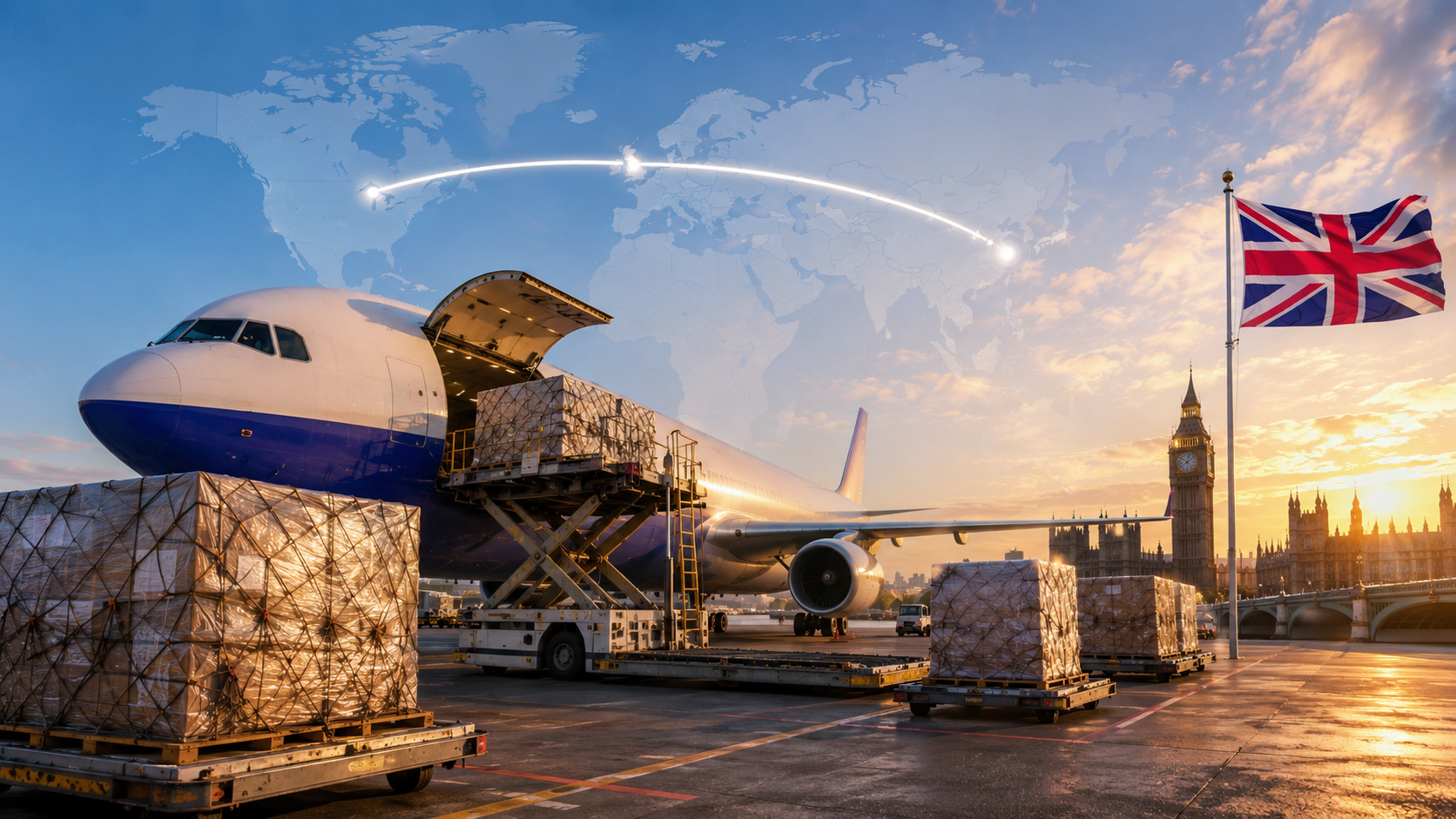
While 90% of global goods are transported by sea, there are instances where importers require faster and more reliable delivery, particularly for high-value or seasonal products, clothing, electronics, or items prone to deterioration during sea transit. In such cases, airfreight becomes the preferred choice, allowing cargo to be shipped from factories in China to destinations in the UK within just a few days.
Main Airports in China
Airport Code | Airport Name |
PEK | Beijing Capital International Airport |
CAN | Guangzhou Baiyun International Airport |
PVG | Shanghai Pudong International Airport |
SHA | Shanghai Hongqiao International Airport |
CTU | Chengdu Shuangliu International Airport |
SZX | Shenzhen Bao’an International Airport |
KMG | Kunming Changshui International Airport |
XIY | Xi’an Xianyang International Airport |
HKG | Hong Kong International Airport |
Main Airports in the United Kingdom
Airport Code | Airport Name |
LHR | London Heathrow Airport |
LGW | London Gatwick Airport |
MAN | Manchester Airport |
NCL | Newcastle Airport |
BHX | Birmingham Airport |
LPL | Liverpool Airport |
BRS | Bristol Airport |
EDI | Edinburgh Airport |
GLA | Glasgow Airport |
How long does it take to ship air freight from China to United Kingdom?
Air freight from China to the UK usually takes around 3–7 days, depending on the airline schedule, customs clearance, and shipping service type.
Direct flights from major Chinese airports such as Shanghai (PVG), Guangzhou (CAN), Shenzhen (SZX), and Beijing (PEK) to UK airports like London Heathrow (LHR) and Manchester (MAN) typically take around 3–5 days.
How much does air freight cost from China to United Kingdom?
The cost of air freight from China to the UK depends on the weight-to-volume ratio, which determines the chargeable weight. This weight is then multiplied by the rate per kilogram. On average, air freight costs from China to the UK range between 3 to 6 USD per kilogram.
The IATA tariff, generally mandatory, may be eligible for volume-based discounts. This tariff decreases progressively based on weight ranges and can vary across different countries. Additionally, there is a minimum charge applicable to smaller shipments.
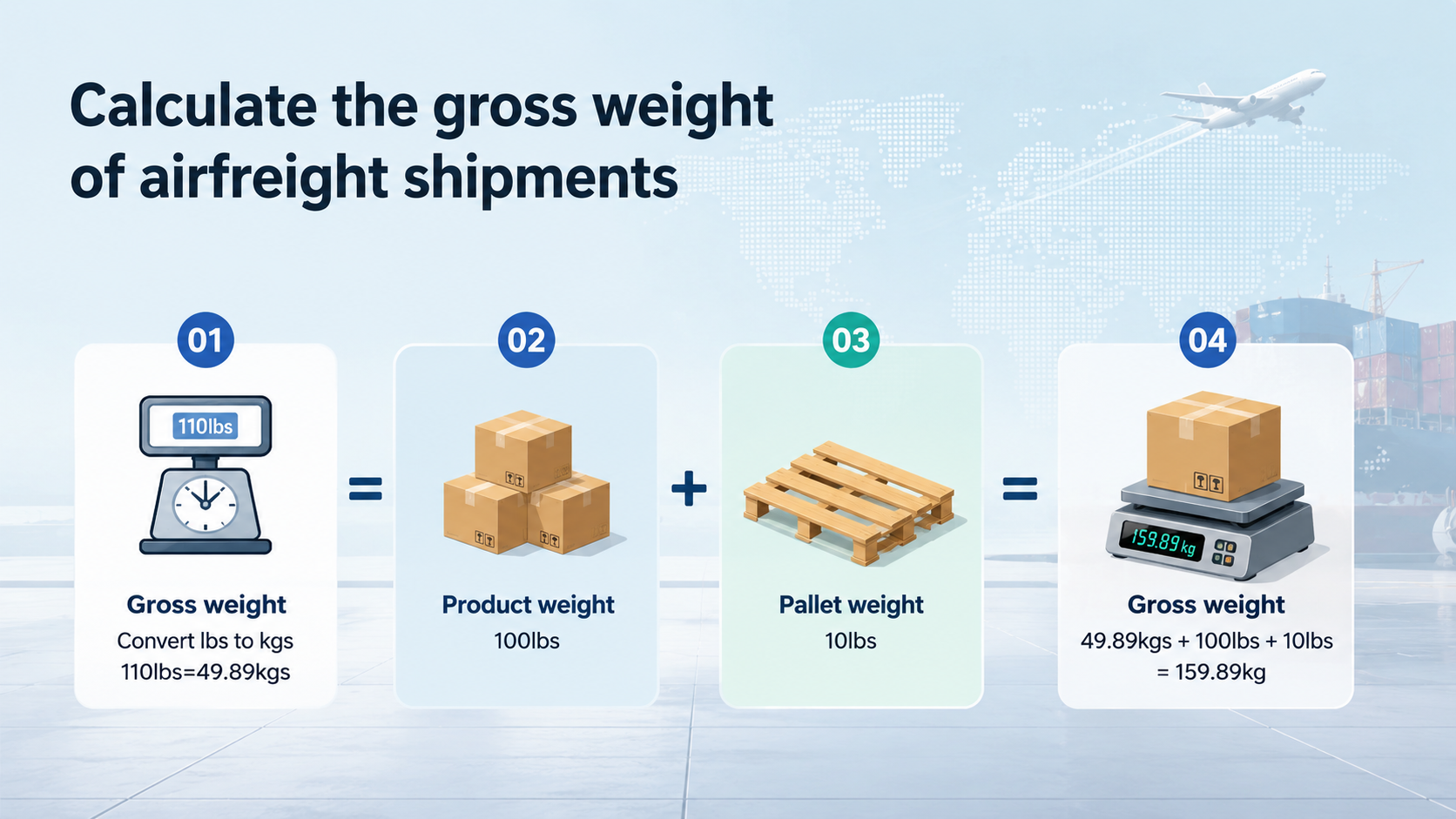
It's important to note that while standard air freight tends to have lower rates per kilogram compared to courier services, it may involve higher fixed costs. The final price is calculated based on the higher of either the gross weight (physical weight measured on a scale) or the volumetric weight (based on the shipment's dimensions).
How to calculate the volumetric weight?
Calculating the volumetric weight of your shipment is an essential step in determining shipping costs. It's important to note that these costs can vary depending on the transportation mode (sea, air, or land) and the specific attributes of the goods being shipped, such as their weight, dimensions, and fragility.
For standard air freight, the industry follows a weight-to-volume ratio of 1:6, meaning 1 tonne is equivalent to 6 cubic meters (CBM). The volumetric weight is calculated by dividing the shipment's actual volume by 6. This figure is then compared to the gross weight, and charges are based on whichever is higher. For express freight, a slightly different ratio of 1:5 is applied.
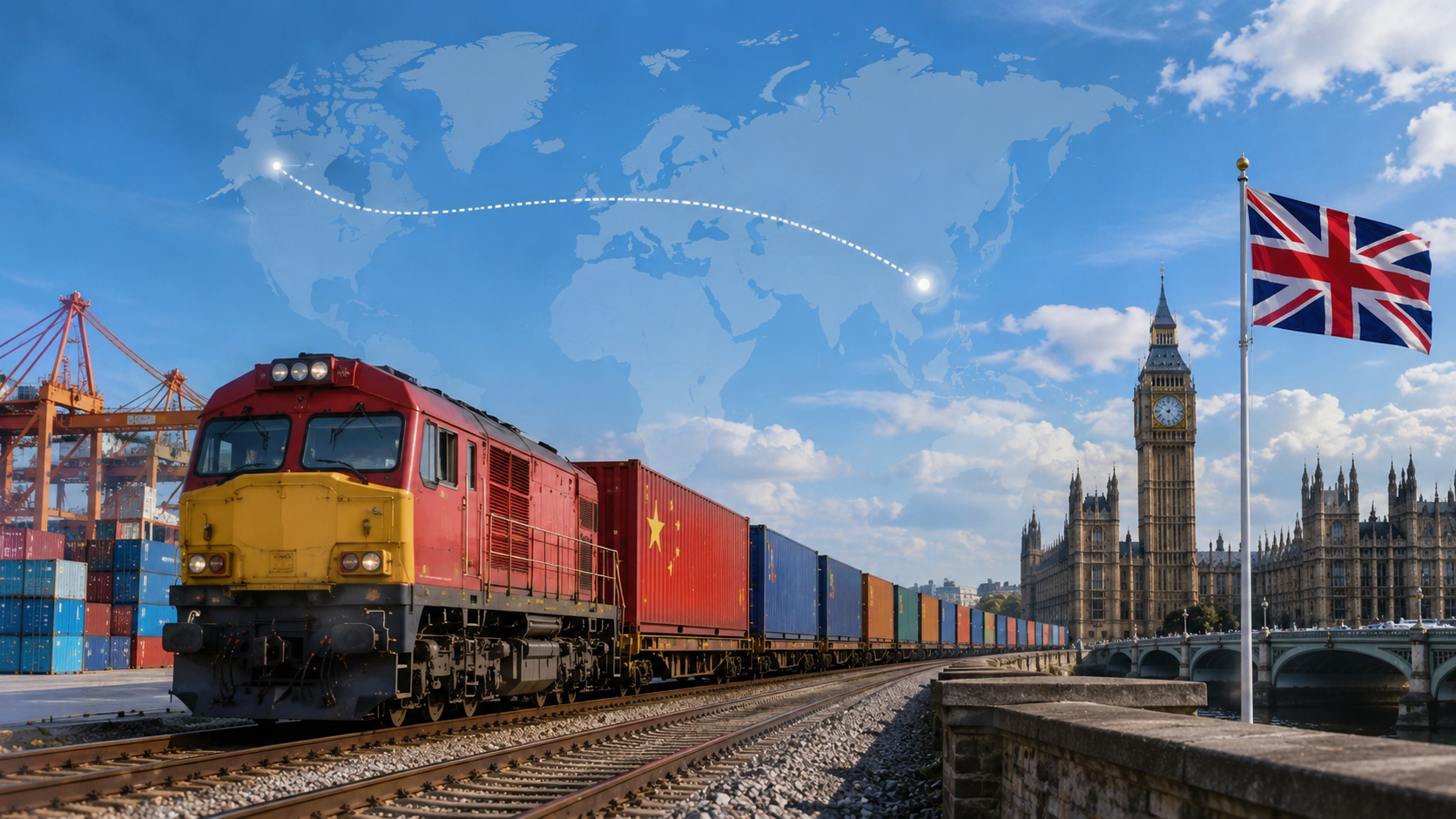
Rail Freight from China to United Kingdom
With air freight often being prohibitively expensive and sea freight unable to meet tight delivery schedules, rail freight is emerging as a popular alternative for European and British importers. Since its inception in 2013, rail freight services have grown rapidly and now connect numerous European destinations, including the UK.
This mode of transport strikes an ideal balance between the cost-effectiveness of sea freight and the speed of air freight, making it an increasingly attractive option for businesses.
Consider the advantage: your goods could reach their destination in less than half the time it takes for sea freight, and at a fraction of the expense associated with air freight.
The National Development and Reform Commission (NDRC) of China has played a pivotal role in advancing the rail network between China and Europe. Thanks to initiatives ensuring reliability, safety, and efficiency, rail freight volume between these regions has surged by more than 90% in recent years.
Main Train Stations in China
Beijing Railway Station
Shanghai Railway Station
Guangzhou Railway Station
Shenzhen Railway Station
Wuhan Railway Station
Chengdu Railway Station
Xi’an Railway Station
Zhengzhou Railway Station
Main train stations in United Kingdom
London Euston Station
London King’s Cross Station
London St Pancras International
Manchester Piccadilly Station
Birmingham New Street Station
Glasgow Central Station
Liverpool Lime Street Station
Edinburgh Waverley Station
How long does rail freight take From China to United Kingdom?
Rail freight from China to the UK usually takes around 18–25 days, depending on the departure city, customs clearance, and rail schedule.
Most China–UK railway routes pass through Kazakhstan, Russia, Belarus, and Europe before arriving in the UK via rail and trucking connections. Rail freight is faster than sea freight and more cost-effective than air freight.
Origin City | Destination | Transit Time |
Yiwu | London | 18–22 days |
Xi’an | London | 20–24 days |
Chongqing | London | 20–25 days |
Zhengzhou | London | 19–23 days |
Wuhan | London | 20–24 days |
Advantages of Rail Transport From China to United Kingdom
Rail freight from China to the UK offers a strong balance between cost and transit time, making it a popular alternative to air and sea freight. It is significantly cheaper than air freight while being much faster than ocean shipping. Rail transport also provides stable schedules, reliable transit times, flexible departure frequencies, and large cargo capacity for different types of goods. In addition, rail freight produces lower CO2 emissions and supports various container types, including reefer, tank, and open-top containers for specialized cargo needs.
How much does shipping goods by train from China to United Kingdom cost?
Rail freight from China to the UK usually costs around USD 6,000–12,000 per 40HQ container, depending on the route, season, cargo type, and service level. A 20GP container typically ranges from USD 4,000–8,000, while LCL rail shipments are usually around USD 0.8–2.5 per kg.
The final price can change based on factors such as departure city in China, delivery location in the UK, cargo volume and weight, customs clearance requirements, fuel surcharges, and whether it is port-to-port or door-to-door service.
Door-to-Door Shipping from China to United Kingdom
Managing international shipping can be complicated, especially for long-distance routes from China to the UK. Door-to-Door shipping simplifies the entire process by collecting goods directly from the supplier and delivering them straight to the final destination in the UK.
What Does Door-to-Door Service Include?
Our Door-to-Door shipping service covers every stage of the logistics process, including cargo pick-up, transportation, customs clearance, and final delivery. Although this service may cost slightly more than standard shipping, it helps businesses save time, reduce coordination work, and improve shipping efficiency. That is why Door-to-Door shipping remains one of the most popular logistics solutions offered by GB FREIGHT.
While customs inspections or peak seasons may occasionally cause delays, Door-to-Door shipping continues to be a reliable and convenient option for businesses importing goods from China to the UK.
GB FREIGHT – Your Door-to-Door Shipping Expert
GB FREIGHT provides professional Door-to-Door shipping solutions from China to the UK by air freight, sea freight, and rail freight. We manage the entire shipping process, from cargo collection and packing to customs clearance and final delivery. Our experienced logistics team ensure smooth, efficient, and stress-free shipping services tailored to your business needs.


