
 |


| Quantity: | |
|---|---|
United States
Freight Shipping From China to United States
If you’re planning to ship goods from China to the US, it's crucial to understand that small logistical decisions in China can lead to significant delays at US customs. Many import issues arise long before the cargo even leaves the factory.
You’re likely searching for concrete answers details on rates, transit times, and the best transport mode. This guide outlines freight handling from China to the United States as we manage it daily. It’s designed to help you accurately budget, select the optimal route, and avoid unexpected setbacks.
Whether you’re importing a few pallets or several containers each month, you need a reliable process that works in practice, not just in theory. Share your project details with us, and we’ll assist in structuring your shipment from China to the US. We’ll ensure you have the right transport mode, proper documentation, and actionable advice to keep your costs in check.
Sea freight From China to United States
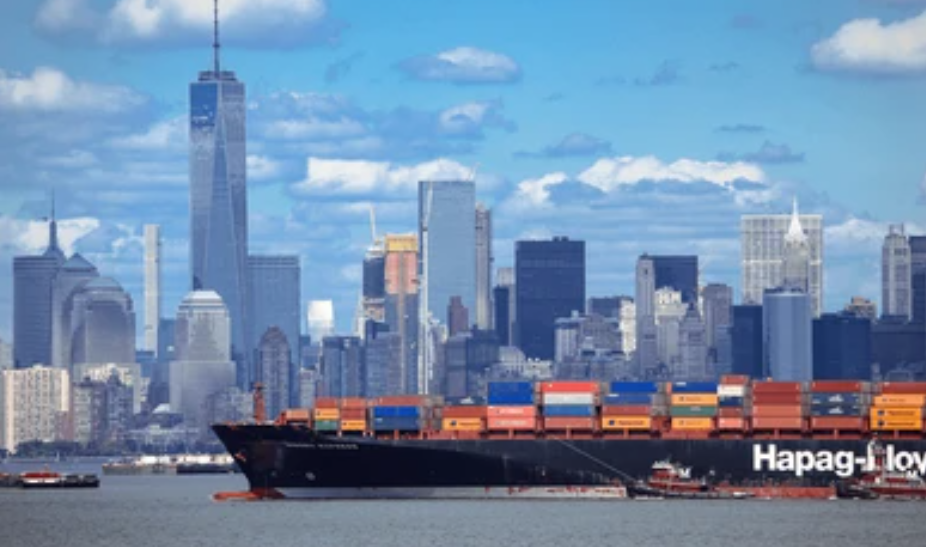
Sea freight from China to the United States plays a vital role in the strong trade relationship between the two countries, supporting the movement of massive cargo volumes across the Pacific Ocean. Major ports such as Shanghai and Los Angeles act as key logistics gateways, efficiently connecting the manufacturing centers of China with the consumer and industrial markets of the U.S. Although ocean freight generally takes longer than other transportation methods, it remains one of the most cost-effective solutions for large-scale international shipments.
That said, shipping cargo from China to the U.S. also comes with operational challenges. Importers and exporters often need to manage complex customs procedures, documentation requirements, container selection, and changing shipping regulations. While these processes may seem overwhelming at first, they can be handled efficiently with the right planning and logistics strategy. This guide is designed to provide practical insights and essential shipping information to help simplify the process and ensure smoother freight operations from China to United States.
Main Shipping Ports in China
Port of Shanghai
Location and Volume: Positioned along the East China Sea in the Yangtze River Delta, the Port of Shanghai serves as the world’s largest container port, handling over 45 million TEUs annually.
Crucial for global trade, it connects key markets such as the United States, South Korea, Europe, and Japan. The port's strategic location enhances its role as a vital gateway to China's fast-growing economy.
For businesses eyeing expansion in Asia or seeking robust regional market access, the Port of Shanghai provides unparalleled opportunities due to its vast shipping capacity and extensive international connections.
Port of Shenzhen
Located in the Pearl River Delta, Guangdong Province, this port manages a substantial volume of around 29 million TEUs annually.
With trading partners across the Americas, Europe, Southeast Asia, and Australia, the port serves as a crucial logistics hub for goods flowing into and out of Guangdong, one of China's most economically vibrant provinces.
If your focus is on southern China or if you require a connection through a tech-driven hub, the Port of Shenzhen's strategic location and designation as a Special Economic Zone make it an excellent choice.
Port of Ningbo-Zhoushan
Situated where the Yangtze River converges with the East China Sea, this port handles over 33 million TEUs annually.
It plays a pivotal role in trade with Europe, the United States, and East Asia, especially benefiting businesses operating within Zhejiang province and surrounding areas.
If your sector includes crude oil or bulk commodities such as iron ore, the Port of Ningbo-Zhoushan offers exceptional logistical support with its record-setting cargo capacity.
Port of Guangzhou
Strategically located on the Pearl River in southern China, the Port of Guangzhou processes over 20 million TEUs each year.
This bustling port maintains strong trade relationships with Southeast Asia, Europe, and the U.S., making it a cornerstone of foreign trade in southern China.
For those in consumer goods aiming to penetrate southern Chinese markets or expand internationally, the Port of Guangzhou's extensive network provides significant logistical advantages.
Port of Hong Kong
With a long-standing history as a global maritime hub, the Port of Hong Kong, situated on the South China Sea, handles over 30 million TEUs annually.
It primarily facilitates trade with mainland China, the U.S., and Taiwan. Known for its free port status, it remains a critical player in international shipping.
Incorporating the Port of Hong Kong into your supply chain could enhance your operations. Its duty-free import/export privileges and expansive global connections are particularly appealing for companies dealing with diverse goods.
Port of Qingdao
Found on the Yellow Sea, the Port of Qingdao is a key maritime gateway in northern China, managing over 20 million TEUs annually.
It facilitates trade with various Asian, European, and North American ports, serving as a strategic hub for northern China's economic activity.
If your business involves importing/exporting goods such as grain, oil, or coal—or targets the dynamic markets around Beijing-Tianjin-Hebei-Shandong—Port of Qingdao offers indispensable connectivity and strategic positioning for efficient commerce.
Main Shipping Ports in the United States
Port of Los Angeles
Located in Southern California, the Port of Los Angeles plays a vital role in connecting North America to global trade, handling 19.2 million TEUs annually.
Its primary trading partners include China, South Korea, Vietnam, Japan, and Taiwan. Equipped with cutting-edge infrastructure, the port is well-suited for accommodating New Panamax-class cargo ships, enhancing its importance in international trade.
If you're aiming to expand operations across North America and the Asia-Pacific region, the Port of Los Angeles offers substantial capacity and advanced facilities to meet your logistics demands efficiently.
Port of Long Beach
Adjacent to the Port of Los Angeles, the Port of Long Beach ranks as the second-largest U.S. container port, managing 11.6 million TEUs annually.
It significantly supports trade with East Asia, Southeast Asia, and Oceania, serving as a critical hub on Trans-Pacific shipping routes.
Companies targeting Asian or Oceanian markets will find the Port of Long Beach an ideal logistics partner, given its pivotal role in Trans-Pacific trade and strategic location.
Port of New York and New Jersey
Positioned on the East Coast, this port is the busiest along the Eastern Seaboard, processing over 8.4 million TEUs every year.
The port’s notable trading partners include China, India, Germany, Italy, and Brazil. It is strategically important for its access to the Atlantic Ocean and Midwest markets via an extensive rail network.
Those seeking seamless integration of sea and rail transport can leverage the Port of New York and New Jersey for efficient access to both Atlantic coastal areas and inland markets.
Port of Savannah
Situated in Georgia, the Port of Savannah is ranked as the fourth-busiest U.S. port, handling approximately 5.4 million TEUs each year.
Key trading partners include China, Germany, Vietnam, India, and Honduras. Featuring a state-of-the-art intermodal terminal, it ensures efficient connections between sea and rail logistics.
The Port of Savannah provides an excellent solution for businesses requiring integrated sea and land transport with its top-tier intermodal facilities.
Port of Houston
Found in Texas along the Gulf of Mexico, the Port of Houston manages over 4 million TEUs annually, making it one of the leading ports in this region.
Primary trade relationships are with Mexico, China, South Korea, Brazil, and the Netherlands, with particular focus on petrochemical goods. The port serves as a critical hub for related industries.
Companies dealing in petrochemicals or looking to reach markets in Mexico and the Gulf region will find the Port of Houston a valuable logistics hub.
Port of Seattle
Located in the Pacific Northwest, the Port of Seattle processes over 1.8 million TEUs per year.
Major trading partners are China, Japan, South Korea, Taiwan, and Vietnam. It serves as a key gateway to Asia and Alaska.
The Port of Seattle offers an advantageous position for businesses targeting markets in Asia, Alaska, or northern U.S. regions, making it an essential partner for optimized logistics strategies.
Should I Choose FCL or LCL for Shipping From China to United States?
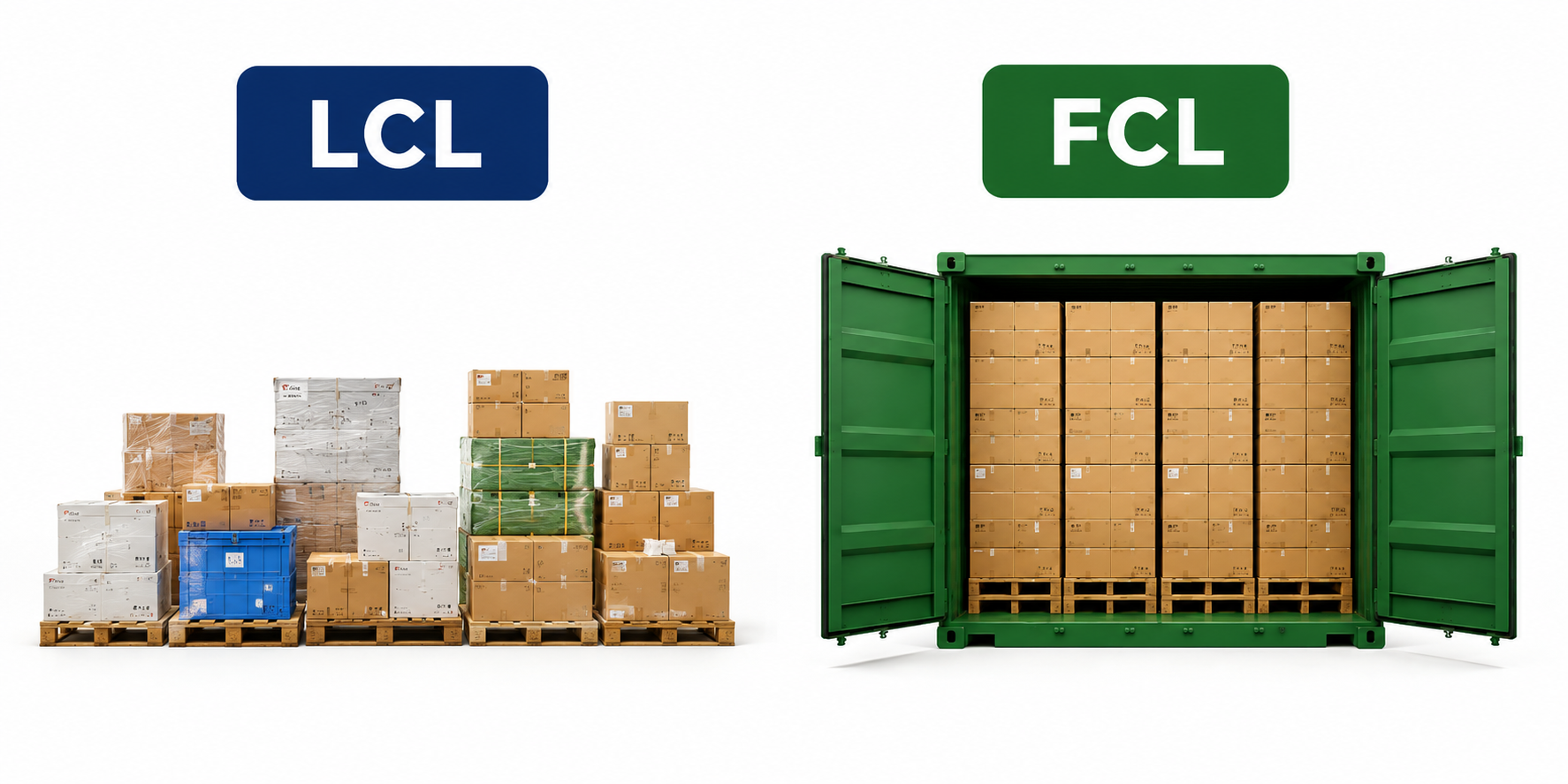
Deciding between FCL and LCL for shipping goods from China to the USA can seem overwhelming, but with the right information, it becomes much simpler. Both Full Container Load (FCL) and Less than Container Load (LCL) have their own advantages and drawbacks, and your choice can significantly impact the cost, speed, and efficiency of your shipment. Let’s explore the key features of each option to ensure you make an informed decision.
LCL: Less than Container Load
Definition: LCL shipping involves consolidating cargo from multiple shippers into a single container. This option lets you share container space and pay only for the space your goods occupy.
LCL is ideal for smaller shipments, typically less than 13–15 cubic meters (CBM). Its flexibility and affordability make it a practical choice for businesses that don’t need an entire container.
Example: Suppose you need to ship 10 CBM of electronics from Shanghai to Los Angeles. Using LCL makes financial sense, as you’ll only pay for the exact volume your shipment occupies.
While LCL usually offers a lower initial quotation, additional charges may apply for consolidating and deconsolidating your cargo at origin and destination. For slightly larger shipments close to the 13–15 CBM range, FCL might sometimes be more economical than LCL. It’s wise to gather quotes for both options to compare total costs and make the best choice.
FCL: Full Container Load
Definition: FCL shipping involves renting an entire container exclusively for your goods. The container remains sealed throughout transit, offering added security and direct delivery.
FCL is most cost-effective for shipments exceeding approximately 13–15 CBM. For larger volumes, the per-CBM cost is typically lower compared to LCL.
Example: If you’re shipping 20 pallets of electronic components, renting a full 20-foot or 40-foot container would provide better value, ensuring safe handling and exclusive container usage.
With FCL, you pay for the entire container regardless of how full it is. However, this option becomes more economical as shipment size increases. Businesses dealing with high-volume goods often prefer FCL to avoid additional handling fees and take advantage of lower unit costs.
In summary, your decision between FCL and LCL depends on your shipment's size, budget, and specific requirements. LCL is ideal for smaller, cost-sensitive shipments, while FCL offers more value and security for larger volumes. Comparing quotes for both options will help you determine the most efficient and cost-effective path for your shipping needs.
How long does sea freight take From China to the USA?
Generally, shipping goods via sea freight from China to the USA takes approximately 20 to 40 days. This timeframe depends on various factors such as the departure and arrival ports, cargo type, and weight. For a more accurate estimate based on your shipment details, you can contact GB FREIGHT for a free personalized quote.
Below is a simplified table showcasing average transit times between major ports in both countries:
Port in China | Port in the USA | Average Transit Time |
Shanghai | Los Angeles | 23 days |
Ningbo | New York | 38 days |
Shenzhen | Savannah | 40 days |
Hong Kong | Houston | 40 days |
These transit times are approximate and may vary. Always consult your freight forwarder for exact details.*
How much does it cost to ship a container From China to United States?
Ocean freight rates between the two countries can vary significantly due to multiple factors like the port of origin, destination, carrier choice, type of goods, and ongoing market fluctuations. As a result, offering generic cost estimates may not address individual requirements.
GB FREIGHT's team of shipping specialists can assist you in navigating these complexities by providing customized quotations tailored to your specific needs. While we cannot provide fixed prices upfront, you can rely on our expertise to deliver cost-effective and realistic solutions for your logistics needs.
Special Transportation Services
Out of Gauge (OOG) Containers
Special shipping containers for oversized cargo extending beyond standard dimensions.
Suitable for: Items like industrial machinery or products that cannot fit in typical containers.
Examples: Construction equipment, industrial boilers, wind turbine blades.
Ideal for businesses dealing with large, irregularly shaped goods that need secure and efficient transport from China to the USA.
Break Bulk
A shipping method for loading goods individually rather than using containers.
Suitable for: Large or irregular items unsuitable for container shipping.
Example: Timber, steel beams, oversized vehicles.
Offers flexibility for cargo that exceeds standard container capacities but requires additional handling.
Dry BulkTransporting loose, unpackaged materials like grains or raw commodities in bulk.
Suitable for: Raw materials such as coal, cement, or grain.
Example: Sand, granular materials essential for industries.
Ideal for businesses handling bulk shipments, offering a more cost-effective solution for unpackaged goods.
Roll-on/Roll-off (Ro-Ro)
A method where wheeled cargo is driven on and off specialist vessels.
Suitable for: Vehicles and mobile machinery like trucks, cars, or trailers.
Examples: Cars, trucks, railroad cars, and other large transport equipment.
Simplifies shipments of mobile goods without disassembly, ensuring reliable delivery.
Reefer Containers
Refrigerated containers for temperature-sensitive shipments requiring controlled conditions.
Suitable for: Produce, meat, dairy products, and pharmaceuticals.
Example: Frozen food items, fresh fruits, medical supplies.
Ensures quality preservation during extended transit times for perishable goods.
Air Freight from China to United States
When businesses need fast and reliable shipping from China to the USA, air freight is often the preferred solution for urgent and high-value cargo such as electronics, pharmaceuticals, and priority shipments. However, mistakes like incorrect weight calculations or poor customs preparation can quickly increase shipping costs.
Understanding factors such as chargeable weight and customs procedures is essential for avoiding delays and unnecessary expenses. With proper planning and logistics support, air freight can provide an efficient and dependable shipping solution between China and the United States.
The Main International Airports in China
Airport | Code | Advantages |
Beijing Capital International Airport | PEK | Major international cargo hub with advanced logistics facilities and extensive global freight connections |
Shanghai Pudong International Airport | PVG | China’s busiest cargo airport with efficient customs handling, large freight capacity, and strong global connectivity |
Guangzhou Baiyun International Airport | CAN | Important South China logistics gateway with strong export operations and comprehensive warehouse services |
Chengdu Shuangliu International Airport | CTU | Strategic cargo hub connecting Western China with Central Asia and Europe, featuring advanced cargo handling facilities |
Shenzhen Bao’an International Airport | SZX | Key airport for electronics, technology products, and commercial cargo with efficient customs clearance |
The Main International Airports in USA
Airport | Code | Advantages |
John F. Kennedy International Airport | JFK | Major East Coast cargo hub with extensive international freight routes and advanced cargo facilities |
Los Angeles International Airport | LAX | Key gateway connecting the USA with Asia-Pacific markets and high-volume cargo operations |
Hartsfield-Jackson Atlanta International Airport | ATL | One of the world’s busiest airports offering strong domestic and international cargo connectivity |
O'Hare International Airport | ORD | Central U.S. cargo hub with large warehouse capacity and extensive global freight network |
Miami International Airport | MIA | Leading gateway for Latin America trade with specialized facilities for perishables and international cargo |
Is Air Cargo the Right Choice From China to the USA?
Choosing air cargo for shipments from China to the USA can be a strategic option, especially if you're shipping loads of 100–150 kg (220–330 lbs) or more. Reputable carriers such as China Airlines and Delta Airlines offer reliable services. While their scheduled flights may result in longer transit times, air cargo remains a cost-efficient solution for larger shipments. If you can accommodate some flexibility in your budget and deadlines, this could very well be your best shipping method.
How Long Does Air Freight Take From China to USA
The typical transit time for air freight shipments from China to the USA ranges from 3 to 5 days. However, this timeframe can vary due to factors like the chosen departure and arrival airports, the weight and type of goods being shipped, and unforeseen delays. For more accurate timing tailored to your requirements, it’s advisable to work with a freight forwarder such as GB FREIGHT.
How Much Does Air Freight Cost From China to USA?
Shipping costs for air freight from China to the USA generally average between $3 and $5 per kilogram. While this provides a baseline estimate, actual costs depend on multiple factors including airport locations, parcel size, weight, and the nature of the goods. Given these variables, determining a flat rate is challenging. To address unique needs, freight services often provide customized quotes based on individual circumstances. Reach out to us for a detailed and free quote to better understand costs specific to your shipment.
What is the Difference Between Volumetric and Gross Weight?
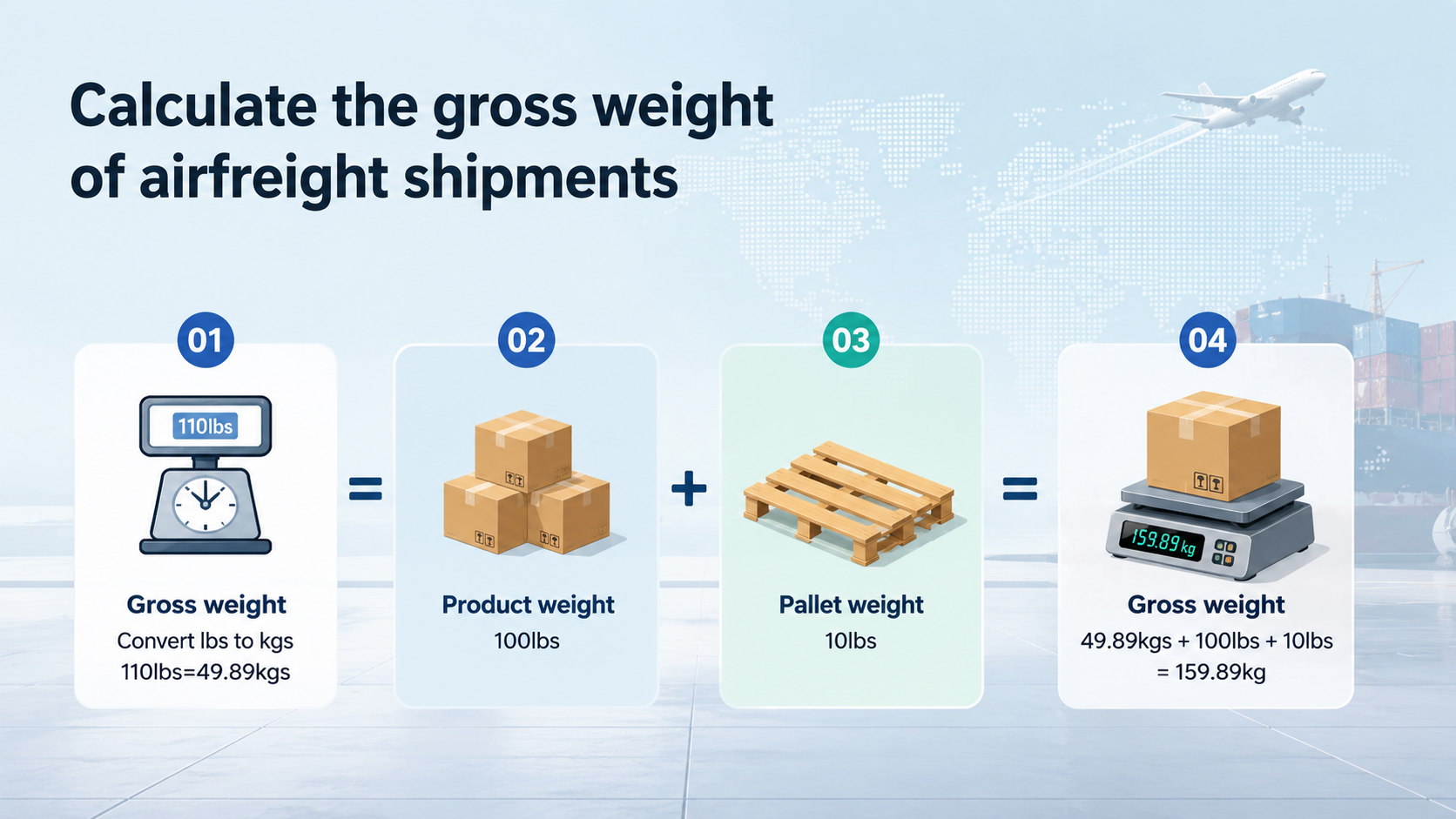
Understanding the difference between gross weight and volumetric weight is essential in air freight shipping. Gross weight refers to the actual physical weight of the cargo, including packaging, while volumetric weight also known as dimensional weight, measures the amount of space the shipment occupies on the aircraft.
Gross weight is calculated simply by weighing the shipment. Volumetric weight is calculated using the formula: Length × Width × Height (cm) ÷ 6000 for standard air freight, while express air freight typically uses ÷ 5000 instead.
For example, a shipment measuring 40 × 40 × 40 cm would have a volumetric weight of 10.67 kg under standard air freight calculations, or 12.8 kg for express shipping.
Airlines always charge based on whichever is higher between gross weight and volumetric weight. Understanding these calculations helps businesses estimate shipping costs more accurately, improve packaging efficiency, and reduce unnecessary freight expenses..
Door-to-door shipping From China to the USA
Door-to-door shipping from China to the USA provides a straightforward and efficient way to move your goods. This service involves picking up your shipment from a specific location in China and delivering it directly to an address in the USA, with minimal hassle for you. It saves time, simplifies logistics, and ensures a smoother process overall. If you’re looking to streamline your international shipping experience, let’s explore the advantages of this solution!
What is Door-to-Door Shipping?
Seeking a stress-free way to handle logistics from China to the USA? Door-to-door shipping is the ideal choice, offering a comprehensive approach to simplify international shipping. From collection to customs clearance, this service takes care of every step, ensuring your goods reach their destination efficiently. While it might occasionally take slightly longer than other methods, the convenience and peace of mind it offers make it a top choice for many.
Why Choose a Door-to-Door Shipping From China to the USA?
Stress-Free Experience: Say goodbye to worrying about intricate logistics! The service handles everything from pick-up to delivery, so you don’t have to lift a finger. Just hand over your goods, and they’ll do the rest.
Time-Efficient Shipping: Need to ship something urgently? Door-to-door services prioritize prompt delivery while ensuring your cargo’s safety throughout the journey.
Specialized Handling: Whether it’s oversized machinery or fragile items like glassware, this service has the expertise to manage all types of cargo with care and precision.
Seamless Delivery: The service goes beyond ports, managing trucking and the final leg of delivery so your shipment arrives straight to its intended destination without delays or extra coordination on your part.
Convenient All-in-One Solution: Door-to-door is the ultimate one-stop shop, covering the entire logistics chain. It’s ideal for businesses wanting an efficient, straightforward shipping process.
In essence, opting for door-to-door shipping from China to the USA is a smart move for businesses looking to save time, reduce complications, and ensure safe delivery from start to finish.
GB FREIGHT, Your Door-to-Door Shipping Expert
GB FREIGHT specializes in making global shipping effortless. With their door-to-door services for shipments from China to the USA, their skilled team manages every step, from packing and transportation to customs clearance, by sea or air.
You can request a free quote or consult our experts for tailored advice! Simplify your international shipping with GB FREIGHT and enjoy a hassle-free experience from start to finish.


