
Views: 237 Author: GB Freight-Michelle Publish Time: 2026-03-27 Origin: Site


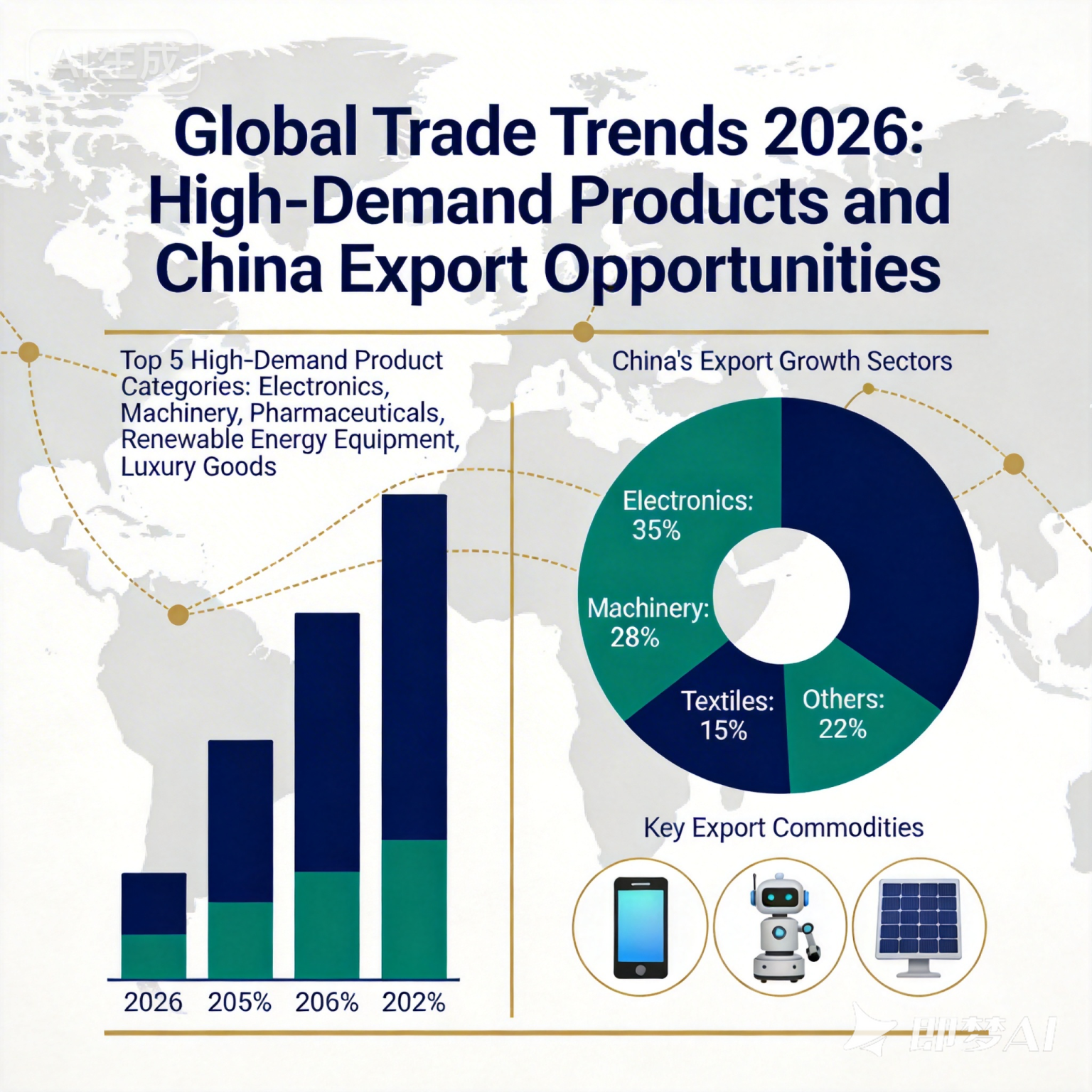
In 2026, global trade trends are evolving rapidly. More importantly, three powerful forces—digital transformation, clean energy transition, and health-conscious consumption—are reshaping international markets. As a result, businesses that align with these international trade trends can unlock new opportunities and gain a competitive edge.
At the same time, China export market continues to dominate global supply chains. With exports reaching over $3 trillion, China remains a key driver of global trade growth. Therefore, understanding both high-demand products in global trade and China’s export strengths becomes essential for importers, exporters, and logistics providers.
First of all, let’s look at the scale of the China export market. In 2023, China’s total exports reached approximately $3.026 trillion. Notably, exports to the United States, Hong Kong, Japan, South Korea, and Vietnam accounted for over 40% of the total.
Furthermore, China’s export structure shows strong industrial capabilities. The top China export products contribute more than 68% of total exports, including:
Electrical machinery and equipment
Machinery including computers
Furniture and prefabricated buildings
Plastics and plastic products
Vehicles and automotive parts
Toys and games
Medical and optical equipment
Steel products
Apparel and accessories
Organic chemicals
Clearly, China plays a central role in supplying high-demand products in global trade, especially in manufacturing and industrial sectors.
At the same time, global demand is shifting toward innovation and sustainability. Below are the most important high-demand products in global trade, which are shaping international trade trends.
Firstly, electric vehicles lead the transformation. Governments worldwide promote EV adoption, and therefore demand continues to rise. In addition, China has become a major exporter of EVs and related components.
Next, lithium-ion batteries support EVs, renewable energy storage, and electronics. As demand increases, China export market plays a critical role in supplying battery products globally.
Moreover, solar panels and wind components are experiencing rapid growth. Countries investing in clean energy rely heavily on imports from China and Southeast Asia.
Meanwhile, semiconductors remain essential for digital economies. Although production is concentrated in a few countries, global demand drives continuous trade expansion.
In addition, the rise of EVs boosts demand for charging stations and smart energy systems. Consequently, this sector becomes a fast-growing segment in global trade trends.
At the same time, healthcare demand increases worldwide. Medical equipment and diagnostic tools continue to rank among the most valuable high-demand products in global trade.
Furthermore, health-conscious consumers are driving demand for plant-based foods. This trend expands global food trade significantly.
Similarly, eco-friendly clothing gains popularity. As a result, exporters from China and other manufacturing hubs benefit from this shift.
In addition, smart home devices and IoT products are growing rapidly. China remains a major supplier in this category, strengthening its position in the China export market.
Finally, green hydrogen emerges as a future energy solution. Although still developing, it is expected to create new global trade corridors.
Importantly, China not only exports traditional goods but also leads in emerging industries. For example:
China dominates electrical machinery exports
It leads in EV production and battery supply
It plays a key role in renewable energy equipment manufacturing
Therefore, the China export market aligns closely with modern global trade trends. This alignment allows businesses to source both traditional and innovative products from one market.
So, how can businesses benefit from these international trade trends?
Firstly, importers should focus on sourcing high-demand products in global trade, especially from reliable suppliers in China. Secondly, exporters should adapt to sustainability standards and technological innovation.
Moreover, companies should:
Diversify supply chains
Monitor global demand shifts
Optimize logistics and transportation
Partner with experienced freight forwarders
By doing so, businesses can reduce risks and improve efficiency in a competitive market.
However, identifying products is only part of the strategy. Efficient logistics plays a critical role in global trade success.
At GB INTL Freight Agency, we help businesses:
Manage international shipping efficiently
Handle customs clearance and compliance
Optimize transportation costs
Improve supply chain visibility
As a result, our clients can focus on growth while we ensure smooth cargo movement across borders.
In conclusion, global trade trends in 2026 highlight a clear shift toward sustainability, innovation, and efficiency. Meanwhile, the China export market continues to support global demand with its strong manufacturing capabilities.
Therefore, businesses that align with these trends and focus on high-demand products in global trade will gain a strong competitive advantage.
Ultimately, success in international trade depends on strategy, adaptability, and reliable logistics support.


