
Views: 220 Author: GB FREIGHT Publish Time: 2026-08-20 Origin: Site


Content Menu
● Railway Freight vs Sea Freight: The Core Difference
● Transit Time: When Days Matter
>> Why Sea Freight Can Take Longer
>> When Railway Freight Delivers Value
● Cost Comparison: Freight Rate vs Total Landed Impact
>> Calculate the Real Cost of Delay
● Cargo Suitability: What Each Mode Handles Best
>> Best Industrial Cargo for Railway Freight
>> Best Industrial Cargo for Sea Freight
● Reliability: Understand the Different Risks
>> A Better Way to Compare Reliability
● Carbon Reporting and Mode Selection
>> Ask for a Route-Specific Emissions Report
● Decision Framework for Time-Sensitive Cargo
● How GB FREIGHT Supports Your Shipment
● FAQ
>> Is railway freight always faster than sea freight from China?
>> Is rail freight cheaper than air freight?
>> Is sea freight better for heavy machinery?
>> Can dangerous goods move by railway freight?
>> How much delivery buffer should industrial importers allow?
>> Should I split one order between rail and sea freight?
For industrial importers moving cargo from China to Europe and other overseas markets, choosing between railway freight and sea freight is no longer only a question of freight cost. It is a supply-chain decision that affects production continuity, inventory levels, customer delivery commitments, and exposure to route disruption.
At GB FREIGHT AGENCY CO., LTD., we have spent 15 years coordinating shipments from Chinese suppliers through booking, export customs clearance, international transport, and final delivery. In practice, the best option depends on the commercial cost of delay—not simply the transport rate. Railway freight is often the middle-ground solution for time-sensitive industrial cargo, while sea freight remains the foundation for large, heavy, or cost-driven shipments.
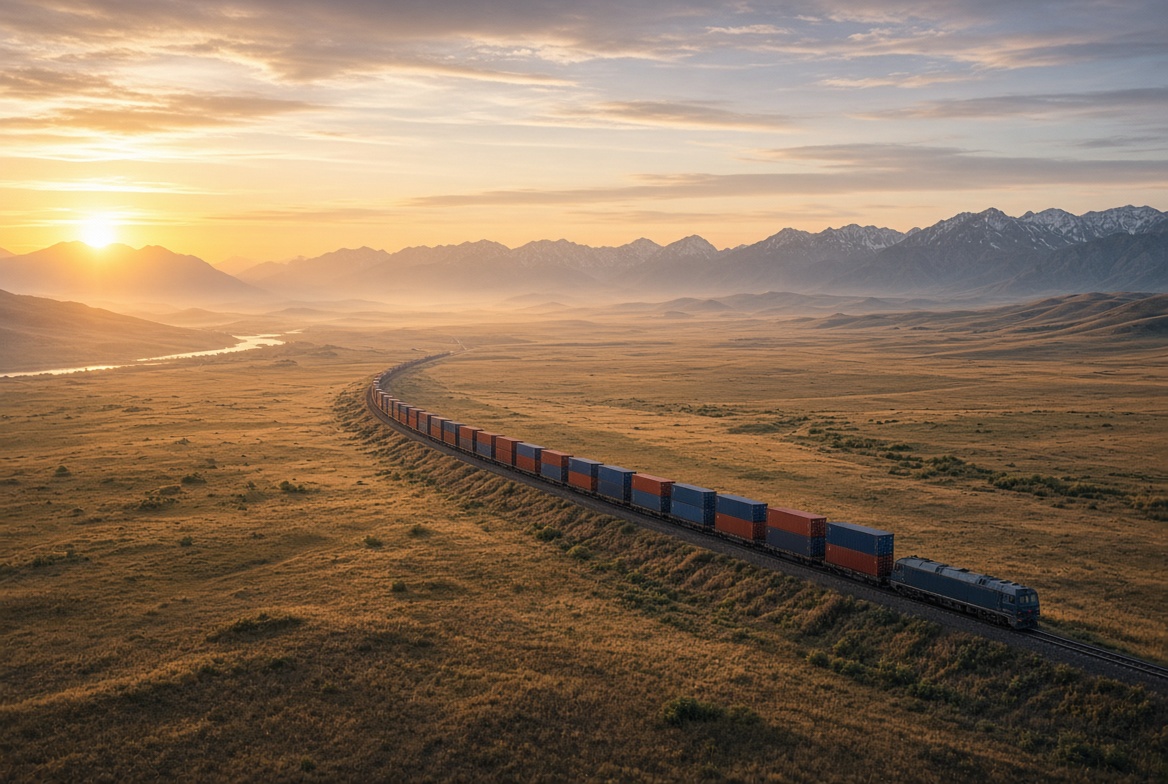
Railway freight usually offers a faster China–Europe transport window than ocean shipping, especially when a shipment must arrive before a production line, installation schedule, seasonal sales plan, or contractual delivery date. Sea freight normally provides the lowest cost per container or per tonne, particularly for high-volume cargo.
For many China-to-Europe lanes, rail terminal-to-terminal transit commonly falls in the 15–20-day range, while main-port ocean transit may take approximately 30–45 days. Door-to-door timing depends on supplier pickup, consolidation, export procedures, border handling, destination clearance, and final-mile trucking.
| Factor | Railway Freight | Sea Freight |
|---|---|---|
| Typical China–Europe transit | About 15–20 days terminal to terminal | About 30–45 days port to port |
| Relative freight cost | Medium | Low |
| Best cargo profile | Time-sensitive industrial goods, moderate-volume replenishment | Heavy, bulky, high-volume, cost-sensitive cargo |
| Schedule control | Usually more predictable on stable corridors | Can be affected by port congestion, vessel rollovers, and route changes |
| Capacity | More limited by train schedules, equipment, and border capacity | Very high capacity, especially for FCL and project cargo |
| Container choices | Generally standard dry containers | Dry, reefer, open-top, flat rack, tank, breakbulk, and more |
| Risk profile | Border and gauge-change coordination matter | Port operations, blank sailings, weather, and geopolitical rerouting matter |
| Suitable delivery model | Faster replenishment and planned industrial deadlines | Long-range purchasing and inventory-led planning |
The practical question is not "Which mode is better?" It is: Which mode protects the commercial outcome of this shipment?
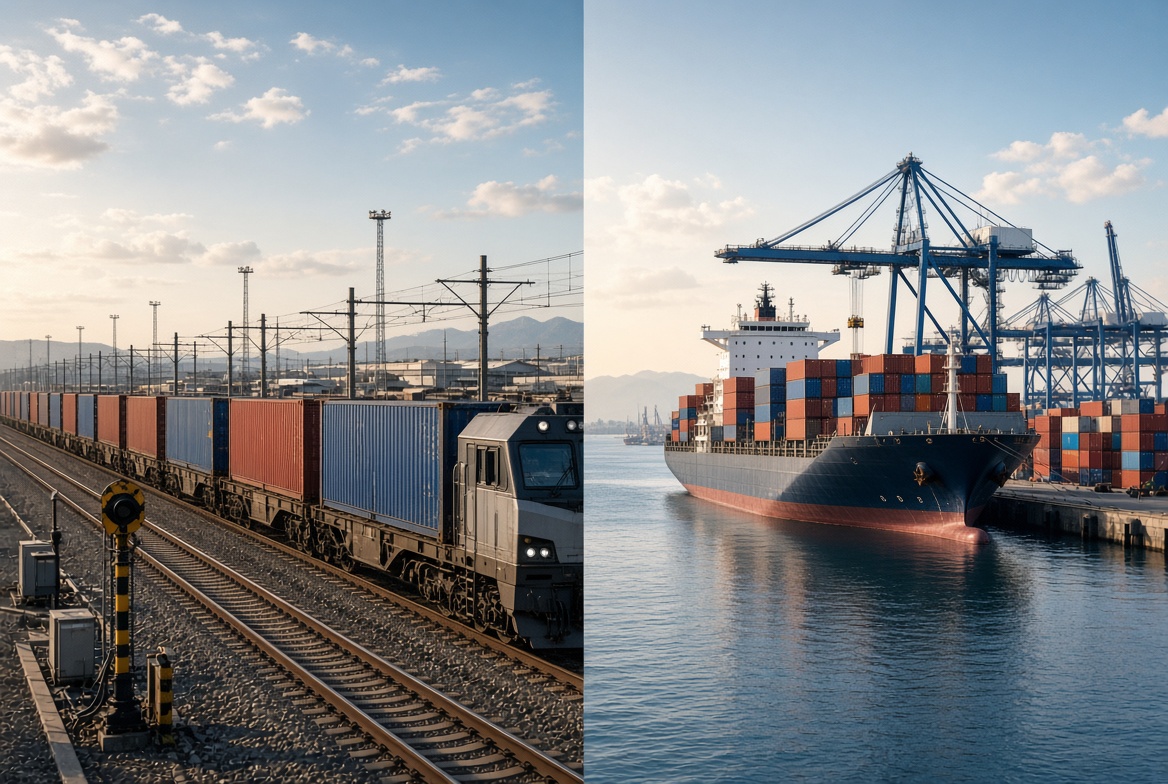
Time-sensitive industrial cargo often includes replacement parts, electrical cabinets, automation components, machine tools, molds, production consumables, and project equipment required for a fixed installation date. In these cases, the cost of a delayed shipment may be much higher than the saving gained from selecting a lower ocean freight rate.
Railway freight can reduce the transit-time gap between China and Europe without reaching the premium cost level of air freight. This makes it useful for cargo that is urgent but not urgent enough to justify air transport.
Ocean shipping has many advantages, but its door-to-door lead time includes more than sailing days:
- Supplier loading and container pickup
- Export customs clearance in China
- Terminal gate-in and port cut-off
- Vessel loading and transshipment
- Potential vessel rollover or blank sailing
- Port congestion at origin or destination
- Import clearance and container release
- Drayage, unloading, and empty-container return
Route conditions also matter. UN Trade and Development reported that ships avoiding the Red Sea and sailing around the Cape of Good Hope added distance, delays, and cost pressure to global supply chains. By May 2025, Suez Canal tonnage remained 70% below 2023 levels.
For industrial buyers with only a small stock buffer, these extra days can become a serious planning problem.
Rail freight can be a strong option when the shipment is needed faster than ocean freight but air freight is commercially unjustified. It works particularly well for containerized cargo moving from manufacturing centers in China to inland European markets.
A practical example: A machinery distributor in Germany has six weeks of inventory for a critical electrical assembly. Its supplier in Shenzhen finishes the replenishment order later than planned. If the cargo moves by ocean, the buyer may face a stockout before arrival. A rail option may cost more, but it can avoid production downtime, emergency sourcing, and customer penalties.
That decision should be evaluated against the cost of disruption, not against the transport invoice alone.
Sea freight generally remains the most economical mode for heavy industrial goods, full-container shipments, oversized machinery, and cargo with flexible delivery deadlines. However, a lower freight rate does not always mean a lower overall supply-chain cost.
Railway freight normally carries a higher line-haul cost than sea freight. Yet it may reduce other costs, including inventory financing, warehouse holding, emergency air shipments, production interruption, and lost sales.
Before choosing a mode, importers should assess these five items:
1. Freight cost
Compare the all-in quotation, including pickup, export handling, customs, rail or ocean transport, destination charges, and final delivery.
2. Inventory carrying cost
Longer ocean lead times often require more safety stock. That ties up working capital and warehouse space.
3. Production-stop risk
Calculate the cost per day if a missing component stops assembly, installation, maintenance, or customer delivery.
4. Delivery commitment risk
Consider contractual deadlines, project milestones, liquidated damages, and reputational impact.
5. Expedite risk
A rail shipment can sometimes prevent a much more expensive last-minute airfreight solution.
For a stable, recurring shipment of industrial fasteners, steel components, or low-value spare parts, sea freight may be the clear choice. For a shipment of specialized control units needed for a factory commissioning date, rail freight can offer a much stronger business case.
Industrial cargo is not one category. Weight, dimensions, packaging, dangerous-goods classification, temperature sensitivity, and loading method all influence the right transport solution.
Railway freight is often appropriate for:
- Standardized machinery parts and equipment
- Electronics, electrical products, and automation components
- Tools, molds, dies, and fixtures
- Packaged industrial materials
- Automotive parts and aftermarket components
- Consumer or industrial goods in standard containers
- Regular replenishment shipments with predictable monthly demand
Rail is particularly attractive when cargo can be securely loaded in a standard 20-foot or 40-foot dry container and when the consignee can accept delivery through a rail-terminal and trucking combination.
Sea freight is usually more flexible for:
- Heavy machinery and large production equipment
- Oversized or out-of-gauge cargo
- Large-volume raw materials and industrial goods
- Full-container loads with long planning horizons
- Refrigerated, tank, open-top, flat-rack, or breakbulk cargo
- Certain dangerous goods requiring specialized acceptance and equipment
For complex machinery, project cargo, or non-standard dimensions, ocean shipping often offers more equipment choices and broader carrier capability. Specialized sea services can also be the practical choice for reefer cargo, oversized equipment, and cargo that cannot be accepted on a rail route.
Neither rail nor sea freight is risk-free. They simply face different operational constraints.
Ocean shipments may encounter port congestion, schedule changes, equipment shortages, weather disruption, labor issues, transshipment delays, and rerouting. Global maritime transport has faced persistent disruption, rate volatility, and longer voyages on affected trade lanes.
Rail shipments depend on train departures, container availability, border procedures, customs documentation, terminal congestion, gauge changes, and corridor capacity. Rail is not automatically "guaranteed faster"; its performance depends on the route, operator, commodity acceptance, and execution at each handover point.
Do not compare only planned transit time. Ask a forwarder for three numbers:
- Scheduled transit time: The standard published service window
- Expected door-to-door time: Including pickup, customs, terminals, and delivery
- Contingency allowance: The realistic buffer for disruptions
For example, a "16-day rail service" may need additional days for origin loading, terminal cut-off, customs, destination handling, and trucking. Likewise, a "35-day sea service" may need a longer buffer during congested periods or when routes are diverted.
A professional freight plan should show the whole shipment journey, not only the main transport leg.
Environmental reporting is increasingly part of procurement and supplier evaluation. Rail and sea freight can both support lower-impact logistics compared with air freight, but actual results vary by route, equipment, utilization, fuel, and inland transport legs.
The European Environment Agency identifies rail as a transport mode with high energy efficiency and relatively low greenhouse-gas and air-pollutant emissions. At the same time, ocean freight remains highly efficient for moving very large volumes over long distances, although rerouting can increase both voyage distance and emissions. Shipping greenhouse-gas emissions rose 5% in 2024, according to UN Trade and Development.
For credible shipment-level reporting, request a calculation that covers the complete route—not just the rail or ocean segment. The Global Logistics Emissions Council framework, aligned with ISO 14083, treats the freight journey as a chain of transport and hub operations, including vehicle changes and terminal handling.
When reporting is important, request:
- Origin and destination locations
- Cargo weight and container type
- Main transport mode and route distance
- Pre-carriage and final delivery by truck
- Terminal or port handling assumptions
- Calculation method and data source
- Whether the estimate uses actual or average carrier data
This approach gives procurement teams a clearer basis for comparing transport options.
Use this simple decision process before booking.
1. Confirm the cargo-ready date with the Chinese supplier.
Do not plan from the purchase-order date. Plan from the date cargo is packed, export-ready, and able to pass inspection.
2. Work backward from the required delivery date.
Include destination customs clearance, trucking, unloading, and an operational buffer.
3. Identify the consequence of a late arrival.
Quantify lost production, missed installation, stockout exposure, or customer penalties.
4. Check cargo compatibility.
Confirm dimensions, gross weight, commodity restrictions, dangerous-goods status, and packaging requirements before selecting rail.
5. Compare all-in options.
Compare door-to-door rail, sea, and—when necessary—split-mode solutions such as rail for critical items and sea for the balance.
6. Book early and align documents.
Accurate commercial invoices, packing lists, HS codes, consignee details, and cargo descriptions reduce avoidable border and customs delays.
For many industrial importers, the strongest strategy is not to replace sea freight entirely. It is to segment the supply chain: use sea freight for base inventory and high-volume cargo, then use rail freight for faster replenishment, launch stock, urgent parts, or delayed supplier production.
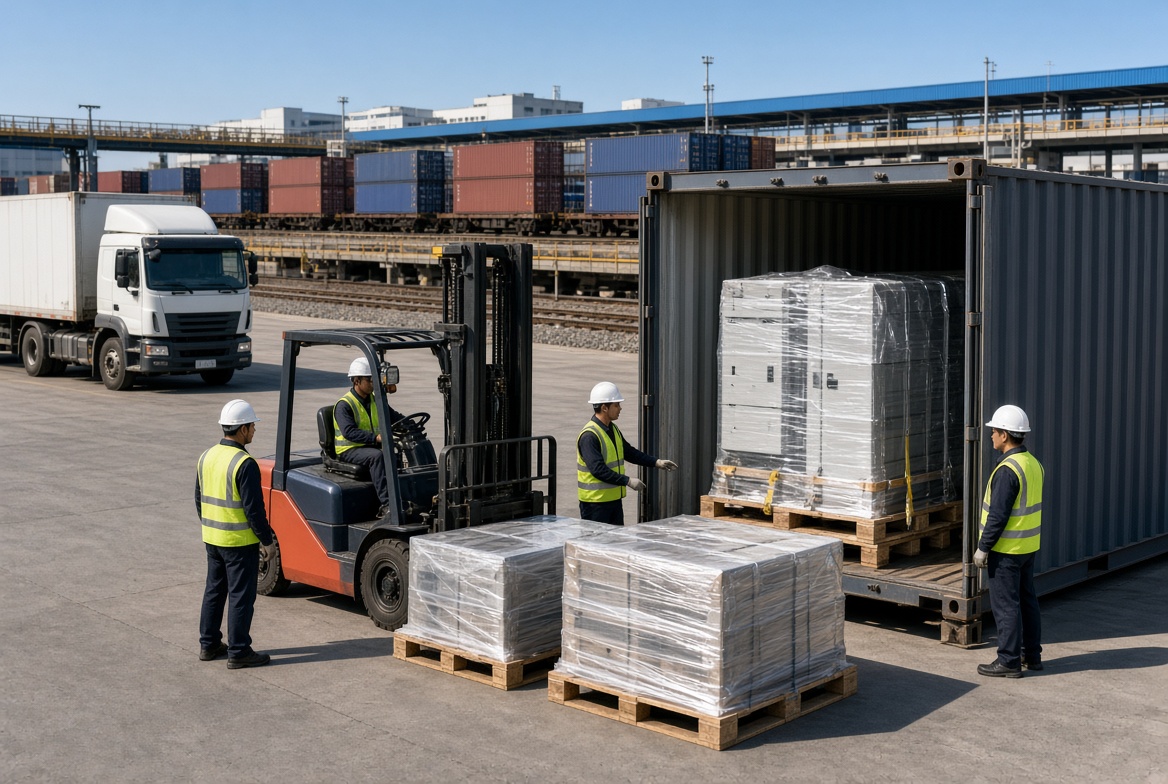
GB FREIGHT AGENCY CO., LTD. provides China-origin logistics solutions built around your cargo, destination, timeline, and commercial priorities. Our team coordinates the shipment from supplier booking through export customs clearance, international transport, and final delivery.
We can help you evaluate railway freight vs sea freight for:
- Europe, North America, South America, Southeast Asia, the Middle East, Africa, and Oceania
- Full-container, less-than-container, and selected multimodal shipments
- Industrial machinery, parts, equipment, and general cargo
- Supplier coordination and cargo consolidation in China
- Export documents and customs-clearance support
- Destination delivery planning and shipment visibility
Request a route comparison from GB FREIGHT today. Send us your cargo-ready date, pickup city, destination, cargo details, container requirement, and required delivery date. We will recommend the most suitable transport plan based on speed, cost, risk, and operational feasibility.
For many China–Europe routes, railway freight is faster in main transit time. However, actual door-to-door performance depends on origin collection, export clearance, terminal handling, border procedures, destination customs, and final delivery.
In most cases, yes. Rail freight is commonly positioned between sea and air: faster than sea freight and substantially less expensive than air freight for suitable containerized cargo.
Usually, yes. Sea freight offers broader options for heavy, oversized, out-of-gauge, and project cargo, including flat racks, open-top containers, breakbulk, and specialized lifting arrangements.
It depends on the commodity, classification, packaging, route, carriers, and approvals. Dangerous goods must be reviewed before booking. Never assume acceptance based only on a general cargo description.
The right buffer depends on route risk, cargo urgency, seasonality, customs complexity, and the cost of a late arrival. For critical production cargo, build a buffer based on the consequences of delay rather than using the carrier's published transit time alone.
Often, yes. Splitting cargo can be effective when part of an order is needed quickly and the remaining volume is cost-sensitive. Rail can carry critical components or early sales stock, while sea freight carries the balance.
1. [UN Trade and Development — Maritime Trade Under Pressure: Growth Set to Stall in 2025]
2. [European Environment Agency — Rail Offers a Major Opportunity to Cut Transport Emissions]
3. [Smart Freight Centre — Global Logistics Emissions Council Framework]
4. [Forto — Shipping From China to Europe: Comparing Sea, Rail and Air Freight]
5. [China to Europe Shipping Time — Sea Freight Transit Guide]


