
Views: 231 Author: GB FREIGHT Publish Time: 2026-07-28 Origin: Site


Content Menu
● Introduction: Choosing the Right Shipping Mode
● Air Freight vs Ocean Freight at a Glance
● Cost Differences You Must Know
● Transit Time and Business Impact
● Cargo Type and Shipment Size
● Real-World Decision Framework
● When Air Freight Is the Better Choice
● When Ocean Freight Is the Better Choice
● Expert Insight for Importers
● How to Make the Right Choice
● Why Working with a Freight Partner Matters
● FAQ
>> 1. Which is cheaper: air freight or ocean freight?
>> 2. How do I know whether to choose air or ocean freight?
>> 3. What is chargeable weight in air freight?
>> 4. Is LCL a good option for small shipments?
>> 5. Can I combine air and ocean freight in one supply chain?
>> 6. Why does ocean freight still take the lead for many importers?
When businesses move goods from China to global markets, the most common question is not simply which is faster, but which is smarter for the shipment. Air freight and ocean freight both solve international transport needs, yet they serve very different business goals, timelines, and cargo profiles.
For importers, exporters, and sourcing teams, the best choice depends on cargo value, shipment size, urgency, destination, and total landed cost. A shipment that looks cheap on the freight quote can become expensive after duties, inland delivery, storage, and delays are added.
This article compares air freight and ocean freight from a practical logistics perspective, based on real shipping conditions and the operational experience of a China-based freight forwarder serving global routes.

Air freight is the transportation of goods by aircraft. It is usually chosen when speed matters, when the cargo is high value, or when production and sales schedules cannot afford long delays.
Air freight is often used for electronics, medical products, fashion samples, urgent replacement parts, and seasonal inventory. It is also helpful when buyers need a predictable transit window and want to reduce the risk of stockouts.
However, air freight is priced differently from ocean freight. The charge is usually based on chargeable weight, which means the higher value between actual weight and volumetric weight. This is why lightweight but bulky cargo can become costly even if the gross weight is low.
Ocean freight is the movement of goods by sea, usually inside containers. It is the preferred option for bulk shipments, heavy cargo, and goods that do not require immediate arrival.
Ocean freight is available in two common formats: FCL and LCL. FCL means a full container is reserved for one shipper, while LCL means smaller shipments from multiple shippers share the same container space.
For many businesses, ocean freight is the most economical international shipping method because it can transport large volumes at lower per-unit cost. It is especially suitable for machinery, furniture, building materials, industrial products, and general consumer goods.
| Factor | Air Freight | Ocean Freight |
|---|---|---|
| Transit speed | Very fast | Slower |
| Freight cost | Higher | Lower |
| Best for | Urgent, high-value, lightweight cargo | Large, heavy, or non-urgent cargo |
| Weight basis | Chargeable weight | Container volume or CBM |
| Risk of delay | Lower on transit time, but schedule-sensitive | More exposed to port congestion and longer sailing time |
| Inventory impact | Lower stock holding time | Better for planned replenishment |
| Cargo types | Samples, electronics, spare parts, perishables | Bulk goods, machinery, furniture, industrial cargo |
Cost is usually the first factor businesses compare, but freight cost alone does not tell the full story. Air freight can be several times more expensive per kilogram than ocean freight, especially on long-haul international routes.
Ocean freight often offers lower per-unit transport cost, particularly when shipment volume is stable and container utilization is high. LCL can also work well for smaller shipments, though consolidated cargo may include additional handling and destination charges.
A better decision comes from comparing total landed cost, not just the shipping quote. That means adding freight, customs clearance, insurance, local charges, inland delivery, and warehouse fees before judging the final cost.
Transit time is often the strongest advantage of air freight. It is ideal when a delay would cause a lost sales opportunity, production stoppage, or contractual penalty.
Ocean freight takes longer, but many businesses can plan around that lead time by forecasting inventory more accurately. If demand is steady and procurement is organized well, sea transport usually creates a healthier cost structure.
A simple way to decide is to ask: What does one week of delay cost my business? If the answer is higher than the extra freight cost, air freight may be the better choice.
Not every shipment should be measured only by speed and price. The physical characteristics of the cargo matter just as much.
Air freight is usually better for:
- High-value goods with tight delivery deadlines.
- Light cargo with high commercial value.
- Samples, launch inventory, and emergency replenishment.
- Sensitive products that must move quickly.
Ocean freight is usually better for:
- Heavy or oversized cargo.
- Large-volume shipments.
- Goods with stable demand and longer planning cycles.
- Products where shipping cost per unit must stay low.
If the cargo is bulky but not urgent, ocean freight is usually the stronger choice. If the cargo is compact, urgent, and margin-sensitive, air freight may protect revenue better than slower transport.
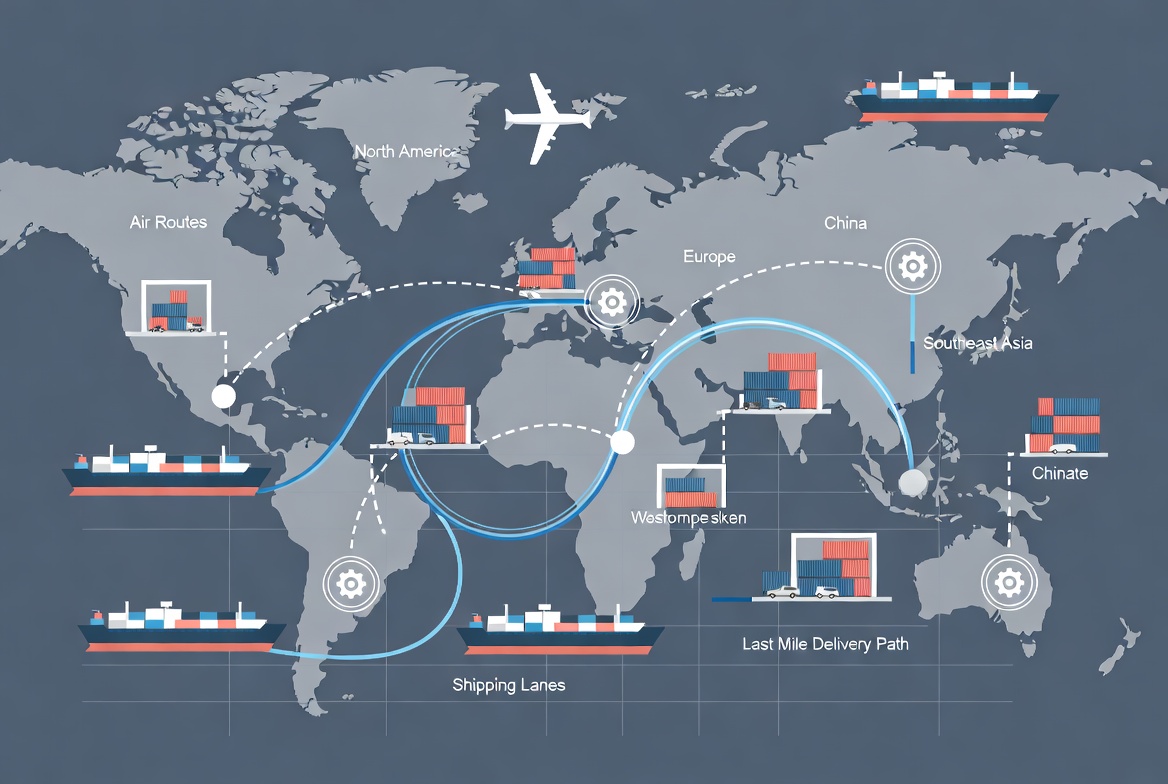
One reason air freight can become expensive is the calculation method. Airlines and cargo carriers charge by the higher of actual weight and volumetric weight.
The volumetric weight formula is commonly calculated using package dimensions, which means a large carton filled with light products may still be billed at a high rate. That is why packaging optimization matters so much in air shipments.
For example, reducing carton size, improving packing density, or switching to a more compact product layout can lower chargeable weight and reduce cost. This is a useful tactic for e-commerce brands, sample shipments, and lightweight consumer goods.
Shipping conditions continue to shift by trade lane, season, and capacity. In 2026, market reports show that international freight costs can vary widely by mode, route, and urgency, with ocean freight remaining the lower-cost option for large volumes and air freight retaining its role in urgent cargo movement.
Route selection also matters. For example, some Asia-to-Europe movements by air can take only a few days, while ocean shipments usually require a much longer planning window. That difference becomes even more important when production schedules, promotion dates, or customer commitments are fixed.
Another practical point is rate volatility. Ocean pricing can soften or rise by lane and season, while air freight often changes quickly when space tightens during peak periods. That makes planning, booking timing, and carrier coordination important parts of the shipping decision.
A strong freight decision should follow a simple sequence. This reduces guesswork and helps teams choose with confidence.
1. Check urgency first.
If the shipment must arrive quickly, air freight is often the more realistic option.
2. Measure cargo volume and weight.
Heavy and bulky cargo usually fits ocean freight better.
3. Calculate total landed cost.
Add freight, duty, insurance, customs, and inland charges before comparing modes.
4. Review inventory risk.
If stockouts would hurt sales or production, faster shipping may be worth the premium.
5. Match the route to the cargo.
Some destinations have stronger air access, while others favor sea lanes and consolidation hubs.
6. Confirm service scope.
Door-to-door delivery, customs clearance, warehousing, and final-mile trucking can change the real cost and speed of each option.
Air freight makes sense when time has a direct financial value. It is often the right answer for launch products, urgent replenishment, high-margin goods, and spare parts that keep operations running.
It also works well when cargo volume is small and the unit value is high. In these cases, the transport premium may be small compared with the business risk of delay.
For global buyers sourcing from China, air freight is especially helpful when supply chains are already tight and customer expectations are high. Faster transport can support faster cash flow, faster replenishment, and better service levels.
Ocean freight is the better option when cost control matters more than speed. It is especially useful for stable, forecastable demand and for goods that can be planned weeks in advance.
It is also the logical choice for bulky industrial cargo, such as machinery, packaged raw materials, and finished goods with lower value density. In those cases, ocean freight usually protects margin far better than air.
For companies scaling international sales, sea transport often becomes the backbone of the supply chain because it supports lower inventory cost per unit and better long-term margin structure.
From a freight-forwarding perspective, the best shipping mode is rarely the cheapest quote or the fastest transit alone. The strongest option is the one that supports your business model, protects your margin, and keeps delivery promises realistic.
Many importers save money by using a mixed strategy. They move urgent or promotional items by air, then shift regular replenishment cargo to ocean freight or LCL once demand stabilizes.
This approach helps businesses avoid overpaying for speed while still protecting customer satisfaction. It is also one of the most practical ways to balance cash flow, inventory control, and service performance.
Before booking, use this short decision checklist:
- Is the cargo urgent?
- Is the shipment large, heavy, or bulky?
- Does delay create lost sales or production downtime?
- Is the product high value per kilogram?
- Have you calculated the full landed cost?
- Do you need customs clearance, warehousing, or door-to-door delivery?
- Can the supply chain tolerate a longer transit time?
If most answers point to urgency and high value, air freight is likely better. If most answers point to volume, cost control, and schedule flexibility, ocean freight is usually the smarter solution.
International shipping is not just about booking space. It also involves supplier coordination, export documentation, customs clearance, route planning, container selection, and destination delivery.
A professional freight partner can compare transit options, explain cost differences clearly, and build a shipping plan around your cargo type and timeline. This is especially important for companies shipping from China to Europe, North America, South America, Southeast Asia, the Middle East, Africa, and Oceania.
For businesses that want predictable delivery and better cost control, end-to-end support can make the difference between a smooth shipment and an expensive delay.
Air freight and ocean freight are not competitors in the same way a better and worse service compete. They are different tools for different business situations.
Air freight wins on speed, control, and urgency. Ocean freight wins on cost, scale, and long-distance efficiency. The right choice depends on cargo, timeline, and the total cost of delivery.
For companies shipping from China, the smartest strategy is to evaluate every shipment by business impact, not by habit. When that happens, freight becomes a competitive advantage rather than a fixed expense.

Ocean freight is usually cheaper, especially for large or heavy shipments. Air freight costs more because speed and space are limited.
Start with urgency, cargo size, and total landed cost. If the shipment is time-sensitive or high value, air may be better; if it is bulky and planned ahead, ocean is usually better.
Chargeable weight is the value used to calculate air shipping cost. It is based on the higher of actual weight and volumetric weight.
Yes. LCL is useful when cargo is too small for a full container but still too large or too costly for air freight. It is a practical middle ground for many importers.
Yes. Many companies use air freight for urgent cargo and ocean freight for regular replenishment. This hybrid approach helps balance speed, cost, and inventory planning.
Because it supports better cost efficiency for large-volume cargo and gives businesses a more sustainable way to move inventory over long distances.
- [Freightos: Air Freight vs Ocean Freight – Making the Decision]
- [Forefront Logistics: Air Freight vs Ocean Freight]
- [DHL Global Forwarding: Choosing Between Ocean and Air Freight]
- [Maersk: Air cargo chargeable weight calculation explained]
- [ExFreight: How to Calculate Landed Cost]
- [Sea freight market and rate trend sources]


