
Views: 236 Author: GB FREIGHT Publish Time: 2026-08-25 Origin: Site


Content Menu
● What Is Last-Mile Industrial Delivery?
● Road Freight for Industrial Last-Mile Delivery
>> Main Advantages of Road Freight
>> Limitations of Road Freight
● Rail Transport for Industrial Deliveries
>> Main Advantages of Rail Transport
>> Limitations of Rail Transport
● Road Freight vs Rail Transport: Key Differences
● When Road Freight Is the Better Choice
● When Rail Transport Is the Better Choice
● The Most Practical Model: Rail-to-Road Delivery
● Total Cost: Look Beyond the Freight Rate
● Expert Checklist Before Booking
● How GB FREIGHT Supports Industrial Deliveries
● Request a Tailored Road or Rail Delivery Plan
>> Is rail transport suitable for last-mile delivery?
>> Is road freight faster than rail freight?
>> Which is cheaper: road freight or rail transport?
>> Can I use rail freight from China to Europe with door-to-door delivery?
>> What cargo is best for rail transport?
>> What information is needed for a road freight quotation?
>> Can GB FREIGHT arrange customs clearance and final delivery?
For industrial shippers, the choice between road freight and rail transport for last-mile delivery is rarely a simple price comparison. It affects production continuity, delivery reliability, cargo safety, carbon reporting, receiving-site access, and the total landed cost of a shipment.
At GB FREIGHT AGENCY CO., LTD., we have supported international shipments from China for 15 years. In practice, rail and trucks are often not competing modes. The most effective solution is frequently an integrated rail-to-road delivery plan: rail handles the long-distance trunk route, while road freight completes the final delivery to a factory, warehouse, construction site, distribution centre, or project location.
This guide compares road freight vs rail transport for last-mile industrial deliveries and explains how importers can choose the right solution for shipments from China to Europe, North America, South America, Southeast Asia, the Middle East, Africa, and Oceania.
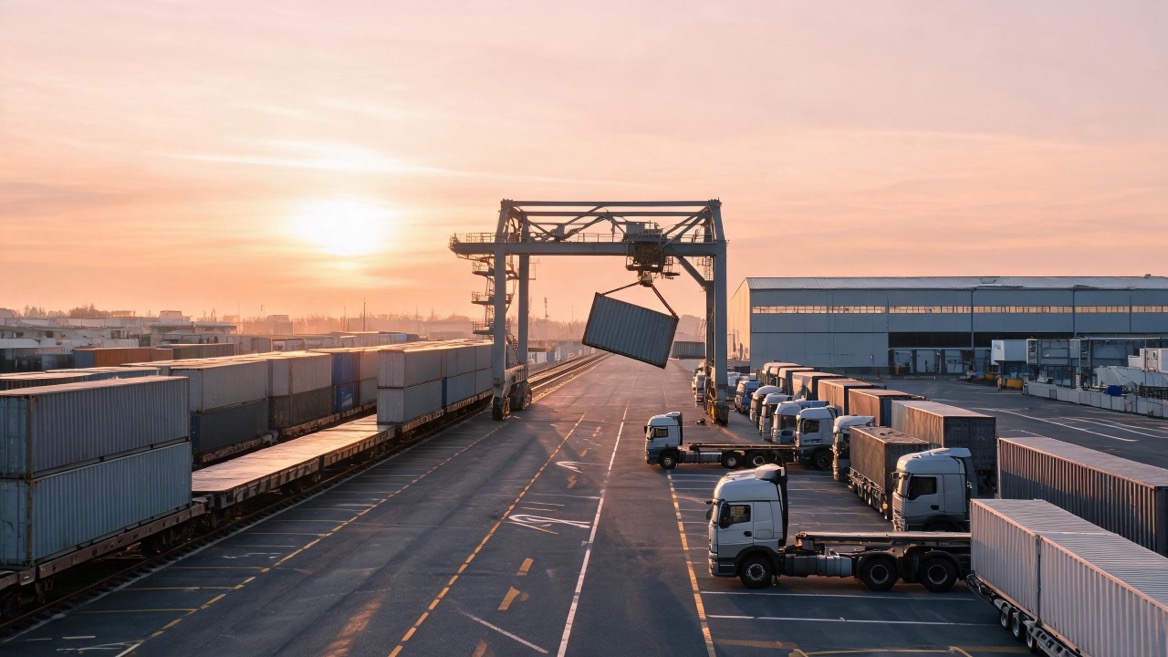
Last-mile industrial delivery is the final movement of cargo from a transport hub to the consignee's receiving point. The hub may be a rail terminal, seaport, airport, bonded warehouse, inland container depot, or consolidation centre.
Unlike residential delivery, industrial last-mile transport often involves:
- Containerized cargo, machinery, components, raw materials, or project cargo.
- Scheduled receiving windows at factories and warehouses.
- Forklift, crane, dock, or ramp requirements.
- Customs-release coordination before cargo can leave a terminal.
- Driver appointment rules, site-access checks, and safety procedures.
- Urgent production requirements, especially for just-in-time manufacturing.
A container may arrive at a rail terminal on time, but the shipment is not truly successful until it reaches the correct unloading point in usable condition. This is why the last-mile transport plan should be arranged before the main freight movement begins.
Road freight uses trucks to move cargo directly between terminals, warehouses, suppliers, factories, and final delivery sites. It is usually the most practical option for the final leg because most industrial facilities are built around road access rather than rail sidings.
Door-to-door accessibility is the strongest advantage. A truck can collect cargo from a port or rail terminal and deliver it directly to the consignee, including industrial parks, rural factories, construction projects, and third-party warehouses.
Road freight also offers:
- Flexible pickup and delivery scheduling.
- Direct delivery without an additional terminal transfer.
- Suitable options for FTL, LTL, container drayage, flatbed, refrigerated, and oversized cargo.
- Fast response for urgent or short-distance deliveries.
- Easier rerouting when production plans, warehouse capacity, or delivery locations change.
- Better support for multi-stop distribution across several customer locations.
For shipments moving from a European rail hub to an industrial customer, a truck can often provide the final delivery with fewer handling points than a second rail movement. Fewer handling points can reduce the risk of cargo damage, missed handovers, and documentation errors.
Road delivery is highly flexible, but it can become costly or unpredictable when capacity is tight. Industrial shippers should account for more than the base trucking rate.
Common road-freight challenges include:
- Driver shortages or peak-season vehicle shortages.
- Road congestion and border delays.
- Toll costs, fuel surcharges, and emissions-zone restrictions.
- Weight and axle-load limits.
- Restrictions for oversized or hazardous cargo.
- Waiting-time fees when a factory cannot unload as scheduled.
- Higher emissions per tonne-kilometre than rail on many long-distance routes.
Road transport remains dominant in European inland freight. In 2024, road accounted for 78% of EU land freight transport performance, while rail accounted for 17%, showing why trucks remain essential for practical factory-to-factory and terminal-to-door movements.
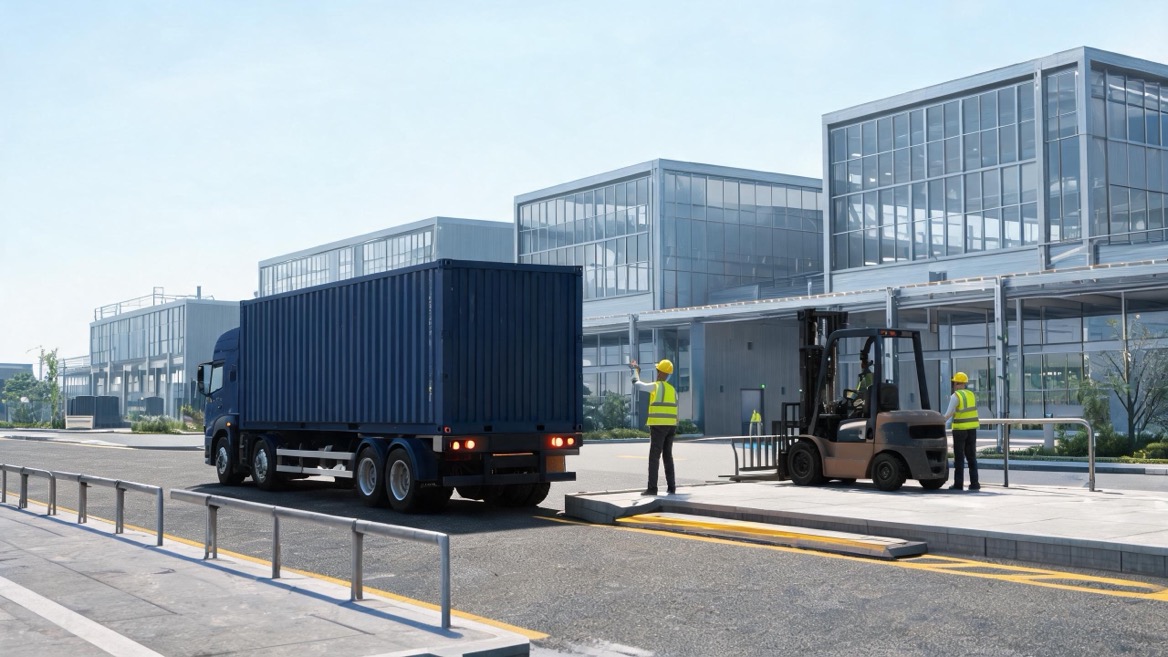
Rail transport moves cargo between rail-connected terminals, inland depots, manufacturing clusters, and major logistics hubs. It is particularly useful for high-volume, regular, long-distance, and intermodal cargo flows.
For exporters shipping from China to Europe, rail freight can provide a middle-ground option between sea freight and air freight. It may be suitable for cargo that is too time-sensitive for ocean shipping but does not justify air-freight cost.
However, rail is usually not a complete last-mile solution by itself. Most final delivery points require a truck after the rail arrival.
Rail freight works best when cargo volumes are sufficient, routes are stable, and the origin and destination are near suitable terminals.
Its main benefits include:
- Efficient movement of heavy and high-volume cargo.
- Potentially lower line-haul cost than long-distance trucking.
- Reduced handling per unit for block trains or containerized volume.
- Lower exposure to highway congestion on the trunk route.
- Useful capacity for steel, machinery, automotive parts, chemicals, consumer goods, and industrial components.
- Potential environmental advantages for long-distance inland transport.
- More predictable routing when the service schedule and terminal operations are stable.
Rail is especially relevant for freight moving between major inland hubs. China–Europe rail corridors commonly connect Chinese cities to European logistics centres, after which containers are transferred to trucks for delivery across regional markets.
Rail transport is less flexible at the delivery end. Even if a factory has nearby rail infrastructure, it may not have an active rail siding, container handling equipment, or a rail operator able to provide the required service frequency.
Key limitations include:
- Terminal-to-terminal structure rather than true door-to-door service.
- Fixed routes and departure schedules.
- Potential delays from terminal congestion, border processes, and network disruption.
- Additional handling when cargo moves from train to truck.
- Limited suitability for small, irregular, or highly urgent shipments.
- Less flexibility if the consignee changes the delivery address at short notice.
- Rail capacity can be constrained during seasonal peaks or infrastructure works.
For these reasons, a rail-only plan may look attractive in a quotation but create operational risk if the last-mile truck, customs release, unloading appointment, and destination equipment are not confirmed in advance.
| Decision factor | Road freight | Rail transport |
|---|---|---|
| Best use | Final-mile, regional, urgent, and multi-stop delivery | Long-distance trunk transport and predictable high-volume flows |
| Delivery coverage | Direct door-to-door access | Usually terminal-to-terminal |
| Flexibility | High; routes and delivery times can be adjusted | Lower; tied to network, schedules, and terminal availability |
| Shipment size | Suitable for parcels, LTL, FTL, containers, and specialized trucks | Best for container loads, bulk cargo, and recurring volume |
| Speed for final delivery | Often faster over short distances | Requires terminal handling and usually a truck for final delivery |
| Cost pattern | Competitive for short distances; can rise with tolls, fuel, and waiting time | Can be efficient for longer, regular routes; transfer costs must be included |
| Cargo handling | Can be direct from terminal to consignee | Often requires lift-on/lift-off and terminal transfers |
| Delivery-site access | Excellent if roads and unloading equipment are available | Limited unless the consignee has rail access |
| Risk management | Sensitive to congestion, driver availability, and road restrictions | Sensitive to schedules, network capacity, border operations, and terminal delays |
| Typical last-mile role | Primary delivery mode | Usually paired with trucking |
The correct decision is not "which mode is better?" It is which transport design delivers the required service level at the lowest total risk-adjusted cost.
Road freight is usually the better option for industrial last-mile delivery when the shipment needs speed, flexibility, or direct access.
Choose road freight when:
- The final destination has no rail siding or rail-served warehouse.
- The cargo must be delivered directly to a factory, jobsite, or remote industrial zone.
- The consignee needs a specific delivery appointment.
- The shipment requires special equipment, such as a flatbed, low-bed trailer, curtain-side truck, reefer, or tail-lift vehicle.
- The cargo is small, irregular, or time-critical.
- The delivery covers a short distance from the arrival terminal.
- The consignee needs several deliveries to different locations.
- The shipment must be rerouted quickly due to inventory or production changes.
For example, a container of replacement parts arriving at a European rail terminal may need same-day delivery to prevent a production line interruption. A dedicated truck can collect the released container, meet the factory's receiving appointment, and return the empty container according to the terminal's time requirements.
Rail is a strong choice when the transport need is regular, long-distance, and volume-driven.
Choose rail transport when:
- Cargo moves repeatedly between the same industrial regions.
- The shipment contains heavy machinery, raw materials, or large-volume components.
- Transit-time requirements are more flexible than for urgent trucking.
- The consignee is close to a rail terminal or has rail-connected facilities.
- The shipment can be planned around fixed departures.
- The cargo can be containerized safely for rail handling.
- The company wants to reduce dependence on long-distance truck capacity.
- A combined rail-and-truck plan offers lower total cost than road-only transport.
Rail can be particularly effective for a supplier sending repeated volumes from China to a European distribution hub. The main movement travels by rail, cargo is cleared and released at the destination hub, and local trucks complete final deliveries to factories or warehouses.
For many international industrial shipments, the best answer is not road freight versus rail transport. It is rail freight plus planned road delivery.
This intermodal model divides the journey according to the strengths of each mode:
1. Cargo is collected from the supplier or consolidation warehouse in China.
2. Export documents and customs formalities are prepared.
3. The shipment moves by rail on the main international corridor.
4. Cargo arrives at an inland terminal or destination hub.
5. Customs clearance and release are completed where required.
6. A truck collects the container or palletized cargo.
7. The shipment is delivered to the consignee's factory, warehouse, or project site.
This structure gives shippers long-distance rail coverage while retaining the flexibility of a truck for the final industrial delivery.
The critical point is coordination. If the truck is not booked early, cargo can incur storage, demurrage, detention, or terminal handling costs. A freight forwarder should align rail ETA updates, customs documents, unloading capacity, chassis availability, delivery appointments, and empty-container return requirements under one operational plan.
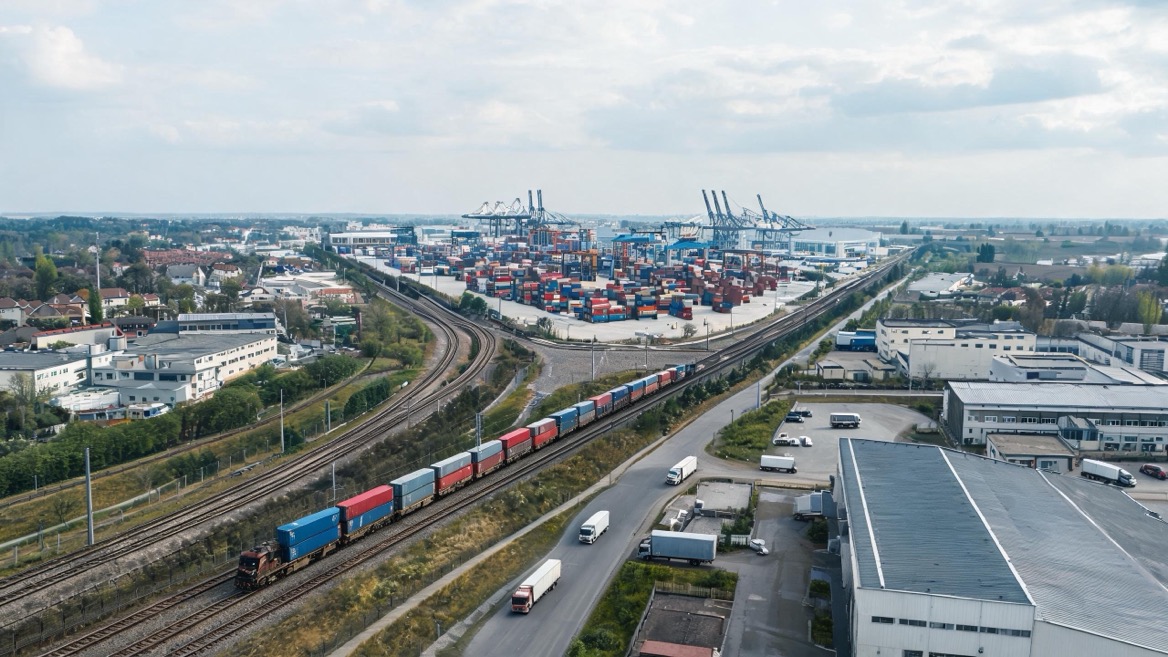
A low rail rate does not always create the lowest landed cost. Likewise, a higher trucking rate may be justified if it prevents storage charges, production downtime, or delivery failure.
When comparing road freight and rail transport, include:
- Main freight cost.
- First-mile collection cost.
- Terminal handling charges.
- Container loading and unloading fees.
- Customs clearance fees.
- Warehouse storage fees.
- Local trucking or drayage charges.
- Toll, fuel, congestion, and access surcharges.
- Demurrage and detention exposure.
- Cargo insurance.
- Packaging and securing requirements.
- The cost of late delivery to production.
A useful operating question is: What will one day of delivery delay cost the business?
For a manufacturer waiting for a machine part, a late delivery may be more expensive than the entire transport-rate difference. For lower-value inventory with a flexible receiving window, rail plus local road delivery may offer better overall economics.
Before selecting road freight, rail transport, or an intermodal solution, confirm the following items with your logistics provider:
1. Cargo details: Dimensions, weight, commodity, packaging, stackability, and dangerous-goods status.
2. Delivery location: Exact address, postal code, unloading conditions, and site-access restrictions.
3. Receiving requirements: Appointment time, unloading equipment, driver safety rules, and contact person.
4. Transport timing: Cargo-ready date, required delivery date, and acceptable transit-time range.
5. Customs status: Importer details, commodity codes, licences, duties, taxes, and clearance location.
6. Container plan: Whether delivery requires live unloading, drop-and-pick, pallet delivery, or empty-container return.
7. Contingency plan: Alternative terminal, backup truck capacity, warehouse option, and escalation contact.
This planning is particularly important for LCL shipments. Consolidated cargo may require deconsolidation at a warehouse before final trucking, adding time and handling that should be included in the delivery promise.
GB FREIGHT AGENCY CO., LTD. provides transport solutions for companies shipping cargo from China to global markets. Our role is to build a practical transport plan around the cargo, delivery deadline, destination conditions, and budget.
Our service coverage includes:
- Sea freight and FCL container shipping.
- LCL consolidation for smaller shipments.
- Air freight for urgent cargo.
- Railway transportation for China-to-Europe and regional cargo flows.
- Road transport coordination for collection and final delivery.
- Export customs clearance from China.
- Warehousing, cargo consolidation, and shipment preparation.
- Door-to-door delivery coordination.
- Shipment tracking and operational communication.
For industrial deliveries, we focus on the details that affect final execution: supplier readiness, booking cut-off times, export documents, cargo packing, destination customs status, terminal release, delivery appointments, and final-mile trucking capacity.
Road freight is the practical choice when your final delivery requires direct access, flexible timing, and rapid response. Rail transport is valuable when your cargo moves over long distances in predictable volumes and can use a terminal-based network. For many shipments from China, a combined rail-to-road solution delivers the strongest balance of speed, control, and cost.
Contact GB FREIGHT AGENCY CO., LTD. with your cargo details, origin city in China, destination address, shipment size, and required delivery date. Our team can evaluate sea, air, rail, LCL, and door-to-door options and provide a transport plan designed for your industrial supply chain.
Rail transport can support last-mile industrial delivery when the consignee has direct rail access or is close to a rail terminal. In most cases, a truck is still required to move cargo from the rail terminal to the final factory, warehouse, or project site.
For short-distance and final-mile delivery, road freight is usually faster because it provides direct door-to-door movement. For long international routes, rail may be faster than sea freight in some corridors, but its schedule and terminal handling must be considered.
Road freight is often more competitive for short distances and flexible deliveries. Rail can be more cost-effective for long-distance, high-volume, recurring cargo flows. The correct comparison should include terminal, handling, customs, storage, and final-mile delivery costs.
Yes. A door-to-door rail service usually includes supplier pickup in China, rail transportation to a European terminal, customs coordination, and truck delivery from the terminal to the final consignee address.
Rail freight is commonly used for containerized industrial goods, machinery, automotive components, consumer products, raw materials, and regular shipment volumes. Cargo must be packed and secured to withstand terminal handling and rail movement.
Provide the pickup and delivery addresses, cargo dimensions, gross weight, number of packages, commodity description, cargo-ready date, delivery deadline, unloading requirements, and any special cargo conditions.
Yes. GB FREIGHT can coordinate export customs clearance in China and work with destination-side partners on customs release, terminal handling, warehousing, and final door-to-door delivery arrangements.
1. [Federal Statistical Office of Germany: Freight transport in the EU—shift to rail is not progressing]
2. [European Environment Agency: Share of trains and inland waterways in freight transport]
3. [European Commission Library Guides: Railway transport statistics and data]
4. [Trans.INFO: China's "Suez Canal on rails" speeds trade to Europe]
5. [Oliver Wyman: Freight reshaping Europe's transport system]
6. [Euro24: A comprehensive guide to freight types—road, air, sea, or rail]


