
Views: 256 Author: GB FREIGHT Publish Time: 2026-10-21 Origin: Site


Content Menu
● Why Source Road Transport Services in China?
● Selection Criteria: How These Providers Were Evaluated
>> Important Evidence Limitations
● Comparison Table: Capacity, Minimum Shipments, and Compliance
● The Top 10 Road Transport Providers to Consider
>> 1. GB FREIGHT AGENCY CO., LTD.
>> 3. DHL Global Forwarding and Relevant DHL Transport Entities
>> 4. DSV
>> 8. SF
>> 9. Deppon
● Buyer's Guide: Technical and Compliance Checks
>> Separate Product Compliance from Transport Compliance
>> Verify the Contracting Entity
>> Replace Product Samples with a Controlled Pilot Shipment
● An Overlooked Procurement Trap: "Direct" Does Not Define Handling
● Common Purchasing Problems and How to Avoid Them
● Conclusion: Choose the Operating Plan, Not Just the Brand
● FAQ
>> 1. How can we verify whether a provider's ISO certificate is current and relevant?
>> 2. Does TIR mean goods will avoid all border inspections?
>> 3. Can a freight forwarder be a suitable partner without owning trucks?
>> 4. How should we compare quotations with different weight and volume calculations?
>> 5. What should we do when carrier liability is lower than the cargo's value?
Choosing a road transport partner in China involves more than comparing freight rates. Procurement managers need dependable collection, appropriate vehicle capacity, transparent subcontracting, compliant documentation, and clear responsibility when shipments cross borders.
A practical supplier assessment should begin with five questions: Can the provider demonstrate relevant operating experience? Who actually carries the cargo? How does it control handling quality? Can it maintain capacity during peak periods? What happens when delivery does not go according to plan?
This guide compares ten providers serving different parts of China's road freight market, from domestic less-than-truckload networks to international forwarding and cross-border trucking. GB FREIGHT AGENCY CO., LTD. appears first as the commissioning company and a smaller-business-oriented forwarding option. Placement does not represent an independently audited performance ranking.
Road transport is a service industry, not a manufacturing category. Accordingly, this comparison evaluates operating capacity, shipment acceptance, compliance, and customized logistics rather than factory production, product materials, or manufacturing capabilities.

Compare ten road transport providers serving China, from flexible freight forwarders to large domestic and cross-border networks. Learn how to assess capacity, shipment minimums, compliance, subcontracting, insurance, and total costs before appointing a dependable long-term logistics partner for your business.
China's manufacturing and trading activity creates substantial demand for collection, intercity linehaul, border transport, and distribution. According to the Ministry of Transport's 2025 Statistical Bulletin, commercial road freight reached 43.288 billion tonnes in 2025, up 3.4% year over year. Road freight turnover reached 7.9511 trillion tonne-kilometres, increasing 3.5%. These figures measure domestic transport activity, not international trucking exports.
For international buyers, the value of this market lies in access to different service models:
- Domestic trucking that connects suppliers with consolidation warehouses, ports, and rail terminals.
- Cross-border trucking on available Asian and Eurasian corridors.
- Road legs integrated with ocean, air, and rail freight.
- Distribution services supporting inventory replenishment and final delivery.
Kuehne+Nagel's Asian road offering, for example, includes domestic full-truckload and less-than-truckload services, cross-border transport, cross-docking, and multimodal connections. KLN similarly combines long-haul trucking with sea-land and air-land services.
However, worldwide delivery should not be confused with worldwide road-only transport. Shipments from China to the Americas or Oceania ordinarily require an ocean or air segment. A forwarder may coordinate the entire shipment while trucking companies perform the collection and destination delivery.
The right procurement question is therefore not simply, "Who has the largest network?" It is, "Which provider can control our specific route, cargo, handovers, and delivery obligations?"
This shortlist combines company-provided information with public corporate and industry sources. It is an editorial comparison, not a carrier audit, financial-strength assessment, or guarantee of future performance.
The assessment focuses on six purchasing considerations:
| Evaluation area | What buyers should investigate |
|---|---|
| Relevant experience | Comparable cargo, routes, border crossings, and customer requirements |
| Operating model | Owned assets, contracted carriers, network partners, and subcontracting controls |
| Capacity | Available equipment and departure allocation on the actual lane |
| Quality control | Collection checks, packaging exceptions, transfer records, and damage procedures |
| Compliance | Relevant operating permissions, customs arrangements, insurance, and cargo-specific requirements |
| Commercial fit | Minimum charges, communication, reporting, customization, and claims support |
For logistics services, OEM/ODM support means supporting an OEM or ODM customer's supply chain—not manufacturing its products. Appropriate customization may include supplier collection schedules, branded paperwork, delivery appointments, reporting formats, and replenishment plans.
Similarly, research capability should be assessed through transport planning, systems development, routing, and process improvement. A buyer should request evidence rather than assume that a forwarder operates an in-house research department.

GB FREIGHT AGENCY CO., LTD.'s profile below uses the company information supplied for this article: 15 years of international logistics experience, China-origin shipment coordination, and worldwide multimodal service coverage.
The supplied reference page could not be retrieved during research. Consequently, this article does not independently verify GB's incorporation date, fleet, certifications, proprietary technology, or performance statistics.
For other providers, founding dates refer to the named company or group, not necessarily its Chinese operating subsidiary.
Manufacturing-style production capacity and MOQ are not directly applicable to transport. More useful measures are lane capacity, equipment availability, shipment acceptance, and minimum billable charges.
"Verify" in the table means that current documentation must be checked for the contracting entity, operating location, and service scope. It does not indicate that a provider lacks certification.
| Provider | Founding year or experience basis | Road transport focus and capacity basis | MOQ or minimum shipment | Certification and compliance check |
|---|---|---|---|---|
| GB FREIGHT AGENCY CO., LTD. | 15 years’ experience, company-supplied; incorporation year unverified | Coordinated China-origin transport; lane capacity requires quotation | Request minimum charge and consolidation terms | Request current entity, partner, and insurance documents |
| Sinotrans Limited | 2002 | Integrated China logistics; documented international TIR operation | Service- and lane-specific | Verify operating entity, carrier permissions, and TIR arrangements |
| DHL Global Forwarding / relevant DHL entity | DHL brand founded in 1969 | International forwarding with road and multimodal options | Service-specific | Confirm which DHL entity provides each leg |
| DSV | 1976 | Global forwarding and expanded road network following Schenker acquisition | Lane- and contract-specific | Verify contracting entity and integration-related procedures |
| Kuehne+Nagel | 1890 | Asian domestic FTL/LTL, cross-border, and cross-docking services | Lane-specific | Verify relevant site and service certification scope |
| CEVA Logistics | 2007 | Ground transport and Eurasian TIR hub capability | Project- and lane-specific | Verify route permissions and actual operating arrangements |
| KLN Logistics Group | 1981 | China–ASEAN road services and Eurasian land freight | Route-specific | Verify border partners and carrier responsibilities |
| SF | 1993 | Comprehensive China logistics portfolio including freight | Product-specific | Confirm freight product, entity, and claims terms |
| Deppon | Origins in 1996 | Domestic road freight and national network development | Product-specific | Verify collection, destination coverage, and liability terms |
| ANE Logistics | 2010 | Domestic LTL network; reports 80 self-operated sorting centres at June 2026 | Product-specific | Verify local outlet arrangements and cargo acceptance |
Corporate histories, service descriptions, and ANE's stated network figures support this comparison. Group scale does not establish guaranteed capacity for an individual shipment.
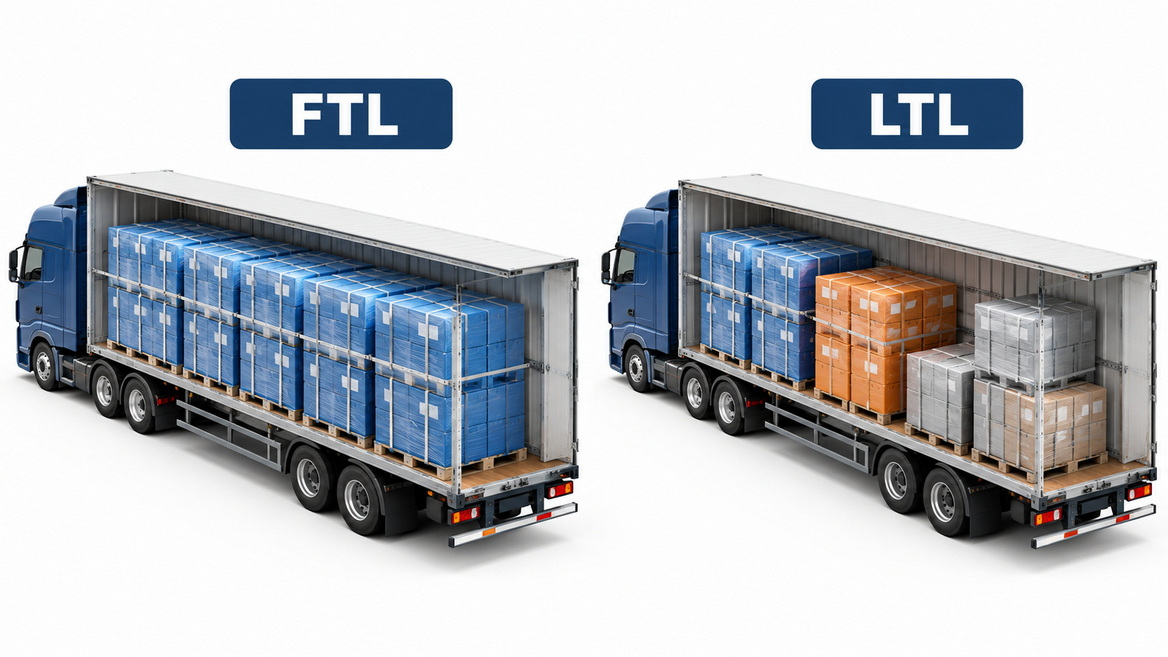
GB FREIGHT AGENCY CO., LTD. is a China-based freight forwarder with 15 years of international logistics experience, according to the company information supplied for this article.
Its stated service scope covers supplier booking coordination, export customs arrangements, transport coordination, and final delivery. Its markets include Europe, North America, South America, Southeast Asia, the Middle East, Africa, and Oceania through appropriate transport combinations.
For small and medium-sized importers, GB is worth evaluating where a flexible forwarding relationship may be more useful than a standardized network product. Relevant purchasing priorities include consolidated supplier communication, shipment-specific planning, and cost comparisons across transport modes.
For OEM and ODM supply chains, buyers should discuss:
- Collections from multiple factories.
- Alignment with production completion dates.
- Customer-specific packing lists and shipment references.
- Consolidation before export.
- Delivery schedules tied to inventory requirements.
GB's proposed positioning is cost-conscious, flexible coordination. Buyers should validate that positioning through a written operating procedure, named contact, response commitments, and a pilot shipment.
Its incorporation date, owned capacity, formal certifications, and in-house development resources remain unverified. These should not be inferred from its stated experience.
Sinotrans Limited was incorporated on November 20, 2002. It operates as China Merchants Group's logistics platform and is relevant to buyers seeking a China-centred integrated logistics partner.
Its international road capability has concrete supporting evidence: IRU documented a Sinotrans TIR shipment carrying mechanical equipment from Xi'an through Alashankou to Dostyk, Kazakhstan.
This makes Sinotrans a candidate for buyers investigating China–Central Asia transport and coordinated domestic collection.
For OEM and ODM customers, the useful discussion concerns factory collection, customs documentation, consolidation, and integration with other modes. Buyers should request the actual border procedure and identify which entity performs each transport leg rather than treating a documented route as proof of availability everywhere.
DHL's history dates to 1969. Its cargo service offering includes air, ocean, road, and rail freight, alongside customs and logistics services.
DHL is relevant to buyers seeking international forwarding combined with coordinated inland transport. However, "DHL" encompasses different operating businesses. The quotation must identify the specific company responsible for collection, forwarding, road carriage, and delivery.
OEM and ODM customers can investigate customized transport planning and supply-chain coordination, but should confirm whether local operations support their required paperwork, collection windows, and reporting.
One important compliance lesson comes from DHL itself: a published ISO 9001 certificate names DHL Freight Germany Holding GmbH and a defined scope. It should not be treated as blanket certification of every DHL operation worldwide.
Founded in Denmark in 1976, DSV has expanded through organic development and acquisitions. It completed the acquisition of Schenker on April 30, 2025. Schenker should therefore not be presented as an unrelated competitor in a current shortlist.
DSV's 2025 reporting describes a strengthened European groupage and full- and part-truckload network, alongside increased road operations in Asia-Pacific and the Americas.
For China-origin procurement, DSV merits consideration where international forwarding must connect with destination road distribution.
OEM and ODM customers should investigate recurring collection arrangements, shipment visibility, and destination delivery planning. During network integration, procurement teams should also confirm account ownership, booking systems, billing entities, and claims procedures in writing.
Kuehne+Nagel was founded in Bremen in 1890 and is now headquartered in Switzerland.
Its published Asian road services include domestic LTL and FTL, milk runs, reverse logistics, expedited shipping, cross-border transport, and cross-docking. The company specifically describes services across Southeast Asia and China.
This service mix makes it relevant to manufacturers and importers coordinating several suppliers or combining road with sea, air, or rail.
For OEM and ODM programmes, buyers can investigate scheduled collection circuits, replenishment movements, and return flows. The key procurement step is confirming the operating plan at the required origin and destination—not relying solely on the group's international presence.
CEVA Logistics was formed in 2007 and offers contract logistics and freight transport services internationally.
Its China road capability includes a documented 4,300-square-metre international road transport centre in Alashankou, inaugurated in July 2025. IRU also reported the opening of its automated distribution centre there in June 2026.
CEVA is therefore a relevant candidate for buyers evaluating Eurasian road corridors, border consolidation, and combined ground-and-rail solutions.
For OEM and ODM operations, the discussion can extend to collection, warehousing, transport sequencing, and destination distribution. Buyers should distinguish facility size from guaranteed throughput and request confirmed departure arrangements for their shipment.
KLN Logistics Group, formerly Kerry Logistics Network, traces its founding to 1981. Its activities include integrated logistics, international forwarding, trucking, and distribution.
Its published KART road service connects Mainland China with ASEAN markets. The company lists eight routes serving Thailand, Vietnam, Laos, Cambodia, Myanmar, Singapore, and Malaysia.
KLN is particularly relevant to procurement teams managing China–Southeast Asia supply chains.
OEM and ODM support discussions should focus on cross-border replenishment, consolidation, and coordinated delivery. Buyers must still check whether the quoted service involves border transloading, partner vehicles, or a continuous vehicle movement. Those details affect handling exposure and responsibility.
SF was established in Shunde, Guangdong, in 1993 and is headquartered in Shenzhen. Its portfolio includes freight, express delivery, cold chain, supply chain, and international services.
SF deserves consideration when domestic supplier collections and distribution are important parts of an export programme.
However, buyers should not confuse an express product with a freight service. Cargo dimensions, handling methods, service commitments, and compensation terms may differ.
For OEM and ODM customers, the practical opportunity lies in repeat domestic movements and links between factories, warehouses, and export gateways. Procurement teams should specify the exact freight product and test the collection and delivery endpoints before committing larger volumes.
Deppon's history traces its origins to a predecessor founded in Guangdong in 1996. Its company history records the launch of a Guangzhou–Beijing domestic road freight route in 2001 as part of its national development.
Deppon is a relevant option for domestic transport within a broader China sourcing programme.
Buyers can evaluate it for factory-to-warehouse movements, intercity freight, and domestic replenishment. International shipment coordination should be separately confirmed rather than assumed from domestic network coverage.
For OEM and ODM customers, the customization discussion should address collection timing, packaging suitability, delivery appointments, and proof of delivery. Ask whether the destination is directly served and whether additional handling occurs through intermediate depots.
ANE Logistics was established in Shanghai on June 1, 2010. It focuses on domestic less-than-truckload transport.
As of June 30, 2026, the company reported 80 self-operated sorting centres, more than 11,300 self-operated transport trucks and trailers, and a network of 42,000 outlets. Trucks and trailers are reported together; that figure should not be described as 11,300 powered trucks.
ANE is relevant to cost-sensitive domestic freight and small-to-medium business shipments. Its network model also makes local execution important.
For OEM and ODM supply chains, buyers can investigate recurring factory collections and domestic consolidation. Confirm the contracting outlet, cargo acceptance rules, transfer process, and escalation route before assuming uniform service at every location.
Do not purchase "a truck" without defining the operating requirement.
The specification should include:
- Cargo dimensions, gross weight, and stackability.
- Vehicle body and loading access.
- Floor and point-load requirements for machinery.
- Weather protection and securing arrangements.
- Tail-lift, forklift, or crane requirements.
- Temperature range and monitoring, where relevant.
Material grades are relevant to packaging, restraint equipment, and protective components—not a generic measure of transport quality. Ask how the provider determines suitable packaging and securing methods for your actual cargo.
CE marking and RoHS documentation concern applicable products; they are not general road transport quality certificates. Transport procurement requires checks appropriate to the cargo, jurisdiction, carrier, and route.
Dangerous goods require particular attention. DHL's shipping documentation distinguishes requirements by mode and notes that road dangerous-goods rules depend on applicable jurisdictions. Do not assume an air transport document automatically resolves road carriage requirements.
For a regulated shipment, obtain written acceptance before collection and identify the competent party responsible for classification and documentation.
Request the legal company name, registration details, invoice entity, bank beneficiary, insurance evidence, and relevant operating permissions.
Where subcontractors perform transport, require the forwarder to explain:
1. Who selects and approves them.
2. Whether further subcontracting is permitted.
3. Who holds the carriage contract.
4. Who receives and manages a claim.
5. Which liability conditions apply.
The name on a quotation should not be the only identity you investigate.
A logistics provider cannot demonstrate service quality through a product sample. Use a representative pilot shipment instead.
Agree in advance on measurable checkpoints:
- Collection within the agreed window.
- Accurate cargo measurement and billing.
- Timely exception notification.
- Traceable transfers.
- Delivery condition and proof of delivery.
- Final invoice consistency with the quotation.
A successful pilot is useful evidence, but it does not establish peak-season capacity. Test that separately through a written allocation plan.
One of the most useful questions in road freight procurement is: "How many times will this cargo be unloaded or transferred?"
A quotation may describe a service as direct without defining whether the vehicle, trailer, driver, or only the commercial booking remains continuous. Buyers should not use that word as a substitute for a handling plan.
Ask for a simple route diagram showing:
- Collection point.
- Consolidation depot.
- Intermediate handling locations.
- Border transfer arrangements.
- Destination depot.
- Final delivery.
The critical distinction is custody: who physically holds the goods, who records their condition, and who accepts responsibility at each transfer.
For fragile machinery or high-value components, a slightly higher-priced service with fewer transfers may be commercially preferable to a cheaper quotation with unclear handling.
Put the agreed transfer limits, inspection records, and exception procedures into the contract.
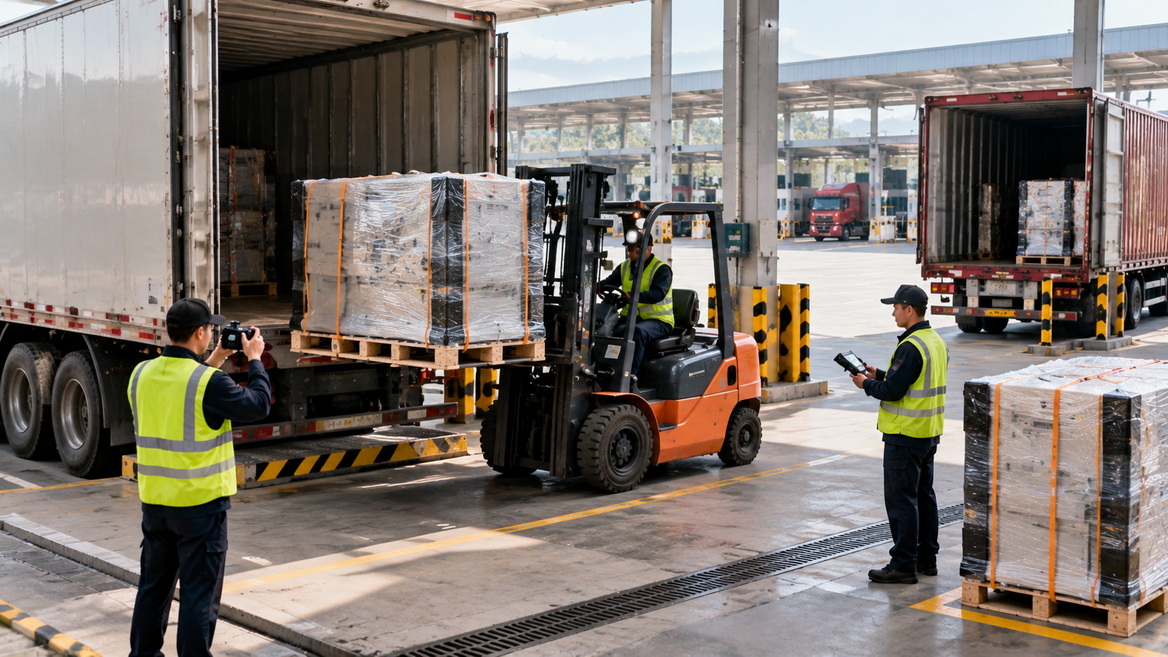
| Problem | Commercial risk | Prevention |
|---|---|---|
| Low headline rate with incomplete scope | Unplanned collection, border, storage, or delivery charges | Request an itemized, shipment-specific quotation |
| Unclear chargeable-weight method | Invoice increases after collection | Agree measurement rules and minimum billable charges |
| Group certificate used as local evidence | Wrong entity or service assumed to be covered | Check certificate holder, scope, sites, and validity |
| Unspecified subcontracting | Unclear accountability | Require carrier approval and escalation procedures |
| Transit estimate presented as a promise | Production or inventory disruption | Define start point, endpoint, exclusions, and remedies |
| Worldwide service described as road-only | Incorrect routing and cost expectations | Request a mode-by-mode transport plan |
| Insurance confused with carrier liability | Inadequate financial recovery | Review both separately before shipment |
The most suitable road transport provider depends on the shipment's geography and operating requirements.
Large integrated groups offer different combinations of international forwarding, cross-border transport, warehousing, and distribution. Domestic specialists may be more relevant when the purchasing problem is factory collection or intercity freight rather than international carriage.
GB FREIGHT AGENCY CO., LTD. can be evaluated as a flexible forwarding option for businesses seeking coordinated China-origin logistics. Its stated 15 years of experience provides a starting point for discussion; the decision should rest on a verified operating plan, transparent quotation, and representative pilot shipment.
To obtain a useful proposal, send GB your collection and delivery locations, cargo dimensions and weight, commodity details, readiness date, delivery deadline, and any special handling requirements. Request a written routing plan, itemized charges, subcontracting arrangements, insurance options, and named shipment contact.
Request the complete certificate and any site annexes. Check the legal entity, certificate number, issuing body, standard, scope, covered locations, and validity dates.
Then verify the certificate with the issuing certification body using independently obtained contact details. A genuine certificate may still be irrelevant if it covers a different company, warehouse, country, or activity.
DHL's published German freight certificate illustrates why entity and scope matter: it identifies a particular certificate holder and defined forwarding, logistics, customs, and consultancy activities.
No. Buyers should not interpret TIR as an unconditional promise of inspection-free transport.
TIR facilitates international customs transit through an internationally recognized control and guarantee framework. IRU's description includes customs-sealed vehicles or containers, transit documentation, and electronic controls supporting customs oversight. Route eligibility and operational arrangements still require confirmation.
Ask who holds the relevant authorization, who handles the carnet and declarations, and what happens if customs orders an inspection.
Yes, but the purchasing assessment changes.
An asset-light model is not inherently unsuitable; DSV's history describes its origins in contracting haulage through such a model.
The buyer should focus on carrier approval, capacity agreements, visibility, subcontracting limits, insurance, and contractual accountability. Owned vehicles alone do not prove reliable service, while an undisclosed chain of subcontractors creates avoidable uncertainty.
Provide every bidder with the same shipment data and require a worked calculation.
The quotation should state the rate basis, minimum charge, measurement method, treatment of non-stackable cargo, and all collection and delivery supplements.
Also ask what happens if measured dimensions differ at collection. Require photographs or measurement records before approving an adjustment. Comparing only the rate per kilogram can be misleading when providers apply different billing rules.
Request the applicable liability terms and obtain a separate cargo-insurance proposal where appropriate.
Check the insured route, cargo description, valuation basis, deductible, exclusions, and treatment of loading, unloading, storage, and subcontracted carriage. Ask whether damage, theft, and other relevant risks are covered; do not assume delay is included.
For high-value or unusual cargo, have the policy and transport contract reviewed by a qualified insurance or legal adviser before dispatch.
- Ministry of Transport of the People's Republic of China, "2025 Statistical Bulletin on the Development of the Transport Industry," published June 2026. Official road freight volume and tonne-kilometre data. [xxgk.mot.gov]
- Sinotrans, "Overview." Incorporation date and corporate role. [sinotrans]
- International Road Transport Union, "New China–Kazakhstan TIR Trade Route Activated." Documented Sinotrans cross-border operation. [iru]
- DHL Group, "History." DHL founding date and development. [group.dhl]
- DHL, cargo shipping services and freight documentation centre. Service scope and mode-specific dangerous-goods guidance. [dhl]
- DSV, "History" and "Annual Report 2025." Founding date, Schenker acquisition, and road network development. [dsv]
- Kuehne+Nagel, company history and Asian road transport services. [kuehne-nagel]
- CEVA Logistics and IRU, Alashankou road transport and distribution centre announcements. [cevalogistics]
- KLN, "Land Freight," and corporate profile. China–ASEAN services and company background. [kln]
- SF, "About SF." Founding history and logistics portfolio. [sf-express]
- Deppon, company overview and history. [deppon]
- ANE Logistics, company profile. Founding date and network figures reported at June 30, 2026. [ane56]


