
Views: 249 Author: GB FREIGHT Publish Time: 2026-10-18 Origin: Site


Content Menu
● ATA Carnet vs Temporary Import Declaration: The Main Differences
● What Is an ATA Carnet for Trade Shows?
>> Which Exhibition Goods Can Use an ATA Carnet?
>> Does an ATA Carnet Eliminate All Customs Costs?
● What Is a Temporary Import Declaration for Trade Shows?
>> Local Procedures Differ Substantially
>> When Can a Local Declaration Be Preferable?
● ATA Carnet vs Temporary Import Declaration: Compare Total Cost
>> Compare Four Cost Categories
>> Ask for a Closed-Loop Quotation
● Re-Export Deadlines: Carnet Validity Is Not the Whole Story
● Mixed Exhibition Shipments: Separate Return Goods from Giveaways
>> Group 1: Goods Returning to China
>> Group 2: Goods Consumed or Distributed
>> Group 3: Goods Potentially Sold Abroad
● Practical Scenario: A Chinese Manufacturer Attending Two Overseas Shows
>> Why Local Declarations Could Still Work
● A Seven-Step Workflow for Trade Show Customs Clearance
>> 1. Build an Identifiable Inventory
>> 2. Confirm Eligibility Before Booking
>> 3. Separate Different Customs Treatments
>> 5. Coordinate China Export and Destination Entry
>> 6. Reconcile Goods After the Exhibition
>> 7. Complete and Verify Closure
● Expert Insight: Treat Customs Closure as a Deliverable
● How GB Freight Supports Exhibition Shipping from China
>> Is an ATA Carnet Always Better for Trade Shows?
>> Can I Use a Carnet for Goods Shipped from China?
>> Can I Sell Equipment Imported Under an ATA Carnet?
>> Does a Temporary Import Declaration Require a Deposit?
>> Does an ATA Carnet Guarantee Immediate Clearance?
Choosing between an ATA Carnet vs Temporary Import Declaration for trade shows affects more than customs paperwork. It influences your shipping budget, financial guarantees, border procedures, and how smoothly your exhibition goods return to China.
For reusable equipment traveling through several participating customs territories, an ATA Carnet often provides a simpler framework. For a single exhibition, a destination outside the carnet system, or goods requiring a different procedure, a local temporary import declaration may be more appropriate.
At GB FREIGHT AGENCY CO., LTD., our perspective comes from 15 years of international logistics experience supporting shipments from China. We approach this decision through one practical question: Which procedure fits the goods, itinerary, and return plan—not simply the lowest initial fee?

A temporary import declaration is not one standardized international document. In this article, it means the destination's local customs declaration or application for temporary admission.
An ATA Carnet, meanwhile, is an internationally recognized customs document supported by a guarantee system. It can serve as the declaration and security for eligible temporary movements.
The two options are therefore alternative ways of handling temporary admission, rather than completely separate customs concepts.
| Comparison factor | ATA Carnet | Local temporary import declaration |
|---|---|---|
| Geographic coverage | Participating countries and customs territories, subject to accepted uses | The destination’s local customs procedure |
| Main purpose | Simplify eligible temporary movements using one document | Obtain temporary admission under destination-specific rules |
| Financial security | International guarantee; the issuer may require applicant security | A bond, deposit, or other guarantee may be required |
| Multiple destinations | Often convenient for a multi-country exhibition itinerary | Separate arrangements may be needed across customs territories |
| Time limits | Generally valid for up to one year; customs may set shorter deadlines | Determined by local rules and authorization |
| Goods identification | Detailed carnet general list | Inventory and supporting documents required locally |
| Goods remaining abroad | Requires an authorized change of procedure where permitted | Requires an authorized change of procedure where permitted |
| Closure | Correct customs processing and return to the issuer | Evidence and procedural discharge required by local customs |
Neither route automatically covers sales stock, giveaways, or every item shipped to an exhibition.
An ATA Carnet is often described as a "passport for goods." It permits eligible goods to enter participating destinations temporarily without paying import duties and taxes, provided the applicable conditions are met.
According to the International Chamber of Commerce, the system operates in more than 80 countries and customs territories. Carnets are issued through national guaranteeing associations.
Common categories include:
- Commercial samples displayed to potential buyers.
- Professional equipment used by the exhibitor.
- Eligible goods presented or used at exhibitions and fairs.
Examples might include demonstration machinery, reusable display units, and audiovisual equipment. However, category acceptance differs by destination.
The goods must remain identifiable and satisfy the approved use. A machine intended for demonstration and return is not equivalent to machinery shipped for permanent installation.
No. It can avoid separate customs security deposits at participating destinations, but it is not a free shipping service.
Budget for carnet issuance, any security required by the issuer, customs handling, transport, storage, and insurance.
The international guarantee also does not remove the holder's responsibility. Missing goods, overdue re-exportation, or incomplete customs records can create duty exposure and claims.
A local temporary import declaration places eligible goods under the destination's temporary admission procedure. Depending on the jurisdiction, this may involve an electronic declaration, an authorization, and financial security.
It is often coordinated through a destination customs broker.
The United States uses Temporary Importation under Bond, or TIB, for qualifying goods. Eligibility depends on specified tariff provisions; not every exhibition shipment automatically qualifies.
In the United Kingdom, Temporary Admission has several authorization methods. HM Revenue & Customs states that the permitted period is usually up to a maximum of 24 months, depending on the goods.
These examples illustrate why "temporary import" is not a universal permission with identical deadlines.
Consider a destination-specific procedure when:
- The destination or intended use is not covered by the carnet system.
- The itinerary involves only one customs territory.
- A longer stay is needed and local rules permit it.
- A destination broker identifies a suitable alternative.
- The expected administrative savings outweigh carnet issuance costs.
However, local temporary admission is not a workaround for ineligible goods. Eligibility must still be established.
The cheapest document is not necessarily the cheapest exhibition shipment.
A useful comparison separates non-refundable expenses from recoverable security and potential disruption costs.
1. Administration: carnet issuance, broker fees, declarations, and closure charges.
2. Security: deposits, guarantees, bond premiums, and issuer requirements.
3. Logistics: freight, customs presentation, venue delivery, storage, and return transport.
4. Exceptions: inspections, amendments, missed deadlines, and unresolved discharge.
A refundable deposit should not be treated as the same expense as a service fee. Nevertheless, it ties up working capital and may remain outstanding until the procedure is properly closed.
Request a quotation covering departure from China through return and customs closure.
Ask each provider:
- What charges are non-refundable?
- What security is required, and who provides it?
- What evidence releases that security?
- Who handles re-export formalities?
- Are return declarations and closure services included?
This makes competing proposals meaningfully comparable.
A carnet generally remains valid for up to one year. That does not mean every destination grants a full year of temporary admission.
Customs may specify an earlier re-export deadline. The shipment must comply with that deadline as well as the document's validity.
Local procedures also have their own limits. For example, qualifying U.S. TIB movements must be exported or destroyed within the applicable period, with the overall period not exceeding three years.
That maximum is not an automatic three-year authorization.
For exhibition planning, record:
- The document expiry date.
- The destination's re-export deadline.
- Any extension application deadline.
- The scheduled return collection date.
Allow time between venue collection and customs exit. An event finishing before the deadline does not prove that the goods left the customs territory on time.
One of the most useful planning steps is to divide the shipment by what happens after the show.

Typical examples include demonstration equipment, display samples, tools, and reusable booth components.
Assess these for carnet coverage or local temporary admission.
Brochures, promotional gifts, tasting samples, and materials used up during demonstrations need separate review.
U.S. Customs and Border Protection explicitly states that samples consumed or given away at a trade show are not allowed under an ATA Carnet.
Do not assume that local temporary admission automatically covers them either. Another import treatment or specific relief may be necessary.
A buyer's offer does not authorize the exhibitor to leave temporarily admitted goods behind.
Before delivery, obtain advice on the permitted change of procedure, import charges, regulatory requirements, and closure documentation.
Labeling these three groups separately reduces inventory confusion and makes the return reconciliation easier.
Consider a hypothetical manufacturer shipping one demonstration machine and reusable display equipment from China to exhibitions in Germany and the United Kingdom.
The goods will return to China after both events.
This is an illustrative planning scenario, not a GB Freight customer case study.
If both destinations accept the goods and intended use, a carnet can simplify the documentation framework for successive temporary movements.
However, the European Union and the United Kingdom are separate customs territories. The itinerary must account for the relevant exit and entry formalities between them.
Destination brokers might arrange temporary admission in each territory. That could be practical where an existing authorization or security arrangement is available.
The trade-off is potentially more separate declarations, guarantees, and closure tasks.
The decision should compare the complete itinerary, not just the first arrival.
Record descriptions, quantities, values, model numbers, and serial numbers where available.
Use photographs and crate markings as supplementary identification. Avoid vague entries such as "exhibition accessories."
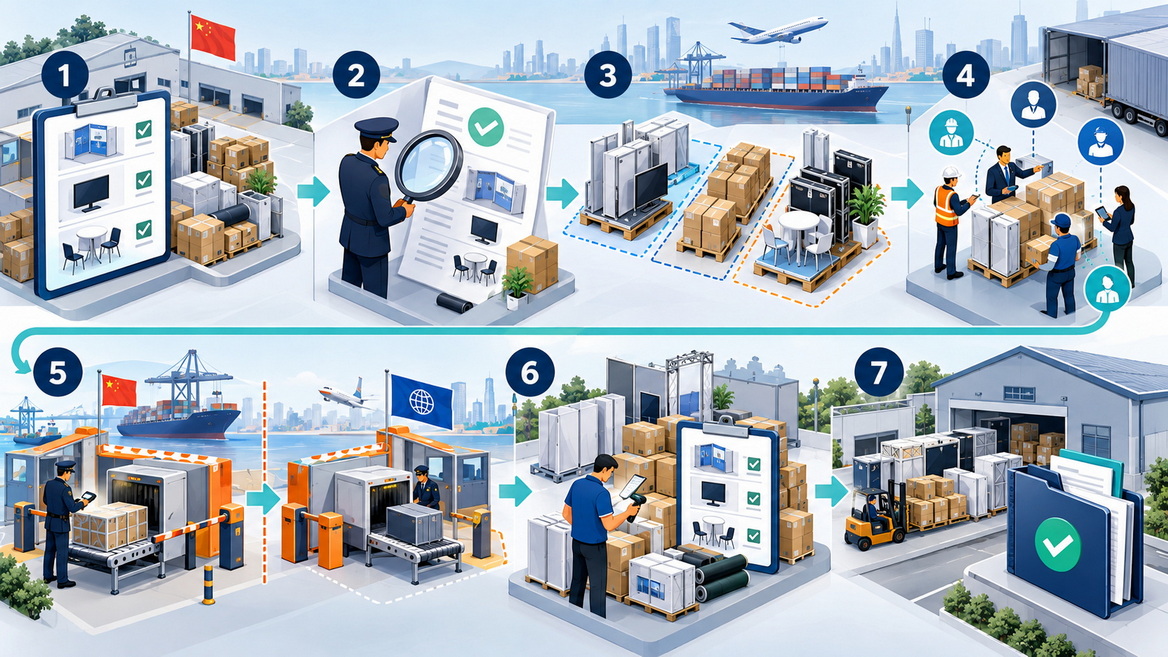
Check the destination, intended use, transit points, and return arrangements with the issuer or broker.
Confirming that a country participates in the carnet system is only the first check.
Distinguish returning equipment from consumables, giveaways, and sale items.
Keep the packing list consistent with that separation.
Identify the document holder, declaration principal, authorized representative, and person responsible for collecting customs evidence.
A freight forwarder's involvement does not automatically transfer every legal obligation.
Align supplier collection, export customs clearance, international transport, and arrival procedures.
Plan customs presentation before venue delivery. A carnet does not replace permits or product-specific controls.
Compare the packed return shipment against the admitted inventory.
Escalate missing, damaged, sold, or consumed items before dispatch. Do not assume physical damage automatically discharges customs obligations.
Arrange the required re-export and return processing.
For carnets, verify the relevant customs endorsements or digital records. For local procedures, obtain the evidence required for discharge and security release.
Keep records until the issuer or responsible broker confirms closure.
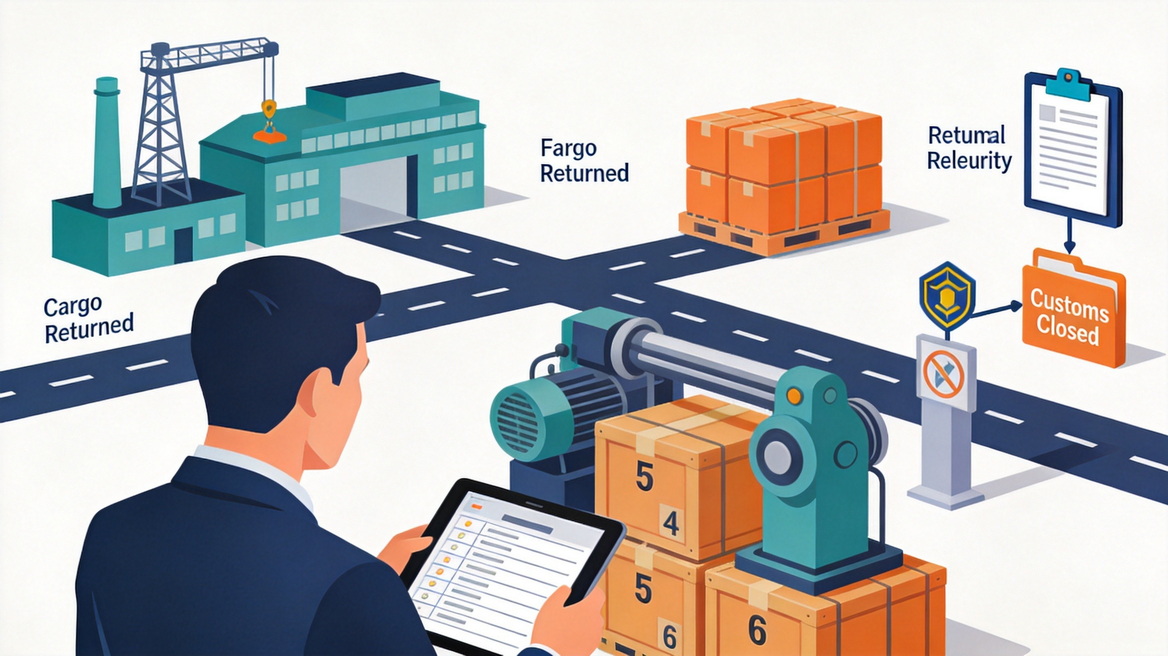
From a freight-planning perspective, delivery to the exhibition stand is only the midpoint.
The shipment is not fully resolved simply because the goods have returned to the factory. Customs evidence and guarantee closure still matter.
A useful internal tracker should include:
| Control point | Information to record |
|---|---|
| Shipment identity | Inventory version, crate numbers, and serial numbers |
| Admission | Procedure reference and admitted quantities |
| Deadline | Required re-export date |
| Return movement | Collection, departure, and arrival details |
| Closure | Customs evidence, discharge status, and security release |
This approach makes exceptions visible while there is still time to address them.
It also prevents the sales team, exhibition organizer, and logistics team from working with different assumptions about what must return.
GB FREIGHT AGENCY CO., LTD. provides shipping solutions covering supplier booking coordination, export customs clearance, international transport, and final delivery.
For exhibition cargo, our planning approach connects the goods list, destination requirements, delivery schedule, and return movement.
Our 15 years of international logistics experience supports shipments from China to Europe, North America, South America, Southeast Asia, the Middle East, Africa, and Oceania.
Contact GB Freight before booking your exhibition shipment. Share your inventory, declared values, event locations, delivery deadline, and intended return dates. Request a route-specific comparison of carnet and local temporary admission requirements, including security and closure costs.
No. It is often convenient for eligible reusable goods visiting multiple participating destinations. A local declaration may fit a single destination, an uncovered use, or a different authorized timeframe.
Potentially, yes. Confirm issuance requirements with the authorized Chinese issuing organization and verify that each destination accepts the goods and intended use.
Do not sell or deliver it without arranging an authorized customs solution. Duties, taxes, and additional documentation may apply, and the temporary admission record must be resolved.
It may require a deposit, bond, or other guarantee. Requirements depend on the jurisdiction, procedure, goods, and authorization. Obtain a written explanation before dispatch.
No. Customs may inspect the shipment or require other permits. Accurate documentation helps, but a carnet does not override product restrictions or operational delays.
The customs comparisons above draw on the following official and institutional guidance. Company background and service descriptions were supplied by GB FREIGHT AGENCY CO., LTD. The scenario and operational checklists are illustrative planning analysis, not reported customer outcomes.
1. [International Chamber of Commerce — ATA Carnet]. Supports the system's international coverage, guarantee function, and validity of up to one year. [iccwbo]
2. [HM Revenue & Customs — Apply to Import Goods Temporarily to the UK]. Updated July 1, 2026. Explains authorization methods, records, guarantees where applicable, and goods-dependent time limits. [gov]
3. [U.S. Customs and Border Protection — Temporary Importation under Bond]. Explains qualifying tariff provisions, export or destruction obligations, and the maximum overall period. [cbp]
4. [U.S. Customs and Border Protection — Trade Shows: Exhibiting a Product]. Covers exhibition documentation and the exclusion of consumed or distributed samples from carnet treatment. [help.cbp]
5. [UK Government — Applying for an ATA Carnet]. Explains goods identification, application arrangements, fees, and issuer security requirements. [gov]
6. [UK Business Growth Service — Taking Goods Temporarily out of the UK]. Explains simplification benefits and why accepted goods and uses must be checked by destination. [business.gov]


