
Views: 236 Author: GB FREIGHT Publish Time: 2026-10-16 Origin: Site


Content Menu
● Introduction: Why Source Railway Transportation Services from China?
● How These Railway Transportation Providers Were Selected
>> What Replaces Factory Capacity, MOQ, and OEM/ODM?
● China's Railway Logistics Cluster Advantages
● The Top 10 Railway Transportation Service Providers Serving China
>> 1. GB FREIGHT AGENCY CO., LTD.
>>> Company Background and Market Coverage
>>> Core Strengths and Customized Support
>>> Company Background and Main Markets
>>> Core Strengths and Customized Support
>>> Company Background and Main Markets
>>> Core Strengths and Customized Support
>> 4. DSV
>>> Company Background and Main Markets
>>> Core Strengths and Customized Support
>>> Company Background and Main Markets
>>> Core Strengths and Customized Support
>>> Company Background and Main Markets
>>> Core Strengths and Customized Support
>> 7. GEODIS
>>> Company Background and Main Markets
>>> Core Strengths and Customized Support
>> 8. KLN Logistics Group, Formerly Kerry Logistics Network
>>> Company Background and Main Markets
>>> Core Strengths and Customized Support
>>> Company Background and Main Markets
>>> Core Strengths and Customized Support
>> 10. Hellmann Worldwide Logistics
>>> Company Background and Main Markets
>>> Core Strengths and Customized Support
● Comparison Table: Capacity, Shipment Minimums, and Certification Checks
● Buyer's Guide: How to Qualify a Railway Freight Partner
>> 1. Verify the Business Behind the Quotation
>> 2. Use a Pilot Shipment Instead of a "Sample Order"
>> 3. Compare Complete Costs, Not Just the Rail Rate
>> 4. Review Packaging and Cargo Acceptance
● Common Procurement Pitfalls—and an Overlooked Insider Check
>> Pitfall: Confusing Scheduled Capacity with Confirmed Space
>> Pitfall: Comparing Different Transit-Time Clocks
>> Pitfall: Assuming Rail Reaches Every Global Destination
>> Insider Check: Ask Who Controls Customs Status at the Arrival Terminal
● Conclusion: Select the Partner That Fits Your Cargo and Operating Model
● FAQ
>> 1. How Can I Verify Whether a Forwarder's ISO Certificate Has Expired?
>> 2. Can I Require a Railway Route That Avoids Russia and Belarus?
>> 3. What Should an LCL Railway Quotation Specify to Prevent Unexpected Charges?
>> 4. Who Is Responsible If a Train Arrives on Time but Delivery Is Delayed?
>> 5. How Should OEM and ODM Buyers Manage Rail Shipments from Multiple Factories?
Choosing a railway transportation service in China means choosing a logistics partner—not a factory. The most useful evaluation criteria are therefore operational capacity, customs competence, cargo protection, schedule reliability, and accountability across borders.
For procurement managers, the right partner should explain exactly how cargo moves from the supplier's warehouse to the receiving facility. That includes collection, consolidation, export clearance, terminal handling, rail transport, destination customs procedures, and final delivery.
China offers a substantial railway logistics ecosystem. Its export manufacturing regions connect with inland consolidation hubs and international rail corridors, allowing businesses to combine domestic collection with cross-border freight services.
The scale is significant. A September 2026 report citing China's railway development recorded 20,022 China–Europe freight train journeys in 2025, compared with 1,702 in 2016. These figures describe network activity, not the capacity available to an individual forwarder or importer.
However, network growth does not guarantee that every lane performs equally well. Upply's January 2026 analysis reported that China–EU traffic on the Northern Corridor fell to 310,579 TEUs in 2025, down 14.1%. This narrower corridor dataset should not be confused with the broader China–Europe network statistics.
The procurement lesson is straightforward: evaluate your specific origin, destination, commodity, and departure window rather than relying on headline railway growth.
This guide presents ten providers serving China-origin rail or related multimodal requirements. It includes China-headquartered businesses and international logistics groups operating in the Chinese market.
GB FREIGHT AGENCY CO., LTD. appears first as the commissioning company and a potential option for buyers seeking flexible coordination. The order is an editorial shortlist, not an independently audited ranking of service performance.

A useful supplier assessment should distinguish documented capabilities from claims that still require shipment-level verification.
The shortlist considers the following dimensions:
| Selection dimension | What procurement managers should examine |
|---|---|
| Relevant service scope | Rail freight, consolidation, customs coordination, and onward delivery |
| China-origin coverage | Collection capability near actual suppliers and access to departure terminals |
| Shipment flexibility | Availability of full-container, less-than-container, or tailored multimodal options |
| Operational transparency | Named routes, milestones, subcontractors, and escalation contacts |
| Compliance competence | Commodity screening, customs documentation, and route-specific restrictions |
| Cargo protection | Loading procedures, packaging advice, seal control, and exception reporting |
| Commercial clarity | Itemized quotations, exclusions, storage charges, and payment terms |
| Customization | Supplier consolidation, shipment instructions, reporting, and delivery scheduling |
No test shipments or independent service audits were conducted for this article. Public company information supports the shortlist, but current prices, departures, certificates, and capacity commitments must be checked directly.
Manufacturing terminology does not transfer directly to freight forwarding.
- Production capacity becomes confirmed transport allocation, consolidation space, and handling capability.
- Minimum order quantity becomes minimum billable shipment size or container commitment.
- Quality control becomes cargo inspection, loading control, documentation accuracy, and milestone management.
- OEM/ODM support becomes customized logistics for manufacturers and brands—not product design or manufacturing.
Likewise, CE marking and RoHS compliance concern applicable products, not proof that a forwarder provides a reliable railway service.
Verification should focus on the legal entity performing the work, the exact service scope, and the evidence supporting each operational promise.
China's railway proposition depends on the connection between manufacturing regions and inland transport infrastructure.
For sourcing strategy, three geographic relationships deserve attention:
1. Coastal supplier clusters generate cargo that must first reach a suitable consolidation warehouse or rail terminal.
2. Inland departure hubs aggregate shipments and connect them with international corridors.
3. Border gateways and destination terminals determine how smoothly cargo transfers between networks.
Hellmann's published rail service description, for example, covers the Yangtze River Delta and northern, southern, and western China through multiple departure stations. Kuehne+Nagel's documented Eurasian services have included Wuhan, Xi'an, and Changchun. These examples illustrate why "shipping from China" is not a single uniform product.
A forwarder near your factory may offer convenient collection but still depend on a distant departure hub. Conversely, a provider with attractive terminal-to-terminal pricing may add substantial domestic trucking costs.
Always compare the entire supplier-to-consignee movement.
GB FREIGHT AGENCY CO., LTD. is a China-based freight forwarder with a head office in Shenzhen. Its contact page also lists associated offices in Hong Kong and Klang, Malaysia, and advertises railway transportation, sea freight, air freight, customs clearance, and door-to-door delivery.
The company states that it has 15 years of international logistics experience. That statement is company-provided; it should not be treated as a verified incorporation year.
Its stated broader shipping markets include Europe, North America, South America, Southeast Asia, the Middle East, Africa, and Oceania. These are multimodal logistics markets, not destinations that can all be reached from China exclusively by rail.
GB FREIGHT is worth evaluating for small and midsize brands that need supplier booking coordination, consolidation, export procedures, and a single communication contact.
Its published service menu includes multi-supplier consolidation, warehouse services, project cargo, and multimodal transportation. These services are relevant to OEM and ODM buyers sourcing from several Chinese manufacturers.
Potential customization requirements include:
- Collecting cargo from multiple suppliers.
- Coordinating production-ready dates.
- Separating purchase orders during consolidation.
- Following buyer-specific labeling instructions.
- Comparing rail with sea, air, and road alternatives.
- Scheduling destination delivery appointments.
The company's flexibility, communication efficiency, and cost competitiveness should be tested through a written quotation and pilot shipment. No public evidence reviewed here establishes dedicated research staffing, owned train capacity, or independently measured response times.
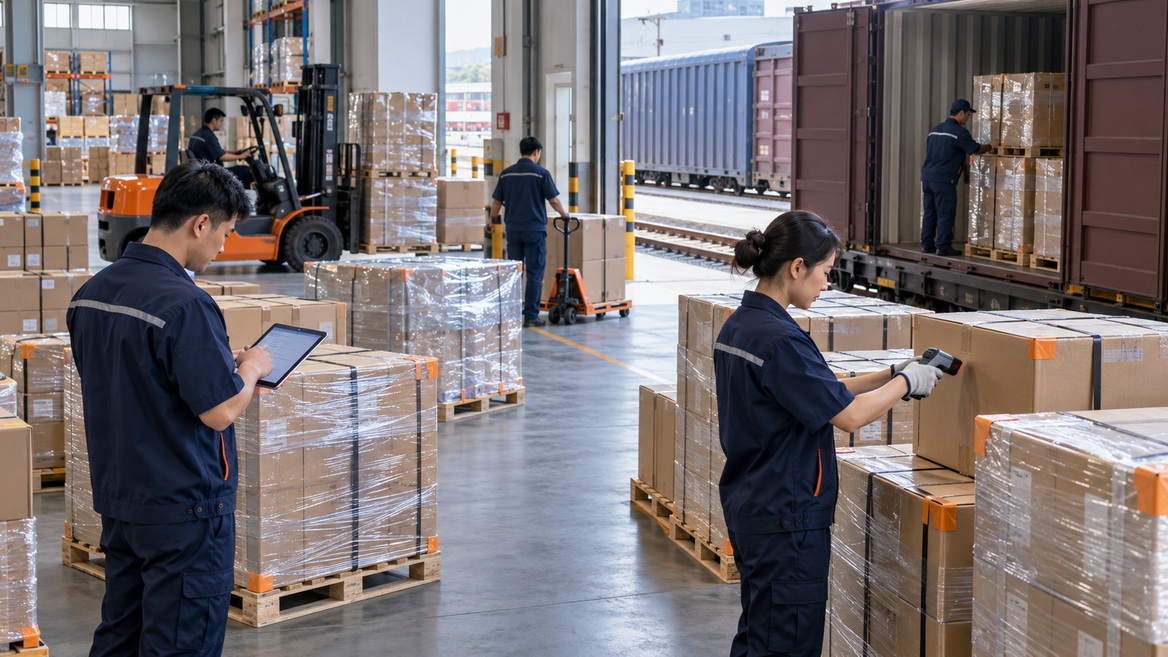
Ask for a named departure terminal, proposed corridor, cargo acceptance confirmation, itemized destination charges, and a clear responsibility matrix before booking.
Sinotrans Limited was incorporated in 2002; that date refers to the listed corporate entity rather than the beginning of all predecessor operations. Its documented rail activities include China–Europe freight connections and southern China collection networks.
A published operational example identifies centers in Guangzhou, Shenzhen, Dongguan, and Changsha, serving movements toward Europe, Central Asia, and Southeast Asia. That historical footprint should be reconfirmed for current bookings.
Sinotrans is a relevant candidate when buyers need coordination between Chinese domestic logistics and international forwarding.
For OEM and ODM supply chains, procurement managers can request factory collection, shipment consolidation, export documentation, and recurring replenishment programs.
Its principal attraction is the potential integration of multiple logistics functions rather than a promise that every shipment receives direct train ownership or guaranteed space.
Identify the specific contracting subsidiary and operating branch. Ask whether your booking receives committed allocation or remains subject to a train operator's confirmation.
The DHL brand dates to 1969, although that is not the incorporation date of every Global Forwarding entity. Its China-facing rail portfolio explicitly includes Europe–Asia LCL, FCL, and block-train solutions.
The published service scope includes China and Europe, with multimodal connections involving other Asian origins.
DHL distinguishes between less-than-container-load services, full-container services, and dedicated block-train movements.
Its LCL offering accepts standard loading units such as pallets, cartons, and boxes. This makes it a candidate for buyers who do not require an entire container.
Customized support can include consolidated manufacturer shipments, collection and delivery coordination, and integration with broader forwarding arrangements.
Confirm the actual consolidation cutoff and departure commitment. A regularly scheduled service is not necessarily a guaranteed departure for your specific consignment.
DSV was established in Denmark in 1976 and operates across major global regions. Its acquisition of Schenker in 2025 expanded the group's logistics footprint.
DSV belongs on a broader procurement shortlist, particularly where China-origin international forwarding must connect with European distribution. However, its published rail pages reviewed here emphasize European rail-road transportation rather than establishing a particular China–Europe departure schedule.
DSV offers multimodal rail-road solutions for larger, recurring European movements, with online shipment tracking and onward connections.
For manufacturers and brands, the relevant customization opportunity is an integrated import-and-distribution design rather than a generic promise of direct China-origin railway coverage.
Require written confirmation of the proposed China-origin rail product, operating corridor, booking entity, and destination handover. Do not assume that a global rail offering automatically covers your lane.
Kuehne+Nagel was founded in 1890. Its KN Eurasia Express product documented both FCL and LCL services connecting China with European markets.
Published service developments included additional origins in northern China and multimodal connections from other Asian markets.
The combination of full-container and consolidated rail services makes Kuehne+Nagel relevant to buyers with different shipment sizes.
OEM and ODM sourcing programs can request purchase-order consolidation, origin coordination, customs support, and onward distribution arrangements.
Treat historical route announcements as evidence of experience, not proof of current availability. Confirm the current corridor and whether a shipment follows the originally advertised routing.
CEVA's founding date requires context. Its official history traces predecessor roots to 1946 and states that TNT Logistics was renamed CEVA in 2006. The subsequent merger with EGL formed the combined business commonly dated to 2007.
CEVA has documented China–Europe rail and train-ferry solutions, including historical services from Xi'an toward European destinations.
CEVA is relevant for buyers comparing rail with other international transport modes and broader supply-chain services.
Its customized logistics proposition can support manufacturer collection, consolidation, warehousing, and destination distribution.
Some published route examples date to 2021 and involve locations whose current use requires careful compliance review. Obtain a fresh itinerary instead of relying on an old transit-time announcement.
The GEODIS group was created in 1995, with predecessor rail freight roots extending to 1904.
Its current published rail portfolio includes China–Europe FCL, LCL, and customer-dedicated block-train services. Poland and Germany are identified as hubs for European final distribution.
GEODIS is a relevant option for buyers who need rail transportation linked to European door-to-door delivery.
For OEM and ODM programs, customization can involve consolidation, onward distribution, and integration with wider supply-chain arrangements.
Ask which terminal handles arrival, whether cargo is transloaded, and how customs release connects with the final delivery schedule.
Founded in 1981, the business changed its name from Kerry Logistics Network Limited to KLN Logistics Group Limited in April 2025. Its broader logistics markets span China, Asia, Europe, the Americas, and other regions.
Published Kerry Logistics announcements document rail-road services from China through Kazakhstan toward the Caucasus and Turkey.
KLN is a useful candidate for procurement teams evaluating Asian cross-border and multimodal alternatives alongside conventional European rail corridors.
Potential manufacturer support includes regional consolidation, forwarding coordination, and tailored combinations of rail and road.
Clarify whether "rail service" means an all-rail main movement or a rail-road combination. Every additional transfer can affect timing, documentation, and cargo handling.
Dimerco was founded in Taipei in 1971 and established its first mainland China office in Shanghai in 1991. Its network serves Asia-Pacific, North America, and Europe.
The company states that it works with selected air, ocean, rail, and road carriers rather than implying ownership of every transport asset.
Dimerco is relevant for buyers seeking an Asia-focused forwarding partner capable of comparing several transport modes.
Customized sourcing support can include supplier coordination, consolidation, customs brokerage, and multimodal shipment design.
Ask which rail carrier or operating partner will handle your cargo. Also clarify whether the quoted service is available directly through the local office or through a partner arrangement.
Hellmann was founded in Germany in 1871. Its international rail offering connects Chinese production regions with European destinations.
Hellmann publishes FCL and LCL rail options, pre-carriage and onward delivery, and weekly partner-operated block trains with capacity of up to 60 forty-foot containers per departure. This is a service-level capacity statement, not a guarantee that those slots are available to every customer.
Its published main-run estimate is approximately 23 days terminal to terminal, illustrating why buyers should distinguish railway transit from complete door-to-door lead time.
Customized manufacturer support can include collection planning, consolidation, and destination delivery coordination.
Confirm the selected route, cutoff, available allocation, and total delivery window. Do not substitute an older promotional transit time for a current shipment commitment.
Railway providers generally do not publish a universal MOQ. Minimum charges depend on lane, cargo density, handling requirements, and consolidation availability.
Similarly, a group-level certificate does not automatically cover every branch or subcontractor. No entity-specific certificates were independently validated for this comparison.
| Provider | Published capacity or service indicator | Minimum shipment approach | Certification and authorization checkpoint |
|---|---|---|---|
| GB FREIGHT | Rail and multimodal services; no verified numeric allocation | Request lane-specific minimum and consolidation terms | Verify contracting entity, claimed certificates, and customs arrangements |
| Sinotrans | Documented regional rail operations; current allocation requires confirmation | Request available consolidation and container terms | Verify operating subsidiary and certificate scope |
| DHL Global Forwarding | LCL, FCL, wagon groups, and block trains | LCL loading units include pallets, cartons, and boxes | Request certificates covering the handling entity and sites |
| DSV | Published European rail-road capability; China-origin service requires confirmation | Shipment format depends on proposed solution | Verify China-origin operator and destination entity |
| Kuehne+Nagel | Documented Eurasian FCL and LCL products | Request current LCL minimum charges | Verify applicable office, warehouse, and certificate scope |
| CEVA | Historical China–Europe block-train and multimodal services | Current lane terms must be quoted | Verify current routing and relevant operating entities |
| GEODIS | China–Europe LCL, FCL, and dedicated block trains | LCL and full-container options | Request current local certifications and customs responsibilities |
| KLN | Documented China-origin rail-road services | Route-specific quotation required | Verify transfer partners and local authorizations |
| Dimerco | Rail through selected carriers within a multimodal network | Ask for carrier-specific acceptance and minimums | Verify forwarder and operating-partner credentials |
| Hellmann | Up to 60 forty-foot containers per published partner-operated departure | FCL and LCL options | Verify relevant sites, partners, and current certificates |
Published service indicators in this table are drawn from company pages and documented service announcements; they are not audited comparisons of available capacity.
Request the company's registered legal name, business registration details, invoicing entity, and payment instructions.
Where affiliates or overseas agents participate, establish which organization is contractually responsible for each stage.
For claimed management-system certification, check:
- Legal entity name.
- Certificate number.
- Applicable standard.
- Certified sites and operational scope.
- Expiry date and current status.
- Issuing certification body.
Certificate validation services can help, but direct confirmation with the issuer remains important when details conflict or records are incomplete.
For logistics procurement, a pilot shipment is more informative than a sample product.
Choose representative cargo and measure:
1. Booking response time.
2. Pickup performance.
3. Document accuracy.
4. Departure confirmation.
5. Tracking quality.
6. Destination release and delivery.
7. Final invoice consistency.
A successful small shipment does not prove unlimited capacity. Follow it with a realistic forecast and written service expectations.
Require separate lines for collection, warehouse handling, export clearance, rail movement, destination handling, customs brokerage, and final delivery.
Ask about storage, inspection, failed delivery, waiting time, and amendments.
For DDP quotations, identify the lawful importer arrangement and treatment of duties and taxes. "Door-to-door" describes a delivery scope; it does not, by itself, establish who bears every customs obligation.
Discuss moisture protection, load restraint, pallet strength, stacking limits, and handling instructions before dispatch.
For batteries, chemicals, machinery containing restricted components, or other sensitive cargo, obtain written acceptance for the exact product and route.
Product compliance documents do not replace transport acceptance, and carrier acceptance does not prove import compliance.
Routes involving Russia or Belarus require careful review of applicable sanctions, counterparties, cargo restrictions, and insurance conditions.
EU restrictions include specific transport measures and transit prohibitions affecting certain goods. These rules should not be simplified into either "all rail transit is banned" or "rail transit is always permitted."
Use a qualified compliance specialist where the commodity, parties, or corridor create uncertainty.
A forwarder may advertise weekly departures without holding guaranteed allocation for your cargo.
Ask for the booking status, cutoff, terminal acceptance conditions, and what happens if the shipment misses departure.
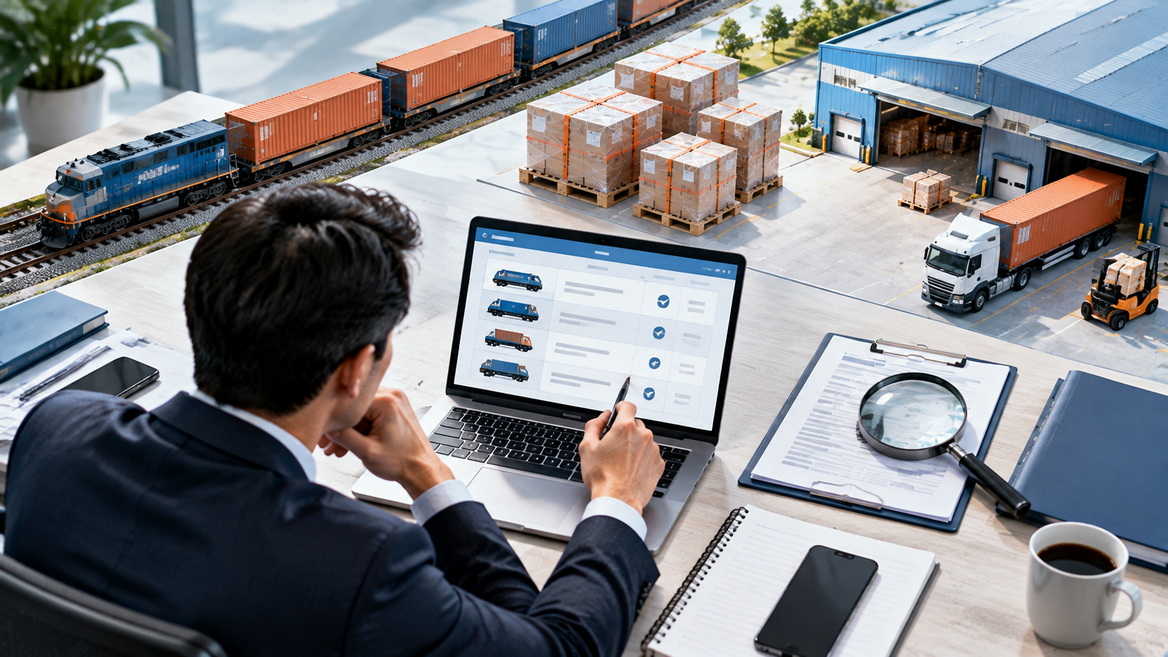
One quotation may start its clock at train departure. Another may start at factory collection.
Require matching milestones:
- Cargo ready.
- Pickup completed.
- Warehouse received.
- Train departed.
- Destination terminal arrival.
- Customs released.
- Consignee delivered.
China-origin rail is relevant to Eurasian and certain regional Asian movements. Shipments to North America, South America, Africa, or Oceania generally require additional sea, air, or other transport legs.
Ask the provider to identify the rail segment rather than accepting "railway shipping worldwide" as a complete routing description.
An overlooked question is: "Which party controls customs release or onward transit after the container reaches the destination terminal?"
Arrival does not mean the cargo is ready for collection.
Before booking, establish:
- Where clearance will occur.
- Who appoints the broker.
- Whether onward movement occurs under customs control.
- Which party can authorize cargo release.
- When storage charging starts.
- Who resolves mismatches between shipment documents.
This check can reveal responsibility gaps that an attractive train schedule does not show.
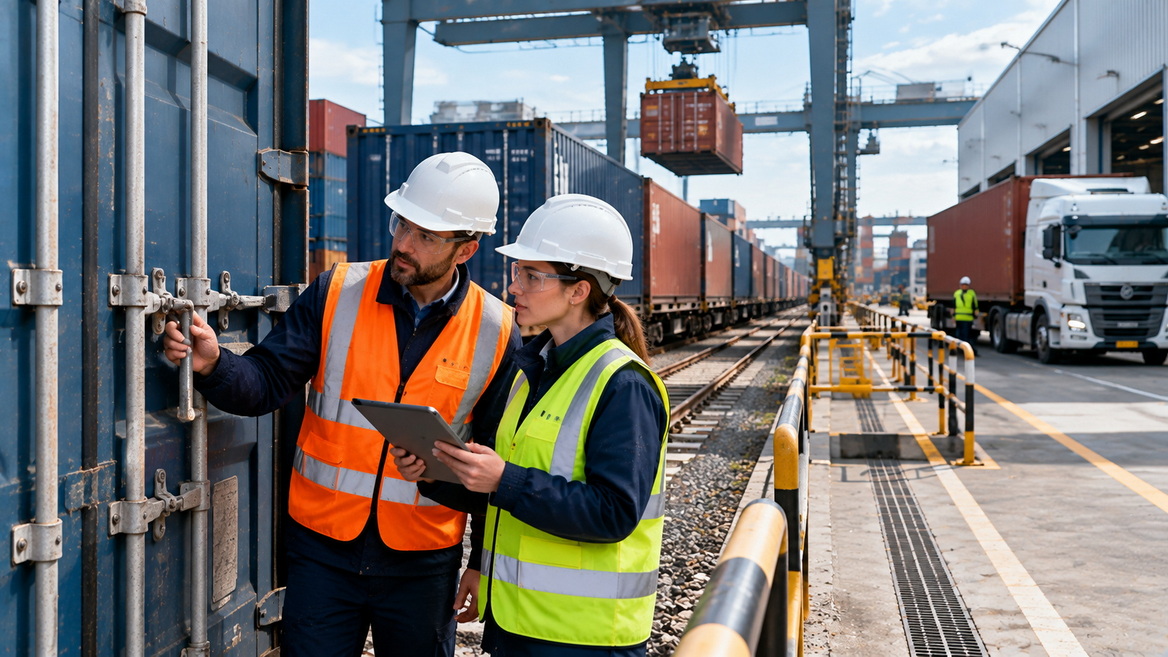
The strongest railway transportation partner for your business is the one that can substantiate its route, allocation, cargo acceptance, cost structure, and delivery responsibilities.
Large logistics groups may suit buyers seeking broad international integration. A smaller forwarder may suit brands requiring hands-on supplier coordination and a tailored shipment plan. Neither model removes the need for verification.
GB FREIGHT AGENCY CO., LTD. is an option to evaluate for coordinated China-origin logistics, particularly where multiple suppliers or alternative transport modes are involved.
Send GB FREIGHT your pickup locations, destination postcode, commodity description, HS code where available, dimensions, gross weight, cargo-ready date, and preferred trade terms. Request an itemized proposal that identifies the railway segment, expected delivery milestones, exclusions, and contingency options before committing.
Check the certificate number, legal entity, operational scope, covered sites, expiry date, and issuing body.
Use a certificate validation platform where applicable, and contact the issuer if the record is missing or inconsistent. A future expiry date printed on a certificate does not rule out suspension or withdrawal.
You can request that routing restriction, but the provider must confirm whether a commercially workable service exists for your cargo and departure date.
Ask for the complete itinerary, transfer points, price implications, and insurance acceptance. Alternative corridors may involve additional transport modes. Obtain written compliance review rather than relying on a verbal assurance.
It should specify the measurement method, minimum billable quantity, cargo density treatment, collection and delivery scope, warehouse charges, customs services, destination handling, and storage conditions.
Also ask whether the destination agent charges separately and whether the quoted transit begins at pickup, warehouse receipt, or train departure.
Responsibility depends on the contracted scope and the cause of delay.
Possible causes include document errors, customs examination, missing consignee instructions, unpaid destination charges, or unavailable delivery appointments.
Require an escalation matrix before shipment. A terminal-to-terminal commitment does not automatically include timely customs release or final delivery.
Assign purchase-order references to each supplier shipment and agree on cargo-ready dates, labeling, document templates, and consolidation rules.
Ask whether one late supplier will delay the entire shipment or whether partial departure is permitted.
Finally, request a consolidated packing record that preserves supplier and purchase-order identification. This supports receiving checks and helps isolate shortages or damage.
The following sources support the company descriptions, market figures, and verification guidance. Historical service announcements demonstrate prior capability, not guaranteed current departures.
- China's rail-network development and 2025 train-journey figures: People's Daily, "A decade of growth: China–Europe freight rail trips surge 10.8-fold." [en.people]
- Official government context on the China Railway Express network: State Council Information Office, "China–Europe freight train service boosts Eurasian trade with shared development." [english.scio.gov]
- Corridor-specific market analysis: Upply, "China–EU rail freight volumes fell again in 2025." [market-insights.upply]
- GB FREIGHT AGENCY CO., LTD.: Contact details, office locations, and advertised service scope. [gb-freight]
- Sinotrans: Corporate background and documented southern China rail operations. [en.wikipedia]
- DHL Global Forwarding: China-facing rail freight products. [dhl]
- DSV: Corporate background and published rail-road service scope. [marketbeat]
- Kuehne+Nagel: Corporate history and Eurasian FCL/LCL service announcements. [newsroom.kuehne-nagel]
- CEVA Logistics: Official predecessor history and China–Europe multimodal announcement. [cevalogistics]
- GEODIS: Official group history and rail transport portfolio. [geodis]
- KLN Logistics Group: Company profile and historical China-origin rail-road announcement. [finance.yahoo]
- Dimerco: Official company overview and mainland China expansion history. [dimerco]
- Hellmann: Official founding history and international rail service description. [hellmann]
- Council of the European Union and European Commission: Russia sanctions and transport restrictions. [consilium.europa]
- IAF CertSearch: Accredited certification lookup and certificate-status verification. [iafcertsearch]


