
Views: 269 Author: GB FREIGHT Publish Time: 2026-09-18 Origin: Site


Content Menu
● Customs Clearance Service vs Self-Clearance: The Main Difference
● What Does a Customs Clearance Service Include?
>> Common Customs Clearance Service Functions
>> Why Pre-Shipment Review Matters
>> Typical Self-Clearance Steps
● When Self-Clearance May Be a Good Option
● Risks of Self-Clearance for SME Importers
>> Common Self-Clearance Mistakes
● When a Customs Clearance Service Is the Better Choice
>> A Customs Clearance Service May Be Best If You:
● Customs Clearance Service vs Self-Clearance: Cost Comparison
>> Total Import Cost Framework
● A Practical Example for Importers Buying From China
● How to Choose the Right Customs Clearance Method
>> Ask These Questions Before Shipping
● Customs-Ready Shipping From China
>> Essential Customs-Ready Documents
● How GB FREIGHT Supports SME Importers
● Summary
>> Is self-clearance cheaper than using a customs clearance service?
>> Can an importer use a customs broker and still be responsible for customs information?
>> What documents are needed for customs clearance when importing from China?
>> Do small businesses need a customs broker?
For small and medium-sized importers, customs clearance is often one of the most important parts of the international shipping process. A shipment may leave China on time, travel smoothly by sea or air, and still face delays at the destination if customs documents, product information, or duty payments are incomplete.
When importing goods from China, businesses usually have two options: use a professional customs clearance service or manage self-clearance independently. The best option depends on the importer's experience, product type, shipment frequency, destination market, and internal resources.
For many growing businesses, customs clearance is more than a formality. It affects landed cost, delivery timing, inventory planning, customer satisfaction, and long-term import compliance. A small documentation issue can cause customs holds, storage fees, cargo examinations, delayed deliveries, or unexpected duty adjustments.
GB FREIGHT AGENCY CO., LTD. has more than 15 years of international logistics experience helping businesses ship cargo from China to destinations across Europe, North America, South America, Southeast Asia, the Middle East, Africa, and Oceania. From supplier booking coordination and China export customs declaration to international transportation, destination clearance coordination, and final delivery, we help importers create more efficient and predictable shipping processes.
This guide compares customs clearance services and self-clearance for SME importers, explains the benefits and risks of each approach, and helps businesses choose the right customs strategy before cargo leaves China.
Customs clearance is the official process required for goods to enter or leave a country. It involves declaring cargo to customs authorities, submitting relevant documents, paying applicable duties and taxes, and obtaining permission for the goods to move forward.
For imports, customs authorities use the declaration process to verify the identity, value, origin, classification, and compliance status of the goods.
A typical customs clearance process may include:
- Reviewing the commercial invoice
- Reviewing the packing list
- Checking the bill of lading or air waybill
- Confirming the importer of record
- Verifying product descriptions
- Identifying the tariff or commodity code
- Confirming the customs value
- Confirming country of origin
- Calculating duties and taxes
- Submitting the customs declaration
- Coordinating customs inspections if required
- Paying duties, taxes, and destination fees
- Receiving cargo release approval
- Arranging final delivery
For SME importers, customs clearance should be treated as a key part of supply-chain planning rather than an administrative step completed only after cargo arrives.
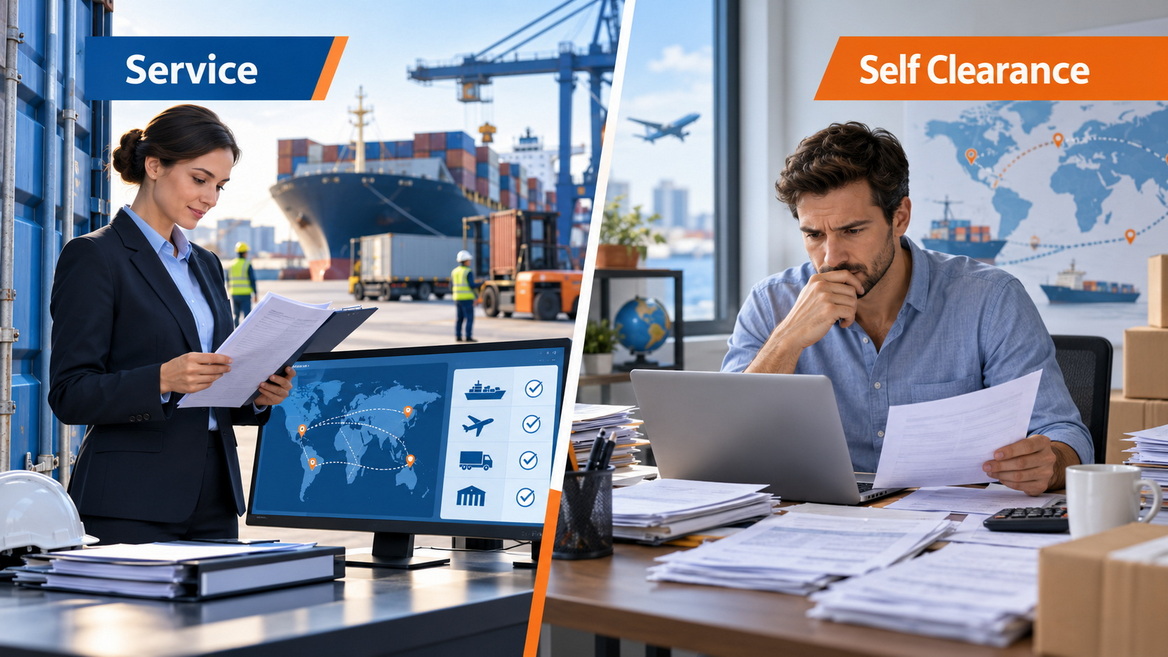
A customs clearance service involves appointing a customs broker, freight forwarder, customs agent, or local clearance partner to help prepare, submit, and manage customs documentation.
Self-clearance means the importer manages customs declarations directly. The importer or its internal team is responsible for preparing information, submitting entries, paying duties and taxes, responding to customs queries, and maintaining records.
Both options can work. However, each option requires a different level of knowledge, time, control, and operational capacity.
| Comparison Area | Customs Clearance Service | Self-Clearance |
|---|---|---|
| Upfront cost | Includes brokerage or service fees | May reduce direct service fees |
| Internal workload | Lower | Higher |
| Customs knowledge required | Moderate | High |
| Product classification support | Often available through customs specialists | Managed by the importer |
| Document review | Usually supported before filing | Fully managed internally |
| Customs communication | Often coordinated by the broker or agent | Managed directly by the importer |
| Scalability | Easier for growing import volume | Requires stronger internal systems |
| Error risk for inexperienced importers | Usually lower | Usually higher |
| Best for | New, growing, multi-market, or complex importers | Experienced importers with stable cargo profiles |
| Importer responsibility | Still remains with the importer | Fully direct responsibility |
The most important point is that a customs clearance service can assist with filing and coordination, but the importer must still provide accurate information. Product descriptions, values, origins, invoices, and supporting records should always be reviewed carefully by the importing company.
The exact scope of a customs clearance service can vary by country, cargo type, transport mode, and local customs rules. Some providers only submit customs entries. Others provide a broader service that includes documentation checks, freight coordination, customs support, and delivery planning.
For SME importers shipping from China, the most valuable customs support often begins before the goods are loaded.
A professional clearance provider may assist with:
- Reviewing commercial invoices and packing lists
- Checking whether product descriptions are sufficiently detailed
- Coordinating customs declaration instructions
- Supporting tariff code or commodity code review
- Identifying possible missing documentation
- Coordinating import duty and tax payment procedures
- Communicating with destination customs brokers
- Managing customs document requests
- Monitoring customs-release status
- Coordinating customs examinations or inspections
- Arranging cargo release and final delivery
- Supporting post-clearance documentation organization
A freight forwarder with experience in shipping from China can also help connect the customs process with supplier booking, export declaration, international transport, and destination delivery.
This coordination is valuable because customs delays often result from disconnected information. For example, the supplier may provide one product description, the commercial invoice may show another description, and the customs declaration may contain incomplete or inconsistent information.
Many customs problems can be prevented before cargo leaves China.
A pre-shipment document review may identify issues such as:
- Missing buyer or consignee information
- Incorrect product quantities
- Unclear item descriptions
- Incomplete material details
- Incorrect declared value
- Missing country-of-origin information
- Missing product certificates
- Inconsistent shipping terms
- Unclear importer-of-record details
- Missing commodity codes
Correcting these issues before shipment is usually easier and less expensive than correcting them after cargo arrives at a port, airport, or bonded warehouse.
Self-clearance is when an importer completes customs procedures without appointing an external broker or clearance agent to file the import declaration.
The importer handles the process through the relevant customs platform, national customs system, or authorized electronic filing method.
For a small business, self-clearance may appear attractive because it can reduce direct customs brokerage fees. However, the importer must invest time and attention in understanding procedures, registrations, tariff classifications, documentation requirements, customs valuation, duty payment rules, and recordkeeping obligations.
1. Register the company with the relevant customs authority.
2. Obtain required importer, tax, or customs identification numbers.
3. Prepare the commercial invoice, packing list, and transport documents.
4. Confirm the correct product classification.
5. Confirm customs value and country of origin.
6. Check whether licenses, permits, certificates, or product approvals are required.
7. Submit the customs declaration.
8. Pay import duties, taxes, and relevant charges.
9. Respond to customs questions, document requests, or inspection notices.
10. Keep declaration records and supporting documents for future review.
For importers with experienced staff and standardized products, this process can become manageable. However, for first-time importers or businesses with multiple product categories, self-clearance can create a significant administrative workload.
Self-clearance can work well when the importer has a stable and simple import process.
It may be suitable when:
- The business imports the same products regularly.
- Product classification is already confirmed.
- The supplier provides consistent documentation.
- Cargo enters the same country through predictable trade lanes.
- Shipment volumes are high enough to justify internal customs resources.
- The company has employees trained in customs documentation.
- The importer has a reliable system for records and document control.
- The goods are not heavily regulated.
- The company can respond quickly to customs queries.
For example, a distributor importing one established product line from the same supplier every month may eventually develop enough internal experience to manage customs declarations directly.
However, the importer should still periodically review classification, origin, value, product regulations, and duty treatment. Customs requirements can change, and a previously accepted process may not always remain appropriate.
Self-clearance may offer several advantages:
- Lower direct customs-brokerage costs
- More direct control over declaration data
- Greater visibility into duty and tax calculations
- Faster internal learning about import procedures
- More control over customs records
- Potential long-term savings for large and predictable import programs
For experienced importers, self-clearance can become part of a broader internal trade-compliance program.
The biggest challenge with self-clearance is not filing a declaration. The challenge is filing a complete, accurate, and well-supported declaration every time.
Customs declarations require detailed information. This may include product descriptions, commodity codes, value, origin, transport details, seller details, buyer details, customs procedure codes, licenses, and supporting documents.
A simple error can create delays or additional costs.
- Using vague product descriptions such as "parts," "items," or "samples"
- Using an incorrect tariff classification
- Declaring an incorrect customs value
- Confusing shipping origin with country of origin
- Using supplier-provided tariff codes without verification
- Missing import permits or product certificates
- Filing declarations too late
- Failing to pay duties and taxes on time
- Missing customs messages or requests for documents
- Not retaining records in an organized system
- Assuming a freight forwarder has automatically completed customs filing
- Failing to account for cargo examinations, storage, or port charges
These problems can affect more than one shipment. Repeated errors can create long-term compliance risks and make future imports more difficult to manage.
For SME importers, the key question is not simply, "Can we self-clear?" The more useful question is, "Do we have the systems, experience, and time to self-clear accurately and consistently?"
A customs clearance service is often the more practical option for first-time importers, rapidly growing businesses, businesses importing into multiple countries, and companies dealing with complex or regulated goods.
It can also be useful for importers that have strong purchasing and sales teams but do not yet have an internal customs specialist.
- Import goods from China for the first time
- Ship to several countries or regions
- Import multiple product categories
- Import products with technical specifications
- Import machinery, electronics, chemicals, food, cosmetics, or medical-related products
- Need support with document review
- Do not have staff dedicated to customs procedures
- Need help coordinating customs clearance and final delivery
- Want to reduce customs-related operational workload
- Need a more scalable import process as order volume grows
A customs clearance service can help improve visibility across the shipment journey. Instead of separately managing the factory, supplier, freight forwarder, carrier, broker, warehouse, and trucking company, the importer can work through a more coordinated process.
This does not mean the importer should ignore customs data. The importer should remain involved in reviewing product information, values, origins, and documents. The best results come from collaboration between the importer, supplier, freight provider, and customs specialist.
Many importers choose self-clearance because they want to save money. This is understandable, but direct brokerage fees are only one part of the total import cost.
The real comparison should include the cost of delay, internal labor, customs errors, documentation corrections, storage fees, and disrupted delivery schedules.
A practical way to compare the two options is:
Total Import Cost=Product Cost+International Freight+Duties and Taxes+Customs Service Cost+Destination Charges+Delay and Risk Cost
Delay and risk costs may include:
- Port storage fees
- Airport storage fees
- Demurrage charges
- Detention charges
- Customs examination costs
- Documentation amendment fees
- Emergency trucking charges
- Warehouse appointment changes
- Missed customer delivery dates
- Internal staff time
- Lost sales caused by stock shortages
A company may save a small customs brokerage fee through self-clearance but lose more money if a document error delays a shipment for several days.
On the other hand, a mature importer with stable product data, frequent shipments, and trained staff may find that self-clearance offers long-term operational savings.
The correct choice depends on the overall business situation, not only on the clearance fee.
Imagine that a small importer in Europe purchases consumer products from two Chinese suppliers.
The business imports:
- Five different product types
- Mixed materials and product designs
- Several carton sizes
- Goods from different factories
- New products every quarter
- Seasonal inventory with strict delivery dates
The company may initially consider self-clearance to reduce customs costs. However, the business must manage product classification, country-of-origin details, invoice consistency, product descriptions, import VAT handling, customs declarations, and delivery coordination.
If a customs officer requests more technical information about one product, the importer must quickly gather the details from the Chinese supplier. Time-zone differences and incomplete factory documentation can slow the process.
For this type of importer, a customs clearance service is usually the more efficient choice. The external logistics team can coordinate documents before departure, communicate with the destination clearance partner, and help identify missing information earlier.
Now consider another company importing one standard industrial component from one long-term Chinese supplier every month. The component has a confirmed commodity code, stable product value, clear technical specifications, and no special import license requirement.
This business may eventually be able to self-clear efficiently if it has trained staff and a reliable internal process.
The difference is not company size alone. The difference is the level of product, shipment, and compliance complexity.
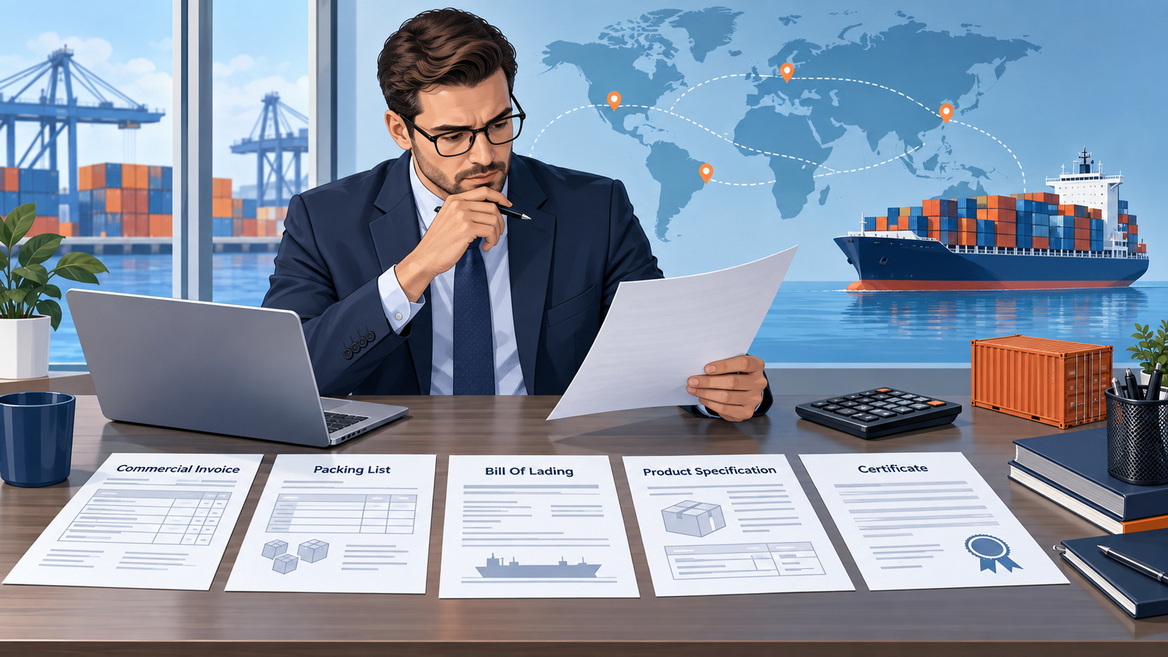
Before selecting self-clearance or a customs clearance service, importers should evaluate their actual resources and shipment risks.
1. Do we know who will act as the importer of record?
The importer of record is generally responsible for customs-related obligations, including duty and tax payment, declaration accuracy, and document retention.
2. Do we have accurate product information?
Product name, material, function, use, model number, composition, and country of origin may all affect customs treatment.
3. Have we confirmed the commodity code?
A tariff classification should be based on the actual product, not only on a supplier's previous export practice.
4. Do we understand customs value requirements?
The declared value should be supported by commercial records and should reflect the applicable customs valuation rules.
5. Are import licenses or certificates required?
Some product categories may require permits, test reports, safety documents, health certificates, labeling records, or product registrations.
6. Can our internal team respond quickly to customs questions?
Customs delays can become more expensive when information is not available quickly.
7. Do we have a recordkeeping system?
Import declarations, invoices, packing lists, transport documents, certificates, and payment evidence should be stored in an organized way.
8. How important is delivery timing?
If the shipment supports a customer launch, retail promotion, factory production schedule, or seasonal sales period, reducing customs delay risk may be more valuable than saving a brokerage fee.
9. Are we shipping to more than one country?
Multi-country importing requires more awareness of different rules, tax systems, customs processes, and documentation requirements.
10. Do we have a trusted logistics partner in China?
A reliable freight forwarder can help coordinate supplier documents, export customs procedures, international freight, customs clearance support, and final delivery.
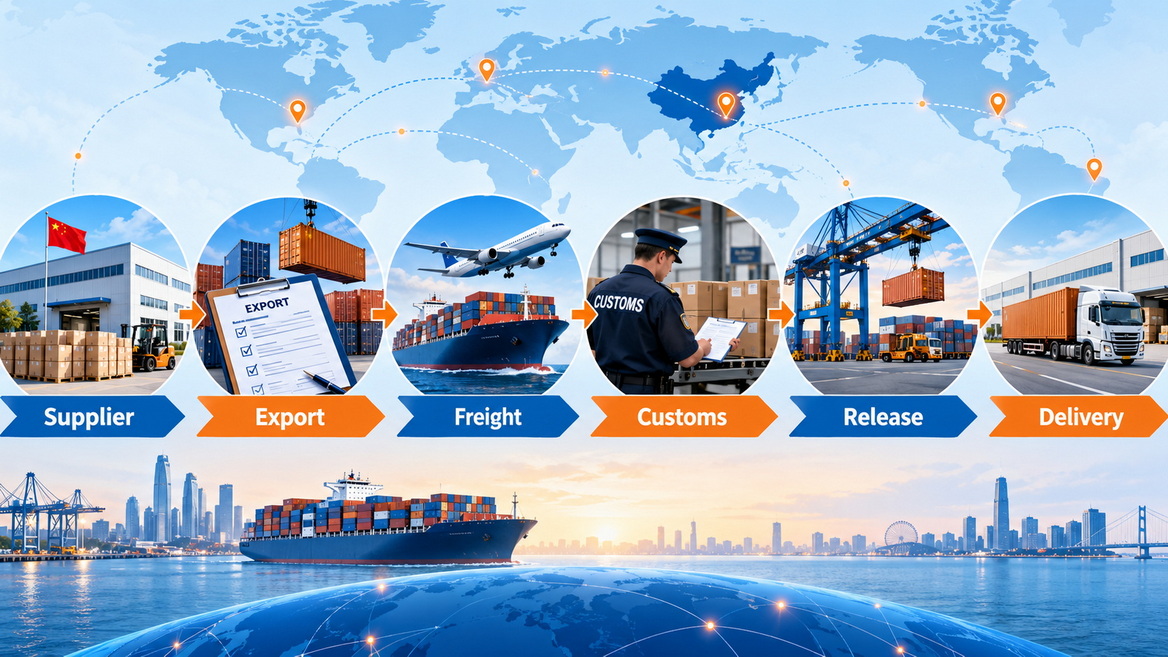
For businesses importing from China, customs success begins with supplier coordination.
Before booking transportation, the supplier should understand what documents are needed, what information must appear on invoices, how products should be described, and who will be responsible for destination customs clearance.
A customs-ready shipment should include accurate and consistent information across all key documents.
- Commercial invoice
- Packing list
- Bill of lading or air waybill
- Purchase order
- Product specification sheet
- Country-of-origin information
- Tariff or commodity code information
- Importer-of-record details
- Tax or customs registration number
- Product certificates where required
- Permit or license documents where required
- Payment records where relevant
- Shipping terms and Incoterms information
The commercial invoice deserves special attention. It should clearly describe what the goods are, how they are used, how many units are included, their unit value, total value, currency, seller, buyer, and shipping terms.
For example, "plastic parts" may be too vague for customs purposes. A stronger description may be: "Injection-molded polypropylene storage-bin lids for household organization products, 2,000 units."
Specific descriptions help customs authorities understand the cargo and help importers support correct classification.
GB FREIGHT AGENCY CO., LTD. provides international freight solutions for businesses moving cargo from China to markets worldwide.
With more than 15 years of international logistics experience, our team supports customers throughout the shipping process, including:
- Supplier booking coordination
- Cargo pickup planning
- China export customs declaration support
- Sea freight arrangements
- Air freight arrangements
- Rail and multimodal shipping options
- Documentation coordination
- Destination customs-clearance coordination
- Shipment tracking
- Final-delivery coordination
Our focus is to help importers create a more organized shipping process from supplier to destination.
For SMEs, early coordination can make a major difference. Reviewing shipping documents before cargo departs from China gives the importer more time to correct missing details, confirm clearance responsibilities, prepare destination documentation, and avoid preventable delays.
A well-planned shipment is usually easier to clear, easier to track, and easier to deliver.
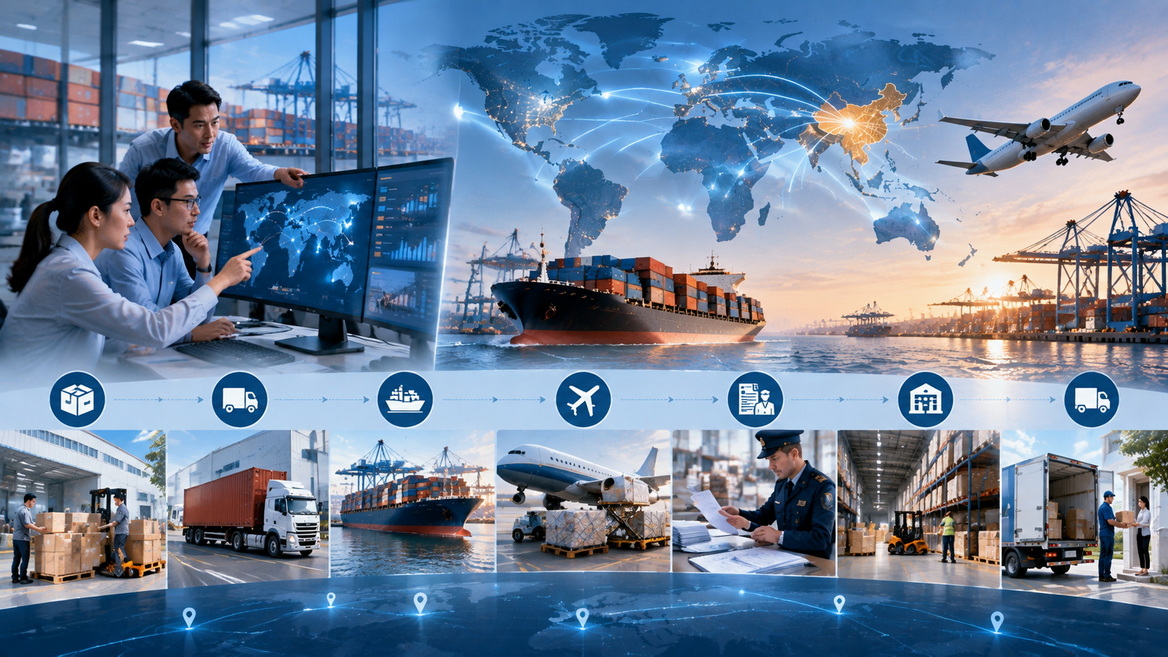
Choosing between a customs clearance service and self-clearance depends on your company's experience, product complexity, shipment volume, destination markets, and internal resources.
Self-clearance may be suitable for experienced importers with stable products, reliable suppliers, trained staff, and strong internal customs processes. It may offer greater control and reduce direct brokerage costs.
However, customs clearance services are often the better option for first-time importers, fast-growing SMEs, businesses importing multiple products, companies shipping to several countries, and importers dealing with regulated or time-sensitive cargo.
The best customs strategy is not simply the cheapest option. It is the option that helps your business move goods legally, accurately, efficiently, and predictably.
For shipments from China, early customs preparation is essential. Review documents before booking, verify product details before departure, and ensure that your freight, customs, and final-delivery plans work together as one process.
GB FREIGHT AGENCY CO., LTD. helps businesses coordinate international freight from China, including supplier booking, export customs procedures, transportation planning, destination customs-clearance coordination, and final delivery. A clear logistics plan can help reduce uncertainty and support smoother global trade.
Self-clearance may reduce direct broker or service fees, but it is not always cheaper overall. Importers should also consider employee time, customs system access, training, documentation preparation, possible corrections, port storage, cargo delays, and delivery disruptions.
Yes. Even when a broker or customs agent submits a declaration, the importer should remain responsible for providing accurate product details, commercial values, country-of-origin information, documents, and supporting records.
Common documents include a commercial invoice, packing list, bill of lading or air waybill, importer information, product details, commodity code information, country-of-origin information, and any required permits or certificates. Requirements vary by destination country and product category.
China export customs clearance is the process of declaring goods before they leave China. Destination import customs clearance happens when goods arrive in the importing country or customs territory. Import clearance may involve local duties, taxes, permits, inspections, product regulations, and delivery-release procedures.
Not every small business is legally required to use a customs broker. However, a customs broker or customs clearance service can be valuable when the importer lacks customs experience, imports multiple products, ships to several countries, or handles goods that require special documents or permits.
1. U.S. International Trade Administration. [Customs Brokers and Freight Forwarders]
2. U.S. International Trade Administration. [Trade Guide: Customs Valuation]
3. European Commission, Taxation and Customs Union. [Economic Operators Registration and Identification Number]
4. GOV.UK. [Get Someone to Deal With Customs for You]
5. GOV.UK. [Making a Full Import Declaration]
6. GOV.UK. [Making an Entry Summary Declaration]
7. Canada Border Services Agency. [Licensed Customs Brokers]
8. U.S. Customs and Border Protection. [Recordkeeping Requirements and Importer Responsibilities]
9. U.S. International Trade Administration. [Colombia: Import Requirements and Documentation]


