
Views: 283 Author: GB FREIGHT Publish Time: 2026-09-19 Origin: Site


Content Menu
● Why Global Freight Needs Better Connection
>> Common Challenges in Fragmented Freight Operations
● How Freight Platforms Connect Shippers, Carriers, and Agents
>> Centralized Shipment Information
>> Role-Based Access for Better Coordination
>> Shipment Milestones That Matter
>> Better Document Collaboration
● The Important Role of a China Freight Forwarder
>> Supplier Booking and Pickup Coordination
>> Railway Transportation From China
● LCL Consolidation for Small and Medium Shipments
>> When LCL Shipping Is a Good Option
>> Important LCL Considerations
● Customs Clearance and Accurate Documentation
>> Understanding Incoterms® Before Shipment
● A Practical Shipping Workflow From China
>> Step 1: Prepare Complete Cargo Information
>> Step 2: Choose the Right Transport Method
>> Step 3: Confirm Booking and Shipping Instructions
>> Step 4: Track Operational Milestones
>> Step 5: Review Each Shipment After Delivery
● Connecting Digital Visibility With Practical Logistics Experience
● Ship From China With a Connected Logistics Partner
>> What is the purpose of a freight platform?
>> What is the difference between a freight platform and a freight forwarder?
>> When should I use LCL shipping from China?
>> Is air freight faster than sea freight?
>> Can a freight forwarder arrange customs clearance in China?
International shipping involves far more than moving cartons from one point to another. A shipment from China to Europe, North America, South America, Southeast Asia, the Middle East, Africa, or Oceania may pass through suppliers, trucking providers, warehouses, port terminals, airlines, shipping lines, rail operators, customs authorities, destination agents, and last-mile delivery partners.
When those parties work in separate systems, shipment information can become fragmented. Documents may be delayed. Cargo-ready dates may change without notice. A booking may be missed because the supplier did not receive the cut-off time. Customs clearance can be slowed by inconsistent cargo descriptions or incomplete paperwork.
Freight platforms help solve these challenges by connecting every relevant participant through one shared logistics workflow. They centralize shipment data, improve communication, support document management, and provide clearer milestone visibility.
For importers and exporters, however, digital tools are only part of the solution. The successful movement of cargo still depends on logistics professionals who can coordinate suppliers, secure appropriate transport capacity, manage customs documentation, respond to disruptions, and arrange final delivery.
GB FREIGHT AGENCY CO., LTD. has 15 years of international logistics experience supporting companies that ship goods from China to global markets. Our services include sea freight, air freight, railway transportation, customs clearance, warehousing, Less than Container Load (LCL) consolidation, and door-to-door delivery services.
From supplier booking coordination and export documentation to international transport and delivery at destination, we help customers choose practical and cost-effective freight solutions based on their cargo, timeline, budget, and destination requirements.
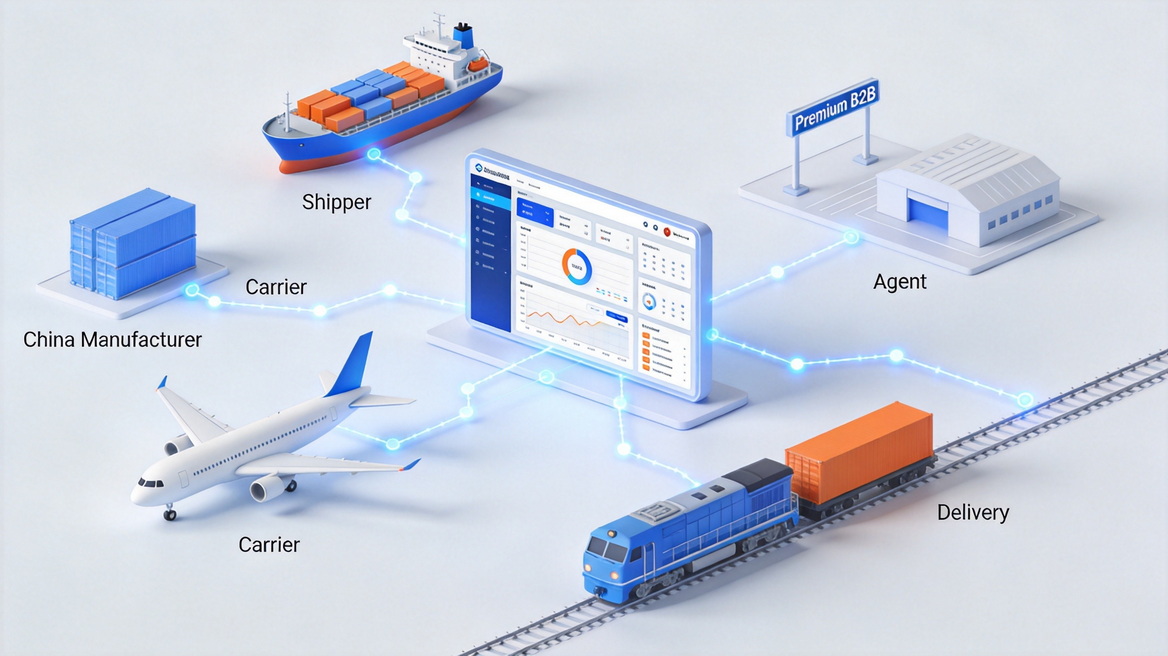
A freight platform is a digital system that connects the parties involved in cargo transportation. It gives shippers, carriers, freight forwarders, agents, warehouses, and customs teams a shared place to exchange information and manage shipment progress.
Instead of depending entirely on separate emails, spreadsheets, phone calls, and messaging applications, users can access key shipment details in a more organized way.
A freight platform may include functions such as:
- Shipment booking management
- Cargo-ready date confirmation
- Supplier coordination
- Freight quotation support
- Document uploading and sharing
- Container, flight, or railway booking records
- Shipment milestone tracking
- Customs documentation workflows
- Warehouse receiving updates
- Delivery status and proof of delivery
- Reporting and performance analysis
The main goal is simple: ensure that the right people receive the right shipment information at the right time.
A platform does not physically move cargo. It supports the people and companies that do. The actual shipment still requires freight planning, carrier coordination, warehouse handling, customs processes, and destination delivery management.
International logistics is a multi-party process. A shipment can involve many companies, different transport modes, several documents, and multiple handovers before it reaches the final consignee.
For example, a buyer importing products from several suppliers in China may need to coordinate:
- Factory production completion
- Cargo pickup scheduling
- Warehouse receiving
- Carton and pallet verification
- LCL consolidation or container loading
- Export customs clearance
- Ocean, air, or railway transportation
- Transshipment handling
- Destination customs clearance
- Local delivery appointment booking
- Final proof of delivery
Without a shared workflow, important information can be missed or misunderstood.
| Challenge | What Can Happen | Potential Result |
|---|---|---|
| Separate communication channels | Suppliers, carriers, and agents receive different instructions | Delayed pickups or booking mistakes |
| Manual data entry | Cargo details are repeatedly copied into different documents | Incorrect weights, dimensions, or product descriptions |
| Limited shipment visibility | The buyer receives updates only after a delay occurs | Weak inventory and delivery planning |
| Incomplete documentation | Commercial invoices and packing lists do not match | Customs delays or additional charges |
| Unclear responsibility | Each party believes another party is handling a task | Missed cut-off dates and operational gaps |
| Poor exception management | Problems are identified too late | Higher costs and missed delivery deadlines |
A connected logistics process helps reduce these risks. It creates a clearer record of shipment instructions, deadlines, documents, and operational milestones.
For businesses importing from China, this becomes especially important when working with multiple suppliers, managing seasonal demand, replenishing overseas inventory, or serving customers who require dependable delivery schedules.
Freight platforms connect logistics stakeholders through shared data, controlled access, operational milestones, document collaboration, and system integrations.
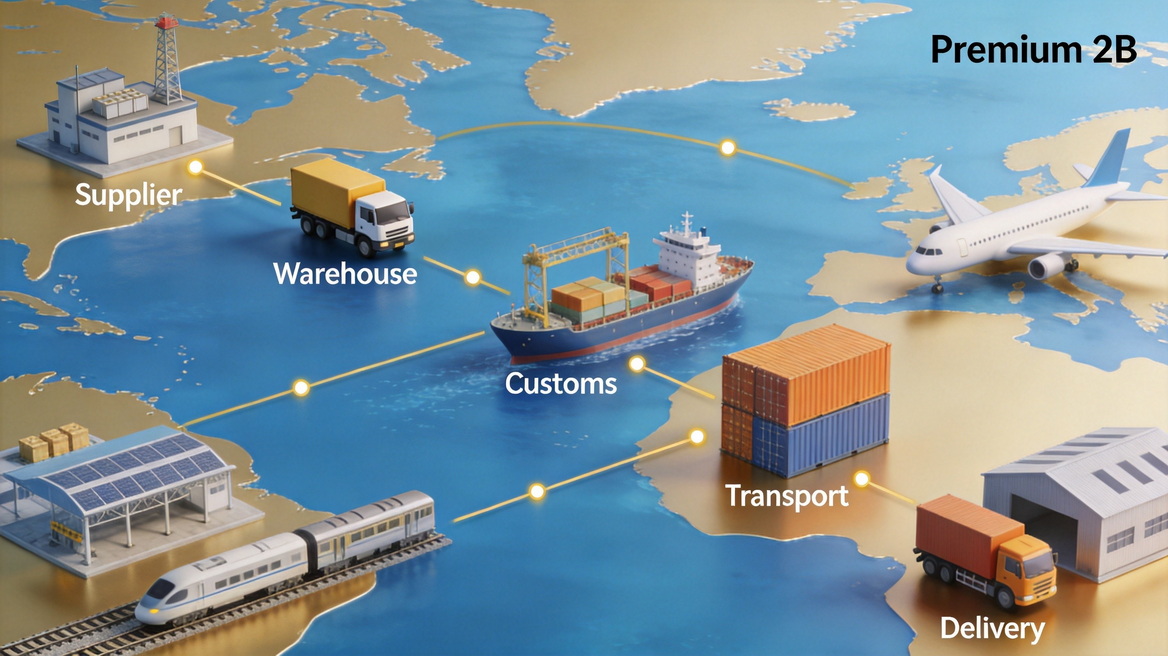
The first benefit of a freight platform is that it brings shipment information into one location.
A complete shipment record may include:
- Supplier name and pickup address
- Consignee details and destination address
- Cargo description
- Number of cartons, pallets, or packages
- Cargo dimensions and gross weight
- Product value and customs information
- Incoterms® rule
- Cargo-ready date
- Booking reference number
- Container number or air waybill number
- Departure and arrival schedules
- Customs documents
- Delivery instructions
- Contact details for relevant parties
When these details are managed consistently, shippers can reduce repetitive communication and minimize the risk of conflicting information.
For example, if a supplier changes the number of cartons after a booking has been made, the freight forwarder can review whether the cargo still fits the planned transport arrangement. This is important for LCL consolidation, container loading, air freight chargeable weight calculations, and local delivery planning.
Different logistics stakeholders need different types of information.
A shipper may want to see shipment progress, documentation status, expected arrival, and final delivery updates. A supplier may need pickup instructions and carton-label requirements. A carrier may need booking details and cargo readiness confirmation. A destination agent may need documents before import customs clearance begins.
Role-based access makes this possible.
| Logistics Party | Main Responsibilities | Information Needed |
|---|---|---|
| Shipper or importer | Plans transport and receives cargo | Cost, schedule, documents, milestones, delivery status |
| Supplier or exporter | Prepares cargo for collection | Pickup instructions, labels, packing requirements, cut-off dates |
| Freight forwarder | Coordinates the shipment | Full cargo data, booking status, documents, routing, agent communication |
| Carrier | Moves cargo by sea, air, rail, or road | Booking data, cargo specifications, loading instructions |
| Warehouse | Receives, stores, consolidates, or prepares cargo | Arrival notices, packing details, cargo-handling requirements |
| Customs team | Prepares export or import formalities | Product descriptions, values, HS codes, invoices, packing lists |
| Destination agent | Arranges clearance and final delivery | Arrival information, release documents, consignee delivery instructions |
This structure allows each party to focus on its assigned responsibilities while remaining connected to the overall shipment process.
A useful freight workflow should track real operational events, not only estimated arrival dates.
A strong shipment timeline often includes the following milestones:
1. The supplier confirms that the cargo is ready.
2. The freight forwarder confirms the booking.
3. Cargo is collected from the supplier or delivered to a warehouse.
4. The warehouse receives, measures, inspects, labels, or consolidates the cargo.
5. Export customs clearance is completed.
6. Cargo is loaded onto a vessel, aircraft, railway service, or truck.
7. The shipment departs China.
8. The shipment arrives at a transshipment hub or destination port.
9. Import customs clearance begins or is completed.
10. Cargo is released for local transportation.
11. Final delivery is completed and proof of delivery is recorded.
These milestones help companies plan purchasing, inventory, warehouse labor, customer communication, and production schedules more effectively.
Shipping documents can determine whether a shipment moves smoothly or becomes delayed.
Freight platforms can help organize and share documents such as:
- Commercial invoices
- Packing lists
- Bills of lading
- Air waybills
- Certificates of origin
- Export declarations
- Cargo insurance certificates
- Customs documents
- Delivery orders
- Proof of delivery
Document consistency is important. The product name, quantity, weight, carton count, declared value, and tariff classification should align across the relevant paperwork.
Even a small mismatch can create questions during customs review or at a destination warehouse. For this reason, document preparation should be treated as an operational task, not simply administrative paperwork.
A freight platform can improve visibility, but it does not replace the day-to-day work required to move cargo internationally.
An experienced freight forwarder acts as the operational coordinator between the shipper, suppliers, carriers, warehouses, customs teams, and destination agents.
GB FREIGHT AGENCY CO., LTD. provides international freight solutions for businesses shipping cargo from China to global destinations. We support customers throughout the logistics process, including supplier coordination, booking, export customs clearance, international transportation, warehousing, and final delivery.
Many freight delays begin before cargo reaches a port or airport.
A supplier may complete production later than expected. Carton dimensions may be different from the original estimate. Cargo may not be properly labeled. The factory may not understand a booking deadline. Several suppliers may need to deliver cargo to the same consolidation warehouse.
A professional China freight forwarder can coordinate these steps before they become costly problems.
Supplier coordination may include:
- Confirming cargo-ready dates
- Checking pickup addresses and contact details
- Verifying package quantity, dimensions, and weight
- Coordinating factory pickup or supplier delivery to a warehouse
- Sharing packing and shipping-mark requirements
- Monitoring booking and document cut-off times
- Arranging LCL consolidation for goods from different suppliers
- Confirming cargo arrival at the warehouse
For buyers sourcing from multiple factories, proper origin coordination can reduce fragmented shipments and help consolidate cargo into a more economical transport plan.
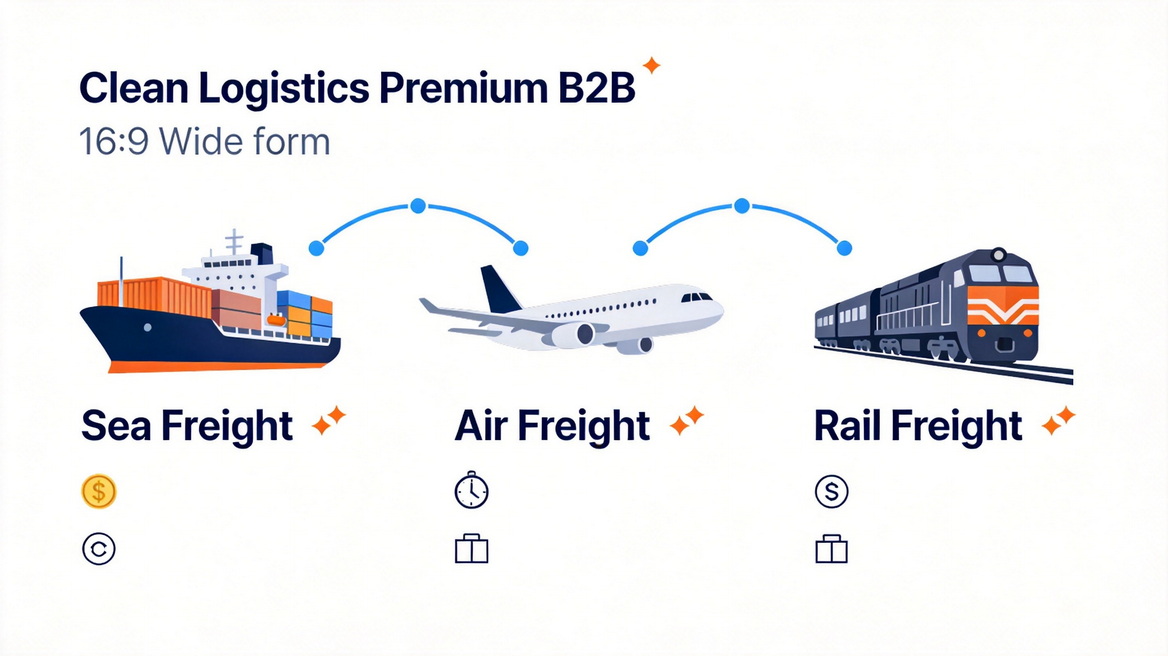
Sea freight is generally suitable for large-volume, heavy, non-urgent, or containerized shipments. It remains one of the most widely used methods for moving goods between China and overseas markets.
Sea freight options can include:
- Full Container Load (FCL)
- Less than Container Load (LCL)
- Standard 20-foot and 40-foot containers
- 40-foot high-cube containers
- Reefer containers for temperature-sensitive products
- Special equipment for oversized or project cargo
- Port-to-port freight
- Port-to-door services
- Door-to-door delivery
FCL is often the right option when a shipper has enough cargo to use a container efficiently. It offers more control over loading and can reduce handling compared with shared-container freight.
LCL is more suitable for smaller shipments that do not fill a container. Goods from multiple shippers are consolidated into one container and separated again at destination.
Sea freight planning should consider more than the ocean freight rate. A complete comparison should also include:
- Origin trucking or warehouse charges
- Export customs clearance
- Documentation fees
- Terminal handling charges
- Destination port costs
- Customs clearance requirements
- Duty and tax obligations
- Local delivery charges
- Container free-time conditions
- Potential storage or demurrage exposure
The lowest initial quote is not always the lowest total cost. A transparent freight solution should explain what is included, what is excluded, and which charges may vary based on the shipment's actual handling requirements.
Air freight is suitable for time-sensitive, high-value, lightweight, seasonal, or urgent shipments.
It is commonly used for:
- Product samples
- Electronics
- Fashion goods
- Replacement parts
- Medical-related products
- Urgent manufacturing components
- ECommerce inventory replenishment
- Product-launch cargo
Air freight offers faster movement than sea freight, but the final door-to-door timeline still depends on cargo readiness, airport cut-off times, security screening, customs clearance, and local delivery scheduling.
Air freight charges are typically based on chargeable weight. This means that large but lightweight cargo may be charged according to its volume rather than its actual scale weight.
Before booking air freight, shippers should confirm:
- Actual gross weight
- Carton dimensions
- Chargeable weight
- Product classification
- Any battery, liquid, magnetic, or dangerous-goods restrictions
- Cargo-ready date
- Airport of departure
- Airport or door delivery destination
- Customs and delivery requirements
A well-planned air freight shipment helps businesses avoid expensive last-minute choices and unexpected charges.
Railway transportation can be a useful option for selected China–Europe trade lanes. It may provide a balance between ocean freight cost and air freight speed for cargo that is suitable for rail movement.
Rail freight may be appropriate when:
- Cargo is heading to an eligible European destination.
- The shipment is time-sensitive but cannot justify air freight cost.
- The product is suitable for rail transport.
- The shipper can plan ahead for border and terminal processes.
- The final delivery location can be connected efficiently from the railway terminal.
Rail services can vary based on origin city, destination city, routing, border procedures, equipment supply, seasonal demand, and geopolitical conditions. Freight planning should therefore be route-specific rather than based on general transit-time assumptions.
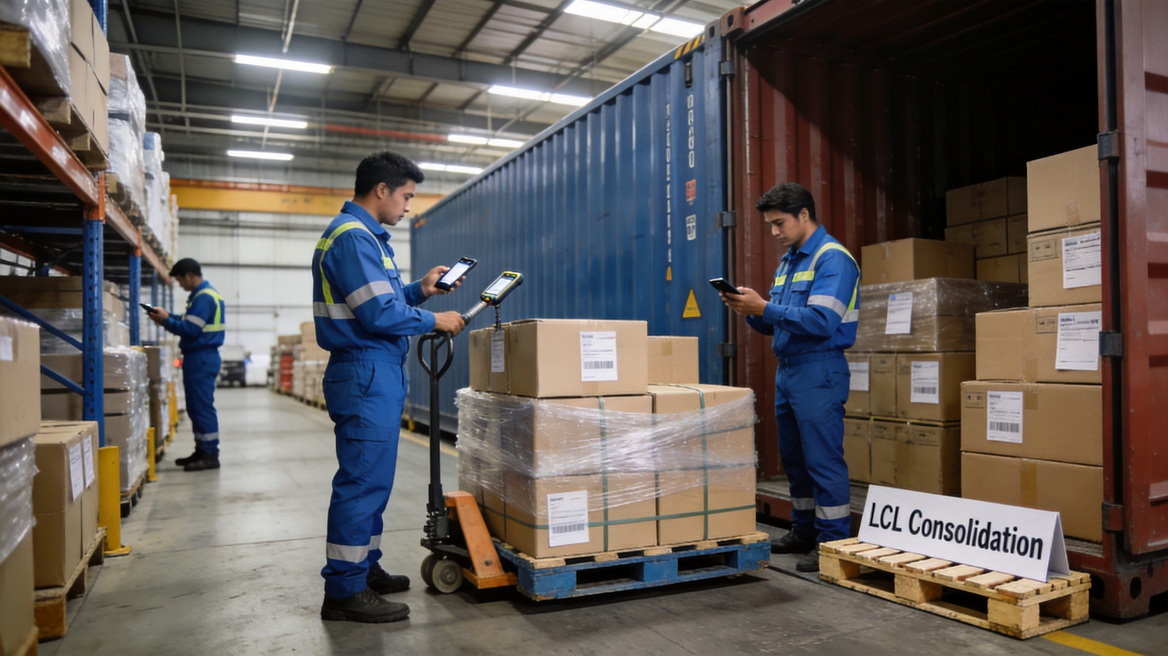
Less than Container Load shipping allows multiple customers' goods to travel in the same container. It is commonly used by importers that have insufficient cargo for a full container but want a more economical option than air freight.
LCL consolidation can be especially useful for businesses purchasing from multiple Chinese suppliers.
Instead of arranging several small international shipments, cargo can be collected or delivered to a warehouse, checked, consolidated, and shipped together.
LCL may be appropriate when:
- Your cargo does not fill a full container.
- Your goods are not extremely urgent.
- You want to consolidate products from multiple suppliers.
- You want to reduce unused container space.
- Your cargo can be safely handled during consolidation and deconsolidation.
- You need a practical sea freight solution for small-volume shipments.
LCL freight requires more handling than FCL shipping. Cargo must be received at an origin warehouse, consolidated with other goods, loaded into a container, unloaded at destination, and separated before delivery.
Before choosing LCL shipping, confirm:
- Cargo volume in cubic meters
- Gross weight
- Carton dimensions
- Packaging strength
- Palletization requirements
- Fragility or special handling needs
- Dangerous-goods status
- Destination local charges
- Customs documentation requirements
- Final delivery address and unloading conditions
Strong packaging is especially important for LCL shipments. Goods may be handled several times during consolidation and deconsolidation. Cartons should be durable, sealed properly, clearly marked, and packed to prevent damage from stacking or movement.
Customs clearance is one of the most important stages of international shipping.
A vessel may arrive on schedule. An aircraft may land on time. A railway service may reach its terminal as planned. But if customs documents are incomplete, inaccurate, or inconsistent, the shipment may still be delayed.
Export customs clearance from China often requires accurate information such as:
- Commercial invoice
- Packing list
- Product description
- Quantity and value
- HS code information
- Exporter details
- Consignee details
- Shipping method
- Transport document information
- Certificates or permits where required
Import customs clearance at destination may depend on local regulations, product classification, declared value, importer registration, duties, taxes, product standards, licenses, and inspection requirements.
The shipper, exporter, and importer should provide true and complete information. A freight forwarder can coordinate operational procedures, but it cannot replace the legal responsibility of the parties declaring the cargo.
The selected Incoterms® rule affects the responsibilities of the buyer and seller.
It can influence:
- Who arranges transport
- Who pays freight charges
- Who manages export clearance
- Who arranges insurance
- When risk transfers from seller to buyer
- Who manages import clearance
- Who pays duties and taxes
- Who arranges final delivery
Common examples include:
| Incoterms® Rule | General Responsibility Overview |
|---|---|
| EXW | The buyer takes responsibility from the seller’s premises, subject to the agreed arrangement |
| FOB | The seller delivers goods on board the vessel at the named port of shipment |
| CIF | The seller arranges carriage and insurance to the named destination port, while risk transfers when goods are loaded on board |
| DAP | The seller delivers goods ready for unloading at the agreed destination, while the buyer generally handles import clearance |
| DDP | The seller assumes broad delivery responsibilities, including import duties and taxes where applicable |
The correct rule should be selected based on the transaction, product, destination, customs responsibilities, and the capabilities of both buyer and seller.
The most efficient freight process begins before a booking is made. Accurate information at the start improves quotation quality, carrier selection, customs preparation, and delivery planning.
Share the following information with your freight partner:
- Pickup address in China
- Destination country, city, and postal code
- Product name and cargo description
- Number of cartons or pallets
- Dimensions and gross weight
- Cargo-ready date
- Incoterms® rule
- Requested service scope
- Preferred delivery timeline
- Special handling requirements
- Customs or compliance documents, if applicable
The best shipping method depends on the cargo and business objective.
| Shipping Method | Best For | Main Benefit | Main Consideration |
|---|---|---|---|
| Sea freight | Large, heavy, and non-urgent cargo | Lower cost per unit for volume shipments | Longer transit time |
| LCL shipping | Small shipments that do not fill a container | Shared-container cost efficiency | More cargo handling stages |
| Air freight | Urgent and high-value cargo | Faster transport | Higher cost |
| Railway transportation | Selected China–Europe shipments | Balance between sea and air options | Route and terminal limitations |
| Door-to-door delivery | Buyers seeking coordinated end-to-end service | Simplified logistics management | Requires clear customs and local-delivery arrangements |
Once the transport plan is selected, confirm the booking, supplier contact information, cargo-ready date, cut-off time, documents, packaging requirements, and pickup arrangement.
Focus on confirmed operational milestones, including pickup, warehouse receiving, customs clearance, departure, arrival, customs release, and final delivery.
Estimated arrival times are useful, but they may change because of weather, port congestion, transshipment delays, customs review, equipment shortages, or local delivery conditions.
After delivery, review the shipment experience.
Consider questions such as:
- Was the cargo collected on time?
- Did the supplier follow the packing instructions?
- Were documents correct?
- Was shipment information updated clearly?
- Did actual costs match the agreed quotation?
- Was customs clearance handled smoothly?
- Was final delivery completed as planned?
This review helps businesses improve future shipments, reduce repeat errors, and build a more reliable supply-chain process.
Freight platforms are valuable because they make logistics information easier to manage. They help connect the people and processes involved in international transport.
But the final quality of a shipment depends on execution.
A shipment can still face disruptions caused by schedule changes, port congestion, capacity shortages, weather events, customs inspections, documentation corrections, supplier delays, or delivery restrictions. The real value of an experienced freight forwarder is the ability to identify risks early, communicate clearly, and coordinate practical solutions.
For example, if a supplier misses an LCL warehouse cut-off, the next step should not be a vague delay notification. The freight team should confirm the next consolidation schedule, review whether the cargo can meet the revised departure, check possible alternative routes, assess whether urgent cartons should move by air freight, and provide an updated delivery expectation.
This combination of visibility, coordination, and accountability helps shippers make better decisions when conditions change.
GB FREIGHT AGENCY CO., LTD. provides end-to-end international freight solutions for businesses shipping cargo from China to destinations worldwide.
With 15 years of industry experience, our team supports shipments from supplier coordination through export customs clearance, international transportation, destination handling, and final delivery.
Our services include:
- Sea freight from China
- Full Container Load shipping
- Less than Container Load consolidation
- Air freight services
- Railway transportation
- Export customs clearance
- Warehousing and cargo consolidation
- Supplier booking coordination
- Door-to-door delivery services
- Shipment tracking and logistics communication
Whether you are importing from one supplier or managing cargo from multiple factories, a clear freight plan can reduce avoidable costs, improve shipment visibility, and help your goods move from China to their destination with greater confidence.
Share your pickup location, destination, cargo details, dimensions, weight, cargo-ready date, and required service scope to receive a practical shipping solution tailored to your shipment.
A freight platform connects shippers, carriers, freight forwarders, agents, warehouses, and customs teams through a shared digital workflow. It helps manage shipment data, documentation, communication, booking records, and milestone tracking.
A freight platform is a digital system for managing logistics information and workflows. A freight forwarder is a service provider that coordinates the actual movement of cargo, including booking, supplier communication, customs support, warehousing, international freight, and delivery.
LCL shipping is suitable when your cargo does not fill a full container and is not highly urgent. It can be a cost-effective choice for small or medium shipments, especially when consolidating goods from multiple Chinese suppliers.
Air freight is generally much faster than sea freight. However, the total delivery time also depends on supplier readiness, cargo screening, airport cut-off times, customs clearance, and local delivery arrangements.
A freight forwarder can coordinate export customs clearance in China and work with destination partners for import customs procedures. The exporter and importer must still provide accurate product descriptions, values, documents, and compliance information.
1. [UN Trade and Development (UNCTAD) — Review of Maritime Transport 2024]
2. [UN Trade and Development (UNCTAD) — Shipping Data: New Seaborne Trade Statistics]
3. [World Bank — Logistics Performance Index 2023 Release]
4. [World Bank — Connecting to Compete 2023: Logistics Performance Index]
5. [World Bank — Logistics Performance Index 2.0]
6. [International Chamber of Commerce — Incoterms® 2020]
7. [eTowerTech — How Do Freight Platforms Connect Shippers, Carriers, and Agents?]


