
Views: 241 Author: GB FREIGHT Publish Time: 2026-09-15 Origin: Site


Content Menu
● What Is Door-to-Door Shipping from China?
● Door-to-Door Shipping vs. Port-to-Port Shipping
● How Door-to-Door Shipping from China Works
>> Step 1: Prepare Cargo and Delivery Information
>> Step 2: Select the Right Transportation Method
>> Step 3: Coordinate Supplier Pickup
>> Step 4: Complete Export Customs and International Transportation
>> Step 5: Arrange Destination Customs and Final Delivery
● Understanding DAP and DDP for Door-to-Door Delivery
● What Should Be Included in a Door-to-Door Freight Quote?
● How to Reduce Door-to-Door Shipping Costs from China
>> Consolidate Cargo from Multiple Suppliers
>> Improve Packaging Efficiency
>> Choose the Right Shipment Schedule
>> Prepare Customs Documents Before Cargo Departure
● Common Door-to-Door Shipping Mistakes
>> Assuming Duties and Taxes Are Always Included
>> Choosing a Freight Provider Only by Price
>> Providing Incomplete Cargo Details
>> Ignoring Product Compliance Requirements
>> Forgetting Final Delivery Requirements
>> Underestimating Transit-Time Variability
● Why Choose GB FREIGHT AGENCY CO., LTD. for Shipping from China?
● Plan Your Door-to-Door Shipment from China
>> What is door-to-door shipping from China?
>> Is door-to-door shipping the same as DDP shipping?
>> How long does door-to-door shipping from China take?
>> What information is needed to request a door-to-door freight quote?
>> Can multiple suppliers in China ship together in one shipment?
Door-to-door shipping from China helps importers move goods from a supplier's factory to an overseas warehouse, business address, fulfillment center, or final destination through one coordinated logistics process. It can cover supplier pickup, export customs declaration, international transportation, destination customs coordination, and final-mile delivery.
For companies sourcing products from China and shipping to Europe, North America, South America, Southeast Asia, the Middle East, Africa, or Oceania, a well-managed door-to-door delivery solution reduces the need to coordinate multiple logistics providers. Instead of separately arranging trucking, export clearance, freight booking, destination handling, customs brokerage, and local delivery, businesses can work with one experienced freight partner throughout the shipment journey.
GB FREIGHT AGENCY CO., LTD. has 15 years of international logistics experience supporting businesses that ship cargo from China to global markets. From supplier booking coordination and export customs declaration to international transportation and final delivery, we provide practical and cost-effective shipping solutions based on your cargo, destination, budget, and delivery schedule.
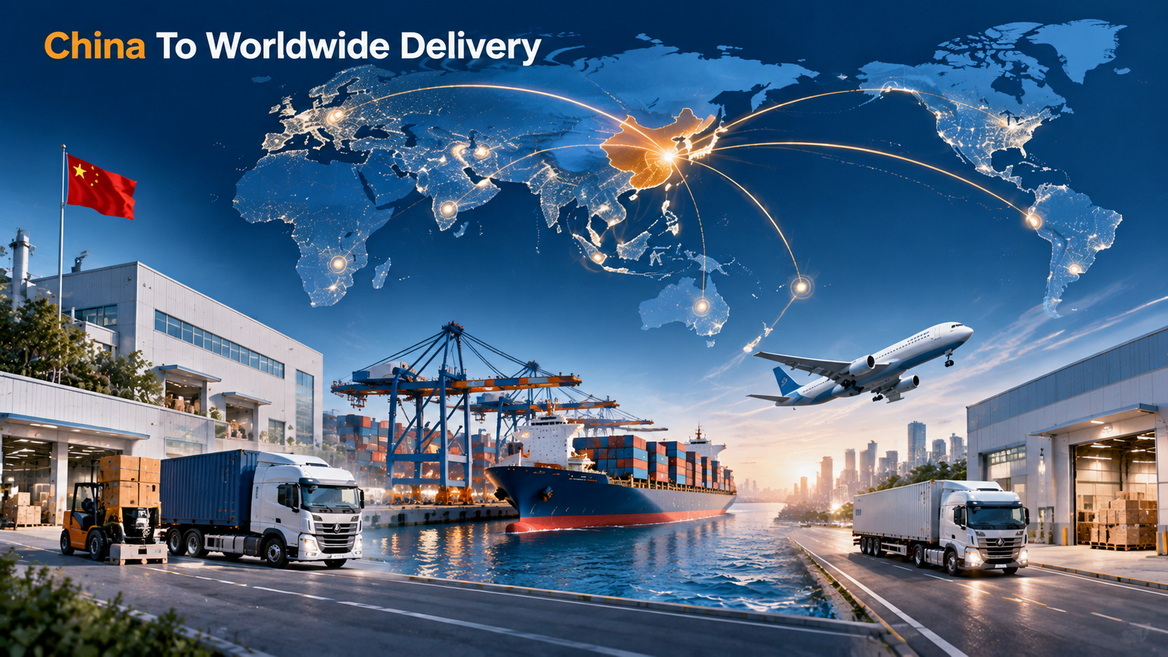
Door-to-door shipping is an international freight service that manages cargo movement from the collection point in China to the consignee's final delivery address in another country or region.
For example, a company may purchase products from a factory in Guangzhou and need the shipment delivered to its warehouse in Toronto, Los Angeles, Frankfurt, Dubai, Sydney, or São Paulo. A door-to-door freight service can coordinate every major stage of the shipment.
These services may include:
- Pickup from a supplier, factory, warehouse, or trading company in China
- Cargo inspection or basic shipment verification when arranged
- Booking with an ocean carrier, airline, railway provider, courier, or trucking network
- Export customs declaration and documentation coordination
- Cargo consolidation from multiple suppliers
- International ocean freight, air freight, rail freight, express freight, or multimodal transportation
- Destination customs coordination based on the agreed shipping terms
- Terminal handling and local logistics arrangements
- Final-mile delivery to the named destination
- Shipment updates and delivery confirmation
The main advantage is one coordinated logistics process. Rather than communicating with several different providers, the shipper has a central logistics contact that manages the main operational steps.
Door-to-door delivery is particularly useful for importers that do not have a logistics team in China, companies purchasing from multiple Chinese suppliers, first-time international buyers, e-commerce sellers, wholesalers, and manufacturers that require consistent inbound supply-chain support.
Port-to-port shipping and door-to-door shipping both move cargo internationally, but they provide different levels of service and responsibility.
Port-to-port shipping normally ends when the cargo reaches the destination seaport or airport. The buyer may need to arrange customs clearance, terminal pickup, local trucking, warehouse delivery, and other destination procedures independently.
Door-to-door shipping extends the logistics process to the final delivery address. It can simplify the shipping experience, especially for businesses without established customs brokers, trucking partners, or logistics teams in the destination country.
| Service Type | Supplier Pickup | Export Customs | International Freight | Destination Customs | Final Delivery | Suitable For |
|---|---|---|---|---|---|---|
| Port-to-Port Shipping | Usually separate | May be included | Included | Buyer-managed | Buyer-managed | Experienced importers with local logistics resources |
| Door-to-Port Shipping | Usually included | Included | Included | Depends on shipment terms | Not included | Buyers with their own destination trucking |
| Door-to-Door Shipping | Included | Included | Included | Depends on shipment terms | Included | Businesses seeking coordinated delivery |
| DDP Door-to-Door Shipping | Included | Included | Included | Usually arranged within the service structure | Included | Buyers seeking a more comprehensive delivery arrangement |
A port-to-port rate can look attractive because the quoted freight charge may be lower. However, the final landed cost may increase after destination terminal handling, customs brokerage, duties, taxes, port pickup, delivery appointments, trucking charges, storage, detention, or other local expenses are added.
For this reason, buyers should compare shipping options based on total logistics cost, not only the international freight rate.
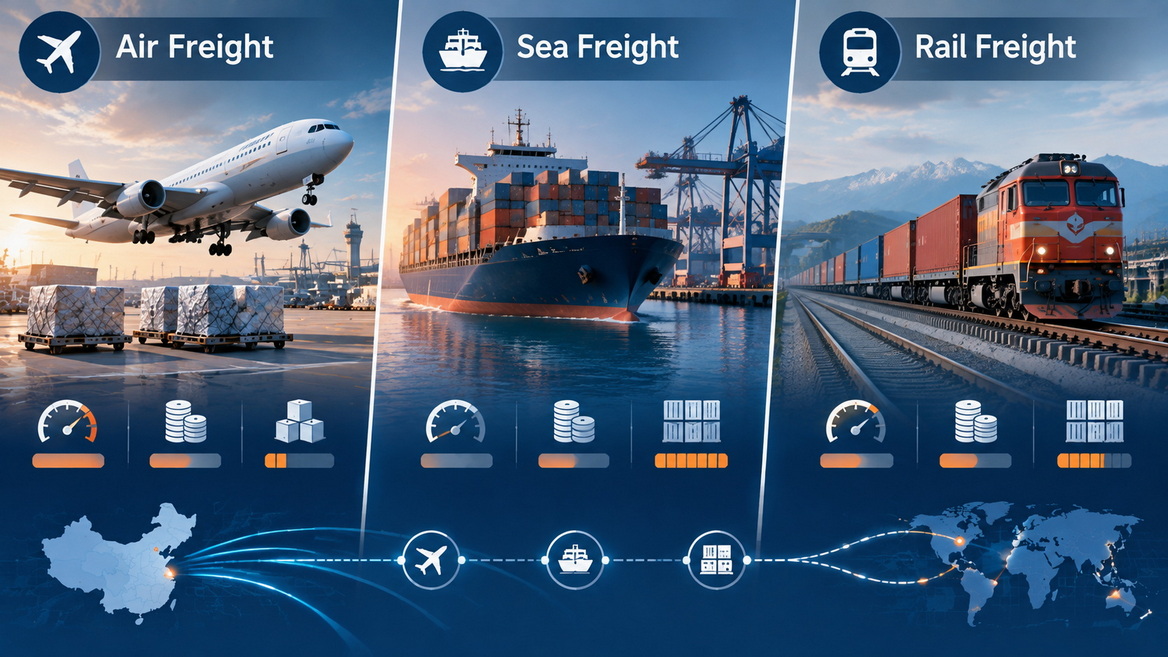
Successful door-to-door freight delivery begins with clear cargo information and realistic delivery expectations. The more accurate the shipment details are before booking, the easier it is to select the appropriate shipping route and reduce unexpected charges.
Before requesting a freight quotation, gather complete shipment details.
Important information includes:
- Product name and product use
- Cargo quantity
- Number of cartons, pallets, crates, or containers
- Gross weight
- Net weight
- Carton or pallet dimensions
- Total shipment volume in cubic meters
- Supplier pickup address in China
- Final delivery address
- Destination country and postal code
- Cargo-ready date
- Required delivery date
- Packaging type
- Commercial invoice
- Packing list
- Product HS code, if available
- Battery, liquid, magnet, chemical, food, cosmetic, or other special cargo information
Accurate information helps the freight forwarder determine whether the shipment should move by express courier, air freight, sea freight, rail freight, trucking, or a multimodal solution.
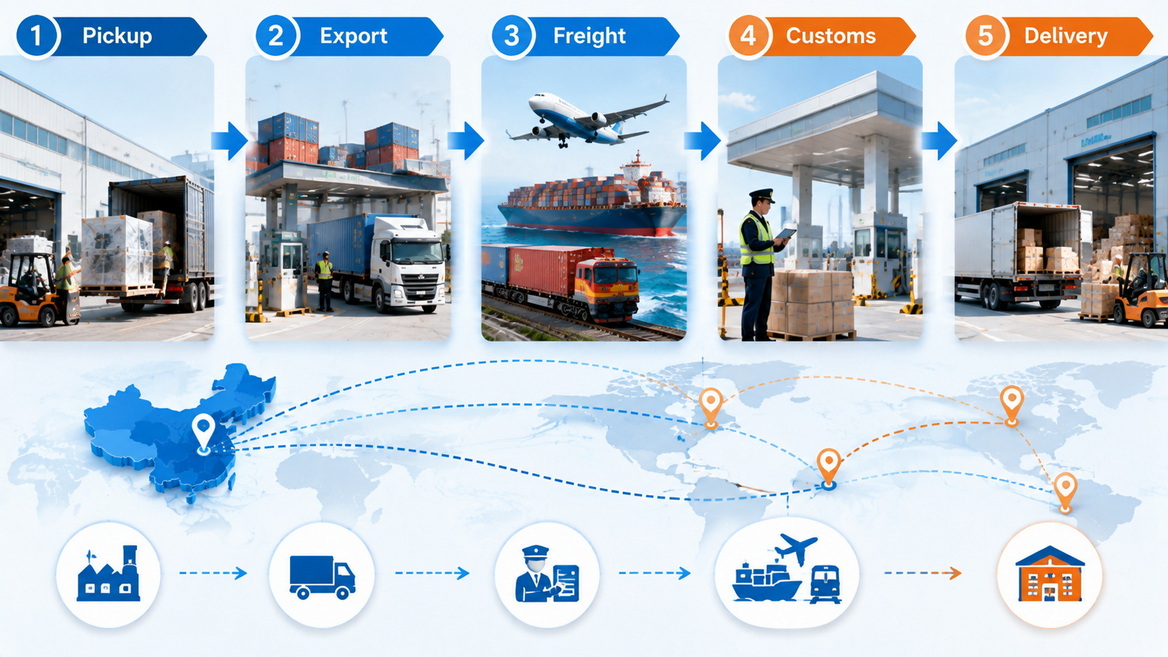
Different shipping methods offer different balances between cost, speed, cargo capacity, and delivery flexibility.
| Shipping Method | Best For | Key Benefit | Consideration |
|---|---|---|---|
| Express Courier | Samples, documents, small urgent parcels | Fast and convenient | Higher cost per kilogram |
| Air Freight | Urgent commercial cargo and high-value goods | Faster delivery for larger shipments | Higher transport cost than sea freight |
| Sea Freight LCL | Smaller shipments that do not fill a container | Cost-effective for many B2B shipments | More handling and longer transit time |
| Sea Freight FCL | Full container shipments | Efficient for high-volume cargo | Requires enough cargo volume |
| Rail Freight | Selected China-to-Europe shipments | Balances cost and transit time | Available only on selected routes |
| Multimodal Shipping | Complex routes and inland destinations | Flexible routing options | Requires detailed coordination |
Choosing the correct method is not only about speed. Businesses should consider product value, inventory levels, seasonal demand, storage costs, customer expectations, cargo size, and destination requirements.
For example, a company may use air freight for a small urgent quantity of products needed to prevent a stockout, while sending the main replenishment order by ocean freight to control logistics costs.
Once the shipping plan is confirmed, cargo pickup is arranged with the supplier in China.
This stage may involve:
- Confirming that goods are finished and ready for collection
- Verifying package quantity and shipping marks
- Checking whether cartons or pallets are suitable for international transport
- Confirming the supplier's pickup time and location
- Arranging collection by truck
- Moving goods to a warehouse, airport, rail terminal, seaport, or consolidation facility
- Combining cargo from multiple suppliers when required
For buyers sourcing from several factories, cargo consolidation can be an effective way to reduce logistics complexity. Instead of arranging separate international shipments from each supplier, compatible cargo can be collected and combined before export.
This can reduce duplicated handling, documentation work, and international transportation costs.
Before cargo leaves China, the shipment must be prepared for export. This process may include export documentation, customs declaration, cargo handling, freight booking, and loading arrangements.
Depending on the shipment type, common documents may include:
- Commercial invoice
- Packing list
- Bill of lading
- Air waybill
- Courier waybill
- Export declaration information
- Certificate of origin
- Product certificates
- Fumigation certificate for wood packaging
- Dangerous goods declaration, when applicable
- Cargo insurance documentation, when arranged
After export procedures are completed, the shipment moves through the selected international route.
Ocean freight may be the most practical option for large volumes, containers, machinery, furniture, building materials, and general cargo that is not highly time-sensitive.
Air freight is often suitable for urgent products, electronics, spare parts, samples, high-value cargo, and goods that need to reach the market quickly.
Rail freight can be a useful option for certain China-to-Europe routes when businesses want a transit-time balance between air and sea freight.
When cargo arrives at the destination country, it must go through the required import procedures before it can be released for final delivery.
The exact process depends on:
- The destination country
- Product category
- Product value
- Import regulations
- Required certifications
- Customs documentation
- Local tax rules
- The agreed shipping terms
- The importer's legal and tax structure
Once the shipment is cleared or released for delivery, local trucking or courier services transport the cargo to the final address.
The final destination may include:
- Commercial warehouses
- Distribution centers
- Retail stores
- Manufacturing facilities
- E-commerce fulfillment centers
- Offices
- Construction sites
- Residential addresses
- Third-party logistics warehouses
Before delivery, it is important to confirm whether the site has a loading dock, forklift, unloading team, delivery appointment process, restricted access, residential delivery requirement, or tail-lift truck requirement.
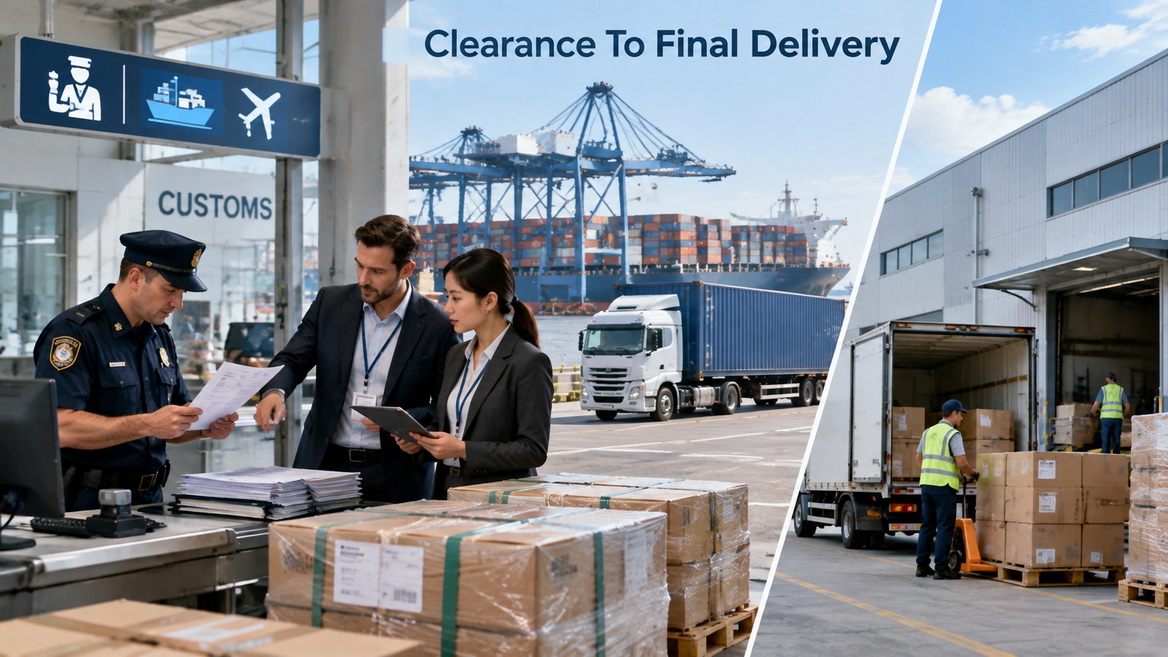
Door-to-door shipping describes how cargo moves from the pickup location to the final address. It does not automatically define who pays duties and taxes or who handles import procedures.
The commercial shipping term must be clearly agreed before the shipment begins.
DAP means that the seller arranges transportation to the agreed destination. However, the buyer is generally responsible for import customs clearance, import duties, taxes, and unloading the goods at the final delivery location.
DAP may be suitable when the buyer has an established importer identity, customs broker, tax registration, and local experience handling imports.
This option can provide more control over import procedures and local tax arrangements.
DDP means the seller takes on broader responsibility for arranging the shipment through to the final destination. This may include international transportation, export procedures, destination customs handling, duties, taxes, and final delivery.
DDP can be convenient for buyers who prefer a more comprehensive arrangement. However, DDP must be planned carefully because import rules, tax registration requirements, product compliance requirements, and importer-of-record rules vary significantly by country.
Before choosing DDP shipping, confirm the following points:
- Who will be responsible for import customs clearance
- Who will act as the importer of record
- Whether the product can be imported under the proposed arrangement
- Whether duties and taxes are included in the quotation
- Whether local inspection fees are included
- Whether customs examination fees are included
- Whether destination storage charges are excluded
- Whether delivery includes unloading
- Whether the product requires specific certification, labeling, registration, or testing
A reliable freight solution begins with clear responsibility. Buyers should never assume that a door-to-door shipment automatically includes every customs and tax expense.
A detailed freight quotation helps businesses compare logistics options accurately. The lowest quoted freight rate may not be the lowest final shipping cost if important services are excluded.
Ask for a quotation that clearly identifies inclusions, exclusions, and possible additional charges.
| Cost Category | What to Confirm |
|---|---|
| Pickup Service | Whether supplier pickup is included and whether remote-area or waiting charges may apply |
| Export Handling | Whether export customs declaration, documentation, warehouse handling, and terminal charges are included |
| International Freight | Whether the rate is based on kilograms, chargeable weight, cubic meters, pallets, or container size |
| Fuel and Security Fees | Whether surcharges are included, fixed, or subject to change |
| Destination Handling | Whether destination terminal, document, and deconsolidation charges are included |
| Customs Clearance | Whether brokerage is included and who pays duties, taxes, and inspection fees |
| Final Delivery | Whether delivery to the full destination address is included |
| Special Delivery Services | Whether appointments, tail-lift trucks, residential delivery, liftgate service, or limited-access delivery cost extra |
| Cargo Insurance | Whether cargo insurance is included, optional, or excluded |
| Storage and Delay Charges | What happens if cargo is delayed because of missing documents, customs holds, or delivery appointment issues |
A transparent quotation should make it easier to understand the true scope of the service before the cargo is collected.
Shipping costs are influenced by cargo volume, weight, transport mode, delivery location, customs procedures, fuel costs, carrier capacity, seasonal demand, and route conditions. Businesses can often reduce their logistics costs by planning shipments more carefully.
If your products are purchased from several Chinese suppliers, consolidation may reduce the total cost of international shipping.
Instead of paying for multiple export shipments, cargo from compatible suppliers can be collected and combined into one shipment. This can reduce duplicate documentation, handling fees, pickup costs, and international transport charges.
Large but lightweight cargo can be expensive when shipped by air or express courier because freight charges may be calculated based on volumetric weight.
Use packaging that protects the product while avoiding unnecessary empty space. Cartons should be stackable when possible, and pallets should be designed to maximize loading efficiency.
Well-planned packaging can reduce chargeable weight, improve container utilization, and lower the risk of cargo damage.
Urgent shipping is usually more expensive. When possible, plan inventory replenishment early enough to use ocean freight, rail freight, or consolidated shipping options.
A business can also use a split-shipment strategy:
- Send a small urgent quantity by air freight
- Send the main order by sea freight
- Use express shipping only for samples, documents, or critical replacement parts
This approach can protect stock availability while avoiding unnecessary air freight costs for the full shipment.
Incomplete or inaccurate documents can cause customs delays, storage charges, missed delivery appointments, and additional handling costs.
Product descriptions should be clear and specific. Invoice values, quantity, package count, and product information should match across all shipping documents.
Avoid vague descriptions such as "parts," "goods," "accessories," or "samples" when a more accurate product name is available.
International freight rates and transit times can change because of seasonal demand, holiday production schedules, port congestion, capacity shortages, route changes, weather events, and customs delays.
Booking earlier can improve space availability and allow more flexibility in route selection. It can also reduce the risk of last-minute air freight upgrades caused by inventory shortages.
Door-to-door delivery can simplify international logistics, but avoidable problems may occur when shipment terms are unclear or cargo information is incomplete.
Door-to-door delivery does not always mean duty-paid delivery. Buyers should confirm whether the shipment is arranged under DAP, DDP, or another agreed commercial term.
A very low quote may exclude customs brokerage, terminal charges, delivery fees, duties, taxes, insurance, appointment charges, or special handling requirements.
Always compare the full scope of service, not only the first freight number.
Incorrect weight, dimensions, product descriptions, or packaging information can result in revised charges, freight delays, customs issues, or cargo rejection.
Some products may require certificates, testing reports, special packaging, labels, registrations, or permits before they can be imported.
Common sensitive cargo categories include:
- Lithium batteries
- Electronics
- Cosmetics
- Food and beverages
- Medical products
- Chemicals
- Liquids
- Magnets
- Toys
- Wood packaging
- Products containing animal or plant materials
A delivery truck may need an appointment, loading dock, forklift, liftgate, security clearance, or advance notice. These requirements should be confirmed before cargo reaches the destination.
Transit time estimates can change due to weather conditions, port congestion, customs inspections, vessel schedule changes, route disruptions, blank sailings, terminal delays, or trucking capacity.
Businesses should build reasonable time buffers into product launches, inventory replenishment plans, and customer commitments.
International shipping requires more than reserving space on a vessel or aircraft. It requires accurate planning, supplier coordination, document control, cargo handling, route selection, customs awareness, and responsive communication from pickup through final delivery.
GB FREIGHT AGENCY CO., LTD. provides practical freight solutions for businesses shipping cargo from China to international destinations.
Our services support the complete shipping process:
- Supplier booking and pickup coordination in China
- Export customs declaration support
- Sea freight, air freight, rail freight, express freight, and multimodal solutions
- Full container load and less-than-container-load shipping
- Cargo consolidation for multi-supplier orders
- International transportation planning based on cost and delivery requirements
- Destination customs coordination based on agreed shipping terms
- Final delivery to warehouses, commercial locations, fulfillment centers, and other approved destinations
- Shipment tracking and logistics communication throughout the transport process
We understand that every shipment has different requirements. A small urgent air shipment requires a different strategy from a full container of furniture, machinery, consumer goods, industrial parts, or e-commerce inventory.
Our team helps customers select a freight solution based on the cargo type, destination, shipment size, customs requirements, target budget, and required delivery timeline.
A successful shipment starts before the cargo is ready. Early planning gives businesses more options for consolidation, carrier booking, document preparation, customs review, route selection, and final delivery arrangements.
When preparing your next shipment from China, gather the product details, packaging information, pickup location, delivery address, shipping deadline, and any special handling requirements.
GB FREIGHT AGENCY CO., LTD. can help you evaluate the available transportation options and develop a door-to-door shipping plan that supports reliable delivery, practical cost control, and smoother international logistics operations.
Door-to-door shipping from China provides a coordinated way to move cargo from a Chinese supplier to an overseas final destination. It can include pickup, export customs procedures, international freight, destination customs coordination, and local delivery. The right solution depends on the cargo, destination, delivery schedule, customs responsibilities, and commercial shipping term.
For businesses importing from China, understanding the difference between door-to-door delivery, DAP, and DDP is essential. Accurate cargo information, transparent freight quotations, efficient packaging, early booking, and correct documentation can help reduce costs and avoid unnecessary delays.
GB FREIGHT AGENCY CO., LTD. supports businesses with international door-to-door delivery solutions from China to Europe, North America, South America, Southeast Asia, the Middle East, Africa, and Oceania.
Door-to-door shipping from China is a logistics service that moves cargo from a supplier, factory, warehouse, or pickup address in China to the final delivery address in another country. The service may include pickup, export handling, international freight, customs coordination, and local delivery.
No. Door-to-door shipping describes the delivery scope from origin to final destination. DDP is a commercial delivery term that may include import customs clearance, duties, taxes, and final delivery under an agreed arrangement. Door-to-door shipments may also be arranged under DAP or other terms.
Transit time depends on the destination, shipping method, cargo type, customs procedures, carrier schedules, and final delivery requirements. Express and air freight are generally faster, while sea freight is often more cost-effective for larger shipments.
You should provide the product name, cargo quantity, package dimensions, gross weight, shipment volume, supplier pickup address, final delivery address, postal code, cargo-ready date, and information about batteries, liquids, chemicals, magnets, or other special cargo.
Yes. Cargo from multiple suppliers can often be collected and consolidated into one international shipment. This may reduce duplicate logistics costs and simplify shipment coordination.
1. Freightos. [Door To Door Shipping]
2. International Chamber of Commerce. [Incoterms® Rules]
3. ICC Academy. [Incoterms® 2020: DAP or DDP?]
4. ICC Academy. [Incoterms® 2020: EXW or DDP?]
5. International Trade Administration. [Know Your Incoterms]
6. UN Trade and Development. [Maritime Trade Under Pressure – Growth Set to Stall in 2025]


