
Views: 236 Author: GB FREIGHT Publish Time: 2026-10-08 Origin: Site


Content Menu
>> Which Container Fits Your Machinery?
● Dimensions and Payload Limits
>> Published Container Specifications
>> Payload vs Concentrated Loading
>> Measure the Shipping Configuration
● Heavy Equipment Shipping Planning
>> Illustrative Machinery Scenarios
>> Weather Protection and Securing
>> Coordinate the China Export Shipment
● Summary and Shipment Enquiry
>> Is a Flat Rack Always Better?
>> Can Open Tops Carry Overheight Cargo?
>> Does Payload Guarantee Cargo Acceptance?
>> What Does Out of Gauge Mean?
>> Can Flat Rack End Walls Fold?
Flat rack containers generally suit heavy equipment that is overwide, irregularly shaped, or requires open-side loading. Open top containers are often better candidates for machinery that fits within the container's walls but needs to be lifted into position from above.
Choosing a flat rack container vs an open top container for heavy equipment involves more than comparing cargo weight. Shipping dimensions, support points, lifting access, weather protection, and destination handling all influence the decision.
For exporters shipping machinery from China, the most useful starting point is the equipment's final transport configuration. Packaging, support beams, protective covers, and securing materials can change its dimensions and loading requirements.
GB FREIGHT AGENCY CO., LTD. brings 15 years of international logistics experience to coordinating shipments from China. Our services cover supplier booking coordination, export customs clearance, transportation, and final delivery.
This guide explains the differences between these container types and provides a practical framework for preparing a shipment-specific comparison.

A flat rack container consists of a load-bearing platform and end structures, without enclosed side walls or a permanent roof. Depending on the unit, its end walls may be fixed or collapsible.
The open design makes flat racks useful for wide machinery, irregular equipment, and cargo that requires access from the sides.
However, open access does not eliminate structural restrictions. Heavy equipment must rest on suitable support arrangements that transfer weight into the container's load-bearing structure.
An open top container retains its side walls but allows loading through the roof opening. It is useful when machinery cannot conveniently pass through a conventional container doorway.
Equipment can be lowered from above using an appropriate lifting arrangement. Overheight cargo may also be accepted, subject to carrier approval and operational restrictions.
The essential distinction is that a flat rack provides lateral freedom, while an open top provides overhead access within a walled container.
| Selection factor | Flat rack container | Open top container |
|---|---|---|
| Basic structure | Platform with end structures and open sides | Container with side walls and an accessible top |
| Typical application | Wide, irregular, or concentrated heavy loads | Top-loaded machinery that fits between the walls |
| Loading access | Open access around the platform | Roof opening or suitable door opening |
| Width considerations | Overwidth cargo may be accepted | Fixed walls restrict the available space |
| Weather protection | Requires cargo-specific protection | Walls provide partial protection |
| Structural priority | Main-beam loading and support arrangement | Floor loading and opening clearance |
| Approval considerations | Weight, dimensions, supports, and end-wall position | Weight, dimensions, supports, and top-opening clearance |
Start with geometry, not price.
A wide industrial press may be a stronger candidate for a flat rack because its body cannot fit between an open top container's walls. A narrow vertical machine may suit an open top if it can be safely lowered through the roof opening.
Neither conclusion is automatic. The equipment's support footprint, centre of gravity, securing requirements, and route must also be reviewed.
The most reliable question is not "Which container is better?" It is "Which approved loading arrangement best suits this shipment?"
Container specifications provide a useful first screening step. They do not guarantee that a particular machine will be accepted.
The following figures are published by Maersk for special-cargo classification. They should not be treated as universal internal dimensions for every container.
| Equipment type | Published length | Published width | Published height | Maximum payload |
|---|---|---|---|---|
| 20-foot open top | 549 cm | 222 cm | 234 cm | 28,200 kg |
| 40-foot open top | 1,181 cm | 219 cm | 234 cm | 28,600 kg |
| 40-foot high-cube open top | 1,181 cm | 219 cm | 265 cm | 28,600 kg |
| 40-foot flat rack | 1,163 cm | 244 cm | 194 cm | 47,000 kg |
| 40-foot high-cube flat rack | 1,163 cm | 244 cm | 226 cm | 47,000 kg |
For the open top entries, the stated length and width represent top-opening dimensions used for overheight cargo. Dimensions vary between container series, and flat-rack payload remains subject to terminal acceptance.
Confirm the actual equipment specifications before finalizing a loading plan.
A payload limit describes the maximum cargo weight permitted under the applicable conditions. It does not mean that the same weight can be placed anywhere on the container floor.
Consider a machine supported by four small feet. Its weight is concentrated over a limited area. A machine of identical weight resting on a longer engineered base creates a different structural loading condition.
Hapag-Lloyd's flat-rack guidance illustrates this distinction. In one 40-foot example, approximately 26.8 tonnes are permitted over a two-metre resting length, compared with 42.1 tonnes over ten metres.
These figures apply to the illustrated equipment and loading assumptions. They are not universal flat-rack limits.
The practical lesson is simple: verify the support arrangement as carefully as the total weight.
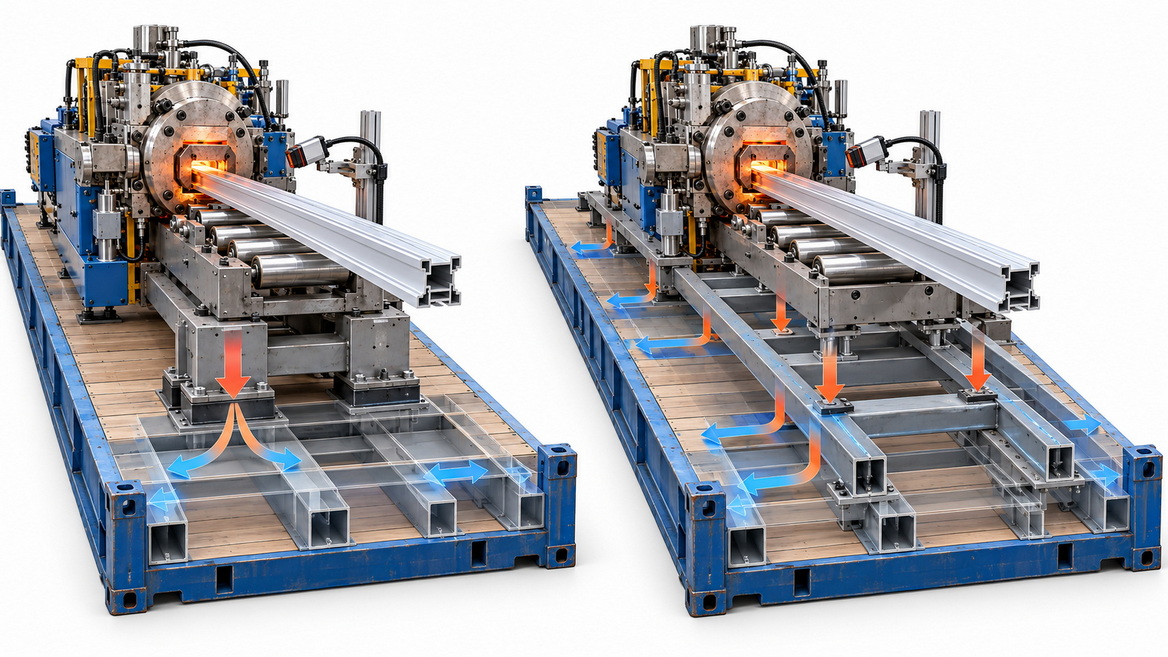
Operating dimensions are not necessarily shipping dimensions.
Before requesting approval, record:
- Final packed length, width, and height.
- Machinery weight and additional packaging weight.
- Support-foot dimensions and spacing.
- Centre-of-gravity information, where available.
- Lifting points and the intended lifting method.
- Projections created by supports, covers, and securing equipment.
For out-of-gauge declarations, include the complete arrangement. Dunnage, crates, and protruding lashing equipment can affect the space required.
If components will be removed, finalize that decision before submitting measurements.
There is no dependable rule that an open top always costs less than a flat rack.
A meaningful comparison requires quotations for the same cargo, route, handling scope, and delivery responsibilities.
Ask each quotation to identify:
- Container positioning and collection.
- Transport from the supplier to the loading location.
- Lifting, packing, and securing work.
- Ocean freight and special-cargo charges.
- Origin and destination handling.
- Customs-service scope and final delivery.
- Storage, waiting-time charges, and exclusions.
This checklist helps reveal differences hidden behind the headline freight rate.
An apparently cheaper quotation may exclude crane work or destination unloading. Conversely, a higher quotation may cover a wider service scope.
Compare scope before comparing totals.
The following examples explain the decision process. They are not documented GB FREIGHT customer shipments or confirmed carrier approvals.
Scenario one: A wide industrial press measures 4.8 metres long, 2.8 metres wide, and 2.4 metres high, weighing 24 tonnes.
Its width makes a conventional open top an unsuitable starting point. A flat rack is a more plausible candidate, but the support footprint, securing arrangement, and out-of-gauge acceptance still require assessment.
Scenario two: A vertical machine measures 4.6 metres long, 2.0 metres wide, and 2.8 metres high, weighing 12 tonnes.
An open top may be worth evaluating because the machine is narrow and can potentially be lowered from above. Its completed loaded height, floor support, and opening clearance must still be checked.
A flat rack could remain preferable if the support structure or lifting arrangement makes open-top loading impractical.
These examples show why dimensions and handling requirements often determine the initial shortlist before freight rates become relevant.
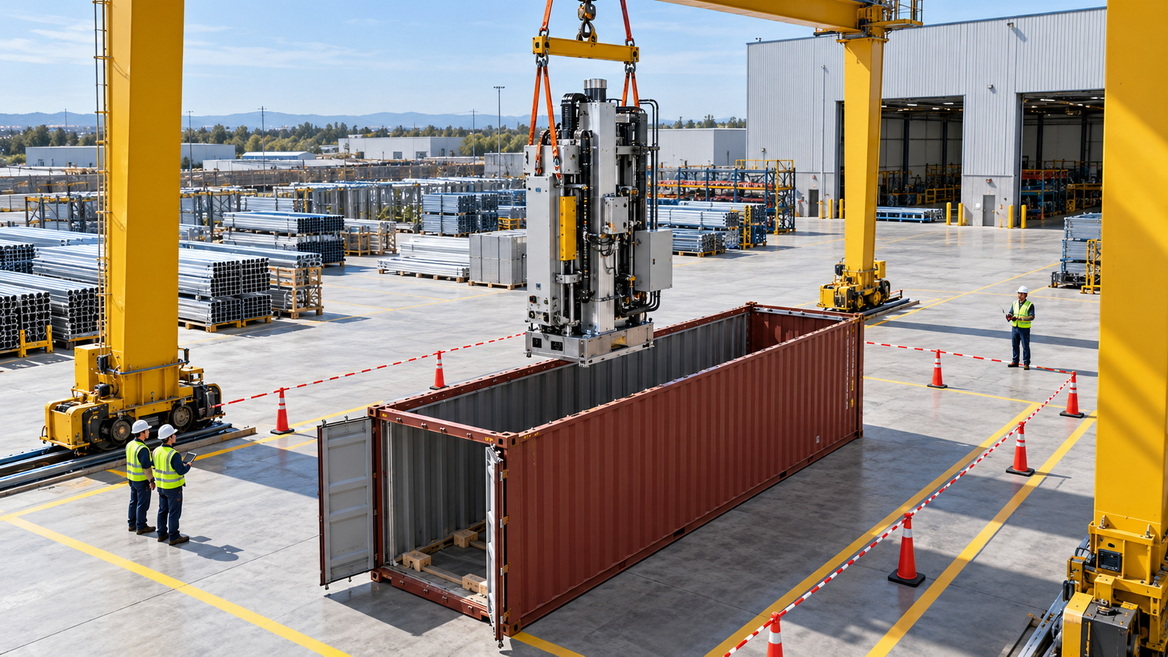
Weather protection and securing serve different purposes.
A protective cover does not prevent machinery from shifting. Securing equipment does not automatically protect electrical cabinets, bearings, or exposed machined surfaces.
For an open top shipment, confirm whether the proposed cover can be fitted around the loaded cargo. Overheight equipment may require a separate protection arrangement.
For a flat rack shipment, ask the packing specialist to evaluate exposed surfaces and sensitive components.
The CTU Code provides internationally recognized guidance for packing and securing cargo across intermodal transport. It addresses issues such as weight distribution, centre-of-gravity positioning, and preventing cargo movement.
It is a non-mandatory code of practice, not a shipment-specific safety certificate. Competent personnel must assess the actual load and equipment.
1. Finalize the shipping configuration, including components that will be removed.
2. Collect drawings, photographs, dimensions, weights, and support details.
3. Screen both container types against opening dimensions and structural limits.
4. Obtain carrier and terminal acceptance for the proposed arrangement.
5. Confirm responsibility for lifting, packing, securing, and destination unloading.
6. Recheck loaded dimensions against the approved declaration before dispatch.
Keep the supplier, forwarder, packing contractor, and consignee working from the same information.
Destination unloading deserves particular attention. Confirm the lifting method and unloading location before departure rather than leaving these questions until arrival.
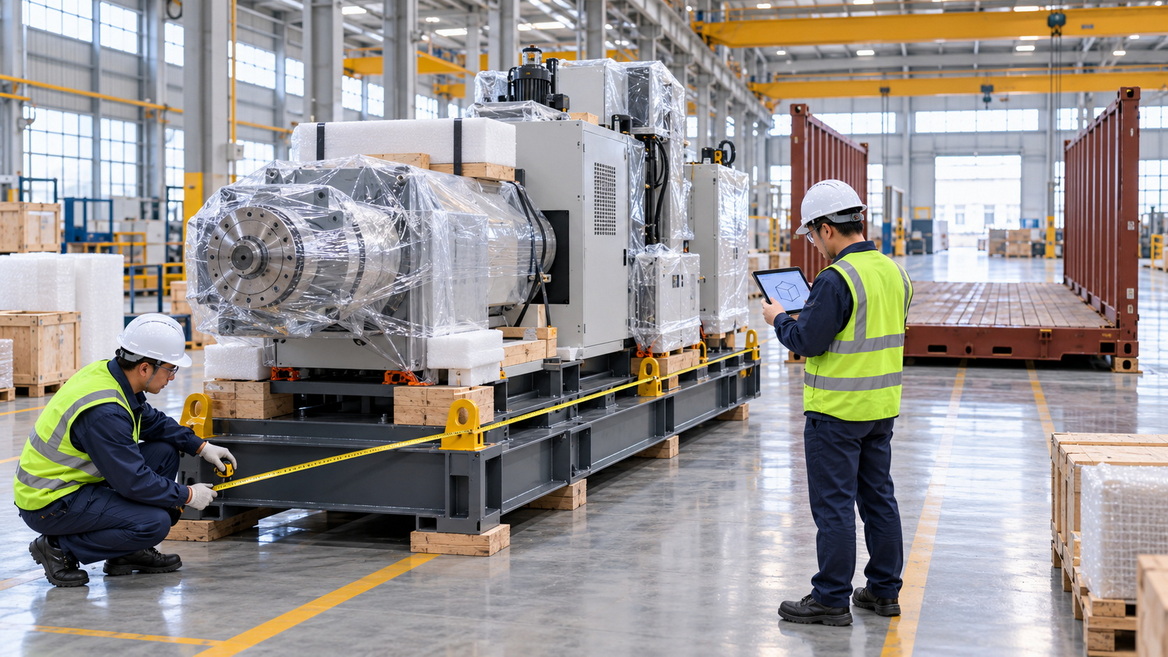
GB FREIGHT AGENCY CO., LTD. coordinates shipments from China to Europe, North America, South America, Southeast Asia, the Middle East, Africa, and Oceania.
Our role is to help connect supplier readiness, transport planning, export documentation, and delivery requirements.
Although LCL is part of our service offering, oversized machinery requires a separate assessment. Businesses should not assume that ordinary consolidation is appropriate simply because the shipment contains one machine.
Early preparation gives the parties involved a clearer basis for selecting equipment and defining responsibilities.
The right flat rack container vs open top container decision begins with the machinery's dimensions and support requirements.
Choose a flat rack as an initial candidate when width, irregular shape, or open-side access drives the shipment. Evaluate an open top when the machine fits between the walls but requires overhead loading.
Before booking either option, confirm weight distribution, final dimensions, securing, weather protection, and destination handling.
Send GB FREIGHT AGENCY CO., LTD. your equipment drawings, packed dimensions, weight, support footprint, pickup address, and destination. Request a shipment-specific comparison with clearly defined handling responsibilities and acceptance requirements.
No. A flat rack is often a stronger candidate for wide or irregular heavy equipment, but an open top may suit machinery that fits within the walls and needs overhead loading. Structural loading and carrier acceptance remain decisive.
Yes, subject to approval. The declaration must reflect the completed loaded height, including bedding and protective materials. Confirm roof-opening clearance, protection arrangements, and operational acceptance before booking.
No. Cargo below the maximum payload can still create excessive concentrated loading. Support length, floor construction, load transfer, and the machine's resting points must be evaluated.
Out of gauge describes cargo exceeding the applicable container envelope in length, width, height, or a combination. The assessment includes the completed shipping arrangement, not only the machine body.
Some flat racks have collapsible end walls. Their proposed position must be declared. Folding the walls does not automatically authorize overlength cargo or remove weight and securing restrictions.
- [Maersk — Shipping Special Cargo]: Published equipment figures, special-cargo classification, declaration requirements, and the treatment of packaging and securing projections. Specifications must be confirmed for the actual equipment and shipment. [maersk]
- [Hapag-Lloyd — Weight Distribution Guideline]: Container floor-loading principles, flat-rack main-beam support, and the illustrated relationship between resting length and permissible cargo weight. [hapag-lloyd]
- [International Maritime Organization — IMO/ILO/UNECE CTU Code]: Purpose and non-mandatory status of the international code of practice for packing cargo transport units. [imo]
- [Hapag-Lloyd — Special Cargo Containers]: Flat-rack design and applications for heavy, oversized, and irregular cargo. [hapag-lloyd]
- [Maersk — Out of Gauge and Break Bulk Cargo Acceptance]: An example of destination-specific acceptance and documentation requirements. These requirements should not be generalized to every destination. [maersk]
- Company experience, service coverage, and business description were supplied by GB FREIGHT AGENCY CO., LTD. The illustrative machinery scenarios and quotation checklist are editorial planning examples, not verified customer case studies.


