
Views: 268 Author: GB FREIGHT Publish Time: 2026-09-24 Origin: Site


Content Menu
● What Does Global Logistics Collaboration Mean?
● Why Door-to-Door Delivery From China Needs Strong Coordination
>> Key Benefits of Door-to-Door Shipping
● How GB FREIGHT Coordinates Global Shipments From China
>> 1. Reviewing Cargo and Shipping Requirements
>> 2. Coordinating Bookings With Chinese Suppliers
>> 3. Preparing Export Customs and Origin Handling
● Choosing the Right Shipping Method From China
● Managing International Transport and Shipment Visibility
● Understanding DAP and DDP for Door-to-Door Shipping
● A Practical Checklist for Shipping From China
● How to Choose a Reliable Freight Forwarder in China
>> Questions to Ask Before Booking
● Building Stronger Global Delivery Operations
● Summary
>> What is door-to-door delivery from China?
>> Can a freight forwarder communicate with Chinese suppliers?
>> What documents are usually required for shipping from China?
>> Is ocean freight or air freight better from China?
>> Does door-to-door shipping include import customs clearance?
International logistics works best when every party—from the Chinese supplier and origin carrier to the customs broker and destination delivery provider—follows the same operational plan. For businesses shipping goods from China to overseas markets, a well-managed door-to-door delivery service turns multiple transport steps into one coordinated process.
GB FREIGHT AGENCY CO., LTD. has 15 years of international logistics experience serving businesses that ship from China to Europe, North America, South America, Southeast Asia, the Middle East, Africa, and Oceania. From supplier booking coordination and export customs declaration to international transportation and final delivery, we help customers build cost-effective shipping solutions around their cargo, route, timeline, and destination requirements.
Global shipping is not only about moving goods from Point A to Point B. It is about managing handovers, documents, schedules, customs requirements, cargo safety, and communication across different countries. The right freight forwarder helps businesses control these moving parts and create a smoother delivery experience for both shippers and consignees.

Global logistics collaboration is the coordinated work of companies and professionals involved in moving cargo across borders. It brings together transportation, warehousing, customs procedures, documentation, cargo tracking, and final-mile delivery under a connected operating process.
A shipment from China may involve several different participants:
- Suppliers and manufacturers
- Freight forwarders and export operations teams
- Ocean carriers, airlines, rail operators, and trucking companies
- Warehouses and cargo-consolidation centers
- Customs brokers and compliance specialists
- Destination agents and local delivery providers
- Importers, distributors, and final consignees
Each partner has a different responsibility. The supplier prepares the goods. The freight forwarder coordinates the shipment. The carrier transports the cargo. Customs specialists support import and export formalities. Destination agents arrange release and local delivery.
The challenge is making sure these parties do not work in isolation.
When shipment information is incomplete or communication is delayed, cargo can miss a booking cutoff, encounter customs issues, remain at a terminal longer than expected, or arrive without a confirmed delivery arrangement. Strong collaboration reduces these risks by making responsibilities clear before cargo begins its journey.
A door-to-door delivery service from China covers much more than international ocean freight or air freight. It connects the entire shipping process—from the supplier's factory, warehouse, or designated pickup point in China to the overseas consignee's address.
For importers, this service model can reduce the complexity of managing multiple providers in different countries. Instead of independently arranging pickup, export clearance, international shipping, customs brokerage, and final delivery, the customer works with a coordinated logistics partner.
A professionally organized door-to-door solution can provide:
- One coordinated shipment process from pickup in China to overseas delivery
- Clearer communication between suppliers, carriers, customs teams, and consignees
- Earlier document checks before cargo reaches the port or airport
- Better visibility at key shipment milestones
- Faster problem identification when schedules or documents change
- Flexible shipping options based on cargo urgency, size, and budget
- Simplified supplier management for overseas buyers sourcing from multiple factories
- More predictable logistics planning for inventory replenishment and customer delivery
Businesses should understand that "door-to-door" does not always mean every cost or customs responsibility is automatically included. The exact service scope should always be stated clearly in the shipping quotation.
For example, customers should confirm whether the service includes export declaration, destination customs clearance, import duties and taxes, delivery appointments, unloading, storage, or special handling. A transparent freight-forwarding plan prevents misunderstandings and helps businesses budget more accurately.
GB FREIGHT AGENCY CO., LTD. supports businesses with international transportation solutions from China to major global markets. Our work begins before goods are loaded onto a vessel or aircraft. Effective shipping starts with detailed preparation.
We coordinate each stage based on cargo characteristics, supplier locations, shipping schedules, destination requirements, and the customer's preferred service level.
The first step is understanding the shipment in detail. Accurate information allows the logistics team to recommend a transport plan that is realistic, compliant, and cost-effective.
Before booking, businesses should prepare the following information:
- Cargo name and product description
- Total quantity of cartons, pallets, crates, or packages
- Dimensions and gross weight
- Packaging type and cargo condition
- Supplier pickup address in China
- Cargo-ready date
- Destination country, city, postal code, and final address
- Preferred shipping method
- Commercial invoice and packing list details
- Importer or consignee contact information
- Any special cargo requirements
This information helps determine whether the shipment is suitable for ocean freight, air freight, express delivery, consolidation, or a multimodal transportation solution.
It also helps avoid common issues such as incorrect cargo measurements, incomplete destination information, insufficient packaging, inaccurate product descriptions, or last-minute schedule changes.
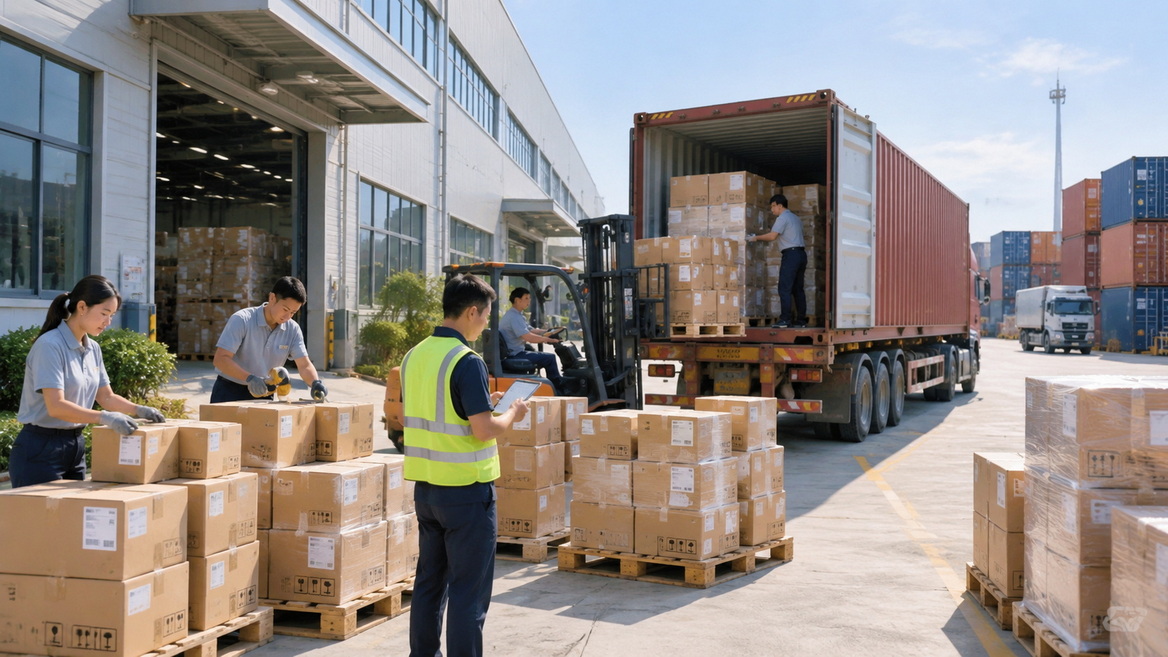
For many international buyers, supplier coordination is one of the most time-consuming parts of shipping from China. A supplier may be balancing production schedules, packaging work, warehouse availability, export preparation, and factory loading at the same time.
A China-based freight forwarder can communicate directly with suppliers to confirm cargo readiness and arrange the next steps.
GB FREIGHT can help coordinate:
- Pickup dates and cargo-ready confirmation
- Carrier or warehouse booking details
- Factory loading arrangements
- Delivery to consolidation warehouses
- Shipping marks and carton-label checks
- Export document collection
- Cargo measurement and weight confirmation
- Departure cutoff deadlines
- Special handling instructions
This process is particularly valuable for overseas buyers who work with multiple Chinese factories. Rather than chasing updates from different suppliers in different cities, the buyer can have one logistics coordinator managing the shipment plan.
Export customs declaration is an important stage in the international logistics process. The shipping documents and declaration information should match the actual cargo.
Inconsistent data may lead to customs questions, shipment holds, document amendments, storage charges, or missed carrier departures. Preparing accurate information early can significantly reduce these risks.
Origin handling may include:
- Pickup from the supplier's factory or warehouse
- Delivery to a port, airport, or consolidation facility
- Cargo counting and inspection
- Weight and volume verification
- Export document review
- Export customs declaration support
- Container loading arrangements
- Air-cargo handover coordination
- Carrier booking confirmation
For businesses sourcing products from several suppliers, cargo consolidation can be a practical option. Compatible goods can be collected from multiple factories and combined into one shipment when timing, packaging, and destination requirements allow.
Consolidation may reduce the number of separate freight movements, simplify destination receiving, and support more efficient transportation planning.

There is no single "best" shipping method for every shipment. The right option depends on cargo volume, product value, urgency, transit-time expectations, destination, and budget.
| Shipping Method | Best For | Main Benefit | Important Consideration |
|---|---|---|---|
| Ocean Freight | Large-volume and non-urgent shipments | Often cost-effective for containerized cargo | Longer transit times and port schedules must be planned carefully |
| Air Freight | Urgent, high-value, or time-sensitive goods | Faster international transportation | Higher freight cost and tighter cargo restrictions |
| Consolidated Shipping | Smaller cargo volumes or multiple supplier orders | Can lower cost compared with separate shipments | Requires accurate coordination of supplier-ready dates |
| Multimodal Transport | Cargo moving through several transport legs | Flexible routing and service coverage | Handover management is essential |
| Door-to-Door Delivery | Buyers seeking one coordinated service | Simplifies shipping administration | Customs scope and delivery terms must be confirmed |
Ocean freight remains a major option for international trade, especially for full containers, large-volume cargo, machinery, retail inventory, and regular replenishment shipments. Air freight is generally more suitable when speed matters more than transportation cost.
For example, a business importing seasonal promotional goods may choose air freight for a small urgent shipment while using ocean freight for the main inventory order. This combination can protect product-launch deadlines without moving the entire order by air.
The most effective freight strategy is often based on a balance between speed, cost, inventory planning, and delivery reliability.
Shipment visibility is more than receiving a generic "in transit" update. Useful visibility means understanding the current stage of cargo movement and knowing what actions may be required next.
A structured shipment process should provide updates at key milestones.
| Shipment Stage | Main Activity | Why It Matters |
|---|---|---|
| Booking Confirmed | Carrier space and shipping instructions are verified | Supports production and pickup planning |
| Cargo Ready | Supplier confirms goods are packed and available | Reduces failed pickup risks |
| Pickup Completed | Cargo moves from the supplier to the next facility | Confirms the origin handover |
| Export Customs Completed | Export procedures are completed | Supports departure preparation |
| Departed From China | Main international transport begins | Helps buyers plan arrival expectations |
| Arrived at Destination | Cargo reaches the destination port or airport | Starts destination handling preparation |
| Import Clearance | Customs processing and cargo release are handled | Reduces avoidable terminal delays |
| Final Delivery | Cargo is delivered to the agreed address | Completes the shipment process |
Clear milestone communication gives businesses more control over their supply chain. It helps procurement teams prepare inventory plans, warehouse teams arrange receiving, and customers manage delivery expectations.
International transport conditions can change due to port congestion, equipment shortages, weather events, carrier schedule adjustments, customs inspections, or local delivery restrictions. Good logistics coordination does not eliminate every disruption, but it helps businesses identify potential problems early and respond more effectively.
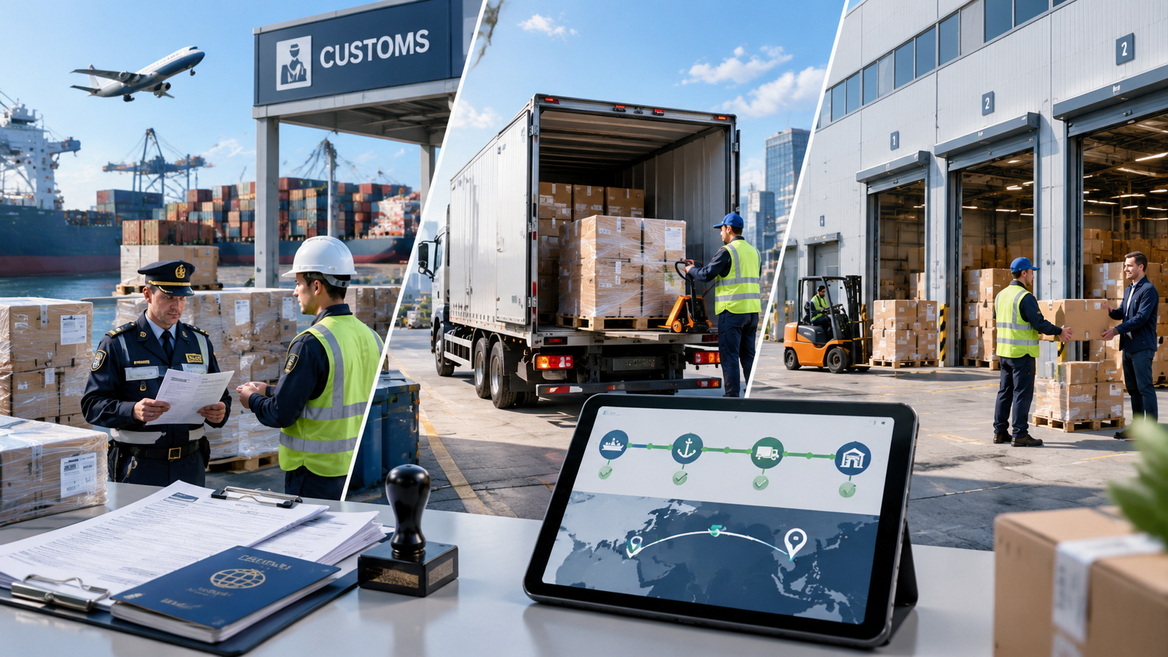
Before confirming a door-to-door shipment, businesses should understand the agreed delivery term. Delivery terms define who is responsible for transportation, customs clearance, duties, taxes, and risk at different stages of the shipment.
Two commonly discussed terms for international door-to-door transport are DAP and DDP.
Under DAP, the seller arranges transportation to the agreed destination. The goods are delivered ready for unloading from the arriving vehicle.
However, the buyer is generally responsible for import customs clearance, import duties, and taxes.
DAP may be suitable when the overseas buyer has an established importer entity, customs broker, tax registration, or local compliance process.
Under DDP, the seller takes on a greater level of responsibility. This may include arranging import clearance and handling duties and taxes, depending on the agreed shipment structure and destination-country requirements.
DDP can be convenient for buyers who want a more inclusive delivered service. However, it requires careful planning because import regulations, tax requirements, product compliance, importer-of-record rules, and local customs procedures differ from country to country.
Businesses should always confirm the service scope in writing. A freight quotation should clearly state:
- Pickup location in China
- Delivery address in the destination country
- Transport method and estimated transit range
- Export customs handling scope
- Import customs handling scope
- Duties and taxes responsibility
- Port, terminal, warehouse, and delivery charges
- Delivery appointment requirements
- Unloading responsibility
- Cargo insurance options
- Special cargo restrictions or handling requirements
Businesses can reduce avoidable shipment issues by preparing key information before requesting a freight quotation.
1. Confirm the supplier's full pickup address in China.
2. Confirm the cargo-ready date rather than only the estimated production date.
3. Request accurate package dimensions and gross weight.
4. Verify whether the cargo contains batteries, liquids, magnets, chemicals, wood packaging, or other restricted materials.
5. Provide the complete final delivery address, postal code, and consignee contact details.
6. Clarify whether the destination requires a delivery appointment, tail-lift truck, liftgate service, pallet jack, or special unloading equipment.
7. Confirm the agreed Incoterms® with the supplier.
8. Prepare product descriptions that match the commercial invoice and packing list.
9. Ask whether import permits, certifications, or product-compliance documents are needed.
10. Build realistic time buffers for production, export processing, transit, customs clearance, and local delivery.
- Check that all packages are properly labeled.
- Confirm that packaging can withstand international handling.
- Ensure invoice quantities match physical cargo quantities.
- Verify that product names are specific and commercially accurate.
- Confirm the consignee can receive the cargo at the destination.
- Review the transport route and expected shipping schedule.
- Keep a copy of shipping documents available for customs or internal records.
This preparation process creates fewer surprises later in the supply chain. It also helps freight forwarders provide more accurate shipping options and identify potential risks before they become costly problems.
Selecting a freight forwarder should involve more than comparing freight rates. International shipping includes operational execution, customs coordination, documentation accuracy, destination communication, and problem-solving ability.
A reliable provider should understand your cargo and provide a clear explanation of the service scope.
- Does the forwarder have experience shipping to your destination country?
- Can the team coordinate directly with suppliers in China?
- Is the freight quotation detailed and transparent?
- What is included and excluded from the quoted price?
- Which shipping methods are available for your cargo?
- How are shipment updates provided?
- Who supports export customs declaration?
- Who coordinates destination customs clearance and local delivery?
- What happens if cargo misses a departure cutoff?
- Can the forwarder support consolidated shipments from multiple suppliers?
- Is there a dedicated operations contact for urgent issues?
- Can the provider explain customs, duties, taxes, and delivery responsibilities clearly?
The best logistics partner does not simply offer the lowest price. It provides clear planning, accurate communication, practical alternatives, and reliable coordination when shipping conditions change.
International logistics depends on relationships and execution. Suppliers, warehouses, carriers, customs teams, and local delivery providers must work together at the right time.
A connected partner network can create a more efficient shipment process by improving communication and reducing gaps between each transportation stage.
For businesses shipping from China, a coordinated logistics solution can support:
- More efficient supplier communication
- Better shipment-document control
- Reduced risk of missed pickup or export deadlines
- Improved coordination between transport and customs stages
- Better planning for destination delivery
- More consistent updates for buyers and consignees
- Flexible service options across ocean, air, consolidation, and multimodal transport
- A clearer end-to-end view of international cargo movement
GB FREIGHT AGENCY CO., LTD. works with customers to organize transportation solutions from China to worldwide destinations. Whether you are moving samples, consolidated cartons, full-container loads, machinery, e-commerce inventory, retail products, or regular replenishment orders, the shipment plan should reflect your actual business needs.
A successful shipment is not defined only by its departure date. It is defined by whether cargo is prepared correctly, documents are managed accurately, transport partners are coordinated efficiently, customs requirements are understood, and final delivery is completed as planned.
Reliable door-to-door delivery from China requires more than booking a vessel or aircraft. It requires careful supplier coordination, accurate export documentation, appropriate transportation planning, milestone visibility, destination customs preparation, and final-mile delivery management.
For businesses serving global customers, a well-organized freight-forwarding partner can simplify the process and improve control across the supply chain. By choosing the right shipping method, preparing cargo and documents early, understanding delivery responsibilities, and working with experienced logistics professionals, importers and exporters can reduce unnecessary delays and create a more predictable shipping experience.
GB FREIGHT AGENCY CO., LTD. provides international freight-forwarding solutions for shipments from China to Europe, North America, South America, Southeast Asia, the Middle East, Africa, and Oceania. Our team supports supplier booking coordination, export customs processes, international transportation, and final delivery planning to help businesses move cargo efficiently and cost-effectively.
Door-to-door delivery from China is an international shipping service that coordinates cargo movement from a supplier's factory, warehouse, or agreed pickup location in China to the consignee's final address overseas. The exact service scope depends on the agreed quotation and delivery terms.
Yes. A China-based freight forwarder can coordinate directly with suppliers regarding cargo-ready dates, pickup arrangements, warehouse delivery, shipping marks, export documents, packing details, and carrier deadlines.
Common documents include a commercial invoice, packing list, shipping instructions, transport documents, and export customs information. Depending on the product and destination, additional certificates, permits, licenses, or compliance documents may also be required.
Ocean freight is often suitable for large-volume and less time-sensitive cargo. Air freight is generally better for urgent, high-value, lightweight, or time-sensitive goods. The right choice depends on your budget, delivery schedule, cargo size, and inventory needs.
It may or may not include import customs clearance. The service scope depends on the delivery term, the destination country, the importer's requirements, and the written freight quotation. Customers should always confirm who is responsible for customs clearance, duties, and taxes.
1. [WallTech (China) Co., Ltd. — How Do Logistics Companies Collaborate with Global Partners?]
2. [UN Trade and Development — Review of Maritime Transport 2024]
3. [World Bank — Logistics Performance Index]
4. [World Bank DataBank — Logistics Performance Index Methodology]
5. [ICC Academy — DAP and DDP Incoterms® 2020 Explained]
Estimated word count: approximately 2,280 words.


