
Views: 229 Author: GB FREIGHT Publish Time: 2026-08-02 Origin: Site


Content Menu
● Why Rail Freight Matters Now
● When Rail Freight Is the Right Choice
● Rail Routes and Market Coverage
● How the Shipping Process Works
● Documentation and Compliance
● Why Businesses Choose GB FREIGHT
● FAQ
>> 1. What is rail freight from China?
>> 2. How long does rail freight usually take?
>> 3. Is rail freight cheaper than air freight?
>> 4. What cargo is suitable for rail transport?
>> 5. What documents are needed for rail shipping?
>> 6. Why do shippers choose a freight forwarder for rail cargo?
Rail freight from China is now one of the most balanced shipping options for businesses that need faster delivery than ocean transport and lower cost than air transport. For importers moving goods from China to Europe and other major markets, it can be a highly efficient solution when speed, reliability, and budget all matter at once.
GB FREIGHT AGENCY CO., LTD. has 15 years of international logistics experience, and in practice we see rail work especially well for companies that want stable lead times, flexible customs handling, and end-to-end shipment control from supplier booking to final delivery. Recent rail network expansions, fixed-schedule services, and upgraded cross-border coordination have made this option more practical than ever.
Rail shipping is no longer just a backup option. It has become a serious part of international supply chain planning for manufacturers, wholesalers, and cross-border sellers. China-Europe freight train services have already carried over 11 million TEUs worth more than $420 billion, showing how large and mature the network has become.
A major reason for its rise is the trade-off it offers. Compared with ocean freight, rail is significantly faster. Compared with air freight, it is much more affordable. For many products, that middle ground is exactly what a business needs.

Rail freight is best suited for shipments that need a balance of time and cost. It is especially useful when inventory pressure is high, customer demand is predictable, or product value is too high to wait for a long sea transit.
Typical cargo that performs well on rail includes:
- Industrial parts.
- Machinery components.
- Auto parts.
- Electronics and consumer goods.
- Packaging materials.
- Home appliances.
- Photovoltaic products.
- Other non-hazardous, time-sensitive cargo.
Rail is not always the cheapest mode, and it is not ideal for every cargo type. But for many exporters and importers, it offers a stronger overall business result because it reduces delay risk while keeping transport cost under control.
Rail freight from China can connect to multiple overseas markets through Eurasian corridors and related intermodal solutions. The best-known lane remains China to Europe, but service coverage is steadily expanding and improving.
Common destination regions include:
- Europe.
- North America.
- South America.
- Southeast Asia.
- The Middle East.
- Africa.
- Oceania.
In real operations, rail is often combined with truck delivery, port transfers, or regional distribution services to complete the final mile efficiently. This makes it especially useful for businesses that need a door-to-door solution rather than port-to-port transport only.
Transit time depends on route, origin city, destination country, customs workload, and service schedule. In many cases, rail can deliver in roughly 11 to 25 days on major China-Europe lanes, while some broader market references still place typical transit around 15 to 22 days depending on the service model.
From a cost perspective, rail usually sits between sea and air. That is why it is often used by businesses that need faster inventory turnover, launch timing protection, or lower stockholding pressure. It is also a good fit when a product is valuable enough to justify a faster transit but not valuable enough for air shipment economics.
Several factors affect rail freight pricing, and understanding them helps businesses control landing cost more effectively. The main variables are not just distance, but also service type, container size, cargo characteristics, and delivery requirements.
Key cost drivers include:
- Origin and destination cities.
- FCL or LCL shipment type.
- Container size and cargo volume.
- Border transfer and customs requirements.
- Final delivery distance.
- Peak season demand.
- Documentation complexity.
- Cargo insurance and special handling needs.
A good freight forwarder can often reduce hidden costs by improving packing efficiency, consolidating cargo properly, and choosing the right routing model for the shipment.
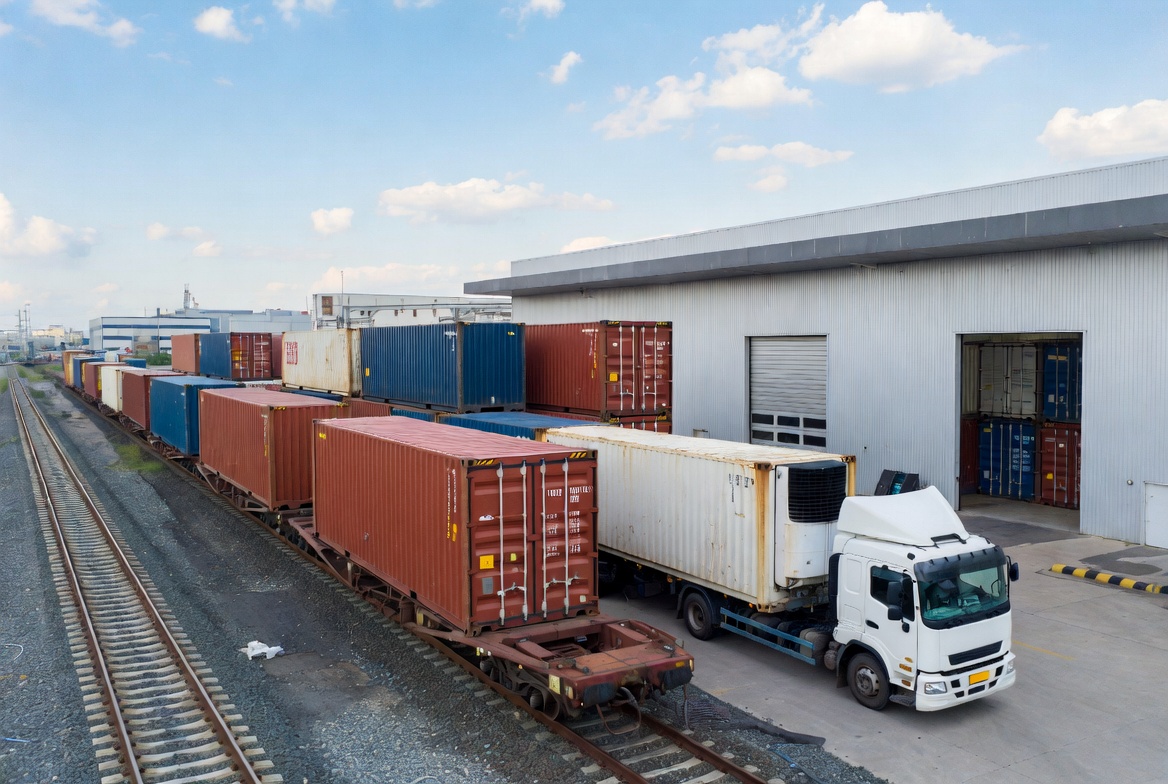
A reliable rail shipment is built on careful coordination from the start. The process is simple in concept, but execution matters because rail freight crosses multiple customs and transport systems.
Here is the usual workflow:
1. Confirm cargo details with the supplier.
2. Book space and arrange the schedule.
3. Prepare export documents.
4. Complete China customs clearance.
5. Move the cargo to the rail terminal.
6. Handle border transfer and transit procedures.
7. Manage arrival clearance at destination.
8. Deliver to warehouse, port, or final address.
The strongest rail shipments are those where documentation, packaging, and timing are all prepared early. When these pieces are in order, delays become far less likely.
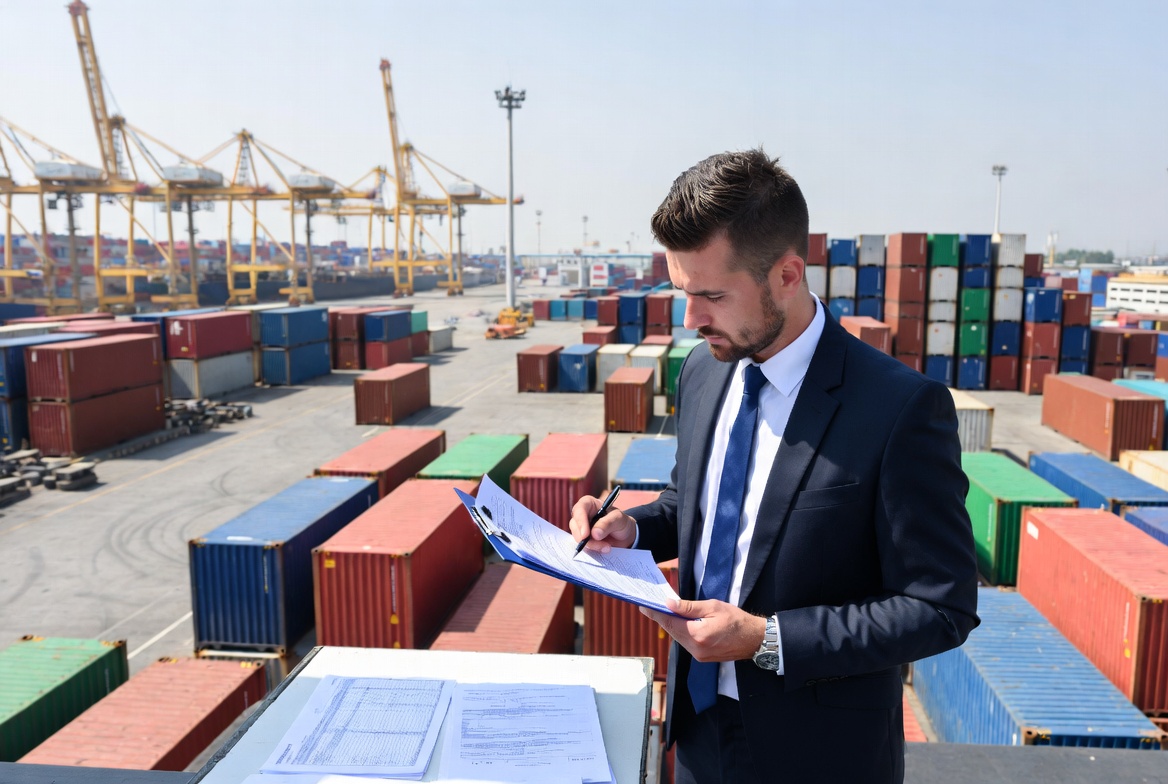
Rail transport involves multiple jurisdictions, so documents must be accurate and consistent. A small mistake in declaration data can create unnecessary delay, especially at borders or during destination clearance.
Commonly required documents include:
- Commercial invoice.
- Packing list.
- HS code classification.
- Export declaration.
- Import clearance documents.
- Transit documents where applicable.
For importers, this is one of the biggest reasons to work with an experienced freight partner. A capable team can review the file set before cargo departs, which helps protect both transit time and total landed cost.
One major advantage of today's rail network is that it is becoming more predictable. Fixed-schedule services, expanded equipment options, and improved cross-border coordination are making planning easier for businesses that previously viewed rail as inconsistent.
This matters because supply chains do not only need speed; they need reliability. A slightly longer but more stable transit can outperform a theoretically faster option that fails to arrive on schedule. For many importers, especially in manufacturing and retail replenishment, that reliability is where rail creates real value.
Another important development is the ongoing modernization of service models. New fixed-timetable trains and stronger route management are helping some corridors cut transit time materially, which improves the appeal of rail for time-sensitive goods.
Every shipment has risk, but rail freight risk is manageable when handled correctly. Most problems come from avoidable issues such as weak packaging, missing documents, or poor route planning.
Best practices include:
- Use strong export packaging.
- Match cargo type to the right service.
- Pre-check all documents before departure.
- Buy cargo insurance.
- Keep buffer time for customs and border transfer.
- Choose an experienced rail specialist.
- Track shipment milestones proactively.
For higher-value cargo, insurance is strongly recommended. It adds an extra layer of protection and helps businesses stay calm if an unexpected event occurs.
For many shippers, the real value is not only the transport mode itself. It is the ability to manage the entire chain with one accountable logistics partner. GB FREIGHT AGENCY CO., LTD. supports supplier booking coordination, export customs, transport execution, and final delivery so businesses can reduce communication gaps and improve shipment visibility. [user background]
This end-to-end model is especially useful for exporters who need a practical solution across multiple regions, including Europe, North America, South America, Southeast Asia, the Middle East, Africa, and Oceania. A single coordinated workflow can save time, reduce errors, and make freight planning much easier for growing businesses. [user background]
Rail freight is a strong choice for:
- Importers who need faster replenishment than sea freight.
- Brands that want to reduce air freight spending.
- Manufacturers shipping parts or components on a schedule.
- Sellers launching products with tighter delivery deadlines.
- Companies that need a more predictable mid-speed supply chain.
It is especially attractive when the shipment value, urgency, and volume sit in the "middle zone" where neither sea nor air feels ideal. That is where rail often delivers the best business result.
The rail sector continues to expand because governments and operators are improving efficiency, pricing, security, and service coordination. China's ongoing investment in new routes, better tracking, and stronger cross-border cooperation is likely to keep rail freight competitive in the coming years.
That makes rail an increasingly strategic choice for global trade. Businesses that learn how to use it well now can gain a supply chain advantage before demand pushes capacity even tighter.
If your shipment needs a practical balance of speed, cost, and control, rail freight from China deserves serious consideration. It is fast enough for many time-sensitive goods, cost-efficient enough for commercial planning, and mature enough to support real-scale international trade.
For businesses that want a dependable freight solution with clearer coordination from supplier booking to final delivery, GB FREIGHT AGENCY CO., LTD. can help design the right route, manage the paperwork, and keep the shipment moving with fewer surprises. [user background]
Contact our team today to discuss your cargo details, destination, and delivery timeline, and receive a tailored rail freight solution for your next shipment.
Rail freight from China is a transport service that moves goods by train from China to overseas destinations through international rail networks and related delivery arrangements.
Transit time varies by route and customs handling, but many China-Europe rail services move in about 11 to 25 days depending on the corridor and schedule.
Yes. Rail is usually much cheaper than air freight while still being significantly faster than ocean freight on many lanes.
Rail is commonly used for machinery parts, auto parts, electronics, appliances, industrial goods, packaging materials, and other non-hazardous cargo.
Typical documents include the commercial invoice, packing list, HS codes, export declaration, and any transit or import clearance documents required by the destination.
Because rail freight crosses multiple checkpoints and customs systems, an experienced forwarder helps reduce delay risk, avoid documentation errors, and coordinate delivery more smoothly.
1. [Rail Freight from China to Europe: Cost, Transit Time, and Best ...]
2. [China-Europe freight train services faster, greener]
3. [Rail Freight From China (2026) – Time, Rates, Routes & ...]
4. [China builds up rail freight with Europe]
5. [China-Europe freight train service boosts Eurasian trade with shared ...]
6. [How the China-Europe Railway Express Is Transforming ...]
7. [China–Europe Rail Freight: The optimal solution - Nexline Group]


