
Views: 248 Author: GB FREIGHT Publish Time: 2026-08-13 Origin: Site


Content Menu
● Sea Freight Forwarder vs Railway Freight Forwarder: The Core Difference
● When a Sea Freight Forwarder Is the Better Choice
>> Choose sea freight when your cargo has these characteristics
>> Sea freight costs: look beyond the ocean rate
● When a Railway Freight Forwarder Is the Better Choice
>> Choose railway freight when speed protects revenue
>> Rail freight requires earlier capacity planning
● Transit Time: Fastest Is Not Always Best
>> Compare door-to-door timing, not just headline transit time
● Cost Comparison: Freight Rate vs Total Landed Cost
>> A practical cost-selection checklist
● Reliability, Risk, and Route Resilience
>> Build a two-mode freight strategy
● Documentation and Customs: Where Forwarding Expertise Matters
● How to Choose the Right China-Europe Freight Forwarder
>> Questions to ask before booking
● Make the Right Choice for Your Next Shipment
● FAQ
>> Is sea freight cheaper than railway freight from China to Europe?
>> How long does sea freight take from China to Europe?
>> How long does railway freight take from China to Europe?
>> Can I ship a full container by rail from China to Europe?
>> Which products are suitable for China-Europe rail freight?
>> Should I split my shipment between sea and rail?
>> Does a freight forwarder handle export customs declaration in China?
For China-Europe trade, choosing between a sea freight forwarder and a railway freight forwarder is no longer just a question of price. It affects inventory levels, delivery reliability, customs coordination, customer satisfaction, and the resilience of your entire supply chain.
At GB FREIGHT AGENCY CO., LTD., our team has supported international shipments from China for 15 years. From supplier booking coordination and export customs declaration to main carriage and final delivery, we help businesses select the transport solution that fits their cargo, delivery window, and budget—not simply the lowest initial quote.

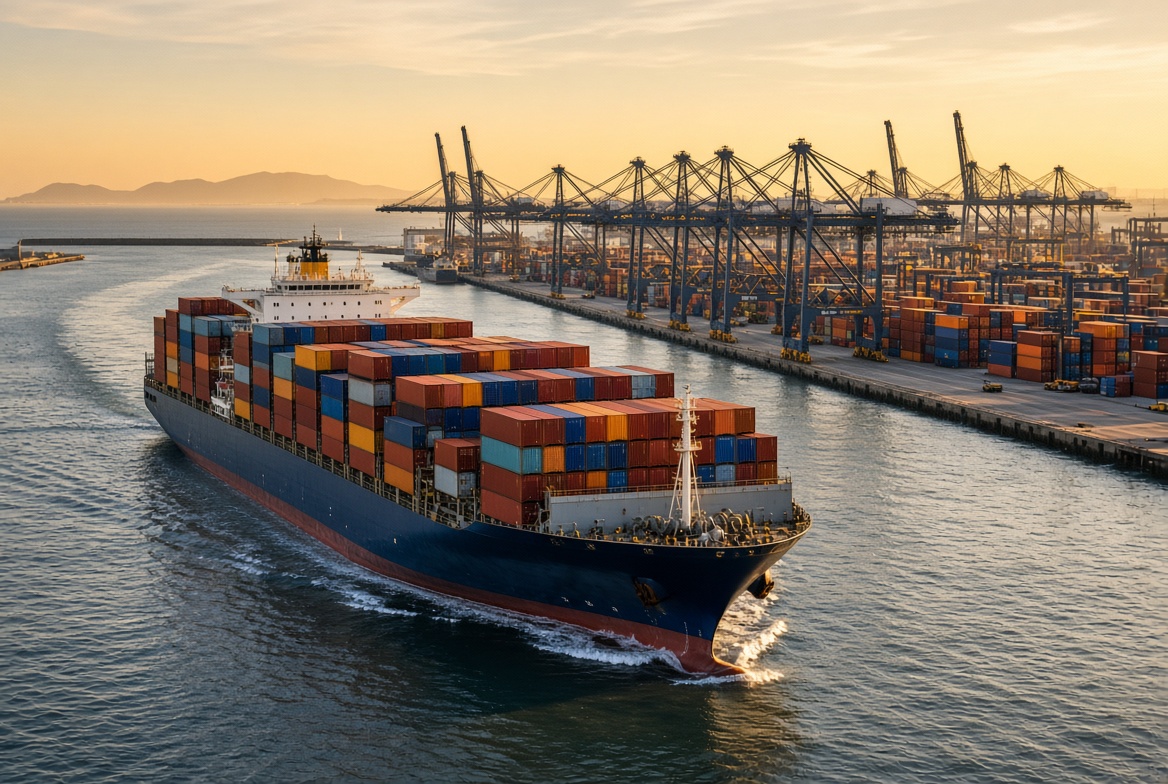
A sea freight forwarder organizes containerized or bulk cargo transport from Chinese ports to European ports. Typical gateways include Shanghai, Ningbo, Shenzhen, Qingdao, Rotterdam, Hamburg, Antwerp-Bruges, and Genoa. Sea freight remains the preferred choice for high-volume, heavy, and cost-sensitive shipments.
A railway freight forwarder arranges inland rail transportation between China and Europe through scheduled China-Europe rail corridors. Rail is often selected by importers that need a faster alternative to ocean shipping but want to avoid the premium cost of air freight.
The best option depends on cargo urgency, shipment volume, destination, product value, and supply-chain risk tolerance.
| Decision factor | Sea freight forwarder | Railway freight forwarder |
|---|---|---|
| Typical China-Europe transit time | About 28–45 days door-to-door | About 16–25 days door-to-door |
| Cost level | Usually lower for full containers and heavy goods | Usually higher than sea but lower than air |
| Capacity | Very high; suitable for large-scale cargo | More limited, especially during peak periods |
| Schedule flexibility | Frequent vessel departures, but rollovers can occur | Planned departures, subject to space and corridor conditions |
| Best for | Bulk cargo, low-value products, stable demand | Time-sensitive, mid-to-high-value cargo |
| Main transport risk | Port congestion, weather, route disruption, transshipment delays | Border processing, capacity limits, route and geopolitical changes |
| Carbon profile | Efficient per container on large-volume shipments | Often attractive for shippers seeking lower-emission land transport |
Important: transit times are planning ranges, not guarantees. Customs inspections, weather, port operations, container availability, border procedures, destination delivery appointments, and route disruptions can all affect final delivery.
Sea freight is the backbone of China-Europe trade for a clear reason: it provides unmatched scale. One vessel can carry a volume that rail services cannot economically replace. For businesses moving full-container loads, machinery, building materials, furniture, home appliances, industrial components, chemicals, or low-margin consumer goods, ocean shipping is often the most commercially sensible option.
A professional sea freight forwarder does much more than reserve a container. The forwarder should coordinate supplier readiness, confirm shipping instructions, arrange trucking or warehouse receiving, manage export declarations, issue shipping documents, track vessel movements, and coordinate destination clearance and delivery.
- High volume: You ship one or multiple 20GP, 40GP, or 40HQ containers regularly.
- Heavy or oversized cargo: Weight and volume make rail pricing less attractive.
- Flexible delivery dates: Your buyer can accept a longer lead time.
- Stable forecasts: You can order earlier and maintain sufficient stock.
- Lower cargo value: The cost of tying up inventory in transit is manageable.
- Non-urgent replenishment: The shipment supports normal production or seasonal inventory planning.
For example, a European distributor importing several containers of furniture from Foshan for a promotion scheduled three months ahead will usually benefit from sea freight. The shipment is large, the goods are relatively bulky, and the company can plan inventory in advance.
A low ocean freight quotation does not always equal the lowest total cost. Importers should review every cost component before confirming a booking:
- Origin trucking or container loading
- Export customs declaration
- Terminal handling charges
- Documentation and filing fees
- Ocean freight and carrier surcharges
- Destination port charges
- Customs clearance
- Demurrage and detention exposure
- Inland delivery from port to warehouse
A reliable sea freight forwarder explains what is included and excluded. This prevents surprise charges at destination and helps buyers compare quotations on a like-for-like basis.
Railway freight is the practical middle option for businesses that cannot wait for ocean transit but do not need air freight. It is particularly useful for manufacturers and importers managing tighter inventory cycles, urgent replenishment, production-line components, aftermarket parts, electronics, retail launches, and higher-value goods.
The China-Europe rail network has continued to expand. In the first quarter of 2026, services completed 5,460 train trips and moved 546,000 TEUs, while the network reached 235 cities across 26 European countries.
Railway transportation can be the stronger commercial choice when a delay would cost more than the freight-rate difference. Consider rail when you need to:
- Avoid a stockout at a European warehouse.
- Support a factory line waiting for parts or components.
- Replenish best-selling products before a campaign or retail deadline.
- Move higher-value cargo with less cash tied up in long transit.
- Reduce dependence on one transport mode during volatile periods.
- Balance speed and budget between ocean and air options.
Take an importer of automotive spare parts in Germany. If a popular component is approaching zero stock, waiting another three or four weeks for ocean freight may lead to lost dealer sales and damaged customer relationships. A rail shipment can restore stock faster while costing considerably less than air transport.
Rail is not an unlimited-capacity service. During periods of high demand, equipment and confirmed train space may be constrained. Businesses should not assume that a last-minute rail booking will be available at the desired rate or departure date.
Rail rates also change in response to capacity, border operations, equipment supply, and market demand. In May 2026, one market update reported average China-Europe rail freight at around USD 8,300 per FEU for shipper-owned containers, with rates rising further during the month.
For this reason, a capable railway freight forwarder should provide:
1. A confirmed origin receiving plan.
2. A realistic train departure window.
3. Details on the rail corridor and destination terminal.
4. A clear explanation of transshipment or gauge-change handling.
5. Customs-document requirements before cargo handover.
6. A final-mile delivery plan after arrival in Europe.
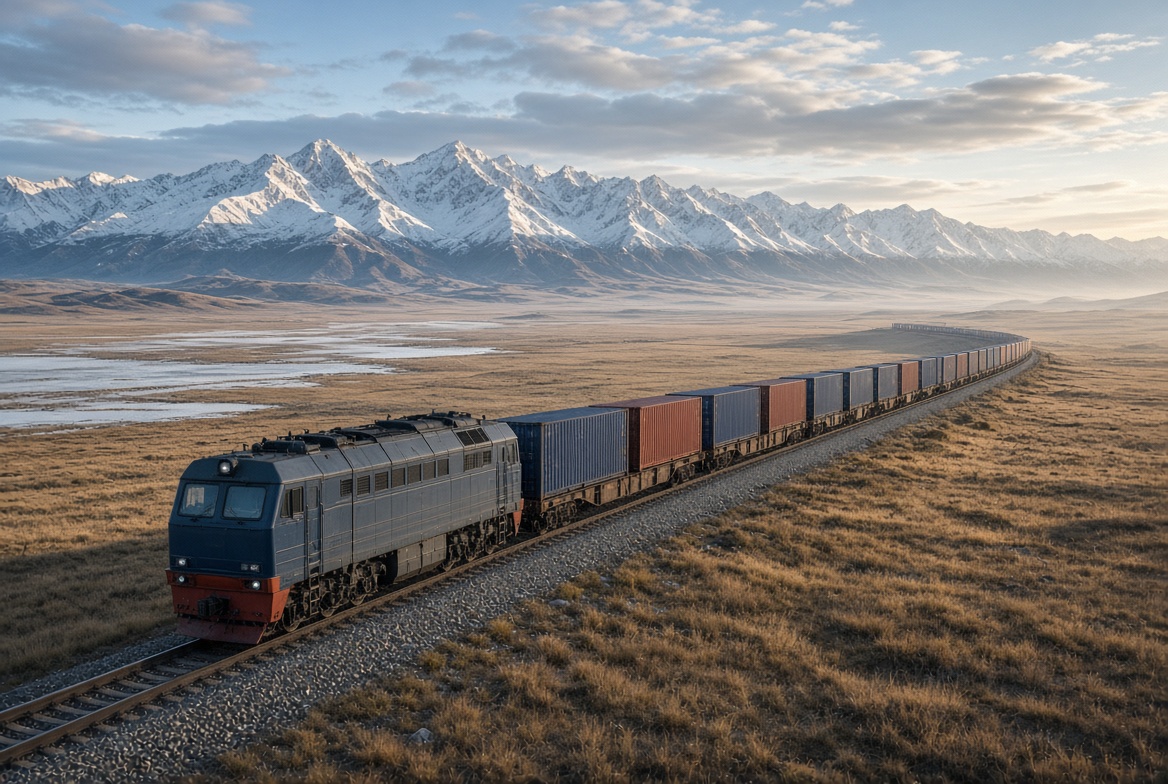
The main advantage of rail is speed. In many China-Europe lanes, rail can cut transport time roughly in half compared with sea freight. However, the right decision is based on total supply-chain time, not only main-carriage transit time.
A shipment may spend days waiting for supplier cargo to be ready, moving from a factory to a terminal, clearing export customs, waiting for destination clearance, or being scheduled for final delivery. A forwarder that only quotes port-to-port or terminal-to-terminal timing does not give the buyer a complete picture.
Ask your freight forwarder to show the full timeline:
| Shipment stage | Sea freight planning point | Railway freight planning point |
|---|---|---|
| Supplier cargo ready | Confirm factory loading date and container availability | Confirm warehouse receiving cut-off and consolidation date |
| China export process | Allow time for port entry, customs, and vessel cut-off | Allow time for terminal cut-off, customs, and train manifest |
| Main transport | Longer voyage, possible transshipment | Shorter rail movement, possible border transfer |
| European arrival | Port discharge and potential congestion | Terminal handling and customs release |
| Final delivery | Trucking appointment from port | Trucking appointment from rail terminal |
Expert perspective: The better mode is the one that meets the delivery date with the lowest total landed cost and the least disruption risk. A cheap shipment that arrives after a production shutdown or retail deadline is not truly economical.
Sea freight generally delivers the lowest transportation cost per cubic meter or per container. This is why it remains highly competitive for large-volume China-Europe shipments. Rail normally costs more because capacity is lower and the network involves multiple operational handovers across borders.
But transport cost alone is incomplete. Importers should calculate the carrying cost of inventory, the potential cost of a stockout, and the value of faster cash conversion.
A useful decision formula is:
Total logistics cost=Freight cost+Origin/destination charges+Inventory carrying cost+Delay risk cost
If rail reduces transit by 15 to 20 days, that can reduce capital tied up in goods still moving across Eurasia. For high-value products, fast-selling items, or critical components, this benefit may justify a higher freight price.
Before deciding, ask these questions:
1. What is the shipment's full door-to-door cost under each mode?
2. How much sales revenue or production value is at risk if cargo arrives late?
3. What is the daily inventory cost while goods are in transit?
4. Is the cargo dense, oversized, hazardous, temperature-sensitive, or high-value?
5. Can one shipment be split between sea and rail to reduce risk?
6. Are destination port, rail-terminal, and final-mile charges included?
A forwarder should help you calculate these variables rather than steer every shipment toward one preferred mode.
Both sea and rail have operational risks. The risk profile is simply different.
Sea freight may be affected by weather, port congestion, blank sailings, vessel schedule changes, container rollovers, transshipment delays, and disruptions along key maritime corridors. Rail can provide a more controlled departure pattern, yet it relies on terminal capacity, cross-border coordination, equipment availability, and changing conditions along Eurasian land corridors.
In 2026, strong demand and wider supply-chain disruption have reinforced the value of maintaining more than one China-Europe transport option. China-Europe rail container volumes rose 27% year on year between January and April 2026, while the Central Eurasian Corridor recorded 30% growth.
For many importers, the strongest solution is not "sea or rail." It is a planned combination of both.
- Use sea freight for core replenishment, large orders, and predictable demand.
- Use rail freight for priority stock, launch inventory, and recovery shipments.
- Keep a small air freight budget for true emergencies only.
- Review inventory weekly and reserve rail capacity before shortages become urgent.
- Work with one forwarder that can compare routes objectively and coordinate documents across modes.
This approach protects margin while giving supply-chain teams a way to respond when forecasts change.
Transport selection does not remove customs responsibility. Whether goods travel by vessel or train, the shipper and importer must prepare accurate commercial documents and comply with export and import requirements.
Common documentation includes the commercial invoice, packing list, sales contract or purchase order, export declaration data, HS code information, transport document, and any product-specific certificates required by the destination market.
Incorrect declarations can lead to cargo holds, penalties, reclassification issues, or delayed delivery. This is especially important for batteries, electronics, machinery, medical-related products, wood products, food, chemicals, and goods subject to conformity requirements.
A dependable freight forwarder should flag document gaps before cargo moves. At GB FREIGHT AGENCY CO., LTD., we coordinate with suppliers early so that booking details, cargo descriptions, package counts, marks, weights, and declared values are consistent across operational documents.
Do not choose a forwarder solely because it offers the lowest rate. A low quote without transparent charges, confirmed space, responsive communication, or customs support can create expensive problems later.
- Can you provide both sea freight and railway freight options for my route?
- Is your quotation door-to-door, port-to-port, or terminal-to-terminal?
- Which charges are excluded from the quote?
- What are the cargo cut-off dates and expected departure windows?
- Which European port or rail terminal will handle my shipment?
- Can you arrange customs clearance and final delivery?
- What happens if a vessel rolls, a train departure changes, or cargo is inspected?
- Will I receive regular shipment updates from a named operations contact?
The best forwarder is a logistics partner that understands your product, your destination, your buyer's expectations, and the commercial cost of delay.
Sea freight is usually the best choice for large, heavy, and cost-sensitive cargo with a flexible delivery window. Railway freight is usually the smarter choice for time-sensitive, higher-value, or inventory-critical goods moving between China and Europe.
GB FREIGHT AGENCY CO., LTD. can assess your cargo details, supplier location, destination, target delivery date, and budget to recommend a tailored China-Europe shipping plan. Contact our team for a transparent sea freight, railway freight, or combined transport quotation from China to Europe and worldwide destinations.
In most cases, yes. Sea freight is usually more economical for full containers, bulky goods, and low-value cargo. However, rail may offer better overall value when faster delivery prevents inventory shortages, delayed sales, or production disruption.
Typical door-to-door sea freight planning ranges from about 28 to 45 days. Actual timing depends on the China port, European destination, carrier schedule, transshipment, customs processing, and final-mile delivery arrangement.
Railway freight commonly takes around 16 to 25 days door-to-door. Timing varies based on the Chinese origin, selected corridor, terminal operations, border procedures, customs clearance, and delivery destination.
Yes. Depending on the route, equipment, cargo type, and available capacity, full-container and consolidated rail options may be available. Advance booking is advisable, particularly during high-demand periods.
Rail is often suitable for machinery parts, automotive components, electronics, consumer goods, fashion products, industrial supplies, retail inventory, and other goods where transit time has commercial value. Cargo suitability should be confirmed before booking.
A split strategy can be effective. You can move most inventory by sea for cost control and send urgent or fast-selling items by rail. This reduces the risk of stockouts without moving the entire order on the more expensive mode.
A qualified China freight forwarder can coordinate export customs declaration when the required commercial and product information is available. Shippers should provide accurate invoices, packing lists, HS codes, cargo descriptions, and any required certificates.
1. China State Railway Group data reported by Xinhua, "[China-Europe freight train services support supply chains amid global strains]," April 16, 2026. [english.www.gov]
2. ERAI, "[Eurasian logistics market update: May 2026, issue 31]," May 21, 2026. [index1520]
3. Great Hensen, "[China-Europe Rail vs Sea Freight: The Multimodal Middle Ground]," June 14, 2026. [greathensen]
4. 1520 International, "[Eurasian logistics market update: March 2026]," March 2026. [1520international]
5. Value Chain Asia, "[China-Europe Rail: Faster Than Sea, Cheaper Than Air]," July 6, 2026. [valuechainasia]


