
Views: 218 Author: GB FREIGHT Publish Time: 2026-08-28 Origin: Site


Content Menu
● Why Dongguan Is a Key Export Shipping Hub
● What Services Should a Dongguan Freight Forwarder Provide?
>> Railway Transportation From China
>> Customs Clearance and Export Documentation
>> Warehousing and LCL Consolidation
● How to Choose Between FCL, LCL, Air, and Rail
● DDP, DAP, and Door-to-Door Delivery: Know the Difference
● A Practical Shipment Workflow From Dongguan
>> 1. Send Complete Cargo Details
>> 2. Confirm the Shipping Plan
>> 3. Coordinate Supplier Readiness
>> 4. Complete Export Procedures
>> 5. Track and Prepare for Arrival
● Why GB FREIGHT AGENCY CO., LTD. Is a Practical Choice
● Request Your Dongguan Shipping Quote
>> What is the best shipping method from Dongguan to the USA or Europe?
>> Can you collect goods from multiple Dongguan suppliers?
>> Is LCL cheaper than a full container?
>> What documents are needed to ship cargo from China?
>> Can you arrange customs clearance and door-to-door delivery?
>> How long does shipping from Dongguan take?
>> What information do you need for a shipping quote?
Finding the right shipping company in Dongguan can make the difference between a smooth international delivery and an expensive supply-chain disruption. For exporters sourcing furniture, electronics, machinery, garments, accessories, packaging, or consumer goods in Dongguan, the best freight forwarder is not simply the one offering the lowest quote—it is the partner that can coordinate pickup, export customs clearance, international transport, and final delivery with clear accountability.
At GB FREIGHT AGENCY CO., LTD., we have 15 years of experience helping businesses ship cargo from China to Europe, North America, South America, Southeast Asia, the Middle East, Africa, and Oceania. We arrange different transportation, LCL consolidation, customs clearance, warehousing, and door-to-door delivery based on each shipment's cargo type, timeline, budget, and destination requirements.

Dongguan sits in the heart of the Pearl River Delta manufacturing region. Its proximity to Shenzhen, Guangzhou, Hong Kong, and major South China ports gives exporters flexible routing choices for international cargo.
For many buyers, Dongguan is not just one supplier location. A single purchase order may involve factories in Dongguan, Shenzhen, Foshan, Guangzhou, and nearby cities. That makes local coordination especially important.
A capable Dongguan freight forwarder should be able to manage the full export process:
- Factory pickup from one or multiple suppliers
- Cargo inspection coordination before loading
- Warehouse receiving and inventory checks
- LCL consolidation for small shipments
- Container loading and shipping booking
- Export declaration and customs documentation
- Sea, air, rail, or multimodal transport
- Destination customs support and final-mile delivery
The original market overview lists a variety of Dongguan logistics providers with different strengths, including dangerous-goods handling, bonded warehousing, project cargo, Southeast Asia routes, Amazon-oriented delivery, and China–Hong Kong transport. This shows that there is no single "best" provider for every shipment. The right choice depends on your actual cargo and trade terms.
A logistics provider should recommend a transport plan after understanding your shipment—not before. At GB FREIGHT AGENCY CO., LTD., we begin by reviewing the cargo details, origin location, destination, delivery deadline, shipping terms, and customs requirements.
Sea freight is generally the most practical choice for large volumes, heavy cargo, and shipments with flexible transit times. Depending on cargo volume, you may use a full container or share container space with other shippers.
Common sea freight options include:
- FCL shipping: A dedicated 20GP, 40GP, 40HQ, or special container for one shipment
- LCL shipping: Shared-container service for smaller cargo volumes
- Special container shipping: Flat racks, open-top containers, reefer containers, and other equipment for special cargo
- Port-to-port shipping: Delivery from the departure port to the destination port
- Door-to-door sea freight: Pickup, export handling, ocean transport, destination clearance support, and delivery to the agreed address
LCL can be a good option when a shipment does not justify the cost of a full container. However, shippers should evaluate the complete cost rather than comparing freight rates alone. LCL pricing may include origin receiving, consolidation, documentation, customs handling, destination deconsolidation, and delivery charges.
Air freight from China is suitable for urgent orders, product launches, samples, high-value goods, replacement parts, and time-sensitive replenishment.
Air cargo is often chosen when:
- Production is completed later than planned
- A customer faces a stockout risk
- Goods are lightweight but commercially valuable
- Ocean transit time does not meet the delivery deadline
- A business needs faster movement for samples or trial orders
Air freight should be planned carefully. Chargeable weight may be based on either actual weight or volumetric weight, depending on which is higher. Accurate carton dimensions help avoid quotation differences after warehouse measurement.
Railway transportation can offer a useful middle option for selected China–Europe shipments. It may be appropriate for cargo that needs faster transit than standard ocean freight but does not require the premium cost of air freight.
Rail is not automatically the best choice for every European destination. The final route, cargo characteristics, border procedures, delivery location, equipment availability, and total door-to-door cost all need review before booking.
Customs compliance is not a paperwork afterthought. It affects whether cargo can leave China smoothly and whether the documents match the commercial transaction.
A standard shipment may require documents such as:
- Commercial invoice
- Packing list
- Bill of lading, sea waybill, or air waybill
- Shipping instructions
- Export customs declaration
- Certificates or permits where applicable
- Product-specific documents for regulated goods
Shipping instructions provide the carrier with key cargo, shipper, consignee, and transport information used to prepare the bill of lading. Inaccurate product names, values, weights, or consignee details can create avoidable delays and correction fees.
For businesses buying from multiple suppliers, warehouse consolidation can reduce unnecessary cost and simplify delivery. Instead of each supplier sending a separate shipment overseas, cargo can be collected into a warehouse, checked, combined, and dispatched under one plan.
This can help you:
- Reduce duplicate destination charges
- Improve carton-count visibility
- Combine cargo from several suppliers
- Optimize container utilization
- Schedule one coordinated delivery
- Identify visible packing issues before departure
For LCL cargo, consolidation is especially valuable because cargo must be received, measured, packed, documented, and loaded into a shared container on schedule.
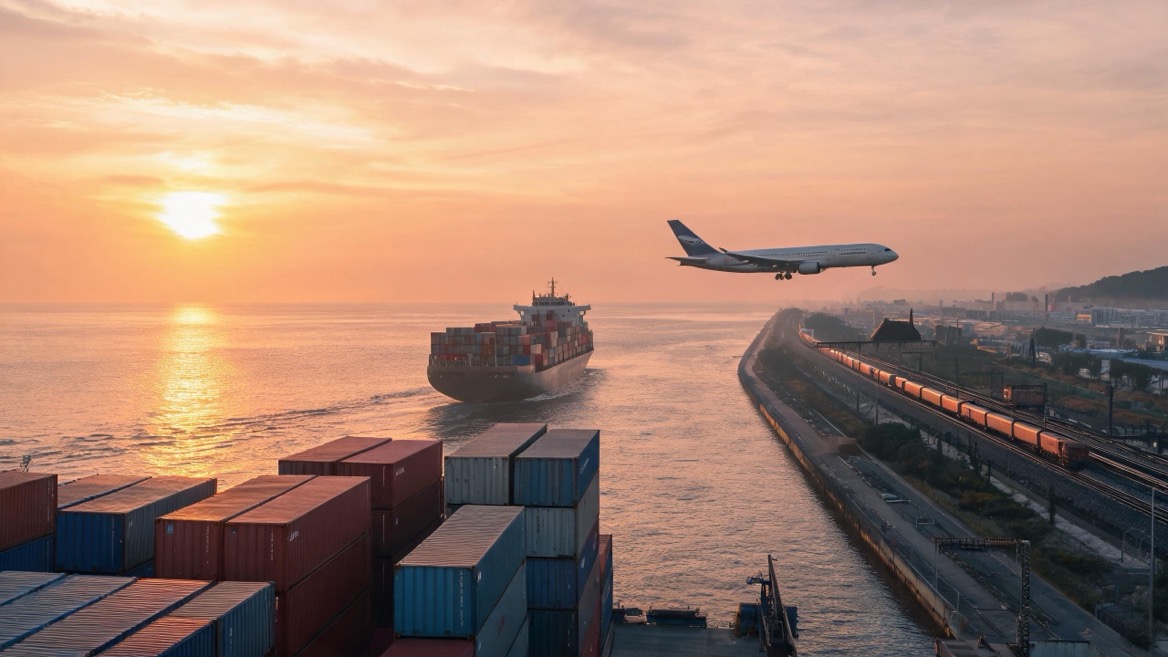
The most suitable transport mode is based on the complete commercial picture, not only on transit time. Use this practical framework before requesting a quote.
| Shipping Method | Best For | Key Advantage | Main Consideration |
|---|---|---|---|
| FCL sea freight | Large-volume or heavy cargo | Better container control and cost efficiency at scale | Requires enough cargo to justify a full container |
| LCL sea freight | Smaller shipments | Avoids paying for an unused container | More handling points and destination charges |
| Air freight | Urgent or high-value cargo | Fast international movement | Higher cost and chargeable-weight rules |
| Railway transport | Selected China–Europe routes | A balance between sea and air timing | Route coverage and final delivery must be checked |
| Door-to-door delivery | Buyers seeking one coordinated solution | Fewer operational handovers | Import responsibilities must be clearly agreed |
A useful rule is to compare landed logistics cost, not only the freight line on a quotation. The total may include pickup, warehouse receiving, export documents, customs handling, terminal charges, freight, insurance, destination handling, duties and taxes where applicable, and final delivery.
Many importers use "door-to-door" as a general term, but it can describe different commercial arrangements. Before booking, both sides should confirm the delivery term, destination address, customs responsibility, duties, taxes, unloading arrangements, and any exclusions.
Under DDP, the seller carries the broadest set of obligations. This normally includes export, transit, and import customs formalities, as well as applicable duties and taxes. However, DDP may not be practical in every destination because import clearance rules can restrict a foreign seller's ability to act as importer or complete tax formalities.
Under DAP, the seller arranges delivery to the named destination, while the buyer generally handles import clearance, import duties, and taxes.
| Delivery Arrangement | Export Clearance | Import Clearance | Duties and Taxes | Final Delivery |
|---|---|---|---|---|
| EXW | Usually buyer-managed | Buyer-managed | Buyer-managed | Buyer-managed |
| FOB | Seller handles export process | Buyer-managed | Buyer-managed | Buyer-managed or buyer-arranged |
| DAP | Seller handles export process | Buyer-managed | Buyer-managed | Seller delivers to agreed place |
| DDP | Seller handles export process | Seller-managed where permitted | Seller-managed where agreed | Seller delivers to agreed place |
Do not select DDP simply because it sounds easier. First confirm whether the destination, product category, consignee structure, and tax arrangement support it. A reliable forwarder should explain the operational boundaries clearly rather than promising an unrealistic all-inclusive rate.
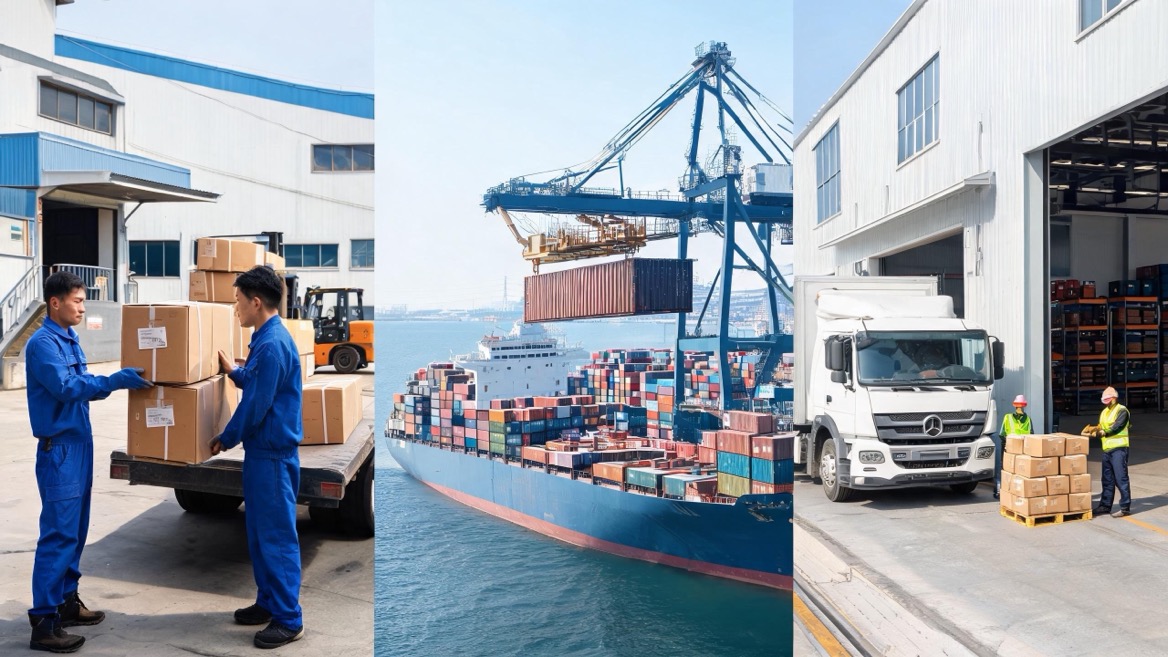
A well-managed shipment follows a controlled process from supplier readiness to final delivery.
Provide the product name, quantity, carton dimensions, gross weight, pickup address, destination postal code, target delivery date, and preferred shipping terms.
For special goods, also disclose batteries, liquids, magnets, chemicals, food-contact materials, wooden packaging, branded products, or oversized pieces. Early disclosure allows the forwarder to verify whether special handling or documents may be required.
Your forwarder should present transport options with clear inclusions and exclusions. Compare:
- Transit-time estimates
- Origin charges
- Freight cost
- Destination charges
- Customs scope
- Delivery scope
- Insurance options
- Validity period of the quotation
Before cargo pickup, confirm that production is complete, carton marks are correct, packing is suitable for international transport, and all export documents match the actual goods.
For multi-supplier orders, a warehouse receiving plan should identify each supplier, purchase order, carton quantity, and required delivery deadline.
Once cargo is ready, the shipment moves through pickup, warehouse or port handling, booking confirmation, customs declaration, and departure. Documentation must stay consistent across the invoice, packing list, declaration, and transport document.
The destination consignee should receive advance notice before arrival. This creates time to prepare import documents, payment arrangements, customs instructions, and warehouse receiving resources.
We focus on turning complex China export movements into clear, manageable shipping plans. Our work begins at the supplier level and continues through final delivery coordination.
Our services include:
- Sea freight: FCL, LCL, and special cargo solutions
- Air freight: Priority and standard air cargo options
- Railway transportation: China–Europe transport planning where appropriate
- Customs clearance: Export declaration coordination and document support
- Warehousing: Receiving, consolidation, storage, labeling, and loading support
- Door-to-door delivery: Tailored solutions for global destinations
- Multi-supplier coordination: Pickup and consolidation from factories across China
We serve exporters and overseas buyers shipping from China to Europe, North America, South America, Southeast Asia, the Middle East, Africa, and Oceania.
Our approach is straightforward: assess the cargo honestly, recommend the right route, explain the charges clearly, and coordinate the process from booking to delivery.
If you are sourcing goods in Dongguan or elsewhere in China, send us your cargo details for a tailored shipping plan. GB FREIGHT AGENCY CO., LTD. can help you compare sea freight, air freight, railway transportation, LCL consolidation, customs clearance, warehousing, and door-to-door delivery options.
To receive an accurate quote, share your pickup city, destination, cargo dimensions, gross weight, number of cartons or pallets, product description, and preferred delivery date.
It depends on your shipment volume, timeline, and budget. FCL sea freight is often suitable for larger shipments, LCL works for smaller ocean cargo, air freight suits urgent goods, and rail may be considered for selected China–Europe routes.
Yes. We can coordinate pickups from multiple suppliers, receive cargo at a warehouse, check carton quantities, consolidate the shipment, and arrange international transport under one shipping plan.
Not always. LCL can cost less for small cargo volumes, but it has additional consolidation and destination handling charges. Once cargo volume increases, an FCL container may become more cost-effective.
Common documents include a commercial invoice, packing list, transport document, shipping instructions, and export customs declaration. Additional permits, certificates, or product documents may be needed depending on the goods and destination.
Yes. We can coordinate export customs clearance in China and arrange door-to-door delivery solutions. The exact scope of destination clearance, duties, taxes, and final delivery should be confirmed before booking.
Transit time depends on the route, transport mode, carrier schedule, customs processing, and final delivery location. Air freight is usually the fastest option, while sea freight is generally more economical for larger volumes.
Please provide the pickup address, destination, product description, quantity, package dimensions, gross weight, shipping terms, and required delivery date. For battery, chemical, liquid, magnetic, or oversized cargo, provide those details at the start.
- [International Chamber of Commerce Academy — DAP or DDP under Incoterms® 2020]
- [International Chamber of Commerce Academy — EXW or DDP under Incoterms® 2020]
- [Maersk — Important Shipping Documents]
- [Maersk — What Are Shipping Instructions?]
- [Maersk — Less-than-Container Load Logistics and Shipping]
- [International Trade Administration — Common Export Documents]
- [International Trade Administration — China: Import Requirements and Documentation]
- [Original Article: List of Shipping Companies in Dongguan] [ddpchain]


