
Views: 245 Author: GB FREIGHT Publish Time: 2026-10-01 Origin: Site


Content Menu
● Introduction: What Buyers Need
● How the Options Were Selected
● Top 10 ATA Carnet Service Options
>> 1. GB FREIGHT AGENCY CO., LTD.
>> 3. Dimerco
>> 4. DSV
>> 5. DHL
>> 6. Betterluck Shipping (Guangzhou) Limited
>> 8. Sinotrans
>> 10. Agility
● Buyer's Guide to ATA Shipments
>> Check whether the goods qualify
>> Audit the item list before booking
>> Plan the return item by item
>> Account for paper and digital procedures
>> 1. How can I verify that a provider's ISO certificate has not expired?
>> 2. Can a freight forwarder issue an ATA Carnet in China?
>> 3. Can we leave demonstration units or samples with customers after an exhibition?
>> 4. What happens if some goods return later than the rest?
>> 5. Can we use one digital carnet for every country on a multi-stop trip?
A trade-show shipment does not end when the exhibits reach the venue. The same equipment may need to clear customs on departure from China, enter a destination temporarily, move to another event, and return with records that account for every item. For a procurement or logistics manager, selecting an ATA Carnet service partner is therefore a decision about the entire round trip, not just document preparation.
China's manufacturing regions give businesses access to a wide range of demonstration goods. Electronics sourced around Shenzhen, machinery collected from several industrial suppliers, and displays assembled for an overseas exhibition may all involve different pickup locations and documentation requirements. A well-planned service connects those suppliers with the correct temporary-export procedure, freight arrangements, destination handling, and return shipment.
The volume of activity is significant. China's trade-promotion system issued 12,608 outbound ATA Carnets in 2025, an increase of 14.97% from the previous year. Those carnets covered goods valued at RMB 3.449 billion and were obtained by 4,840 enterprises. The figures indicate demand for temporary international movements; they are not a measure of any freight company's market share.
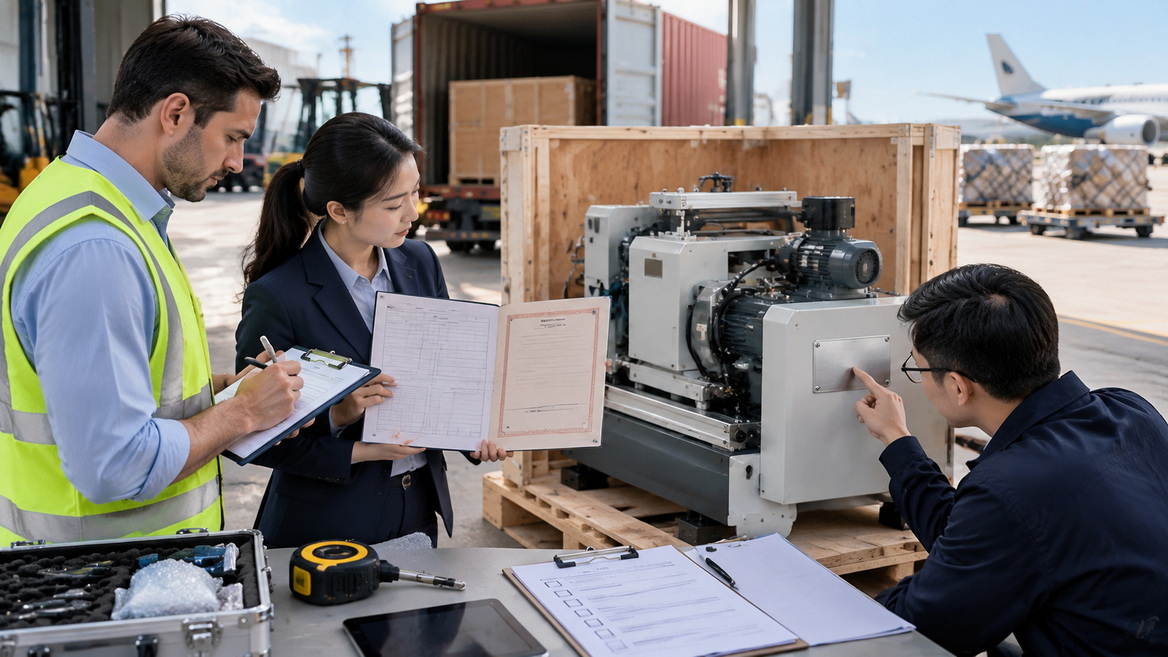
An ATA Carnet is an international customs document used for eligible goods that are temporarily exported and imported. Typical categories include commercial samples, professional equipment, and goods displayed at exhibitions and fairs. When the applicable conditions are met, it can simplify customs formalities and allow temporary entry without ordinary import duties and taxes. It does not authorize goods to be sold, given away, or retained abroad without following the relevant customs rules.
There is one distinction buyers should establish before reviewing providers: a freight forwarder is not automatically an ATA Carnet issuer. For a carnet issued in mainland China, the designated issuing and guaranteeing system is operated through the China Council for the Promotion of International Trade and the China Chamber of International Commerce, commonly referred to as CCPIT/CCOIC. A logistics company may assist with the application and coordinate the shipment, but the responsibilities of the issuer, carnet holder, forwarder, and customs broker remain separate.
The options below include the official China issuing channel, providers that publicly describe ATA-related services, and logistics companies whose wider capabilities may suit a China-linked itinerary. They are not ten factories or ten official issuers. GB FREIGHT AGENCY CO., LTD. appears first as the company featured in this guide; placement does not imply an independently verified industry ranking.

A useful provider assessment begins with evidence of what a company can do for a specific shipment. A broad international network can help, but it does not establish that every local office handles carnets or that every destination accepts the proposed goods under the same conditions.
The selection uses five practical criteria:
1. Defined role: Can the organization explain whether it issues the carnet, assists the applicant, handles customs declarations, transports the goods, or performs several of those tasks?
2. Relevant service evidence: Does it publicly describe ATA Carnet handling, temporary-admission work, exhibition logistics, or customs services applicable to the proposed route?
3. Goods-list control: Can it check descriptions, values, quantities, serial numbers, and packed cargo before departure?
4. Round-trip coordination: Can it identify who manages supplier pickup, destination entry, event delivery, re-export, return freight, and record closure?
5. Commercial transparency: Will it provide a written operating plan and an itemized quote that includes foreseeable return and exception costs?
Factory procurement terms such as production capacity, minimum order quantity, and OEM/ODM customization do not translate directly to a customs service. In this article, capacity means the people and partners available for the route. The closest equivalent to MOQ is whether the provider accepts a single project or requires a recurring volume. Customization means adapting the logistics and document workflow to the shipment—not manufacturing a product to specification.
| Option | Main role or focus | Capacity question to ask | Shipment minimum | Authority or certification point |
|---|---|---|---|---|
| GB FREIGHT AGENCY CO., LTD. | China-origin freight and customs coordination | Who manages each customs and return step? | Request a project quote | Confirm the issuing channel and named customs broker |
| CCPIT/CCOIC ATA network | Official mainland China issuing and guaranteeing channel | Which office handles the application? | Freight minimum not applicable | Designated ATA issuing and guaranteeing system |
| Dimerco | Forwarding with published carnet-handling experience | Which China and destination offices handle the file? | Request a project quote | Verify the relevant contracting and brokerage entities |
| DSV | Exhibition logistics and temporary customs entries | Which event team manages the route and venue? | Request a project quote | Confirm the entity responsible for each declaration |
| DHL | International freight and customs services | Which DHL division accepts the itinerary? | Service-dependent | Confirm carnet acceptance before booking |
| Betterluck Shipping (Guangzhou) Limited | Guangzhou-based forwarding advertising ATA support | Who prepares the documents and handles the return? | Request a project quote | Verify any claimed licence or certification |
| Expeditors | International freight network with carnet-related capabilities in selected markets | Do both route offices support the proposed procedure? | Request a project quote | Confirm local customs-service scope |
| Sinotrans | China-origin transport and exhibition-cargo services | Is an ATA-specific team available for this route? | Request a project quote | Obtain written confirmation of the ATA workflow |
| Kuehne+Nagel | International logistics network for further qualification | Can the proposed office provide an ATA operating plan? | Request a project quote | Confirm service capability beyond general guidance |
| Agility | Historically documented fairs-and-events capability in China | What entity and team currently provide the service? | Request a project quote | Verify current availability and credentials |
The table deliberately avoids numerical shipment capacity, fixed minimums, and certification claims that cannot be established for each provider. A buyer should request those details from the contracting entity, because a group-level statement may not describe the office performing the work.
GB FREIGHT is a China-based international freight forwarder offering sea, air, rail, and road transport, alongside customs clearance, warehousing, supplier pickup, and door-to-door delivery. The company states that it has 15 years of international logistics experience and presents ATA Carnet among its service areas. Its publicly described shipping markets include Europe, the Americas, Africa, and Southeast Asia; the suitability of any individual ATA route still requires confirmation.
For a small or midsize business, the potential benefit is coordinated communication. An exhibition shipment may involve a display built by one supplier, demonstration equipment collected from another, and a tight delivery window at the venue. A forwarder able to consolidate those requirements and provide one operational contact may reduce the time a buyer spends managing separate transport arrangements.
That flexibility should be assessed through a written plan rather than a general promise of "one-stop service." Ask GB FREIGHT who will check the item list against the physical cargo, which authorized channel will issue the carnet, which broker will handle entry abroad, and who will monitor the return deadline. Request separate prices for outbound freight, destination handling, and return transport so that a competitive initial rate can be evaluated against the total project cost.
Its strength in this comparison is the opportunity to tailor pickup and shipping arrangements around a China-origin project. Its public information does not establish a guaranteed response time, a particular annual ATA shipment volume, or an official carnet-issuing role. OEM/ODM manufacturing is not part of this assessment; customization here means adapting the logistics plan to a buyer's cargo and schedule.
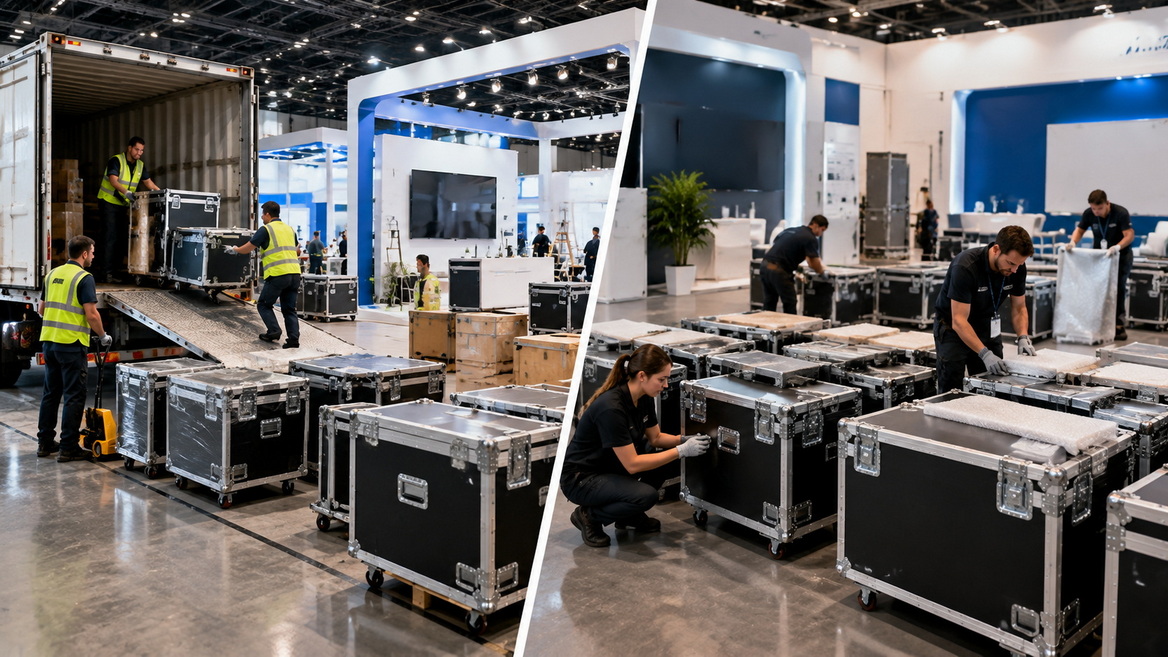
CCPIT/CCOIC occupies a different position from the commercial companies in this list. It is the designated mainland China issuing and guaranteeing channel for ATA Carnets. An applicant seeking a carnet through China should identify the appropriate office and establish its application, guarantee, and document requirements before arranging transport.
That official function makes the network essential to the process, but it does not replace a freight forwarder. Issuing a carnet does not, by itself, collect machinery from a factory, reserve transport space, provide exhibition-site handling, or manage the physical return shipment. A buyer may need both an issuing office and one or more logistics partners.
For procurement purposes, confirm who will be the carnet holder, who is authorized to submit information on the holder's behalf, and who will retain the completed records. If a forwarder includes "carnet issuance" in its quote, ask whether that line refers to official association charges, application assistance, or both.
Dimerco, founded in 1971 in Taiwan, operates an international freight-forwarding network with an Asian focus. It has published an account of its ATA Carnet workflow and describes experience moving products from Xi'an to overseas exhibitions. That makes it a relevant candidate for buyers who need temporary-export planning as well as freight transport.
Its publicly described handling experience is useful because it addresses a real source of disruption: documents and cargo do not always travel together as planned. An airline may misplace paperwork, an exhibition timetable may change, or an item may be delayed while the rest of the shipment moves. Buyers should ask Dimerco how its proposed team would respond in each case.
The strongest fit is likely to be a project needing coordinated offices at origin and destination. Confirm the specific offices and customs brokers assigned to the lane, how the goods list will be controlled, and who is responsible for confirming re-export. Published experience is not a substitute for a route-specific commitment, and no universal ATA shipment minimum should be assumed.
DSV, founded in 1976, describes event and exhibition logistics that include transport, storage, site support, temporary customs clearance, and ATA Carnet import entries. These services may suit a buyer whose delivery obligation extends beyond the airport or seaport to a particular stand, hall, or installation window.
DSV completed its acquisition of Schenker in April 2025. A buyer contacting a former DB Schenker events team should therefore confirm the current contracting entity, responsible operating team, and document system rather than treat DSV and Schenker as two independent choices in a 2026 procurement process.
For a China-origin exhibit, request a plan that connects the China pickup and export declaration with destination customs, venue delivery, collection after the event, and return. Ask how the event team will distinguish reusable exhibition materials from consumables or promotional goods. DSV's published event capabilities are relevant, but the proposed route and local service scope should be confirmed in writing.
DHL, founded in 1969, publishes guidance on temporary imports and ATA Carnets and offers freight and customs services through different divisions. Its network may be attractive when a business is moving relatively time-sensitive samples or professional equipment.
The important qualification is that "DHL" is not one shipping product. A buyer should identify whether the proposed service is provided by DHL Express, DHL Global Forwarding, or another division, then confirm that the actual shipment, document format, packaging, and destination can be handled under that product.
A useful enquiry should state the shipment's dimensions, value, purpose, destination, return date, and whether the goods will be hand-carried, couriered, or moved as freight. Ask who will present the goods and carnet to customs and how the shipment will be documented when it leaves the destination. Do not infer an ATA-specific service promise from the company's global reach alone.
Betterluck Shipping describes itself as a Guangzhou-based freight forwarder established in 2007. It advertises temporary import/export, ATA-related customs declaration, application assistance, and return-shipment services. Its location may be relevant to buyers consolidating exhibition goods from suppliers in Guangdong.
This is an option to qualify carefully. Request the exact legal name on the service contract, the identity of the customs declarant, the issuing channel for the carnet, and the destination agent's responsibilities. Ask for a quotation that separates association charges, document preparation, freight, destination handling, and return costs.
If the company presents a licence, ISO certificate, or other credential during procurement, inspect the document rather than relying on the marketing description. Check its legal-entity name, scope, issuing body, and validity dates. The ability to collect goods locally is valuable, but it should be paired with a documented procedure for confirming that the same goods leave the destination.
Expeditors describes a presence across North, Central, and South China and publishes carnet-related customs capabilities for certain markets, including Australia and Hong Kong. That combination makes it a candidate for companies seeking an international logistics network with origin and destination teams.
The distinction between network capability and lane capability matters here. A service listed by one country office does not automatically establish that a different office will perform the same customs task. Before appointing Expeditors, ask both the China and destination teams to identify their roles in a single written operating plan.
That plan should name the party controlling the item list, the destination-side customs contact, the required proof of re-export, and the person who will reconcile the file after return. The cited public service material does not establish a universal ATA project minimum or a standard procedure across every route, so those terms belong in the project proposal.
Sinotrans has described international transport, exhibition-cargo handling, booking, warehousing, customs declaration, and multimodal services within its business activities. For a buyer moving a larger display or cargo assembled from multiple Chinese suppliers, that broad transport capability may be worth exploring.
The qualification point is ATA-specific execution. General exhibition logistics and customs services are relevant, but they do not prove that the proposed team regularly manages carnet shipments on a particular lane. Ask Sinotrans to explain which entity would contract with the buyer, who would coordinate the issuing office, and how destination re-export evidence would be collected.
It is also important not to use a corporate group's scale as a proxy for the resources assigned to a single shipment. Request a named project manager and destination partner, then compare their operating plan with those of providers that explicitly describe carnet workflows.
Kuehne+Nagel's public logistics materials explain the purpose of ATA Carnets in temporary goods movements. For a buyer already using its freight network, it may be practical to ask whether the company can manage an exhibition or professional-equipment project originating in China.
However, a published explanation of the document is not the same as a confirmed service commitment. Treat this option as a candidate for qualification until the proposed China office and destination team provide an ATA-specific plan.
The buyer should ask which entity will assist with the application, who will act as customs broker, whether the goods can move under the proposed transport product, and how the return will be recorded. If those questions cannot be answered for the actual itinerary, general network size offers little protection against a missed deadline or incomplete customs record.
Agility's historical China profile listed fairs-and-events logistics, while its Hong Kong profile described event-related services and cross-border trucking. That background may make the company relevant to an exhibition-shipment enquiry.
The limitation is the age and scope of the publicly available information. A profile describing a service in 2020 does not establish that the same team, legal entity, or ATA procedure is available for a shipment booked in 2026. Buyers should confirm current China coverage, the contracting company, the assigned customs specialists, and destination support before including Agility in a final tender.
Use the same standard applied to every candidate: require a written goods-list process, an itemized round-trip quotation, and a clear owner for return-shipment evidence. Historical event experience can start a conversation; it should not close a procurement decision.
Start with a list of everything that will travel. Separate reusable exhibits and identifiable demonstration equipment from brochures, giveaways, food, replacement parts intended to stay abroad, and goods that may be sold. Goods intended for repair or processing also require separate assessment rather than an automatic assumption that a standard carnet will cover them.
For each item proposed for the carnet, record a sufficiently clear description, quantity, reasonable commercial value, country of origin, model, and serial number where applicable. Photographs can help identify unusual or high-value goods. The details on the goods list must correspond to what suppliers actually pack.
The buyer should also verify participation by customs territory, not by continent. A forwarding company's ability to ship to a country does not prove that an ATA Carnet can be used there for the intended goods and purpose. Check every destination and transit point before the carnet is prepared.
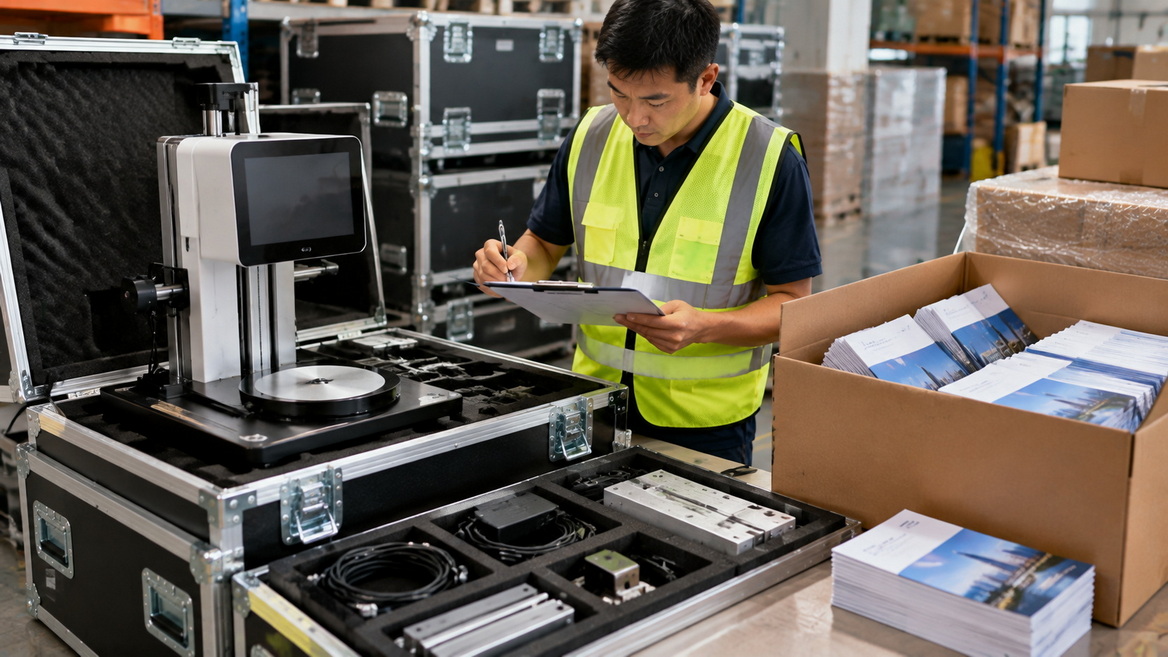
The customs equivalent of receiving a product made from the wrong material is shipping an item that no longer matches its description. A supplier may replace a display unit at the last moment, pack a different serial-numbered machine, or add spare parts after the document list has been approved. The shipment may look commercially identical, yet the customs record no longer identifies the cargo accurately.
Create one controlled version of the goods list and assign a person to approve changes. Ask suppliers to photograph serial plates and packed cases before collection. At consolidation, compare the received items with the approved list and resolve differences before issuance and export, rather than expecting a destination broker to repair the record on arrival.
For example, consider a shipment containing a reusable demonstration machine, a trade-show counter, and 500 brochures to distribute to visitors. The machine and counter may warrant assessment for temporary admission; the brochures should not simply be inserted into the carnet goods list as though they will return. A capable provider should identify that distinction at the planning stage.
An often-overlooked risk is the split return. After an exhibition, a sales team may send one machine to a second event while the booth structure returns to China. Another item may remain abroad while a lawful permanent-import procedure is considered. If everyone tracks only the number of cases, the customs record may fail to show where each carnet-listed item went.
Prepare an item-by-item movement register before departure. Record the item identifier, each entry and exit, the expected next destination, the person responsible for the customs presentation, and the evidence received afterward. Reconcile the register after every border crossing, not just when the entire project ends.
Also distinguish the carnet's overall validity from a shorter re-export deadline imposed by destination customs. A document that remains valid does not override an earlier deadline recorded for a particular entry. Ask the local agent to check that deadline as soon as the goods are admitted.
ATA Carnet procedures are moving toward digital processing, but the transition is not simultaneous in every customs territory. In 2026, a route may include locations using digital declarations and others still requiring a paper carnet. Certain mixed journeys may require transactions in both formats.
Before departure, give the issuing office and every customs agent the full itinerary, including transit points and return plans. Ask which format each location will accept and how the holder or representative must present the goods and document. Do not assume that a single digital process works throughout a multi-country tour.
The digital rollout schedule is particularly relevant to long-running exhibitions. As of September 2026, a territory with a future activation date should not be treated as already operating under the new procedure. Recheck current requirements close to departure.
An ATA project quote should cover more than freight from the factory to the exhibition city. Request separate lines for supplier pickups, consolidation, packaging, document assistance, issuing-association charges or required security, export customs, international transport, destination clearance, storage, venue delivery, post-event collection, re-export, return freight, and exception fees.
Then ask what happens financially if the event date changes, an item is returned separately, or a customs record is missing. The cheapest outbound rate may be the most expensive option if the return movement or exception handling was excluded.
For a long-term logistics partner, compare how consistently each bidder answers operational questions. A useful proposal identifies people, deadlines, records, and responsibilities. A vague promise of "hassle-free customs" does not.
The most dependable ATA Carnet service arrangement is one in which every party knows its role. The issuing association provides the official document; the carnet holder remains responsible for compliant use; and the logistics and customs teams coordinate the physical shipment, border procedures, and return evidence.
For China-origin shipments, GB FREIGHT AGENCY CO., LTD. is one option to evaluate when supplier collection, international transport, customs coordination, and final delivery need to fit into a single plan. Its value should be measured against the same requirements applied to every provider: a verified route, a controlled goods list, named customs contacts, a realistic return schedule, and an itemized round-trip price.
Send GB FREIGHT your proposed goods list, supplier pickup locations, destination and transit itinerary, exhibition dates, cargo value, and expected return plan. Request a written proposal that identifies the authorized carnet-issuing channel, the customs responsibilities at each border, and the total costs before confirming the shipment.
Ask for the full certificate showing the legal entity, certified sites, standard, scope, certificate number, certification body, issue date, and expiry date. Confirm it through the certification body's verification process. A valid certificate belonging to another group company does not certify the entity signing your contract. ISO certification also does not make a company an official ATA Carnet issuer or replace verification of its customs-broker arrangements.
A freight forwarder may help prepare an application, submit information on a client's behalf where authorized, and coordinate transport and customs formalities. That assistance should not be confused with the official issuing and guaranteeing function of the CCPIT/CCOIC system in mainland China. Ask the forwarder to separate official issuing charges from its own service fees and to identify the issuing channel on the proposal.
Do not treat an unplanned sale, transfer, or giveaway as a routine carnet movement. The goods were admitted on a temporary basis, and their disposal may require another lawful customs procedure, payment of applicable duties or taxes, and proper discharge of the carnet record. Tell the local customs broker and issuing association before an item is retained or transferred. Promotional materials intended for distribution should be assessed separately from reusable exhibits at the outset.
A split movement must still account for the individual items covered by the carnet. Agree in advance who will present each consignment to customs and obtain the required confirmation at every exit and re-entry. Keep the item numbers and descriptions consistent with the goods list. If an item may exceed a destination's re-export deadline, seek advice before that date rather than relying on the carnet's overall expiry.
Do not assume so during the paper-to-digital transition. Provide the complete route to the issuing office, then confirm the required format and transaction process with the customs agents in each territory. A mixed itinerary can involve digital declarations at some points and paper validation at others. The route, not a general claim that carnets are "digital," determines the preparation needed.
- [China Council for the Promotion of International Trade: January 2026 press briefing and 2025 ATA Carnet figures]. [ccpit]
- [International Chamber of Commerce: ATA Carnet issuing associations and participating customs territories]. [iccwbo]
- [China ATA Carnet information: CCPIT/CCOIC issuing and guaranteeing system]. [eatachina]
- [International Chamber of Commerce: eATA Carnet transition and activation schedule]. [iccwbo]
- [United States Council for International Business: Eligible goods and ATA Carnet rules]. [uscib]
- [United States Council for International Business: How to use a carnet]. [uscib]
- [GB FREIGHT AGENCY CO., LTD.: Company services and contact details]. [gb-freight]
- [Dimerco: ATA Carnet shipment operations]. [dimerco]
- [DSV: Event and exhibition logistics services]. [dsv]
- [DSV: Completion of the Schenker acquisition]. [dsv]
- [DHL: Customs-clearance guidance]. [dhl]
- [Betterluck Shipping: Temporary import/export and ATA Carnet services]. [blshipping]
- [Expeditors: Australia customs capabilities, including ATA Carnet]. [expeditors]
- [Sinotrans: International supply-chain services]. [logistics.sinotrans]
- [Kuehne+Nagel: Freight terminology, including ATA Carnet]. [kuehne-nagel]


