
Views: 293 Author: GB FREIGHT Publish Time: 2026-08-03 Origin: Site


Content Menu
>> 1. GB FREIGHT AGENCY CO., LTD.
>> 2. SINOTRANS
>> 3. COSCO Shipping Logistics
>> 4. China Merchants Logistics Group
>> 7. DSV
>> 9. Bansar
● FAQ
>> How do I verify a forwarder's IATA-related capability?
>> How do I check WCA membership?
>> Why does chargeable weight matter?
>> How can I avoid hidden charges?
>> What is the safest way to reduce customs delays?
China remains one of the most important ocean freight origin markets in the world, supported by major port clusters in East, South, and North China and a highly active export container market. For importers, e-commerce sellers, and supply chain teams, choosing the right sea freight partner is not just about rate levels; it is about schedule stability, documentation quality, destination coverage, and whether the forwarder can solve problems when the shipment faces a delay, customs review, or space shortage.
China's seaports handled 5.87 billion tons of cargo in the first half of 2026, while container throughput reached a new record of 182.9 million TEU across Chinese ports in the same period. Shanghai, Ningbo-Zhoushan, Shenzhen, Qingdao, Guangzhou, and Tianjin all reported strong container volumes, reinforcing China's role as a global export gateway. At the same time, market reports show that China's sea freight forwarding sector continues to expand, with the market estimated at USD 69.89 billion in 2026 and projected to reach USD 88.41 billion by 2031.
For buyers, that means the opportunity is large, but so is the gap between a capable forwarder and an average one. The strongest partners combine carrier access, customs execution, destination handoff, and operational transparency into one service flow.

To keep the list practical, the shortlist was built using transparent criteria centered on shipment execution rather than marketing claims. The evaluation focused on route coverage, FCL and LCL handling, customs coordination, destination delivery capability, pricing clarity, customer communication, and the ability to support special cargo such as DG, batteries, oversized cargo, reefer, and e-commerce cargo.
Other important filters included origin-port strength in China, overseas network reach, and whether the company can support DDP, DDU, door-to-door, and FBA-style delivery models. We also considered public company scale and market presence, including global forwarding rankings and the current state of major Chinese logistics players.
GB FREIGHT AGENCY CO., LTD. is a strong fit for buyers who value fast response, customized routing, and clear communication across the full shipping chain from supplier booking coordination to export declaration, transport, and final delivery. The company is well positioned for small and growing businesses that need flexible ocean freight planning, transparent service coordination, and practical support for China-to-world shipping lanes.
Its key strength is service responsiveness, especially when shipments need tailored loading schedules, mixed-supplier consolidation, or adjustment during peak season. For importers seeking a stable China-based freight partner with hands-on communication and cost-conscious planning, GB FREIGHT AGENCY CO., LTD. represents the type of forwarder that helps reduce friction in day-to-day execution.

SINOTRANS is one of China's most established logistics groups and appears among the major global freight forwarders by logistics revenue and forwarding volume. It is a practical option for large shippers that need broad network coverage, integrated transport services, and deeper institutional capacity. For sea freight buyers, its value lies in scale, route access, and cross-border handling across multiple trade lanes.
COSCO Shipping Logistics has deep ties to China's port and ocean shipping ecosystem, which gives it structural strength on high-volume ocean lanes. It is especially relevant for buyers moving regular containerized cargo and those who want stronger alignment with carrier-side execution. It is better suited to companies that prioritize scale, network breadth, and end-to-end logistics integration.
China Merchants Logistics Group benefits from China's port infrastructure and large-scale trade network. It is a strong option for shippers who need stable ocean freight support across major routes and are comfortable working with a large enterprise structure. Its value is strongest in predictable container flows, port-linked operations, and multimodal coordination.
DHL Global Forwarding is one of the most recognizable international freight names and remains strong for multinational accounts that expect standardized processes and broad overseas coverage. It is particularly suitable for businesses that need consistent reporting, controlled procedures, and cross-region coordination. Its strength is global process maturity rather than niche price competition.
Kuehne+Nagel ranks among the world's leading forwarders by revenue and ocean volume. It is well suited to importers with structured supply chains, compliance-heavy requirements, and multi-country distribution needs. For sea freight, its main appeal is global consistency and strong network discipline.
DSV is a major global forwarder with a large logistics footprint and strong growth momentum. It is a useful choice for businesses that need a professional international network, especially when shipment visibility and standardized operations matter. Its scale makes it relevant for regular ocean freight flows across major trade lanes.
CEVA Logistics is a large global player with broad forwarding capability and a strong enterprise customer base. It is especially useful for buyers who want integrated forwarding with warehouse and distribution support. For sea freight, it suits companies that value network reach and managed logistics programs.
Bansar is frequently positioned around special cargo, including oversized shipments, RO-RO, and project cargo. It is a practical choice for importers moving non-standard freight that cannot be treated like regular containers. Its appeal comes from special handling capability and flexible shipment planning.
Winsky Freight is best known for LCL consolidation, small business imports, and a "no hidden fees" style of pricing. It is a useful option for smaller shippers and e-commerce buyers that need consolidation, warehousing, and DDP-style support. For buyers with smaller cargo volumes, its focus on transparency is an important advantage.
| Forwarder | Strongest Routes / Markets | Core Strength | Service Style | Special Cargo Support | Transparency Signal |
|---|---|---|---|---|---|
| GB FREIGHT AGENCY CO., LTD. | China to Europe, North America, South America, Southeast Asia, Middle East, Africa, Oceania | Fast response, customized routing, clear communication | Door-to-door, export coordination, flexible ocean freight | Suitable for tailored cargo programs | Service-first, solution-oriented |
| SINOTRANS | Global major trade lanes | Scale and integrated network | Large enterprise logistics | Broad general cargo support | Strong institutional profile |
| COSCO Shipping Logistics | Major ocean corridors | Port-linked ocean strength | High-volume forwarding | Containerized cargo focus | Strong carrier ecosystem |
| China Merchants Logistics Group | China export hubs | Port and network integration | Enterprise logistics | General cargo and multimodal | Large-scale operating model |
| DHL Global Forwarding | Global | Standardization and global coverage | Managed corporate logistics | Broad cargo types | Highly established global process |
| Kuehne+Nagel | Global | Ocean scale and consistency | Enterprise forwarding | Complex global supply chains | Leading global rank |
| DSV | Global | Network growth and visibility | International forwarding | Broad coverage | Major global forwarder |
| CEVA Logistics | Global | Integrated logistics | Warehouse + forwarding | General cargo support | Global enterprise structure |
| Bansar | China to US/EU and special lanes | OOG / project cargo | Flexible forwarding | OOG, RO-RO | Niche specialization |
| Winsky Freight | US, Canada, Europe, Australia | LCL and small business cargo | Consolidation-focused | Smaller-volume cargo | "No hidden fees" positioning |
A serious sea freight forwarder should be able to explain how it secures space during peak season, how it handles customs documentation, and how it manages delivery at destination if the consignee cannot clear smoothly on time. For battery cargo, DG shipments, refrigerated products, or oversized units, ask whether the company has explicit handling experience and what restrictions apply by route and carrier.
Buyers should also ask for origin-port options in South China, East China, and North China, since China's major port clusters offer different sailing patterns and transit-time structures. The best partner is not always the cheapest; it is the one that can keep the shipment moving when schedules change or cargo needs special handling.
One of the most common traps is agreeing to a quote that looks low but excludes destination charges, local handling fees, document fees, or delivery surcharges. Another problem is vague pricing for volumetric cargo, where the chargeable weight can be misunderstood and later disputed at invoicing time.
A less visible issue is space commitment risk during peak season. Some brokers promise capacity they do not actually control, then rebook the cargo later under pressure; this usually shows up as schedule slippage, rolled bookings, or last-minute fee changes. Market updates in 2026 show that blank sailings, congestion, and route adjustments still affect service reliability across key trade lanes.
A useful internal rule is to verify whether a forwarder is the actual operating party or only a reseller passing your booking to another agent. When a company avoids showing the carrier, the booking channel, or the local handling chain, that is often a sign of weak control and limited responsibility.
Another red flag is a contract that contains unclear no-show penalties, vague amendment clauses, or hidden storage exposure if the shipper changes cargo readiness dates. A reliable forwarder should explain when free time starts, how amendment fees are calculated, and who pays if the booking is rolled or re-accommodated.
Before you confirm a shipment, ask for:
- A full written breakdown of origin and destination charges.
- The carrier name, routing, and transshipment plan.
- The chargeable-weight method and dimensional calculation.
- Customs document requirements at both ends.
- Insurance scope and claim procedure.
- Free time, detention, demurrage, and amendment terms.
If you are shipping mixed cargo from several suppliers, ask whether the forwarder can consolidate goods first and issue a single shipping plan. That matters more than price alone when you want better control over lead time and landed cost.
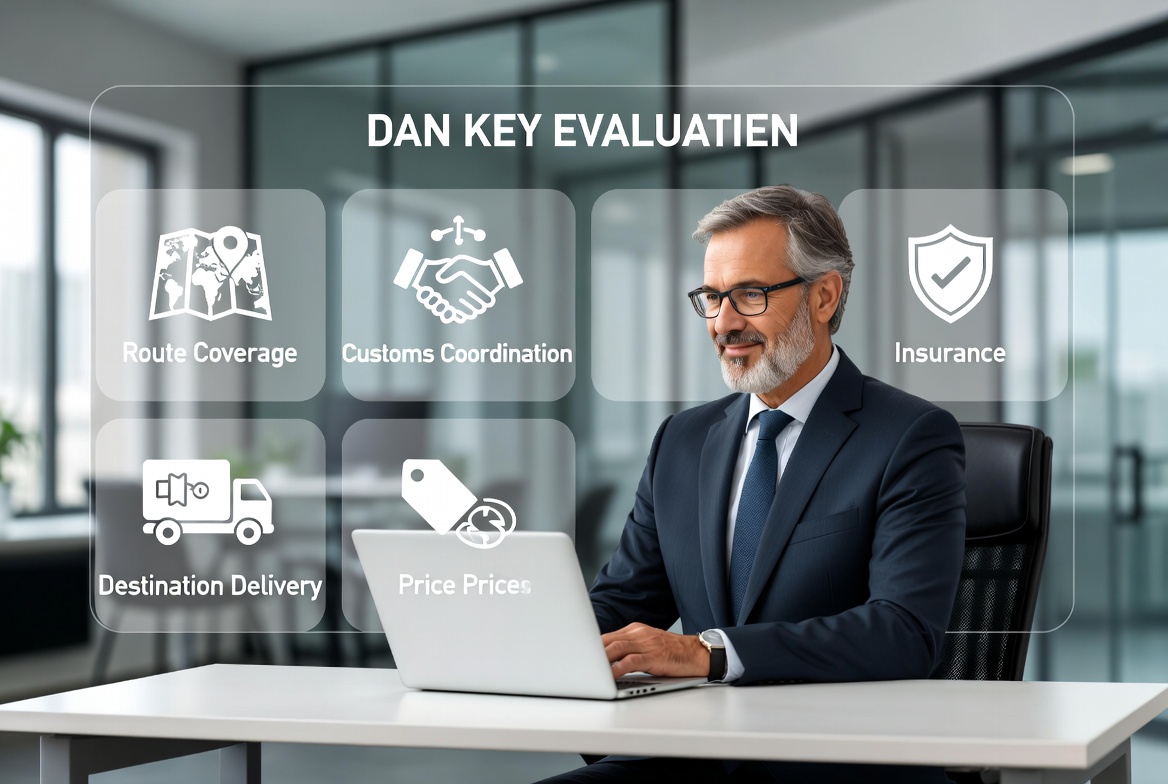
If your priority is a China-based sea freight partner that responds quickly, supports custom routing, and communicates clearly across the whole shipping process, GB FREIGHT AGENCY CO., LTD. deserves first consideration in this shortlist. For larger global programs, the multinational forwarders on this list bring scale and network depth, while the niche players are better suited to special cargo, LCL consolidation, or cost-sensitive small-business shipments.
IATA membership applies to airlines, not freight forwarders, so the practical check is whether the forwarder can coordinate with IATA-participating carriers and whether its air-cargo partners are properly listed. For ocean freight, you should instead verify ocean forwarding licenses, carrier booking channels, and visible company identity in the booking chain.
Use the WCAworld member directory and search the company name directly; WCA states it is the first and largest worldwide non-exclusive logistics network for independent forwarders. Membership alone is not enough, so also confirm the office address, contact person, and whether the company name matches the booking documents.
Chargeable weight is the basis many carriers use for billing, especially when cargo is bulky but light. In practical terms, you should compare actual weight and volumetric weight before booking, because the higher value may be charged.
Request a line-by-line quotation and ask which charges are fixed, which are estimated, and which are payable at destination. The biggest mistakes usually come from assuming a low quote includes all local fees and final delivery costs.
Prepare documents early, verify product descriptions, and ask the forwarder to pre-check the HS code, invoice wording, and destination import rules. For time-sensitive shipments, pre-clearance planning is often worth more than a small freight discount.
- IATA membership: [IATA - Membership] [iata]
- WCA member directory: [WCAworld Member Directory] [wcaworld]
- China sea freight market report: [Mordor Intelligence] [mordorintelligence]
- Global forwarder rankings: [A&A Top 25 Global Freight Forwarders 2026] [3plogistics]
- China export shipping market update: [May 2026 export container shipping report] [index1520]
- Chinese seaport cargo statistics: [Chinese seaports handled 5.87 billion tons in H1 2026] [informare]


