
Views: 248 Author: GB FREIGHT Publish Time: 2026-08-06 Origin: Site


Content Menu
● Air freight forwarder vs express courier
● Cost difference in real terms
● Cargo types that fit each option
● Market demand and capacity trends
● FAQ
For B2B international shipments, air freight forwarding and express courier solve the same problem in very different ways. The right choice depends on cargo size, urgency, customs complexity, and total landed cost, not just speed.
Many importers and exporters compare only transit time, then discover the real difference at customs, in local delivery, and in total cost. In practice, an air freight forwarder is usually better for recurring commercial cargo, while express courier is often better for urgent small parcels, samples, and low-friction deliveries.
For companies shipping from China to Europe, North America, South America, Southeast Asia, the Middle East, Africa, or Oceania, the best option is often the one that fits the shipment profile, not the one that looks fastest on paper.

| Factor | Air freight forwarder | Express courier |
|---|---|---|
| Service model | Airport-to-airport, often with separate origin and destination handling | Door-to-door, integrated network |
| Best for | Medium to large B2B cargo, recurring orders, bulky goods | Samples, urgent parcels, compact shipments |
| Customs | Usually managed with more coordination by shipper or forwarder | Simplified and bundled into the service |
| Pricing structure | Usually cheaper per kg at scale, but with extra local charges possible | Higher all-in rate, but simpler and more predictable |
| Tracking | Good, but often less granular than express | Detailed end-to-end tracking |
| Delivery speed | Fast, but final delivery can add time | Often the fastest door-to-door option |
Air freight forwarding is built around commercial cargo movement. A freight forwarder coordinates booking, export paperwork, airline space, consolidation, customs clearance, and destination delivery when needed. This model works well when the shipment has planning time and when the buyer wants a more economical structure for larger volumes.
Express courier is built around integrated delivery. Couriers such as DHL, UPS, and FedEx control pickup, air movement, customs handling, and last-mile delivery inside one network, which makes the process easier for urgent and smaller shipments. That simplicity is a major advantage when speed and convenience matter more than unit cost.
The most common mistake is assuming the cheaper-looking option is always cheaper overall. Air freight can be more cost-effective for heavier or recurring shipments, because it spreads transport cost across more kilos and uses airline capacity more efficiently. Express courier often looks attractive for small shipments because the final price includes customs handling and delivery, but the per-kilo cost rises quickly as weight and size increase.
A practical rule is this:
1. Small, urgent, compact shipments usually favor express courier.
2. Heavier, recurring, or palletized cargo usually favors air freight forwarding.
3. Borderline shipments should be quoted both ways before booking.
For many B2B buyers, the break-even point is not fixed. It shifts by route, chargeable weight, cargo dimensions, service level, and destination handling charges.
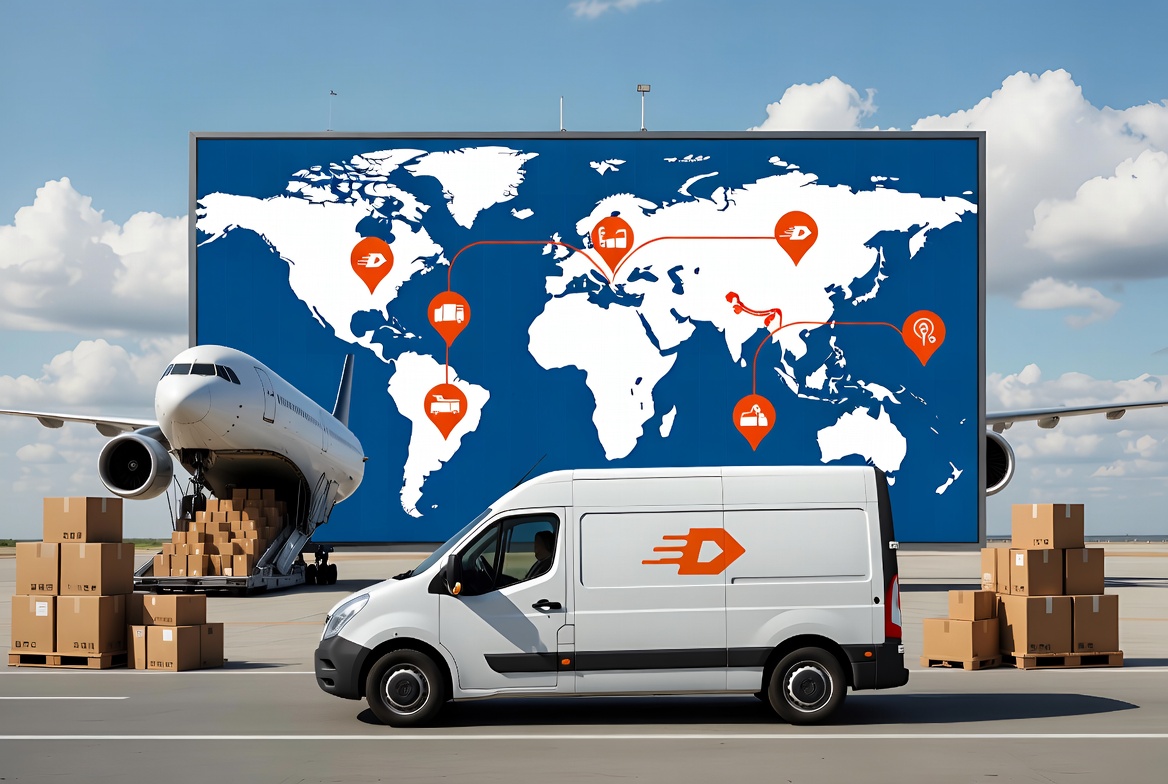
Express courier is usually the best choice when the shipment must arrive with minimal coordination. It offers time-definite delivery, simplified customs handling, and proactive tracking, which is especially useful for samples, urgent replacements, and documents.
Air freight can still be very fast, but it usually adds more handoffs. The shipment may be quicker in the air yet slower overall once export processing, airline schedules, import clearance, and final trucking are included. If your buyer needs predictable door-to-door timing, courier is easier; if your business needs lower transport cost on larger cargo, freight forwarding is often stronger.
Air freight forwarding is often the better fit for:
- Replenishment orders for distributors.
- Industrial parts and commercial goods.
- Bulky cartons, cartons on pallets, and oversize items.
- Higher-volume orders where unit cost matters.
Express courier is often the better fit for:
- Product samples.
- Urgent replacement parts.
- Documents and small accessories.
- High-value, low-volume packages that need fast delivery.
This is where many shippers save money or avoid delays. A shipment that is too large for courier pricing can become unnecessarily expensive, while a shipment that is too small for air freight can become operationally inefficient.
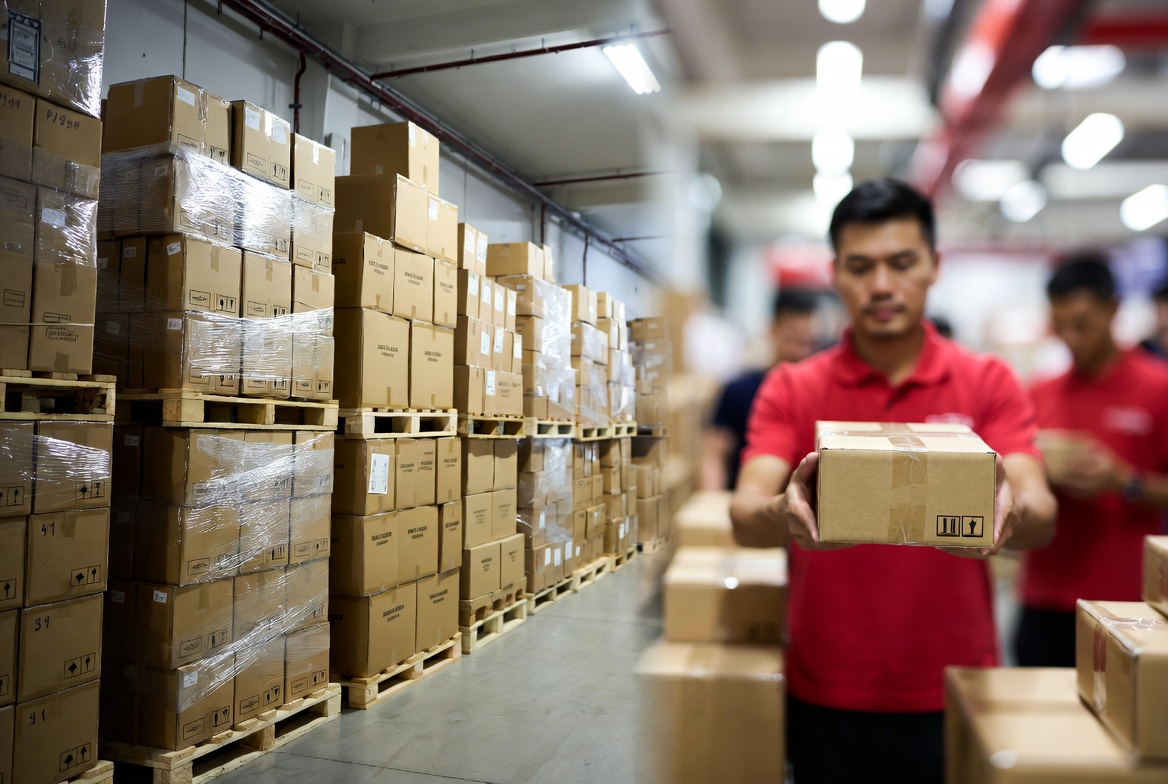
Customs handling is one of the biggest operational differences between the two models. Express networks usually bundle customs steps into the service, which reduces the burden on the shipper and makes the process smoother for teams without deep logistics experience.
Air freight forwarding usually requires more coordination between the shipper, freight forwarder, customs broker, and destination agent. That extra coordination can be an advantage for complex shipments, but it also increases the risk of delay if documents, classifications, or declarations are incomplete.
From a practical standpoint, companies shipping regulated, commercial, or mixed cargo often prefer freight forwarders because the process is easier to customize around the shipment.
Air cargo demand remained strong in 2025 and into 2026, showing that air freight continues to play a major role in global trade flows. IATA reported that global air cargo demand rose 11.2% year on year in February 2026, with strong performance across multiple regions, including Asia Pacific, North America, the Middle East, and Africa.
That matters for shippers because capacity tightness can affect space, routing, and price. When demand is strong, working with a freight forwarder can be valuable because route planning, consolidation, and airline selection become more important.
When I advise B2B clients, I usually start with four questions:
1. How urgent is the shipment?
2. What is the real chargeable weight and volume?
3. Does the buyer need door-to-door simplicity or can the team manage airport handling?
4. Will this shipment repeat every week or month?
If the answer is "urgent, small, and simple," express courier is usually the better commercial choice. If the answer is "larger, repeatable, and cost-sensitive," air freight forwarding usually wins. For China-origin shipments, this decision is especially important because origin coordination, export declaration, and destination delivery can change the final landed cost more than many shippers expect.
A trading company sending 20 kg of product samples to a distributor in Germany usually benefits from express courier because the shipment is small, time-sensitive, and easy to clear.
A manufacturer sending 300 kg of industrial components from Shenzhen to Los Angeles usually gets better value from an air freight forwarder because the shipment is large enough for scale pricing and may not need the full express network.
A consumer electronics supplier shipping recurring cartons to multiple markets may use both: courier for samples and urgent replenishment, and freight forwarding for production orders.
Before booking, confirm these points:
- Exact dimensions and gross weight.
- Chargeable weight calculation.
- Commodity description and HS code.
- Export documents required at origin.
- Import clearance expectations at destination.
- Whether final delivery is included or separate.
- Transit time versus delivery time.
This checklist helps avoid hidden cost surprises and makes comparison between quotes much more accurate.
For most B2B international shipments, express courier wins on simplicity and urgent small parcels, while air freight forwarding wins on flexibility, scalability, and cost efficiency for larger commercial cargo. The best choice is not universal; it depends on your shipment profile and your buyer's delivery expectations.
If you need a China-based shipping solution for Europe, North America, South America, Southeast Asia, the Middle East, Africa, or Oceania, our team at GB FREIGHT AGENCY CO., LTD. can help compare both options and build the most cost-effective route for your cargo.
1. Is air freight always cheaper than express courier?
No. Air freight is usually cheaper for larger shipments, but express courier can be more competitive for small, urgent parcels.
2. Is express courier faster than air freight?
Usually yes for door-to-door delivery, because the network, customs handling, and last-mile service are integrated.
3. Which option is better for B2B samples?
Express courier is usually better for samples because it is fast, simple, and easier to track.
4. Which option is better for bulky industrial cargo?
Air freight forwarding is usually better for bulky or recurring industrial cargo because it scales more efficiently.
5. Do both methods require customs clearance?
Yes, but express courier usually manages it in a more bundled way, while air freight often requires more coordination from the shipper or forwarder.
1. [IATA - Air Cargo Market Analysis February 2026] [iata]
2. [Air Cargo Demand up 11.2% in February 2026] [iata]
3. [Global Air Cargo Demand Achieved Record Volume in 2025 - IATA] [iata]
4. [DHL Express - Fast. Door-to-Door. Courier-Delivered] [dhl]
5. [Reach your destinations faster with DHL Express] [dhl]
6. [DHL Express - Express division overview] [group.dhl]
7. [Freight forwarding and customs clearance guide] [logicomhub]


