
Views: 249 Author: GB FREIGHT Publish Time: 2026-09-05 Origin: Site


Content Menu
● What Is Air Freight Forwarding?
● Why Businesses Use Air Freight from China
>> Main Benefits of Air Freight Transportation
● Air Freight vs. Ocean Freight from China
● How Air Freight Costs Are Calculated
>> Actual Weight and Volumetric Weight
>> Factors That Affect Air Freight Rates
● The Air Freight Process from China
>> 2. Select the Shipping Route
>> 3. Arrange Supplier Pickup or Cargo Delivery
>> 4. Check Packing, Labels, and Cargo Condition
>> 5. Prepare Export Documents and Customs Information
>> 6. Deliver Cargo to the Airline
>> 7. Flight Departure, Arrival, and Final Delivery
● Documents Required for Air Freight from China
● Shipping Batteries and Dangerous Goods by Air
● How to Reduce Air Freight Costs from China
>> Improve Packaging Efficiency
>> Plan Cargo Ready Dates Earlier
>> Consolidate Multiple Supplier Orders
>> Choose the Right Service Level
>> Provide Accurate Cargo Information
● Why Choose GB FREIGHT AGENCY CO., LTD.
● Summary
>> How long does air freight from China take?
>> Is air freight from China cheaper than sea freight?
>> What details are needed to receive an air freight quotation?
>> Can cargo be collected from multiple suppliers in China?
>> Can lithium batteries be shipped by air from China?
Air freight forwarding from China is one of the most practical transport solutions for businesses that need speed, reliable cargo handling, and international delivery coverage. It is widely used for urgent replenishment, high-value goods, samples, electronics, replacement parts, seasonal inventory, and products that cannot wait for long ocean transit times.
GB FREIGHT AGENCY CO., LTD. is a China freight forwarding company with 15 years of international logistics experience. We help businesses move cargo from China to Europe, North America, South America, Southeast Asia, the Middle East, Africa, and Oceania. Our services can cover supplier booking coordination, cargo pickup, export customs declaration, air transportation, shipment monitoring, customs support, and final delivery.
Whether you are importing from one Chinese factory or consolidating cargo from multiple suppliers, a professional air freight forwarding plan can help reduce delivery risks, improve shipment visibility, and control logistics costs.
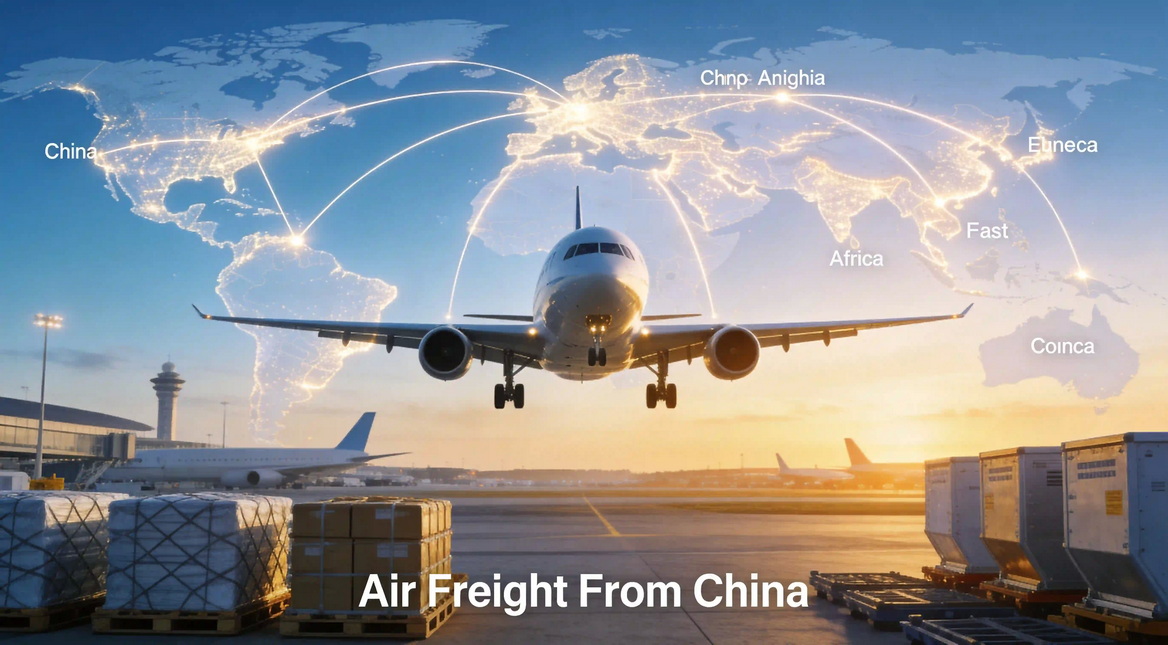
Air freight forwarding is the process of organizing and managing cargo transportation by aircraft. An air freight forwarder coordinates the parties, documents, schedules, cargo handling, and transportation activities needed to move goods from the supplier to the overseas consignee.
The freight forwarder does not usually operate the aircraft. Instead, it works with airlines, airport warehouses, trucking companies, customs authorities, overseas partners, and final-mile delivery providers to make sure the shipment moves smoothly through every stage.
For international importers, air freight forwarding is not simply about booking a flight. It is an operational service that may include:
- Communicating with Chinese suppliers
- Checking cargo-ready dates
- Arranging cargo pickup or supplier delivery
- Measuring and weighing cartons or pallets
- Preparing shipping documents
- Booking airline space
- Completing export customs procedures
- Monitoring departure and arrival schedules
- Coordinating import clearance
- Arranging final delivery to the consignee
A good freight forwarding process helps prevent common shipping problems such as missed flight cutoffs, incorrect documents, incorrect cargo measurements, airline rejection, customs delays, unexpected destination charges, and delivery disruptions.
Air freight is generally chosen when delivery speed is more important than achieving the lowest transportation cost. It is particularly valuable when a delayed shipment could result in lost sales, production interruptions, retailer penalties, stockouts, or missed product-launch opportunities.
Air cargo can move products from China to major global markets much faster than traditional sea freight. While the exact transit time depends on the route, airport congestion, flight schedules, customs processing, and delivery location, air freight remains the preferred option for shipments with strict deadlines.
Faster international delivery
Air freight is usually the fastest commercial shipping option for cargo moving from China to overseas markets. It can help businesses respond quickly to urgent customer orders, supplier delays, inventory shortages, and unexpected demand.
Suitable for high-value goods
Products with a high value relative to their weight are often good candidates for air transportation. These may include electronics, medical products, automotive components, precision machinery parts, branded consumer goods, fashion items, and specialized industrial equipment.
Improved inventory flexibility
Faster transit can reduce the need to hold large safety-stock quantities in overseas warehouses. This may help importers improve cash flow, reduce warehouse pressure, and adjust more quickly to market demand.
Global airport and delivery coverage
Air freight services from China can connect exporters and importers with markets across the United States, Canada, Mexico, Brazil, Chile, the United Kingdom, European countries, the United Arab Emirates, Saudi Arabia, Singapore, Malaysia, South Africa, Australia, New Zealand, and many other destinations.
Useful for urgent or sensitive supply chains
Air freight is commonly used for product samples, prototypes, spare parts, e-commerce replenishment, promotional inventory, time-sensitive retail products, and shipments needed to support manufacturing operations.
Choosing between air freight and ocean freight requires more than comparing a shipping rate. Businesses should consider cargo weight, shipment volume, urgency, product value, destination, delivery deadline, inventory requirements, and total landed cost.
| Factor | Air Freight from China | Ocean Freight from China |
|---|---|---|
| Transit speed | Fast and suitable for urgent cargo | Slower and better for planned inventory |
| Best for | High-value, light, urgent, and time-sensitive goods | Heavy, bulky, high-volume, and non-urgent goods |
| Cost level | Usually higher per kilogram | Usually lower for containerized cargo |
| Pricing basis | Actual weight or volumetric weight | Container size, cargo volume, and shipping route |
| Inventory impact | Can reduce safety-stock requirements | Requires longer inventory planning |
| Typical cargo | Samples, electronics, spare parts, fashion, medical products | Furniture, machinery, building materials, large retail orders |
| Delivery flexibility | Suitable for airport-to-airport and door-to-door services | Suitable for port-to-port, port-to-door, and container shipping |
| Carbon impact | Generally higher per unit of cargo | Generally lower for large-volume shipments |
Air freight can be the more practical choice when products are urgently needed. For example, an importer may use sea freight for its main inventory shipment but choose air freight for a limited number of cartons needed to avoid an out-of-stock situation.
This mixed transport strategy can help a business balance shipping cost with delivery speed.
Air freight costs are normally based on chargeable weight. This means the airline will compare the actual physical weight of the cargo with its volumetric weight and charge according to whichever is higher.
Understanding chargeable weight is important because a shipment can be physically light but still expensive if it occupies a large amount of cargo space.
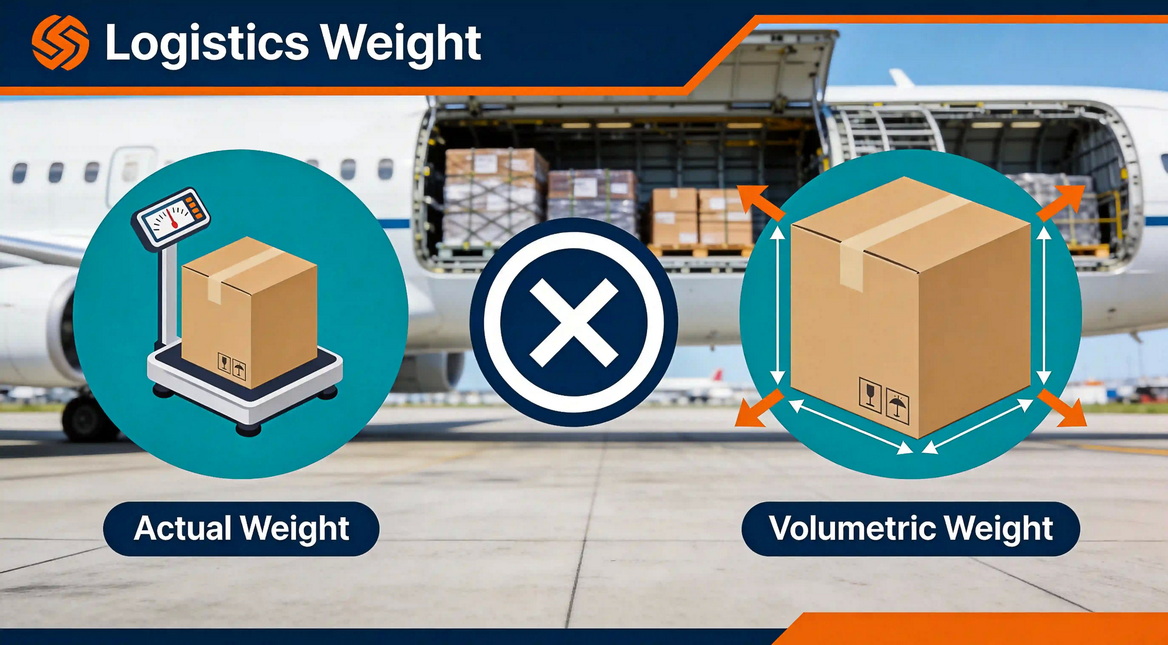
Actual weight is the physical weight of the shipment measured on a scale.
Volumetric weight is calculated based on the dimensions of the cargo. It reflects the amount of space the cargo occupies in the aircraft.
If the actual weight is 85 kg, the airline will generally calculate freight charges based on 112 kg. If the actual weight is 130 kg, the airline will normally calculate the charge based on 130 kg.
Air freight rates can change based on capacity, airline schedules, seasonality, fuel costs, cargo type, destination demand, and airport handling conditions.
A complete quotation may include the following cost elements:
- Cargo pickup from the supplier
- Warehouse receiving and handling
- Cargo measurement and weighing
- Export documentation
- China export customs declaration
- Airport handling charges
- Security screening charges
- Airline freight charges
- Fuel-related surcharges
- Destination airport handling
- Import customs clearance support
- Duty and tax, where applicable
- Final delivery charges
To receive an accurate quotation, importers should provide correct carton dimensions, gross weight, product information, pickup location, destination, cargo-ready date, and special handling requirements.
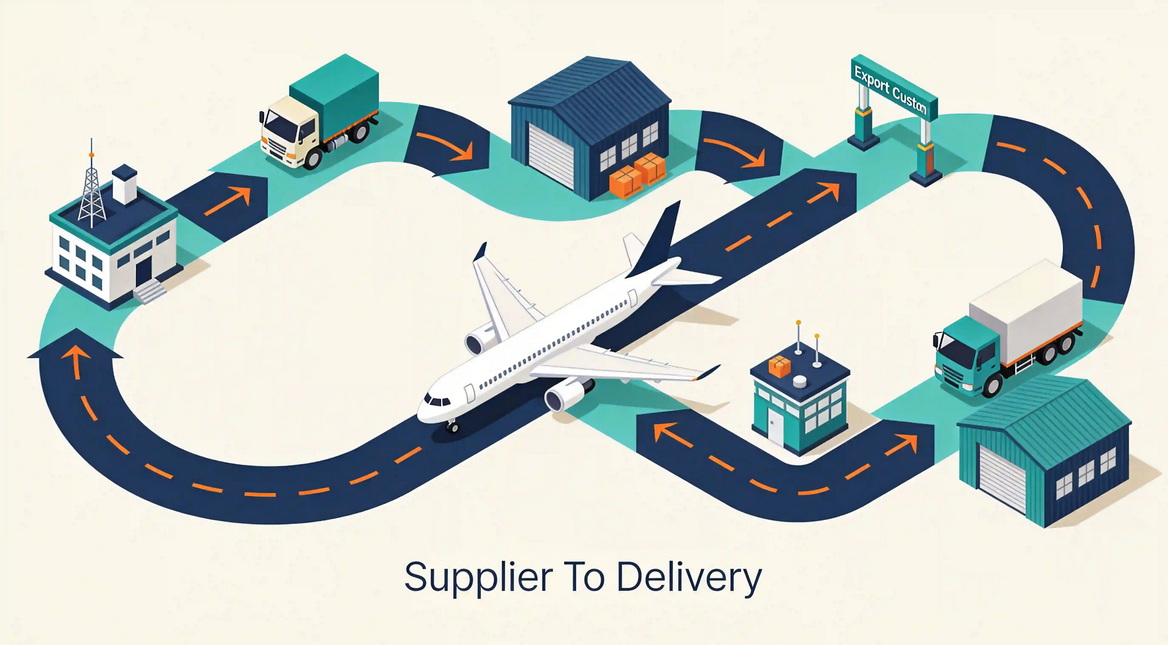
A successful air shipment requires planning before the cargo reaches the airport. The following process explains how international air freight from China is commonly organized.
The first step is collecting complete shipment information. This allows the freight forwarder to check the appropriate route, airline options, cargo requirements, and estimated transport cost.
Important shipment information includes:
- Supplier name and pickup address
- Supplier contact person and telephone number
- Cargo-ready date
- Product name and product use
- Number of cartons, crates, or pallets
- Carton dimensions
- Gross weight
- Destination airport or full delivery address
- Importer details
- Trade terms
- Cargo value
- Special cargo information
Accurate information is essential. Incorrect dimensions or weight can lead to revised pricing, delayed bookings, or cargo acceptance issues.
The freight forwarder evaluates available airline capacity, direct-flight options, transit routes, cost levels, departure schedules, airport congestion, and destination delivery requirements.
The fastest route is not always the best route. A direct service may be appropriate for urgent cargo, while a transit service may offer better cost efficiency for regular inventory shipments.
The recommended transport plan should reflect the shipment's real priority:
- Lowest total cost
- Fastest available service
- Stable flight schedule
- Priority handling
- Airport pickup
- Door-to-door delivery
- Multi-supplier consolidation
- Special cargo handling
Depending on the agreed trade terms, cargo may be picked up directly from the supplier or delivered by the supplier to a designated warehouse or airport terminal.
For shipments involving multiple Chinese factories, consolidation can be arranged before export. This allows cargo from different suppliers to be gathered, measured, checked, and prepared under one coordinated shipping plan.
Consolidation can help businesses:
- Reduce duplicated pickup and handling costs
- Improve visibility across supplier orders
- Confirm accurate cargo measurements
- Simplify export documentation
- Combine shipments under one transport arrangement
- Coordinate one delivery schedule for the overseas consignee
Proper packaging is essential for air freight. Cargo may be handled multiple times before departure and after arrival. It may move through trucks, warehouses, security screening, airport terminals, aircraft loading areas, transit airports, and destination facilities.
Export packaging should be strong enough to protect the goods throughout the journey.
Recommended packing practices include:
- Use strong export cartons, crates, or pallets
- Add internal cushioning for fragile goods
- Seal cartons properly
- Mark each package clearly
- Use moisture protection where required
- Apply handling labels for fragile or sensitive cargo
- Confirm package count before handover
- Make sure shipping marks match the documents
- Use suitable outer packaging for high-value products
For sensitive goods, importers may also request cargo photographs, packing checks, palletization, shrink wrapping, or additional protective packing before export.
China export procedures require accurate cargo and document information. The freight forwarder can coordinate the export process, but the supplier and shipper must provide truthful and complete product details.
Common documents include:
- Commercial invoice
- Packing list
- Export declaration information
- Air waybill details
- Certificate of origin, if required
- Product certificates or compliance documents, if required
- Dangerous goods documents, if applicable
- Import permits or licenses for controlled products
The commercial invoice should clearly describe the product. General descriptions such as "goods," "samples," "parts," or "accessories" may not be detailed enough for customs review.
A better product description would be:
- Stainless steel kitchen sinks for retail sale
- Aluminum automotive brake components
- Polyester women's knitted shirts
- LED lighting fixtures for commercial use
- Plastic storage containers for household use
After the cargo is packed, checked, and cleared for export, it is delivered to the airport cargo terminal or airline handling facility.
Before cargo can be loaded onto a flight, it may be subject to security screening, documentation checks, weight verification, cargo acceptance procedures, and airline handling requirements.
Once accepted, the shipment receives an air waybill number. The air waybill is the primary transport document used to identify the cargo, routing, shipper, consignee, number of pieces, and shipment weight.
After departure, the cargo moves to the destination airport directly or through a transit airport. Once it arrives, it must be processed by the airline's destination handler and cleared through import customs before delivery.
The final delivery process depends on the chosen service arrangement.
Possible delivery options include:
- Airport-to-airport service
- Airport-to-door service
- Door-to-airport service
- Door-to-door service
- Delivery to a commercial warehouse
- Delivery to an e-commerce fulfillment center
- Delivery to a distributor or retailer
- Delivery to a project site or factory
A clear delivery plan should identify who is responsible for customs clearance, import duty, tax payment, cargo collection, and final transportation.
Documentation is one of the most important areas of international logistics. Even a small error can delay customs clearance, create additional costs, or result in cargo being held at the airport.
| Document | Purpose |
|---|---|
| Commercial invoice | Shows seller, buyer, product description, quantity, value, currency, and trade terms |
| Packing list | Shows package count, dimensions, net weight, gross weight, and packing details |
| Air waybill | Provides shipment routing and carriage information |
| Export customs declaration | Supports China export procedures |
| Certificate of origin | May be required by the buyer, bank, customs authority, or trade agreement |
| Insurance certificate | Confirms cargo insurance coverage when insurance has been arranged |
| Import license or permit | Required for certain regulated or controlled goods |
| Dangerous goods declaration | Required for qualifying regulated cargo |
The importer should also understand local customs requirements before shipping. Import duty, VAT, GST, customs permits, testing requirements, labeling standards, product certifications, and importer registration rules can vary significantly by destination country.
Not all products can be shipped by air under normal cargo procedures. Certain products require special review, classification, packaging, labeling, documentation, and airline approval.
Common examples include:
- Lithium-ion batteries
- Lithium-metal batteries
- Power banks
- Battery-powered products
- Liquids and gels
- Cosmetics and perfumes
- Aerosols
- Paints, inks, and adhesives
- Chemicals and cleaning products
- Magnetic materials
- Pressurized items
- Medical products
- Temperature-sensitive cargo
- Products containing alcohol
- Laboratory samples
Lithium battery shipments deserve special attention. A battery may be installed in equipment, packed with equipment, or shipped separately. Each situation can have different packaging and documentation requirements.
The shipper should always disclose battery information before booking, including battery type, capacity, number of batteries, whether batteries are installed in equipment, and available product safety documents.
Misdeclaring dangerous goods can create serious risks. It may lead to shipment rejection, delays, fines, cargo seizure, safety incidents, and restrictions on future shipments.
Air freight does not always need to be expensive. Businesses can often lower total transport costs through better planning, accurate data, improved packing, and realistic scheduling.
Bulky packaging increases volumetric weight. Reducing unnecessary empty space inside cartons can lower chargeable weight and improve freight efficiency.
Before shipping, review whether cartons can be:
- Reduced in size
- Repacked more efficiently
- Combined into fewer packages
- Palletized correctly
- Protected with lighter materials
- Designed to reduce unused volume
Last-minute shipments can have higher costs because available flight capacity may be limited. Early planning gives the freight forwarder more time to compare carriers, identify economical routing, and secure suitable space.
Combining cargo from several suppliers may reduce duplicated handling and improve shipment control. It can also allow importers to use one coordinated shipment rather than several small individual consignments.
Not every shipment needs the fastest possible flight. A slightly slower service may offer better value when delivery dates are flexible.
Businesses should compare:
- Direct flights
- Transit flights
- Consolidated air freight
- Priority services
- Airport-to-airport services
- Door-to-door services
- Air freight combined with local trucking
Incorrect dimensions, weights, product descriptions, or special-cargo declarations often create additional costs. Accurate information helps avoid re-rating, re-packing, document amendments, customs issues, and airline acceptance delays.
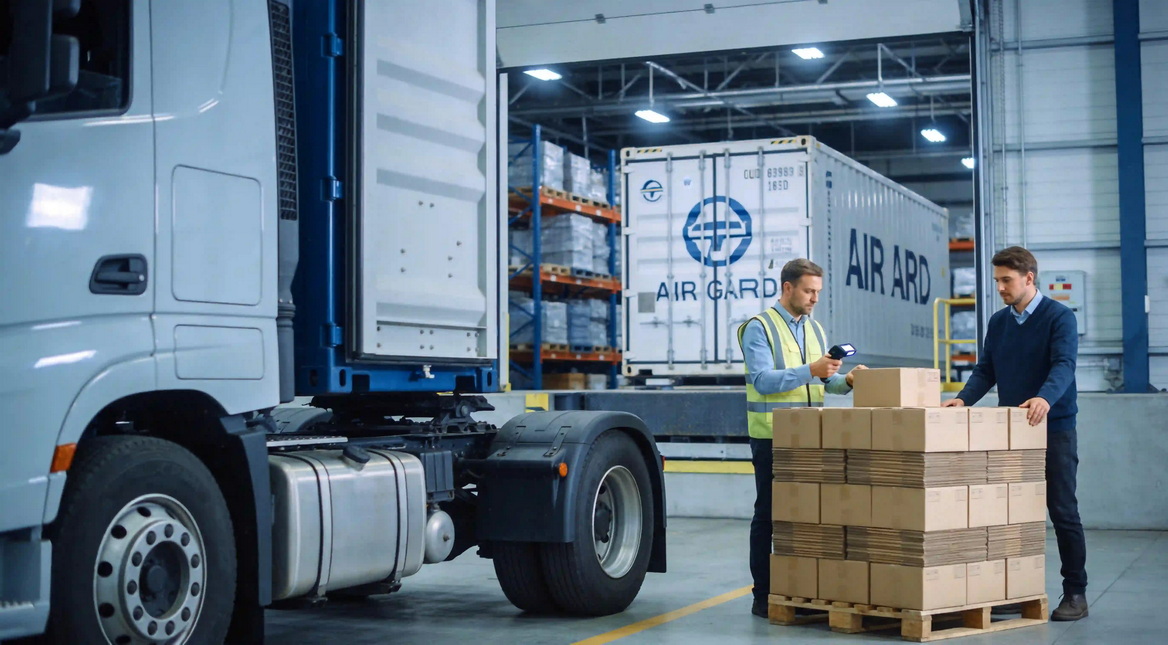
GB FREIGHT AGENCY CO., LTD. provides international air freight solutions for businesses shipping from China to global markets. With 15 years of freight forwarding experience, we understand that successful air shipping depends on more than a flight booking.
It requires coordinated supplier communication, accurate cargo information, correct export procedures, reliable routing, shipment visibility, destination support, and delivery planning.
Our services can include:
- Supplier booking coordination in China
- Cargo pickup from factories and warehouses
- Multi-supplier shipment consolidation
- Cargo measurement and weight confirmation
- Export packing and labeling guidance
- China export customs declaration coordination
- International airline booking
- Airport-to-airport shipping
- Door-to-door air freight solutions
- Shipment tracking and status updates
- Destination customs and delivery coordination
- Support for Europe, North America, South America, Southeast Asia, the Middle East, Africa, and Oceania
We focus on building cost-effective transportation plans based on your shipment's actual needs. Whether your priority is urgent delivery, stable routing, lower chargeable weight, multi-supplier consolidation, customs readiness, or final-mile coordination, our team can help identify a suitable air freight solution from China.
Air freight forwarding from China is a valuable solution for importers that need fast, dependable, and globally connected cargo transportation. It is particularly suitable for urgent, lightweight, high-value, and time-sensitive shipments.
The most successful air freight shipments begin with accurate cargo details, strong export packing, correct documentation, early planning, and clear communication between the supplier, freight forwarder, importer, and destination service providers.
Businesses should compare more than airline rates. They should evaluate chargeable weight, transit time, customs requirements, service scope, destination charges, cargo restrictions, and final delivery responsibilities.
GB FREIGHT AGENCY CO., LTD. supports businesses shipping cargo from China to destinations around the world. By coordinating suppliers, export procedures, air transportation, overseas handling, and final delivery, we help importers build a more efficient and reliable international logistics process.
For a detailed air freight shipping plan from China, provide your pickup city, destination, cargo dimensions, gross weight, package quantity, commodity description, cargo-ready date, and any special handling requirements.
Air freight transit time depends on the origin airport, destination airport, airline schedule, direct or transit routing, customs clearance, and delivery location. Airport-to-airport transport may take several days, while door-to-door delivery takes additional time for pickup, export customs procedures, destination clearance, and final-mile delivery.
Air freight is usually more expensive than sea freight for heavy, bulky, or high-volume cargo. However, it can be a practical choice for lightweight, urgent, high-value, or time-sensitive products. The best option depends on the total cost of transportation, inventory, delivery delays, and potential lost sales.
You should provide the pickup address, destination airport or delivery address, cargo-ready date, product description, number of packages, carton dimensions, gross weight, trade terms, cargo value, and special cargo details such as batteries, liquids, magnets, or temperature-control requirements.
Yes. Cargo from multiple Chinese suppliers can often be collected and consolidated into one export shipment. This can simplify coordination, reduce duplicated handling, improve cargo visibility, and support one organized delivery plan for the overseas consignee.
Some lithium battery shipments can be transported by air, but they are subject to strict requirements. The battery type, configuration, capacity, packaging, labels, documents, and airline restrictions must be reviewed before booking. Battery information should always be disclosed in advance.
1. Freightos. "Air Freight Transportation: Everything You Need to Know About Air Forwarding." Available at:
[https://www.freightos.com/freight-resources/air-forwarding-everything-you-need-to-know/]
2. International Air Transport Association. "Global Air Cargo Demand Achieved Record Volume in 2025." Available at:
[https://www.iata.org/en/pressroom/2026-releases/2026-01-29-01/]
3. International Air Transport Association. "Dangerous Goods Regulations for Processing DG." Available at:
[https://www.iata.org/en/training/courses/processing-dgr-initial/dgc020veen01/en/]
4. U.S. Customs and Border Protection. "Entry Documentation Required: 19 CFR § 142.3." Available at:
[https://www.govregs.com/regulations/19/142.3]
5. International Air Transport Association. "Air Cargo Demand Sets New Record in October, Up 4.1%." Available at:
[https://www.iata.org/en/pressroom/2025-releases/2025-11-28-01/]


