
Views: 233 Author: GB FREIGHT Publish Time: 2026-08-11 Origin: Site


Content Menu
● What Air Freight and Road Freight Mean
● Air Freight vs Road Freight: Core Comparison
● When Air Freight Is the Better Choice
>> Choose Air Freight for Urgent China-to-Europe Shipments
>> Air Freight Supports Inventory Risk Control
>> Air Freight Limitations to Consider
● When Road Freight Is the Better Choice
>> Choose Road Freight for European Distribution
>> Road Freight Offers Better Delivery Flexibility
>> Road Freight Risks and Constraints
● Cost Comparison: Look Beyond the Freight Rate
● Transit Time: Speed vs End-to-End Control
>> A Practical Transit-Time Rule
● Customs and Documentation Considerations
● The Best Strategy: Combine Air Freight and Road Freight
>> Air-and-Road Service for China to Europe
>> Segment Cargo by Business Priority
● How to Select the Right Freight Solution
● FAQ
>> Is air freight faster than road freight for European supply chains?
>> Is air freight more expensive than road freight?
>> Can road freight deliver cargo from a European airport to any destination?
>> What products are suitable for air freight from China to Europe?
>> How can I reduce air freight costs?
>> What documents are needed for air freight and road freight?
>> Should I choose airport-to-airport or door-to-door service?
For companies importing from China, the choice between air freight vs road freight can shape inventory availability, landed cost, customer satisfaction, and supply-chain resilience. Air freight provides speed for urgent China-to-Europe shipments, while road freight provides flexible, door-to-door distribution across European markets.
At GB FREIGHT AGENCY CO., LTD., we have supported international shipments from China for 15 years. From supplier booking coordination and export customs clearance to international transport and final delivery, our experience shows that the best transport mode is rarely chosen by price alone. It depends on the cargo's urgency, value, volume, destination, customs requirements, and the cost of a delayed delivery.
This guide compares air freight and road freight for European supply chains, explains when each option makes commercial sense, and shows how Chinese exporters can combine both modes into a more reliable transport plan.

Air freight moves cargo from an airport in China to a European airport using scheduled cargo capacity, passenger-aircraft belly capacity, or dedicated freighter aircraft. After arrival, shipments usually continue by truck for customs release, warehouse delivery, or final-mile distribution.
Road freight transports goods by truck. Within Europe, it is one of the most practical methods for moving cargo between ports, airports, warehouses, factories, distribution centers, and final customers. It can be arranged as full truckload, less-than-truckload, express van, temperature-controlled transport, or specialized equipment transport.
For a China-to-Europe supply chain, the comparison is often not simply "plane or truck." A typical decision is:
- Use air freight from China to Europe, then road freight to the consignee.
- Use sea, rail, or other long-haul transport from China, then road freight for European delivery.
- Use road freight for regional or cross-border distribution after inventory has entered Europe.
This distinction matters because road transport is often the operational backbone of European delivery, while air freight is the fast international option for time-sensitive cargo.
| Factor | Air Freight | Road Freight |
|---|---|---|
| Transit speed | Usually fastest for China-to-Europe urgent cargo | Best for regional and cross-border European delivery |
| Cost per kilogram | Usually higher | Usually lower for domestic and regional movements |
| Best cargo type | High-value, urgent, lightweight, time-critical goods | Palletized goods, regular replenishment, bulky cargo |
| Capacity | Limited by aircraft space, weight, and dimensions | Flexible vehicle options, but capacity depends on truck availability |
| Door-to-door delivery | Requires airport handling and onward trucking | Naturally suited to door-to-door delivery |
| Customs process | Usually cleared at airport or designated customs facility | Can involve border and transit procedures for international routes |
| Delivery reliability | Fast, but can be affected by flight schedules and airport congestion | Flexible routing, but affected by driver availability, road restrictions, traffic, and border queues |
| Carbon impact | Generally higher per tonne-kilometre | Lower than air for comparable transport work, especially with efficient loading and cleaner fleets |
Air freight is normally the premium solution when every day matters. Road freight is usually the more economical and flexible solution after goods are positioned inside Europe.
European road freight remains a major part of the region's logistics system. In 2024, road transport accounted for 25.7% of freight transport performance within the EU, demonstrating its central role in regional distribution and industrial supply chains.
Air freight is most valuable when the commercial cost of delay is greater than the additional freight cost. It is not only an emergency option. For many exporters, it is a planned tool for protecting production schedules, preventing stockouts, and supporting high-value sales.
Air freight is a strong option when your customer needs products within days rather than weeks. It is especially useful for:
- Production-line spare parts that could stop manufacturing.
- Electronics, components, and samples with a high value-to-weight ratio.
- Medical devices, laboratory materials, and approved temperature-sensitive cargo.
- Seasonal goods that must arrive before a launch, promotion, or event.
- Replacement orders for retailers and distributors facing stock shortages.
- Urgent documents, prototypes, and small commercial shipments.
For example, a European machinery distributor may need a replacement CNC control component from China immediately. Sending it by a lower-cost mode may save freight expenditure, but a delayed repair could leave the distributor's customer with an idle machine. In that situation, air freight often protects far more value than it costs.
Many importers use air freight selectively rather than for every shipment. A practical approach is to ship the bulk of predictable demand through lower-cost transport and reserve air capacity for exceptions.
This can help businesses:
- Avoid expensive production downtime.
- Maintain service levels for key accounts.
- Bridge the gap between forecast errors and replenishment cycles.
- Launch new products before committing to larger inventory volumes.
- Reduce the need to hold excessive safety stock in Europe.
The goal is not to replace every transport mode with air freight. The goal is to use speed where it delivers the greatest commercial return.
Air freight pricing is influenced by chargeable weight. Airlines charge based on actual weight or volumetric weight, whichever is higher. Large but lightweight cartons can therefore become expensive.
Air transport also has restrictions. Lithium batteries, liquids, magnetic materials, chemicals, aerosols, and other regulated goods may require special packaging, classification, documentation, carrier approval, or may be prohibited on certain services. Before booking, exporters should confirm whether their cargo is acceptable for air transport.
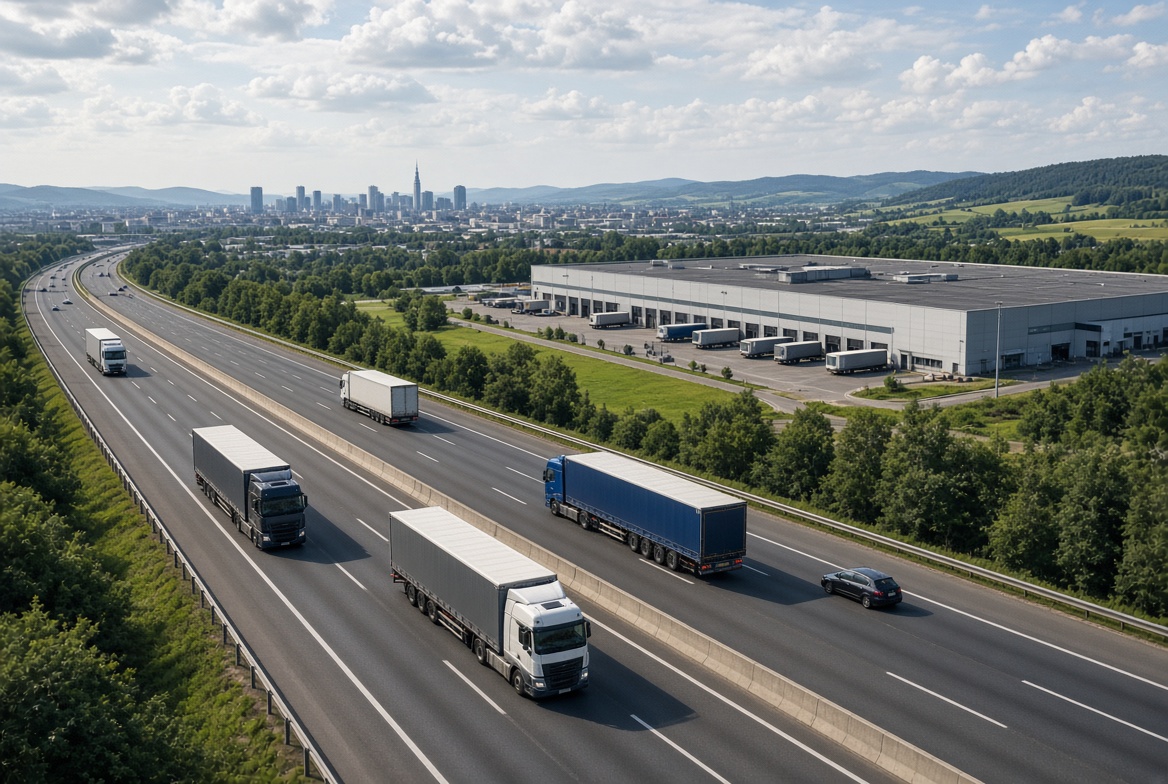
Road freight is the most adaptable solution for moving cargo within Europe. It connects airports, seaports, customs facilities, bonded warehouses, distribution hubs, factories, retailers, and final business customers.
Road freight works particularly well when cargo has already arrived in Europe and needs dependable delivery across one or several countries. It is suitable for:
- Airport-to-door delivery after air freight arrival.
- Port-to-warehouse delivery after ocean freight.
- Cross-border movements between EU markets.
- Regular pallet distribution to distributors or retailers.
- Full truckload deliveries to factories and large warehouses.
- Less-than-truckload shipments for smaller consignments.
- Specialized cargo requiring liftgates, temperature control, or dedicated vehicles.
A shipment arriving at Frankfurt Airport may need delivery to customers in Germany, the Netherlands, Belgium, France, Poland, or the Czech Republic. Road freight allows the consignee to receive cargo directly at a warehouse or factory instead of arranging separate collection from the airport.
The main advantage of road freight is operational flexibility. Trucks can collect and deliver at locations that aircraft cannot serve directly.
Road freight may offer:
- Direct pickup and delivery appointments.
- Multiple delivery points on one route.
- More practical handling for pallets and oversized cargo.
- Better control over local delivery windows.
- Access to regional markets beyond major airport hubs.
- Options for dedicated trucks when cargo security or schedule control is essential.
For European supply chains, this flexibility is crucial. Air freight can move a shipment rapidly across continents, but trucking often determines whether cargo reaches the final consignee on time.
Road freight is not automatically simple or cheap. European trucking costs can be affected by fuel prices, tolls, labor costs, driver shortages, environmental regulations, equipment availability, city-access restrictions, and seasonal demand.
The driver shortage is a material planning risk. The IRU reported that Europe had approximately 502,000 unfilled truck-driver positions, equal to a 13% shortage rate, based on its 2025 survey. This means shippers should not wait until the last moment to arrange peak-season, cross-border, or specialized truck capacity.
Road delivery times can also change because of border formalities, driving-hour rules, traffic congestion, weather, road closures, and public holidays. A reliable freight plan should include realistic delivery windows rather than assuming a truck will always move without interruption.
The lowest freight quote does not always create the lowest total cost. Decision-makers should compare the total landed cost and the operational consequence of delay.
Air freight costs commonly depend on:
- Chargeable weight.
- Origin airport and destination airport.
- Cargo dimensions and packaging efficiency.
- Fuel and security surcharges.
- Airline capacity and booking urgency.
- Dangerous-goods handling requirements.
- Customs clearance, terminal handling, and delivery charges.
Air freight is often more economical for compact, high-value cargo than for low-value, high-volume goods. Improving carton dimensions can significantly reduce volumetric-weight charges.
Road freight costs commonly depend on:
- Collection and delivery locations.
- Distance, route, and border crossings.
- Pallet quantity, weight, and loading meters.
- Full truckload or less-than-truckload service.
- Fuel, tolls, congestion, and emissions-related charges.
- Required delivery appointments or special equipment.
- Temperature control, ADR capability, or other cargo requirements.
For recurring European delivery lanes, contracted road freight capacity can offer more predictable pricing than frequent spot-market bookings. However, contracts should still allow for peak-season surcharges and changing regulatory costs.
Air freight is faster in the air, but the full shipment timeline includes supplier readiness, export customs, warehouse receiving, airport handling, flight connection, import clearance, cargo release, and final delivery.
A well-planned China-to-Europe air shipment may take only a few days in transit, but delays can occur when cargo arrives late at the origin airport, paperwork is incomplete, capacity is tight, or the consignee is not ready for customs clearance.
Road freight can be faster than air freight for short European distances because it avoids airport processing. For example, a dedicated truck moving cargo from one European manufacturing site to another may be more efficient than airport-to-airport transport for an intra-European lane.
Use air freight when the shipment must cross continents quickly. Use road freight when cargo needs to move flexibly within Europe.
For the best result, build a realistic end-to-end schedule that includes:
1. Supplier production completion and pickup readiness.
2. Export customs documents and cargo inspection requirements.
3. Origin handling and departure cut-off times.
4. Flight or truck transit time.
5. Import clearance and tax or duty procedures.
6. Airport, warehouse, or terminal release.
7. Final road delivery appointment.
A transport plan is only as fast as its slowest handover.
Both air freight and road freight require accurate shipping documents. Typical documents include the commercial invoice, packing list, transport document, customs declaration data, product descriptions, HS codes, country-of-origin information, and any product-specific certificates.
For air freight, documentation must be ready before cargo acceptance. Inaccurate cargo descriptions, missing consignee information, inconsistent values, or incomplete regulated-goods paperwork can cause holds at origin or destination.
For European road freight, customs requirements are particularly important when cargo moves between the EU and non-EU countries, or when goods are traveling under transit procedures. Even within a smooth logistics network, customs compliance remains essential for avoiding delays, penalties, and unexpected storage charges.
Our recommendation is simple: prepare the document set before booking space, not after cargo reaches the airport or warehouse.
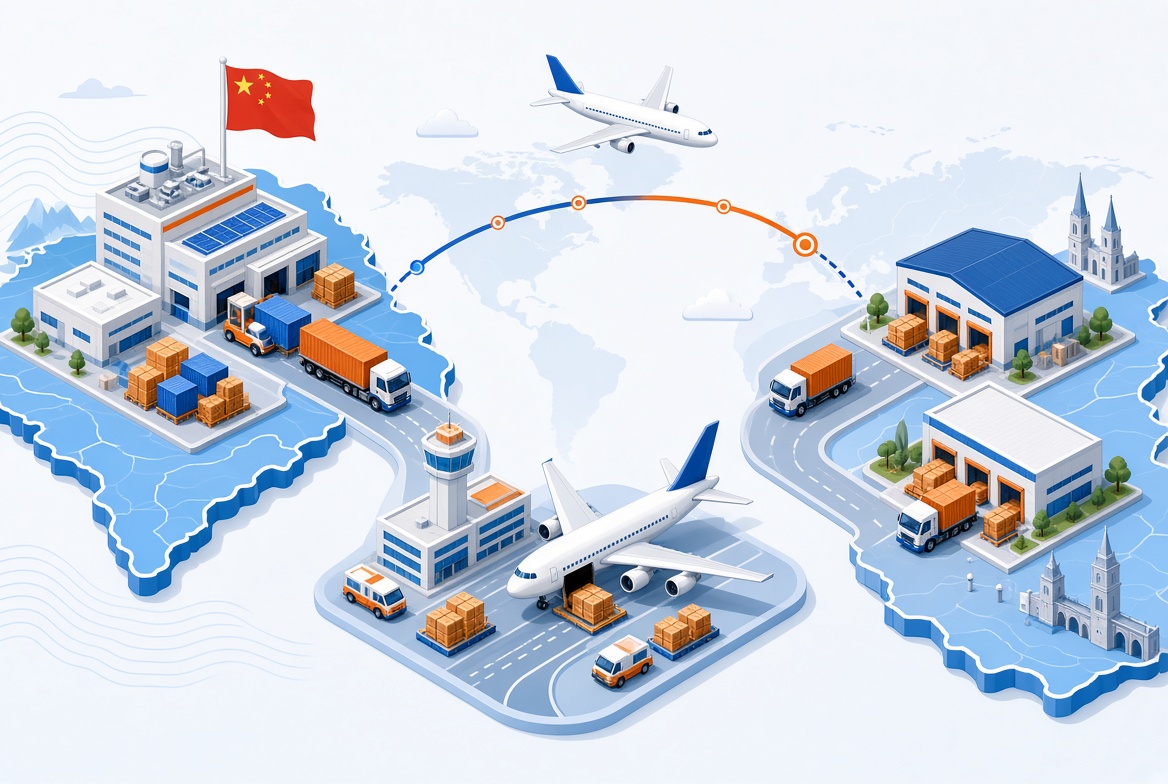
For many businesses, air freight and road freight are not competing choices. They are complementary parts of a single European supply-chain strategy.
A combined service can follow this structure:
1. Collect cargo from the supplier in China.
2. Complete export customs clearance.
3. Move cargo by air to a suitable European gateway airport.
4. Arrange import customs clearance.
5. Deliver by truck to the final warehouse, factory, distributor, or customer.
This approach combines the international speed of air transport with the local flexibility of road delivery. It is especially suitable for urgent B2B cargo destined for locations outside major airport cities.
Instead of assigning one transport method to all products, divide cargo into categories:
| Cargo Priority | Recommended Approach |
|---|---|
| Critical production parts | Air freight plus dedicated or priority road delivery |
| High-value, lightweight goods | Air freight with standard final-mile trucking |
| Regular stock replenishment | Lower-cost long-haul transport plus road distribution |
| Heavy or low-value goods | Consolidated transport and planned road delivery |
| Product launch samples | Air freight for early market validation |
| Seasonal safety stock | Advance shipment and scheduled European road distribution |
This segmentation helps companies avoid paying premium freight rates for cargo that does not require premium speed.
Before requesting a quotation, collect the details that influence both price and feasibility:
- Cargo name and intended use.
- Number of cartons, pallets, or crates.
- Dimensions and gross weight of each package.
- Ready date at the supplier's location.
- Pickup address in China.
- Destination city and postal code in Europe.
- Incoterms and the responsible customs party.
- Commodity code, declared value, and country of origin.
- Whether the cargo contains batteries, liquids, chemicals, magnets, or other regulated materials.
- Required delivery date and any booking appointment rules.
The more complete the shipment information, the more accurate the freight proposal will be. It also allows the freight forwarder to identify potential customs, packaging, routing, or capacity risks early.
Choose air freight when time, product value, or supply-chain disruption makes speed essential. Choose road freight when you need cost-effective, flexible, door-to-door distribution within Europe.
For most importers, the strongest solution is an integrated air-and-road plan: fast uplift from China, compliant customs handling, and reliable truck delivery to the final European destination. GB FREIGHT AGENCY CO., LTD. can assess your cargo, timing, destination, and budget to build a practical transport solution from supplier pickup in China through final delivery in Europe.
Request a tailored air freight and European road delivery quotation today, with your cargo dimensions, weight, ready date, and destination postcode.
For China-to-Europe shipments, air freight is normally much faster for the international leg. Within Europe, road freight may be faster for direct regional delivery because it avoids airport handling and can travel door to door.
Usually, yes. Air freight generally costs more per kilogram, particularly for large-volume cargo. However, it can be more cost-effective when a delay would create production losses, missed sales, stockouts, or penalty charges.
Road freight can deliver cargo from major European airports to most commercial destinations, subject to local access rules, delivery appointments, vehicle requirements, and customs release. Remote locations or specialized cargo may require additional planning.
Air freight is suitable for urgent spare parts, electronics, samples, medical-related products, high-value components, fashion items, and compact commercial cargo. Cargo with batteries, liquids, chemicals, or dangerous-goods characteristics requires an advance compliance review.
Use compact packaging, avoid unnecessary carton volume, consolidate shipments when timing permits, provide accurate dimensions and weight, and plan bookings before peak periods. Splitting urgent cargo from non-urgent cargo can also prevent unnecessary premium freight spending.
The standard documents often include a commercial invoice, packing list, shipment instructions, customs data, product descriptions, HS codes, and origin details. Additional documents may be needed for regulated goods, controlled products, or destination-specific import requirements.
Airport-to-airport service may be suitable if your consignee has its own customs broker and local transport arrangement. Door-to-door service is usually easier for businesses that want one coordinated provider to manage pickup, customs processes, airport handling, and final truck delivery.
- [Eurostat — Freight transport statistics: modal split] [ec.europa]
- [Eurostat — EU road freight transport in 2024] [ec.europa]
- [International Road Transport Union — Global Driver Shortage Report 2025 findings] [iru]
- [International Road Transport Union — European road freight rate update, Q1 2026] [iru]
- [Deloitte — Future of Freight: European Executive Brief] [deloitte]
- [European Commission — Road freight transport data] [ec.europa]


