
Views: 273 Author: GB FREIGHT Publish Time: 2026-09-28 Origin: Site


Content Menu
● Bonded Warehouse vs Standard Warehouse: What Is the Difference?
● How Does Bonded Warehousing Affect Cash Flow?
>> How to Compare the Total Warehouse Cost
● When Should an Import Business Use a Bonded Warehouse?
>> Inventory Will Be Released in Stages
>> Some Goods May Be Re-Exported
● When Is a Standard Warehouse the Better Choice?
● How Do Warehouse Rules Differ by Destination?
● How to Plan a Warehouse Move From China
● What Should You Ask a Warehouse Provider?
● Conclusion: Choose the Warehouse That Fits the Shipment
>> Is a Bonded Warehouse Always Cheaper Than a Standard Warehouse?
>> Does a Bonded Warehouse Eliminate Import Duty?
>> Can Customer Orders Be Shipped Directly From Bonded Inventory?
>> How Long Can Goods Stay in a Bonded Warehouse?
>> Is EU Temporary Storage the Same as Customs Warehousing?
Choosing a bonded warehouse vs standard warehouse is about more than the monthly storage rate. The decision affects when imported goods can enter the local market, when customs charges become payable, how inventory must be recorded, and how quickly orders can reach customers. If you import from China, the right warehouse depends on where the goods are going, how long they may remain unsold, and whether they will be sold locally or re-exported.

A bonded warehouse is an authorized facility where eligible imported goods can be stored under customs control. Depending on the destination country, import duty and certain other import charges can generally be deferred while goods remain under the applicable warehousing procedure. Charges normally become due when the goods are released for domestic use.
A standard warehouse stores goods for ordinary commercial operations, such as inventory management, picking, packing, and distribution. In this article, a standard warehouse means a facility holding goods that have completed the import process required for domestic distribution. Putting goods in a standard warehouse does not, by itself, defer customs charges.
The physical buildings may look similar. The important difference is the customs status of the goods and the procedures the facility is authorized to perform. A warehouse that offers fast order fulfillment is not necessarily approved for bonded storage. A bonded facility may not provide the fulfillment speed or services your business needs.
| Decision factor | Bonded warehouse | Standard warehouse |
|---|---|---|
| Customs status | Eligible goods remain under an authorized customs procedure | Goods in this comparison have completed import clearance for domestic distribution |
| Timing of import charges | Generally deferred until domestic release, subject to local rules | Addressed through the applicable import-clearance process |
| Re-export | May be useful when goods could leave the country without entering its domestic market | May be less attractive if import charges have already been paid |
| Inventory records | Customs-compliant records and release controls are required | Ordinary commercial inventory controls apply |
| Domestic dispatch | A customs release step may be required before delivery | Often simpler for rapid fulfillment |
| Typical fit | Phased sales, uncertain demand, or possible re-export | Predictable local sales and quick customer delivery |
The main financial advantage of bonded warehousing is usually payment timing, not an automatic reduction in tax. Instead of completing a domestic import for an entire shipment immediately, an importer may be able to hold eligible goods under the warehousing procedure and release them in batches.
Imagine a company importing 1,000 units from China. For a simplified illustration, assume the estimated import duty attributable to the full shipment is $20,000. If the company releases four equal batches of 250 units, $5,000 represents the assumed duty attributable to each batch.
That does not mean the importer has saved $15,000 after the first release. It means charges associated with the remaining stock may be payable later, if the relevant customs procedure permits it. The actual amount due depends on the product, classification, customs value, applicable rates, release arrangements, and destination-country rules.
Deferral can nevertheless be valuable. It may allow a business to keep more cash available while stock is unsold, then pay the applicable charges as inventory enters the domestic market. That benefit needs to be weighed against bonded storage, administration, handling, and withdrawal fees.
Request two quotes based on the same shipment, storage period, and dispatch plan. Compare the complete cost of each option rather than a single pallet rate.
For the bonded option, include:
- Freight and transfer to the authorized facility
- Bonded entry and customs-related administration
- Receiving, storage, inspections, and inventory reporting
- Handling and charges for each partial or full withdrawal
- Delivery after release
- The financing effect of paying applicable import charges later
For the standard option, include:
- Freight and import-clearance costs
- Receiving, storage, picking, and packing
- Domestic delivery and returns handling
- The financing effect of paying applicable import charges earlier
Test at least two sales forecasts: fast sell-through and slow-moving stock. If everything will sell quickly, extra bonded procedures may offer little commercial benefit. If inventory will remain unsold for months or may be re-exported, the comparison may look different.
Bonded warehousing is worth considering when the importer needs flexibility over when and where goods enter a domestic market.
A business may want to position goods near customers without releasing the entire shipment for domestic use at once. This can be useful when orders arrive gradually or demand is seasonal.
Before choosing this approach, check how the facility handles partial withdrawals. A provider that charges a substantial fee for every release may be poorly suited to frequent small orders.
An importer may not know whether all inventory will be sold in the destination country. If some goods are properly re-exported while they remain under the applicable customs procedure, the treatment may differ from goods released for local use.
This makes bonded storage potentially useful for redistribution plans. It does not mean re-export is paperwork-free or that every product qualifies. The importer must confirm the destination rules, permitted movements, and records before booking.
Holding goods under customs control may give the importer time to assess sales while keeping stock closer to its intended markets. That flexibility has a cost. Storage duration, product shelf life, handling requirements, and expected order volume should all be included in the decision.
A bonded warehouse is therefore not automatically the best choice for uncertain demand. It is a tool for managing a specific inventory and cash-flow problem.
A standard warehouse is often the more practical option when most goods will be sold locally, the importer is ready to complete import clearance, and customers expect fast delivery.
Once goods have completed the required import process, the operation can focus on commercial fulfillment: accurate receiving, stock control, picking, packing, returns, and dispatch. For businesses shipping many small orders, avoiding repeated bonded withdrawals may simplify daily work.
A standard warehouse may also offer better value when the expected storage period is short. If duty deferral lasts only a few days, additional bonded fees may outweigh the cash-flow benefit.
Do not confuse "standard" with "no customs process." Imported goods still need to follow the rules that apply before they enter the domestic market. A conventional warehouse cannot make uncleared cargo available for ordinary local sales simply by receiving it.
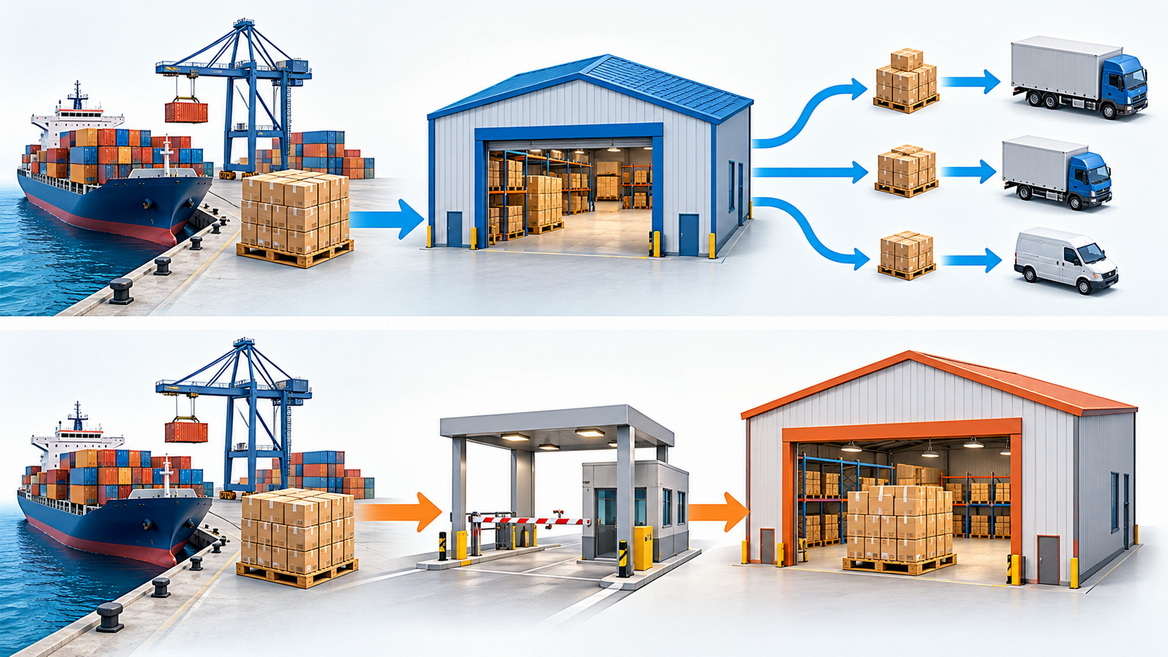
There is no single worldwide bonded warehouse rule. The United States, European Union, and United Kingdom each have their own procedures, authorizations, declarations, and responsibilities.
| Destination | Planning point |
|---|---|
| United States | U.S. rules generally set a five-year limit from importation for goods in a bonded warehouse, unless a longer period is permitted under the applicable regulation. Confirm product eligibility and the proposed entry and withdrawal process. |
| European Union | Non-EU goods can be placed under a customs warehousing procedure at authorized premises. EU temporary storage is a separate status with a general 90-day limit; do not treat the two as interchangeable. |
| United Kingdom | A customs warehouse can be used to delay duty and import VAT on eligible goods. Confirm the warehouse authorization, the party responsible for declarations, and what will happen when goods leave the procedure. |
The product also matters. Temperature-sensitive cargo, dangerous goods, regulated products, or goods requiring special handling may need a facility with additional capabilities. Ask whether the specific warehouse site can accept your commodity under the proposed procedure. A general statement that a logistics provider "offers bonded storage" is not enough.
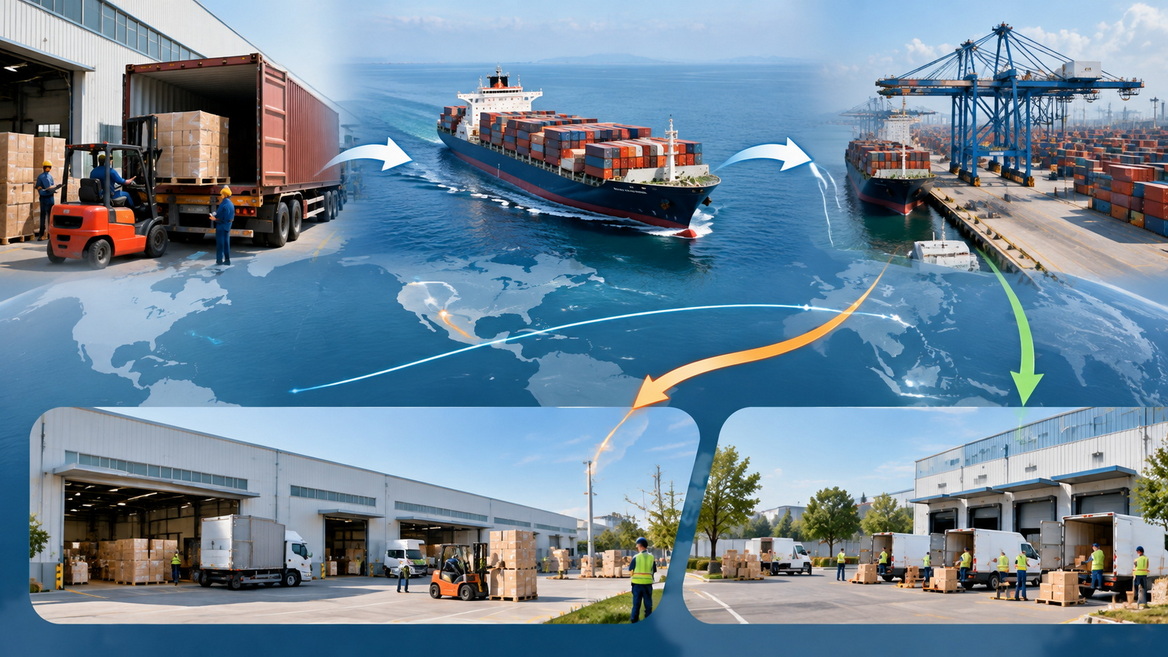
The warehouse choice should be settled before the cargo leaves the supplier. A workable plan must connect export arrangements in China with the import, storage, and delivery requirements at the destination.
1. Define the sales plan. Estimate which goods will be sold locally, which might be re-exported, and how long each portion may remain in storage.
2. Identify the responsible parties. Confirm the importer, the agreed trade term, and who will arrange international freight, import formalities, warehousing, and final delivery.
3. Prepare accurate product information. Share descriptions, quantities, specifications, composition where relevant, origin information, commercial values, and any required permits with the appropriate customs specialist.
4. Check the proposed warehouse. Verify its location, relevant authorization if bonded storage is planned, accepted commodities, capacity, operating hours, insurance arrangements, and handling services.
5. Map the physical journey. Agree how goods move from the Chinese supplier through export, international transport, destination arrival, any authorized transfer, warehouse receiving, and final dispatch.
6. Set inventory controls. Determine how shipments and SKUs will be identified, who approves withdrawals, how stock discrepancies are reported, and who keeps the records.
7. Compare complete quotations. Include the expected number of releases, storage duration, handling fees, domestic delivery, and customs-related administration.
The agreed trade term deserves particular attention. For example, DAP and DDP allocate import responsibilities differently. A shipping quote that ignores the agreed responsibilities may appear competitive but leave an important part of the process unresolved.
A useful warehouse quote should explain what happens to the goods, not only what a pallet costs per month. Ask the provider:
- Is this particular site authorized for the proposed bonded procedure?
- Can it accept the product and meet its storage and safety requirements?
- Who handles entry, stock records, withdrawals, and customs-related discrepancies?
- Can inventory be released in batches, and what does each release cost?
- Which handling or preparation activities are permitted while goods remain under customs control?
- How are damage, shortages, inspections, and returns managed?
- What are the order cutoffs and expected dispatch times?
- Can the provider quote both a short and a long storage scenario?
The answers will help you distinguish between a customs-storage need and a fulfillment need. Some importers need both, but they do not always need both services from the same facility.

A bonded warehouse can be a strong option when goods may be released gradually, remain unsold for a meaningful period, or be re-exported. A standard warehouse is often simpler when inventory has cleared customs and needs to reach local customers quickly. Neither option wins on storage price alone; the better choice is the one that fits the shipment's customs status, sales plan, cash-flow needs, and total operating cost.
GB FREIGHT AGENCY CO., LTD. has 15 years of international logistics experience and supports businesses shipping goods from China to destinations across Europe, North America, South America, Southeast Asia, the Middle East, Africa, and Oceania. Our services include supplier booking coordination, export customs arrangements, transportation planning, warehousing solutions, and final-delivery coordination.
Share your cargo details, destination, expected storage period, and delivery schedule with our team. We can help you compare available bonded and standard warehousing arrangements as part of a practical shipping plan from China.
No. Bonded storage may improve cash-flow timing, but its administration, handling, storage, and withdrawal charges can be higher. Compare total costs using your expected storage period and order pattern.
Not automatically. It generally defers applicable duty while eligible goods remain under the relevant customs procedure. Duty normally becomes payable when goods are released for domestic use. Proper re-export may be treated differently under the destination rules.
Orders may be fulfilled using bonded inventory, but goods intended for domestic customers must follow the required release process before entering the local market. Confirm how partial withdrawals work and how long they take before promising delivery dates.
The answer depends on the jurisdiction and the goods. U.S. rules generally refer to a five-year period unless a longer period is permitted. EU customs warehousing follows different rules. Always check the destination requirements and the facility's authorization.
No. EU temporary storage begins when non-EU goods are presented to customs and is generally limited to 90 days. Customs warehousing is a separate procedure for goods placed in an authorized warehouse.
1. [European Commission — Storage: Customs Warehousing and Free Zones]. Guidance on EU customs warehousing, storage, and release.
2. [European Commission — Importation]. Guidance on import procedures and the distinction between temporary storage and customs procedures.
3. [HM Revenue & Customs — How to Use a Customs Warehouse]. Guidance on UK customs warehousing, duty, import VAT, and warehouse responsibilities.
4. [U.S. Electronic Code of Federal Regulations — 19 CFR § 144.5, Period of Warehousing]. U.S. rule on the bonded warehouse storage period.
5. [U.S. Customs and Border Protection — Bonded Warehouses]. Overview of U.S. customs bonded warehouses.
6. [U.S. Customs and Border Protection — Tips for New Importers and Exporters]. Guidance on importer responsibilities and import preparation.
7. [ICC Academy — DAP & DDP Incoterms® 2020 Explained]. Explanation of import responsibilities under DAP and DDP.
8. Company information: GB FREIGHT AGENCY CO., LTD.'s experience, services, and destination regions are based on the company description supplied for this article.


