
Views: 235 Author: GB FREIGHT Publish Time: 2026-09-10 Origin: Site


Content Menu
● What Is China Sea Freight Peak Season?
● Why Sea Freight From China Becomes More Difficult During Peak Season
● When Should You Book Sea Freight From China?
>> Work Backward From Your Required Delivery Date
>> Build a Realistic Time Buffer
● Main Risks During China Sea Freight Peak Season
>> Higher Freight Costs and Unexpected Charges
>> Port Congestion and Delayed Delivery
● A 7-Step Peak Season Shipping Plan
>> 1. Classify Cargo by Priority
>> 2. Confirm Supplier Readiness
>> 3. Reserve Capacity and Monitor Each Milestone
>> 4. Use Split-Shipping for Critical Inventory
>> 5. Select Reliable Shipping Routes
>> 6. Consider Cargo Insurance
>> 7. Prepare Destination Customs and Delivery Early
● How to Choose a China Freight Forwarder for Peak Season
● Summary
>> When is sea freight peak season from China?
>> How early should I book sea freight from China during peak season?
>> What does cargo rollover mean in ocean freight?
>> Is direct sea freight better than transshipment freight during peak season?
>> Should I ship some goods by air and the rest by sea?
China sea freight peak season can quickly turn a routine shipment into a difficult operational challenge. When demand for container space rises, importers may face higher freight costs, limited equipment, vessel schedule changes, rolled cargo, port congestion, and delayed final delivery.
For businesses shipping goods from China to Europe, North America, South America, Southeast Asia, the Middle East, Africa, or Oceania, successful peak-season planning requires more than booking a container early. It requires accurate supplier coordination, realistic delivery planning, clear cargo priorities, and reliable shipment visibility from factory pickup to final destination.
GB FREIGHT AGENCY CO., LTD. has more than 15 years of international logistics experience helping businesses move cargo from China to global markets. From supplier booking coordination and export customs clearance to sea freight transportation and final delivery, we help importers build practical, cost-effective shipping plans during high-demand periods.
China sea freight peak season is a period when demand for container shipping exceeds the immediately available supply of vessel space, empty containers, trucking capacity, terminal handling resources, warehouse labor, and customs-processing capacity.
During these periods, carriers, ports, suppliers, and logistics providers operate under greater pressure. Importers may find that normal booking lead times are no longer sufficient, ocean freight rates can change quickly, and shipment schedules may become less predictable.
The most common annual peak periods include:
- Late summer through early autumn, when retailers, distributors, and e-commerce sellers prepare inventory for back-to-school demand, Black Friday, Cyber Monday, Christmas, and year-end sales.
- The period before Chinese New Year, when factories accelerate production and exporters rush to ship goods before holiday closures.
- The weeks before China National Day, when suppliers and exporters attempt to move cargo before the Golden Week holiday period.
- Unexpected market surges, which can be caused by inventory front-loading, changes in import policies, carrier capacity adjustments, route disruptions, or rapid demand growth in a specific market.
China's National Day holiday in 2026 runs from October 1 through October 7. However, the operational impact often begins several weeks before the holiday. Factories may rush to finish orders, trucking capacity can become tighter, terminals may receive larger volumes of export cargo, and carriers may have limited availability on popular routes.
The effect can also continue after the holiday. When factories, warehouses, trucking providers, and customs-related service teams resume work, a backlog of cargo may need to move through the supply chain at the same time.

Peak season creates pressure across the full logistics chain. A shipment can face delays long before it reaches the port, and it can still encounter problems after it arrives at the destination.
The most common causes include:
- Higher retail demand: Importers want inventory in destination warehouses before seasonal sales events begin.
- Supplier production deadlines: Factories may have limited production capacity or may complete orders later than originally planned.
- Limited vessel capacity: Carriers may have fewer available slots on popular routes, especially for shipments from China to the United States, Canada, Europe, and Latin America.
- Container equipment shortages: Empty containers may be difficult to secure at specific Chinese ports or inland container depots.
- Port congestion: Export terminals, transshipment hubs, destination ports, rail terminals, and warehouses may process larger cargo volumes.
- Schedule changes: Blank sailings, port omissions, vessel delays, weather events, or route adjustments can affect estimated sailing dates.
- Holiday closures: Factory shutdowns, reduced warehouse capacity, limited trucking, and slower documentation processing can disrupt shipment preparation.
A shipment is not complete when the container is loaded or when the vessel departs. It must still pass through destination customs clearance, container release, port pickup, local delivery, and warehouse receiving. A delay at any point can affect inventory availability and customer commitments.
The best booking time depends on the origin port, destination port, cargo type, container requirement, supplier readiness, shipping service, carrier availability, and final delivery deadline.
The most important planning principle is simple: book based on the date your goods must be available at the final destination.
Do not plan only around the estimated vessel departure date. A full container shipment may involve supplier preparation, factory loading, trucking, export customs clearance, terminal gate-in, port handling, vessel loading, ocean transit, transshipment, import customs clearance, destination drayage, and warehouse delivery.

A practical peak-season plan begins with the final date when your inventory must be received.
For example, if a retailer needs products delivered to a warehouse by November 1, the shipping plan should begin with November 1 and move backward through the entire logistics process.
Consider the following timeline:
1. Confirm the warehouse receiving date.
2. Allow time for import customs clearance.
3. Add time for destination port congestion, customs inspections, trucking delays, and warehouse appointment scheduling.
4. Add the expected ocean transit time.
5. Add time for terminal gate-in, export customs declaration, and origin handling.
6. Confirm the supplier's actual cargo-ready date.
7. Reserve vessel space and container equipment before demand becomes tighter.
This method helps avoid a common mistake: selecting a vessel based on its estimated departure date without allowing enough time for cargo preparation and destination delivery.
During regular shipping periods, a small delay may not create a major problem. During peak season, however, a short delay can cause a shipment to miss a vessel, lose a warehouse appointment, or arrive after a sales deadline.
A realistic shipping plan should include time buffers for:
- Supplier production delays
- Quality inspections
- Container loading delays
- Export customs documentation
- Terminal cutoff dates
- Vessel schedule changes
- Port congestion
- Transshipment delays
- Destination customs clearance
- Inland delivery and warehouse appointments
For time-sensitive cargo, a larger buffer provides more protection than a lower freight rate.
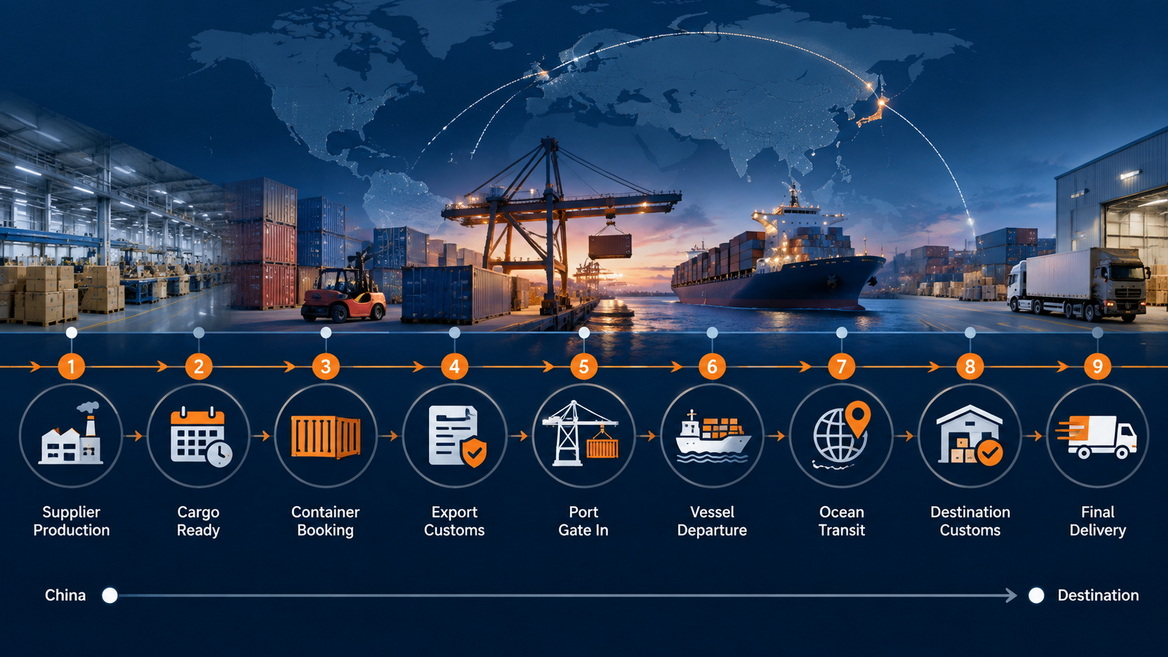
Importers should understand the most common peak-season risks before making shipment decisions. A proactive plan can reduce avoidable delays and help protect inventory availability.
A cargo rollover occurs when a booked container does not load onto its intended vessel and is moved to a later sailing.
This can happen because of overbooking, vessel capacity limitations, late terminal gate-in, equipment shortages, inaccurate cargo information, customs documentation issues, or schedule changes.
A rolled container may wait several days or longer for the next available vessel. For seasonal goods, promotional products, production materials, or fast-selling consumer items, this can create a significant business impact.
To reduce rollover risk:
- Confirm the supplier's cargo-ready date before booking.
- Provide accurate cargo dimensions, weight, container type, and dangerous goods information.
- Deliver the container to the terminal before the cutoff date.
- Complete shipping instructions and customs documents on time.
- Identify critical cargo clearly when placing the booking.
- Avoid last-minute changes to shipping instructions, consignee details, or cargo quantity.
- Maintain communication with the freight forwarder throughout the loading process.
Securing vessel space does not always mean that an empty container will be available. During peak season, equipment shortages can affect standard dry containers, 40HQ containers, refrigerated containers, open-top containers, flat racks, and other specialized equipment.
Equipment shortages may occur at major export ports such as Shanghai, Ningbo, Shenzhen, Qingdao, Xiamen, Tianjin, and Guangzhou. They can also affect inland factories that require container pickup from a depot before trucking to the port.
This is especially important for:
- Consumer goods requiring 40HQ containers
- Refrigerated food and temperature-sensitive products
- Machinery and oversized cargo
- Dangerous goods shipments
- Heavy cargo requiring special equipment
- Export shipments from inland manufacturing areas
A well-managed shipment requires both confirmed vessel space and confirmed equipment availability.
Ocean freight rates can increase during peak periods because demand rises while available capacity becomes limited. However, the base ocean freight rate is only one part of the total logistics cost.
Importers should understand all expected charges before confirming a shipment.
A clear freight quotation should include:
- Origin port and destination port
- Container type and quantity
- Ocean freight rate
- Rate validity period
- Applicable surcharges
- Origin charges
- Destination charges
- Documentation fees
- Customs-related charges
- Delivery charges, if required
- Storage, demurrage, and detention conditions
- Estimated transit time
- Direct or transshipment routing
- Cargo insurance options
The lowest shipping quote is not always the best option. A lower rate may involve a slower route, more transshipment risk, less schedule flexibility, or charges that are not clearly included at the beginning.
Port congestion can occur at origin, during transshipment, or at destination. Even when the vessel arrives on schedule, containers may wait for discharge, customs release, trucking capacity, rail availability, or warehouse appointment confirmation.
Destination delays can be particularly costly because containers may begin accumulating storage, demurrage, or detention charges if they are not collected and returned within the available free time.
Before the shipment departs China, importers should make sure that destination customs clearance, duty payment arrangements, local delivery plans, and warehouse receiving procedures are ready.
A structured shipping plan makes it easier to manage uncertainty and respond quickly if conditions change.
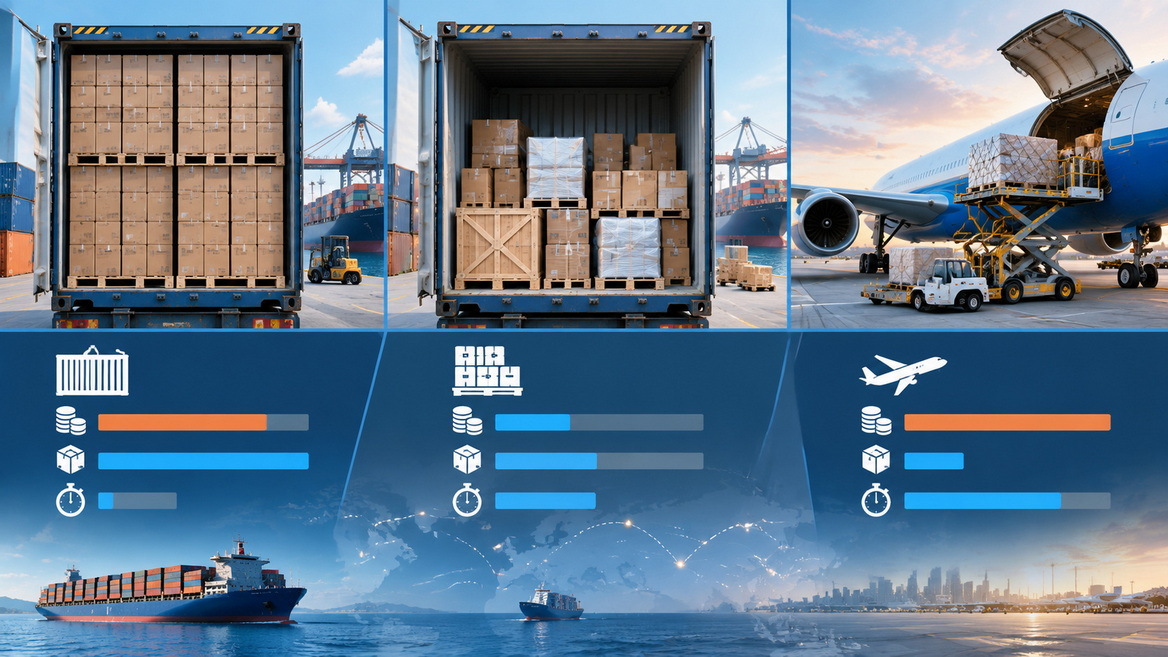
Not every shipment has the same business value. Divide inventory into clear priority groups before booking transportation.
- Critical cargo: Products or materials that could stop production, cause stockouts, interrupt customer orders, or affect contractual commitments.
- Important cargo: Products that support revenue but can tolerate a limited delay.
- Flexible cargo: Goods that can arrive later without creating a major commercial impact.
This allows importers to protect high-priority inventory first if capacity becomes limited.
Before placing a booking, verify that the supplier can complete the order, package the goods correctly, prepare export documents, and load the cargo according to the planned schedule.
For full container load shipments, confirm:
- Factory address and loading access
- Cargo-ready date
- Required container type
- Total gross weight
- Carton count or pallet quantity
- Packaging requirements
- Loading method
- Export declaration documents
- Product information and HS code details
For less-than-container-load shipments, confirm:
- Delivery date to the consolidation warehouse
- Number of packages
- Cargo dimensions
- Gross weight
- Cargo marks
- Product description
- Dangerous goods status
- Packaging quality for handling and consolidation
Peak-season shipments should be actively monitored from booking to final delivery.
Important milestones include:
- Booking confirmation
- Empty-container release
- Container pickup
- Factory loading
- Export customs declaration
- Terminal gate-in
- Vessel departure
- Transshipment connection
- Destination arrival
- Import customs clearance
- Container release
- Local delivery appointment
- Empty-container return
Regular updates help importers make faster decisions if a container is delayed, a vessel changes schedule, or a destination delivery appointment needs to be adjusted.
A split-shipping strategy can reduce the risk of running out of important products. Rather than sending all cargo by one method, importers may send the most urgent products by air freight and the remaining volume by sea freight.
This approach can work well when:
- A product has high sales value.
- A stockout would cause significant lost revenue.
- A customer order has a fixed delivery deadline.
- Only part of the shipment is urgently needed.
- Sea freight remains the most economical option for the bulk cargo.
For example, an importer may ship the first 10% of a seasonal product order by air to support immediate sales, while the remaining 90% travels by sea at a lower total logistics cost.
During peak season, routing decisions should focus on reliability as well as transit time.
A direct service may reduce handling points and lower the risk of missing a transshipment connection. A transshipment service may offer lower pricing or more departure options, but it can introduce additional delay risks.
When comparing routes, ask:
- Is the service direct or transshipped?
- Which ports will the vessel call at?
- How many transshipment points are involved?
- What is the expected connection time?
- Is there an alternative sailing if the first vessel is delayed?
- What is the expected transit time to the destination port?
- What destination delivery options are available?
For high-value or deadline-sensitive cargo, a more reliable route may be more valuable than the cheapest route.
Peak season can increase handling activity and operational pressure across ports, warehouses, trucking networks, and distribution facilities.
Cargo insurance can help protect the financial value of goods if they are lost, damaged, or affected by covered events during transportation. Importers should review the insurance scope carefully and confirm the declared cargo value, policy exclusions, packaging requirements, claim process, and supporting documentation.
Carrier liability may be limited and may not cover the full commercial value of cargo. Insurance should be considered as part of a broader risk-management plan.
A container may arrive on time but still face delays if customs documents are incomplete, duties are unpaid, inspections are required, or the consignee has not arranged delivery.
Before the vessel leaves China, confirm that:
- Import customs documents are complete.
- Product descriptions and values are accurate.
- Import permits and compliance documents are available.
- Duties and taxes are planned.
- Customs broker instructions are confirmed.
- Warehouse receiving hours are known.
- Delivery appointments are arranged when necessary.
- Container free-time terms are understood.
- Local trucking capacity is available.
A freight forwarder plays an important role during high-demand shipping periods. The right logistics partner should provide more than a freight quotation. They should help coordinate suppliers, booking schedules, customs requirements, transport options, cargo tracking, and destination delivery.
| Service Area | What to Evaluate | Why It Matters |
|---|---|---|
| Supplier coordination | Ability to communicate with Chinese suppliers | Helps prevent late cargo handover and loading delays |
| Booking management | Experience with vessel space, equipment, and schedule changes | Supports better shipment planning |
| Export customs clearance | Knowledge of Chinese export documentation and customs processes | Reduces avoidable customs delays |
| Route selection | Access to direct and transshipment options | Creates flexibility when capacity is limited |
| Global delivery | Ability to arrange destination customs and local delivery | Supports smoother door-to-door transportation |
| Cost transparency | Clear explanation of included and excluded charges | Reduces unexpected freight costs |
| Shipment visibility | Regular milestone updates and exception notices | Helps importers make fast decisions |
| Cargo insurance | Ability to provide insurance guidance or arrangement | Supports cargo-risk management |
GB FREIGHT AGENCY CO., LTD. supports companies shipping from China to global destinations. Our services can include supplier booking coordination, export customs clearance, sea freight, multimodal transportation, destination handling, and final delivery.
We help businesses compare shipping options based on cargo urgency, budget, volume, transit requirements, and destination needs. Whether the shipment is a full container load, less-than-container load, urgent replenishment order, or recurring global supply-chain movement, the objective is to move cargo with better visibility and greater operational control.
China sea freight peak season can create higher costs, limited container availability, booking challenges, cargo rollovers, and delivery delays. However, importers can reduce these risks through earlier planning, accurate supplier coordination, realistic transit buffers, clear cargo prioritization, reliable routing, cargo insurance, and destination-delivery preparation.
The strongest shipping plans begin before the cargo is ready. They connect supplier production schedules, container booking, export customs clearance, vessel capacity, destination customs, and final warehouse delivery into one coordinated process.
For businesses moving cargo from China to Europe, North America, South America, Southeast Asia, the Middle East, Africa, and Oceania, GB FREIGHT AGENCY CO., LTD. provides practical sea freight solutions designed around cost control, transit reliability, and end-to-end shipment coordination.
The main peak season often occurs from late summer through early autumn, when importers ship inventory for back-to-school demand and year-end retail sales. Another major period occurs before Chinese New Year, when factories and exporters rush to complete shipments before holiday closures.
Booking should begin as soon as the supplier can provide a reliable cargo-ready date. Importers should work backward from the final warehouse delivery date and include time for production, export customs clearance, terminal cutoff, ocean transit, destination customs, and inland delivery.
Cargo rollover means that a booked container does not load onto the planned vessel and is moved to a later sailing. It may happen because of limited vessel space, overbooking, late terminal gate-in, equipment shortages, documentation issues, or carrier schedule changes.
Direct sea freight can be more reliable for urgent cargo because it reduces the number of ports and handling points involved. Transshipment services may offer lower costs or more route options, but they can increase the risk of delays if containers miss connections or congestion occurs at a hub port.
This can be a useful option when only part of the cargo is urgently needed. High-priority, fast-moving, or high-margin products can move by air freight, while the larger shipment travels by sea freight. This helps balance delivery speed and transportation cost.
1. Freightos. "[Beating Peak Shipping Season]." Information on seasonal freight demand, booking practices, shipping risks, cargo prioritization, split shipments, and freight-forwarder selection. [freightos]
2. UN Trade and Development. "[Review of Maritime Transport 2025: Staying the Course in Turbulent Waters]." Information on freight-rate volatility, port disruption, maritime transport risks, supply-chain resilience, and global shipping conditions. [unctad]
3. UN Trade and Development. "[Maritime Trade Under Pressure – Growth Set to Stall in 2025]." Information on global maritime trade growth, container shipping conditions, route disruption, and freight-rate volatility. [unctad]
4. State Council of the People's Republic of China. "[China's Public Holidays for 2026]." Official information on China's 2026 public-holiday schedule. [english.www.gov]
5. China Briefing. "[China Public Holiday Schedule 2026]." Information on China's 2026 Spring Festival and National Day holiday periods for business and supply-chain planning. [china-briefing]
6. FreightWaves / Yahoo Finance. "[Trans-Pacific Spot Rates Reach New Highs on Resilient Demand, Port Congestion]." Information on peak-season demand, capacity conditions, port congestion, and Trans-Pacific freight-rate trends. [finance.yahoo]
7. The Loadstar. "[Late Peak Demand Sees Container Spot Rates to the US Surge]." Information on differences in Trans-Pacific and Asia-Europe market conditions and late-season freight demand. [theloadstar]


