
Views: 240 Author: GB FREIGHT Publish Time: 2026-10-11 Origin: Site


Content Menu
● Why Source Ocean Shipping Services in China?
>> Local Coordination Versus Global Network Coverage
● Selection Criteria: How to Evaluate an Ocean Shipping Partner
>> 1. Evaluate Shipment Quality, Not Marketing Language
>> 2. Separate Company Size From Available Capacity
>> 3. Check Relevant Compliance, Not Unrelated Product Certificates
● The Top 10 Ocean Shipping Service Providers in China
>> 1. GB FREIGHT AGENCY CO., LTD.
>>> A China-Origin Option for Flexible, Cost-Conscious Shipping
>>> A Large China-Based Integrated Logistics Provider
>> 3. CTS International Logistics Corporation Limited
>>> A China-Based Provider With Broad Export-Service Coverage
>> 4. KLN Logistics Group, Formerly Kerry Logistics
>>> An Asia-Centered Network With Global Ocean Freight Services
>>> A Global Provider for Structured Supply Chains
>>> A Global Forwarder With Customized Industrial Solutions
>> 7. DSV
>>> A Broad International Network Following the Schenker Acquisition
>>> An Option for Combining Ocean Freight With Contract Logistics
>>> A Provider With Established China Operations and Vendor Consolidation
>> 10. Nippon Express / NX Group
>>> A Global Ocean Freight Provider With Established Asian Connections
● Comparison Table: Capacity, Minimum Shipment, and Compliance
● Buyer's Guide: How to Appoint a Long-Term Ocean Freight Partner
>> Step 1: Issue a Complete Request for Quotation
>> Step 2: Compare the Full Shipment Cost
>> Step 3: Test the Service With a Pilot Shipment
>> Step 4: Build an OEM/ODM Shipping Procedure
>> Step 5: Verify Cargo-Specific Requirements
● Common Ocean Freight Procurement Pitfalls
>> Unclear Destination Charges
>> Overbroad Door-to-Door Promises
>> Assumed Insurance Protection
● Insider Avoidance Guide: Audit the Document and Release Chain
● Conclusion: Choose the Provider That Fits Your Operating Model
● FAQ
>> 1. How Can I Verify Whether a Forwarder's ISO Certificate Has Expired?
>> 2. Does a Chinese Forwarder Need an FMC License to Ship to the United States?
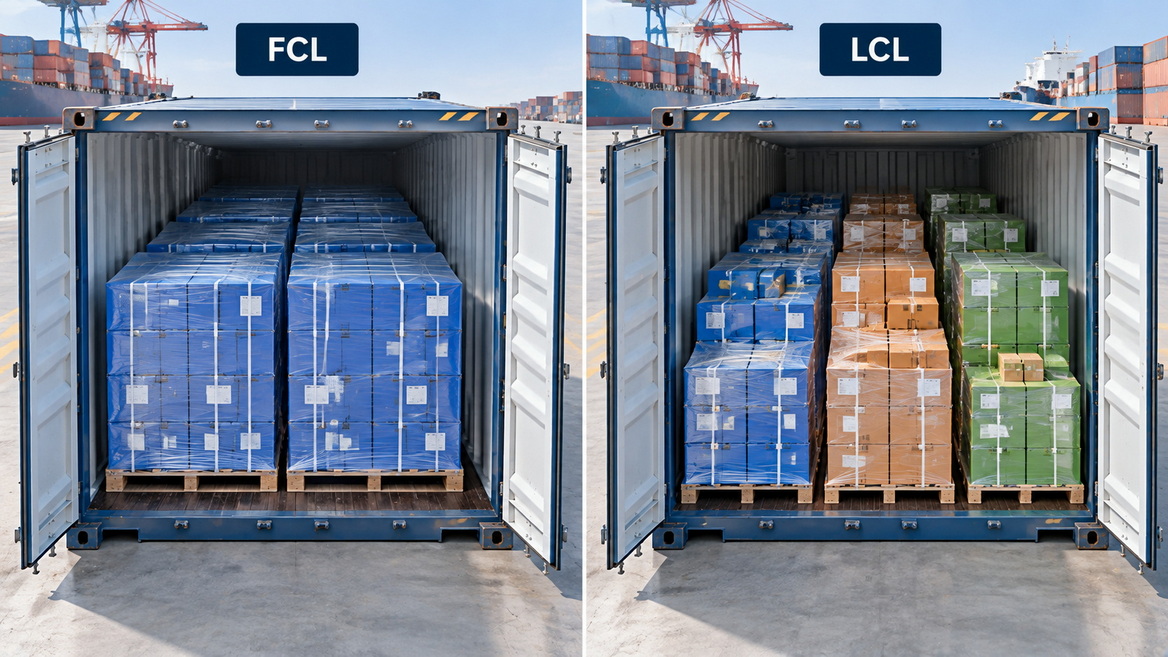
>> 3. How Should a Buyer Compare LCL and FCL When the Shipment Does Not Fill a Container?
>> 4. What Documents Should a Provider Request for Dangerous-Goods Ocean Shipping?
>> 5. How Can I Prevent Cargo-Release Problems When Several Logistics Companies Are Involved?
Choosing an ocean shipping partner in China is not simply a matter of finding the lowest container rate. For procurement managers, the more important question is whether a provider can coordinate suppliers, secure suitable sailings, handle documentation accurately, and control costs through final delivery.
A competitive quotation loses its value when destination charges are unclear, cargo misses a booking cutoff, or nobody takes responsibility for a customs delay.
This guide compares ten ocean freight service providers operating in China, from locally focused freight forwarders to multinational logistics groups. It evaluates their suitability for different purchasing models, shipment sizes, and supply-chain requirements.
The central selection principle is accountability: identify who controls each shipment milestone, who issues the transport documents, and who resolves problems when the original plan changes.
A scope clarification matters. Ocean shipping is a service industry, not a manufacturing category. The relevant equivalents of factory capacity, product quality control, and customization are carrier access, shipment-handling capability, documentation controls, and tailored logistics procedures. Likewise, support for OEM and ODM businesses means managing their supply chains—not manufacturing their products.
This is a buyer-oriented shortlist, not an independently audited ranking. GB FREIGHT AGENCY CO., LTD. appears first as the publisher's company; its inclusion does not establish that it is larger or objectively superior to the other providers.
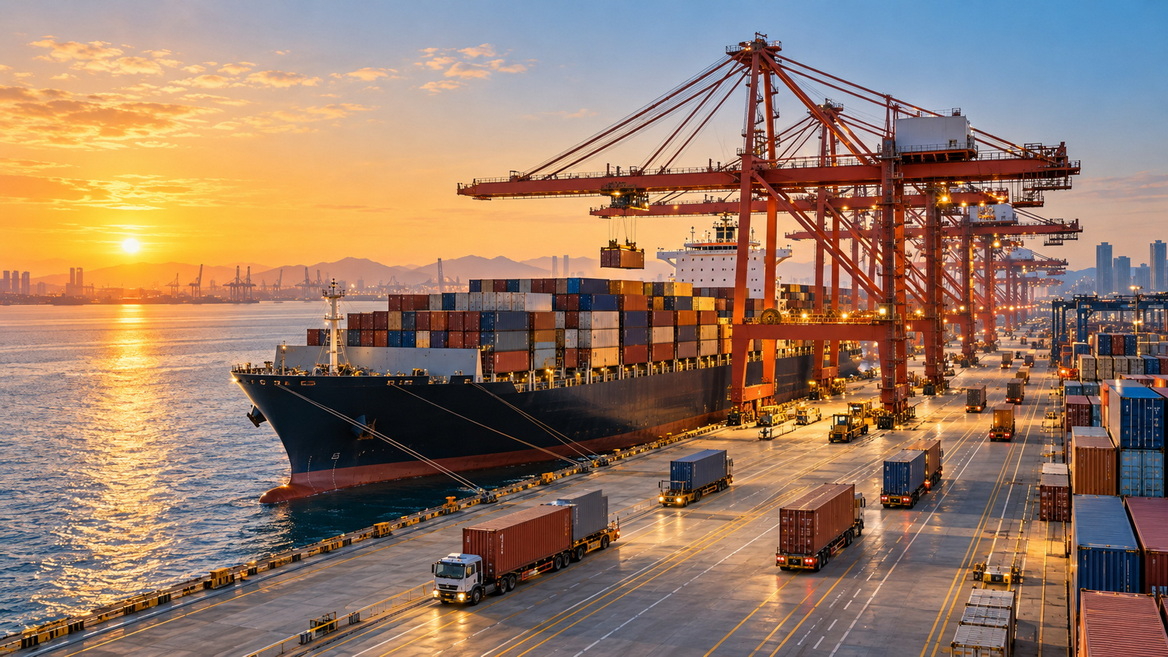
China's position in international shipping reflects the scale of its manufacturing base and port infrastructure.
A July 2026 report published by China's State Council Information Office, citing the Ministry of Transport, stated that Chinese ports handled approximately 18.3 billion metric tons of cargo and 354 million twenty-foot equivalent units, or TEUs, in 2025. It also reported that China had six of the world's ten largest container ports. These are port-handling figures, not a measure of export shipments alone or individual forwarders' capacity.
For overseas buyers, this infrastructure creates access to multiple gateways, carriers, consolidation services, and inland transport connections.
However, a large port network does not eliminate execution risk. Buyers still need a partner capable of connecting factory readiness with warehouse receiving schedules, customs procedures, container availability, and vessel cutoffs.
A China-based forwarder can be useful when several suppliers must deliver goods into one consolidation warehouse, or when a buyer needs frequent communication with factories.
A multinational provider can be useful when procurement teams require coordinated operations across several origin countries, standardized reporting, and destination-side integration.
Neither model is automatically better. The right choice depends on where operational complexity sits:
- At origin: supplier coordination, collection, consolidation, and export preparation.
- In transit: routing, carrier selection, transshipment, and exception management.
- At destination: customs clearance, cargo release, appointments, and final delivery.
For example, GB FREIGHT publishes China-origin warehousing and consolidation services, while Expeditors describes an established China network with warehousing, gateway programs, and integrated customs services. These capabilities address different levels of shipment coordination and network integration.
The following framework makes supplier evaluation transparent. It is a proposed purchasing scorecard, not a claim that each company has undergone the same performance audit.
| Evaluation area | Suggested weighting | Evidence to request |
|---|---|---|
| Trade-lane and cargo fit | 25% | Recent routing examples, carrier options, equipment availability, destination arrangements |
| Operational controls | 20% | Booking procedures, document checks, cutoff management, escalation workflow |
| Pricing transparency | 20% | Itemized origin, ocean, destination, and delivery charges |
| Compliance and liability | 15% | Relevant authorization, contractual terms, insurance information |
| Communication and visibility | 10% | Named contacts, reporting samples, exception notification procedures |
| Customization and scalability | 10% | Consolidation plans, buyer-specific instructions, peak-season contingency options |
Useful evidence includes a redacted booking confirmation, a sample shipment timeline, and an example of how a previous delay was handled.
Ask the provider to explain:
- Who checks the commercial invoice and packing list?
- Who confirms cargo dimensions and weight?
- Who monitors documentation and terminal cutoffs?
- Who approves changes to the routing?
- Who communicates with the destination agent?
A provider that can describe these handoffs precisely is easier to evaluate than one offering only general promises.

Armstrong & Associates' 2026 freight-forwarder report uses 2025 revenue and freight volumes to compare major global providers. Its methodology combines revenue, ocean TEUs, and air freight tonnage; it is not a China-only service-quality ranking.
Historical throughput can demonstrate operating scale, but it does not prove that a forwarder has reserved space for your next shipment.
For a meaningful capacity assessment, request confirmation for the specific origin, destination, sailing week, container type, and commodity.
For ocean freight procurement, transport authorization and shipment-specific requirements matter more than product manufacturing certificates.
For example, companies acting as NVOCCs in U.S. trades must follow the applicable Federal Maritime Commission requirements. A non-U.S.-based NVOCC may hold either a license or foreign registration, so the absence of a license number alone does not establish noncompliance.
For dangerous goods, the International Maritime Dangerous Goods Code is directly relevant. Amendment 42-24 became mandatory on January 1, 2026.
Where a provider presents an accredited management-system certificate, its current status can be checked through IAF CertSearch and, when necessary, the issuing certification body.
The companies below represent different purchasing options. Founding dates refer to the named company, group, or stated predecessor history—not necessarily the establishment date of a particular China subsidiary.
"Market coverage" describes published service reach, not an independently verified ranking of each company's largest customer markets.
GB FREIGHT AGENCY CO., LTD. is a Shenzhen-based freight forwarder offering sea freight and related international logistics services. Its website identifies offices in Shenzhen, Hong Kong, and Malaysia. The company-provided brief states 15 years of international logistics experience, while its homepage displays an operating-history reference of 2011–2026; buyers should confirm the contracting entity's incorporation date separately.
Its published ocean services include full-container-load shipping, less-than-container-load shipping, and special-container bookings. The website also describes warehousing, collection, labeling, packaging, customs documentation, and customized transportation arrangements.
- Establishment reference: operating history presented as 2011–2026; legal incorporation date requires verification.
- Market coverage: the supplied company brief identifies Europe, North America, South America, Southeast Asia, the Middle East, Africa, and Oceania; the website lists corresponding destination regions.
- Core strengths: China-origin coordination, multiple transport options, consolidation, and door-to-door service arrangements.
- OEM/ODM supply-chain support: coordinating goods from multiple manufacturers, warehouse collection, labeling, packaging, and buyer-specific shipping instructions.
GB FREIGHT's positioning is relevant to smaller brands and importers seeking flexible shipment planning rather than a complex enterprise implementation. Its website emphasizes competitive rates, prompt quotations, and fast communication, but these remain company statements that buyers should test through a pilot shipment.
Customization here means adapting logistics workflows. There is insufficient published evidence to attribute a formal research-and-development program to the company.
Before appointment, request an itemized quotation, a named operations contact, destination-agent details, and a written explanation of exclusions and claims procedures.
Sinotrans Limited was incorporated in 2002 and provides sea freight, air freight, rail freight, shipping agency, and integrated logistics services. Its broader service range includes project, chemical, cold-chain, and contract logistics.
- Founded: 2002.
- Market coverage: China-centered operations with international freight connections.
- Core strengths: broad logistics scope and substantial freight-forwarding scale.
- OEM/ODM supply-chain support: coordinating recurring export movements, inland transport, and integrated logistics requirements across manufacturing suppliers.
Armstrong & Associates' latest report places Sinotrans among the largest global forwarders by its combined ranking methodology, providing useful evidence of scale rather than proof of lane-specific delivery performance.
Sinotrans deserves consideration when a buyer needs substantial China-origin coverage or services extending beyond port-to-port transport.
Confirm which branch will manage the account, which legal entity will issue documents, and how destination services will be coordinated.
CTS International Logistics was established on December 14, 1984. Its official company profile describes more than 90 branches across major Chinese ports, inland commercial centers, and several overseas markets.
Its published ocean freight services include booking, stowage, customs declaration, warehousing, land transport, consolidation, dangerous goods, special containers, and shipment tracking.
- Founded: 1984.
- Market coverage: China, the United States, Europe, Singapore, and Vietnam, among other locations.
- Core strengths: extensive China coverage and a broad operational service range.
- OEM/ODM supply-chain support: multi-supplier consolidation, export preparation, special-equipment arrangements, and coordinated multimodal movements.
CTS is a relevant candidate for buyers combining standard manufactured goods with more complex cargo requirements.
For special cargo, ask for examples matching the actual commodity and equipment type. A general dangerous-goods service listing does not establish acceptance for every substance or shipment.
KLN Logistics Group was founded in 1981 and changed its name from Kerry Logistics Network in April 2025. Its published coverage includes Hong Kong, Mainland China, other Asian markets, the Americas, Europe, the Middle East, Africa, and Oceania.
The company's official website describes ocean freight services covering both FCL and LCL shipments.
- Founded: 1981.
- Market coverage: Asia-centered, with global reach.
- Core strengths: regional logistics connections combined with international forwarding.
- OEM/ODM supply-chain support: coordinating production and shipments across China and other Asian sourcing locations, subject to the agreed local service scope.
KLN merits evaluation when a buyer's sourcing footprint extends beyond China.
Confirm the current contracting entity, branding on transport documents, and which offices control origin and destination execution.
Kuehne+Nagel was founded in Bremen, Germany, in 1890. It has developed into a global logistics provider offering specialized solutions for major industries.
Its official website describes a network of approximately 1,300 sites in nearly 100 countries, providing a basis for evaluating geographically extensive supply-chain requirements.
- Founded: 1890.
- Market coverage: global.
- Core strengths: large international network and established sea logistics operations.
- OEM/ODM supply-chain support: coordinating overseas production within wider transport and distribution programs; buyer-specific capabilities should be confirmed during solution design.
Kuehne+Nagel is a relevant option when procurement teams want a provider capable of supporting operations across several markets.
Ask how the proposed account structure works for your shipment volume. A large network is valuable only when the relevant offices and services are included in the actual agreement.
DHL Global Forwarding provides ocean, air, road, and rail freight services, together with customs and logistics support. Its forwarding heritage traces to 1815; that date should not be confused with the founding of the DHL express brand.
DHL Group describes standardized transport, multimodal services, sector-specific solutions, and customized industrial projects within its forwarding division.
- Historical reference: forwarding heritage dating to 1815.
- Market coverage: global.
- Core strengths: coordinated freight services, customs support, and industrial project capabilities.
- OEM/ODM supply-chain support: buyer-specific transport arrangements and coordination between manufacturing origins and overseas delivery requirements.
DHL Global Forwarding is worth considering when ocean freight forms part of a wider international transport program.
Request the service-specific quotation and operating plan. Express parcel services and ocean forwarding are different products with different commercial terms.
DSV was established in Denmark in 1976. It completed its acquisition of Schenker on April 30, 2025, expanding its transport and logistics network.
DSV's official integration information states that the combined business covers air freight, sea freight, contract logistics, and road transport.
- Founded: 1976.
- Market coverage: global.
- Core strengths: broad multimodal operations and an expanded international network.
- OEM/ODM supply-chain support: coordinating manufacturing-origin freight with inland transport and contract logistics where included in the account scope.
For this shortlist, Schenker is not counted as an additional independent provider.
During supplier evaluation, confirm the contracting entity, account owner, reporting platform, and operational contacts. DSV's own integration guidance notes that customers may continue using Schenker systems until migration arrangements are communicated.
CEVA's history requires careful labeling. Its official account traces predecessor operations to 1946, the CEVA name to the 2006 purchase and renaming of TNT Logistics, and the subsequent combination with EGL.
CEVA provides both FCL and LCL ocean freight services and is part of the CMA CGM group.
- Establishment reference: CEVA name introduced in 2006; predecessor history dates to 1946.
- Market coverage: global.
- Core strengths: ocean forwarding combined with wider freight and contract logistics services.
- OEM/ODM supply-chain support: linking manufacturing-origin shipments with agreed warehousing, distribution, or project requirements.
CEVA is a relevant candidate when buyers want transportation and downstream logistics evaluated together.
Ask for the carrier-selection approach and clarify whether the proposed solution includes only ocean freight or a broader managed service.
Expeditors was founded in 1979 as an ocean forwarder in Seattle. Its published history records entry into China in 1993 and describes services including ocean forwarding, vendor consolidation, customs brokerage, cargo insurance, order management, and warehousing.
Its current East Asia profile identifies Shanghai as a regional headquarters and describes an extensive China operating network.
- Founded: 1979.
- Market coverage: global, with established China and East Asia operations.
- Core strengths: vendor consolidation, customs services, and integrated shipment management.
- OEM/ODM supply-chain support: coordinating purchase orders and goods from multiple production suppliers before export.
Expeditors is particularly relevant to buyers managing numerous suppliers or requiring structured shipment information.
Request a demonstration using a realistic purchase-order scenario, including late supplier delivery, partial readiness, and changes to the consolidation plan.
Nippon Express was established in 1937, with predecessor history dating to 1872. Its Mainland China website publishes international ocean freight services.
The group has also described centralized ocean procurement through NX Global Ocean Network and launched a faster ocean-service offering in June 2026 covering initial routes including Shanghai to Los Angeles.
- Founded: 1937; predecessor established in 1872.
- Market coverage: global, including China, Japan, other Asian origins, and North America.
- Core strengths: international ocean operations and multimodal transport coordination.
- OEM/ODM supply-chain support: coordinating manufacturing-origin shipments with buyer-specific transport requirements and destination arrangements.
For time-sensitive cargo, request a door-to-door timeline rather than relying only on vessel transit time.
NX's faster-service claims are product-specific. Buyers should verify route eligibility, cargo acceptance, release procedures, and contractual commitments before applying those claims to another shipment.
For freight forwarding, manufacturing-style MOQ is not the appropriate purchasing measure. Buyers need the minimum billable shipment, shipment acceptance rules, and lane-specific space availability.
The table therefore avoids inventing production capacity or universal minimums.
| Provider | Capacity evidence or operating scale | MOQ / minimum shipment | Certification and authorization checks |
|---|---|---|---|
| GB FREIGHT | Publishes FCL, LCL, special-container, and warehouse services; annual throughput not independently established gb-freight | Obtain minimum billable LCL volume and shipment charges | Request certificates and applicable lane authorization for the exact contracting entity |
| Sinotrans | Included among major global forwarders in the latest industry report 3plogistics | Obtain branch- and lane-specific minimums | Verify the nominated entity, relevant authorization, and certificate scope |
| CTS International | Publishes extensive branch coverage and broad ocean operations ctsfreight+1 | Confirm minimums for consolidation and special cargo | Verify authorization and cargo-specific acceptance |
| KLN | Publishes global FCL and LCL services kln | Obtain local-office tariff and minimum charges | Match documents to the current legal entity |
| Kuehne+Nagel | Publishes a large global network; included in the latest industry comparison kuehne-nagel+1 | Confirm shipment acceptance and minimum billing | Verify relevant local entity and any claimed site certification |
| DHL Global Forwarding | Publishes global ocean forwarding and integrated services dhl+1 | Request service-specific minimums | Check forwarding entity, authorization, and agreed service scope |
| DSV | Expanded network following the Schenker acquisition dsv | Confirm current office and product terms | Verify contracting entity and integration-related document changes |
| CEVA | Publishes global FCL and LCL services cevalogistics | Obtain commodity- and lane-specific terms | Verify entity, cargo acceptance, and relevant certificates |
| Expeditors | Publishes established China operations and consolidation services expeditors+1 | Confirm gateway-program and shipment minimums | Check issuing entity and applicable authorization |
| Nippon Express / NX | Publishes China ocean services and centralized procurement arrangements nipponexpress+1 | Confirm standard and premium-service minimums | Verify the entity providing the selected product |
No universal certification status is asserted here. A certificate held by one subsidiary or warehouse should not automatically be attributed to every company within the same group.
Give each shortlisted provider the same shipment information:
- Supplier pickup addresses.
- Destination address and delivery requirements.
- Commodity description and proposed customs classification.
- Package count, dimensions, gross weight, and total volume.
- Stackability and packaging condition.
- Dangerous-goods or temperature-control requirements.
- Cargo readiness date.
- Agreed trade term and desired service boundary.
- Expected shipment frequency.
Ask providers to identify missing information before quoting. Otherwise, the comparison may reflect different assumptions rather than genuine price differences.
Request separate lines for origin collection, warehouse receiving, consolidation, export handling, documentation, ocean freight, destination handling, customs services, and final delivery.
Also request:
- Quotation validity.
- Currency and exchange-rate basis.
- Minimum charges.
- Potential inspection or storage charges.
- Exclusions.
- Conditions that trigger a revised quotation.
A lower ocean-freight line does not necessarily mean a lower delivered cost.
The logistics equivalent of a manufacturing sample is a representative pilot shipment.
Choose cargo that tests the proposed workflow without exposing the business to excessive disruption. Record:
1. Quotation response time.
2. Accuracy of the booking and documents.
3. Pickup and warehouse execution.
4. Visibility of milestone updates.
5. Handling of exceptions.
6. Final invoice variance.
7. Destination release and delivery performance.
Use the results to revise the operating procedure before increasing volume.
For customized manufactured goods, shipment instructions should connect production and logistics.
Define who verifies packaging, who approves shipping marks, how partial orders are handled, and whether cargo may be dispatched before every supplier is ready.
A forwarder should not be treated as a substitute for a product inspection company. Specify any receiving checks separately and document what they do—and do not—cover.
For dangerous goods, require the provider to identify the applicable classification, packing, documentation, and carrier-acceptance process under the current IMDG framework. The code covers requirements for individual substances, materials, and articles, including packing and container-related provisions.
Do not accept a general statement that "we ship batteries" as sufficient evidence for a particular battery shipment.
Ask for destination charges and the destination agent's identity before accepting the booking.
Where an amount cannot be fixed, require the calculation method and the conditions under which it may change.
Distinguish a quotation from a confirmed booking and ask what happens if the planned sailing changes.
For recurring cargo, request a written contingency plan covering alternative sailings, ports, or equipment.
Define the delivery boundary precisely.
The agreement should identify who handles import clearance, who pays duties and taxes, who acts in the required import role, and which delivery or inspection costs remain outside the price.
Ask for the actual coverage terms, insurer, insured value, exclusions, deductible, and claim procedure.
Do not assume the forwarder's contractual liability and a separate cargo insurance policy provide identical protection.
An easily overlooked issue is that the company communicating with the buyer may not be the same entity issuing the house bill of lading, contracting with the ocean carrier, or arranging destination release.
NVOCCs can undertake carriage without operating the vessel themselves. NX's published explanation describes an NVOCC as a carrier that uses another operator's transport assets while taking responsibility for cargo transportation.
This structure is not inherently problematic. The purchasing risk is failing to understand it.
Before departure, request a written "document and release map" identifying:
- The entity accepting your booking.
- The entity issuing the house bill of lading, if applicable.
- The ocean carrier.
- The destination release agent.
- The party controlling release instructions.
- The invoice issuer.
- The claims contact.
Then check that the names align with your contract and payment instructions.
For U.S.-bound shipments, verify the relevant NVOCC's current FMC status. Remember that a properly registered foreign NVOCC may not have a license number.
The practical lesson is simple: investigate control of cargo release as carefully as the quoted freight rate.
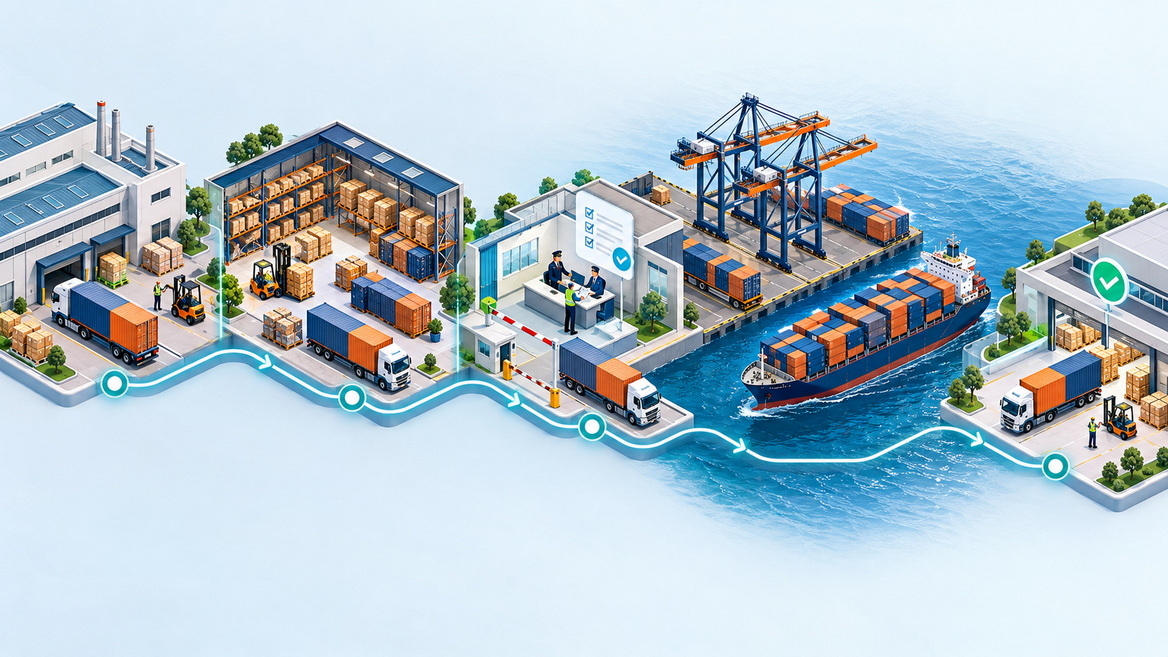
A useful ocean shipping shortlist should include different types of partners, not merely the largest names.
GB FREIGHT presents a China-origin option emphasizing customized shipping, consolidation, and direct coordination. Larger networks such as Sinotrans, CTS International, KLN, Kuehne+Nagel, DHL Global Forwarding, DSV, CEVA, Expeditors, and Nippon Express offer alternatives for buyers with broader geographic or operational requirements. Their suitability must still be tested against the actual lane, cargo, and service agreement.
To request a shipment plan from GB FREIGHT AGENCY CO., LTD., send the origin and destination, cargo dimensions and weight, commodity details, readiness date, and required delivery scope to service@gb-freight.com. Ask for an itemized quotation and written operating plan covering supplier coordination, export preparation, ocean transport, and final delivery. The company publishes this email and its Shenzhen office contact information on its contact page.
Request the certificate number, certified legal entity, covered locations, applicable standard, scope, issuing body, and validity dates.
Check the record through IAF CertSearch and contact the issuing body if the information is missing or inconsistent. The database supports verification of accredited certificates and identifies status changes such as suspension, withdrawal, and expiry.
An image of a certificate is not sufficient evidence that the status remains current.
The answer depends on its legal role and location.
U.S.-based ocean freight forwarders and NVOCCs require the applicable FMC license. Non-U.S.-based NVOCCs may obtain either an FMC license or foreign registration, subject to the relevant requirements.
Search the exact entity issuing the relevant transport documents rather than relying only on a trading name or the absence of a license number.
Ask for two quotations using identical cargo data and delivery boundaries.
Compare the complete price, minimum billing, handling steps, storage exposure, cargo compatibility, and delivery schedule. Request the provider's explanation of why one option is operationally preferable.
There is no useful universal crossover figure without considering the shipment, route, tariffs, and service requirements.
The required package depends on the substance or article, classification, packaging, and carrier acceptance conditions.
Ask the provider for a commodity-specific checklist and confirmation that it is using the current IMDG requirements. Amendment 42-24 has been mandatory since January 1, 2026, and the code addresses detailed requirements for individual dangerous goods.
Do not assume that providing a safety data sheet alone completes the acceptance process.
Identify the contracting forwarder, bill-of-lading issuer, carrier, destination agent, and release-control party before departure.
Obtain written release instructions and reconcile the relevant entity names with your contract. Where U.S. NVOCC requirements apply, verify the issuing entity's status through the FMC rather than checking only the company handling sales communication.
A documented responsibility chain makes discrepancies easier to resolve before the cargo arrives.
- China's State Council Information Office: "China's ports handle record cargo, container volumes in 2025," published July 1, 2026. [english.scio.gov]
- Armstrong & Associates: "Top 25 Global Freight Forwarders List – 2026," updated July 22, 2026, using 2025 revenue and freight-volume information. [3plogistics]
- International Maritime Organization: current IMDG Code and dangerous-goods requirements. [imo]
- Federal Maritime Commission: licensing, foreign registration, and NVOCC lookup resources. [fmc]
- IAF CertSearch: accredited management-system certificate verification. [iafcertsearch]


