
Views: 230 Author: GB FREIGHT Publish Time: 2026-09-06 Origin: Site


Content Menu
● Why China Is a Strong Warehouse Service Hub
>> Major Warehouse and Export Logistics Clusters
● How to Evaluate a Warehouse Service Company
>> Warehouse Location and Supplier Access
>> Storage and Handling Capability
>> Inventory Accuracy and Reporting
>> Export and Customs Coordination
● Top 10 Warehouse Service Companies in China
>> 1. GB FREIGHT AGENCY CO., LTD.
>> OEM and ODM Logistics Support
>> 2. SF Supply Chain / SF Express
>> OEM and ODM Logistics Support
>> 3. Cainiao
>> OEM and ODM Logistics Support
>> 4. Sinotrans
>> OEM and ODM Logistics Support
>> 5. China Merchants Logistics
>> OEM and ODM Logistics Support
>> 6. GLP China
>> OEM and ODM Logistics Support
>> OEM and ODM Logistics Support
>> 8. Kerry Logistics Network China
>> OEM and ODM Logistics Support
>> 9. YTO Supply Chain / YTO Express
>> OEM and ODM Logistics Support
>> OEM and ODM Logistics Support
● Comparison Table: Warehouse Service Companies in China
● Warehouse Service Requirements Buyers Should Include
● How to Verify Warehouse Capacity
● Internal Risk-Control Tips for Buyers
>> Avoid Pallet-Level Receiving Without Carton Verification
>> Be Careful With "Free Storage" Offers
>> Do Not Confuse Warehouse Receiving With Product Inspection
● Common Problems and How to Avoid Them
>> Choosing a Warehouse Based Only on Price
>> Using an Unclear Release Process
>> Incomplete Product Information
● FAQ
>> 1. How can I verify whether a warehouse company's ISO certificate is valid?
>> 2. What inventory-accuracy level should I expect from a warehouse service company?
>> 3. Can a warehouse company perform product quality inspection?
>> 4. How can I compare warehouse quotations from different companies?
>> 5. What should I do if my supplier sends the wrong goods to the warehouse?
China remains a major global sourcing base for consumer products, electronics, machinery, furniture, packaging, textiles, industrial components, and cross-border e-commerce goods. However, purchasing products from China is only one part of the supply-chain process. Overseas buyers also need to manage supplier coordination, factory pickup, warehouse receiving, inventory verification, packaging, labeling, customs clearance, freight booking, and final delivery.
A professional warehouse service company can help buyers bring these activities together. Rather than arranging separate shipments from multiple factories, importers can use a warehouse in China to receive, inspect, consolidate, label, palletize, and dispatch cargo through ocean freight, air freight, rail freight, road freight, or door-to-door shipping.
This is especially valuable for buyers working with several suppliers in different Chinese cities. A buyer sourcing electronics from Shenzhen, packaging from Dongguan, furniture accessories from Foshan, and promotional products from Yiwu may face higher freight costs, repeated destination charges, and complex customs administration if each supplier ships separately. A consolidated warehouse model can create a more controlled and efficient outbound shipping process.
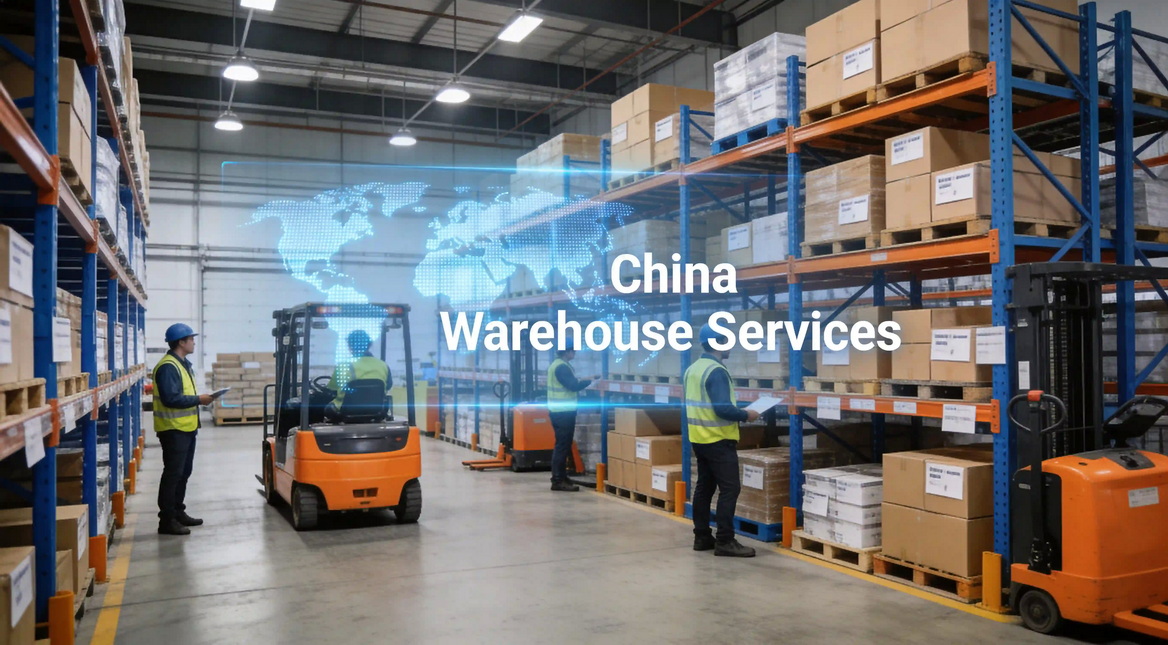
China's warehouse and logistics sector benefits from a large manufacturing base, dense supplier networks, major sea ports, international airports, rail connections, e-commerce infrastructure, and established freight-forwarding systems.
The country has developed major logistics clusters around manufacturing and export regions. These locations allow warehouse companies to connect factories with domestic trucking, customs procedures, freight terminals, and international transport routes.
| Region | Main Product Categories | Typical Warehouse Advantages |
|---|---|---|
| Shenzhen and Dongguan | Consumer electronics, accessories, batteries, e-commerce products, smart devices | Close to Shenzhen Port, Yantian Port, Shekou Port, Hong Kong, and international airports |
| Guangzhou and Foshan | Furniture, lighting, building materials, appliances, garments, consumer goods | Strong factory access and container-export capability |
| Shanghai, Ningbo, and Suzhou | Machinery, automotive parts, industrial equipment, chemicals, consumer products | Access to major ports, industrial parks, and high-volume shipping routes |
| Yiwu and Hangzhou | Small commodities, gifts, fashion accessories, e-commerce products | Suitable for multi-supplier consolidation and small-parcel fulfillment |
| Qingdao and Tianjin | Machinery, agricultural equipment, industrial products, northern China exports | Good access to northern ports and manufacturing centers |
| Xiamen and Fuzhou | Footwear, apparel, ceramics, consumer products, food-related goods | Strong Southeast Asia and global export connectivity |
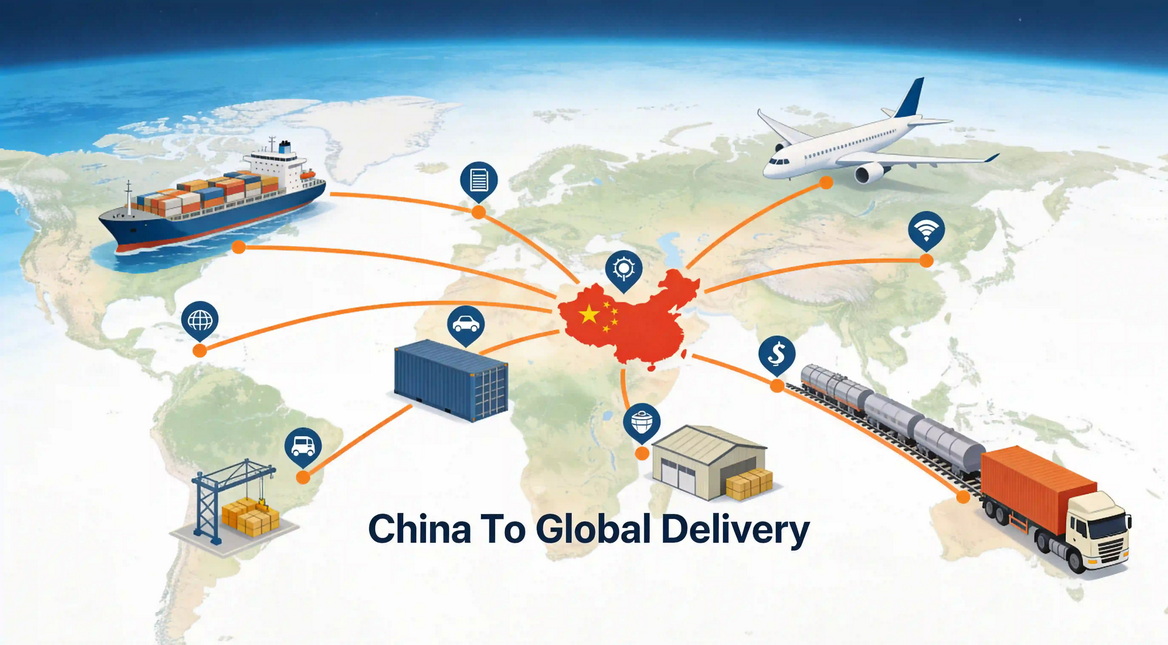
For overseas buyers, the most important advantage is not simply access to low-cost storage. It is the ability to connect warehouse operations with supplier management, export documentation, cargo consolidation, international freight, and destination delivery.
A warehouse service company should be evaluated as a supply-chain partner rather than a simple storage provider. The provider may receive valuable goods, prepare cargo for export, control inventory records, and arrange international delivery. Any operational weakness can create delays, shortages, damaged cargo, customs issues, or unexpected costs.
The following criteria are useful when comparing warehouse service companies in China.
The warehouse should be close enough to your suppliers, ports, airports, rail terminals, or distribution destinations. A warehouse located far from your production base can increase domestic trucking cost and add unnecessary cargo handling.
For example, buyers sourcing electronics from Shenzhen and Dongguan may benefit from warehouses in Shenzhen, Dongguan, Guangzhou, or Hong Kong. Buyers sourcing furniture and lighting from Foshan may prefer warehouses in Foshan, Guangzhou, or Shenzhen. Buyers purchasing small products from Yiwu should consider warehouse capacity in Yiwu, Hangzhou, Ningbo, or Shanghai.
Buyers should confirm whether the warehouse can handle their actual cargo type. Not every warehouse is suitable for every product.
Key questions include:
- Can the warehouse receive loose cartons, pallets, crates, or containers?
- Does it support pallet racking, bulk storage, shelving, or piece-picking?
- Can it handle fragile, high-value, oversized, heavy, or dangerous goods?
- Does it offer labeling, barcode scanning, carton marking, repacking, or palletization?
- Can it manage mixed-SKU inventory?
- Does it have suitable loading docks, forklifts, packing areas, and labor capacity?
- Can it receive cargo from several suppliers at different times?
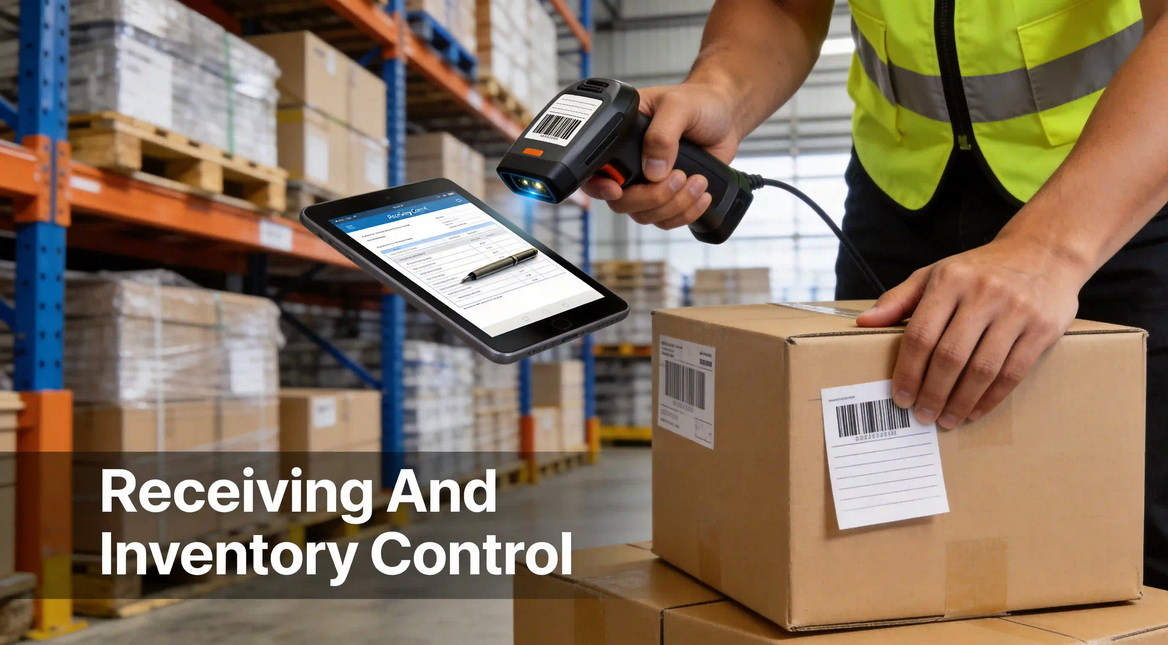
Overseas buyers should request a clear inventory-control process. A reliable warehouse should be able to provide shipment records, receiving reports, carton counts, SKU details, photographs of visible damage, and inventory updates.
For long-term storage or high-SKU fulfillment, buyers should ask whether the warehouse uses a warehouse management system, barcode procedures, cycle counts, inventory reports, and controlled release authorization.
A warehouse service company may only provide storage, while another provider may offer a broader service model that includes freight forwarding, customs clearance, export declaration, cargo insurance, and international delivery.
For buyers who want to simplify China-origin logistics, a warehouse company with integrated freight experience can reduce the number of handoffs between different parties.
Large warehouse operators may be suitable for high-volume contracts, but smaller and medium-sized importers often need more flexibility. This may include lower minimum storage requirements, mixed-SKU handling, multi-supplier consolidation, smaller shipment releases, and personalized communication.
Buyers should clarify minimum storage charges, handling fees, contract length, free-storage conditions, and support for irregular shipment schedules before making a decision.
The following companies represent different warehouse-service models in China. Some specialize in international freight forwarding and consolidation, while others focus on e-commerce fulfillment, domestic distribution, contract logistics, logistics real estate, or enterprise supply-chain management.
The best option depends on cargo type, supplier location, shipment volume, destination market, service level, and budget.
Founded: More than 15 years of international logistics experience
Head office: Shenzhen, China
Other offices: Hong Kong and Klang, Malaysia
Main markets: Europe, North America, South America, Southeast Asia, the Middle East, Africa, Oceania, and global trade routes
Suitable for: Small and medium-sized importers, e-commerce sellers, sourcing companies, multi-supplier buyers, and businesses requiring flexible China-origin logistics coordination
GB FREIGHT AGENCY CO., LTD. is an international freight-forwarding and warehouse-service provider supporting shipments from China to global destinations. The company provides warehouse services alongside ocean freight, air freight, railway freight, road freight, customs clearance, door-to-door shipping, multimodal transport, special containers, and cargo-specific logistics solutions.
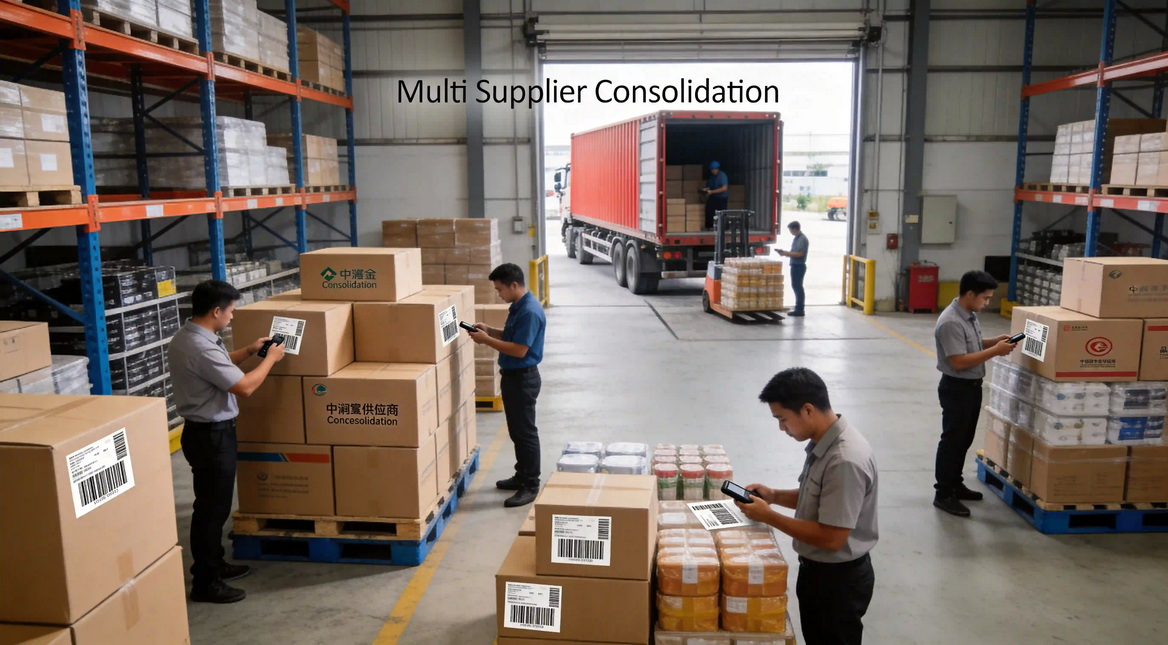
For overseas buyers, the company is particularly relevant when goods are sourced from several suppliers in China. Instead of arranging separate international shipments from each factory, buyers can coordinate supplier delivery to a warehouse for receiving, consolidation, labeling, repacking, export preparation, and final freight dispatch.
- Multi-supplier cargo consolidation
- Warehouse receiving and temporary storage
- Ocean freight and air freight coordination
- Railway freight and road freight solutions
- Door-to-door shipping arrangements
- Export customs clearance support
- Amazon FBA shipping coordination
- Dangerous-goods logistics handling
- Project cargo and oversized cargo support
- Special container arrangements
- Multimodal transport planning
- International shipping support from China to major global markets
GB FREIGHT AGENCY CO., LTD. is suitable for buyers that need more flexibility than a large enterprise warehouse program may offer. This includes businesses with mixed product categories, varying order quantities, multiple suppliers, seasonal shipment schedules, and changing destination requirements.
For example, a buyer may source phone accessories from Shenzhen, printed packaging from Dongguan, household products from Yiwu, and promotional materials from Guangzhou. Rather than managing four separate shipments, the buyer can arrange deliveries to a consolidation warehouse. The warehouse can receive cargo, record carton counts, identify visible damage, prepare shipment marks, consolidate the goods, and arrange international transportation.
This model may reduce repeated freight bookings, destination handling charges, customs administration, and delivery complexity. The actual cost benefit depends on cargo volume, dimensional weight, shipment timing, product category, Incoterms, and destination-country requirements.
GB FREIGHT AGENCY CO., LTD. does not manufacture products directly, but it can support the logistics side of OEM and ODM projects.
Relevant support may include:
- Coordinating cargo pickup from OEM factories
- Receiving finished goods from multiple manufacturers
- Consolidating components or finished products
- Checking carton quantities and shipping marks
- Preparing labels, packaging instructions, and palletization
- Supporting Amazon FBA shipment preparation
- Arranging export customs clearance
- Managing shipment release according to buyer instructions
- Connecting warehouse operations with international freight and final delivery
This is useful for buyers who work with Chinese factories but do not have their own purchasing office or warehouse team in China.
Founded: 1993
Headquarters: Shenzhen, China
Main markets: China domestic logistics, e-commerce fulfillment, express delivery, cold chain, supply-chain services, freight forwarding, and international shipping
Suitable for: Brands requiring domestic China fulfillment, fast distribution, high-frequency deliveries, consumer-goods logistics, and structured supply-chain operations
SF is one of China's largest integrated logistics companies. It has developed a broad network covering express delivery, freight services, cold-chain logistics, pharmaceutical logistics, intra-city delivery, warehouse operations, supply-chain services, international express delivery, and international freight forwarding.
SF Supply Chain is often a strong choice for brands that sell within China or require reliable domestic distribution after goods have entered a warehouse. It can be particularly suitable for fast-moving consumer goods, e-commerce orders, temperature-sensitive products, and regular replenishment programs.
- Large domestic distribution network
- E-commerce fulfillment capability
- Express-delivery integration
- Cold-chain and pharmaceutical logistics options
- Structured supply-chain operations
- Domestic warehouse-to-customer delivery
- International freight and forwarding support
- Suitable for recurring shipment programs
SF can support finished-goods logistics for OEM and ODM brands, especially after goods have completed production. Its services may include warehouse storage, China domestic distribution, retail replenishment, returns handling, and freight coordination.
It is usually more suitable for standardized and recurring logistics programs than highly customized low-volume consolidation from many small factories.
Founded: 2013
Headquarters: Hangzhou, China
Main markets: E-commerce logistics, online fulfillment, cross-border logistics, reverse logistics, digital supply chains, and parcel distribution
Suitable for: Marketplace sellers, direct-to-consumer brands, online retailers, and businesses that need technology-driven fulfillment
Cainiao is strongly associated with e-commerce fulfillment and digital logistics operations. It supports warehousing, order management, parcel processing, cross-border delivery, return logistics, and supply-chain services for online merchants.
Its warehouse model is especially relevant for sellers operating on e-commerce platforms or managing high-SKU consumer product inventories.
- E-commerce fulfillment infrastructure
- Digital logistics and tracking capability
- Parcel-oriented warehouse operations
- Cross-border shipping support
- Reverse-logistics capability
- Suitable for online retail inventory
- Strong fit for marketplace and direct-to-consumer sellers
Cainiao can support the finished-product fulfillment stage of an OEM or ODM operation. It is particularly useful when products are distributed through e-commerce channels and require inventory management, order picking, packing, parcel dispatch, and returns handling.
However, buyers with complex supplier coordination, industrial cargo, oversized products, or detailed pre-export consolidation needs should confirm whether the selected service program can provide the required operational flexibility.
Founded: 1950 roots in China's logistics sector
Headquarters: Beijing, China
Main markets: International freight forwarding, contract logistics, warehousing, multimodal transportation, project logistics, shipping, and trade logistics
Suitable for: Industrial buyers, multinational companies, large importers, machinery shippers, and businesses with structured international transport requirements
Sinotrans is one of China's most established logistics brands. It operates across international freight forwarding, warehousing, multimodal transport, project cargo, contract logistics, and global trade supply chains.
The company can be a suitable option for buyers with large shipment volumes, industrial cargo, recurring import-export programs, complex documentation, or multiple transportation modes.
- International freight-forwarding experience
- Warehousing and contract-logistics capability
- Project cargo and industrial logistics
- Multimodal transportation solutions
- Structured documentation procedures
- Support for enterprise supply chains
- Suitable for large and recurring shipping programs
Sinotrans can support the movement of raw materials, components, finished goods, and industrial products through warehouse, transport, customs, and global freight programs.
It may be more appropriate for formalized and higher-volume supply chains than for small brands with irregular, low-volume shipments.
Founded: China Merchants Group has a long history beginning in 1872
Headquarters: Hong Kong, with extensive mainland China operations
Main markets: Ports, shipping, warehousing, logistics infrastructure, supply-chain operations, transport, and industrial distribution
Suitable for: Large importers, containerized cargo owners, industrial companies, manufacturers, and long-term logistics programs
China Merchants Logistics is connected to a large transport and logistics ecosystem that includes port operations, shipping, transport infrastructure, warehouse facilities, and supply-chain services.
This makes it a relevant company for businesses requiring port-linked logistics, high-volume container movement, industrial distribution, or long-term warehouse planning.
- Port-related logistics ecosystem
- Containerized cargo coordination
- Large-scale supply-chain operations
- Industrial logistics capability
- Potential access to major transport infrastructure
- Suitable for medium and large cargo programs
- Strong relevance for long-term logistics planning
China Merchants Logistics may support finished-goods warehousing, port delivery, export logistics, container loading, inland transport, and distribution programs.
Buyers should confirm whether the selected operating entity can provide value-added services such as SKU labeling, kitting, repacking, carton-level inspection, multi-supplier consolidation, and small-batch fulfillment.
Business focus: Logistics parks, modern warehouse facilities, high-standard distribution centers, warehouse development, and logistics real estate
Main markets: China warehouse infrastructure, industrial parks, large-scale distribution facilities, and logistics property operations
Suitable for: Large brands, third-party logistics providers, importers requiring dedicated facilities, and companies planning regional distribution centers
GLP China is primarily recognized as a logistics infrastructure owner, developer, and operator. It is different from a traditional freight forwarder or small-scale warehouse service company.
GLP is particularly relevant for businesses that need professionally managed warehouse facilities, long-term space, regional distribution centers, and scalable logistics infrastructure.
- Modern warehouse and logistics-park infrastructure
- Suitable for larger storage requirements
- Potential locations near industrial clusters and transport hubs
- Appropriate for regional distribution-center planning
- Suitable for companies with stable inventory volumes
- Strong fit for long-term warehouse leasing or dedicated logistics projects
GLP generally provides infrastructure rather than direct OEM or ODM logistics coordination. Buyers may need to work with a separate freight forwarder, warehouse operator, or third-party logistics provider to manage inbound receiving, labor, inventory, packing, customs, and outbound transport.
This model can work well for established brands with substantial volume and a clear long-term logistics strategy.
Headquarters: Beijing, China
Main markets: E-commerce fulfillment, warehousing, distribution, supply-chain technology, inventory management, consumer delivery, and omnichannel retail
Suitable for: Consumer brands, retailers, e-commerce sellers, online marketplaces, and businesses needing China domestic fulfillment
JD Logistics developed from the logistics and fulfillment requirements of the JD retail ecosystem. It has become an important logistics provider for warehousing, inventory management, order fulfillment, consumer delivery, and supply-chain technology.
It is especially relevant for brands that plan to sell products in China through online stores, retail channels, marketplaces, or direct-to-consumer models.
- E-commerce fulfillment experience
- Warehouse-to-consumer delivery capability
- Inventory and order-management support
- Suitable for high-SKU operations
- Omnichannel distribution potential
- Strong fit for consumer-goods brands
- China domestic market focus
JD Logistics can support the finished-goods distribution stage of an OEM or ODM supply chain. It may be suitable for brands that manufacture in China and sell through domestic e-commerce channels.
Buyers should verify whether the relevant service program accepts third-party supplier consolidation, export freight coordination, low-volume inventory, or customized international shipping requirements.
Headquarters: Hong Kong-based regional logistics network with mainland China operations
Main markets: International freight forwarding, warehousing, regional distribution, Asia-Pacific logistics, contract logistics, and cross-border supply-chain management
Suitable for: Brands operating across China, Hong Kong, Southeast Asia, and international markets
Kerry Logistics Network has a strong presence in Asia-Pacific logistics and can support international freight forwarding, warehouse services, contract logistics, and regional distribution.
It can be a good option for brands that need consistent operations across multiple Asian markets, especially when China logistics must connect with Hong Kong, Southeast Asia, or other international destinations.
- Asia-Pacific logistics network
- International freight-forwarding capability
- Warehousing and regional distribution
- Support for consumer goods, fashion, electronics, and retail
- Cross-border logistics coordination
- Suitable for brands with regional expansion plans
Kerry Logistics can support factory-to-market supply chains, including finished-goods storage, international forwarding, distribution, and selected value-added services.
It may be better suited to established companies with regional shipment volume than to smaller buyers needing highly flexible, low-cost consolidation services.
Founded: 2000
Headquarters: Shanghai, China
Main markets: Express delivery, e-commerce logistics, domestic warehousing, fulfillment, parcel distribution, and selected cross-border services
Suitable for: E-commerce sellers, consumer-goods brands, online retailers, and parcel-focused fulfillment operations
YTO is a China-based express and logistics provider with strong relevance to e-commerce distribution and domestic parcel delivery. It can be useful for warehouse programs that require frequent outbound shipping to consumers, retail customers, or marketplace buyers.
- Domestic parcel distribution
- E-commerce logistics support
- Warehouse-to-parcel fulfillment
- Suitable for fast-moving consumer goods
- Potential value for online sellers
- Broad domestic delivery coverage
- Appropriate for regular order dispatch
YTO is mainly useful after production is complete. It may support storage, packing, order fulfillment, parcel dispatch, and domestic delivery.
For complex international shipments, oversized cargo, industrial equipment, dangerous goods, or detailed multi-supplier consolidation, buyers should verify the capabilities of the specific operating team and warehouse location.
Business focus: Contract logistics, warehousing, supply-chain management, managed transportation, regulated-industry logistics, and global distribution
Main markets: Automotive, life sciences, technology, consumer products, retail, industrial products, and multinational supply chains
Suitable for: Multinational companies, regulated industries, high-compliance operations, and companies requiring standardized procedures
DHL Supply Chain is a major global logistics provider with warehouse and contract-logistics capabilities in China. It is often considered by companies that require established process controls, formal reporting, audit readiness, global operating procedures, and multi-country supply-chain coordination.
- Global operational standards
- Contract logistics and managed transportation
- Suitable for regulated and compliance-sensitive industries
- Strong fit for automotive, technology, life sciences, and consumer sectors
- Formal reporting and performance-management systems
- Potential support for multi-country warehouse operations
DHL Supply Chain can support finished-goods storage, regional distribution, transport management, returns, inventory control, and multi-market supply-chain programs.
Smaller buyers should confirm commercial thresholds, implementation timelines, minimum annual spend, and flexibility for irregular or low-volume shipments.
| Company | Main Warehouse Focus | Suitable Buyer Type | Flexibility for Small and Medium Buyers | Typical Service Model | Key Considerations |
|---|---|---|---|---|---|
| GB FREIGHT AGENCY CO., LTD. | Consolidation, export warehouse services, freight forwarding, customs, DDP, FBA preparation | SMEs, importers, multi-supplier buyers, e-commerce sellers | High, subject to cargo type and service requirements | Warehouse plus international shipping coordination | Confirm receiving process, storage fees, cargo insurance, and destination requirements |
| SF Supply Chain | Domestic fulfillment, express delivery, cold chain, supply-chain operations | China domestic distribution and consumer brands | Medium | Warehouse plus domestic delivery network | Strong for regular domestic fulfillment programs |
| Cainiao | E-commerce fulfillment, cross-border parcels, returns | Marketplace and direct-to-consumer sellers | Medium to high | Digital fulfillment and parcel logistics | Confirm warehouse location and marketplace compatibility |
| Sinotrans | Freight forwarding, contract logistics, project cargo, multimodal transport | Industrial shippers and enterprise buyers | Medium | Integrated international logistics | Best suited to structured and recurring cargo programs |
| China Merchants Logistics | Port-linked logistics and industrial distribution | Large importers and containerized cargo owners | Medium to low | Infrastructure-linked logistics | Confirm value-added warehouse capabilities |
| GLP China | Class A warehouse infrastructure and logistics parks | Large tenants and regional distribution centers | Low | Warehouse facilities and logistics infrastructure | Usually requires a separate warehouse operator or freight provider |
| JD Logistics | E-commerce fulfillment and omnichannel distribution | Consumer brands and China online retail | Medium | Inventory, fulfillment, and delivery | Strong for China domestic retail and e-commerce |
| Kerry Logistics | Asia-Pacific warehousing and freight forwarding | Regional brands and international supply chains | Medium | Regional warehouse and freight management | Suitable for brands with Asia-Pacific expansion needs |
| YTO Supply Chain | Domestic e-commerce fulfillment and parcel dispatch | Online sellers and fast-moving consumer brands | Medium to high | Warehouse-to-parcel delivery | Confirm peak-season capacity and claims handling |
| DHL Supply Chain | Contract logistics and compliance-led distribution | Multinationals and regulated industries | Low to medium | Global contract logistics | May involve higher onboarding requirements |
A complete warehouse quotation should include more than a monthly storage rate. Buyers should request a detailed breakdown of all expected charges.
Important quotation items include:
- Inbound receiving charge per carton, pallet, SKU, or container
- Loose-container unloading fee
- Storage fee by pallet position, cubic meter, square meter, bin location, or shelf location
- Minimum monthly warehouse fee
- Carton counting and barcode scanning fees
- Labeling and relabeling charges
- Amazon FBA labeling and preparation fees
- Pick-and-pack charges
- Outbound handling charges
- Palletizing, shrink wrapping, stretch wrapping, and repacking fees
- Domestic trucking charges from suppliers to the warehouse
- Customs declaration and document charges
- Freight charges and peak-season surcharges
- Cargo insurance cost and liability limits
- Photo-inspection or basic receiving-check charges
- Return-to-supplier, disposal, or destruction charges
- Inventory-reporting and warehouse-management-system charges
- Claims procedure and compensation limitations
A warehouse rate may look attractive at the beginning, but additional handling fees can significantly affect the final cost. Buyers should compare total operational cost rather than selecting a provider based only on the lowest storage price.
Warehouse size alone does not determine whether a provider is suitable. A large facility may still be inefficient for your cargo if it lacks proper labor, racking, equipment, loading docks, barcode systems, or packing capability.
Ask the warehouse company the following questions:
- How many pallet positions are currently available?
- What type of storage is offered: racking, bulk storage, shelving, floor storage, or secure cages?
- What is the maximum pallet height?
- What is the floor-load limit?
- Can the warehouse receive loose cartons and floor-loaded containers?
- How many loading docks are available?
- What type of forklifts, pallet jacks, scales, and packing equipment are available?
- What is the receiving appointment procedure?
- How quickly can goods become available in inventory after receipt?
- What is the inventory-accuracy target?
- How often are cycle counts performed?
- Can the warehouse provide real-time or scheduled inventory reports?
- Does the warehouse have peak-season labor planning?
- Can it handle dangerous goods, batteries, liquids, oversized cargo, or fragile products?
- What is the warehouse security process?
- Is the facility equipped with fire-prevention and fire-response systems?
One of the most common warehouse-control risks is accepting goods only at pallet level.
For example, a supplier may deliver ten pallets and state that each pallet contains 60 cartons. If the warehouse signs only for ten pallets, it may record the shipment as complete even when one pallet contains fewer cartons, mixed products, or damaged goods.
The problem becomes harder to solve after cargo from multiple suppliers has been consolidated, relabeled, shrink-wrapped, or loaded into a container.
To reduce this risk:
- Require carton-level receiving whenever practical
- Use a carton label that includes supplier name, purchase order number, SKU, carton sequence, and total carton quantity
- Require photos of visible carton damage
- Require discrepancy reports within an agreed time period
- Request random carton verification for high-value goods
- Keep similar-looking SKUs physically separated
- Do not authorize consolidation until key receiving issues are resolved
- Require written approval before goods are loaded or released
Free storage can be useful, especially for consolidation shipments. However, buyers should clarify the terms carefully.
Ask the following questions:
- Does free storage begin when the first supplier shipment arrives?
- Does it apply to calendar days or working days?
- Does it apply only if the buyer books international freight through the same provider?
- Are receiving, handling, palletizing, labeling, and outbound charges still payable?
- What happens if a supplier misses the planned delivery date?
- Is there a minimum cargo volume or freight spend requirement?
- What happens when free storage expires?
- Does the warehouse accept responsibility for damage during the storage period?
- Can goods be released to another freight forwarder?
A free-storage offer should be treated as a commercial term, not as a substitute for a clear warehouse agreement.
A warehouse can confirm that it received the correct number of cartons, but it may not be responsible for checking product quality.
Warehouse receiving does not automatically confirm that:
- The product matches the approved sample
- The correct product model is inside every carton
- The color, material, finish, or size is correct
- The internal carton quantity is accurate
- Retail packaging meets buyer requirements
- The product complies with destination-market regulations
- The supplier used approved materials or components
For high-risk products, buyers should arrange product inspection before goods leave the factory. The warehouse can then focus on carton count, packaging condition, label verification, photo records, consolidation, and export preparation.
The lowest warehouse storage price may not produce the lowest total logistics cost. Low monthly storage fees can be offset by expensive receiving, labeling, palletizing, outbound release, documentation, and freight charges.
Always compare the total landed logistics cost for a representative shipment.
Your warehouse should not release cargo based on informal messaging alone. Establish authorized contacts, approved email addresses, written release instructions, and escalation rules.
This helps prevent unauthorized cargo collection, shipment mistakes, or delivery to the wrong forwarder.
Warehouse liability may be limited by contract. Some providers only compensate according to cargo weight, handling fees, or a limited declared value.
Before shipping goods to a warehouse, confirm:
- What is the maximum warehouse liability?
- Is cargo insurance available?
- What risks are excluded?
- Does coverage include water damage, theft, handling damage, fire, or loss?
- What documents are required to submit a claim?
- What is the claims response timeline?
Warehouse and customs delays often occur because buyers or suppliers provide incomplete product details.
Provide accurate information about:
- Product name and intended use
- HS code, if available
- Material composition
- Country of origin
- Carton dimensions and gross weight
- Battery type and capacity
- Dangerous-goods classification, if applicable
- Product value
- Required compliance documentation
- Destination-country import requirements
- Packaging and labeling instructions
A warehouse service company in China should help buyers manage more than storage. The right partner can improve supplier coordination, receive cargo accurately, reduce shipment fragmentation, support consolidation, protect inventory visibility, prepare export documentation, and connect goods with international freight solutions.
Large-scale providers such as SF Supply Chain, Cainiao, Sinotrans, China Merchants Logistics, GLP China, JD Logistics, Kerry Logistics, YTO Supply Chain, and DHL Supply Chain may be suitable for different business models. Their strengths vary across domestic distribution, e-commerce fulfillment, contract logistics, warehousing infrastructure, regional distribution, and global supply-chain management.
For importers, sourcing companies, e-commerce sellers, and growing brands that need flexible warehouse handling and China-origin freight coordination, GB FREIGHT AGENCY CO., LTD. can be considered as a practical logistics partner. Its warehouse services can be combined with supplier coordination, cargo consolidation, customs clearance, ocean freight, air freight, rail freight, road freight, Amazon FBA shipping, special cargo handling, and door-to-door delivery.
A carefully selected warehouse partner can help turn a fragmented supplier network into a more controlled, trackable, and cost-effective international shipping process.
Ask for the certificate PDF, certificate number, issuing certification body, legal company name, warehouse address, certification scope, issue date, and expiry date.
The certificate should cover the warehouse operation or logistics services relevant to your cargo. A certificate issued to a head office or unrelated subsidiary may not confirm that your chosen warehouse follows the same procedures.
You should also check whether the certification body is recognized and whether the certificate appears in the issuer's official verification system.
For pallet and carton inventory, buyers should request a documented inventory-accuracy target of at least 99.5%. For high-SKU e-commerce or piece-picking operations, more stringent controls may be required.
However, accuracy should be clearly defined. Ask whether the provider measures accuracy by pallet, carton, SKU, individual unit, order line, or inventory value.
A warehouse may report high pallet-level accuracy while still making SKU-level errors that affect your customers.
A warehouse can usually conduct basic receiving checks, including carton count, visible damage inspection, label verification, barcode scanning, photo evidence, and weight checks.
However, warehouse receiving is not the same as professional product inspection. A warehouse may not be able to assess product functionality, material quality, product safety, internal carton quantity, color consistency, performance, or regulatory compliance.
For more detailed quality control, buyers should arrange a factory inspection, pre-shipment inspection, laboratory test, or third-party quality-control service.
Create one standardized request for quotation and send the same information to every provider.
Your request should include:
- Warehouse city or preferred region
- Product type and cargo description
- Number of SKUs
- Carton quantity, pallet quantity, dimensions, and weight
- Inbound delivery frequency
- Expected storage duration
- Outbound shipment frequency
- Labeling and repacking requirements
- Consolidation requirements
- Destination country and city
- Shipping mode
- Incoterms
- Cargo value and insurance needs
- Special handling requirements
Ask each company to prepare a full cost estimate for one typical month or one representative shipment. This makes it easier to compare storage, handling, packing, freight, customs, and destination costs.
Immediately instruct the warehouse not to consolidate, relabel, palletize, load, or release the affected cargo.
Request:
- Carton photos
- Shipping-mark photos
- Count records
- Barcode or SKU records
- Weight records
- Receiving-date confirmation
- Damage evidence
- A written discrepancy report
Compare these records with your purchase order, approved sample, packing list, supplier invoice, and factory dispatch record.
Then request a corrective-action plan from the supplier. This may include replacement, rework, return to supplier, credit note, disposal, or reshipment. Your warehouse agreement should clarify who pays for additional storage, handling, return transport, and re-export costs.
- [GB FREIGHT AGENCY CO., LTD. – Contact and Service Overview]
- [China State Council – China Logistics Sector Statistics]
- [Cushman & Wakefield – Greater China Logistics Market Q4 2025]
- [SF Express – Company Overview]
- [SF Holding – Investor Relations Overview]
- [Cainiao – Global E-Commerce Logistics]
- [Sinotrans – Company Profile]


