
Views: 293 Author: GB FREIGHT Publish Time: 2026-10-04 Origin: Site


Content Menu
● What Is a Freight Order Processing System?
● Why Freight Order Processing Matters in International Logistics
>> Common problems caused by poor freight order management
● The Main Functions of a Freight Order Processing System
● How Freight Order Processing Works for Door-to-Door Delivery
>> Step 1: Receive the Shipping Instruction
>> Step 2: Verify Cargo Details and Shipping Feasibility
>> Step 3: Choose the Right Transportation Solution
>> Step 4: Coordinate Supplier Booking and Cargo Pickup
>> Step 5: Arrange Export Customs Clearance
>> Step 6: Book Transport Capacity
● Shipment Tracking and Exception Management
>> Why exception management matters
● How to Improve Freight Order Accuracy
>> Freight Order Checklist for Importers and Exporters
● How to Choose a Freight Forwarder in China
● Door-to-Door Shipping from China with GB FREIGHT AGENCY CO., LTD.
● Summary
>> What is the difference between a freight order and a freight booking?
>> What information is needed to get an international freight quotation from China?
>> Can a freight forwarder collect goods from multiple suppliers in China?
>> Does door-to-door shipping include customs clearance?
>> How can I reduce shipping delays from China?
A freight order processing system is the operational foundation that transforms a shipping request into a planned, documented, trackable, and deliverable cargo movement.
For businesses importing goods from China, shipping is not limited to reserving space on a vessel or aircraft. A successful shipment requires coordinated supplier communication, cargo preparation, pickup arrangements, export documentation, customs declaration, carrier booking, international transportation, destination clearance, and final delivery.
At GB FREIGHT AGENCY CO., LTD., we have more than 15 years of experience helping businesses move cargo from China to destinations across Europe, North America, South America, Southeast Asia, the Middle East, Africa, and Oceania.
Our experience shows that the best logistics solution is not always the lowest quoted freight rate. It is the solution that gives the shipper clear information, reliable coordination, realistic transit planning, and responsive support from the supplier's door to the final consignee's address.

A freight order processing system is a structured workflow used to manage the complete life cycle of a freight shipment.
It brings together the information, documents, instructions, transport arrangements, costs, and delivery milestones required to move goods from the point of origin to the final destination.
For international shipping from China, a freight order may include:
- Shipper, supplier, consignee, and importer details
- Supplier pickup address and cargo-ready date
- Cargo description and product category
- Number of cartons, pallets, crates, or containers
- Gross weight, net weight, and cargo dimensions
- Incoterms, such as EXW, FOB, CIF, DDP, or DAP
- Port, airport, or rail terminal of departure
- Destination port, airport, warehouse, or final delivery address
- Shipping mode and routing plan
- Customs declaration and document requirements
- Carrier booking details
- Freight charges and local handling costs
- Import clearance and final-mile delivery instructions
In simple terms, the freight order becomes the central shipment record that keeps all parties aligned.
This matters because international freight involves many participants. A shipment may pass through a Chinese supplier, pickup driver, warehouse operator, customs broker, shipping line, airline, port terminal, overseas agent, destination customs authority, delivery provider, and final consignee.
When different parties work from incomplete or inconsistent information, delays and unnecessary costs can quickly follow.
Freight order processing matters because global shipping depends on accurate information and timely coordination.
A shipment can be delayed before it even leaves China if the cargo is not ready, the pickup address is incorrect, the packaging is unsuitable, the export documents are incomplete, or the booking details do not match the actual cargo.
A structured process reduces these risks by ensuring that key shipment information is collected and checked early.
When freight orders are managed through scattered emails, messaging apps, spreadsheets, or incomplete supplier information, businesses may face:
- Incorrect cargo weight or volume declarations
- Missed cargo-ready dates
- Failed supplier pickups
- Late carrier bookings
- Incomplete commercial invoices or packing lists
- Incorrect consignee details
- Delayed export customs declarations
- Wrong shipping marks or carton labels
- Unexpected destination charges
- Customs delays caused by inconsistent information
- Limited visibility after departure
- Delivery appointment problems
- Freight-invoice disputes
Even a small mistake can create a larger operational problem.
For example, if the dimensions provided by a supplier are inaccurate, the cargo may require more space than originally booked. This can change the freight cost, delay warehouse acceptance, affect container loading, or create problems with destination delivery arrangements.
Accurate freight order processing helps prevent avoidable issues before cargo enters the transportation network.
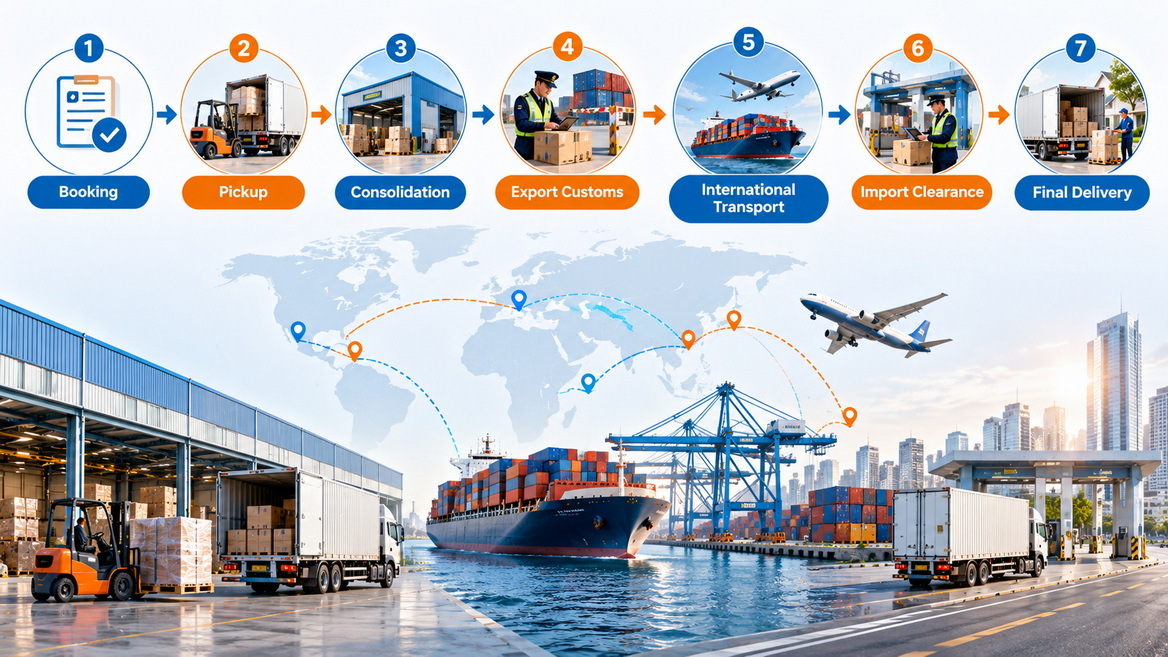
A well-managed freight order process does much more than record shipment information. It helps logistics teams create a repeatable and controlled workflow for each shipment.
| Function | Purpose | Benefit for Shippers |
|---|---|---|
| Order intake | Collects shipment instructions, cargo details, delivery requirements, and trade terms | Reduces missing information at the start |
| Supplier coordination | Confirms cargo readiness, pickup arrangements, packaging, and documents | Helps avoid failed pickups and late departures |
| Route planning | Selects suitable transport modes, carriers, and service levels | Balances cost, transit time, and reliability |
| Carrier booking | Reserves capacity with shipping lines, airlines, rail operators, or trucking providers | Improves planning during busy shipping periods |
| Document management | Organizes invoices, packing lists, transport documents, and certificates | Supports smoother customs and cargo release |
| Customs coordination | Prepares information for export declaration and compliance review | Reduces clearance risks |
| Shipment tracking | Monitors cargo milestones from pickup to final delivery | Improves visibility and communication |
| Cost management | Records freight, handling, delivery, customs, and related charges | Helps control budgets and reduce invoice disputes |
| Delivery coordination | Arranges destination clearance, delivery appointments, and proof of delivery | Supports complete door-to-door service |
Door-to-door shipping requires more than transport from a Chinese port to an overseas port. It involves controlling the shipment from the supplier's location in China to the consignee's final address.
The following process shows how a professional freight forwarder manages an international freight order.
The process begins when the shipper, buyer, supplier, or procurement team submits a shipping request.
The logistics team should confirm the essential shipment details before recommending a transport solution or making a booking.
Important information includes:
- Supplier name and pickup address in China
- Contact person, phone number, and warehouse hours
- Cargo-ready date
- Destination country, city, postal code, and delivery address
- Commodity description
- Package quantity
- Gross weight and dimensions
- Cargo value, where needed for insurance or customs purposes
- Shipping mode preference
- Delivery deadline
- Incoterms
- Importer information
- Special cargo requirements
A complete shipping instruction reduces repeated clarification emails and helps prevent last-minute changes that can affect cost or transit time.
Before booking, the freight forwarder should review whether the cargo details are accurate and whether the shipment can move under the selected transport method.
This is especially important for goods that may require special handling, additional documentation, or compliance checks.
Examples include:
- Lithium batteries and battery-powered products
- Chemicals and restricted goods
- Cosmetics and personal-care products
- Food and agricultural products
- Medical devices
- Branded or trademarked goods
- Oversized machinery
- Fragile products
- Temperature-sensitive cargo
- Wooden packaging materials
The logistics team should verify whether the cargo description, package count, weight, volume, and packaging are consistent.
If the shipment includes special cargo, the forwarder may need additional documents, packaging details, product safety information, or transportation approval before accepting the booking.
The earlier potential restrictions are identified, the easier it is to avoid costly cargo delays.
The most suitable shipping solution depends on the cargo type, budget, destination, delivery deadline, and service requirements.
Common transportation options include:
- Sea freight for large-volume or cost-sensitive cargo
- Air freight for urgent, high-value, lightweight, or time-sensitive goods
- Rail freight for selected China-to-Europe routes
- Express delivery for small parcels, samples, documents, and urgent shipments
- Multimodal transport combining sea, air, rail, and trucking
- Door-to-door delivery covering pickup, export handling, international transport, destination procedures, and final delivery
Sea freight is often more economical for larger shipments, especially when cargo volume is high and the delivery schedule is flexible.
Air freight is usually preferred when speed is more important than the transportation cost. It may be suitable for urgent production materials, high-value goods, product samples, spare parts, and goods needed for time-sensitive sales campaigns.
Rail freight may provide a practical balance between sea and air freight for some China-to-Europe shipments, depending on the route, cargo type, customs conditions, and destination location.
The right solution is not always the fastest or the cheapest. It should match the actual commercial priorities of the shipper.
Supplier coordination is one of the most important parts of freight order processing in China.
A forwarder should communicate directly with the supplier to confirm that the cargo is physically ready, properly packed, correctly labeled, and available for pickup.
Key items to confirm include:
- Cargo-ready date
- Exact pickup address
- Warehouse contact person
- Loading hours
- Number of packages
- Cargo weight and dimensions
- Packaging condition
- Pallet or crate requirements
- Shipping marks
- Commercial invoice availability
- Packing list availability
- Loading equipment requirements
- Whether cargo needs to be consolidated with shipments from other suppliers
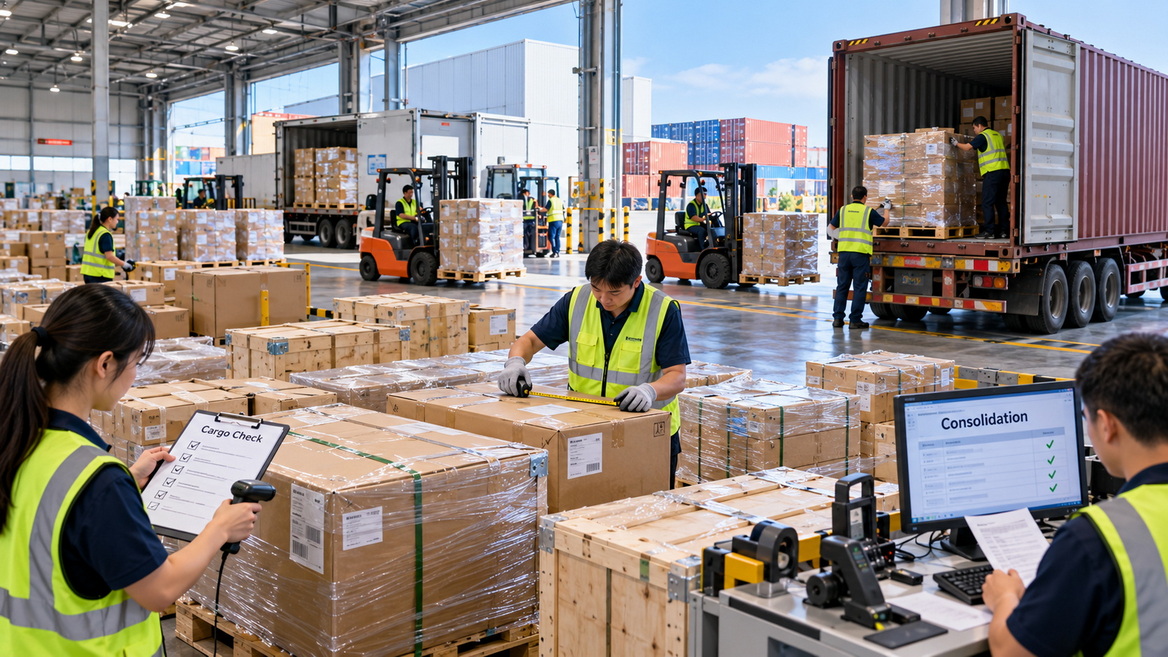
For buyers sourcing from multiple Chinese factories, cargo consolidation can be a valuable option.
Instead of arranging several separate international shipments, a freight forwarder can collect goods from multiple suppliers, transport them to a consolidation warehouse, check package details, and combine them into one shipment.
This may reduce duplicated handling, simplify documentation, and improve transportation efficiency.
Export customs clearance is a critical stage for cargo leaving China.
The freight forwarder or customs broker must prepare and submit accurate information based on the cargo details, supplier documents, and shipping instructions.
Typical export documentation may include:
- Commercial invoice
- Packing list
- Export declaration information
- Sales contract, where required
- Bill of lading instructions
- Airway bill instructions
- Certificate of origin, when required
- Inspection or quarantine documents, when applicable
- Fumigation certificate for wooden packaging, where required
- Product-specific certificates or compliance documents
The required documents vary depending on the product, transport mode, shipment value, export entity, destination market, and local regulations.
A strong freight-order workflow helps ensure that documents are collected, reviewed, and matched with cargo information before the shipment moves to the port, airport, or bonded warehouse.
Once cargo details and documents are ready, the forwarder can arrange the transport booking.
For sea freight, this may include reserving container space or less-than-container-load capacity with a shipping line or consolidator.
For air freight, it may include booking space with an airline or airfreight consolidator.
For rail and multimodal shipments, the process may involve coordination with rail operators, terminals, trucking providers, and overseas partners.
During busy periods, carrier capacity can become limited. Booking early can help reduce the risk of space shortages, rolled cargo, or higher last-minute freight costs.
A professional freight forwarder should also explain the planned route, estimated transit time, cargo cut-off date, documentation deadline, and any expected transshipment point.
Shipment tracking is not only about telling customers that cargo has departed. It is about providing useful milestone updates and identifying potential issues before they become serious delays.
A typical freight order may include the following shipment milestones:
1. Shipping instruction received
2. Cargo details verified
3. Quotation or transport plan confirmed
4. Booking confirmed
5. Cargo picked up from supplier
6. Cargo delivered to warehouse, port, or airport
7. Export customs clearance completed
8. Cargo departed from China
9. Cargo arrived at transshipment location, if applicable
10. Cargo arrived at destination port or airport
11. Import clearance in progress
12. Final delivery arranged
13. Cargo delivered
14. Proof of delivery received
Clear milestone tracking helps importers plan inventory, warehouse receiving, production schedules, customer deliveries, and payment arrangements.
International transportation can be affected by issues that are outside the direct control of any one party.
Common shipping exceptions include:
- Vessel schedule changes
- Flight cancellation or capacity reduction
- Port congestion
- Weather disruption
- Customs inspection
- Missing or revised documents
- Carrier equipment shortages
- Warehouse delays
- Delivery appointment restrictions
- Holiday-related congestion
- Destination trucking shortages
- Incorrect importer information
When an exception occurs, the most important factor is not simply whether there is a delay. It is how quickly the issue is identified, communicated, and managed.
A capable logistics team should:
- Identify the issue as early as possible
- Explain the operational impact clearly
- Confirm the available alternatives
- Coordinate with suppliers, carriers, brokers, and overseas agents
- Update shipment records
- Provide realistic revised timelines
- Continue monitoring until the issue is resolved
Technology can provide shipment visibility, but experienced logistics professionals are needed to interpret the information and take practical action.
Importers and exporters can improve shipping reliability by providing complete and consistent information when requesting a quotation or arranging a booking.
A standard shipping instruction template is especially helpful for companies that ship regularly from China.
Before confirming your shipment, make sure the following information is available:
- Supplier name and exact pickup address
- Supplier contact person and phone number
- Cargo-ready date
- Commodity description
- Number of cartons, pallets, crates, or containers
- Gross weight and net weight
- Package dimensions
- Product value, where required
- Incoterms
- Destination address and postal code
- Consignee name and contact details
- Importer information
- Delivery requirements
- Required delivery date
- Cargo insurance instructions
- Special handling requirements
- Customs or certification documents
It is also important to confirm whether the final delivery location has special receiving requirements.
For example, some warehouses require delivery appointments, palletized cargo, liftgate trucks, tail-lift service, driver identification, or specific booking procedures.
Providing these details in advance helps prevent failed deliveries and unexpected local charges.
Choosing a freight forwarder should involve more than comparing freight rates.
A low price may appear attractive at the quotation stage, but the total logistics cost can increase if the service scope is unclear or if important charges are excluded.
When comparing freight forwarders in China, consider the following points:
| Evaluation Area | Questions to Ask |
|---|---|
| Supplier coordination | Can the forwarder contact suppliers directly and arrange pickup? |
| Service coverage | Does the provider offer sea freight, air freight, rail freight, express, and door-to-door delivery? |
| Documentation | Can the team review commercial invoices, packing lists, and shipping instructions? |
| Customs support | Can the forwarder assist with export customs coordination and destination clearance arrangements? |
| Cost transparency | Are pickup, export handling, customs, destination, and delivery costs clearly explained? |
| Shipment visibility | Will you receive meaningful shipment milestones and operational updates? |
| Exception handling | How does the company respond to carrier delays, customs inspections, or delivery problems? |
| Global network | Does the forwarder have reliable destination partners for final delivery? |
| Industry experience | Does the company understand your product type and shipping requirements? |
A reliable freight forwarder should explain the process in clear language and help the customer understand what is included in the quoted service.
The forwarder should also identify potential risks before cargo departs from China, rather than only responding after a problem occurs.
GB FREIGHT AGENCY CO., LTD. provides international freight forwarding and door-to-door delivery services for businesses shipping goods from China to worldwide destinations.
With more than 15 years of experience in international logistics, we help customers coordinate shipments from Chinese suppliers to destinations across Europe, North America, South America, Southeast Asia, the Middle East, Africa, and Oceania.
Our logistics services may include:
- Supplier booking coordination
- Cargo pickup from factories and warehouses in China
- Multi-supplier cargo consolidation
- Export customs declaration support
- Sea freight services
- Air freight services
- Rail freight services
- Express shipping solutions
- Multimodal transportation
- Shipping-document coordination
- Shipment tracking and milestone updates
- Destination handling arrangements
- Final-mile and door-to-door delivery coordination
We focus on the details that influence shipment performance: cargo-data accuracy, supplier communication, document readiness, route selection, customs coordination, transport visibility, and issue resolution.
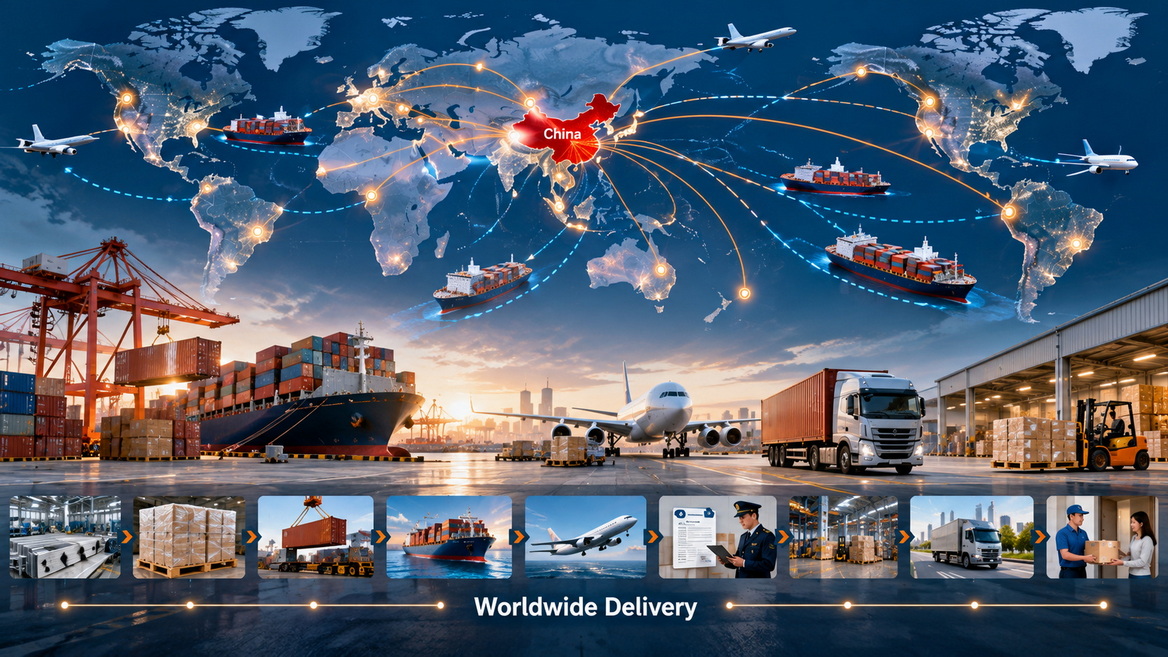
A freight order processing system is not simply an administrative tool. It is a structured method for managing international shipments from the first supplier communication to the final proof of delivery.
For businesses importing goods from China, a well-managed freight order can reduce communication gaps, improve document accuracy, support smoother customs processing, strengthen shipment visibility, and help control avoidable logistics costs.
The most reliable international shipping process begins before cargo is picked up. It starts with complete information, careful planning, experienced coordination, and clear responsibility at every stage of the shipment journey.
GB FREIGHT AGENCY CO., LTD. supports businesses that need practical, cost-effective, and well-coordinated transportation solutions from China to global markets. From supplier booking and export handling to international freight and final delivery, our team works to help cargo move with greater clarity, control, and confidence.
A freight order is the complete shipment record. It includes cargo details, shipper and consignee information, routing, documents, costs, customs requirements, and delivery instructions.
A freight booking is one part of the process. It refers to reserving transport capacity with a shipping line, airline, rail operator, trucking company, or logistics provider.
You should provide the pickup location, destination city and postal code, cargo type, number of packages, total weight, dimensions, cargo-ready date, shipping mode preference, and Incoterms.
For special cargo, you may also need to provide product specifications, battery information, safety documents, packaging photos, or compliance certificates.
Yes. A freight forwarder can arrange pickups from multiple suppliers and consolidate the cargo at a warehouse before international shipping.
This can help buyers combine products from several factories into one shipment, simplify documentation, and potentially reduce transportation and handling costs.
Door-to-door service can include export customs procedures in China and destination customs coordination. However, the exact scope depends on the agreed transport service, destination country, cargo type, Incoterms, importer responsibilities, and local requirements.
Duties, taxes, and customs obligations should always be confirmed before shipment.
You can reduce delays by confirming the cargo-ready date with the supplier, providing accurate cargo dimensions and weight, preparing documents in advance, confirming the correct Incoterms, and sharing complete consignee and delivery information.
Working with a freight forwarder that provides milestone updates and manages exceptions quickly can also improve shipment reliability.
1. WallTech Solutions. "[What Is a Freight Order Processing System?]" Accessed October 2026.
2. World Bank. "[Logistics Performance Index]" Accessed October 2026.
3. World Bank DataBank. "[Logistics Performance Index: Ability to Track and Trace Consignments]" Accessed October 2026.
4. UN Trade and Development. "[Review of Maritime Transport 2024]" Published October 22, 2024.
5. UN Trade and Development. "[Review of Maritime Transport 2024: Overview]" Published October 22, 2024.


