
Views: 239 Author: Jeaken Chan Publish Time: 2026-02-05 Origin: Jeaken Chan


Breakbulk & Open-Top Container Transport for a German Industrial Manufacturer
End-to-End Logistics Solution for 28-Ton Oversized Vegetable Sorting and Packaging Equipment: From a Factory in Jiangsu to Duisburg, Germany, via Flat Rack Containers
| Project | Details |
| Client Type | Large-scale German manufacturer of industrial automation equipment |
| Cargo | 2 units of automated vegetable sorting and packaging equipment (28 tons per unit) |
| Transport Route | Factory in Jiangsu → Port of Shanghai → German Port of Discharge → Factory in Duisburg, Germany |
| Transport Solution | Flat Rack containers + customized lashing and securing + specialized heavy-haul trucking at both the origin (China) and destination (Germany) |
| Total Transit Time | Approximately 30–45 days (including ocean freight and inland delivery) |
| Project Outcome | Zero-damage delivery; total logistics costs reduced by 22% compared to a breakbulk/chartered vessel solution; cargo arrived 3 days ahead of the client’s deadline. |
The client is a major German manufacturer of industrial automation equipment that procured two units of automated vegetable sorting and packaging equipment from a manufacturing facility in Jiangsu. These units were intended for a production line at the client’s Duisburg plant. A strict schedule for installation and commissioning had already been established; any delay in the arrival of the equipment would have directly impacted the launch of the entire production line.
Upon receiving the inquiry, we broke down the specific challenges of this shipment rather than simply providing a quote:
1. Oversized and Overweight Cargo: Each unit weighs 28 tons and exceeds the internal dimensions of standard general-purpose (GP) containers. This necessitated the use of Flat Rack containers, Open-Top containers, or a breakbulk (chartered vessel) solution. Furthermore, because the center of gravity does not align with the geometric center, the requirements for lashing and securing were exceptionally high.
2. Sensitivity of High-Precision Equipment: The automated vegetable sorting and packaging equipment—comprising conveyor belts, robotic sorting arms, photoelectric sensors, weighing modules, and electrical control cabinets—is highly susceptible to damage from vibration or impact. The client required that the cargo be protected from any severe shocks throughout the entire journey and requested verification of this upon arrival.
3. Fixed Delivery Schedule: The German facility had a set timeline for the arrival and installation of the equipment, leaving no room for delays.
The client’s procurement manager searched for "flat rack shipping China to Germany" on Google. After landing on the page dedicated to out-of-gauge (OOG) cargo services on our website, they reached out to us via an inquiry form. The inquiry was received in July 2025, approximately 10–12 weeks before the client’s required delivery date at their facility.
In their initial email, the client raised several specific questions:
• Can flat rack containers be used, given that the cargo dimensions exceed those of standard containers?
• How can we ensure that a 28-ton unit—which has an off-center center of gravity—remains stable and does not shift or tilt during transit?
• What is the estimated lead time for the inland transport of oversized cargo in both China and Germany?
• As the cargo consists of high-precision equipment, how can vibrations and impacts be controlled throughout the entire journey?
• Is it possible to offer a more competitive freight rate compared to the "breakbulk" (chartered vessel) quotes they had previously received?
Before contacting us, the client had consulted other freight forwarders who proposed a breakbulk (chartered vessel) solution. The client had three primary concerns: the high cost; the lack of a fixed schedule, as it depended on the shipowner’s loading plans; and the inability of other providers to offer a clear timeline for obtaining the necessary permits for inland transport at both ends. The client was worried that these issues might cause them to miss the installation deadline at their German facility.
Prior to providing a quote, we collected and verified the following key details to assess the feasibility of the proposed transport solution:
• Cargo Details: Dimensions, weight, center of gravity, and technical drawings of the automated vegetable sorting and packaging equipment.
• Lifting and Securing Requirements: Locations of lifting points, permitted lifting methods, and designated lashing/securing points.
• Loading and Unloading Conditions: Lifting equipment capacity at both the Chinese and German facilities, ground load-bearing capacity, and site accessibility for vehicles.
• Delivery Timeline: The client’s required arrival date at the facility and the installation schedule at the German plant.
We provided the client with a comparison to help them clearly understand the differences:
| Comparison Item | Break-bulk cargo chartering | Flat Rack Solution |
| Shipping Schedule | Depends on the shipowner's stowage plan | Regular liner services with scheduled sailings; space can be secured in advance. |
| Freight | The solution the client previously inquired about comes with a high cost | Overall costs are about 20% lower |
| Loading, Unloading, and Lashing | Requires multiple lifting operations and port handling | Containerized operations; lashing plans can be reviewed in advance |
| Risk Control | The goods have been exposed for a relatively long time | Fully containerized, facilitating monitoring and inspection |
Ultimately, the client opted for the Flat Rack container solution.
① Customized Flat Rack Loading and Lashing/Securing Plan
Based on the center-of-gravity diagram provided by the factory, we precisely calculated the cargo’s center of gravity and developed a bespoke lashing and securing plan, including:
• Specifications and quantity of steel lashing cables
• Placement of anti-slip wooden dunnage and blocking timbers
• Complete wrapping with anti-rust, sun-protective film
• Verification of load-bearing at lashing points, conducted by qualified personnel in accordance with the Code of Safe Practice for Cargo Stowage and Securing (CSS).
Shipment was confirmed only after passing a professional safety review. A 40ft Flat Rack (40FR) container was used, with a maximum load capacity of 31 metric tons.
Examples of Flat Rack Loading Requirements
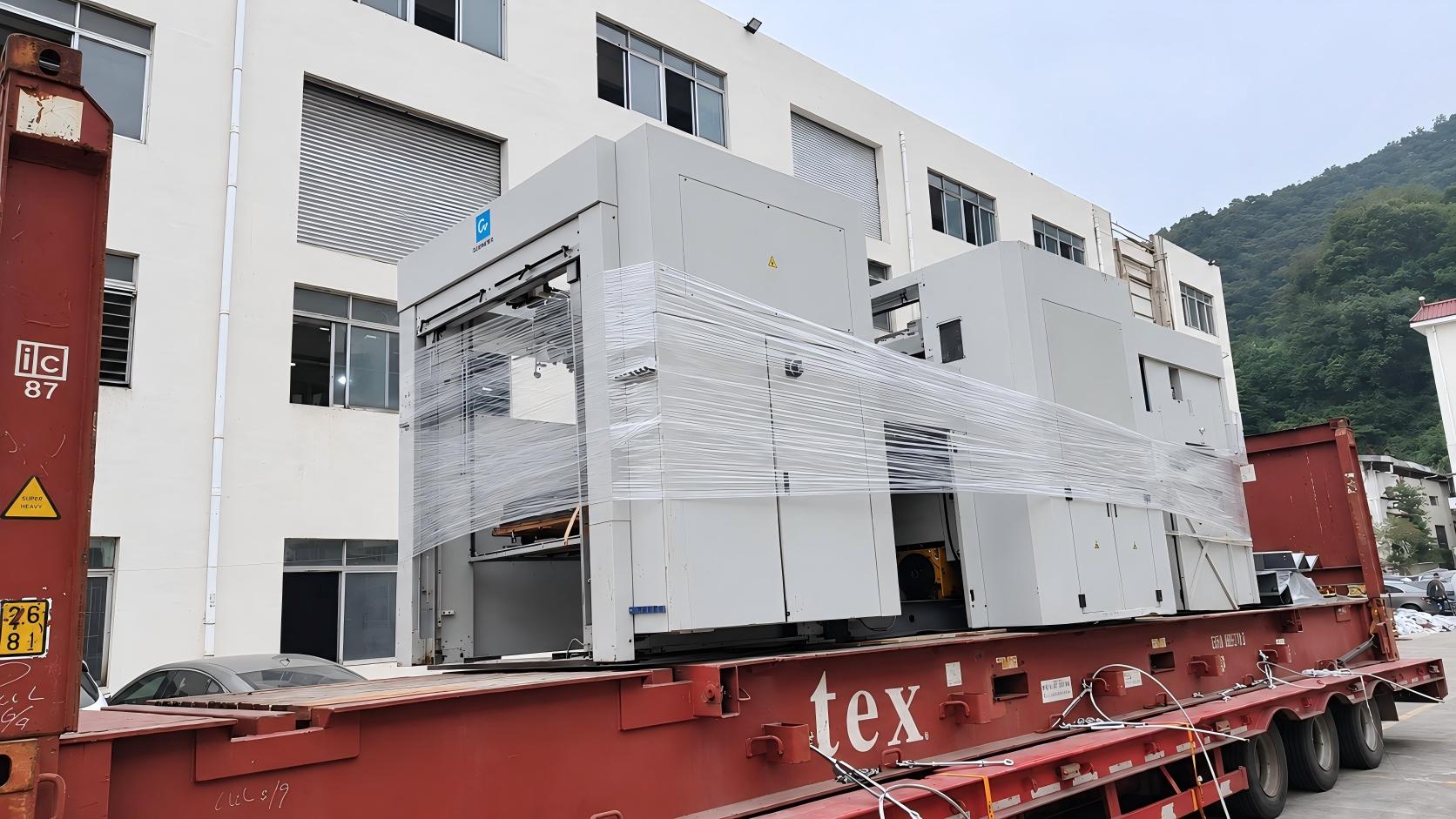
1. Cargo must be positioned in the center of the container, rather than near the sides.
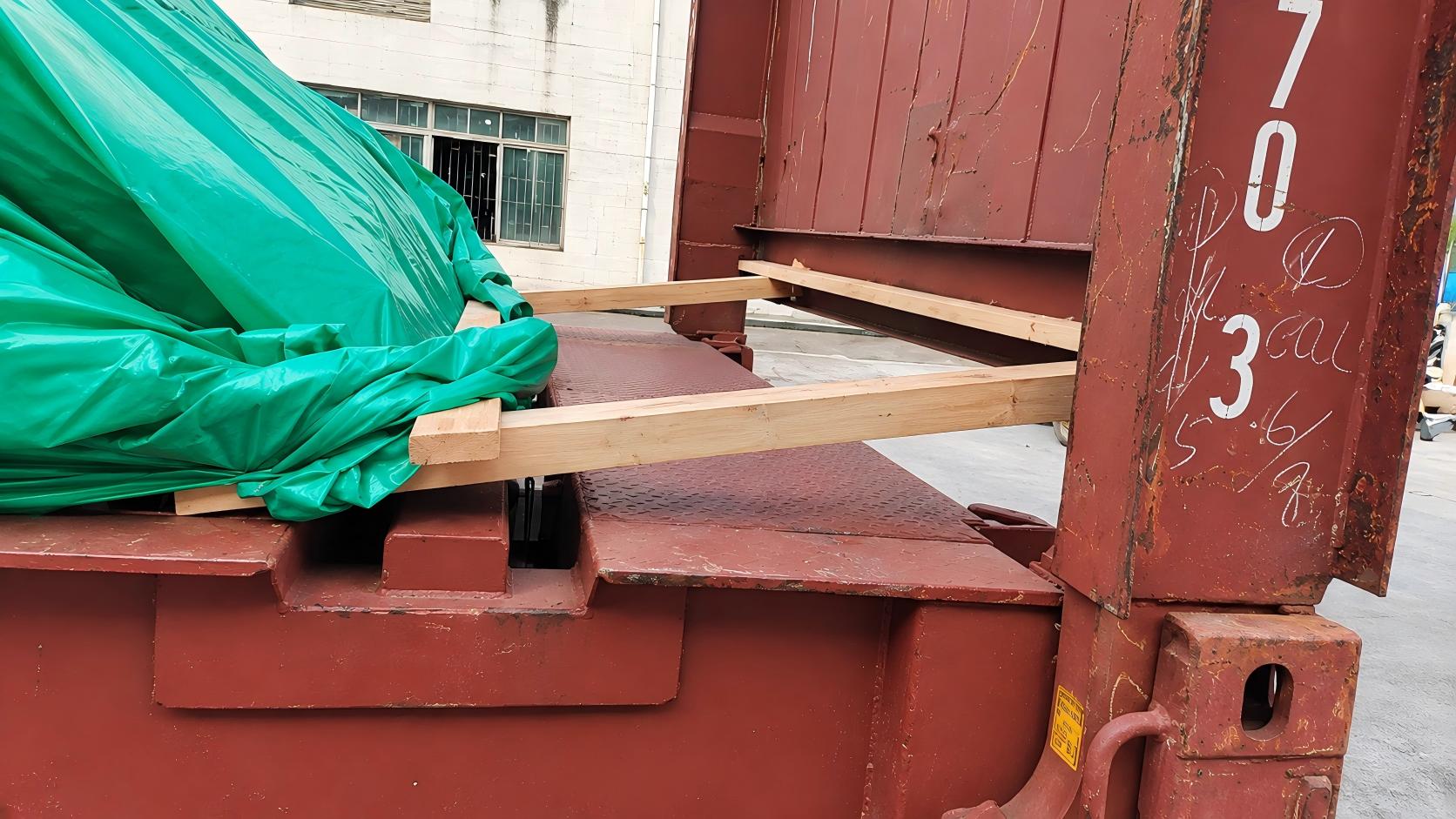
2.Timber dunnage of sufficient strength must be placed between the cargo and the container’s end frames.
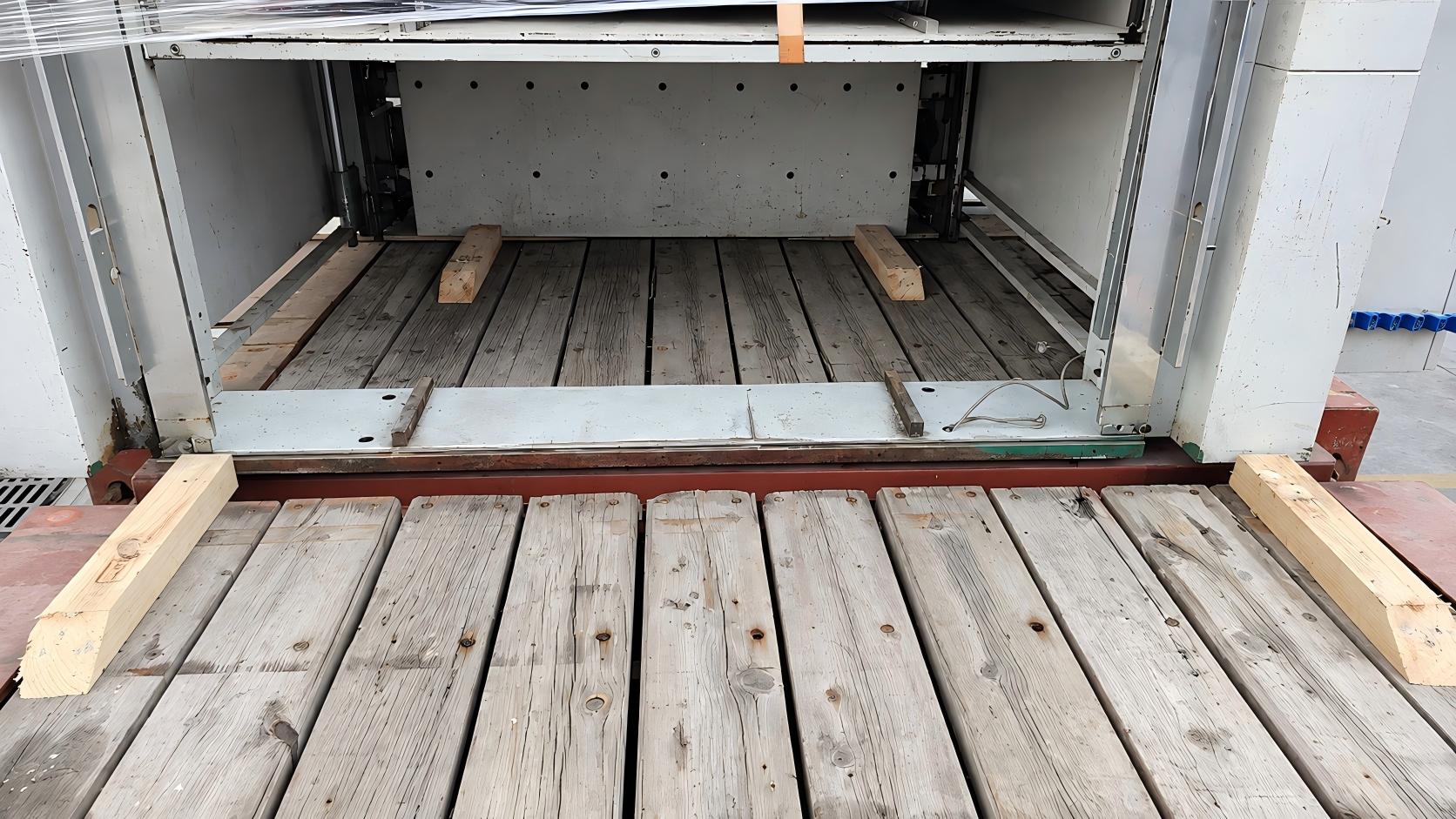
3. For items prone to shifting—such as vehicles—additional blocking timbers must be installed.
4. Photos of lashing and steel-wire securing/blocking.
 |  |
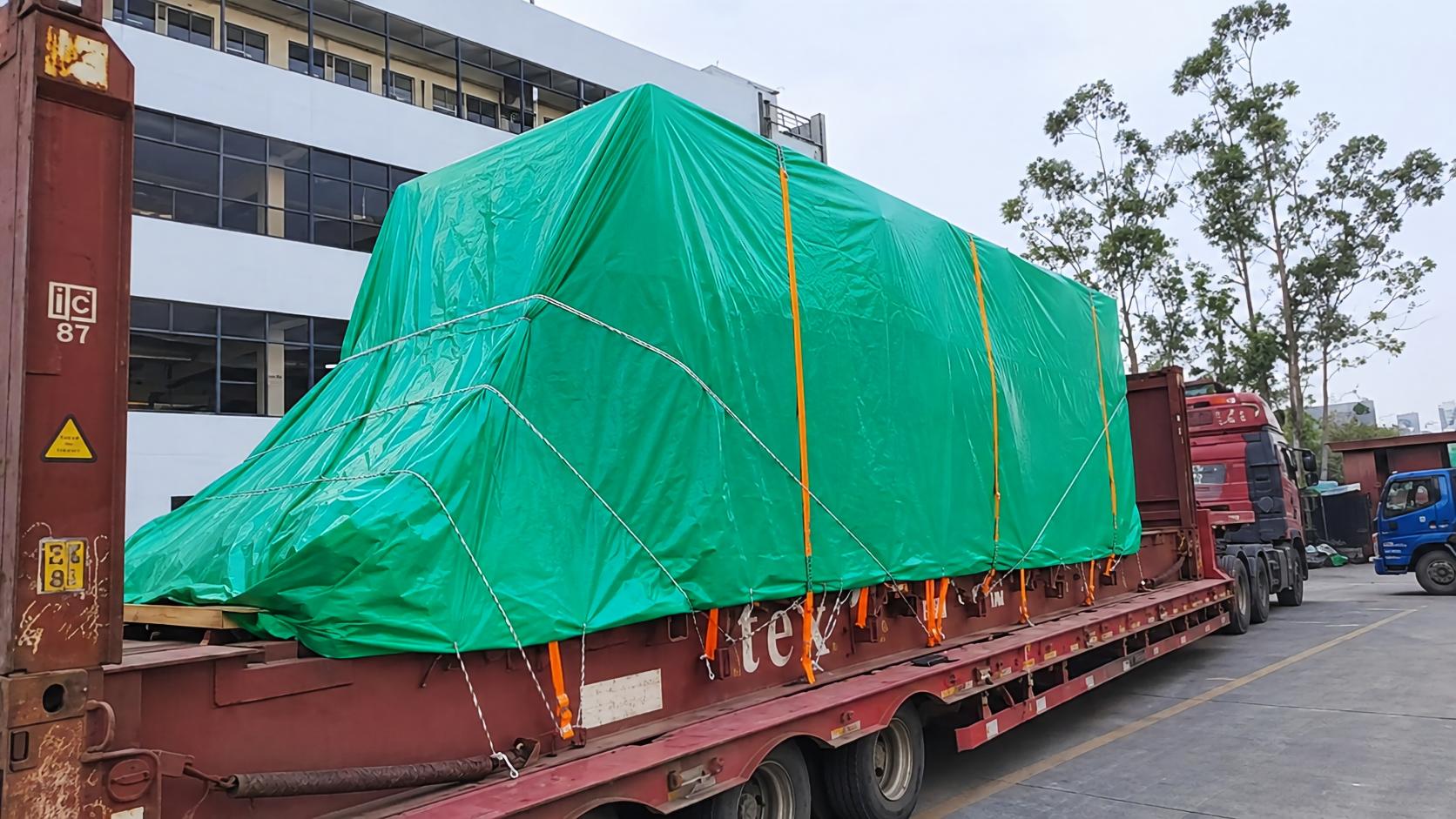
5. Photos of the cargo fully wrapped in protective, waterproof material to prevent moisture damage.
② Integrated Specialized Trucking (China–Germany)
• China Segment: Transport from the shipper’s factory in Jiangsu to the Port of Shanghai, utilizing customized Flat Rack containers and ensuring the cargo is safely loaded, lashed, and secured.
• Germany Segment: Transport from the Port of Hamburg to the consignee’s factory, handled by a local partner trucking company for final delivery.
③ Space Guarantee and On-site Supervision
We have secured direct-service shipping space with COSCO. Simultaneously, we station professional cargo inspectors at the Shanghai port terminal to oversee the entire process—including lifting, container loading, and lashing—and provide real-time photographic updates of the lashing to the client.
| Project Milestones | Project Timeline | Project Content |
| Inquiries and Information Gathering | 15/7/2025 - 17/7/2025 | Receive drawings and center-of-gravity location; confirm cargo dimensions and weight |
| Plan Confirmation | 18/7/2025 | Client confirms the flat-rack container plan and submits it to the carrier for review |
| Factory Loading | 20/7/2025 | Loading onto a low-bed trailer at the factory, with on-site inspection of the goods |
| Container loading and lashing at Shanghai Port | 21/7/2025 - 22/7/2025 | Inspector supervises lifting and lashing operations |
| Export Customs Declaration | 22/7/2025-24/7/2025 | File an export declaration for the goods |
| Ocean Freight | 28/7/2025 - 1/9/2025 | Shipping takes approximately 30–45 days, depending on the actual circumstances |
| Import Customs Clearance | 2/9/2025 - 10/8/2025 | Customs carries out clearance and release |
| Cargo Pickup and Inland Transport at European Ports | 12/9/2025 | Transported to the consignee’s factory via low-bed trailer |
During a trial lift at the factory, we discovered that the actual center of gravity for one of the automated vegetable sorting and packaging units deviated from the specifications provided in the drawings. As the original lashing plan lacked sufficient load-bearing points, we immediately halted the loading process. After recalculating the requirements, we increased the number of steel wire ropes used and added anti-slip wooden dunnage, then resubmitted the plan to the carrier for approval. Although this adjustment added one day to the schedule, it effectively prevented the risk of the cargo shifting during ocean transit.
During the cargo's wait at the Shanghai port terminal, the weather turned rainy. We wrapped the entire shipment in waterproof, protective sheeting to prevent moisture from reaching the equipment surfaces.
• Zero-Damage Delivery: The cargo arrived safely at the factory in Duisburg via ocean freight and inland transport, remaining completely intact.
• 22% Reduction in Total Costs: Compared to the breakbulk chartering option initially considered by the client, our optimized solution—utilizing a combination of flat-rack containers—reduced total transportation costs by approximately 22%.
• Early Delivery: The shipment was delivered ahead of the client’s specified deadline.
Following the cargo's arrival at the factory, we monitored the unloading and inspection process. We also assisted the client in compiling a comprehensive set of shipping documentation—including photographic records of the loading and lashing—for their internal quality archives.
The client noted that our greatest value lay in our professionalism and meticulous attention to detail during loading—specifically, our proactive identification and resolution of issues regarding the cargo's center of gravity, rather than merely providing a freight quote. Consequently, the client has entrusted us with all their subsequent heavy-lift and oversized cargo shipments, and our partnership continues to this day.
1. On-site inspection is more critical than document review. Discrepancies between technical drawings and the actual cargo can only be identified through on-site assessment.
2. Maintain detailed records for client verification. Photographic documentation of lashing serves as both proof of quality for the client and a demonstration of our professional expertise.
3. Use client feedback to drive continuous service improvement. Actively gathering input on transport solutions, communication efficiency, and post-delivery outcomes helps identify service gaps, thereby increasing client satisfaction and fostering long-term trust.
Not necessarily; the choice depends on a comprehensive assessment of dimensions, weight, and available shipping schedules.
Key factors include cargo dimensions and weight, the center of gravity, lifting safety, the load-bearing capacity of the flat rack, and proper lashing and securing. Ensuring the loading plan meets transport requirements is essential to minimize the risk of cargo shifting or damage.
We coordinate every stage of the transport process, including verifying equipment specifications, container types, shipping schedules, transport permits, and loading/unloading requirements in advance. Please note that some delays may still be unavoidable, depending on the specific circumstances of the shipment.
Contact Us
If you need to transport out-of-gauge, overweight, or high-precision equipment from China to Europe, please provide us with the dimensions, weight, and destination of your cargo.
We will get in touch within two business days to discuss your requirements and provide a quote.
Contact Information: [service@gb-freight.com / Tel & WhatsApp: +86 135 1014 8872]


