
Views: 237 Author: GB FREIGHT Publish Time: 2026-11-09 Origin: Site


Content Menu
● What Does an Ocean Freight Forwarder Do?
>> Freight Forwarder, Shipping Line, and Customs Broker
● Is Sea Freight the Right Choice for Your Cargo?
● FCL vs LCL Shipping from China
>> Compare Complete Costs, Not a Fixed Volume Rule
● How the Ocean Freight Forwarding Process Works
>> 1. Confirm Cargo and Delivery Requirements
>> 2. Agree on Trade Terms and Service Scope
>> 3. Coordinate Suppliers and Book Space
>> 4. Prepare Documents and Complete Export Formalities
>> 5. Track Transit and Prepare Destination Release
>> 6. Arrange Delivery and Close the Shipment
● How to Compare Ocean Freight Quotes Without Missing Costs
>> Use a Like-for-Like Comparison
● Three Practical Controls That Reduce Shipping Surprises
>> Build a Booking-Readiness Checklist
>> Plan Backward from the Required Delivery Date
>> Make Exception Management Part of the Booking
● How to Choose an Ocean Freight Forwarder in China
● Sea Freight from China with GB FREIGHT AGENCY CO., LTD.
● Frequently Asked Questions About Ocean Freight Forwarders
>> Do I Need a Forwarder to Ship Goods from China?
>> How Long Does Sea Freight from China Take?
>> Is FCL Always Cheaper Than LCL?
>> Does Door-to-Door Shipping Include Duties and Taxes?
>> What Information Is Needed for an Accurate Quote?
Ocean freight forwarders help businesses coordinate international sea freight, from supplier bookings and export documentation to overseas delivery. For importers shipping from China, the right partner connects these activities into one workable plan, with clear responsibilities, realistic schedules, and transparent costs.
At GB FREIGHT AGENCY CO., LTD., we bring 15 years of international logistics experience to businesses moving goods from China to Europe, North America, South America, Southeast Asia, the Middle East, Africa, and Oceania.
Our approach starts with a practical question: what must happen between your supplier's warehouse and your receiving address for this shipment to succeed?
This guide explains how ocean freight forwarding works, how to compare shipping options, and what to check before booking.
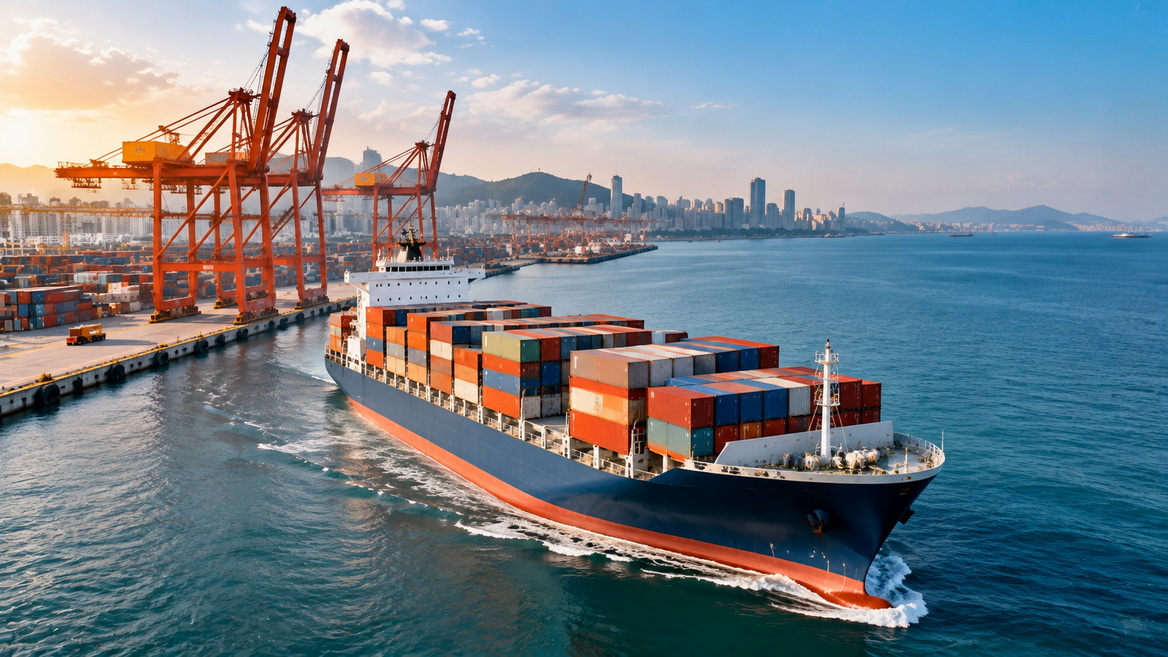
An ocean freight forwarder organizes cargo movement by sea, coordinating shipping lines, warehouses, trucking providers, and other parties involved in the agreed transport service.
Most forwarders do not operate the vessels carrying your goods. Their value lies in connecting transport services, preparing information, and managing handovers.
Typical ocean freight forwarding services include:
- Coordinating cargo readiness with Chinese suppliers.
- Arranging collection and origin handling.
- Booking vessel space.
- Organizing export customs clearance.
- Coordinating transport documentation.
- Monitoring shipment milestones.
- Arranging destination services and final delivery where agreed.
Service scope matters. A port-to-port booking does not automatically include factory pickup, import clearance, or delivery to your warehouse.
Before accepting a quotation, ask the forwarder to identify where its responsibility begins and ends.
These providers perform different functions.
A shipping line operates maritime transport services. A freight forwarder organizes transport arrangements. A customs broker handles customs-related transactions where authorized under local rules.
One company may coordinate several functions through partners, but coordination is not the same as holding every required authorization.
For your shipment, establish who books the vessel, who submits customs declarations, and who handles destination exceptions.
Sea freight is often suitable for larger, heavier, or less urgent shipments where transport cost matters more than the shortest possible delivery time.
However, lower freight charges do not always mean a lower overall business cost.
Consider:
- Shipment volume and gross weight.
- Product value and handling requirements.
- Required warehouse arrival date.
- Inventory available during transit.
- Consequences of a missed delivery.
- Destination handling and inland transport costs.
For urgent replenishment, compare the cost of faster transport against the commercial impact of a stockout.
For regular orders, sea freight can support planned inventory replenishment when production dates and transport schedules are aligned.
Avoid treating ocean transport as a fixed-duration service. The complete timeline includes activities before departure and after vessel arrival.
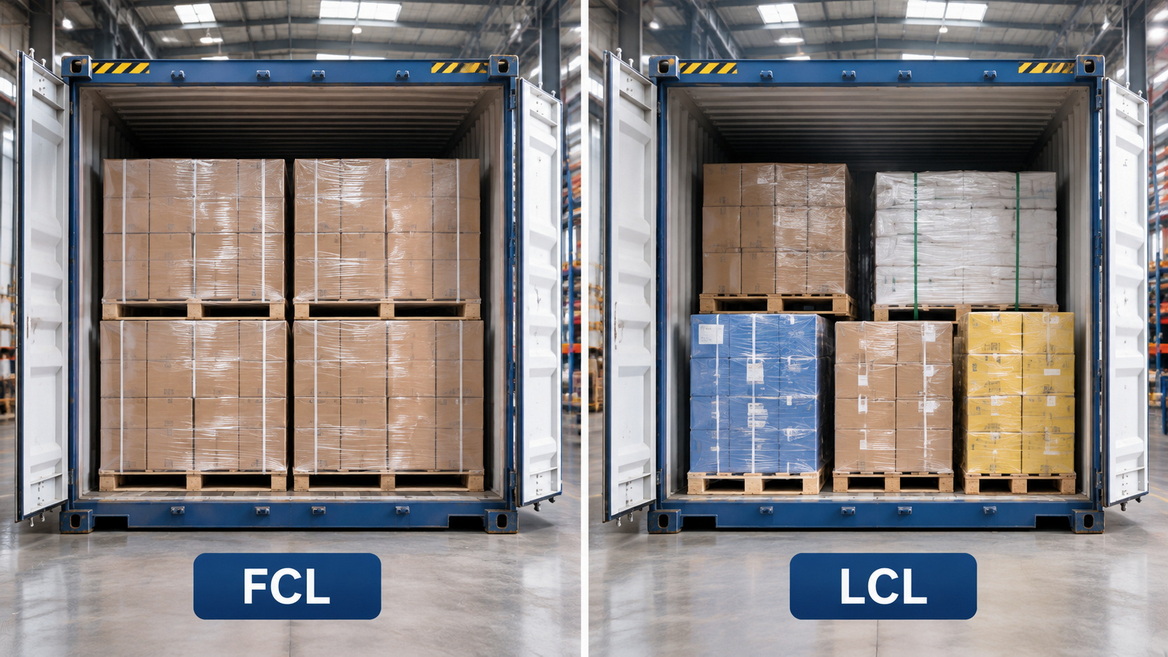
Full container load, or FCL, generally gives one shipper exclusive use of a container. Less than container load, or LCL, combines shipments from different shippers.
| Decision factor | FCL shipping | LCL shipping |
|---|---|---|
| Container use | Dedicated to one shipment | Shared with other shipments |
| Typical application | Larger orders or cargo needing separation | Smaller orders without enough volume for a dedicated container |
| Handling | Generally fewer consolidation stages | Consolidation and deconsolidation required |
| Pricing review | Container rate plus applicable charges | Chargeable volume or weight plus applicable charges |
| Main consideration | Whether dedicated space justifies the cost | Whether local charges and handling offset savings |
There is no universal shipment size at which FCL becomes cheaper than LCL.
The answer depends on route pricing, cargo density, minimum charges, destination fees, and handling requirements.
Request both options when your shipment approaches a commercially sensible container comparison.
Also consider cargo compatibility. Fragile packaging, awkward dimensions, or sensitive products may make a dedicated container attractive even when it is not full.
A dependable shipment begins before the container reaches the port.
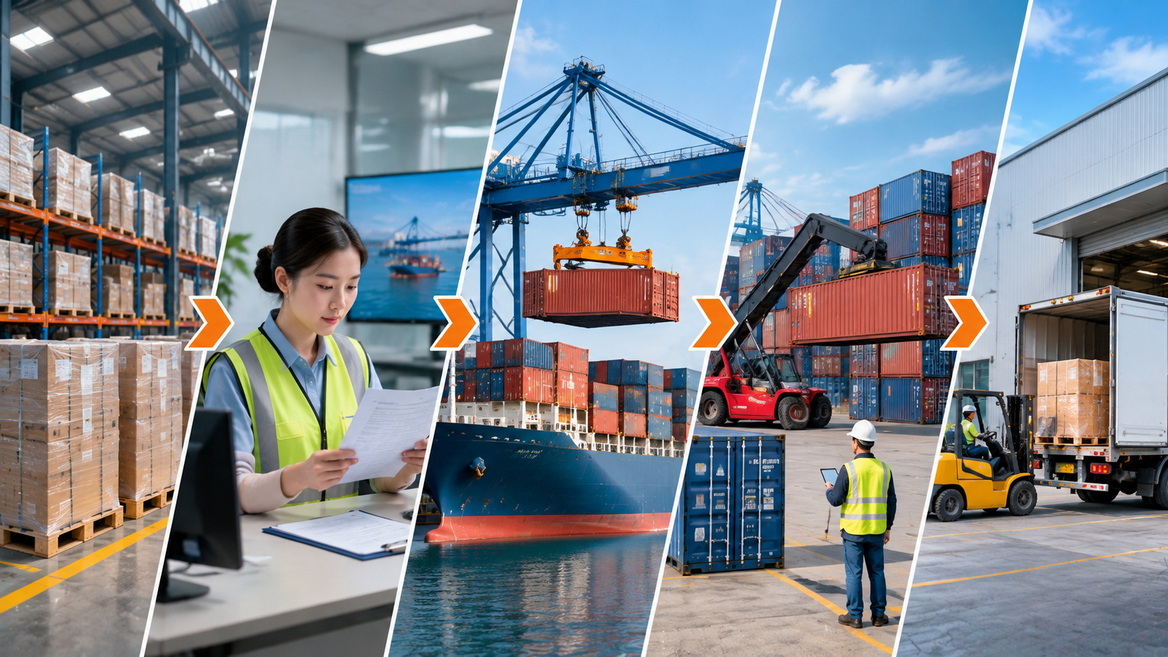
Provide the product description, package count, dimensions, gross weight, supplier address, destination, and cargo-ready date.
Disclose batteries, liquids, chemicals, magnetic materials, and other potentially regulated characteristics before requesting space.
A general description such as "accessories" rarely provides enough information for proper planning.
Confirm the Incoterms rule, named place or port, and applicable version in the sales agreement.
These rules allocate specified costs, tasks, and risks between buyer and seller. They do not replace the full sales contract or resolve every liability question.
Ask your forwarder to explain how the agreed terms affect pickup, export clearance, main carriage, and destination arrangements.
The booking plan should connect actual cargo readiness with available sailings and operational deadlines.
Ask for:
- Intended loading and discharge ports.
- Direct or transshipment routing.
- Estimated departure and arrival.
- Cargo receiving deadlines.
- Documentation and weight submission deadlines.
- Booking conditions and rate validity.
Do not assume a supplier's production completion date is also the date cargo can enter the port.
Common shipment documents include a commercial invoice, packing list, and bill of lading or sea waybill.
Other documents depend on the commodity, destination, and transaction.
Check consistency across descriptions, quantities, weights, values, and consignee details. Corrections made after submission can create avoidable work and delay.
For packed containers covered by applicable SOLAS requirements, verified gross mass must be available before loading. The shipper bears responsibility for providing it.
While the cargo is moving, confirm that the receiving party and destination service providers have the information needed for clearance and release.
Resolve outstanding document, payment, and delivery arrangements before arrival where possible.
Confirm delivery appointments, unloading arrangements, access restrictions, and any empty-container return requirements.
Retain delivery records and relevant photographs. If damage or shortages are found, document them promptly and follow the applicable notification procedure.
The most useful number is total shipment cost, not the ocean freight line alone.
A quotation should make included services, exclusions, and conditional charges easy to identify.
| Cost category | What to clarify |
|---|---|
| Origin services | Pickup, warehouse handling, export clearance, documentation |
| Main carriage | Ocean freight, routing, applicable surcharges |
| Destination services | Terminal or warehouse handling, release, local service fees |
| Import costs | Customs brokerage, duties, taxes, inspections |
| Final delivery | Trucking, appointments, unloading-related requirements |
| Conditional charges | Storage, waiting time, amendments, additional handling |
Not every item applies to every shipment. Some costs cannot be finalized until shipment details or official assessments are available.

Before comparing two offers, check that both use the same:
1. Cargo dimensions and weight.
2. Origin and destination.
3. Container or consolidation service.
4. Routing assumptions.
5. Delivery scope.
6. Currency and validity period.
For example, an offer excluding destination handling is not directly comparable with one including it.
Ask for conditional charges to be explained in writing, including what event triggers them and how they are calculated.
A supplier saying "goods ready" does not necessarily mean the shipment is ready to book and dispatch.
Confirm:
- Final packing dimensions and weights.
- Packaging suitable for the planned journey.
- Consistent commercial documents.
- Product-specific transport requirements.
- Collection access and loading arrangements.
- An identified party responsible for each submission.
This checklist is particularly useful when several suppliers contribute to one shipment.
Start with the date your warehouse needs the goods.
Then allow time for final delivery, destination release, customs procedures, sea transit, origin handling, and supplier preparation.
Request a planning window rather than treating one estimated arrival date as a guarantee.
Where a missed delivery would stop production or disrupt a launch, discuss alternative routings or a separate urgent shipment before the main cargo departs.
Ask what happens if cargo misses a cutoff, a sailing changes, or a document requires correction.
A practical escalation plan identifies:
- Your main contact and backup.
- How changes will be communicated.
- Who approves additional costs.
- What alternative options will be presented.
- Which decisions need your response.
Visibility is valuable only when it supports timely action.
The best ocean freight forwarder for your business is not necessarily the largest provider or the lowest bidder.
Look for evidence that the company understands your cargo, route, and receiving requirements.
Ask these questions before booking:
1. Have you handled this commodity and destination?
2. What exactly does your quotation include?
3. Who coordinates with my supplier?
4. Who manages destination clearance and delivery?
5. Which operating entity will contract with me?
6. What authorizations apply to the services being offered?
7. How are shipment changes and additional charges approved?
Assess the quality of the answers, not just their speed.
If customer references or reviews are available, look for specific information about communication, billing clarity, and problem resolution. Broad praise alone does not show how a forwarder handles an exception.
Also request a clear explanation of cargo insurance options. Transport arrangements and insurance protection are separate matters; review coverage, exclusions, deductibles, and claim requirements before deciding.
GB FREIGHT AGENCY CO., LTD. provides transport solutions for businesses shipping from China to international markets.
With 15 years of international logistics experience, we coordinate supplier bookings, export customs clearance, transportation, and final delivery according to the agreed service scope.
Whether you are comparing FCL and LCL or organizing an ongoing purchasing program, the starting point is accurate cargo information and a clearly defined delivery requirement.
Send us your supplier location, cargo description, package dimensions, gross weight, cargo-ready date, destination address, and agreed trade terms.
Request an itemized sea freight quotation with routing details, estimated milestones, and clearly stated exclusions—so you can evaluate the complete shipping plan before committing.
Not every shipment requires one. However, a forwarder can coordinate bookings, documents, suppliers, and transport providers when you do not want to manage each party separately. Confirm the services included before appointing one.
Timing depends on the origin, destination, sailing, routing, and service scope. Ask for both estimated port-to-port transit and the broader collection-to-delivery planning window. Vessel arrival does not mean cargo is immediately available at your warehouse.
No. LCL may suit smaller shipments, while FCL can become more attractive as volume or handling requirements increase. Compare complete quotations, including origin and destination charges, rather than applying one universal volume threshold.
Not automatically. Door-to-door describes transport coverage, but the quotation and agreed trade terms determine which costs and responsibilities are included. Confirm import clearance, duties, taxes, unloading, and any exclusions explicitly.
Provide cargo descriptions, dimensions, gross weight, package count, pickup and delivery locations, cargo-ready date, and trade terms. Identify any special handling or regulated characteristics. Incomplete information can produce a quotation that changes later.
1. Freightos. "Ocean Freight Forwarders & Everything You Need to Know About the Ocean Freight Forwarding Process." Published March 29, 2023; page displays an update date of July 14, 2026. Original article reviewed for the introductory explanation of forwarding and for identifying opportunities to expand practical buyer guidance. [freightos]
2. International Maritime Organization. "Verification of the Gross Mass of a Packed Container." Authoritative guidance supporting the explanation of shipper responsibility, verified gross mass, and loading requirements. [imo]
3. International Trade Administration, U.S. Department of Commerce. "Know Your Incoterms." Supports the explanation of buyer and seller responsibilities, named places, transport arrangements, and the limitations of trade terms. [trade]
4. International Trade Administration, U.S. Department of Commerce. "Shipping Options." Supports the discussion of freight-forwarding services, quotation components, packaging, documentation, and shipping preparation. Its U.S.-specific regulatory statements are not presented as universal requirements for Chinese forwarders. [trade]
5. International Trade Administration, U.S. Department of Commerce. "Customs Brokers and Freight Forwarders." Supports the distinction between forwarding coordination and customs brokerage, together with examples of forwarding activities. U.S. licensing provisions apply within their relevant jurisdiction. [trade]


