
Views: 256 Author: GB FREIGHT Publish Time: 2026-11-21 Origin: Site


Content Menu
● Why Australia Requires a Carefully Chosen Air Freight Partner
>> What the Latest Industry Evidence Means for Buyers
● Selection Criteria: How These Five Forwarders Were Assessed
● Air Freight Forwarder Comparison: Capacity, Minimums, and Credentials
● 1. GB FREIGHT AGENCY CO., LTD.
>> A China-Origin Option for Supplier Coordination and Customized Shipping Plans
>> An Established Option for Network Scale and Structured Procurement
>> Why It Belongs on the Shortlist
● 3. DSV
>> A Candidate for Multi-Country Freight and Integrated Logistics
>> Why It Belongs on the Shortlist
>> An Option for Buyers Seeking an Established Australian Operating Footprint
>> Why It Belongs on the Shortlist
>> A Candidate for Linking International Freight With Regional Distribution
>> Why It Belongs on the Shortlist
● Buyer's Guide: How to Qualify an Air Freight Partner
>> 1. Verify the Contracting and Operating Entities
>> 2. Match Compliance Evidence to the Actual Service
>> 3. Compare the Complete Delivered Cost
>> 4. Use a Representative Pilot Shipment
>> 5. Prepare Australian Clearance Before Departure
● Common Air Freight Purchasing Traps
>> A Cheap Rate With an Incomplete Scope
>> Network Size Presented as Guaranteed Capacity
>> Customized Orders Treated as Standard Cargo
>> "Door-to-Door" Without Responsibility Details
● An Insider Due-Diligence Check: Audit the Release Process
● Conclusion: Select the Forwarder That Fits Your Supply Chain
● FAQ
>> 1. How can I verify whether a forwarder's ISO certificate has expired or applies to my shipment?
>> 2. Does a confirmed booking guarantee that my shipment will depart on the stated flight?
>> 3. Can I accept a door-to-door quotation without knowing the Australian customs broker?
>> 4. How should I evaluate a forwarder for battery-powered OEM products?
>> 5. What performance commitments should appear in a long-term forwarding agreement?
Choosing a top air freight forwarder in Australia means finding a partner that can control the entire shipment—not simply offer a competitive airport-to-airport rate. For procurement managers, the real priorities are dependable capacity, compliant documentation, transparent destination charges, and delivery performance that protects production schedules.
This guide compares five freight forwarding businesses relevant to Australian importers, including a China-based specialist for buyers sourcing directly from Chinese suppliers. It evaluates service suitability rather than presenting an independently audited ranking.
Before shortlisting a provider, examine five practical indicators: origin coordination, verifiable compliance credentials, shipment visibility, capacity commitments, and exception management. These are the logistics equivalents of checking a manufacturer's quality controls and delivery consistency.
A clarification matters: freight forwarders are service providers, not factories. Manufacturing capacity, product MOQ, and OEM/ODM production capability therefore need different measures here—available shipping capacity, minimum shipment charges, and logistics support for customized manufacturing orders.
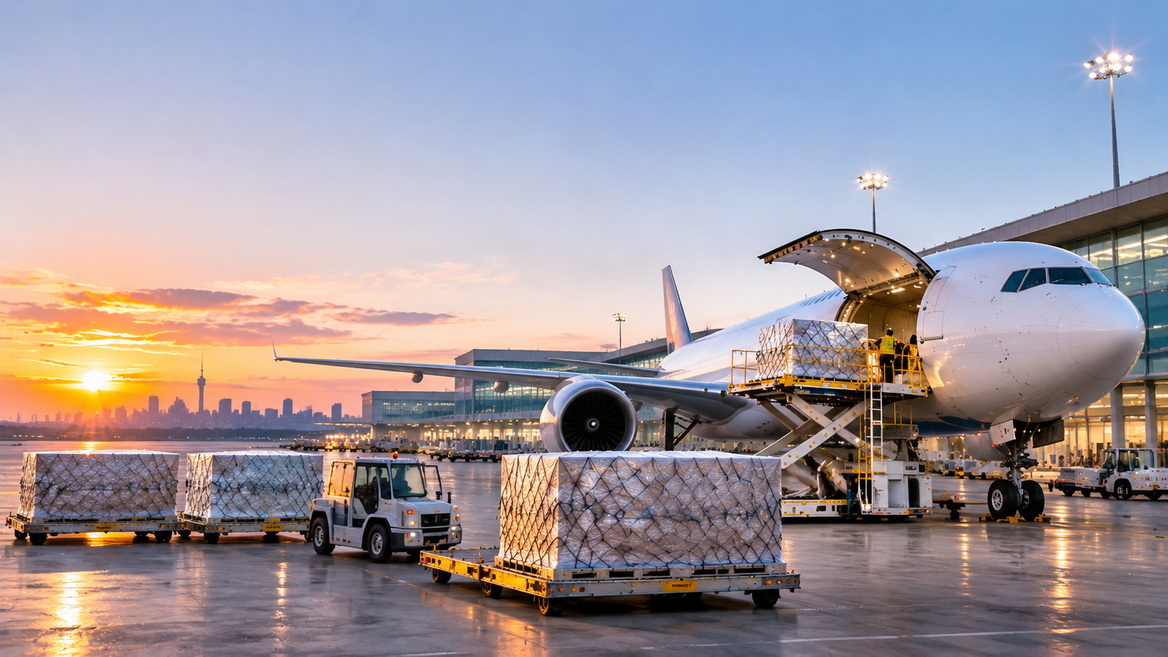
Australia's international air freight market connects overseas manufacturing centres with geographically dispersed business customers. Buyers need more than an international flight: they need a workable connection between origin collection, airline handling, customs clearance, and domestic distribution.
The country's logistics advantage lies in its airport and distribution clusters rather than an "air freight manufacturing industry." Sydney and Melbourne are important international gateways, supported by Brisbane and Perth. Infrastructure Partnerships Australia's airfreight analysis identifies these airports as central to the national cargo system and lists China among Australia's key airfreight import markets. Its historical figures should not, however, be mistaken for current airport market shares.
For importers buying from China, the relationship between origin and destination capabilities is especially important. A strong Australian delivery network cannot fully compensate for incomplete supplier documents or an unsuitable booking at origin.
IATA's full-year 2025 figures, released in January 2026, show that global air cargo demand increased 3.4%, measured in cargo tonne-kilometres. International demand rose 4.2%, while total available capacity increased 3.7%. These are worldwide transport measures—not Australian forwarding revenue or shipment counts.
The procurement implication is straightforward: global capacity growth does not establish availability for a particular China–Australia shipment. Buyers should ask about the actual route, departure date, cargo acceptance conditions, and recovery plan rather than relying on broad market trends.
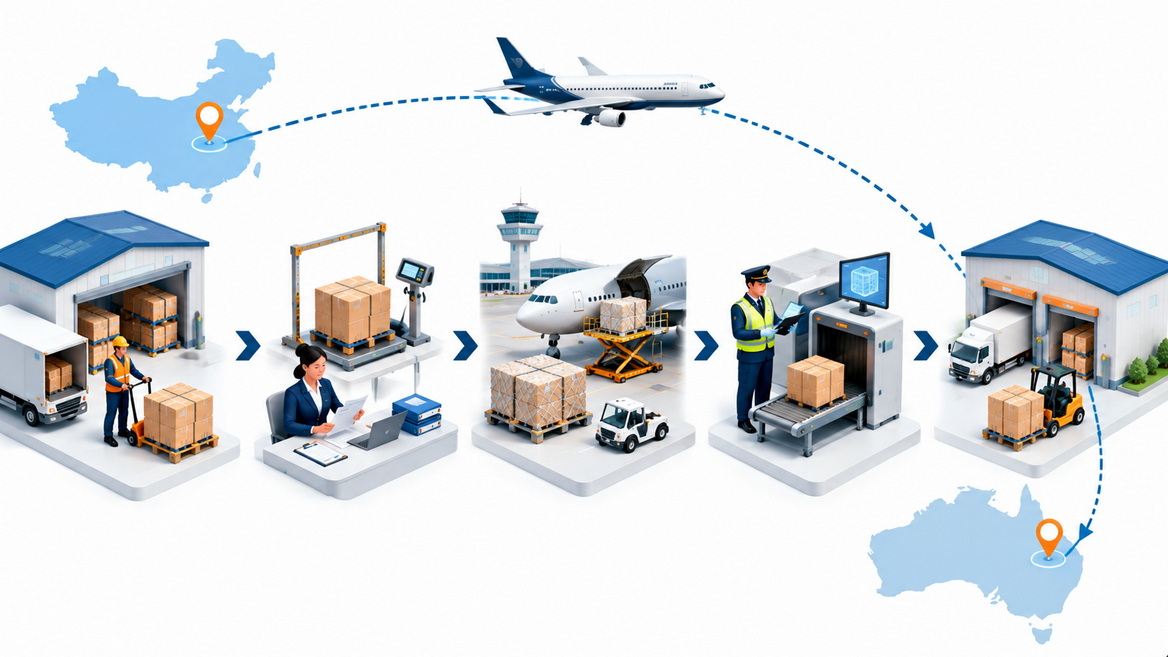
This shortlist uses public company information, official guidance, and the business details supplied by GB FREIGHT AGENCY CO., LTD. It does not claim to verify confidential airline allocations, individual customer rates, or unpublished delivery performance.
GB FREIGHT appears first because this article is prepared for the company and because China-origin coordination is relevant to its intended customers. Its placement is a commercial editorial choice, not proof of overall market leadership.
Use the following proposed scorecard when evaluating your own shortlisted providers:
| Evaluation category | Suggested weighting | Evidence to request |
|---|---|---|
| Route and commodity suitability | 25% | Recent comparable shipments, proposed routing, cargo restrictions |
| Total-cost transparency | 20% | Itemized quotation, exclusions, destination tariff |
| Compliance and documentation | 20% | Relevant licences, operating procedures, broker responsibilities |
| Delivery reliability | 15% | Clearly defined milestones and lane-specific performance records |
| Communication and recovery | 10% | Named contacts, escalation process, disruption procedures |
| Visibility and reporting | 10% | Tracking demonstration, document access, reporting examples |
The weights are a recommended purchasing framework, not measured scores assigned to the companies below.
Forwarders generally arrange access to airline capacity rather than manufacture a fixed quantity of output. Likewise, an advertised network size is not a guaranteed shipment allocation.
No company-wide minimum shipment quantity or universal certification status is asserted below. Buyers should verify the legal entity, branch, facility, and service involved.
| Forwarder | Most relevant purchasing scenario | Capacity evidence or operating model | MOQ / minimum shipment position | Certification and compliance checks |
|---|---|---|---|---|
| GB FREIGHT AGENCY CO., LTD. | China-origin shipments requiring supplier coordination | Shipment-specific arrangements; no verified public lane-allocation figure | Request minimum billable weight and handling charges | Request applicable credentials and identify the Australian clearance and delivery partners |
| DHL Global Forwarding | International procurement requiring a large forwarding network | Reported 1.767 million tonnes of global export air freight in 2025; not Australia-specific allocation | Confirm minimum charges for the selected product | Verify relevant entity/site credentials and any environmental reporting documentation |
| DSV | Multi-country supply chains requiring integrated transport services | Expanded network following its 2025 acquisition of Schenker | Confirm account, lane, and service minimums | Verify contracting entity, operating branch, and any integration-related process changes |
| Kuehne+Nagel | Buyers requiring an established Australian presence and broader supply-chain services | Australian operations across major cities within a global network | Request shipment-specific minimums | Confirm credentials for the exact handling location and commodity |
| Mainfreight | Buyers combining international forwarding with Australian or trans-Tasman distribution | Air & Ocean, transport, and warehousing network | Confirm air freight and domestic delivery minimums separately | Verify branch scope, customs arrangements, and any specialist handling authorizations |
Company network and service information comes from the providers' public materials. DHL's tonnage is historical global throughput, not available capacity for a particular booking.

GB FREIGHT AGENCY CO., LTD. is a China-based freight forwarder, not an Australian-headquartered business. Its published contact page lists a Shenzhen head office and branch businesses in Hong Kong and Malaysia. The page identifies air freight, sea freight, railway transportation, customs clearance, and door-to-door delivery among its services.
The company states that it brings 15 years of international logistics experience and serves shipments from China to overseas markets. That experience statement is supplied by the company; the reviewed contact page does not independently establish its incorporation year.
- Establishment year: Not verified from the reviewed source; request business-registration evidence.
- Main markets: China-origin international trade, including Australia and the other overseas regions identified in the company brief.
- Core positioning: Cost-conscious shipping coordination for businesses sourcing from China.
- OEM/ODM relevance: Logistics support around customized orders, rather than product design or manufacturing.
GB FREIGHT is worth including in a quotation exercise when the buyer's main operational challenge begins with Chinese suppliers: coordinating cargo readiness, collecting documents, arranging export procedures, and connecting those activities with international transportation.
For smaller brands, flexibility should be evaluated through concrete tasks. Ask whether the proposed service can accommodate:
- Collections from multiple suppliers.
- Different production-completion dates.
- Separate shipping instructions for samples and commercial orders.
- Packing-list reconciliation before dispatch.
- Delivery appointments at the Australian receiving warehouse.
- A named contact responsible for resolving document discrepancies.
These are recommended requirements to confirm—not independently verified promises about every GB FREIGHT shipment.
The supplied positioning emphasizes flexibility, communication efficiency, and cost control. Test these qualities with a pilot shipment and a written communication standard.
For example, request confirmation of cargo receipt, final measured weight, booking status, departure, customs release, and delivery. Ask the company to identify its Australian destination partner before approving the shipment.
For OEM/ODM supply chains, meaningful customization means adapting the shipping workflow to the purchase order. It does not mean the forwarder performs product research, engineering, or factory quality inspection.
DHL Global Forwarding's Australian website offers air and ocean freight together with customs and logistics services. It traces its forwarding heritage to 1815; this is a historical lineage statement, not the founding date of DHL Express or the date Australian operations began.
- Establishment reference: Forwarding heritage dating to 1815.
- Main markets: Global trade lanes, including shipments to and from Australia.
- Core strength: Large-scale international forwarding supported by complementary logistics services.
- OEM/ODM relevance: A candidate for coordinating recurring supplier shipments and cross-border replenishment, subject to the agreed scope.
DHL reported 1.767 million tonnes of global export air freight in 2025. This provides useful evidence of forwarding scale, although it does not establish guaranteed space or service performance on an individual Australian route.
Its Australian offering also includes GoGreen Plus services using a book-and-claim approach. Under that model, environmental benefits from fuel substitution can be allocated to a customer's shipment even when that shipment does not physically travel using the substituted fuel.
Ask which service level is being quoted, how exceptions are escalated, and whether any emissions-related option is included in the price.
If environmental reporting affects your purchasing decision, request the calculation boundary and verification documents. Do not treat every sustainability product as operationally or financially identical.
DSV was founded in 1976. Its history describes expansion from a Danish transport business into international forwarding and contract logistics.
A significant current consideration is its acquisition of Schenker, completed on 30 April 2025. DSV's customer information explains that system migration and account communications form part of the transition. Schenker should therefore not be treated as a fully independent competing ownership group in a current corporate comparison.
- Founded: 1976.
- Main markets: International transport and logistics across a global network.
- Core strength: Combined air, sea, road, and contract logistics capabilities.
- OEM/ODM relevance: A potential fit for coordinating suppliers and distribution across several countries.
DSV is relevant when procurement requires more than an isolated airport shipment. Its expanded network makes it a candidate for businesses evaluating consolidated international transport relationships.
However, corporate scale should remain separate from the buyer's actual operating experience.
Confirm the contracting entity, booking platform, invoice format, and account owner. If an existing Schenker relationship is involved, ask whether operating procedures, tracking access, or escalation contacts have changed.
A useful contract attachment lists each milestone owner and the process for transferring unresolved shipment issues between teams.
Kuehne+Nagel was founded in 1890. Its Australian company information states that it has operated in Australia since 1971, with locations across major cities including Melbourne, Sydney, Brisbane, Perth, and Adelaide.
- Founded: 1890 globally; Australian presence since 1971.
- Main markets: Global supply chains, including Australian imports and exports.
- Core strength: An established local footprint connected with international logistics services.
- OEM/ODM relevance: A candidate for coordinating recurring factory shipments with customs, insurance, and broader distribution requirements.
Kuehne+Nagel's Australian service information identifies customs clearance, cargo insurance, and digital capabilities among its complementary offerings. This makes it relevant for procurement teams comparing a wider service package rather than freight rates alone.
Ask the local team to demonstrate how it handles your actual commodity and receiving requirements.
For sensitive or high-value goods, request a shipment-specific process covering handovers, storage conditions, discrepancy reporting, and claims support. A global service description should not replace a locally agreed operating procedure.
Mainfreight began operations in Auckland in 1978, opened its first Air & Ocean branch in 1984, and began investing in Australian operations in 1989.
- Founded: 1978.
- Main markets: Australia, New Zealand, Asia, Europe, and the Americas.
- Core strength: A combination of Air & Ocean forwarding, transport, and warehousing.
- OEM/ODM relevance: A potential fit for moving imported production orders into regional storage and distribution workflows.
Mainfreight's history and service structure make it particularly relevant to buyers evaluating the connection between international transportation and downstream distribution. Its Australian and New Zealand development is a useful distinction from a purely airport-to-airport proposition.
Ask whether the international shipment, customs process, warehouse receipt, and domestic delivery will operate under one agreed workflow.
Where several branches are involved, establish who owns the final delivery deadline. Avoid assuming that a single corporate name automatically means a single operational contact.
Start with the business that will issue the quotation and invoice. Then identify the parties responsible for origin handling, airline booking, Australian customs clearance, and delivery.
Request:
- Legal company name and registration details.
- Contract terms and liability provisions.
- Relevant licences or authorizations.
- Details of subcontracted activities.
- Insurance options and claims procedures.
For Australian export air cargo, the government's Regulated Air Cargo Agent scheme establishes security obligations within the air cargo supply chain. Its relevance depends on the activity being performed; it should not be presented as a universal certification covering every import-forwarding service.
Product certificates and transport qualifications answer different questions.
A factory's product documentation does not establish that a forwarder can accept dangerous goods, and a forwarder's credentials do not prove that an imported product is legally marketable.
For specialist cargo, require a written acceptance assessment before collection. IATA's cargo operations resources address handling standards and procedures, while its TACT services cover cargo rules, tariffs, schedules, and compliance information.
Avoid booking first and resolving commodity restrictions later.
Require each bidder to quote the same origin, destination, cargo details, service scope, and commercial responsibilities.
| Cost component | Question to ask |
|---|---|
| Supplier collection | Are all collection addresses included? |
| Origin handling | Are receiving, screening, and documentation itemized? |
| International transportation | What weight, route, and service assumptions apply? |
| Destination handling | Which airport and release charges are included? |
| Customs brokerage | What is included, and what creates an additional entry charge? |
| Inspection and storage | What is excluded, and when can charges begin? |
| Final delivery | Are appointments, waiting time, and special unloading excluded? |
| Insurance | Is cargo cover included, optional, or absent? |
Australian import taxes also require separate budgeting. ABF states that GST on taxable importations is generally 10% of the taxable importation value, which includes customs value, applicable duty, and relevant international transport and insurance costs. It is not necessarily 10% of the supplier's invoice alone.
A pilot should test the real workflow, not simply the easiest parcel available.
Choose cargo with packaging, documentation, supplier involvement, and receiving conditions similar to your expected repeat orders.
Evaluate:
1. Quotation accuracy.
2. Document checking before collection.
3. Weight and dimension confirmation.
4. Milestone communication.
5. Destination-charge transparency.
6. Delivery appointment execution.
7. Final invoice reconciliation.
For OEM/ODM orders, include the production-order references and packing-list structure that your business actually uses. This reveals whether the forwarder can support customized procurement without losing traceability.
ABF states that consignments valued above AUD1,000 and cleared into home consumption require an Import Declaration. The declaration includes information about the importer, transport, tariff classification, and customs value.
Before dispatch, reconcile the commercial invoice, packing list, transport instructions, and any required permits or approvals. ABF identifies air waybills, invoices, and applicable approvals among the documents relevant to import declaration procedures.
Do not assume that a small shipment or a "sample" description automatically eliminates declaration requirements.
An attractive freight rate can exclude destination handling, brokerage, storage, or delivery.
The preventive measure is a line-by-line scope comparison. Ask each provider to distinguish fixed charges, estimated charges, and costs payable only if a specific event occurs.
A forwarder's global tonnage or office count does not establish confirmed space for your cargo.
Request the proposed route, booking status, cargo acceptance conditions, and fallback plan. Keep historical scale separate from shipment-specific commitments.
OEM/ODM shipments may involve split production, mixed purchase orders, accessories, or different packaging versions.
Require the supplier and forwarder to agree on the shipping data before collection. The key control is reconciliation: what was ordered, what was packed, what was collected, and what was declared.
The phrase does not explain who will act as importer, pay assessed taxes, arrange inspections, or resolve delivery access problems.
Convert it into a written responsibility matrix. If the provider cannot explain each handover, the service description is not yet sufficiently defined for procurement approval.
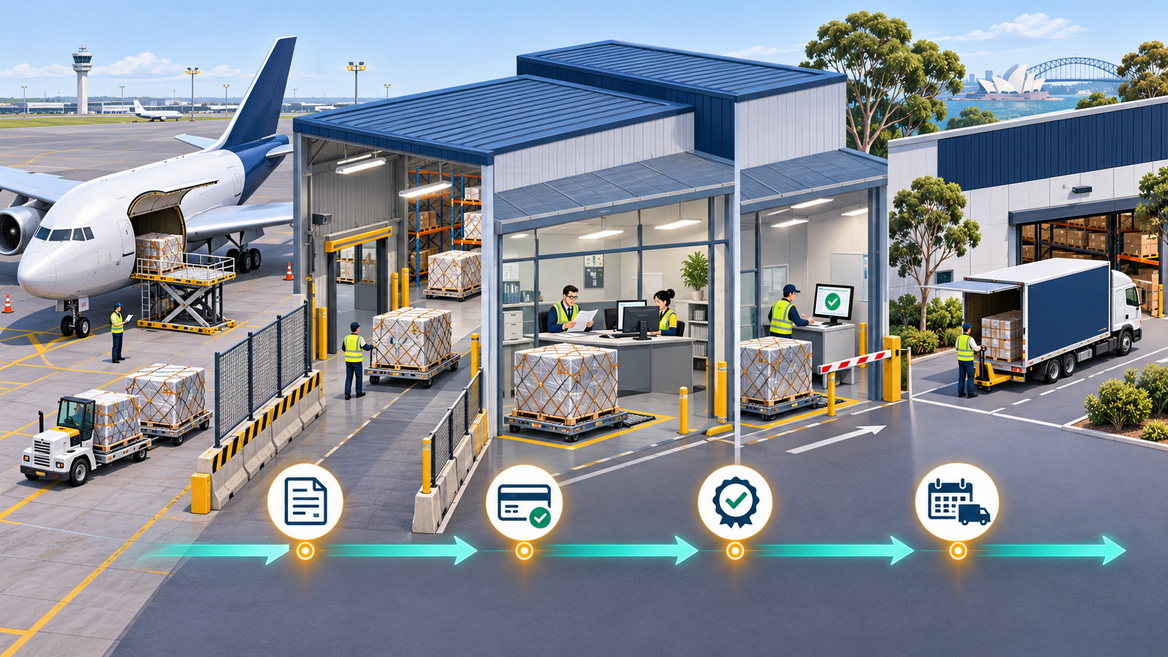
A flight-arrival notification is not the same as cargo being available for collection.
ABF confirms that applicable duties, taxes, and charges must be paid before goods can be released from customs control. That makes release readiness a separate purchasing concern from the aircraft's arrival time.
A practical, often overlooked qualification exercise is to ask the forwarder to walk through a shipment after landing:
1. Who receives and checks the arrival documents?
2. Who monitors customs release?
3. Who confirms any remaining handling or payment requirements?
4. Who tells the delivery team that collection can proceed?
5. Who escalates the shipment if one of those steps stalls?
This is a proposed operational test, not a claim that one hidden issue explains every delay.
It is particularly useful when comparing two otherwise similar quotations. A provider with a clearly owned release process may be a better fit than one offering a slightly shorter advertised flight schedule but no clear destination accountability.
The right air freight partner depends on where your purchasing risk sits.
GB FREIGHT merits consideration when Chinese supplier coordination and a tailored origin workflow are central requirements. DHL Global Forwarding, DSV, Kuehne+Nagel, and Mainfreight offer different combinations of international network reach, Australian presence, and complementary logistics services. Their public information supports inclusion in a shortlist—not an unconditional recommendation for every shipment.
For a useful China-to-Australia quotation, send GB FREIGHT your collection address, cargo description, carton dimensions, gross weight, cargo-ready date, delivery postcode, and any special handling requirements. Request a written scope identifying routing assumptions, destination responsibilities, exclusions, and the proposed communication process.
GB FREIGHT publishes service@gb-freight.com and +86-755-25851060 as contact details.
Request the complete certificate rather than a website logo. Check the legal entity, certificate number, standard, covered locations, service scope, and validity dates. Ask the issuing certification body to confirm its status.
Even a valid certificate should be evaluated against the service you are buying. It does not replace commodity-specific acceptance or applicable operating authorizations; cargo rules and handling procedures require separate attention.
Do not assume that it does. Ask the forwarder to define the booking status and identify any remaining conditions in writing.
Your approval process should distinguish a proposed routing from an accepted booking and from actual departure. Require a disruption procedure explaining who contacts you, what alternatives can be offered, and which additional costs require approval.
For a long-term procurement relationship, identify the clearance arrangement before approval.
Ask who will lodge the declaration, whose importer details will be used, who approves classification and valuation information, and who retains the records. ABF explains that import declarations may be made by the importer or a licensed customs broker acting on the importer's behalf.
Provide the full product and battery details at the quotation stage, rather than describing the shipment only as "electronics."
Request a written explanation of the applicable acceptance requirements and the documents needed for the proposed route. Ask who checks the classification, packaging, and handling instructions against current cargo rules and carrier requirements. IATA provides dedicated cargo rules and operational resources for these assessments.
Do not treat a previous successful shipment as sufficient approval for a different battery configuration or route.
Define measurable milestones: response time, collection, document completion, departure reporting, customs-release reporting, delivery, and invoice accuracy.
For each measure, record the start event, end event, responsible party, exclusions, and escalation process. Keep airline transit, border clearance, and final delivery separate so that delays can be investigated rather than hidden within one overall figure.
Where customs release is involved, recognize that applicable payments and declaration requirements are separate from the forwarder's communication commitments.
Note: The prices mentioned above are for reference only. We update our rates on a weekly basis; please contact us to confirm the current costs before arranging any shipments.
- GB FREIGHT AGENCY CO., LTD., "Contact Us": published offices, contact details, and service categories. [gb-freight]
- IATA, "Global Air Cargo Demand Achieved Record Volume in 2025," released January 29, 2026: full-year demand and capacity data. [iata]
- Infrastructure Partnerships Australia, "2023 International Airfreight Indicator": historical Australian gateway and trade-lane context. [infrastructure.org]
- Australian Border Force, "Import Declarations": declaration thresholds, responsibilities, and documentation. [abf.gov]
- Australian Border Force, "GST and Other Taxes When Importing": taxable importation valuation and GST treatment. [abf.gov]
- Australian Government, "Regulated Air Cargo Agent Scheme": air cargo security obligations. [cisc.gov]
- IATA, "TACT Air Cargo Solutions" and "Cargo Operations Manuals": cargo rules and operational resources. [iata]
- DHL Global Forwarding Australia and DHL Group's 2025 Annual Report: services, forwarding heritage, and global export air freight volume. [group.dhl]
- DSV, company history and Schenker acquisition announcements: establishment and corporate ownership developments. [dsv]
- Kuehne+Nagel, company and Australian operating information: history, local presence, and services. [jobs.kuehne-nagel]
- Mainfreight, company history and service information: establishment, Australian expansion, and logistics scope. [mainfreight]


