
Views: 237 Author: GB FREIGHT Publish Time: 2026-11-08 Origin: Site


Content Menu
● What Is a Digital Logistics Platform?
>> How It Differs from a Tracking Portal
● Why China-Based Supply Chains Need Connected Logistics
● How Digital Logistics Platforms Support Different Shipping Services
● Five Capabilities That Matter More Than a Polished Dashboard
>> 1. Reliable Shipment Identification
>> 2. Clear Milestone Definitions
>> 3. Document Version Control
>> 5. Practical Access and Data Controls
● What "Real-Time Shipment Visibility" Actually Means
● From Tracking to Action: A Practical LCL Shipping Scenario
● Customs Documentation: Automate Preparation, Retain Human Review
● How to Introduce a Digital Logistics Workflow
>> Step 1: Select One Shipment Flow
>> Step 2: Agree on Required Data
>> Step 3: Assign Milestones and Owners
>> Step 4: Test Exceptions Before Expanding
>> Step 5: Review Results and Refine
● Measure Results with Operational Indicators
● Connecting Digital Coordination with Experienced Freight Support
>> 1. Can a digital logistics platform guarantee on-time delivery?
>> 2. Do small importers need their own platform subscription?
>> 3. Can one platform track sea, air, rail, and final delivery?
>> 4. How does digital coordination help LCL shipments?
>> 5. Does digital document processing remove the need for customs review?
Digital logistics platforms for modern supply chain management connect shipment information, documents, partners, and operational tasks in one coordinated environment. For businesses importing from China, their value is practical: clearer shipment progress, fewer repeated requests, and earlier warnings when delivery plans need attention.
However, software alone cannot secure vessel space, correct inaccurate cargo descriptions, or resolve a customs inspection. Effective international shipping combines reliable information with experienced people who act on it.
At GB FREIGHT AGENCY CO., LTD., we bring 15 years of international logistics experience to supplier coordination, freight booking, customs clearance, warehousing, and final delivery. Our perspective is straightforward: visibility matters most when it supports a timely decision.
This guide explains how digital logistics platforms work, which capabilities matter, and how importers can use them to strengthen shipments from China.

A digital logistics platform connects logistics data and workflows across participating organizations. Depending on its integrations, it can bring together purchase orders, freight bookings, warehouse records, transport milestones, shipping documents, and invoices.
Instead of searching separate email threads for each update, authorized users can work from a shared shipment record.
Typical participants include:
- Suppliers and purchasing teams.
- Freight forwarders and transport operators.
- Warehouses and consolidation facilities.
- Customs brokers and destination agents.
- Consignees and final-mile delivery providers.
A tracking portal mainly answers, "Where is my shipment?"
A broader platform should also help answer:
- Is the cargo ready before the booking cutoff?
- Which document requires correction?
- Who owns the next action?
- Has a delay affected the delivery appointment?
- Which additional costs require approval?
The distinction is important. Displaying a delay does not resolve it. Useful platforms connect shipment status with responsibility and action.
Shipping from China often involves several suppliers, different cargo-ready dates, multiple service providers, and destination-specific requirements.
A purchase order may be complete commercially but incomplete operationally. Carton dimensions might change after packing. One supplier may miss a warehouse receiving deadline. The consignee may require an appointment that was never included in the original booking instructions.
Disconnected information makes these issues harder to identify.
Digital coordination can help teams maintain consistent shipment references, document versions, and deadlines. It also makes handovers clearer when cargo moves between organizations.
However, importers should distinguish information problems from physical constraints. A platform can reveal a missed connection, but it cannot guarantee replacement capacity or eliminate border checks.
The most useful capabilities depend on the transport mode and service scope.
| Shipping service | Information worth connecting | Practical buyer benefit |
|---|---|---|
| Sea freight | Booking, cutoffs, container events, vessel changes, release status | Better coordination of port movements and inland delivery |
| Air freight | Cargo acceptance, flight milestones, handling status, arrival updates | Earlier intervention for urgent shipments |
| Railway transportation | Terminal receipt, departure, border transfers, destination availability | Clearer oversight of eligible rail corridors |
| LCL shipping | Supplier receipts, consolidation references, container milestones, cargo availability | Better control of shared-container handovers |
| Warehousing | Receiving records, quantities, condition checks, dispatch instructions | Fewer discrepancies between suppliers and outbound shipments |
| Customs clearance | Document versions, declaration queries, submission and release status | Faster coordination when information needs correction |
| Door-to-door delivery | Pickup, international movement, clearance, appointments, proof of delivery | A more complete view of the contracted journey |
Coverage should be verified lane by lane. An integration available for one ocean carrier may not exist for a rail operator or destination delivery partner.
Purchase orders, bookings, containers, and house transport documents need consistent references.
This is especially important for LCL shipments. Tracking a shared container does not necessarily confirm that an individual consignment is available for collection after deconsolidation.
Ask whether the system links each supplier shipment to the relevant consolidation and destination release record.
"Arrived" can mean arrival at a port, airport, warehouse, or consignee.
A useful record should identify the location, event time, reporting source, and whether the information is planned, estimated, or confirmed.
Without these distinctions, a dashboard can create confidence without providing operational certainty.
Commercial invoices, packing lists, and transport instructions may change before departure.
The platform should make the approved version easy to identify and preserve a history of changes. Otherwise, different parties may continue using conflicting quantities, values, or consignee details.
An alert should identify what happened, why it matters, and who must respond.
Useful alerts include:
- Cargo not received before the warehouse deadline.
- Missing documentation before declaration preparation.
- A revised arrival estimate affecting delivery arrangements.
- An unresolved release requirement.
- Delivery completed without supporting confirmation.
Suppliers, buyers, brokers, and delivery partners do not need identical access.
Evaluate role-based permissions, account security, audit logs, data retention, and export options. Also establish how shipment information will remain accessible if the platform relationship ends.

Real-time visibility depends on the underlying data source.
Some events arrive automatically through connected systems. Others depend on warehouse scans, agent updates, or manual confirmation. Information can be delayed even when the platform itself works correctly.
For buyers, three questions matter:
1. When did the physical event occur?
2. When was the update received?
3. Who supplied the information?
A predicted arrival should not look identical to a confirmed arrival. Missing updates should also remain visible rather than being interpreted as evidence that everything is proceeding normally.
Standardized event definitions help different organizations exchange information consistently. Nevertheless, standards do not guarantee that every partner supplies complete or immediate updates.
Treat visibility as decision support, not a delivery guarantee.
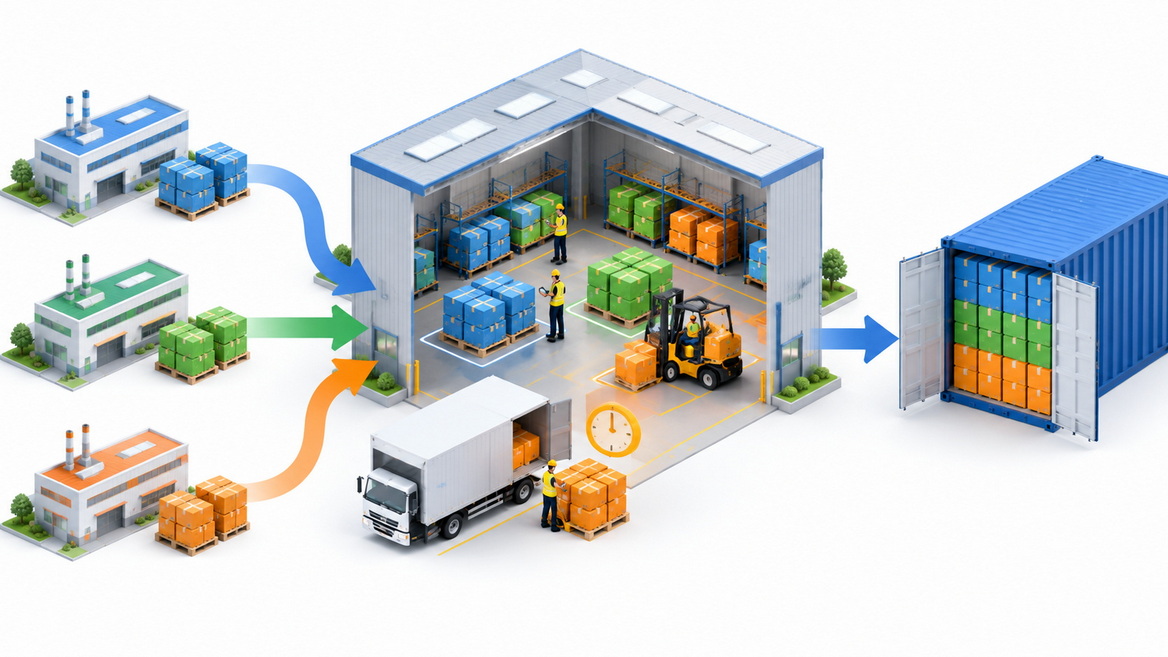
Consider an illustrative shipment of industrial components from three Chinese suppliers to one European consignee. This is a planning example, not a reported customer case.
Two suppliers deliver to the consolidation warehouse on schedule. The third reports a packing delay.
A tracking-only workflow might show that the consolidation is incomplete. A coordinated workflow should support the next decision:
1. Confirm the delayed supplier's revised cargo-ready date.
2. Identify the affected purchase orders and operational priority.
3. Check whether the shipment can still meet the receiving cutoff.
4. Compare waiting, splitting the shipment, or moving urgent items separately.
5. Obtain the buyer's approval before creating additional costs.
6. Update documents and inform destination partners.
The important outcome is not another status message. It is an approved plan with clear ownership.
This example also explains why logistics expertise remains essential: the right response depends on production needs, available capacity, cargo suitability, and total cost.
Digital logistics platforms can help collect documents, reuse approved information, and flag inconsistent fields. They should not be treated as substitutes for customs expertise.
Before submission, responsible parties should review:
- Accurate product descriptions and intended use.
- Quantities, weights, values, and currencies.
- Consignor and consignee details.
- Country-of-origin information.
- Classification and supporting product specifications.
- Destination-specific permits or regulatory requirements.
Document extraction tools can accelerate data entry, but incorrect source information remains incorrect after extraction.
International customs data frameworks support more consistent information exchange. They do not replace national rules or guarantee acceptance of a declaration.
For door-to-door shipping, clarify who handles import clearance, who acts as importer of record where applicable, and which duties, taxes, or other charges are included in the quotation.

A focused pilot is usually more useful than attempting to connect every supplier and destination immediately.
Choose a manageable lane, service, or supplier group. Record current problems, such as repeated document requests, late cargo-ready updates, or unclear delivery handovers.
Define mandatory shipment references, cargo details, document fields, and delivery instructions.
Keep the initial requirements practical. Collect information that supports an operational decision.
For each stage, establish:
- The event definition.
- The party responsible for reporting.
- The expected update timing.
- The escalation contact.
- The action required if the milestone is missed.
Test a changed booking, corrected invoice, late supplier delivery, and missing destination update.
A workflow that handles routine shipments but fails during disruption is not ready for wider use.
Compare the pilot against its original baseline. Expand only after teams understand their responsibilities and recurring data problems have been addressed.
Avoid judging success solely by login activity or the number of automated messages.
Use indicators connected to service quality and workload:
| Indicator | Suggested measurement | What it reveals |
|---|---|---|
| Milestone completeness | Required events recorded ÷ required events expected | Whether the shipment record is usable |
| Update timeliness | Elapsed time between an event and its reporting | Whether information arrives soon enough |
| Document correction rate | Shipments requiring correction ÷ shipments reviewed | Where preparation needs improvement |
| Exception response time | Time from alert to acknowledged ownership | Whether problems receive attention |
| Delivery performance | Deliveries within the agreed window ÷ completed deliveries | Whether execution meets commitments |
Define exclusions and measurement periods before comparing results. Otherwise, changes in shipment mix can distort performance.
For financial evaluation, compare verified administrative savings and avoidable charges against subscriptions, implementation, integrations, training, and ongoing support.
No universal savings percentage applies to every operation.
GB FREIGHT AGENCY CO., LTD. provides sea freight, air freight, railway transportation, customs clearance, warehousing, LCL, and door-to-door delivery services for businesses shipping from China.
Our service scope covers supplier booking coordination through transportation and final delivery, with solutions for Europe, North America, South America, Southeast Asia, the Middle East, Africa, and Oceania.
The appropriate route depends on cargo characteristics, destination, delivery requirements, and available services. Digital coordination should support those decisions rather than force every shipment into the same process.
For your next shipment, send our team your cargo description, supplier locations, cargo-ready date, package dimensions, gross weight, destination, and required delivery date. Request a proposal that clearly identifies transport options, shipment milestones, document responsibilities, and quotation exclusions.
No. It can improve coordination and highlight risks, but carrier capacity, weather, inspections, congestion, and other disruptions still affect delivery. Evaluate how the forwarder responds when plans change.
Not necessarily. A forwarder's shared reporting process or customer portal may provide sufficient information. The priority is reliable updates, accessible documents, and clear responsibility—not software ownership.
Potentially, but coverage depends on integrations and partner participation. Ask for a demonstration using your actual route and service requirements rather than assuming worldwide end-to-end coverage.
It can connect supplier deliveries, warehouse receipts, consolidation references, and destination availability. This helps buyers distinguish container movement from the release status of their own cargo.
No. Automation can assist with collection and consistency checks. Product classification, valuation, regulatory requirements, and declaration accuracy still require appropriate review by responsible parties.
1. [eTower / WallTech — "Digital Logistics Platforms for Modern Supply Chain Management"]. Original article reviewed for its platform definitions, integration framework, workflow descriptions, and stated capabilities. Its vendor-specific capabilities are not attributed to GB FREIGHT AGENCY CO., LTD. [etowertech]
2. [Digital Container Shipping Association — "Track & Trace Standard"]. Supports the discussion of consistent event definitions, information exchange, interoperability, and visibility limitations caused by inconsistent data. [dcsa]
3. [Digital Container Shipping Association — "Digital Shipping Standards"]. Explains common data models, communication protocols, and operational processes designed to support interoperability across container-shipping participants. [dcsa]
4. [World Customs Organization — "WCO Data Model"]. Supports the discussion of harmonized customs data, reusable information, and cross-border regulatory information exchange. [wcoomd]
5. [World Customs Organization — "Single Window Data Harmonisation"]. Explains standardized data requirements and the reduction of redundant submissions across border agencies. [wcoomd]


