
Views: 234 Author: GB Freight-Michelle Publish Time: 2026-04-17 Origin: Site


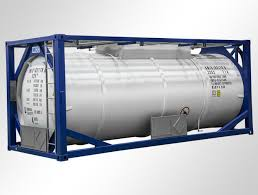
Global chemical logistics requires safe, efficient, and compliant transport solutions. Therefore, many shippers choose an ISO Tank for liquid cargo, gas products, food-grade liquids, and hazardous chemicals. Because every product has different handling needs, understanding the right Tank Container type can help reduce risk, improve efficiency, and lower transport costs.
In this guide, we explain the most common ISO Tank classifications and how different tank models meet specific cargo requirements.
An ISO Tank is a stainless-steel tank built inside a standard container frame that follows ISO dimensions. As a result, it can move easily by sea, rail, and truck. Compared with drums or IBC totes, a Tank Container offers better safety, larger capacity, and lower packaging waste.
Moreover, industries such as chemicals, food, pharmaceuticals, and energy rely heavily on ISO tanks for international shipping.
Selecting the correct ISO Tank is important because each cargo type has different pressure, temperature, and corrosion requirements. For example, some products need heating systems, while others need extra lining protection or pressure resistance.
Therefore, using the proper Tank Container helps you:
Improve cargo safety
Meet IMDG compliance standards
Reduce contamination risk
Speed up loading and unloading
Lower logistics costs
The ISO Tank T11 is the most commonly used standard tank. It is suitable for non-hazardous liquids and dangerous goods classified up to T11 under IMDG portable tank rules.
Additionally, this Tank Container can include steam heating coils. Operators use indirect heating to raise cargo above melting point, turning solid cargo into liquid for easier discharge.
Food oils
Non-hazardous chemicals
Liquid raw materials
Products requiring heating before unloading
The ISO Tank T14 is a specialized model designed for certain hazardous and non-hazardous products. Unlike T11, it uses a top loading and top discharge system only, meaning it has no bottom valve.
As a result, it provides stronger sealing performance and improved leak prevention.
Sensitive chemicals
High-purity liquids
Cargo requiring stronger airtight protection
This ISO Tank is a T14 model with an internal PTFE lining. PTFE resists highly corrosive substances and protects tank walls from chemical damage.
Therefore, it is widely used for aggressive acids and electronic-grade products that require clean surfaces.
Strong corrosive chemicals
High-purity electronics chemicals
Specialty industrial liquids
The ISO Tank T50 and T75 Tank Container are designed for gas transport. These tanks follow IMDG standards and differ mainly in working pressure and test pressure ratings.
Consequently, they are ideal for pressurized gases and specialized industrial gas cargo.
LPG
Industrial gases
Refrigerant gases
High-pressure chemical gases
A Cement Tank Container is specially designed for bulk cement powder transport and storage. It allows efficient pneumatic loading and unloading.
Therefore, construction and infrastructure industries frequently use this model.
Bulk cement
Dry powder materials
Construction minerals
This special ISO Tank handles Anhydrous Hydrogen Fluoride (AHF), one of the most corrosive and hazardous chemicals in logistics.
Because AHF presents severe risks, operators must follow strict safety standards during transport and storage.
AHF chemical transport
Hazardous fluorine products
A High Temperature ISO Tank uses 316L stainless steel and enlarged steam coil systems. It can handle temperatures up to 200°C through indirect heating.
Therefore, it works perfectly for products with high melting points or goods needing rapid heating.
Wax
Bitumen
Resins
High-viscosity chemicals
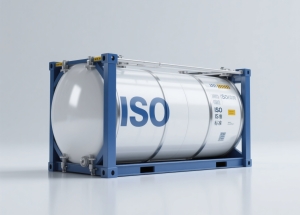
Before selecting an ISO Tank, always consider:
Hazardous, food-grade, gas, powder, or corrosive?
Does the cargo need heating or insulation?
Does the product release vapor or require pressure control?
Does the cargo require IMDG-certified portable tank standards?
Bottom discharge or top discharge only?
Many global shippers prefer Tank Container transport because it offers major advantages:
Higher payload than drums
Lower packaging waste
Reduced contamination risk
Better cargo security
Multi-modal flexibility (sea, rail, truck)
Lower unit shipping cost
Therefore, ISO tanks remain one of the smartest solutions for bulk liquid logistics.
Understanding ISO Tank types helps businesses ship liquids, gases, powders, and hazardous goods safely and efficiently. Whether you need a T11 for standard liquids, T14 for sealed cargo, or T50 for gas products, the correct Tank Container can improve operations and reduce risk.
If you ship chemicals or bulk liquids internationally, choosing the right ISO Tank is not optional—it is essential.
Need help selecting the best ISO Tank for your cargo? Contact us today for expert guidance and competitive freight solutions.


